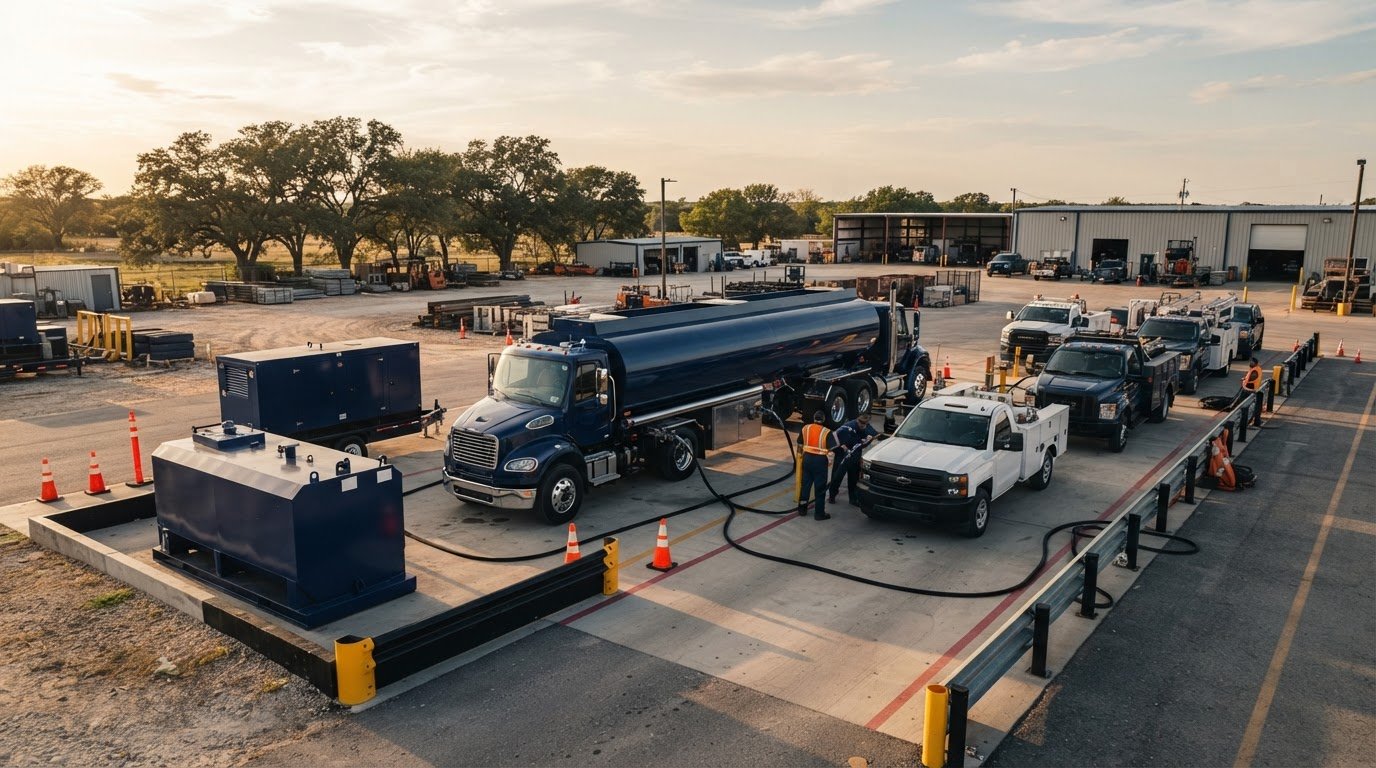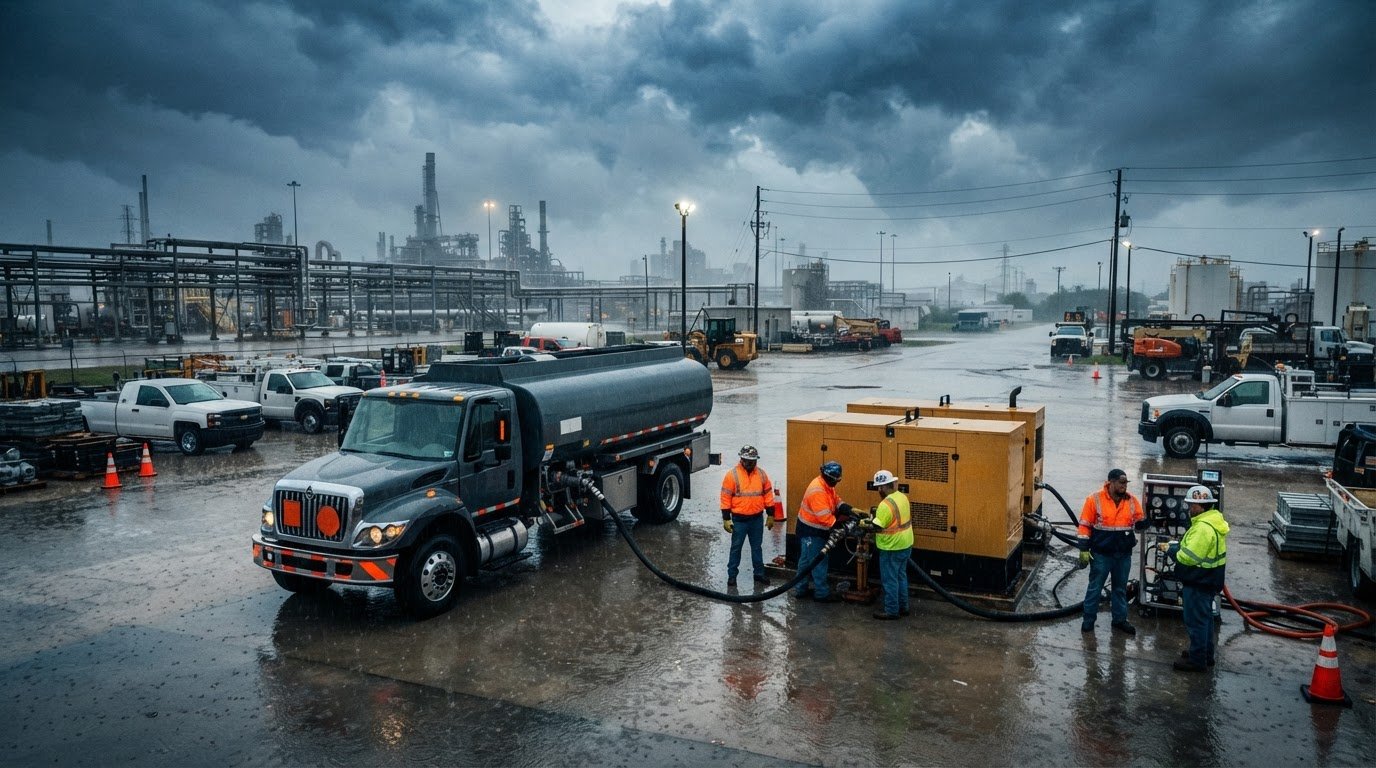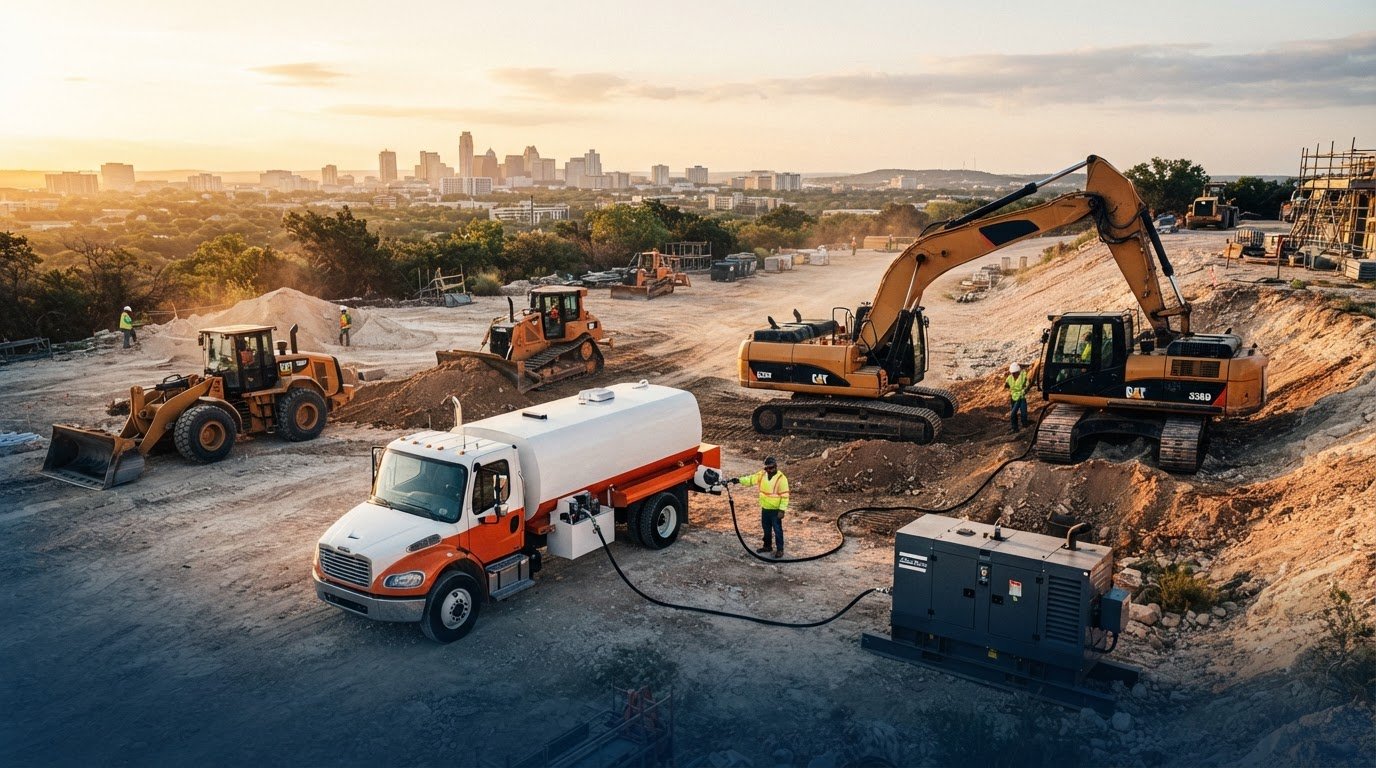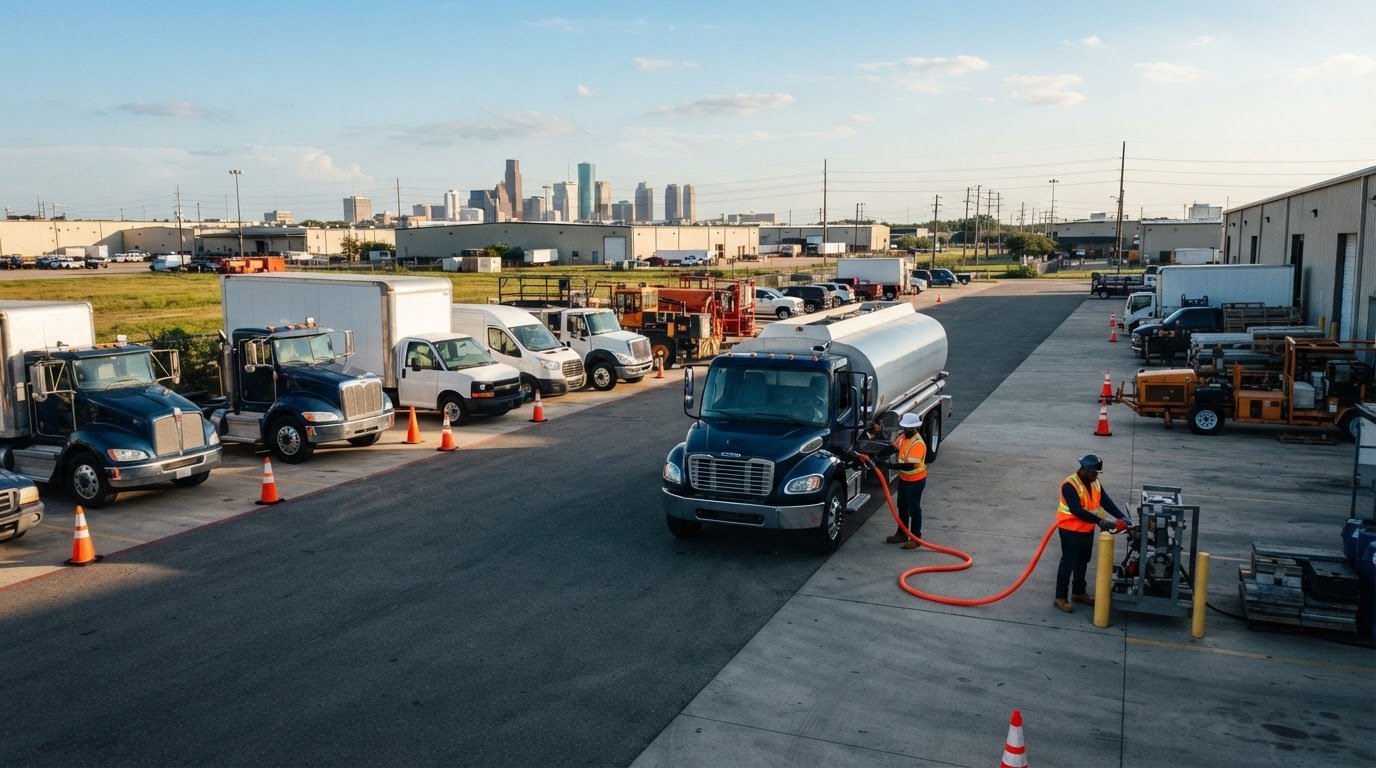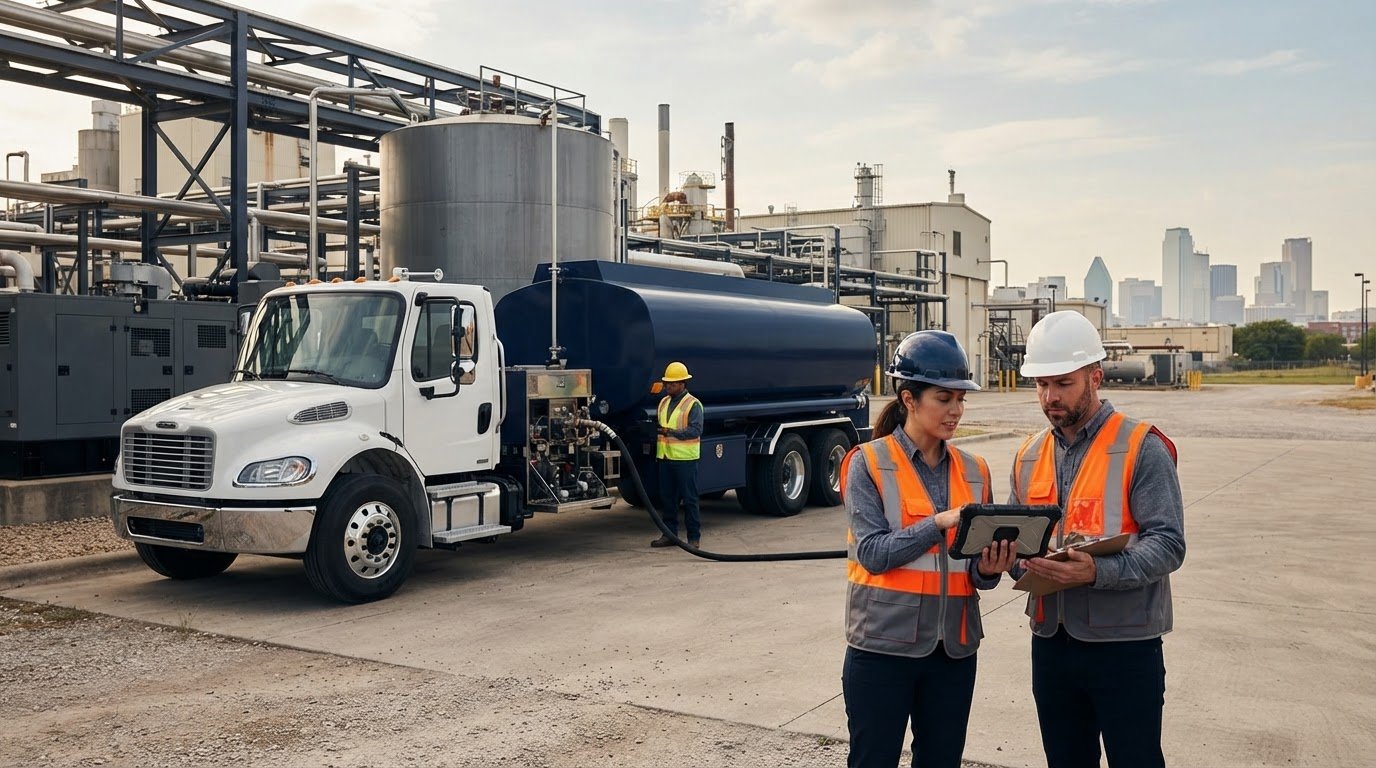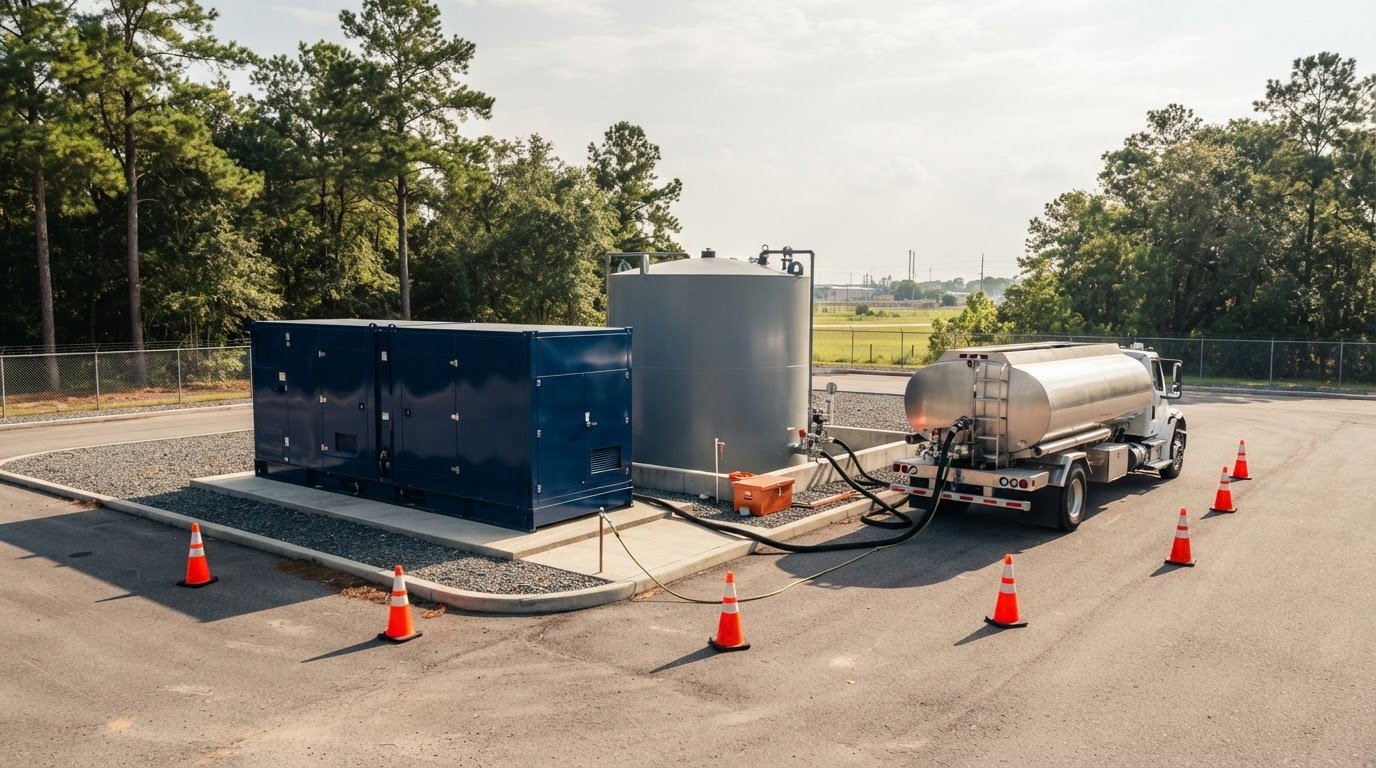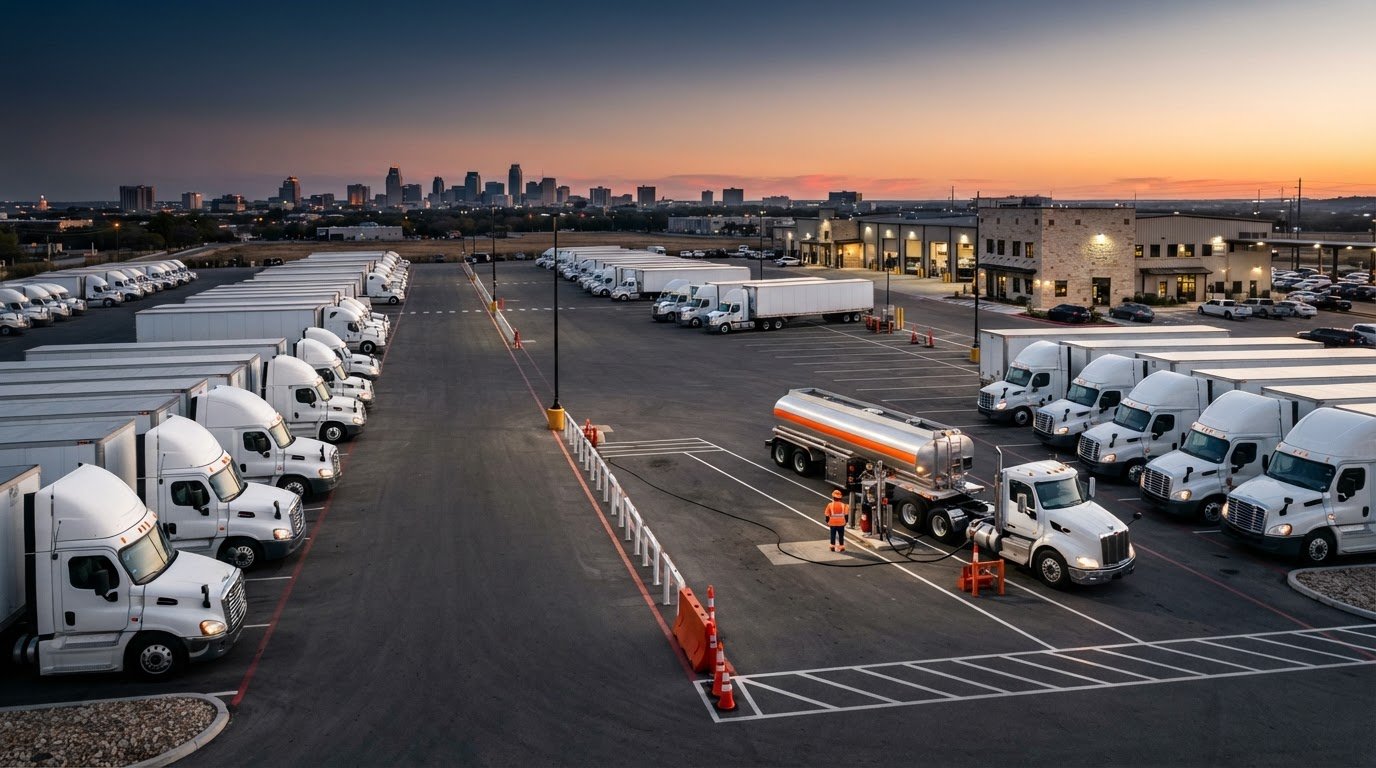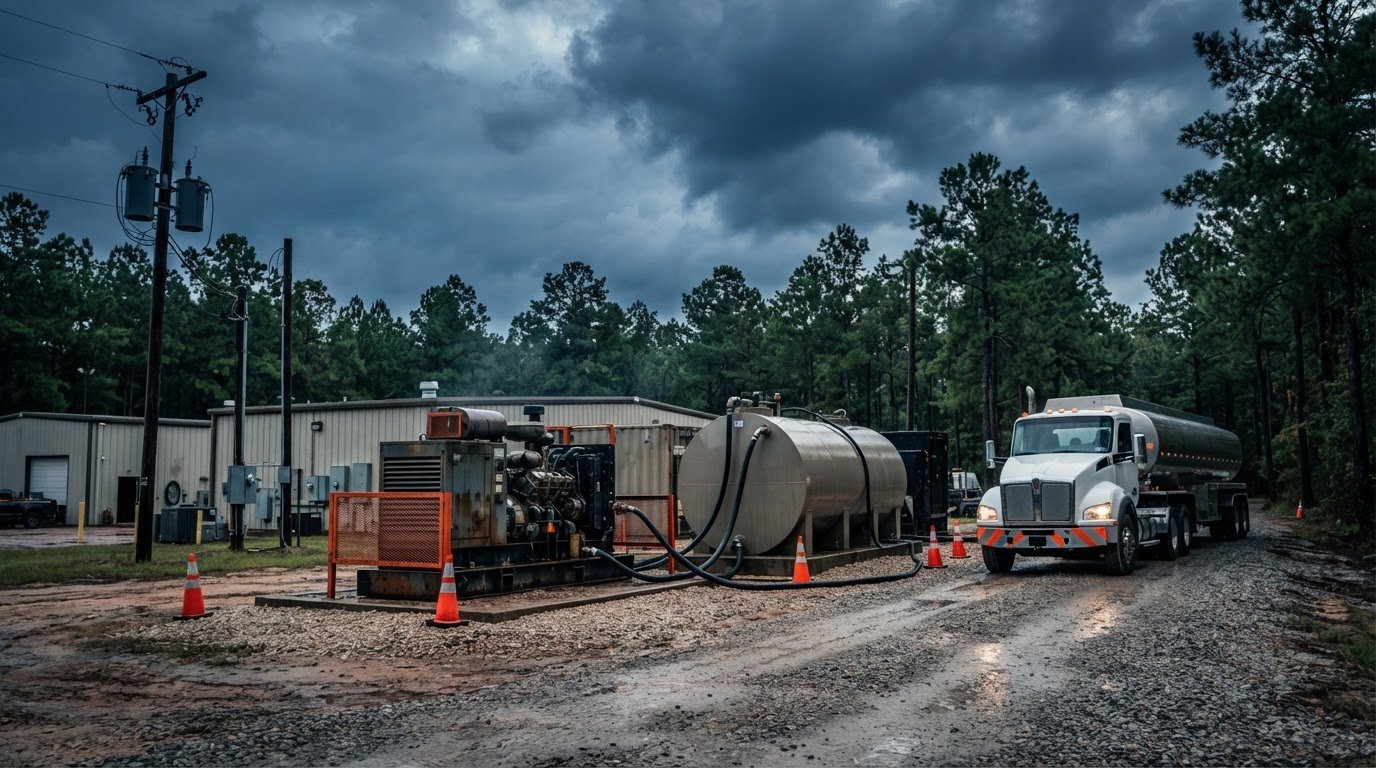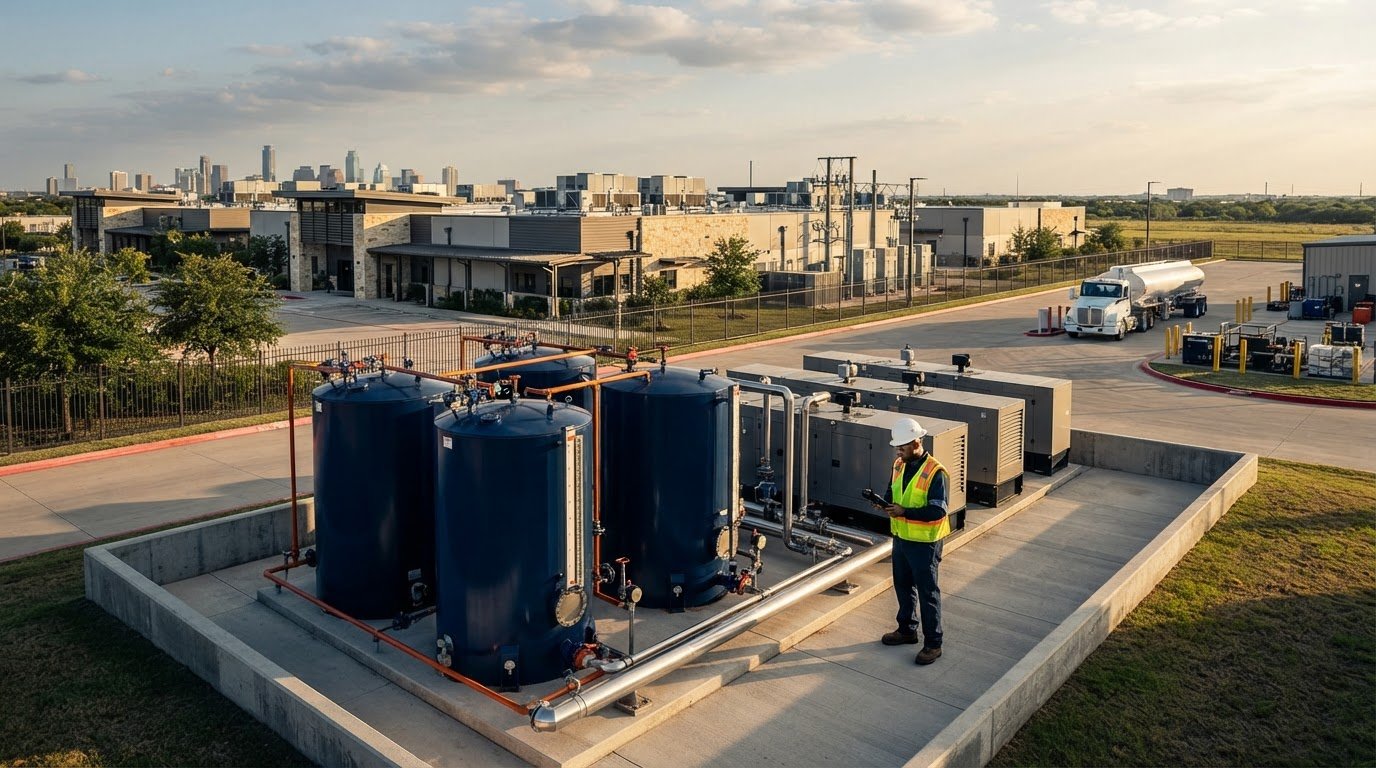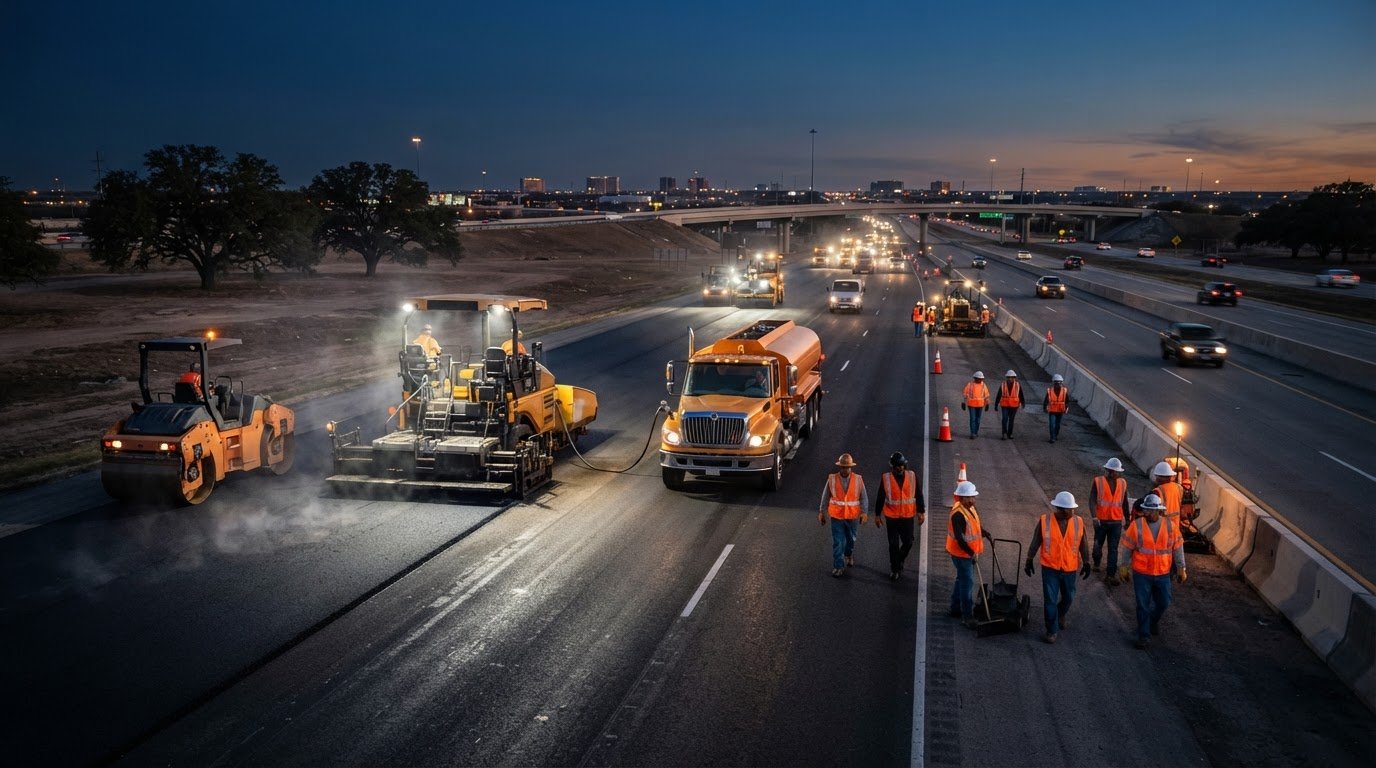
A larger tank won’t prevent a fuel interruption if delivery timing, site access, and equipment needs don’t line up. A temporary diesel tank rental for industrial use Magnolia projects depend on more than capacity: the setup needs to fit the worksite’s fuel workflow, from placement through replenishment.
Fuel shortages can disrupt equipment and facility operations, while unclear site conditions make tank planning harder. Plan storage, safe access, and fuel delivery together before work begins. React Fueling serves Magnolia with portable fuel tank rentals and diesel delivery, helping industrial teams connect on-site storage with replenishment.
This guide provides a site-based framework for estimating fuel demand, planning a rental around the project, and choosing a practical tank location. It also explains how to coordinate deliveries with operating needs and account for changing site conditions, so the fuel plan supports continuity instead of creating another logistical gap.
When Does Temporary Diesel Tank Rental Make Sense for Industrial Sites in Magnolia?
A temporary diesel tank rental provides on-site fuel storage for a project or operating need. Instead of relying only on fuel arriving when it is needed, a site can keep a planned reserve closer to the work. A fuel tank stores fuel for later use; the industrial decision is how that storage fits with site activity, replenishment, and access.
Temporary storage may suit construction projects, industrial work, equipment staging, or a short-term need for added fuel resilience. For example, a changing work zone may move machinery farther from its usual fueling point, while a project with concentrated equipment use may benefit from having fuel on site. A rental is most useful when fuel demand, work location, or operating conditions make a planned reserve practical.
Which Magnolia-area operations may benefit from temporary storage?
Consider the work pattern, not just the facility type. Construction crews moving between active areas, industrial teams operating equipment at a temporary work location, and sites staging generators or machinery may benefit from keeping fuel closer to operations. A rental can also suit a project with a defined duration or a layout that changes as work progresses. The setup should support the site’s actual workflow, not add storage that goes unused.
Before planning a rental, map where equipment operates, how staff reach the fueling point, and where delivery vehicles can access the site. These details help determine whether on-site storage could simplify day-to-day fuel access.
Rental tank or delivery-only plan: what is the difference?
A delivery-only plan brings fuel to the site as needed without establishing a site reserve. A rental tank adds storage between deliveries, which can help when consumption varies, work areas are spread out, or fuel needs to be available between replenishments. Demand patterns, storage space, and delivery access all shape the decision. Fuel delivery and direct-to-equipment fueling can also complement storage: deliveries replenish the tank, while equipment fueling brings fuel to machines where they’re working.
React Fueling serves Magnolia with portable tank rentals and commercial diesel delivery, allowing teams to plan storage and replenishment as connected parts of an on-site fuel plan. Explore the temporary fuel tank rental service as you assess whether an on-site reserve fits the project. For temporary diesel tank rental for industrial use Magnolia, match the arrangement to how fuel will be stored, delivered, and accessed throughout the work.
Matching Temporary Diesel Tanks to Your Magnolia Site
Choose a rental around the site’s fuel workflow, not a generic tank size. Tank fit depends on demand, site layout, access, and replenishment. For a temporary diesel tank rental for industrial use Magnolia teams should assess how fuel will be consumed, where it needs to be available, and how a delivery vehicle can reach the storage location.
Use this five-step review before settling on a storage plan:
- Estimate demand. List the equipment that will use diesel, its expected operating hours, and how usage may change during a typical work period. Base storage planning on expected consumption and operating patterns rather than an unsupported capacity rule.
- Define duration. Identify the project schedule and any operating need that may continue beyond a particular work phase. A clear timeline helps keep the rental plan aligned with the work and avoid maintaining unnecessary storage.
- Map access. Mark delivery-truck routes, work zones, equipment movement, and site traffic. Note whether access may change as crews, materials, or machinery move around the site.
- Plan placement. Select a practical location that supports fuel access without obstructing work or vehicle circulation. Review the site’s operating and safety plan, including applicable OSHA regulations for flammable liquids.
- Coordinate replenishment. Decide how fuel use will be monitored and how the on-site reserve will be replenished as it is consumed.
What site and fuel-use details should you map first?
Build the assessment around equipment types, operating hours, expected fuel demand, and project duration. Then map the delivery entrance, truck access, traffic routes, active work areas, and a suitable tank location. Revisit the plan when project phases shift: machinery may move, demand may rise or fall, and routes that were clear may become harder to use. Include weather-related access changes if they affect site logistics.
How should delivery and replenishment fit the rental plan?
Match replenishment to the rate at which fuel is used and the storage available on site. A reserve provides fuel between deliveries, while a delivery plan restores that reserve as operations consume it. Avoid relying on a fixed interval without accounting for changing equipment use or site conditions. Commercial diesel delivery can complement a rental tank by connecting temporary storage with replenishment. Share the site’s demand pattern and access plan when arranging the fuel workflow, so storage and delivery work together.
Temporary Diesel Tank Rental vs. Other Magnolia Fuel Options
Industrial fuel plans can use on-site storage, delivery as needed, direct equipment fueling, or a combination of these approaches. The right fit depends on where fuel must be available and how your operation handles replenishment. Use this comparison to identify which workflow best matches the site.
Rented on-site storage
Fuel access: Keeps a planned reserve at the site for authorized use.
Site control: Requires a suitable placement and a clear process for managing stored fuel.
Replenishment coordination: Deliveries need to align with consumption and available storage.
Operational fit: May suit concentrated or steady on-site demand, especially when fuel needs to be close to active work.
Delivery-only service
Fuel access: Fuel arrives through planned deliveries rather than being held in a rental tank.
Site control: Requires practical delivery access and coordination around site activity.
Replenishment coordination: Timing needs to reflect demand and the site’s delivery access.
Operational fit: May fit operations with limited storage needs or sites where deliveries can be coordinated smoothly.
Direct equipment fueling
Fuel access: Fuel is delivered to equipment as part of the fueling workflow.
Site control: The plan must account for equipment locations and safe movement around work areas.
Replenishment coordination: Fueling activity is coordinated with equipment use.
Operational fit: Can suit sites where equipment is dispersed or fueling needs to connect directly with active operations.
When does on-site storage fit better than delivery alone?
A rental tank may be useful when demand is concentrated at the site and keeping a reserve nearby supports the work pattern. Delivery-only can fit when storage needs are limited and delivery access works with the operating schedule. There’s no universal demand threshold: compare expected use, available storage space, and how easily deliveries can reach the site before choosing an approach.
When can direct equipment fueling complement a tank rental?
A combined plan can pair stored fuel with direct fueling support, connecting the site’s reserve to the equipment that needs it. This can be useful when machines operate across different work areas or move as project phases change. React Fueling’s on-site equipment fueling can complement a rental tank within a coordinated fuel plan. For temporary diesel tank rental for industrial use Magnolia projects, choose the combination that fits the operation rather than adding services the site doesn’t need.
Plan Safe, Practical Fuel Storage at an Industrial Site Near Magnolia
A sound storage plan covers more than where a tank can sit. It connects placement, vehicle movement, access control, routine checks, and staff responsibilities so fuel logistics fit the site’s safety procedures. Before placing a rental tank, review the work area and the requirements that apply to the specific location, tank arrangement, and operation. Texas and local requirements can depend on those details, so account for them when planning temporary diesel tank rental for industrial use Magnolia.
What should a site-preparation checklist cover?
Walk the proposed location with site operations and fueling logistics in mind. Use this checklist to flag constraints before the tank arrives:
- Placement and ground: Identify a stable, suitable area and consider nearby work activities that could affect access or expose the tank to interference.
- Delivery access: Confirm the delivery vehicle can reach the location and maneuver without conflicting with active work.
- Traffic and emergency routes: Review vehicle paths and keep planned emergency access clear.
- Access control: Establish who is authorized to access the fuel and how that access will be managed.
- Spill prevention and checks: Set out who performs routine visual checks, what concerns they should report, and how those concerns are escalated under site procedures.
- Staff responsibilities: Assign a site contact to coordinate with the fueling operations team and communicate changes that could affect delivery or access.
Use these items as planning prompts alongside the requirements and safety procedures that apply to your site and tank setup.
For a rental plan shaped around your operating conditions, discuss your Magnolia site’s fuel needs.
How can teams prepare for changing site conditions?
Revisit the plan as project phases shift. A route that was clear during setup may later become a work zone, equipment may move closer to the tank, or vehicle traffic may change. Assign someone to notify the fueling operations team when access, placement, or site activity changes, and update site procedures so the delivery plan stays aligned.
Weather can also affect access and work patterns. Establish a process for reassessing routes and the tank location when conditions change, rather than assuming the original plan will remain practical. Clear communication helps the team respond deliberately and maintain an organized fuel workflow.
Arrange Temporary Diesel Tank Rental and Fuel Support in Magnolia
A practical rental plan brings several decisions together: expected fuel demand, project duration, tank placement, site access, and replenishment. React Fueling serves Magnolia with portable fuel tank rentals and fuel delivery for commercial and industrial operations. Treat storage and replenishment as connected parts of the site plan, so the arrangement reflects how work will actually run.
For local details, visit the Magnolia fuel tank rental page. You don’t need an exact tank specification to start planning. Begin with the operating picture, then use those details to shape a rental and fuel plan around the project.
What information helps start a rental conversation?
Prepare a short site summary. Include the location, the equipment or operation that will use diesel, expected demand, project duration, and delivery access. Note where work is taking place and whether site routes or activity are likely to change during the project. These details help frame a project-specific discussion without requiring you to select a tank size in advance.
Clear information also helps connect the rental arrangement to how fuel will be used and replenished. If demand changes by project phase, describe that pattern rather than relying on a single estimate.
How can delivery support help maintain site continuity?
A rental tank provides on-site storage, while fuel delivery replenishes that supply as operations consume it. If equipment use or site access changes, revisit the plan to keep deliveries aligned with current needs. React Fueling’s commercial fuel services support industrial fuel planning, and the construction site fuel delivery guide offers further planning context for project teams.
For temporary diesel tank rental for industrial use Magnolia, bring together your demand estimate, project timeline, site access information, and replenishment needs. That gives the conversation a clear operational starting point and helps align storage with the work ahead.
Contact React Fueling about your site to discuss a rental and fuel delivery plan for your Magnolia operation.
Build a Fuel Plan That Fits Your Magnolia Site
A reliable rental plan starts with the worksite, not a generic tank size. Match expected demand and project duration with practical placement, delivery access, and a replenishment plan. Then revisit those choices as equipment use or site conditions change. This site-first approach helps make temporary diesel tank rental for industrial use Magnolia a practical part of day-to-day fuel planning.
React Fueling serves Magnolia and surrounding Texas markets, including Houston, San Antonio, College Station, Austin, and Dallas, with portable fuel tank rentals and diesel delivery. Equipment fueling can also support related industrial operations, connecting fuel logistics more closely to the work being done. Together, these services help teams plan on-site fuel access without treating storage, delivery, and equipment needs as separate decisions.
Bring your site location, application, expected demand, project timeline, and access details into the planning conversation. Contact React Fueling to plan your Magnolia site’s fuel needs and take a clear next step toward a fuel arrangement built around your operation.
Frequently Asked Questions
How do I choose a temporary diesel tank rental for an industrial site in Magnolia?
Choose a rental based on expected fuel use, project duration, site layout, delivery access, and replenishment needs. Estimate how much diesel equipment uses across its operating schedule, then consider where storage can support work without disrupting traffic or active operations. For temporary diesel tank rental for industrial use Magnolia projects, planning these factors together helps match storage to the site rather than relying on a generic capacity assumption.
Can a temporary diesel tank rental support construction and equipment operations?
Yes. On-site storage can support construction and industrial work when equipment needs accessible fuel near active work areas. A rental tank holds fuel for later use, while direct equipment fueling can connect fuel logistics with machinery operating around the site. React Fueling provides portable fuel tank rentals and equipment fueling services for commercial and industrial operations, including customers in Magnolia and other Texas markets it serves.
What site details matter when planning a temporary diesel tank rental?
Start with the location, equipment types, operating patterns, expected fuel demand, and project timeline. Map the proposed tank placement, delivery-truck access, work zones, traffic routes, and nearby activities. Consider whether project phases could change fuel use or make access harder. These details help shape a practical rental and replenishment plan. You don’t need an exact tank specification to outline the site’s needs.
How does fuel delivery work with a rented on-site diesel tank?
Fuel delivery replenishes the on-site tank as its stored supply is used. Plan around actual consumption, available storage, and the delivery vehicle’s access to the tank. If equipment use changes, adjust the replenishment plan to reflect the new pattern rather than relying on an outdated estimate. React Fueling provides commercial diesel delivery alongside portable tank rentals, connecting fuel supply with on-site storage for industrial operations.
What should an industrial site plan before placing a temporary diesel tank?
Review whether the proposed area is suitable, how delivery vehicles will reach it, and how the tank location fits with vehicle movement and active work. Establish procedures for authorized access, routine checks, and reporting concerns. Assign staff responsibilities for coordinating site changes with fueling operations. Account for the Texas and local requirements that apply to the specific location and tank arrangement.
How long can an industrial site rent a temporary diesel tank?
Rental duration should align with the project or operating need. Define the expected start and end points, including whether the need may continue as work shifts between project phases. Share that timeline when planning the rental so the arrangement can be matched to the operation. Avoid assuming a standard rental term applies to every project.
What happens if site access or fuel demand changes during a rental?
Reassess the fuel plan when access routes, work areas, or equipment use changes. A revised layout may affect delivery-vehicle access or where fuel is needed, while changing demand may alter replenishment needs. Assign a site contact to communicate changes to the fueling operations team promptly and update internal procedures. React Fueling serves Houston, Magnolia, San Antonio, College Station, Austin, and Dallas, supporting commercial fuel logistics across these Texas markets.