The lowest-cost fueling model isn’t always the one with the smaller invoice. An outsourced vs. in-house fueling cost analysis for San Antonio should compare the full monthly cost of managing fueling internally with the cost of outsourced service, then identify the volume at which one option becomes more economical. The right answer depends on operating volume, staffing and equipment needs, management time, and the value of reliable backup coverage.
In-house fueling gives a business direct control, while outsourcing can reduce the internal work required to coordinate fuel for vehicles and equipment. But the comparison needs to account for more than fuel: include labor, equipment, administration, service costs, and the operational impact of interruptions. This guide explains how to build a monthly and annual comparison, calculate a break-even point from your own costs, and weigh reliability, scalability, and backup coverage alongside the dollars. You’ll have a practical basis for deciding which approach fits your fleet’s workload and operating priorities.
Monthly in-house versus outsourced cost comparison
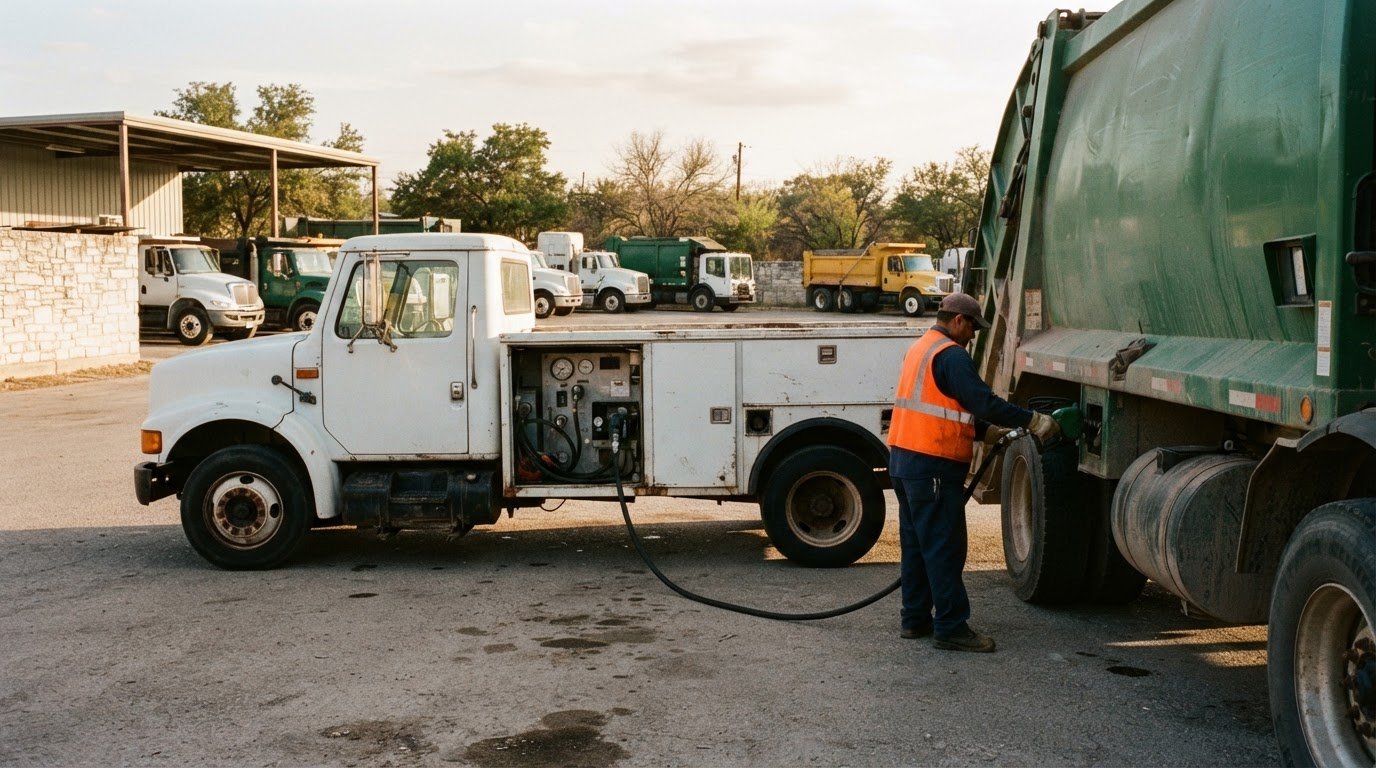
For San Antonio fleets, in-house fueling puts equipment, labor, fuel purchasing, and coordination on the company’s monthly ledger. Outsourcing shifts fueling work to a service provider, while internal staff still manage schedules and review service records. A useful comparison includes both direct spending and the management time each option requires.
Build a monthly ledger by separating vehicle costs, insurance, fuel, maintenance, wages, and oversight. Keep capital expenses distinct from variable operating costs, and annualize recurring expenses consistently.
| Option | Capital and equipment | Staffing and training | Monthly oversight | Quality and rework |
|---|---|---|---|---|
| In-house fueling | Company funds and maintains its setup | Internal employees need assigned responsibilities and training | Staff coordinate purchasing, schedules, and records | Internal processes control checks and corrections |
| Outsourced fueling | Service structure replaces some internal setup needs | Internal staff coordinate with the provider | Staff review deliveries and resolve exceptions | Service records support reconciliation and follow-up |
Compare recurring internal costs with the quoted service arrangement, then include management hours and the cost of correcting missed or inaccurate fueling records. Service pricing depends on fuel type, volume, delivery schedule, site access, and equipment needs. A quote tailored to your operation provides the relevant service cost.
Setup depends on what the fleet already has. An in-house plan may require capital approval, equipment acquisition, staffing, training, and a process for recording each fueling event. Outsourcing still requires site and schedule coordination, but moves fueling execution outside the fleet’s daily workflow. Compare each option with your launch sequence and operating requirements rather than assuming one is automatically faster.
Expertise also has a cost. In-house employees need clear procedures for fuel ordering, delivery coordination, and exception handling. Outsourced service can support scheduled fueling, while fleet staff retain oversight of consumption and records. Compare delivery documentation, quantity reconciliation, and the time spent correcting discrepancies. Rework can consume staff capacity even when it doesn’t appear as a separate invoice.
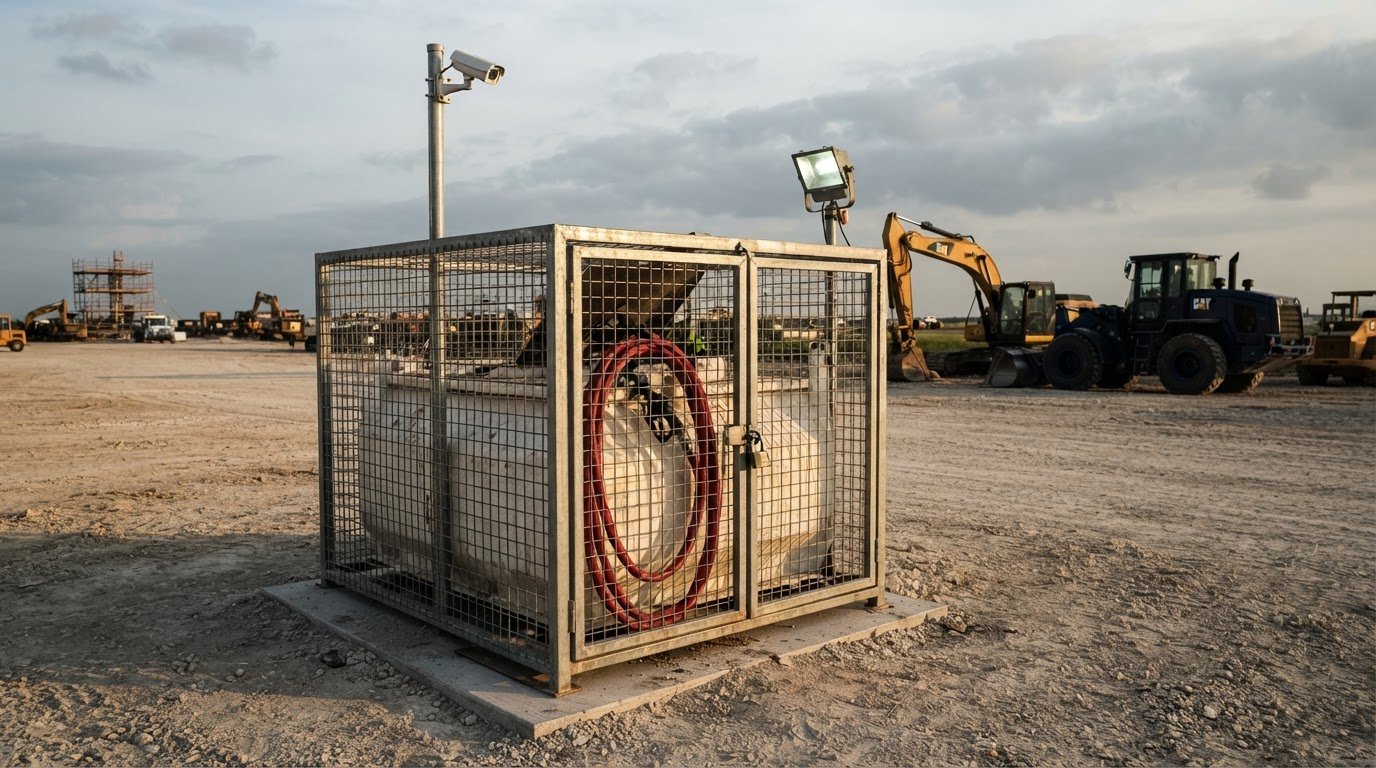
Requirements for private fuel tanks in Texas, including San Antonio, depend on tank design, capacity, placement, and use. Before installing or changing a tank, identify the fire, building, and environmental approvals applicable to the site. Requirements vary by project.
Diesel and gasoline prices for San Antonio fleets vary with fuel type, purchase volume, and delivery requirements. Compare current supplier quotes with your actual consumption plan rather than applying one market figure to every route.
For continuity planning, include a backup process for urgent interruptions, such as emergency fuel delivery, and define who coordinates it. The right choice is the one whose full monthly cost, quality controls, and coverage fit the fleet’s operating pattern.
Scalability, reliability, and backup coverage
Fueling models respond differently when routes, equipment, or site demands change. Compare flexibility, continuity planning, and the staffing workload each approach places on operations.
Workload Flexibility and Scalability
In-house capacity grows through added staff, equipment, storage, and coordination. This gives a fleet direct control over daily priorities, but expansion requires internal planning and resources. Outsourced fueling can adapt to changing delivery needs through an agreed service arrangement, while the business retains scheduling oversight.
For example, a construction fleet moving between San Antonio sites may have uneven equipment demand. Map expected work by location and period, then compare how each fueling model handles increases, reductions, and schedule changes. This reveals whether fixed internal capacity or a variable service arrangement better fits the fleet’s operating pattern.
Outsourced and On-Site Risks
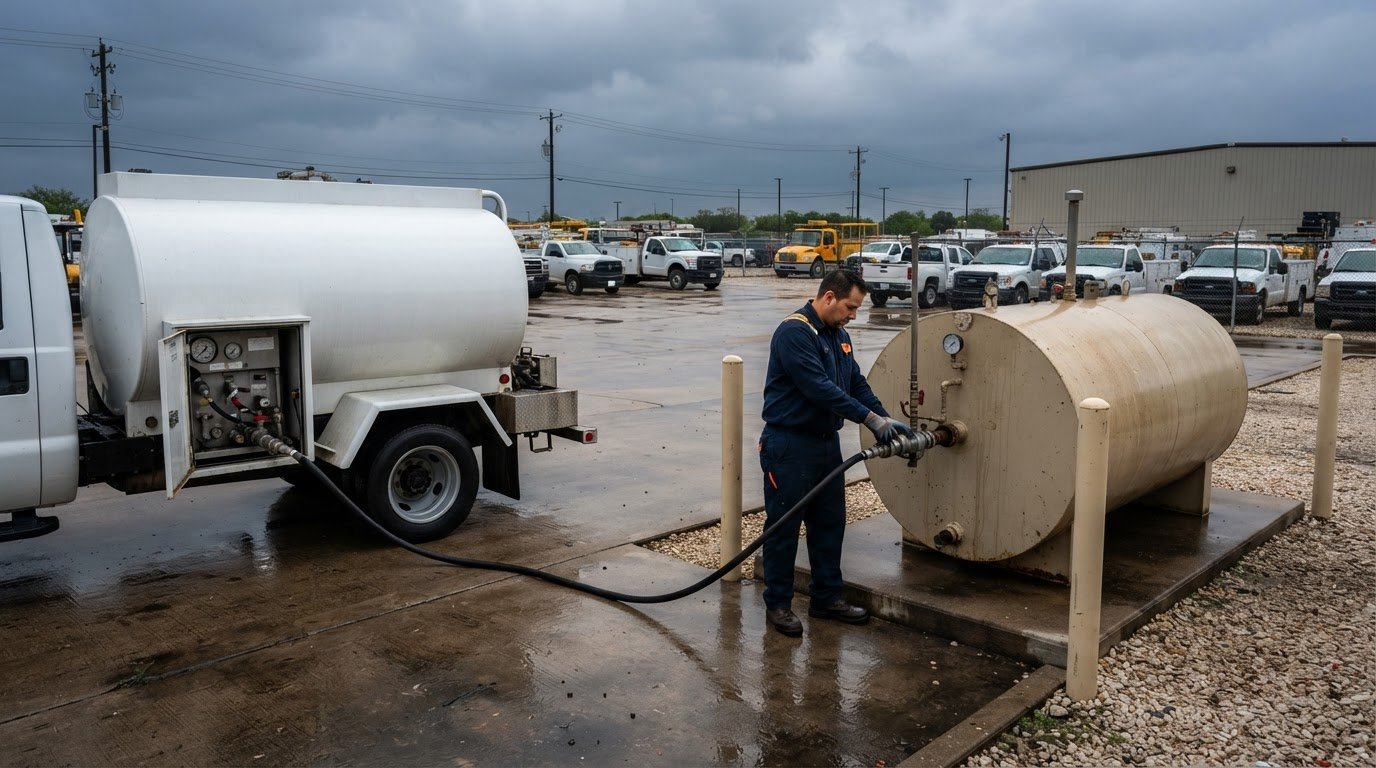
Outsourcing can reduce the burden of fueling execution, but it adds reliance on service coordination and agreed delivery schedules. On-site fueling gives the business direct control, but also makes it responsible for staffing, equipment readiness, inventory planning, and backup procedures.
Hidden costs often appear in staff time spent resolving missed schedules, reconciling records, correcting fueling errors, or maintaining internal equipment. List each exception and its operational impact, including delayed work or reassigned employees. Compare the costs and responsibilities of both models rather than treating the service invoice as the full outsourced cost.
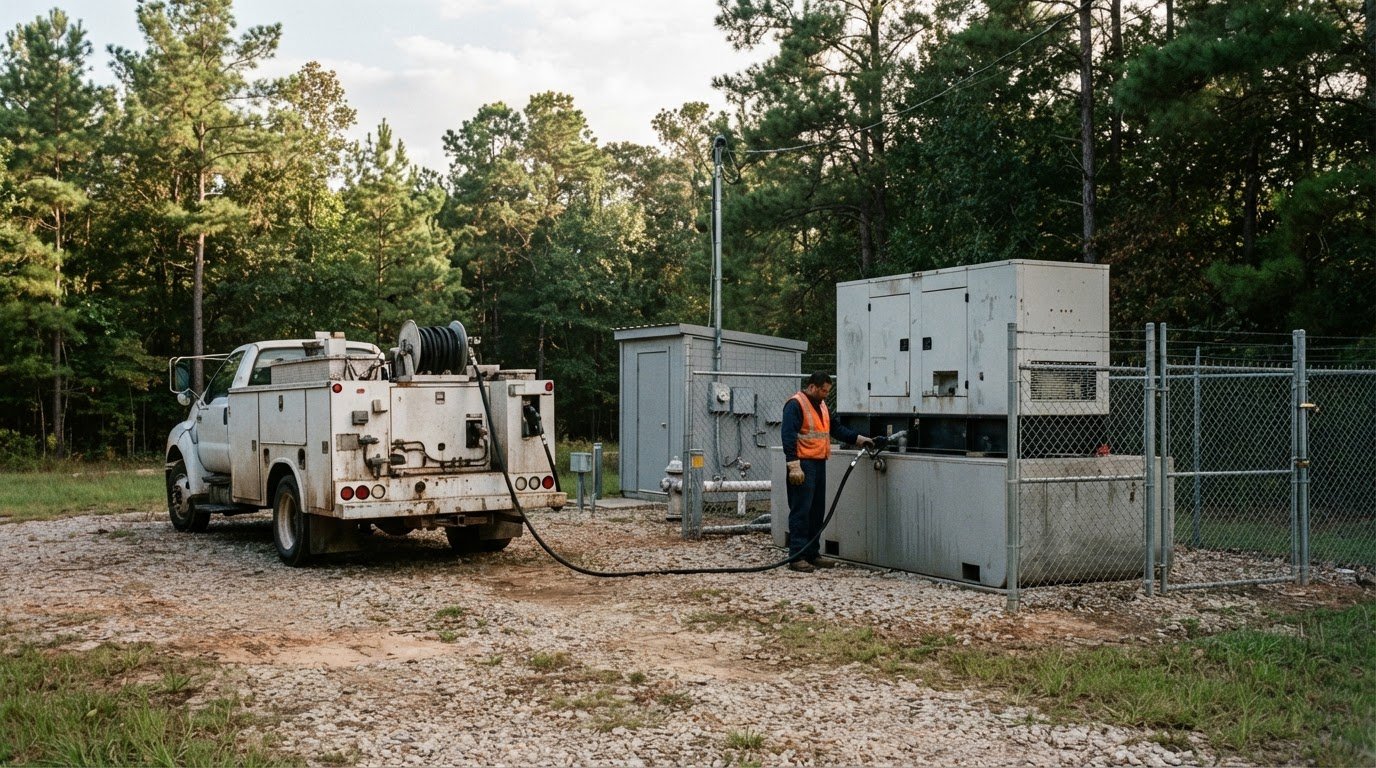
Reliability depends on having a clear response plan, not simply choosing one model. Assign responsibility for tracking fuel levels, reporting disruptions, and adjusting work priorities if scheduled fueling is delayed. For generators or equipment supporting critical work, document the backup fueling process and who is responsible for activating it.
Payroll scalability is part of the in-house calculation. As fueling workload grows, employee hours and management duties may grow too; reduced demand can leave fixed staffing capacity underused. Outsourcing may shift some execution from payroll to a service expense, but internal employees still coordinate schedules and review records. Include those retained duties when forecasting predictable operating costs and potential savings.
To compare options, model a normal operating period and a busy period using the same workload assumptions. Record staffing hours, equipment requirements, service coordination, and disruption procedures for each. A fueling plan for your operation can help frame those needs around equipment and generator demands.
Payroll provides a useful parallel for assessing how much work remains internal. Outsourced payroll services can scale up or down, allowing small businesses to replace a fixed salary bill with a predictable fee. In-house payroll requires dedicated staff with HR or payroll expertise, while outsourced payroll generally still requires internal staff for data entry and review.
The workload differs too. In-house payroll requires HR time for data entry, manual filing, and reconciliation, while outsourced payroll limits internal work to checking data and approving the final payroll run. In-house teams can make last-minute changes or corrections immediately, while changes to outsourced payroll depend on provider lead times and processing windows. Apply the same distinction to fueling: compare internal control and retained coordination with the provider’s scheduling limits, then ensure the arrangement can respond when plans change.
Annual volume and breakeven analysis
Annual volume reveals whether fixed in-house capacity earns its keep or sits underused. An outsourced vs. in-house fueling cost analysis for San Antonio fleets should use matching annual volume assumptions. Build the comparison around actual fueling demand, then calculate how each model performs over a full operating year. A monthly snapshot can miss seasonal workload changes, equipment additions, and shifts in route activity.
Treat this as an example, not a guaranteed result for every operation. Your break-even point depends on internal fixed costs, fuel volume, staffing, and the variable cost of outsourced service. A San Antonio fleet can make its outsourced vs. in-house fueling cost analysis more useful by testing its own expected demand.
Use a consistent calculation. First, total annual in-house fixed costs, such as dedicated staffing and equipment. Next, calculate internal variable costs for fuel, maintenance, and administration at each volume level. Compare that total with the annual outsourced cost at the same volume. The break-even volume is where the two totals match.
- List annual fixed costs that remain even when fueling demand falls.
- Estimate variable in-house costs for the fleet’s expected fuel volume.
- Use the applicable outsourced cost for the same volume and schedule.
- Compare both totals at low, expected, and peak operating demand.
If in-house fueling has higher fixed costs but lower variable costs, greater volume may improve its economics. If outsourced costs rise with each delivery or unit of fuel, compare that increase with the internal costs avoided. If the cost relationships are reversed, outsourcing may remain less costly as volume grows. The calculation depends on your cost structure, not a universal fleet threshold.
For an immediate decision, separate financial break-even from operational benefits. A lower annual total doesn’t capture the value of flexible capacity, backup coverage, or staff time freed for core operations. Record these factors alongside the dollar comparison without assigning unsupported savings to avoided downtime.
Recalculate annually and whenever routes, equipment, or operating schedules change. For example, a business adding a worksite should update expected fuel demand and delivery requirements before relying on last year’s result. Use the same assumptions for both options, and keep one-time setup costs separate from recurring annual expenses.
The result is a decision range, not just one break-even figure. Below the calculated point, one model may cost less; above it, the other may have the advantage. Compare realistic low- and high-demand scenarios before committing capital or changing fueling operations.
In-house and outsourced total-cost equations
Compare both models over the same operating period and fuel volume. Separate recurring expenses from setup costs so the calculation shows how costs change as demand shifts.
Equipment, Installation, and Maintenance Costs
For an on-site fueling station in San Antonio, total costs depend on equipment, site preparation, installation, maintenance, and fuel-management needs. No single figure applies to every facility because capacity, site conditions, and operating requirements differ.
Build the in-house cost equation by listing equipment and installation as setup costs, then adding recurring maintenance, fuel, labor, insurance, and management expenses. Include software or recordkeeping tools if the operation uses them. Keep one-time capital separate from monthly expenses so you can compare the station’s initial investment with its ongoing costs.
For example, a fleet with existing site infrastructure may have a different installation scope from one starting with an undeveloped fueling area. Add scheduled maintenance and repairs to the annual operating total rather than treating installation as the full cost. This equation captures both the initial investment and the costs that continue after the station begins operating.
Staffing, Insurance, and Fuel Management Costs
Staffing costs include employee time spent ordering fuel, coordinating deliveries, maintaining records, and resolving discrepancies. Add commercial insurance and fuel-management work to the total. In an in-house model, the business remains responsible for those tasks.
Use this formula: annual in-house cost = annualized equipment and installation + fuel + maintenance + staffing + insurance + software + administration. For outsourced fueling, compare service costs and retained internal coordination with the same fuel demand and operating period. Include any internal work that remains, such as scheduling deliveries and reviewing records.
Hidden expenses often sit outside the fuel ledger. For instance, a supervisor’s time spent reconciling a delivery or arranging equipment maintenance still uses operating capacity. Record these hours consistently, then value them using your business’s labor accounting. Avoid counting the same task twice if payroll or administration already includes it.
Flexibility also affects the calculation. A station’s fixed costs continue during periods of lower demand, while variable expenses change with usage. Outsourcing may shift some costs toward service activity, but retained coordination still matters. Compare low, expected, and peak demand using identical assumptions for both options.
Finally, run a sensitivity check: remove one cost category at a time and see how the comparison changes. If maintenance, staffing, or software significantly shifts the result, document that assumption. This gives decision-makers a clear view of the costs driving the choice instead of relying on one headline total.
Management overhead
Management overhead includes the administrative work needed to keep fueling organized, documented, and aligned with fleet operations. Compare that internal workload with the coordination and oversight still required under an outsourced arrangement.
Start by mapping one fueling cycle from request to reconciliation. Assign each task to a role: identifying demand, scheduling, receiving fuel, recording usage, reviewing invoices, and resolving exceptions. For example, a fleet manager who coordinates deliveries also spends time away from dispatch, maintenance planning, or site supervision. Include that displaced work in the comparison.
In-house fueling concentrates responsibility within the business. A supervisor or specialist may coordinate fuel purchasing, employee schedules, inventory records, equipment readiness, and internal reporting. Each handoff creates administrative work. If a delivery record differs from the fleet log, someone must investigate the discrepancy and update the records.
Outsourcing changes the task mix rather than eliminating oversight. Internal staff still communicate demand, share access details, review completion records, and escalate missed or changed schedules. The transition works best when one role owns the schedule and another reviews the records. This separation helps identify gaps before they affect the next fueling cycle.
Measure overhead with a task-based worksheet. Record the employee role, task frequency, time spent, and operational consequence if the task is delayed. Separate recurring coordination from occasional exception handling. For example, routine schedule updates belong in regular administration; resolving a missed delivery belongs in exception management.
- Track time spent ordering fuel and coordinating delivery windows.
- Record hours spent reviewing usage logs and reconciling invoices.
- Include equipment oversight, staff scheduling, and internal reporting.
- Note who handles changes when a site or operating schedule shifts.
Next, compare those responsibilities across both approaches using the same workload assumptions. Don’t count a task as removed if an employee still performs it. Don’t count the same oversight time under both administration and payroll. This prevents double-counting and makes the comparison useful to finance and operations teams.
Management capacity also affects flexibility. If one specialist handles every fueling task, planned leave or competing priorities can create a coverage gap. A documented backup role clarifies who updates schedules and reviews records. For outsourced operations, define the internal contact and escalation path so exceptions reach the right decision-maker.
Use the resulting task map to identify where administrative effort sits and where oversight remains necessary. For a fleet-specific review of fueling coordination and management responsibilities, discuss your fueling operations.
Include accounting responsibilities in the same workload review, since internal staffing brings both management time and office requirements. Managing an in-house accountant requires an estimated 10-15 hours per month. Record these alongside the time spent coordinating fueling, rather than treating accounting as an unrelated administrative function.
In-house operations can avoid contractor compensation, benefits, and office overhead. Compare those avoided costs with the internal time and expenses that remain, including schedule coverage and record review. This makes the overhead assessment more complete: a lower external bill doesn’t show by itself how much management capacity in-house fueling requires, and outsourced fueling still needs staff oversight.
React Fueling
React Fueling helps San Antonio businesses assess outsourced fueling as part of their fleet and site operations. Its Fuel Delivery, Equipment Fueling Service, and Generator Fueling Service serve businesses that need fuel delivered to vehicles, machinery, or generators without bringing every fueling task into their internal workflow.
Consider outsourced fueling when changing workloads, site demands, or internal coordination make in-house fueling difficult to manage. Compare projected volume, delivery schedules, equipment needs, and retained oversight to understand how the service may fit your cost model. React Fueling provides fuel delivery, equipment fueling, and generator fueling to support commercial operations.
Contact React Fueling to discuss your operation’s fueling needs.
Build a fueling plan that fits your operation
Use your cost model as a working tool, not a one-time decision. As routes, equipment demands, and site schedules change, update the assumptions and confirm that your fueling approach still supports daily operations. A practical outsourced vs. in-house fueling cost analysis in San Antonio connects the financial comparison to the work your fleet needs to complete.
React Fueling supports commercial operations with Diesel Delivery, Equipment Fueling Service, and Fuel Delivery. These services can help fuel vehicles and equipment while your team focuses on core work. Define the sites, schedules, and equipment needs that matter most, then discuss how outsourced fueling could fit your operating requirements.
Contact React Fueling to discuss fueling for your operation. A clear next step can help you move from cost comparison to a practical plan with confidence.
Frequently Asked Questions
What fuel volume makes an in-house fueling operation cheaper than outsourced fueling?
There’s no universal volume threshold: in-house fueling becomes cheaper when its lower per-unit costs offset its fixed operating expenses. For a San Antonio fleet, the crossover depends on staffing, equipment, maintenance, insurance, and outsourced service costs. Compare actual fuel records across vehicles and equipment, including seasonal demand. If in-house costs remain higher at the fleet’s expected volume, increased fuel use alone may not make the setup economical.
How can a San Antonio fleet calculate its break-even point for outsourced versus in-house fueling?
Use the same annual fuel volume and operating schedule for both options. First, total in-house fixed expenses, then add fuel and other volume-related costs. Compare that result with the outsourced total, including internal coordination that remains. To find the break-even volume, test different usage levels until the totals match. Use actual fleet records, and separate vehicle demand from generator or equipment requirements so unlike workloads don’t distort the comparison.