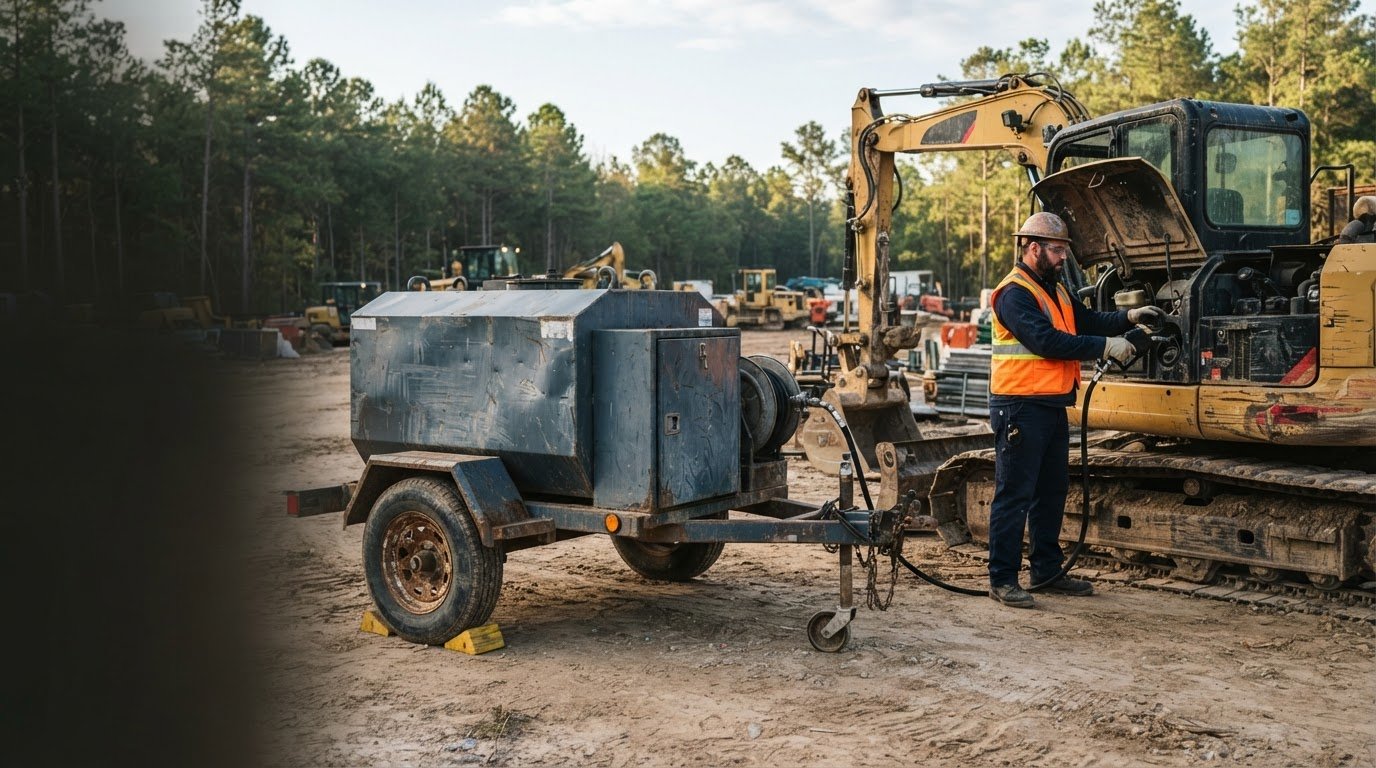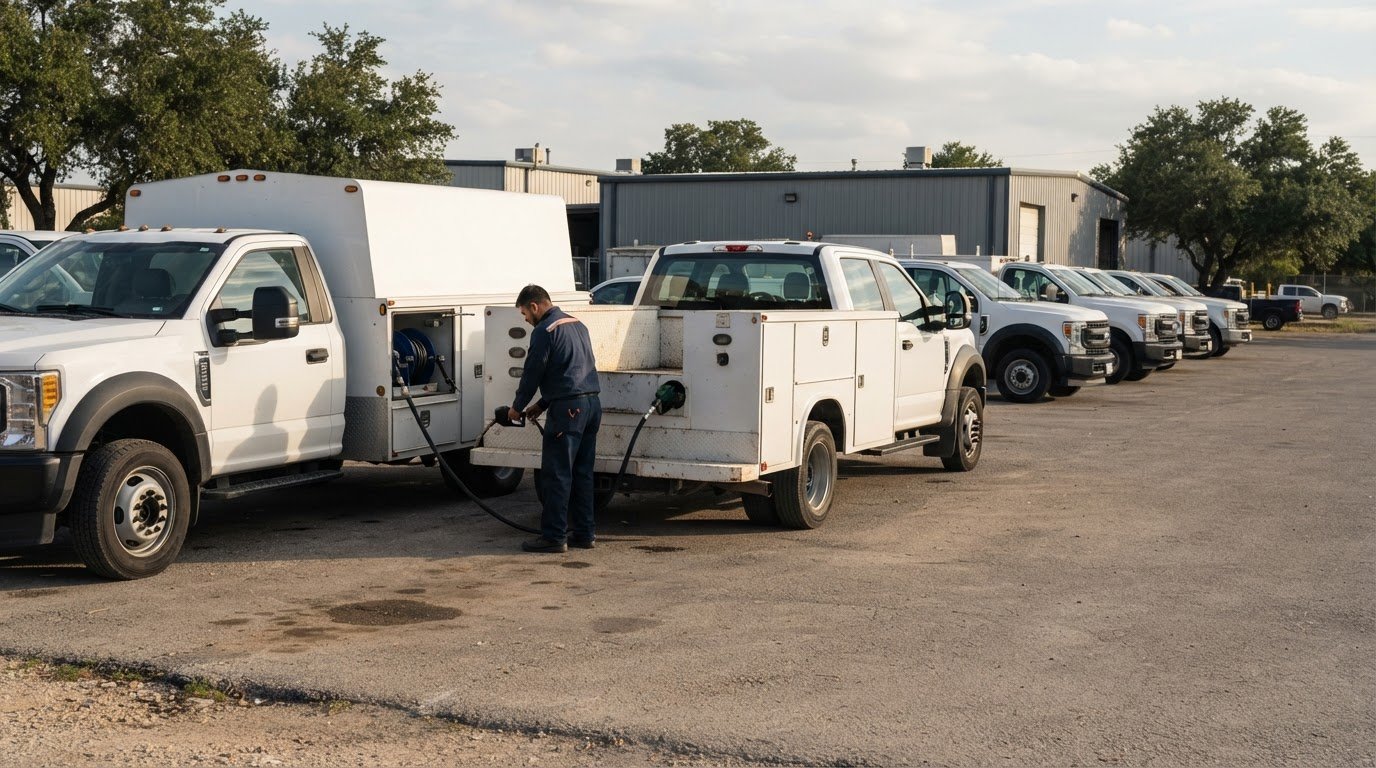
The lowest per-gallon quote isn’t always the lowest-cost delivery. For commercial diesel delivery in San Antonio, the total depends on factors such as fuel volume, delivery location, timing, and whether you need scheduled or on-demand service. React Fueling provides clear, competitive rates with no long-term commitments or hidden fees. Request a quote for your specific delivery.
It’s reasonable to want a clear figure before committing, especially when fuel supply affects equipment, generators, and daily operations. Minimum order requirements and contract terms can also shape how a quote works, so it helps to understand what each one covers before comparing options.
This article explains the main cost drivers, how minimums and contracts may affect delivery arrangements, and what details to include when requesting a quote. It also looks at on-demand and emergency deliveries, so you can assess the trade-offs and plan for fuel needs without losing sight of operational continuity.
How much does diesel fuel delivery cost in San Antonio?
There’s no single price for diesel delivery in San Antonio. A delivery price depends on fuel volume, delivery location, timing, access conditions, and any order minimums, and is provided after a quote request. For a useful comparison, separate the fuel charge from delivery terms and identify what each quote includes.
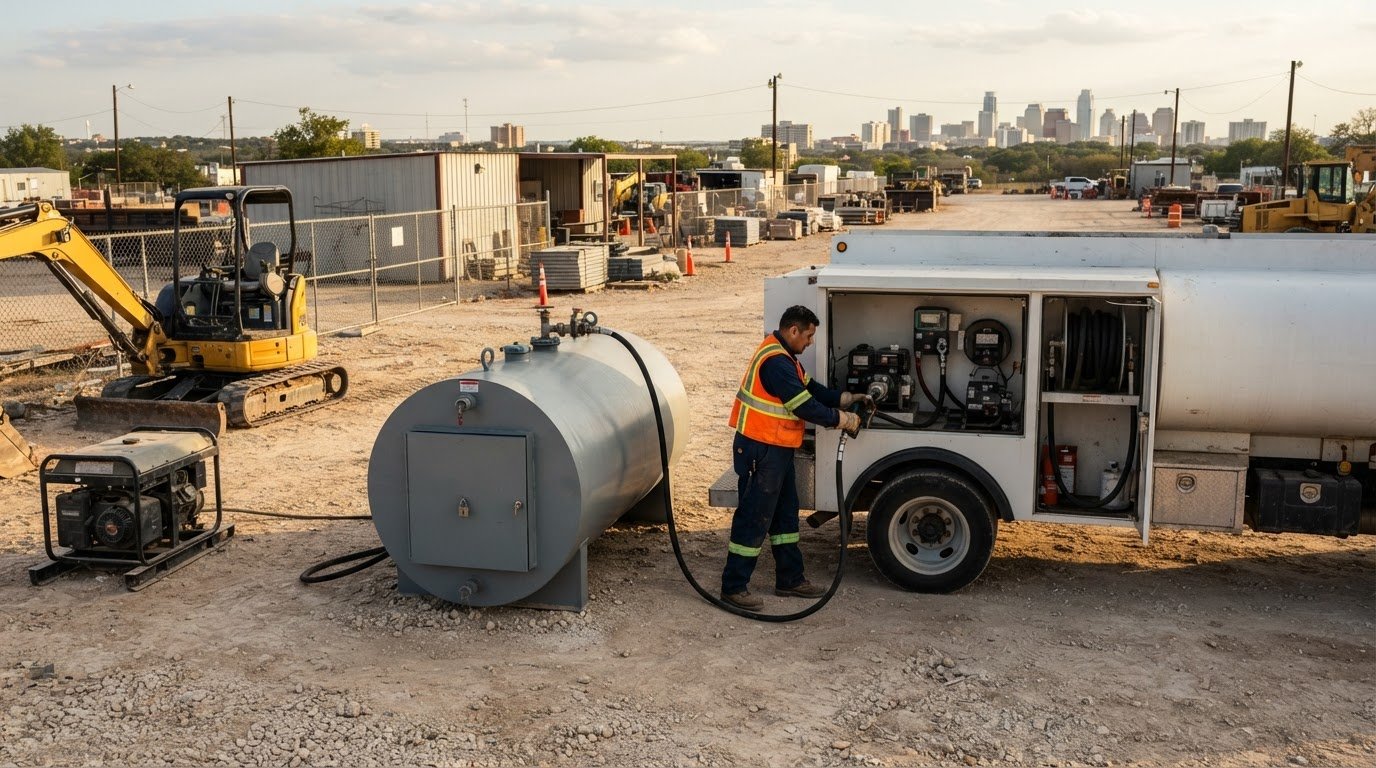
San Antonio businesses may need fuel at a fleet yard, construction site, industrial facility, or generator location. A quote can change with the number of vehicles or equipment units served, the amount requested, and how far the delivery point sits from truck access. Provide the site address, requested quantity, equipment type, and preferred delivery window so the quote reflects the actual job.
Tank and site details help plan a delivery. Provide the tank’s capacity, current fuel level, fill connection, and location, along with the equipment or vehicle requiring fuel. Describe truck access, turning space, gates, overhead obstructions, and any site check-in process. This helps the delivery team plan access to the fill point and determine whether one stop can serve multiple assets.
Fueling requires attention to spills, leaks, overfilling, and vehicle movement around active work areas. For a visible diesel underground storage tank leak, the U.S. Environmental Protection Agency says to notify the implementing agency immediately and safely stop and contain the release. Identify the tank and delivery area to the site contact before fueling begins.
Scheduled and same-day requests serve different operational needs. A scheduled delivery supports planned fleet use and can align with a known work sequence; an on-demand request responds to an unplanned shortfall. Timing, requested volume, and site access affect the quote. For an urgent interruption, businesses can use an emergency fueling plan to organize the information needed for a delivery request.
Track fuel consumption by vehicle, machine, or generator. Compare usage with operating schedules and note equipment that repeatedly needs unplanned refills. These records can help you plan delivery quantities and timing around actual demand instead of relying on a site-wide estimate.
Fuel dispensers and lighting are separate site considerations, not automatic parts of a diesel delivery quote. A dispenser upgrade may affect how a facility handles on-site fueling, while lighting improvements can make a fueling area easier to see during low-light work. List those projects separately when comparing delivery costs, so infrastructure work doesn’t blur the fuel and service terms.
Diesel trucks produce more torque than trucks using standard fuel. Diesel trucks can tow greater loads than trucks using conventional fuel. They offer added acceleration power without a toll on fuel efficiency or gas mileage. Fleet operators can consider these capabilities when matching vehicles to hauling needs.
No-contract service and order minimums
A no-contract arrangement separates individual deliveries from an ongoing supply commitment. For a San Antonio fleet, that can mean requesting fuel for a specific yard, project, or operating period without assuming recurring deliveries. Contract terms, if used, should define the delivery schedule, requested quantities, billing process, and how changes are handled. Read those terms alongside the quote, not as a substitute for it.
An order minimum is the smallest delivery quantity accepted for a particular request. It can affect smaller fleet yards differently from large construction sites, where several vehicles or machines may need fuel during the same stop. A quote should state any minimum and explain how requested volume, location, and delivery timing shape the order. No fixed minimum can be applied to every site without considering those conditions.
Before requesting service, organize the operating details that affect dispatch and fulfillment:
- Delivery point: Give the San Antonio site address and identify the yard, project entrance, or equipment area.
- Fuel demand: Describe the vehicles or equipment needing fuel and the requested quantity.
- Site access: Note gate procedures, truck clearance, and any active work zones.
- Timing: Specify the preferred delivery window and whether the request supports planned work or an urgent need.
These details help match delivery support to fleet operations. A yard with vehicles returning at different times has different fueling coordination needs from a construction site with equipment grouped in one work area. Identify generator locations and operating schedules so the delivery team can plan around the site’s needs.
For deliveries around San Antonio, provide the actual delivery address, not just the city name. Travel distance, site access, and the number of stops influence routing and scheduling. If your fleet operates at several locations, list each address and identify which sites need fuel first. This helps distinguish routine deliveries from urgent needs.
Same-day delivery and response times depend on dispatch conditions, the requested quantity, route, and site readiness. A same-day request should include the current fuel situation, the impact of a delay, and the latest practical arrival time. Avoid treating “same-day” as a guaranteed arrival window unless the quote explicitly defines it. For planned work, a recurring schedule can reduce reliance on urgent requests.
To compare arrangements, review the minimum, contract commitments, delivery window, and process for changing a request. A fleet manager can then match terms to actual fuel use, rather than committing to a schedule that conflicts with vehicle rotations or project shifts. Send a fleet delivery inquiry with the locations, equipment needs, and timing requirements for a tailored discussion.
On-demand and emergency diesel delivery
An unexpected fuel shortage can interrupt a San Antonio job before equipment reaches its next task. On-demand delivery addresses an immediate need, while emergency delivery focuses on a shortage that threatens operations. The distinction is practical: a fleet manager may need fuel for one machine today, while a generator running critical equipment may need priority attention.
Start an urgent request with the operational impact, not only the fuel quantity. State which vehicle, machine, or generator needs fuel, whether it has stopped, and what work depends on it. Then provide the site location, fuel type, approximate amount, and a reachable contact. A clear description helps dispatch plan the delivery.
Urgency does not create a guaranteed arrival time. Response timing depends on the delivery location, route, current dispatch activity, requested volume, and whether the site can receive the delivery. A downtown San Antonio address with controlled entry may need different coordination than an open construction site. Give the latest useful arrival time, then explain what happens if the equipment remains without fuel.
For a fleet, prioritize assets by operational consequence. A vehicle needed for scheduled site work may have a different priority from a backup unit. At an industrial facility, a generator supporting an active operation may take precedence over equipment that can remain idle. Sharing these distinctions helps the delivery team understand the urgency.
Keep the request focused and consistent. A dispatcher needs a reliable point of contact, a precise delivery location, the equipment requiring fuel, and any instructions that affect entry. If the site changes its access plan or the equipment moves, communicate that change promptly. A last-minute location change can affect routing and delay a delivery already in progress.
On-demand support works best as part of a broader continuity plan, not as the only fuel strategy. Identify assets that cannot be left idle, track recurring shortages, and define who can authorize an urgent request. For example, a construction supervisor can notify the fleet lead when a loader needs refueling. That early signal can help turn an emergency into a planned delivery.
After an urgent delivery, record the affected asset, cause of the shortage, and work interruption. Compare that record with operating schedules to identify preventable patterns, such as a vehicle repeatedly returning from a remote job with insufficient fuel. San Antonio businesses can use these findings to adjust delivery timing and reduce last-minute requests. React Fueling provides emergency diesel delivery for urgent fuel needs.
Free quotes and quote comparison
A useful diesel delivery quote turns the San Antonio job into clear, comparable terms. The price depends on the delivery request and is provided after a quote request. If a quote is described as free, its terms should make that clear. Compare the same fuel quantity, delivery location, and timing across each proposal.
Start with one consistent request. Include the site address, fuel type, requested volume, delivery window, and whether the need is planned or urgent. For example, a construction-site quote should specify whether it covers one delivery point or several equipment locations. A fleet yard with separate fueling areas also needs a precise scope.
Review the quote for the details that affect the final charge and delivery plan:
- Fuel quantity and unit: Confirm the requested amount and how it is measured.
- Delivery terms: Identify the location, timing, and any order minimum.
- Access requirements: Note gate procedures, truck access, and fueling-point locations.
- Service scope: Clarify which vehicles, machines, or tanks are included.
- Changes and rescheduling: Understand how revised quantities or timing affect the request.
These details prevent a low initial figure from hiding a different scope. One proposal may cover a single drop, while another accounts for multiple fueling points at the same facility. Compare the complete delivery arrangement, not just a single line. Ask for the quoted amount, delivery terms, and any applicable minimum to appear together.
Timing deserves its own comparison. A planned delivery and an urgent request may involve different dispatch conditions, even at the same San Antonio address. Check whether the delivery window fits the work schedule. If vehicle rotations or construction shifts depend on the fuel, include that constraint in the request.
For recurring fleet demand, consider how delivery frequency and order size affect operations. A larger scheduled delivery may suit a central yard, while separate deliveries may better serve equipment spread across active sites. The right fit depends on consumption patterns, storage capacity, access, and work locations. Match the quote to actual demand rather than relying on a headline figure.
Keep a written record of each quote’s scope and assumptions. A simple comparison sheet can list quantity, delivery point, timing, minimum, and included assets. If one detail differs, request a revised quote using the same assumptions. This gives a San Antonio operations manager a sound basis for choosing delivery terms that fit fleet schedules and site conditions.
What Texas and federal rules apply to on-site commercial diesel storage and delivery?
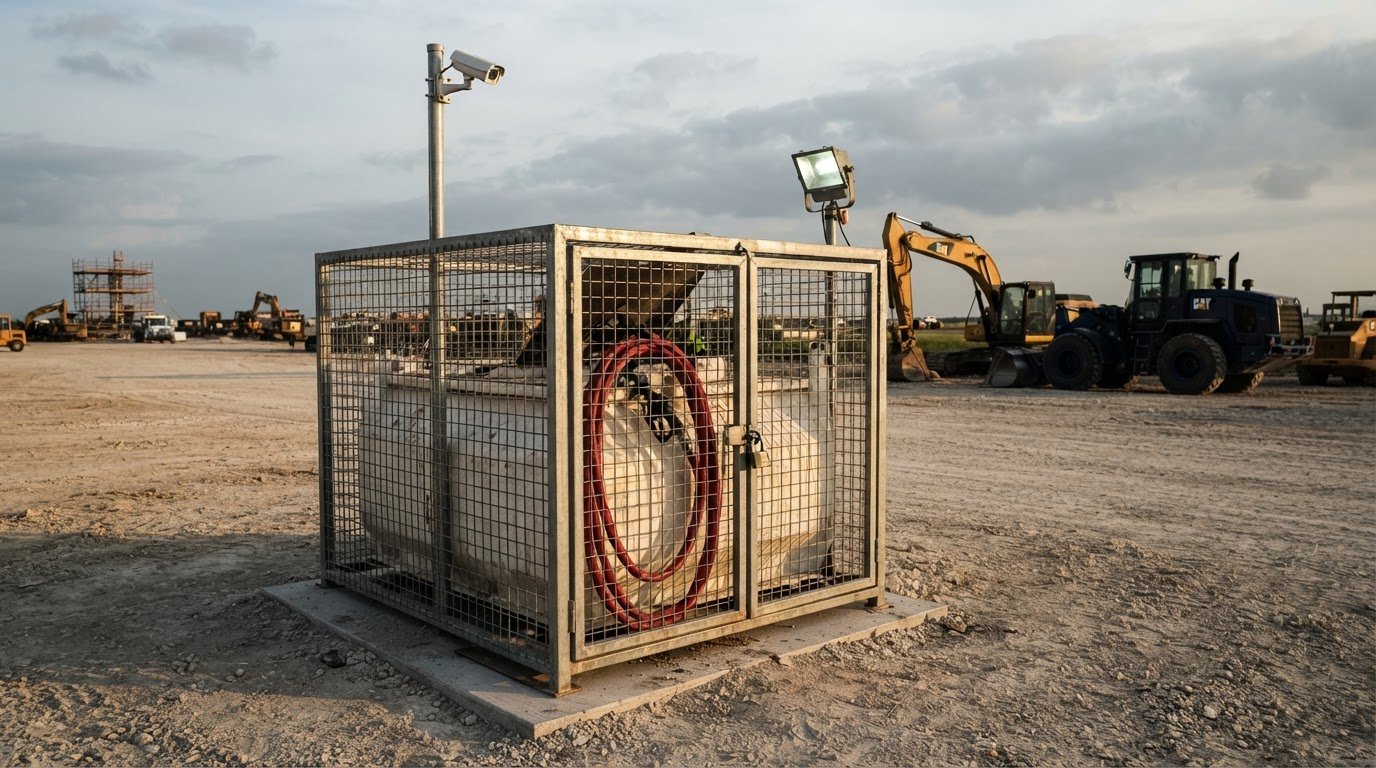
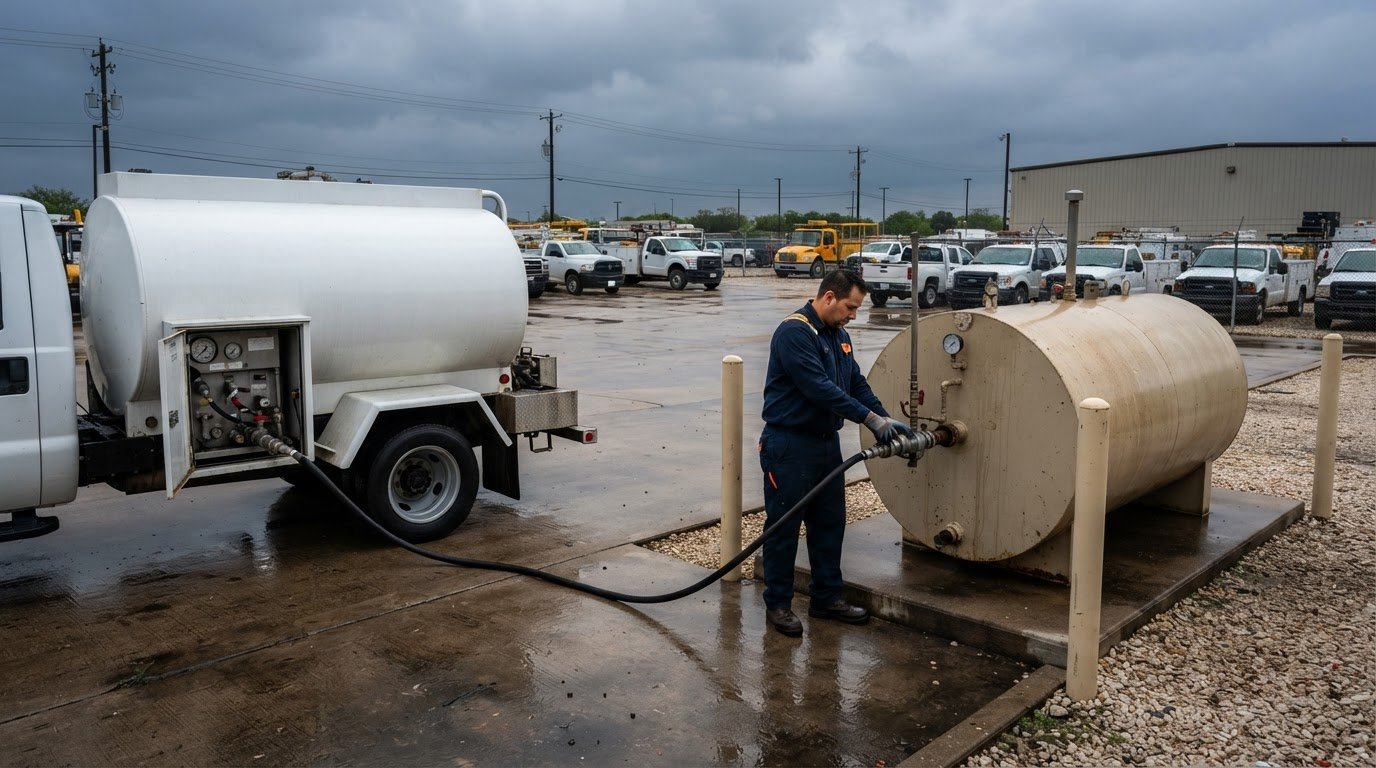
Requirements for a San Antonio diesel site depend on its storage system, location, and operations. A facility with an underground storage tank (UST) has different considerations from one receiving fuel directly into equipment tanks. Before setting a delivery plan, identify the tank type, who operates it, and where fueling occurs. Those details clarify which storage and spill questions apply.
Federal UST requirements are relevant when diesel is held in an underground tank. For a visible diesel UST leak, the U.S. Environmental Protection Agency (EPA) says to notify the implementing agency immediately and safely stop and contain the release. A facility should identify who recognizes a leak and who communicates with the appropriate agency.
Consider Texas requirements alongside the specific site setup. Separate questions about storage, delivery, and spill response rather than treating them as one issue. A construction site receiving fuel for equipment has different operating conditions from a permanent facility storing diesel in a UST. The tank type and facility’s role help frame the relevant review.
Build a site record before arranging scheduled deliveries. Include the storage system type, tank location, delivery point, facility contact, and existing response procedures. Keep the information current when a tank, fueling area, or site operator changes. A clear record gives delivery and facility teams the same site details.
- Storage: Identify whether diesel is held in a UST or another storage arrangement.
- Delivery: Define the receiving point and the person coordinating access.
- Spill response: Record the site’s communication and containment process.
- Review: Match the facility setup to the relevant Texas and federal requirements.
Keep delivery procedures aligned with the facility’s established safety process. A site contact can explain access restrictions, active work areas, and where the delivery vehicle should report. These details support coordination but don’t replace storage or environmental obligations. Businesses operating across several San Antonio locations should maintain separate site records, since tank types and procedures may differ.
For an underground tank, include leak response in the site’s operating plan and make the notification route clear to responsible personnel. For equipment fueling, document the designated fueling area and how delivery fits active site operations. A written record helps prevent confusion when facility staff, project supervisors, and delivery personnel hand off responsibilities.
Prepare the site and storage details for a delivery discussion, including the tank type, facility address, and fueling arrangement. Discuss your commercial fueling requirements to plan delivery around the site’s operating conditions.
React Fueling: Diesel Delivery
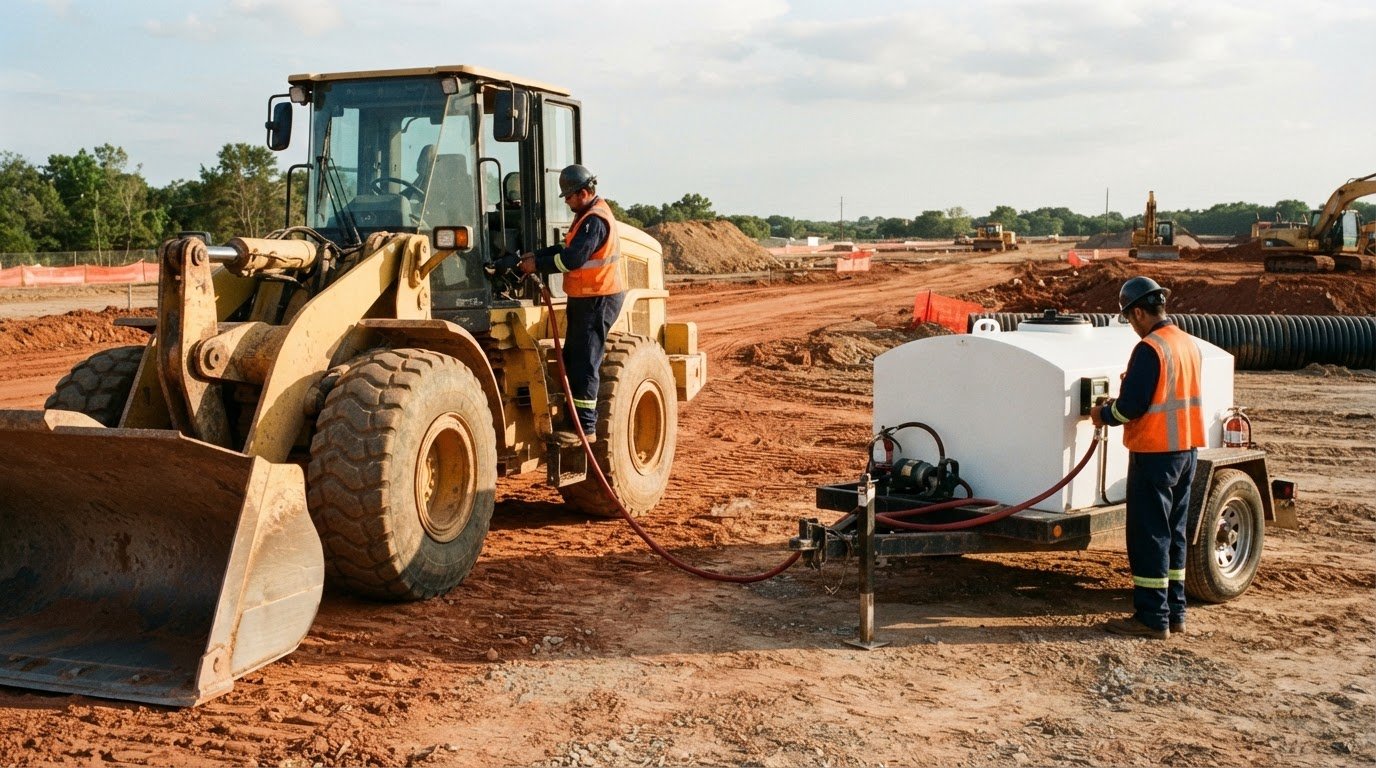
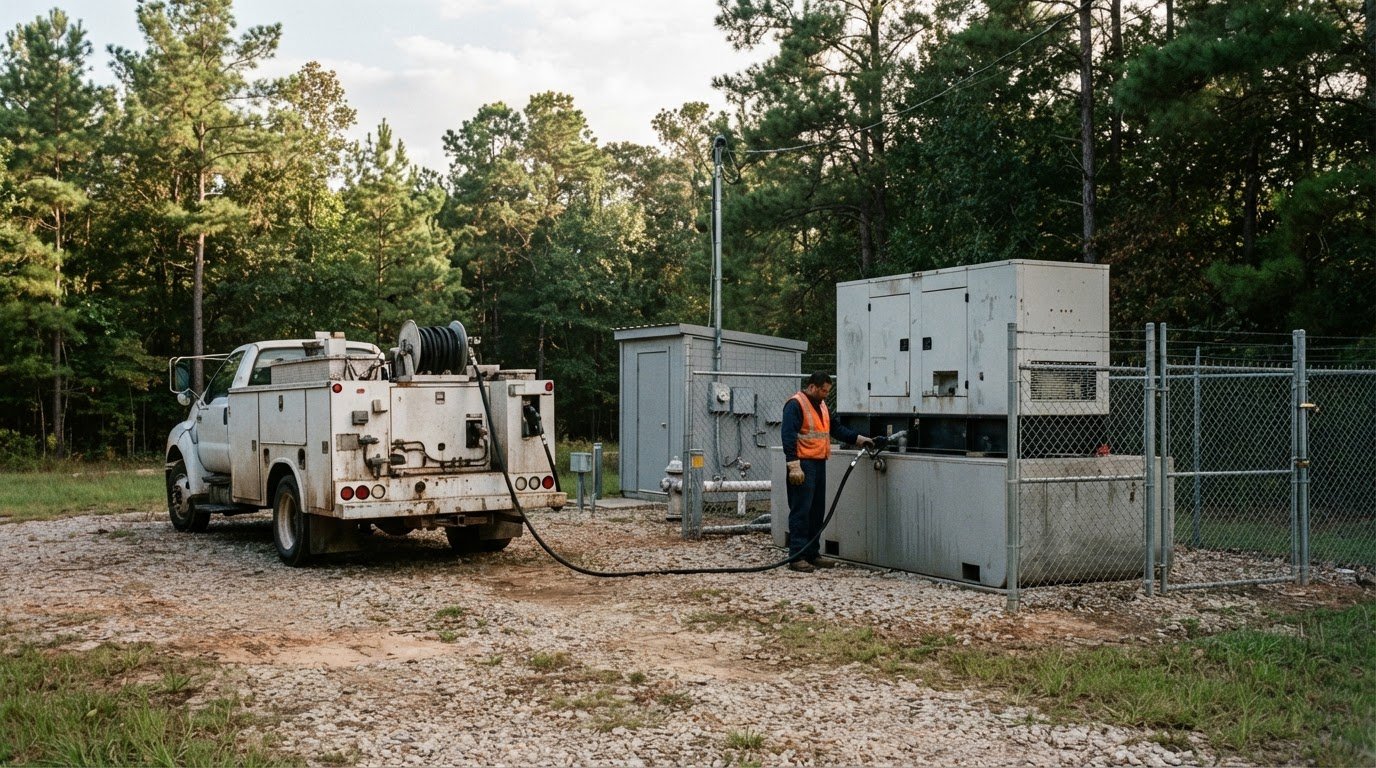
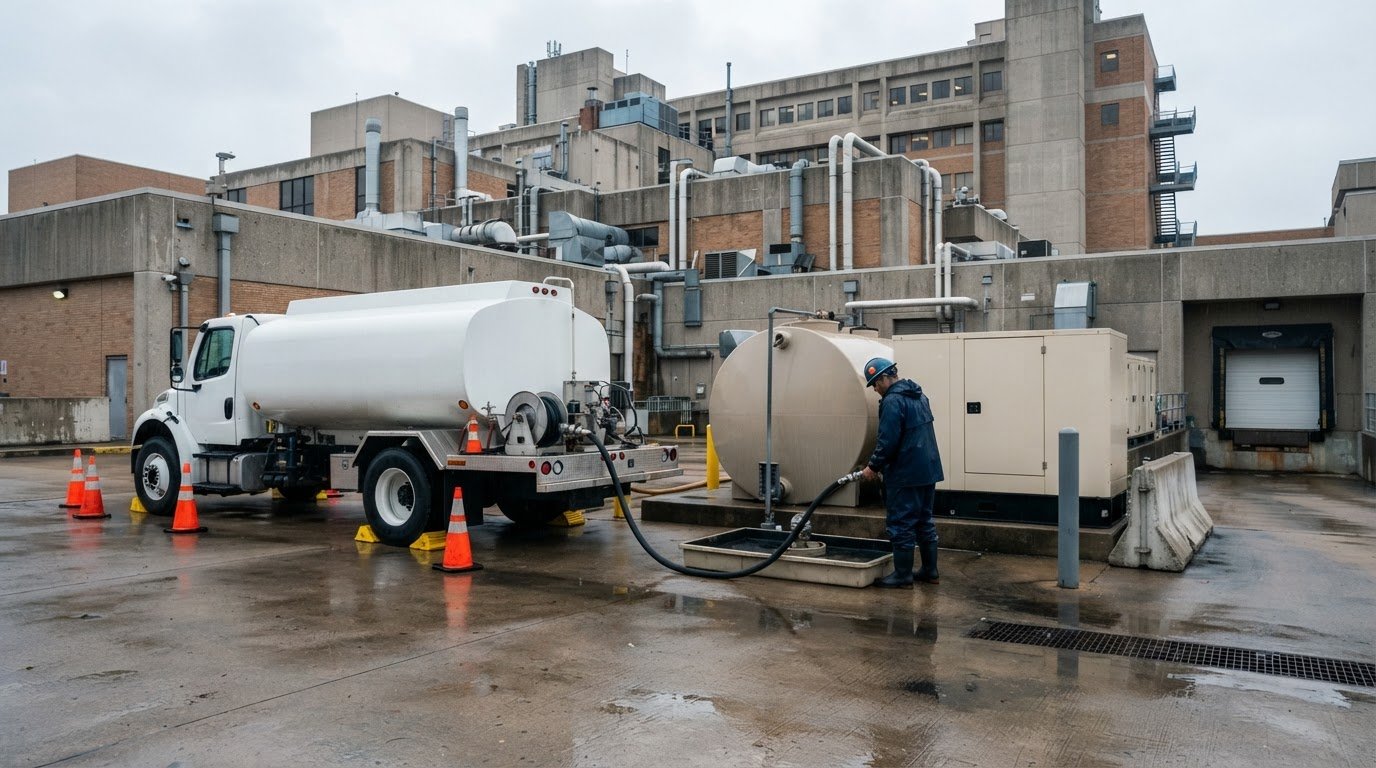
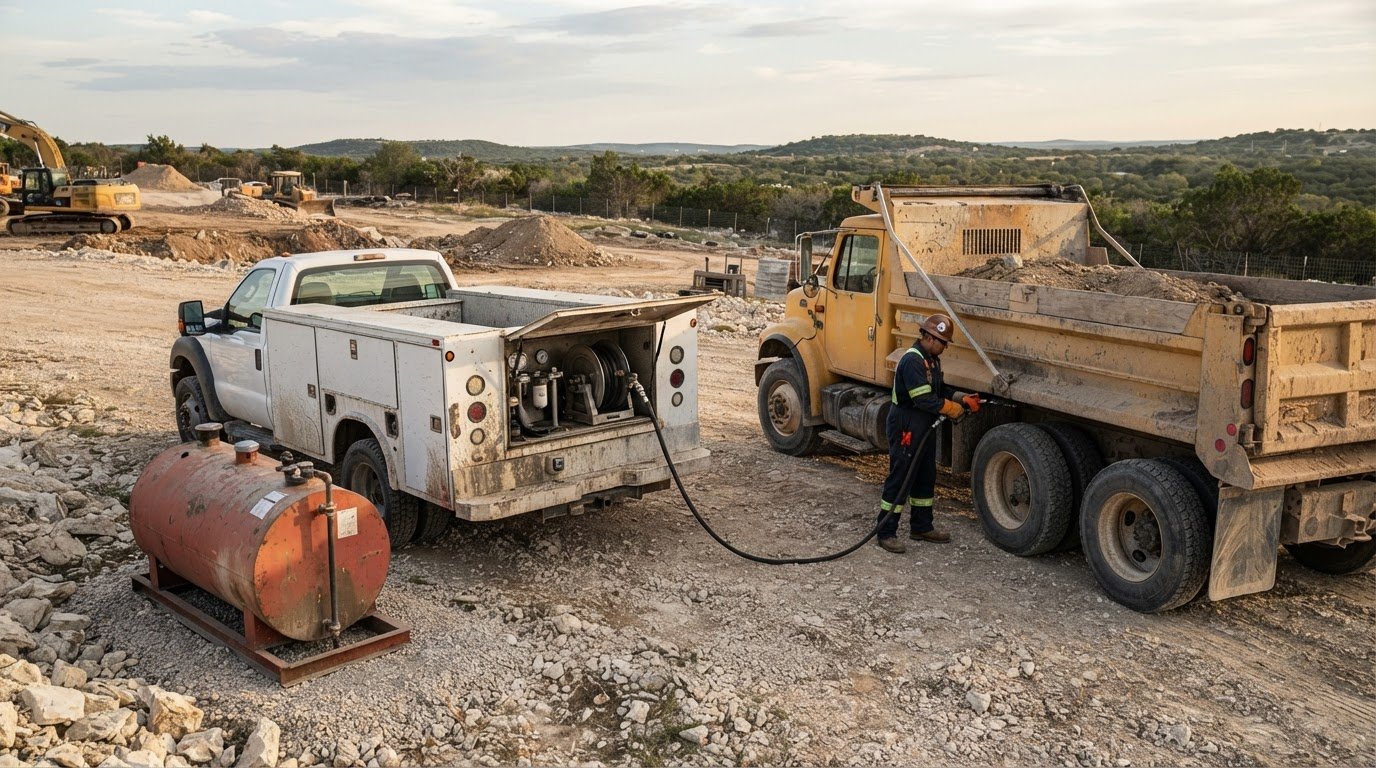
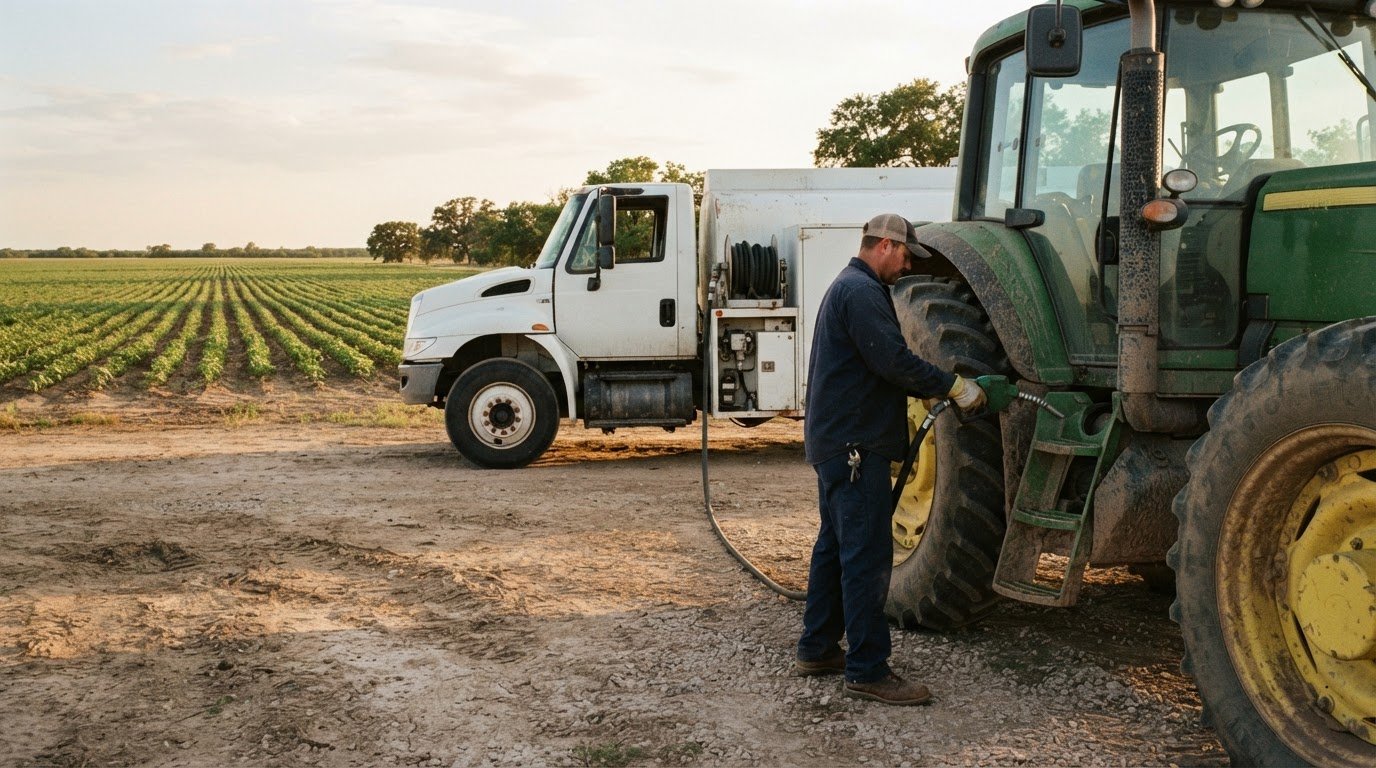
React Fueling supports San Antonio businesses with diesel delivery for fleets, equipment, and generators. Its Fuel Delivery services bring fuel to commercial sites, while Equipment Fueling Service and Generator Fueling Service address specific on-site needs.
Turn to React Fueling for scheduled fuel planning or when an unexpected shortage disrupts operations. Share the delivery location, fuel need, equipment or generator details, and preferred timing. Clear site information helps coordinate deliveries around the needs of fleet managers, construction teams, and industrial facilities.
For commercial diesel delivery in San Antonio, contact React Fueling to discuss your delivery needs.
Put a dependable fueling plan in motion
Build a practical operating plan by identifying which assets need fuel, where they work, and how demand changes across projects. This gives your team a clear basis for aligning commercial diesel delivery in San Antonio with fleet schedules and site requirements.
React Fueling offers Diesel Delivery, Fuel Delivery, and Equipment Fueling Service for commercial operations. These services support fuel planning for vehicles, equipment, and work locations. Share your priorities, such as fueling a specific asset or organizing deliveries around active work.
To get started, share your site and fueling requirements with React Fueling. Provide the delivery location, equipment or vehicles involved, and the operational need you’re addressing. Request a quote to discuss a delivery approach that fits your operation.
Contact React Fueling to discuss your fueling needs, and take the next step toward keeping work moving.
Frequently Asked Questions
Which companies provide commercial diesel fuel delivery in San Antonio, Texas?
React Fueling provides commercial diesel delivery for fleets, construction sites, and industrial facilities. Its listed Texas service areas are Houston, TX; Austin, TX; San Antonio, TX; Dallas, TX; College Station, TX, and Magnolia. For a San Antonio operation, the service can support commercial fuel needs at a worksite or facility. Share the delivery location and operation type when arranging a request.
What commercial diesel delivery services are available in San Antonio, including on-site fueling and bulk delivery?
Commercial options include on-site diesel delivery, direct fueling for equipment, and generator refueling. React Fueling also provides fuel delivery for commercial applications. Describe the intended use, such as fueling construction equipment at a jobsite or supplying a facility generator, to define the delivery scope. Portable fuel tank rentals are available for on-site fuel storage.
What are the minimum order quantities and delivery fees for commercial diesel in San Antonio?
Minimum quantities and delivery fees depend on the delivery request and are determined through a quote. Include the site location, requested fuel amount, delivery timing, and whether the request covers one delivery point or several. For example, fueling equipment across a worksite may require a different scope than delivering to one fleet yard. Review the quote’s quantity and delivery terms together before approving the request.
What is the current price per gallon for commercial diesel delivery in San Antonio?
React Fueling does not publish a fixed per-gallon price in the available pricing information. The price for a specific delivery depends on the request and is provided after a quote request. Give the delivery location, requested quantity, timing, and use case, such as fleet fueling or equipment refueling. Those details help define the work covered by the quote. React Fueling describes its rates as clear and competitive, with no long-term commitments or hidden fees.
Can businesses schedule recurring or same-day diesel delivery in San Antonio?
Businesses can arrange scheduled diesel delivery, and urgent fuel needs can be submitted for emergency delivery. Same-day timing depends on dispatch conditions, route, location, and the request details. For a time-sensitive need, explain which asset requires fuel, what operation depends on it, and the required delivery window. A generator or a piece of construction equipment may have different priority based on its role at the site.
What information is needed to request a commercial diesel delivery quote in San Antonio?
Provide the delivery address, requested fuel type and quantity, preferred timing, and the equipment or vehicles involved. Identify the fueling point and any site-entry instructions, such as a gate or designated contact. For a fleet operating at multiple locations, list each address separately and state which has priority. If the request is for a generator or construction equipment, name the asset and explain its operational need.