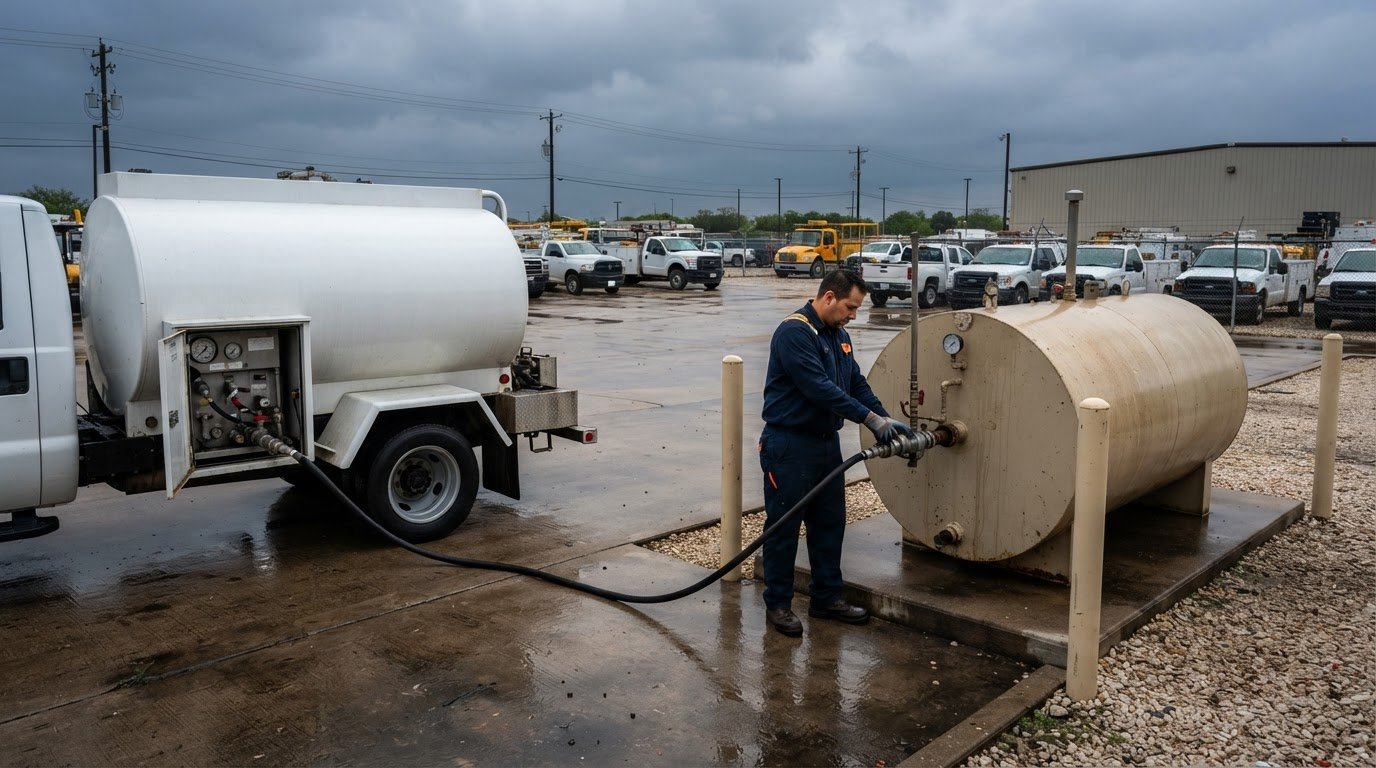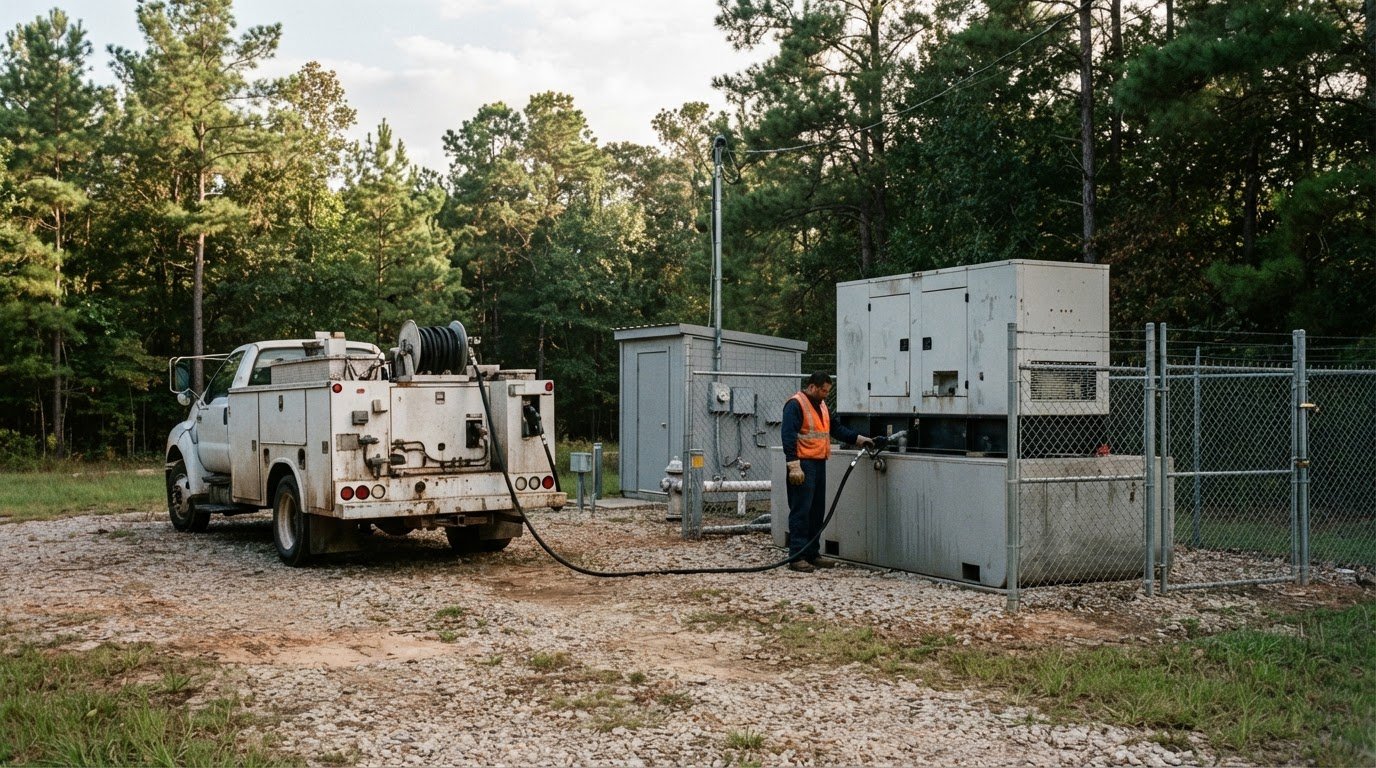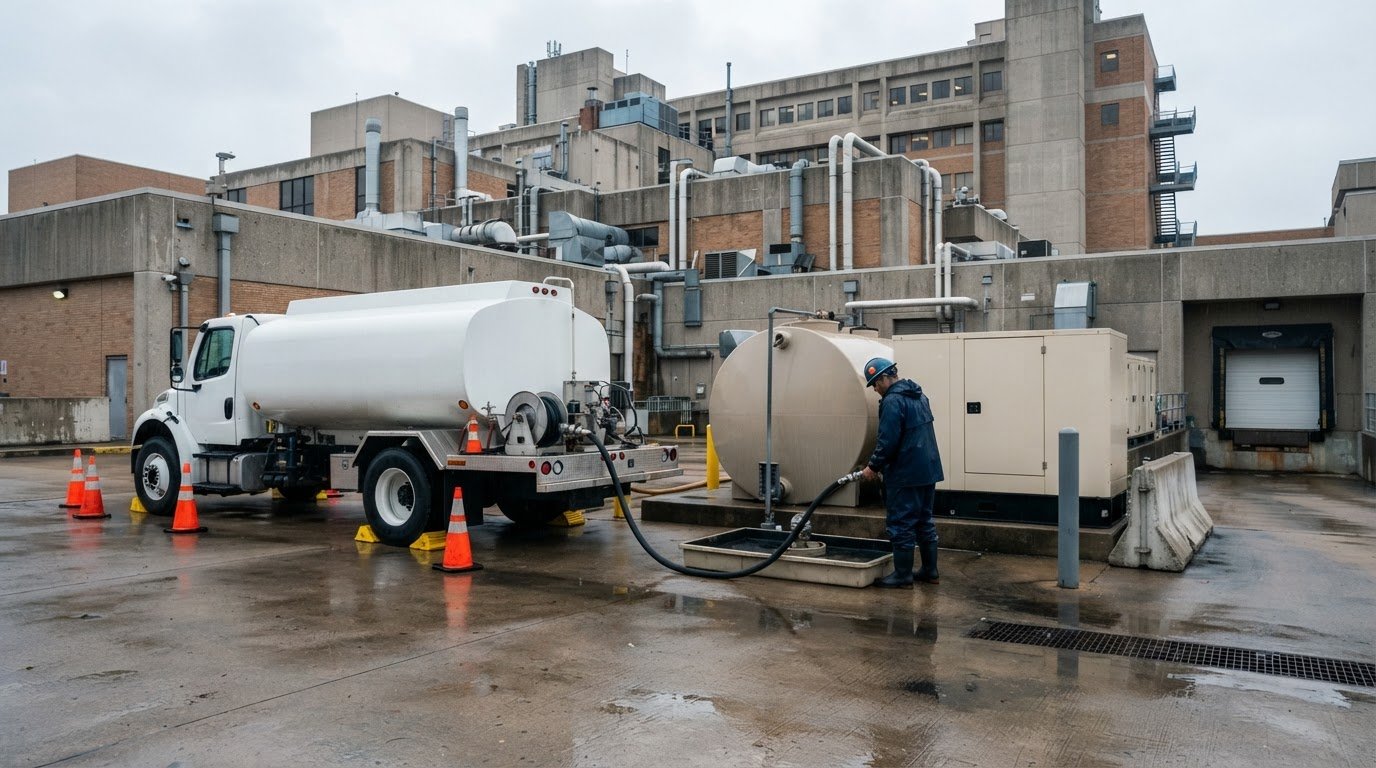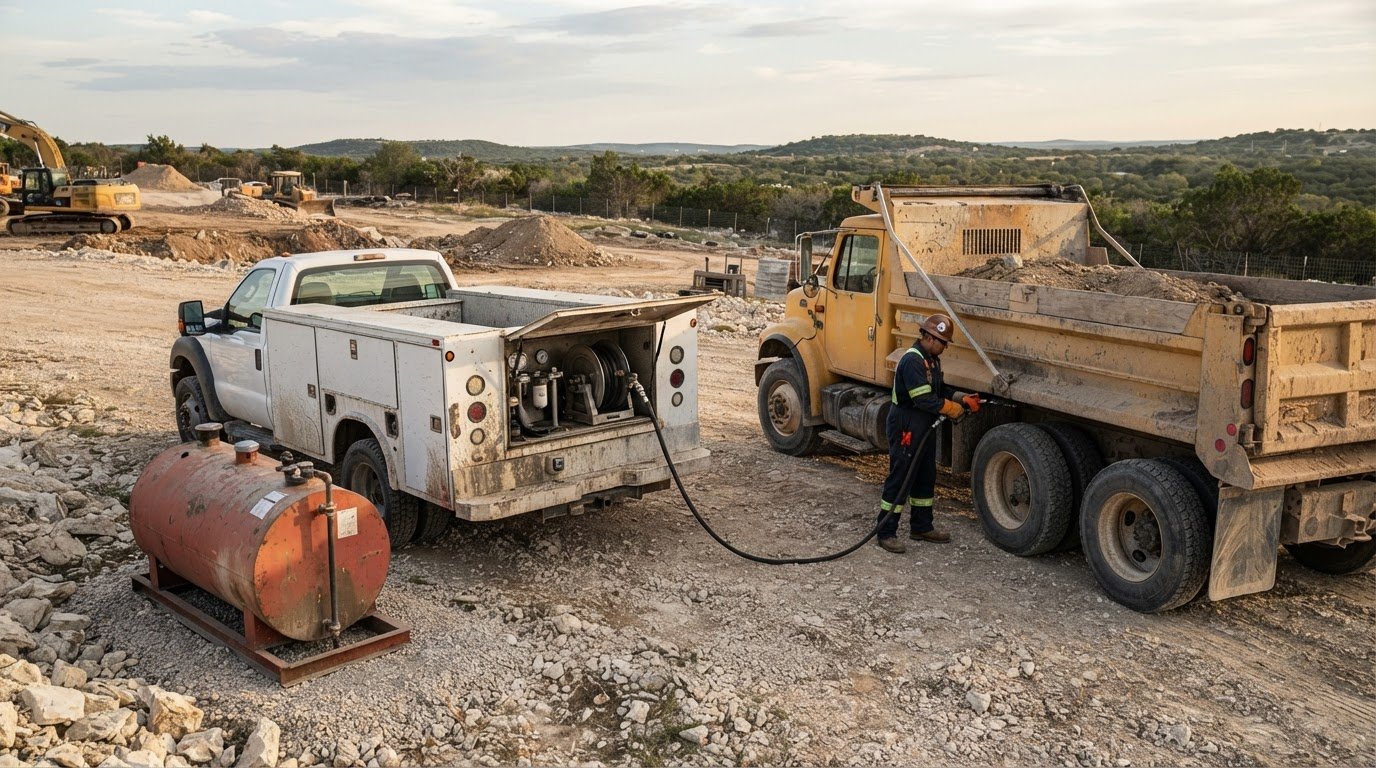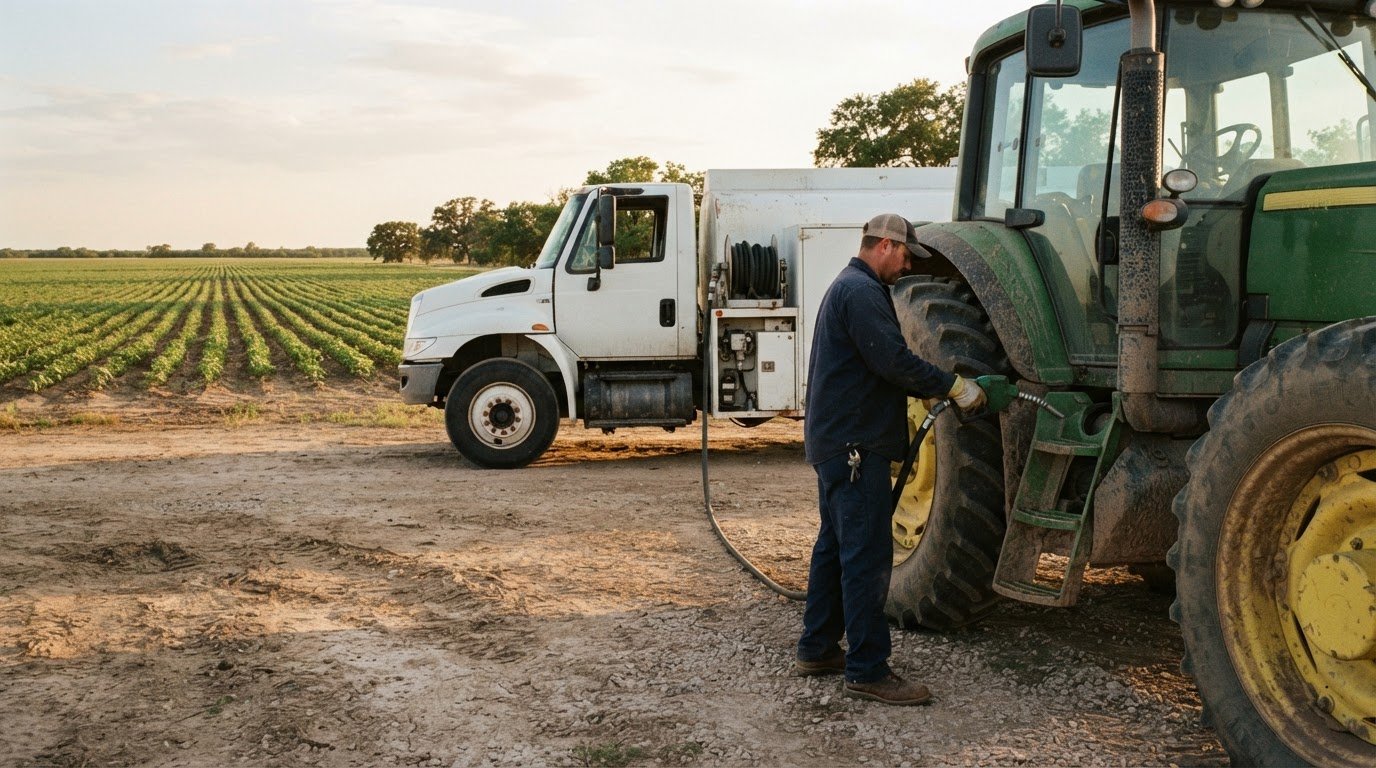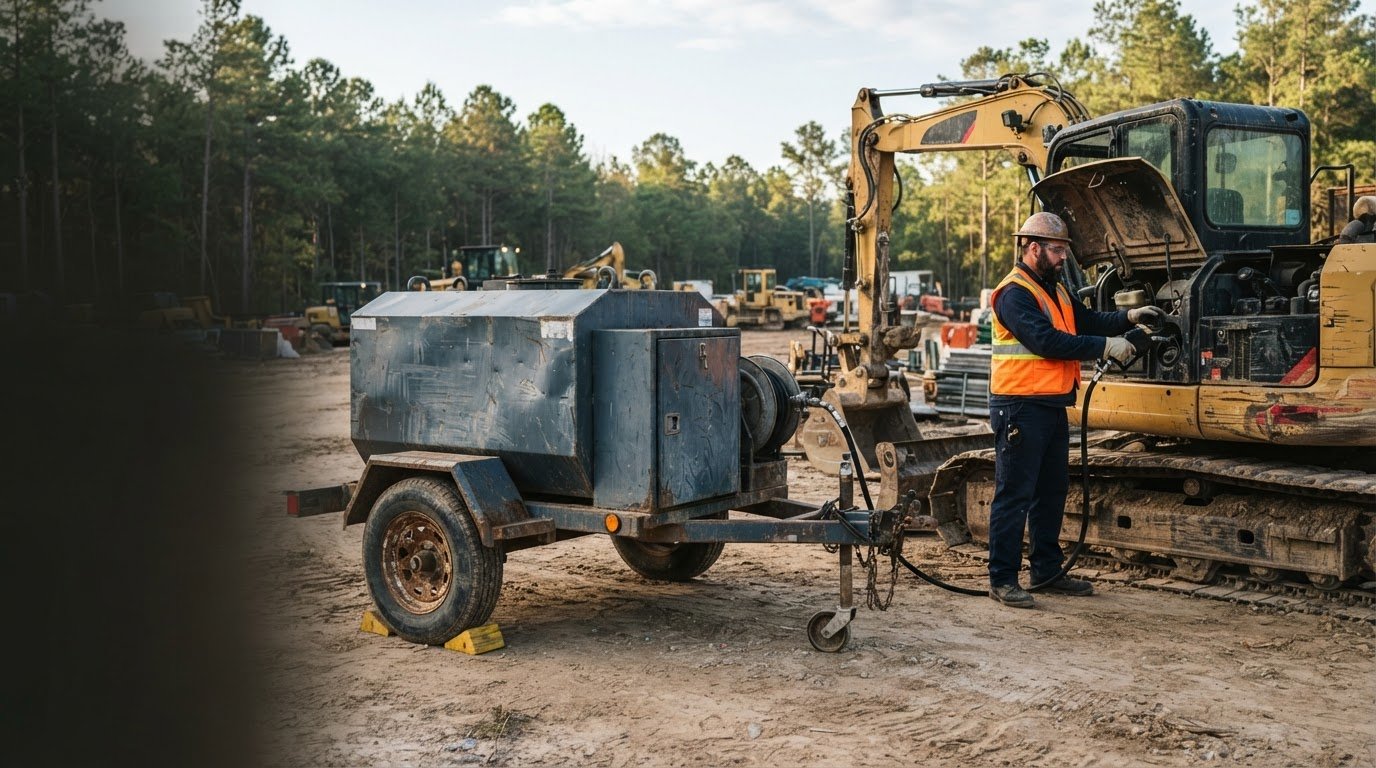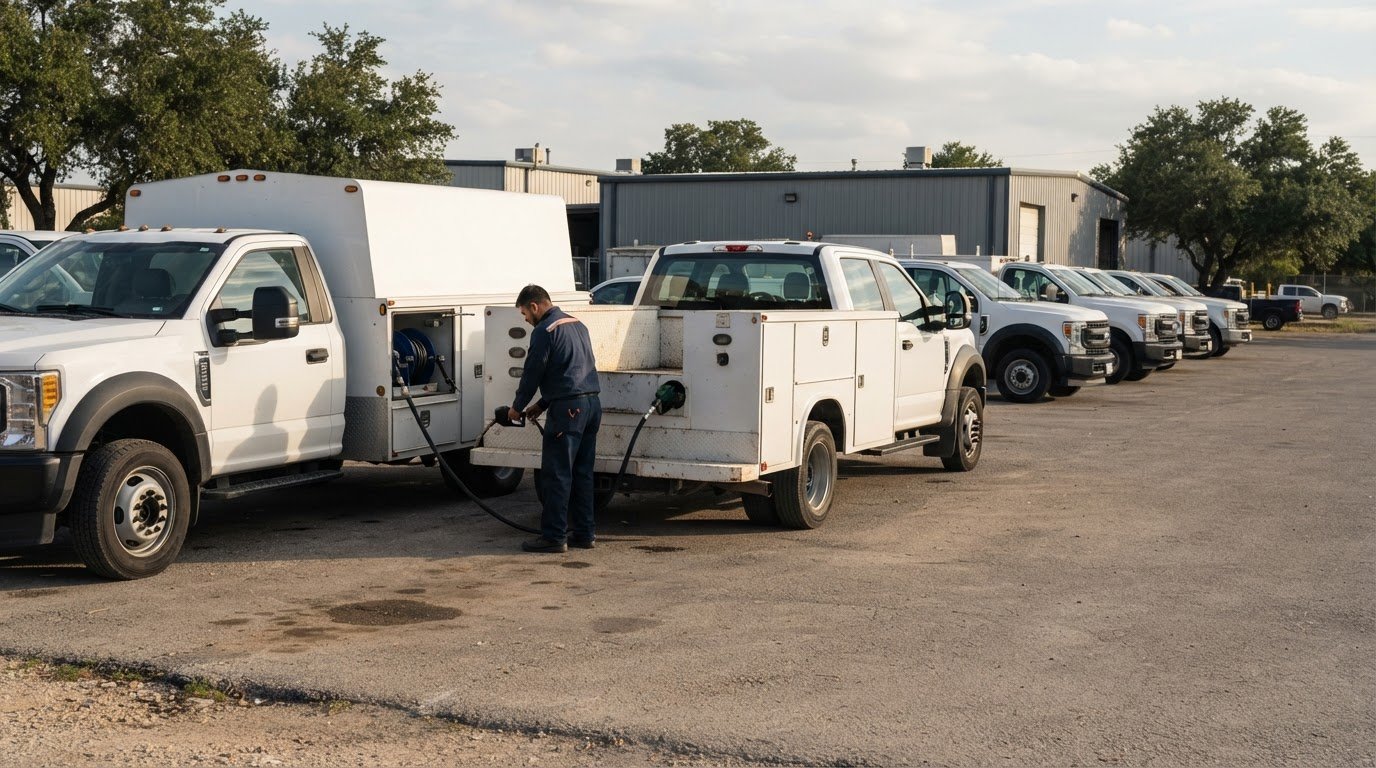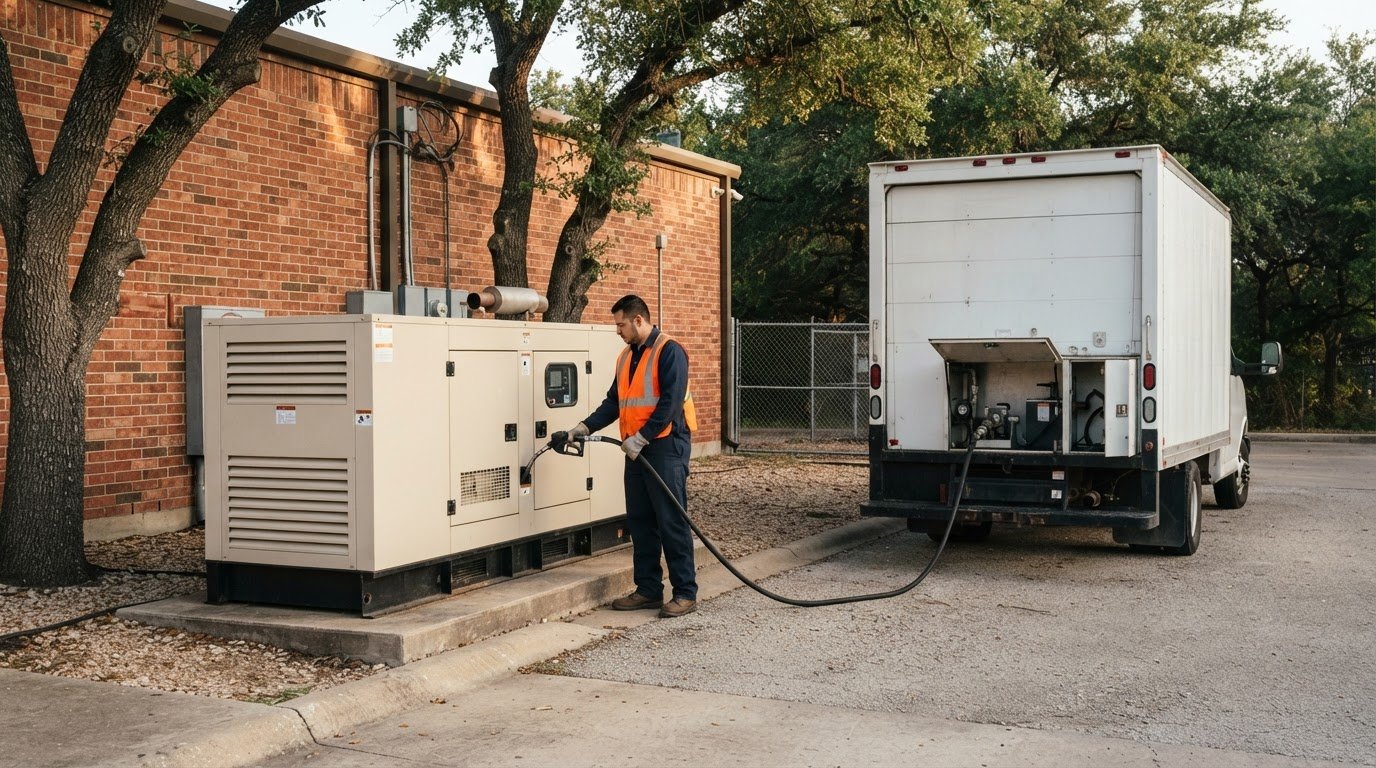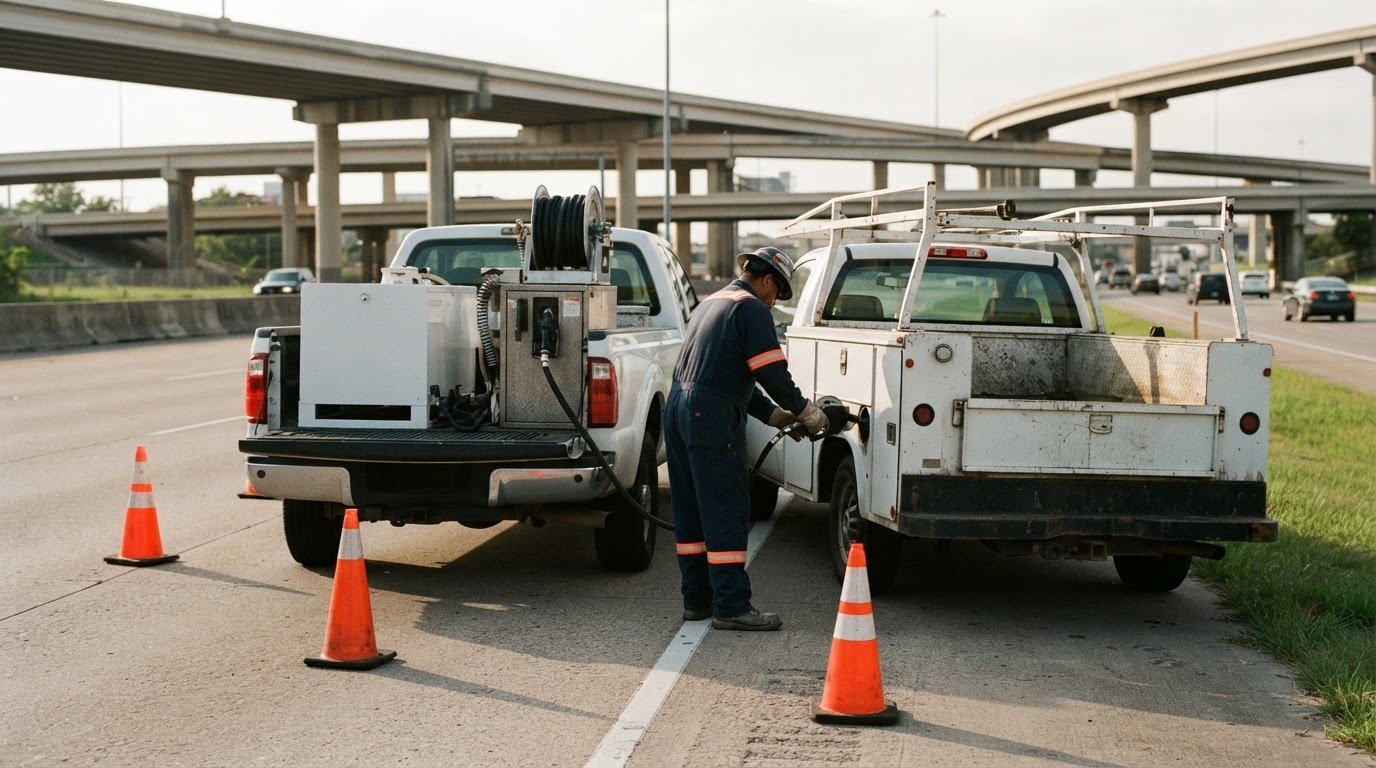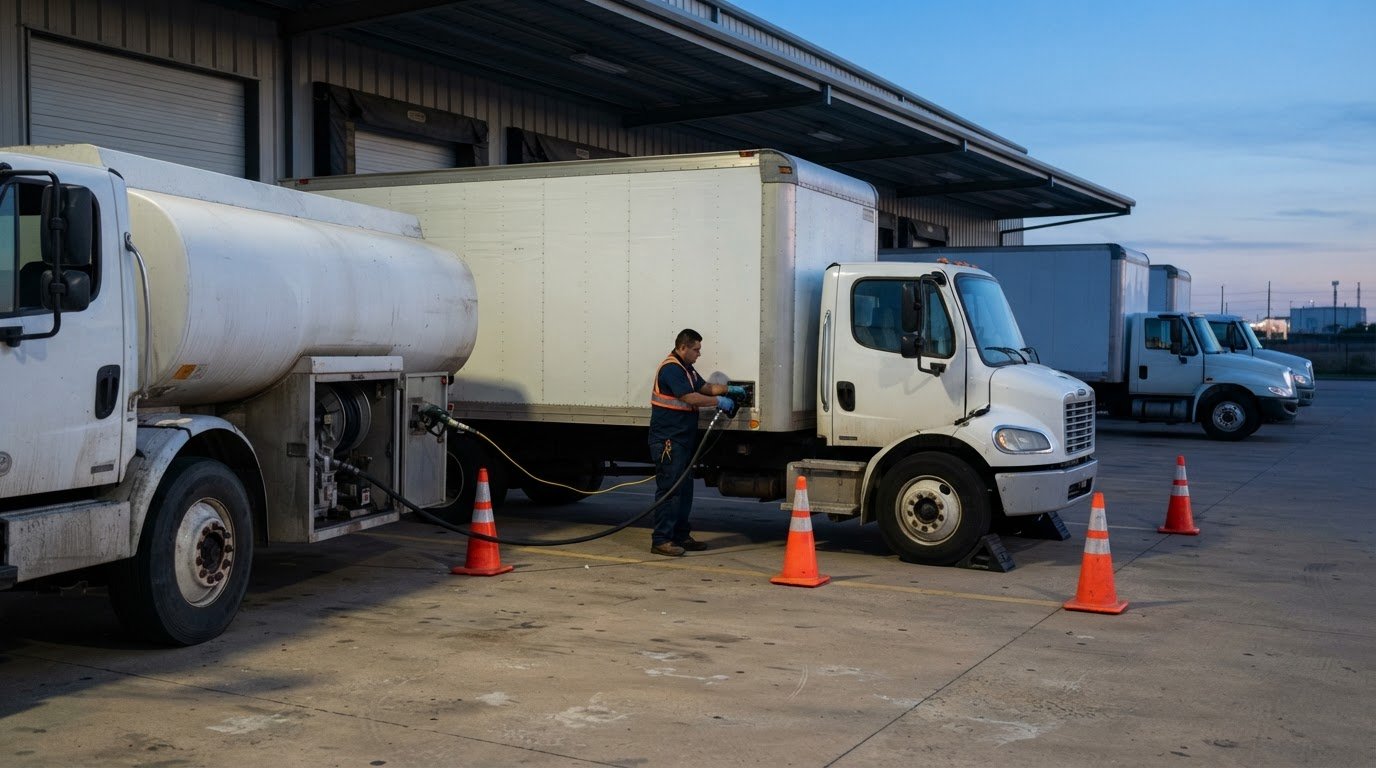
A fuel tank can remain vulnerable even behind a fence if it’s out of sight and easy to reach. Effective construction site fuel theft prevention in Dallas starts with placing fuel storage near cameras, lighting, or motion sensors, then restricting access with a secure cage and tracking fuel use. Strong controls matter because theft can come from both intruders and employees.
Locks and perimeter security are important, but a practical plan also considers where fuel is stored, who can dispense it, and how unusual losses will be identified. The right setup helps protect fuel while keeping access manageable for authorized crews.
This guide explains why construction sites attract fuel theft and how to compare on-site guards with remote monitoring, position fuel cages, limit access, and maintain useful inventory records. You’ll get clear steps for building a layered approach that fits the realities of an active jobsite.
1. On-site guards compared with remote monitoring
On-site guards provide a visible presence and can respond in person when they spot suspicious activity. Remote monitoring uses cameras or sensors to detect motion and alert operators, while recorded footage can help document what happened. Remote video monitoring can provide 24/7 protection, but it doesn’t put a person physically at the fuel tank. A combined approach can pair live monitoring with physical patrols to balance coverage and on-site response.
Choose security measures based on the site’s layout and its exposure after crews leave. Cover entrances, fuel storage, and equipment areas with cameras and motion-sensor lighting. If a project lacks permanent power or internet, solar-powered wireless cameras can transmit data over cellular networks. A remote operator can assess an alert, issue a voice warning, activate flashing lights, and contact keyholders or police when needed. A defined response turns detection into action rather than leaving an unattended recording.
For construction sites in Dallas and across Texas, plan fuel storage and fire safety around the requirements that apply to the tank and project. Applicable provisions depend on the storage setup and site conditions. Align the plan with the project safety lead and local authority before changing tank placement or safeguards.
Monitoring idling can help control fuel waste. Telematics can track equipment idle time and alert managers when a chosen threshold is exceeded. For example, an alert after a machine idles longer than the project’s set limit gives supervisors a prompt to investigate unnecessary run time. This will not identify every theft, but it can help distinguish avoidable consumption from unexplained fuel loss.
GPS tracking and fuel-level sensors can flag a mismatch between an equipment unit’s location, recorded fuel use, and a sudden drop in tank level. Compare telematics records with fuel transactions to distinguish a recorded refueling from an unexplained change. A break-in can also trigger a sudden-loss alert. Treat alerts as prompts to review the unit’s activity and records, not as proof of theft.
Use cameras with clear views of access points and fuel storage, then add motion-triggered lighting to reveal activity after dark. Fencing slows entry, while an alarm can notify monitoring staff or site contacts when sensors detect suspicious motion. A posted surveillance warning can reinforce the deterrent, but it does not replace working cameras or a response plan. Together, these measures support construction site fuel theft prevention in Dallas by making access more visible and unusual activity easier to investigate.
Using machinery, vehicles, and barriers to restrict access
Build the site perimeter to slow entry and make unauthorized activity visible. High fencing can deter theft and obstruct access, while chain-link or anti-climb welded-wire panels define the boundary. Align gates with planned entry routes instead of leaving informal gaps near fuel storage or delivery areas. Barriers work best when crews can see whether they have been moved or damaged.
Place the fuel cage within the protected work area, then use parked machinery or work vehicles to narrow the approach overnight. Keep this arrangement clear of work routes and emergency access. Vehicles should restrict direct access to the tank without blocking the gate or creating a blind corner. A locked cage with one controlled entry point lets authorized workers access fuel without leaving the storage area open.
Manage the perimeter as an access-control system, not just a fence. Issue unique codes or credentials to authorized workers, and change access codes weekly or after project phases. Close gates after each entry and assign someone to check them at shift end. These steps limit how long an old code remains useful and help crews spot changes in site security.
Electronic access control can create time-stamped logs showing who entered and when. If fuel goes missing, compare entry records with work schedules, delivery records, and camera footage to narrow the period under review. Logs are most useful when each worker has an individual credential. Shared codes make it harder to connect an entry to a specific person.
After fuel is stolen, preserve the scene and relevant footage, document the missing quantity, and record when the loss was discovered. Report the incident to law enforcement and notify the insurer within 24 hours after theft. Keep the incident record with gate logs and fuel transaction details so the investigation can follow a consistent timeline.
Fuel storage and site security involve different roles: fuel tank rental services provide storage equipment, while security firms and system installers provide cameras, alarms, fencing, or access control. Coordinate these elements around the site layout so the cage, gate, and monitoring coverage work together without leaving an unprotected approach.
For construction site fuel theft prevention in Dallas, review the perimeter whenever project phases change or machinery moves. If fuel access needs to stay coordinated with equipment operations, discuss jobsite fuel coordination as part of the site plan.
Treat the cage, overnight vehicle placement, and perimeter as complementary layers. Cages around fuel storage units restrict access while allowing authorized entry, and machinery or work vehicles parked around the units overnight add another barrier. High fencing can deter theft and slow unauthorized entry at the site boundary. Keep the arrangement consistent with planned routes so authorized access remains controlled.
Access-control systems can create time-stamped logs showing who entered a construction site. When an incident needs review, those records can support an investigation alongside physical barriers that restrict access.
3. Fuel cages and strategic placement
Place the fuel tank where cameras, lights, or motion sensors can cover it, rather than beside perimeter fencing. A tank near a fence can give an intruder a concealed approach and a quick exit. Positioning it within active surveillance coverage makes movement around the storage point easier to notice and review. On a small Dallas site, choose a visible area that does not obstruct equipment routes or scheduled fuel deliveries.
Enclose the tank in a cage with a secure entry point. The cage limits direct access while allowing authorized workers to reach the dispensing area. Control the access route, and ensure the cage does not block the camera’s view of the tank or the person using it.
Plan placement around how the operation uses fuel. Map the tank against equipment parking, delivery vehicle access, work paths, and camera coverage. A tank behind parked equipment may be harder to approach, but that arrangement can also hide the dispensing area from view. Adjust the layout so machinery restricts access without creating a blind spot or disrupting deliveries.
Small construction sites can start with a cage, a visible storage location, and focused coverage from existing cameras or motion sensors. Keep the tank in the active work area rather than at an isolated edge. Give authorized workers a clear access process, and keep the approach free of materials that could conceal activity. These practical steps protect fuel without requiring a complex site layout.
Connect physical safeguards with fuel tracking. Record deliveries and dispensing, then compare those records with inventory checks. If recorded use does not match the amount on hand, review access activity and surveillance footage around the storage point. This process helps identify when a loss may have occurred and whether the cage, camera view, or access procedure needs adjustment.
Review tank placement as construction work changes. A new material stack, temporary office, or relocated machine can block surveillance that previously covered the tank. When the site layout changes, confirm that cameras or sensors still cover the storage point and its approach. Keep the cage accessible to authorized workers, but avoid placing it where an open gate, fence line, or delivery area gives outsiders a direct route.
For a compact jobsite, keep fuel visible, enclose the tank, control its access point, and preserve a clear route for authorized work. This simple combination limits exposure, supports inventory tracking, and makes unexplained losses easier to investigate.
4. Inventory records and worker reporting
Keep a consistent record of every delivery and dispensing event. A fuel management system can log the amount dispensed and the time, establishing a baseline for normal use. Record the equipment or vehicle receiving fuel, the authorized worker, and transaction details. When measured inventory does not match recorded deliveries and dispensing, the difference is a clear reason to investigate.
Compare fuel transactions with telematics data instead of reviewing either record alone. A transaction may show fuel issued to a machine while its location or fuel-level data shows no matching activity. That discrepancy could indicate a recording error, an unusual transfer, or possible theft. Review the time, equipment, and transaction together before drawing a conclusion.
Conduct regular inventory checks and keep the results in one consistent record. Note the tank reading, date, recent deliveries, and dispensing since the previous check. A designated staff member can compare the current reading with the expected balance and report any unexplained difference. Consistent records make it easier to identify when a loss may have occurred.
Give workers a simple way to report concerns during onboarding and throughout the project. Explain who receives reports about a damaged lock, unfamiliar activity near the tank, or a fuel-level change that does not match a work task. Prompt reporting can help supervisors preserve relevant access records or footage before routine site activity changes the scene.
Use a written handoff at shift changes. The outgoing worker can note fuel dispensed, equipment refueled, and unusual events; the incoming worker can acknowledge the record and report visible discrepancies. This creates continuity between crews and reduces reliance on memory. Keep reports factual, focusing on observations and times rather than assumptions about who caused a loss.
Review consumption patterns against project needs before treating a variance as theft. If a jobsite uses 30% more material than estimates call for, investigate the difference because estimates may be inaccurate or materials may be leaving the site. The same careful approach applies to fuel: compare equipment use, transactions, deliveries, and inventory readings to identify a likely cause.
Worker training should explain how to report concerns without delaying work. For example, a crew member who finds an open cage can notify the designated supervisor, record when it was discovered, and avoid disturbing the area. Pair reports with regular audits and transaction logs. These measures give managers a usable record, help identify patterns, and make unexplained fuel losses easier to address.
5. Reasons construction sites are targeted for fuel theft
Construction sites combine valuable fuel, changing layouts, and periods with fewer people present. Fuel is stored in tanks to support equipment, making it a concentrated target rather than a resource spread across the jobsite. After crews leave, an intruder may have fewer witnesses and more time near storage or machinery. The unattended period from 6 PM to 6 AM is identified as a peak vulnerability window.
Access is not limited to outsiders. Intruders or employees can commit fuel theft, so construction site security needs controls for both perimeter entry and routine dispensing. A worker with legitimate access may know where fuel is kept and when equipment is idle. Clear authorization, dispensing records, and regular inventory checks help identify activity that does not match assigned work.
Project conditions can also create openings. A temporary fence may shift as work advances, a delivery route may leave a gate open, or stored materials may conceal a tank. Moving equipment to a new staging area, for example, can leave the fuel point outside camera coverage. Reassess access and storage whenever the layout changes instead of relying on an outdated security plan.
Some construction sites may not have the budget for security around the clock, leaving gaps when crews are absent or patrols cover only selected periods. Remote monitoring, motion alerts, lighting, and controlled dispensing can add layers, but the right mix depends on the layout, power, connectivity, and staffing. A smaller site can start by securing its tank and the route leading to it.
The cost of construction-site fuel theft prevention systems depends on the coverage and equipment selected, including camera locations, lighting, access controls, and whether guards or remote monitoring are used. Site size, power and connectivity, installation needs, and ongoing monitoring also affect the total investment required for effective construction site fuel theft prevention Dallas measures. A project-specific price is provided after a quote request.
Treat fuel theft as a risk created by access, opportunity, and weak records, not just a broken lock. Combine physical barriers with controlled dispensing and inventory tracking. Assign someone to review unusual activity and report changes in site conditions. These measures make it harder to approach fuel unnoticed and easier to identify a loss while the event is still recent.
To coordinate fuel requirements around your jobsite’s operating plan, discuss your construction fuel needs with React Fueling.
Some construction sites may not have the budget for robust security around the clock. That limit makes prioritization important: attention can go first to the fuel point, its access route, and periods when equipment is idle. A consistent process for checking dispensing and comparing remaining fuel with expected use can help surface discrepancies without requiring continuous on-site coverage.
Review security as work progresses. When storage locations, entrances, or crew routines change, assess whether existing measures still protect fuel and whether records clearly account for its use. A practical plan links access, observation, and accountability, making it less likely that a gap in one layer will leave a loss unnoticed.
React Fueling
React Fueling helps Dallas contractors keep fuel available for equipment and generators while site security measures address theft risk. When jobsite inventory records point to a shortfall, or planned work requires dependable fuel coordination, equipment fueling service can support day-to-day operations. Diesel delivery, fuel delivery, and generator fueling are also available for commercial jobsite needs.
Fuel delivery supports operations; cages, access controls, monitoring, and inventory records remain part of the site’s security plan. Aligning fuel needs with equipment schedules can help contractors manage supply as work progresses. Contact React Fueling to discuss fuel support for your construction site.
Put the plan into operation
A practical Dallas plan for construction site fuel theft prevention should adapt as each jobsite changes. As crews, equipment, and delivery routes shift, keep fuel planning aligned with daily operations. Assign responsibility for reviewing fuel records and reporting unusual activity so the response does not depend on memory or informal handoffs.
Start by identifying the site’s fuel needs, the equipment that depends on a steady supply, and the operational details that affect delivery. React Fueling supports commercial fuel needs around construction work, with service across Houston, Magnolia, San Antonio, College Station, Austin, and Dallas. Request a quote to discuss the fuel services that fit your project.
Contact React Fueling to discuss your jobsite’s fuel requirements and plan the next step with confidence.
Frequently Asked Questions
Why Does Construction Fuel Theft Happen?
Construction fuel theft happens when accessible fuel and gaps in oversight create an opportunity. A jobsite can change daily as crews, equipment, and deliveries move, leaving controls out of step with the current layout. Fuel may also be accessible to people who already have legitimate site access. Clear responsibility for storage and dispensing helps close these gaps and reduces delays in noticing unexplained losses.
What are the most effective ways to prevent fuel theft at construction sites?
The strongest approach combines physical barriers, controlled dispensing, and prompt review of fuel activity. Match each safeguard to a specific risk: restrict access to the tank, keep its approach visible, and compare unusual usage with equipment operations. Assign a supervisor to receive alerts and worker reports, then define how that person responds. Cameras and alarms are more useful when someone is responsible for follow-up.
What fuel storage tanks and locking systems are best for construction sites?
A double-walled tank inside a secured fuel cage provides two layers: the tank is harder to reach, and the cage restricts direct access. Choose a setup with a controlled entry point for authorized dispensing, then keep the lock and access process consistent across shifts. The placement should also suit the delivery route and site layout so security does not interfere with routine work.
How should construction crews document fuel deliveries, usage, and suspected theft?
Use one jobsite record to separate incoming deliveries, equipment fueling, and inventory observations. For each event, note the date and time, fuel amount, equipment identifier, and responsible worker. If theft is suspected, preserve relevant entries and document what was observed, when it was found, and any affected equipment. Separating facts from assumptions gives supervisors a clearer basis for reviewing discrepancies.
What are the costs of construction-site fuel theft prevention systems?
Which Dallas-area vendors provide construction fuel storage, monitoring, or security services?
Fuel tank rental services provide storage equipment, while security firms and system installers provide cameras, alarms, fencing, or access control. Coordinate these elements around the site layout.