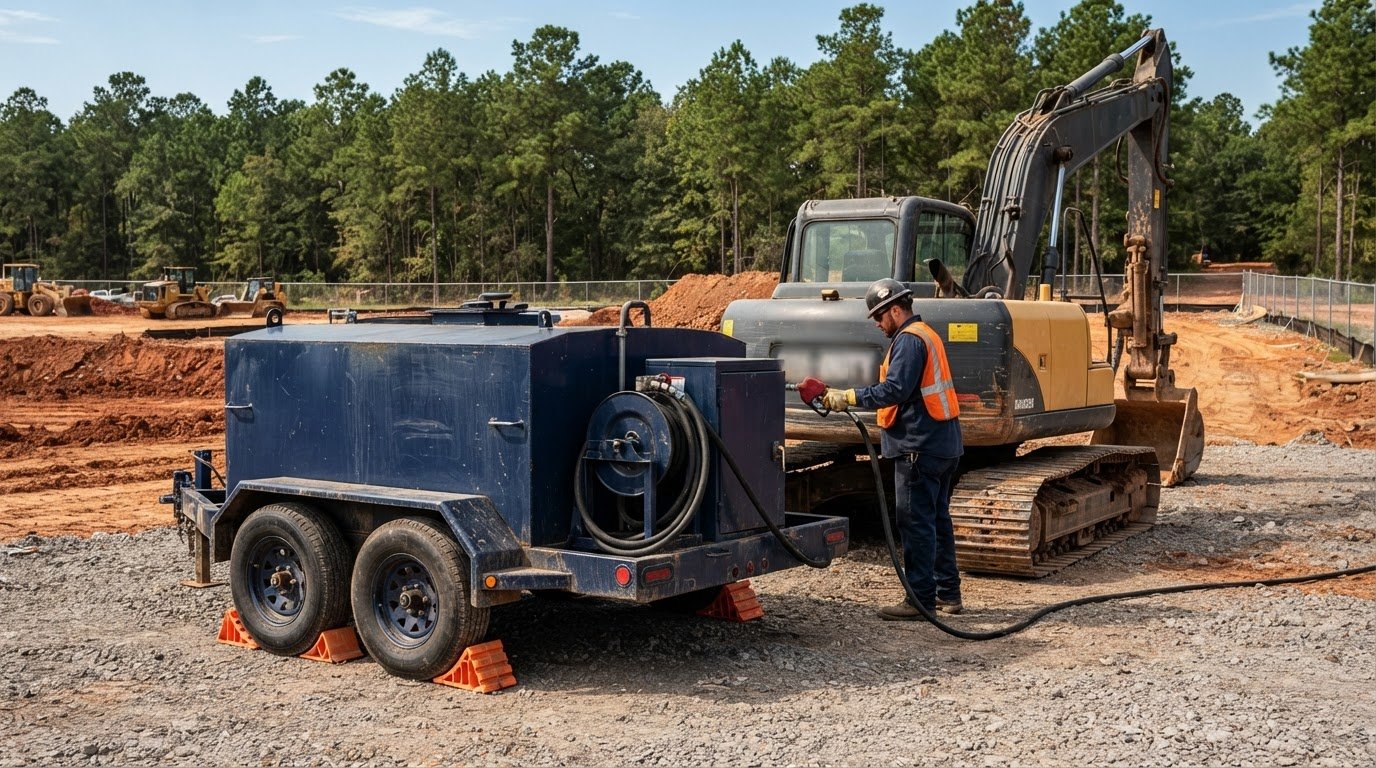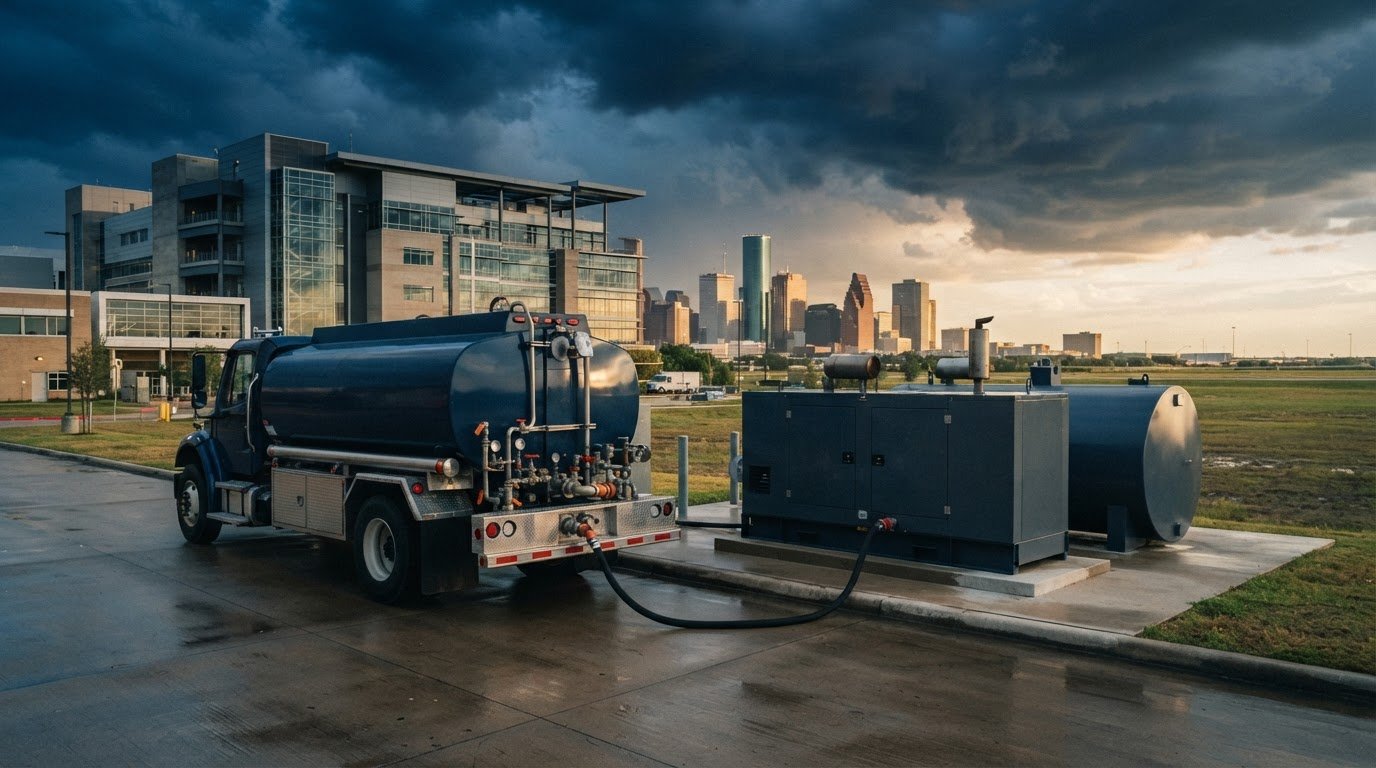
A hospital’s backup power plan depends on fuel being available when generators are needed. Texas hospitals are required to have emergency generators capable of powering all critical circuits for 96 hours, and hospital emergency generators are tested monthly. Emergency fuel delivery for hospitals in Houston can support continuity when on-site fuel needs replenishing.
Emergency fuel delivery for hospitals in Houston is quote-based, not a fixed-price service. Fuel type and volume, delivery location, urgency, route, and site access all shape the quote. Share clear details about the hospital’s fuel needs and receiving point so React Fueling can define the delivery scope.
This guide explains what to include in an emergency fuel request, how dispatch and scheduling work, and which details affect a quote. It also covers how fuel delivery can support hospitals and other critical sites that depend on generators and equipment.
Emergency fuel service for Houston hospitals and other organizations
Texas hospital generator planning includes the capacity to power all critical circuits for 96 hours. Transport and on-site storage requirements depend on the applicable rules and the facility’s fuel, route, and tank setup.
Hospitals can assess a supplier’s readiness by reviewing documented delivery capacity, fuel-quality procedures, and dispatch and backup plans. These checks connect operational needs with the site’s storage limits and generator requirements.
Transport and On-Site Storage Regulations
Review transport and storage separately: how fuel reaches the site, and how the hospital receives and stores it. Requirements depend on the delivery and storage setup, so have facilities and compliance teams align the site plan before an emergency.
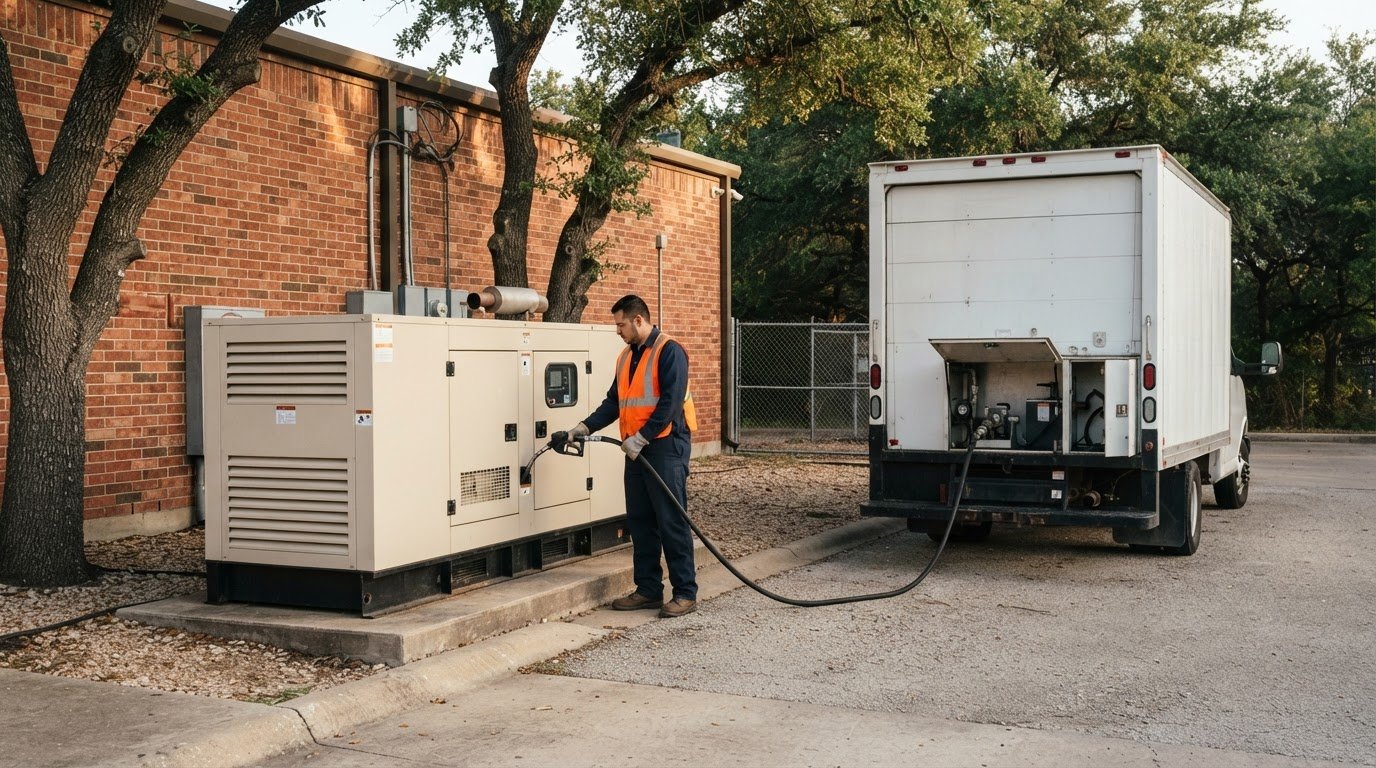
Start with the facility’s storage records, delivery-access instructions, and generator-fueling procedures. Confirm which receiving point serves the generator area and whether a delivery vehicle can reach it without disrupting hospital operations. Keep these details with the site’s emergency procedures.
Texas hospitals are required to have emergency generators capable of powering all critical circuits for 96 hours. That requirement makes the relationship between available fuel, storage capacity, and generator demand a practical planning concern. Hospital emergency generators are tested monthly, so each test cycle can inform the facility’s operational review.
Supplier Capacity, Quality, and Readiness Checks
Assess delivery capacity against the hospital’s actual needs, not a general promise of availability. Provide dispatch with the site address, receiving location, fuel type and quantity, access constraints, and urgency. Complete information helps the team plan a workable route and delivery sequence.
Review the supplier’s fuel-handling process and match it to the hospital’s fuel specifications and records. Keep relevant requirements accessible to facilities staff and the generator team. This gives staff a clear reference when fuel arrives and supports consistent site procedures.
Readiness also means understanding how the supplier handles disruptions. Review its dispatch escalation process, communications plan, and backup arrangements. Fuel providers used to supply hospital generators have backup generators of their own, and hospital backup generators could theoretically run indefinitely. These facts do not remove the need to plan deliveries and monitor fuel levels.
South Texas Regional Advisory Council oversees 53 hospitals throughout South Texas, illustrating how critical-site planning spans multiple organizations. Each Houston facility still needs its own delivery instructions, receiving points, and escalation contacts. A hospital campus with separate generator locations, for example, should identify which location has priority and how staff will direct a driver during an urgent request.
Keep a concise emergency fuel file with the 96-hour critical-circuit requirement, monthly generator-test schedule, site access details, and delivery contacts. Update it when equipment, storage arrangements, or receiving procedures change. In an emergency, this shared reference helps facilities, operations, and dispatch teams work from the same information.
Emergency request availability and dispatch timing
Houston hospitals should assess suppliers by their stated dispatch coverage and documented backup-power arrangements. A 24/7 dispatch claim and backup power for supplier operations are separate capabilities, so evaluate each directly rather than treating one as proof of the other.
Dispatch planning starts with a complete request. Provide the hospital’s delivery address, receiving point, fuel type and quantity, access instructions, and urgency. Name a facilities contact who can direct the driver, and include any gate, loading-area, or campus-routing requirements. Clear details help avoid delays caused by basic site questions.
In a Houston emergency, route conditions also matter. Rush-hour backups on Houston’s 610 Loop can turn a short trip into an hour of idling. A dispatch estimate therefore depends on the destination, current route conditions, site access, and the details of the request. Hospitals should communicate a priority receiving location if multiple buildings or generator areas need fuel.
- Coverage: Establish which hours dispatch accepts urgent requests and how requests are escalated.
- Capacity: Explain the required fuel type, quantity, and delivery location so dispatch can assess the request.
- Route: Share entrance instructions, restrictions, and a practical vehicle approach to the receiving point.
- Backup: Ask how the supplier maintains its own operations during a power disruption.
- Updates: Set a contact method for changes to the route, arrival estimate, or site instructions.
During a power outage or severe weather event, several Houston facilities may need deliveries at once. Distinguish an immediate operational need from planned replenishment, and identify the priority location according to the hospital’s procedures. For example, direct the driver to the receiving point serving the generator that supports the most urgent operations.
Treat an arrival estimate as subject to traffic and site access, not a fixed time. Dispatch plans around the information available when the request is made, and route conditions or changed instructions can affect the schedule. A named on-site contact and clear delivery point reduce uncertainty. Keep these details in the hospital’s emergency fuel procedures so staff can provide them promptly.
To prepare a request, gather the fuel requirement, site address, receiving instructions, and an available contact before contacting dispatch. A concise hospital emergency fuel request helps move the conversation from urgency to actionable dispatch details.
Fuel delivery order and scheduling process
Hospitals can compare suppliers by capacity, fuel-quality procedures, dispatch communication, and written service terms. To arrange priority service, define the site’s delivery needs and document how requests are scheduled, escalated, and updated.
Placing an Emergency Fuel Order
Start each order with the fuel type, requested quantity, delivery address, and receiving location. Identify the generator or equipment that needs fuel, and include site-access instructions and an on-site contact. For a multi-building campus, name the priority delivery point according to the hospital’s operating plan.
Next, describe the urgency and any timing constraints. Dispatch uses these details to assess the request and plan the delivery sequence. If the receiving location changes, send updated instructions promptly so the driver and site contact have the same plan.
Comparing Suppliers and Setting Service Terms
Compare written information about fuel handling, dispatch communications, delivery capacity, and disruption procedures. Ask each supplier to explain how an urgent request is received, assigned, and updated. A clear process matters: the hospital should know which contact initiates an order and how staff receive scheduling changes.
For priority or contract service, put the hospital’s requirements in writing. Specify covered locations, fuel types, request procedures, delivery priorities, and how schedule changes are communicated. A general service description does not set the priority for a particular hospital or generator location.
Use the same request scenario to compare suppliers. For example, describe a hospital needing a delivery to a specific generator area, with controlled site access and a named facilities contact. Compare each response for completeness, clarity, and delivery coordination. This makes differences easier to assess than broad claims.
Map the order process to the hospital’s internal roles. Name the person authorized to submit a request, the staff member who receives the driver, and the contact who can clarify access instructions. If a delivery serves multiple areas, record who sets the service order and how that decision reaches dispatch.
Before service begins, understand how routine scheduling and urgent requests are handled. Define the information required for an order, how changes are communicated, and what to do if the delivery location is incorrect or the request is incomplete. These details give hospital teams a usable procedure during a disruption.
Keep the final process with the hospital’s emergency operations materials. A short order template can capture fuel type, quantity, address, receiving point, access notes, urgency, and contact information. Staff can then provide consistent details when ordering, while written service terms guide scheduling and priority decisions.
Quote-based emergency fuel pricing
Emergency fuel pricing is quote-based rather than a fixed amount. The price depends on the case and is provided after a quote request; fuel type, requested volume, delivery location, route, urgency, and site access shape the quote. A hospital’s request should describe each factor clearly.
Start with the operational need, not a guessed order size. Identify the generator or equipment, the required fuel type, and the requested quantity. If separate locations need fuel, list each receiving point. These details help define the quote and delivery plan.
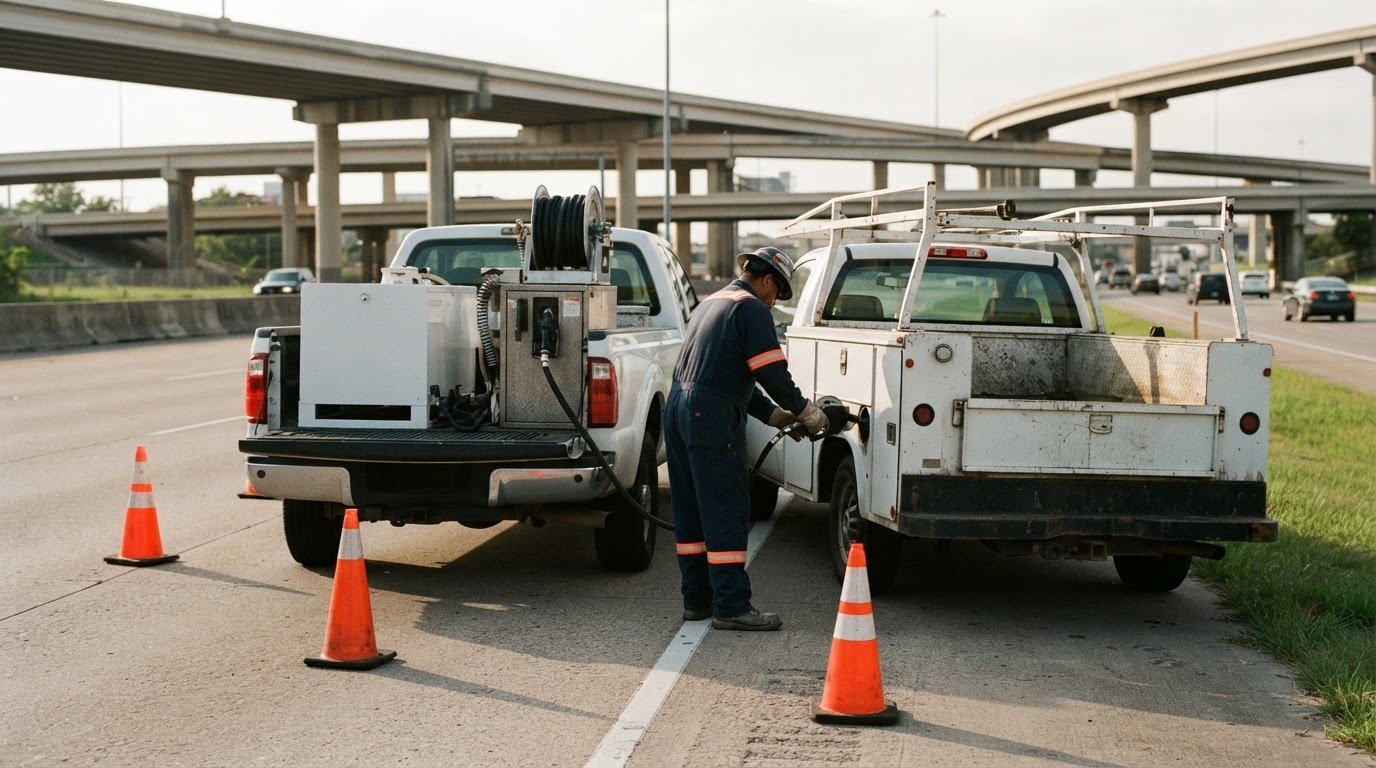
Location and access can affect the delivery plan. A receiving point inside a large Houston medical campus, for example, may need different routing instructions from a roadside equipment area. Include the correct entrance, access notes, and a contact who can guide the driver. These details give the quote request practical context.
- Fuel requirement: Specify the fuel type and quantity requested for the generator or equipment.
- Delivery location: Name the facility, receiving point, and any separate delivery locations.
- Timing: State whether the request is urgent or can follow a planned schedule.
- Access: Include entrance instructions, restrictions, and the on-site contact.
- Scope: Clarify whether the request covers one delivery or scheduled replenishment.
Review the quote against the requested scope before approving the order. Check the fuel, delivery location, quantity, timing, and access details. If the hospital needs deliveries to multiple generator areas, confirm that each appears in the quoted scope. Resolve any mismatch before dispatch.
For a fair comparison, provide the same request details for each quote. A hospital could describe an urgent delivery to a specified generator area, then compare how each quote addresses fuel, scheduling, route, and site access. Compare equivalent requests: a planned delivery may not involve the same work as an urgent one.
Keep the quote and request details with the hospital’s purchasing and emergency procedures. If the fuel requirement or delivery location changes, update the request so the quote and schedule reflect the new need. A change from one generator area to another, for instance, requires updated receiving instructions before delivery.
A clear quote request helps hospital staff understand the proposed scope before committing to delivery. Provide the operational details, review the scope, and resolve discrepancies. This keeps pricing discussions tied to the actual fuel and delivery needs rather than assumptions about the site or schedule.
Emergency fuel delivery to Houston hospitals and critical sites
Hospitals can request diesel for equipment designed to use it; gasoline is suitable only for equipment specified for gasoline. Key risks include delivering the wrong fuel, spills, and blocked access. Coordinate each delivery with site procedures and the receiving team.
Available Emergency Fuel Types
Match the fuel to the generator or equipment specifications, not assumptions about what hospitals commonly use. Diesel is suitable for equipment designed for diesel; gasoline should be used only when the receiving equipment is designed for it.
Before dispatch, identify the equipment, required fuel type, quantity, and receiving location. If a hospital campus has separate generators, for example, state each location’s fuel requirement separately. This helps prevent a delivery for one system from being directed to another.
Delivery Risks and Safety Requirements
A wrong-fuel delivery can leave the intended generator or equipment without usable fuel. Spills, unclear access routes, and vehicle movement near active hospital areas can also disrupt operations. Provide the receiving point, site-access instructions, and on-site contact before dispatch.
Follow the hospital’s established fuel-handling and site-safety procedures during delivery. Keep the receiving area clear, identify who will coordinate the transfer, and communicate access restrictions. Use the facility’s process to respond to a spill or other delivery incident.
Connect fuel selection with equipment records in the hospital’s delivery plan. Facilities staff can maintain a location-specific list of each generator or piece of equipment, its required fuel, receiving point, and access contact. A campus map, for example, can distinguish a central generator room from an exterior equipment area. Dispatch then gets instructions for the correct destination.
During an emergency, name the priority location and explain its urgency under the hospital’s operating plan. “Deliver to the hospital” leaves the receiving point unclear. Identify the building or generator area, fuel type, access route, and on-site contact so dispatch has actionable details.
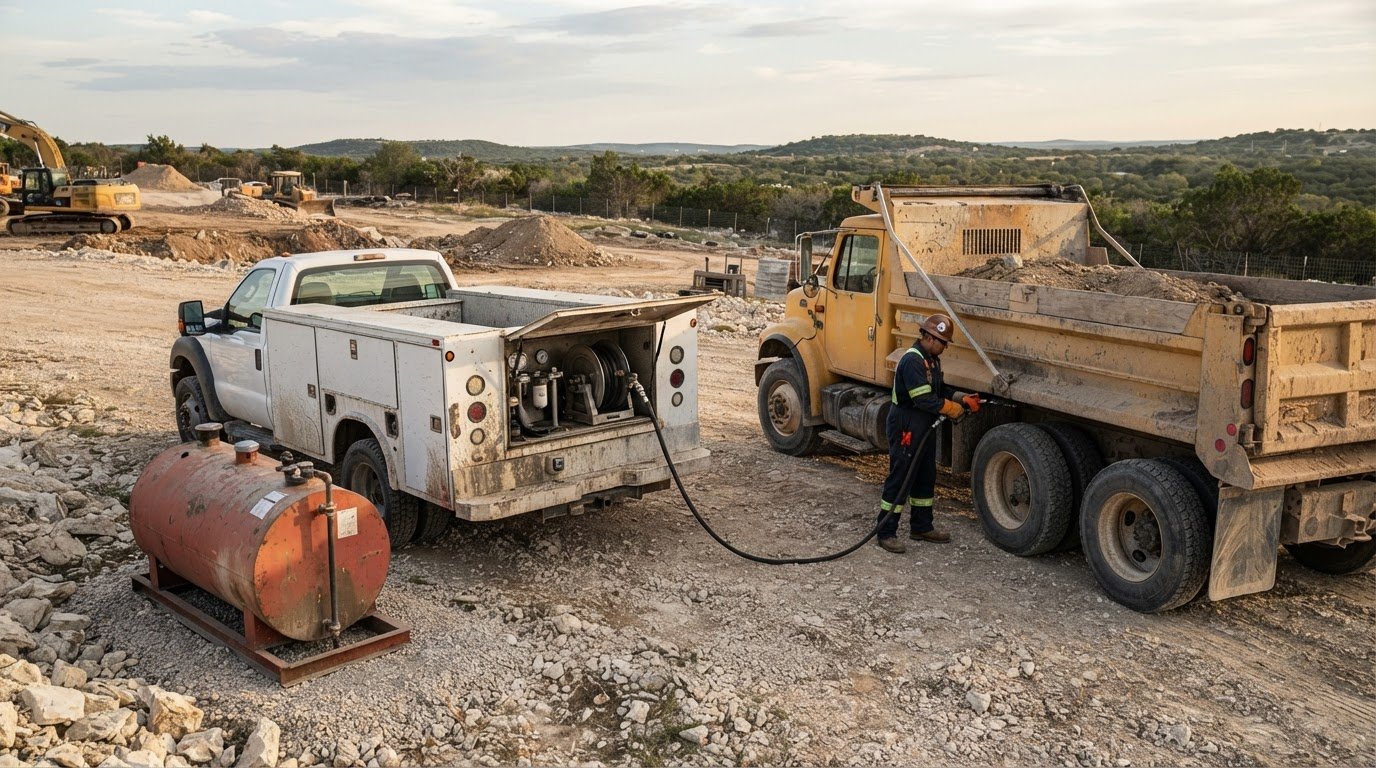
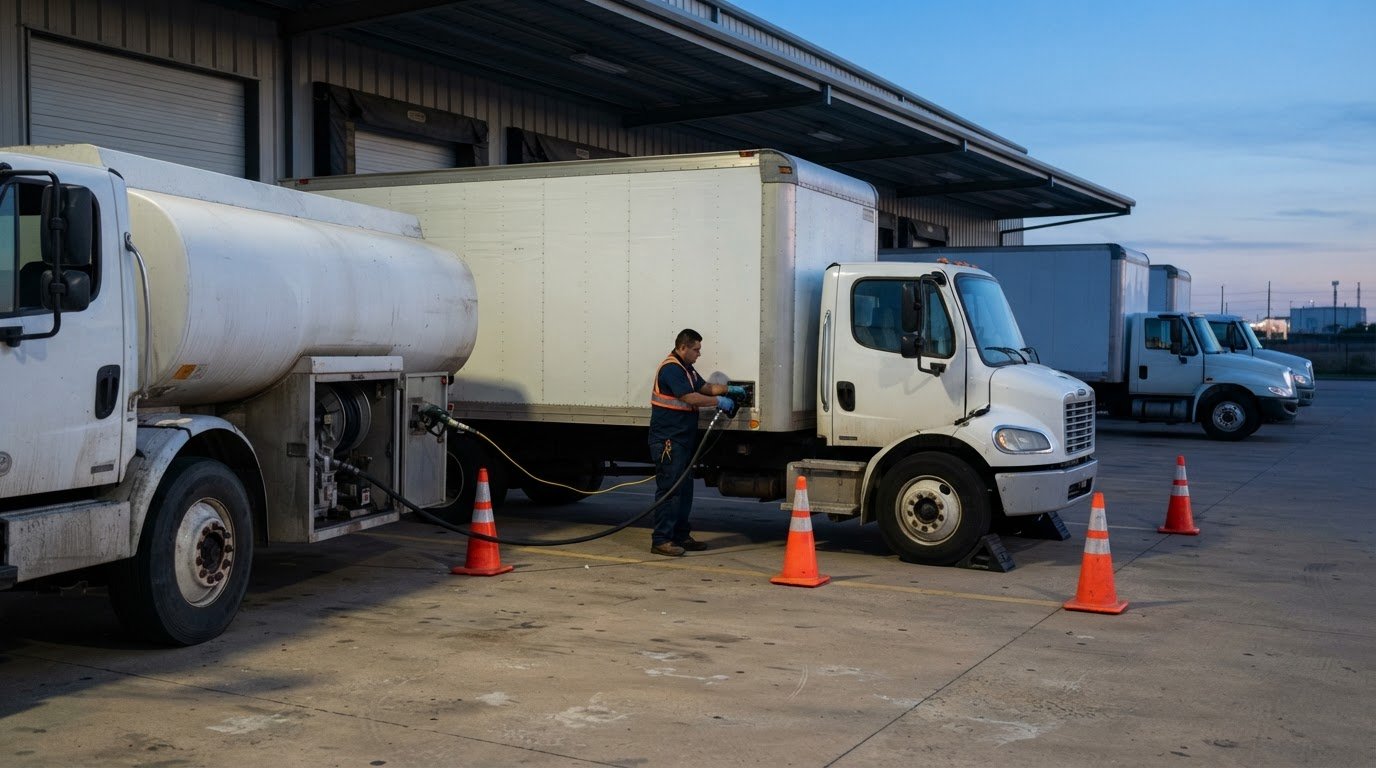
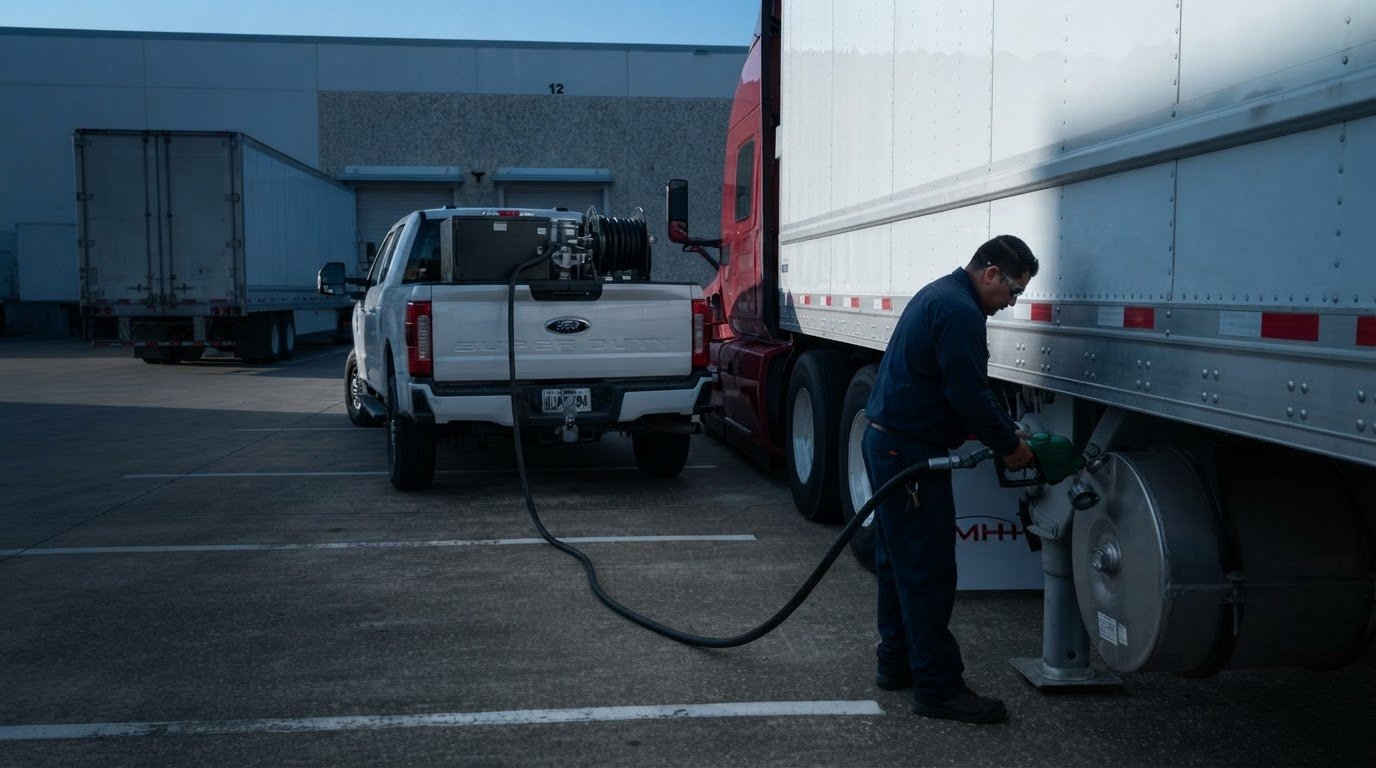
For critical sites beyond hospitals, apply the same equipment-first approach. A data center, industrial facility, or construction site should identify the equipment requiring fuel and its designated receiving area. Keep vehicle paths clear of active work zones and coordinate arrival with the person responsible for site access.
Before authorizing a delivery, match the requested fuel against the equipment record and confirm the designated receiving location. That simple sequence reduces avoidable errors when several facilities or generator areas need attention. To discuss a site-specific emergency fuel requirement, coordinate an emergency fuel delivery.
React Fueling: Emergency Fuel Delivery
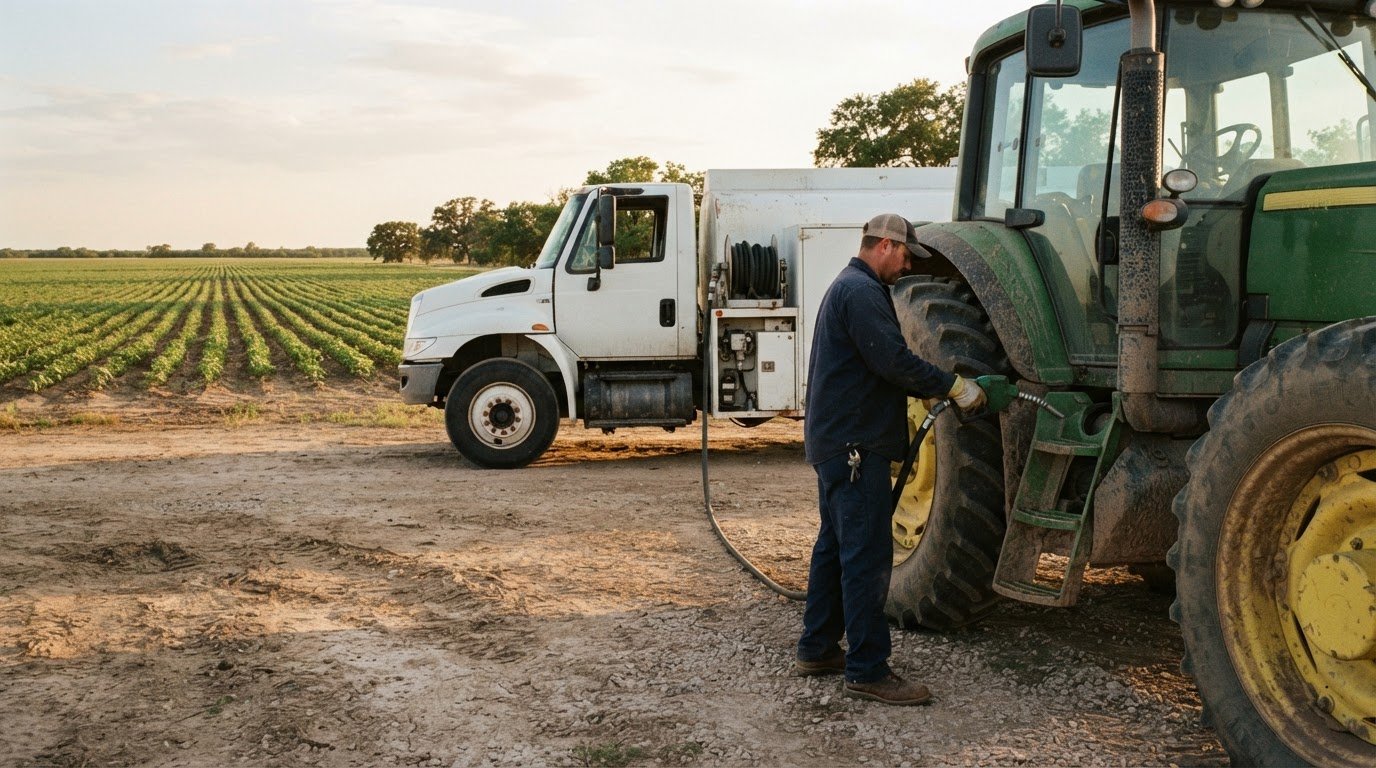
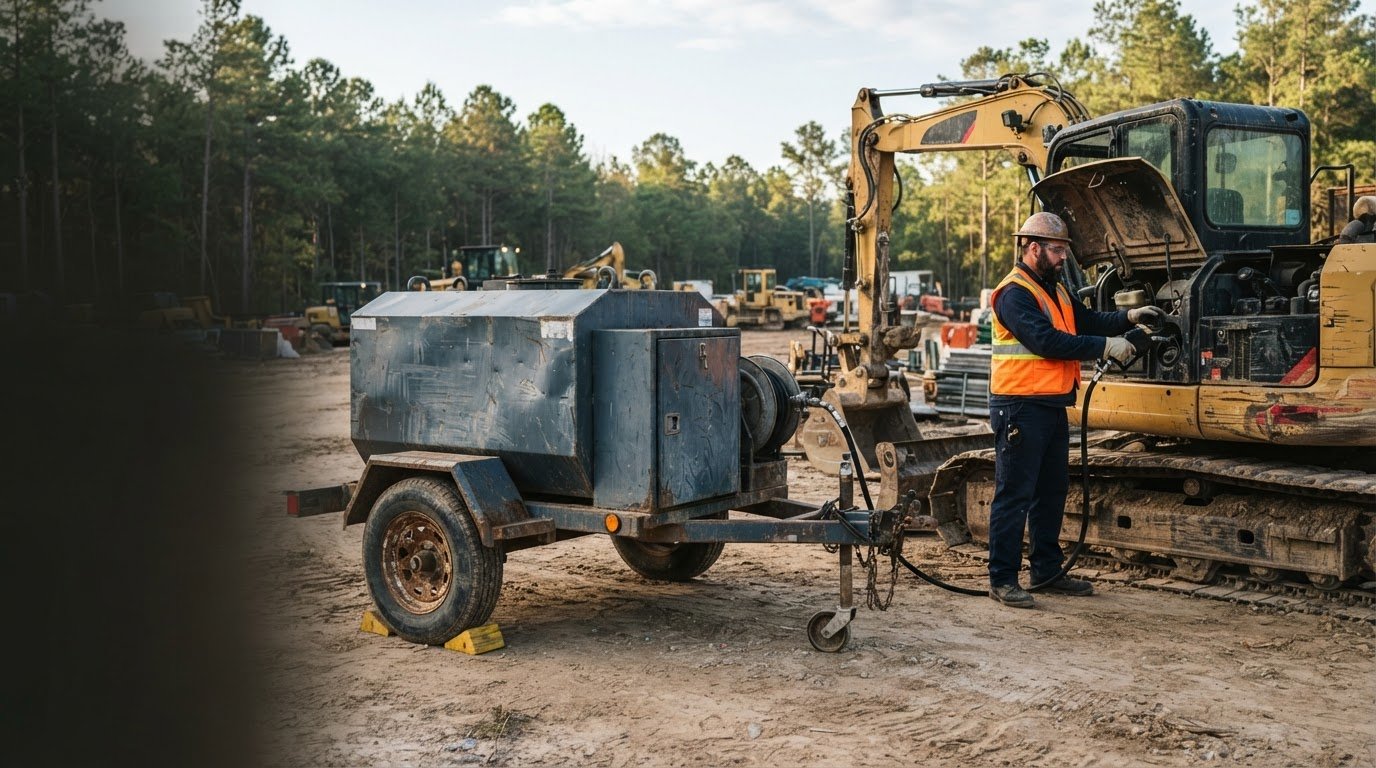
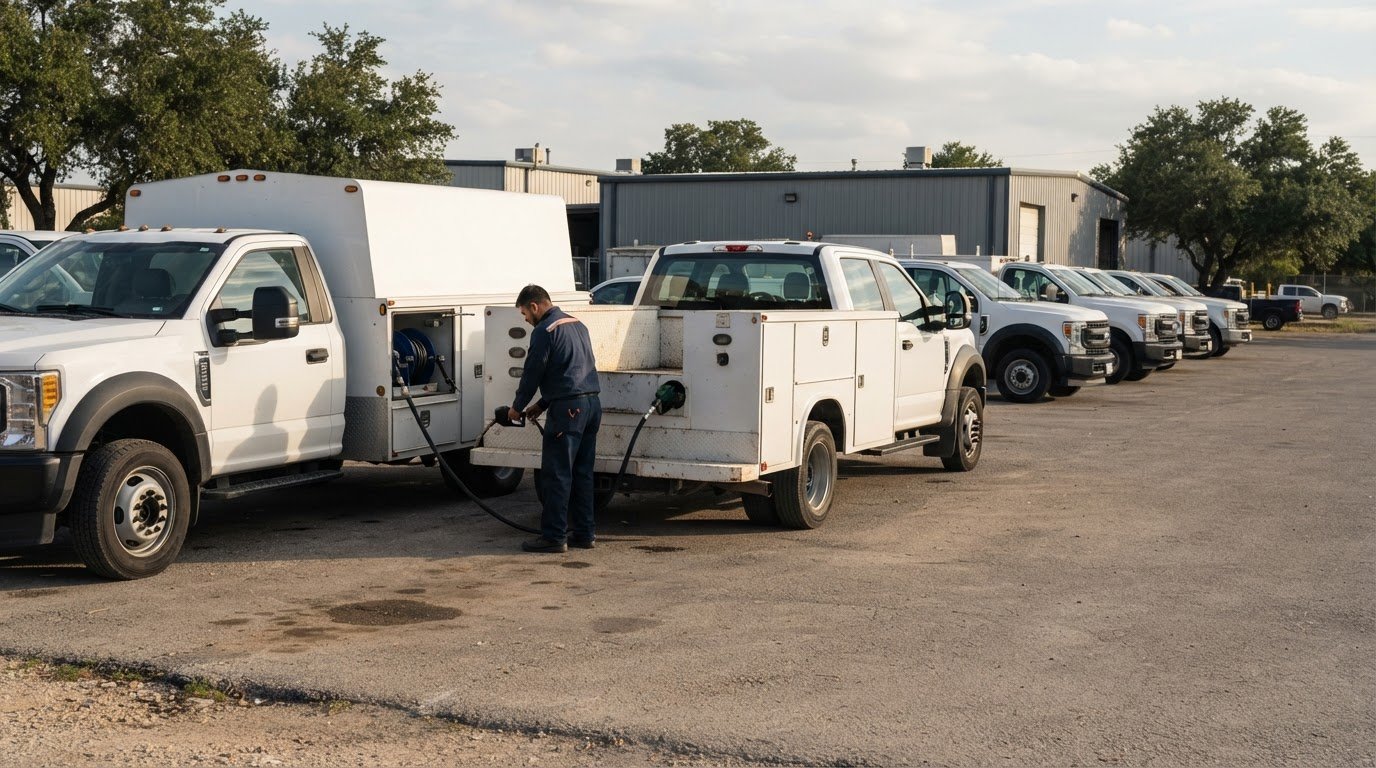
React Fueling provides emergency fuel delivery for hospitals and critical sites with urgent fuel needs. Services include diesel delivery, fuel delivery, and equipment fueling for generators and other essential machinery.
To request service, provide the fuel type, quantity, delivery location, access instructions, and urgency. These details define the delivery need and support a quote. Hospitals can use emergency fuel delivery when planned replenishment no longer meets an immediate operational need.
For an emergency fuel requirement, contact React Fueling about emergency fuel delivery.
Prepare the Next Step for Site Readiness
Turn emergency fuel planning into a practical site procedure. Align the person authorized to place an order with facilities staff who know generator locations, equipment needs, and delivery access. For Houston hospitals planning emergency fuel delivery, clear internal coordination makes the next request actionable.
React Fueling offers diesel delivery, equipment fueling service, and fuel delivery for commercial operations. Share the site’s fuel requirement and receiving details to start a focused conversation about the delivery need. The information you provide can help define the request and its scope.
Contact React Fueling for emergency service to discuss a hospital or critical-site fuel requirement. A clear next step can help your team put its plan into motion.
Frequently Asked Questions
How Much Does Fuel Delivery Cost in Houston, TX?
Fuel delivery in Houston is priced by quote, based on the specific request. For purchasing review, separate urgent delivery needs from planned replenishment and identify the facility or equipment served. A hospital arranging generator fuel, for example, should describe that need in its request. Review the quoted scope against the service required before approving the order.
How much fuel gets delivered during an emergency call?
The requested quantity depends on the receiving equipment or site’s needs, not a standard emergency amount. Identify which generator or equipment needs fuel and specify the requested quantity. If multiple locations need service, list them separately. Distinguishing a central generator from another equipment area, for example, associates the quantity with the correct destination.
What if the wrong fuel type gets requested by mistake?
Notify dispatch as soon as a mistake is identified, and state the correct fuel type and destination. If fuel has already arrived, keep it separate from the equipment and follow the hospital’s fuel-handling procedures. A facilities contact can identify the affected generator and clarify whether delivery instructions need to change. Prompt communication helps ensure the request is corrected.
Which companies provide emergency fuel delivery to hospitals in Houston, Texas?
React Fueling provides emergency fuel delivery, diesel delivery, and equipment fueling for commercial and critical-site operations. Its service areas include Houston, TX; Austin, TX; San Antonio, TX; Dallas, TX; College Station, TX. Magnolia is also among the Texas communities named in its local business information. In a hospital request, specify whether the need is for a generator, other equipment, or another commercial fuel requirement.
How quickly can fuel suppliers deliver to hospitals in Houston during an outage or disaster?
Delivery timing depends on the request, dispatch conditions, route, and site access. React Fueling lists an average 4-hour response time across Texas; response time is not the same as a guaranteed delivery arrival time. During a Houston outage, provide the exact receiving location and any access restrictions promptly. A named site contact can help dispatch coordinate changes if traffic or hospital entry instructions affect the plan.
What is the minimum order and typical emergency fuel delivery price in Houston?
Order quantity and pricing depend on the specific request, so do not assume a fixed minimum or typical price. A quote is provided after a request, with fuel needs, delivery location, urgency, and site details shaping its scope. For procurement, distinguish an immediate generator need from planned replenishment, then ensure the quantity and destination match the hospital’s intended use.
What information does a hospital need to arrange emergency fuel delivery in Houston?
Provide the fuel type, requested quantity, facility address, receiving location, urgency, access instructions, and an on-site contact. A hospital campus should identify the building or generator area, not just the general campus address. Include any entry or routing details the driver needs. If the request covers multiple locations, list each destination and its requirements.