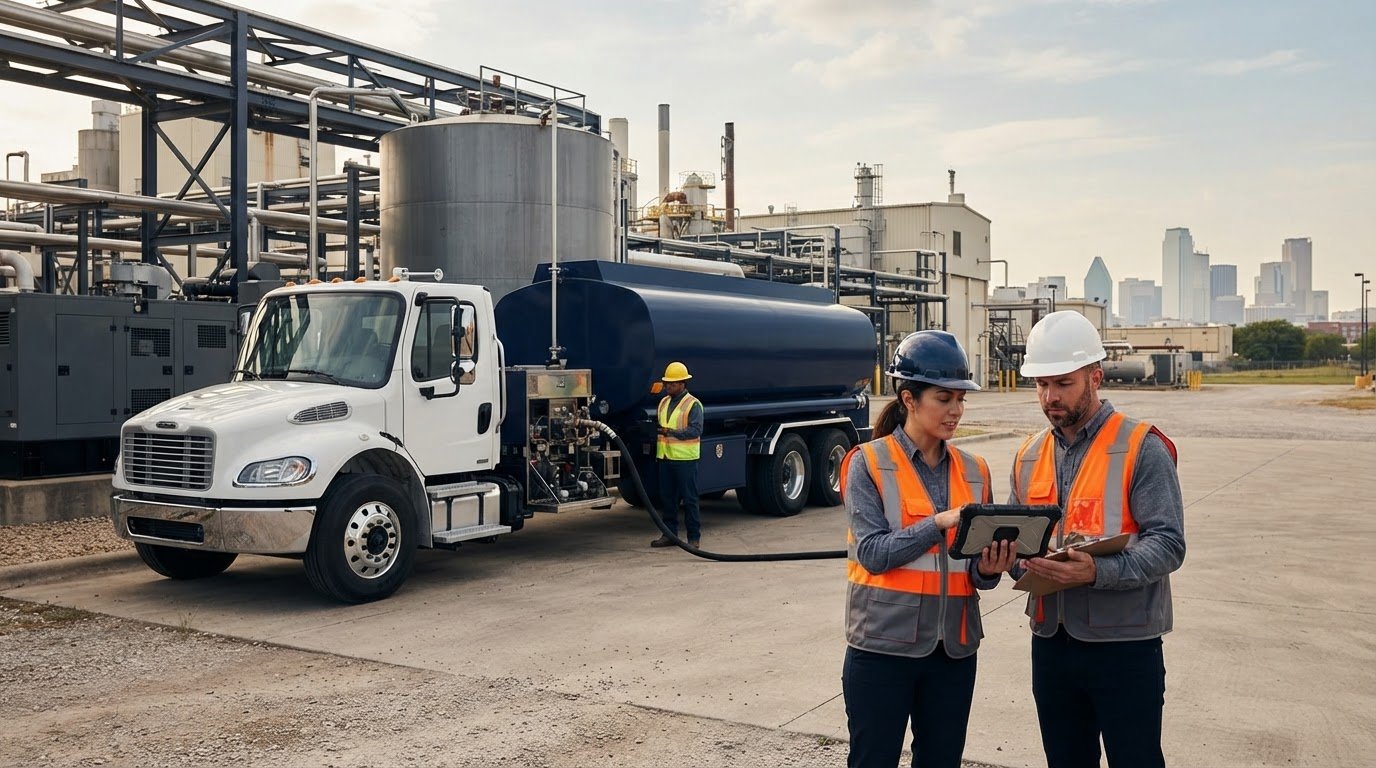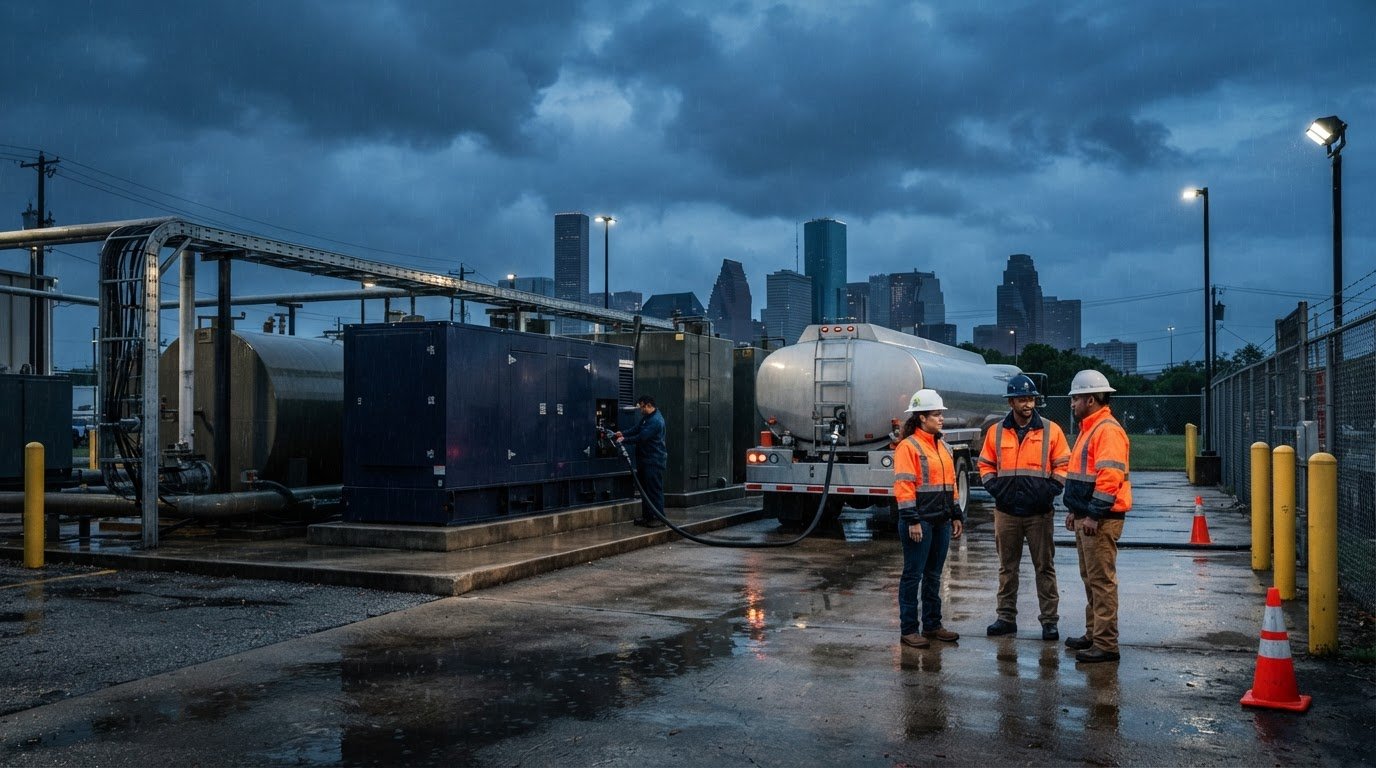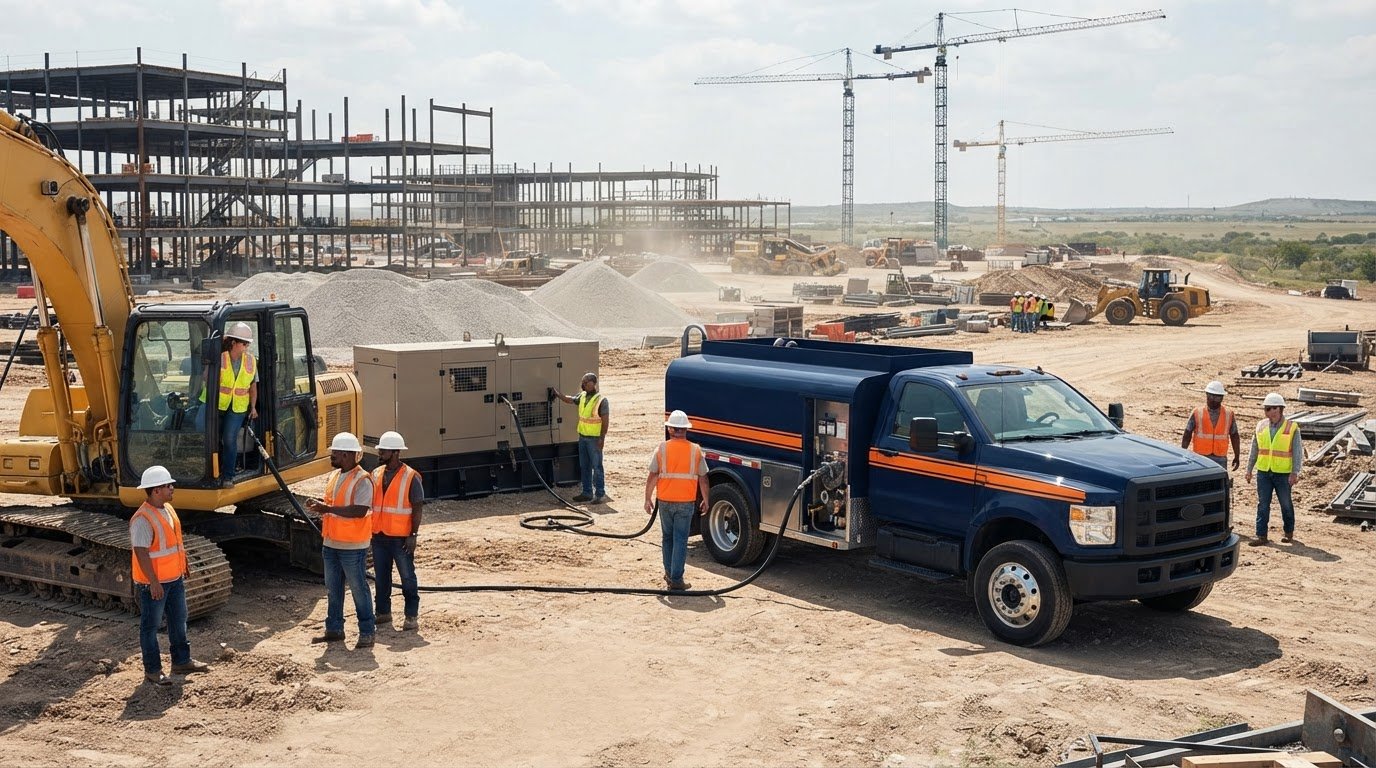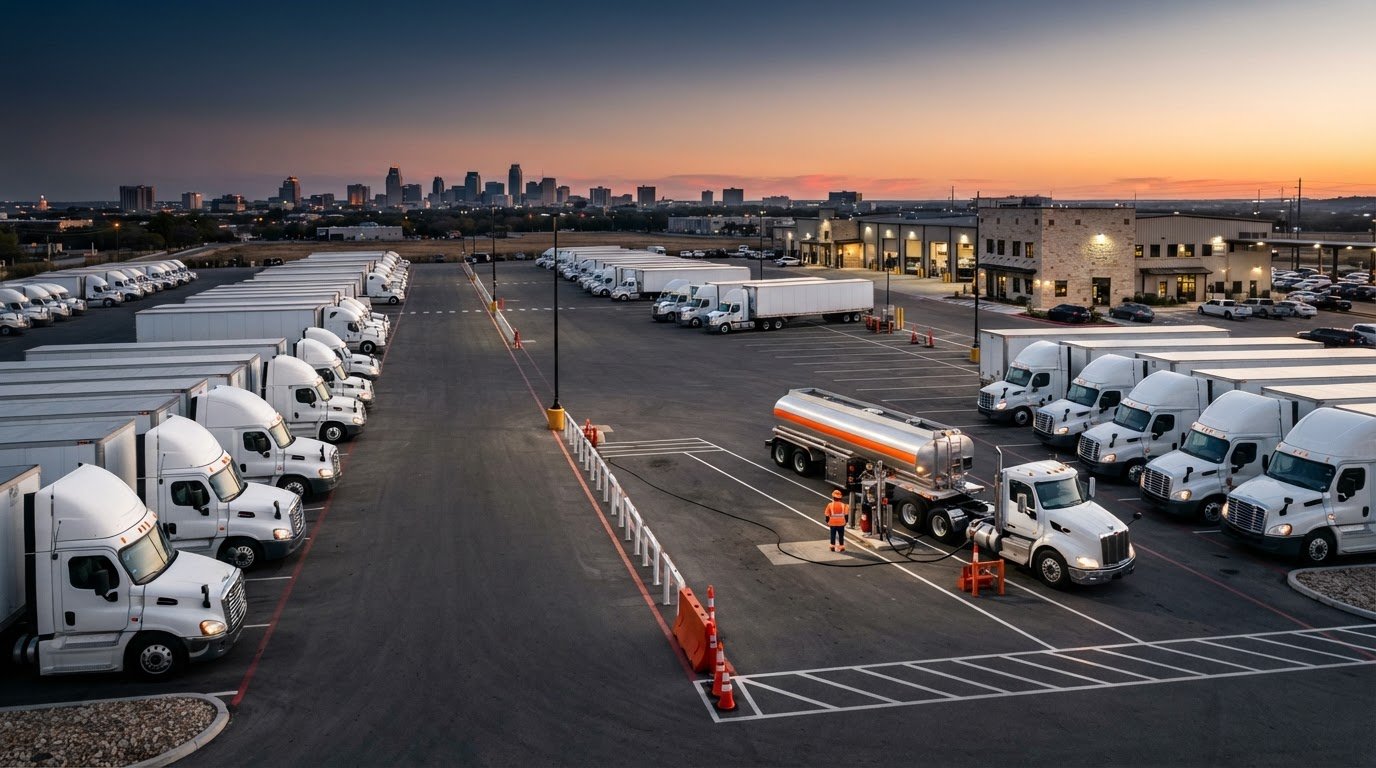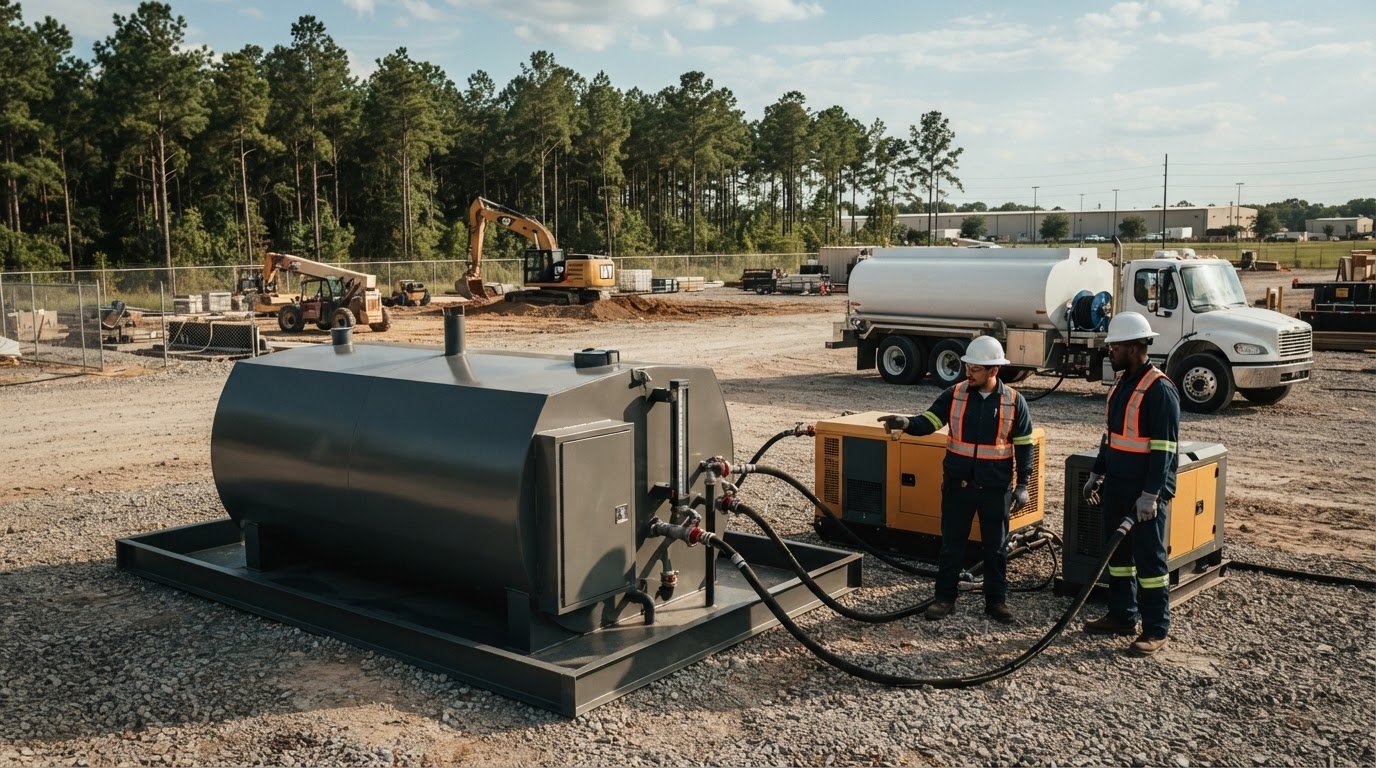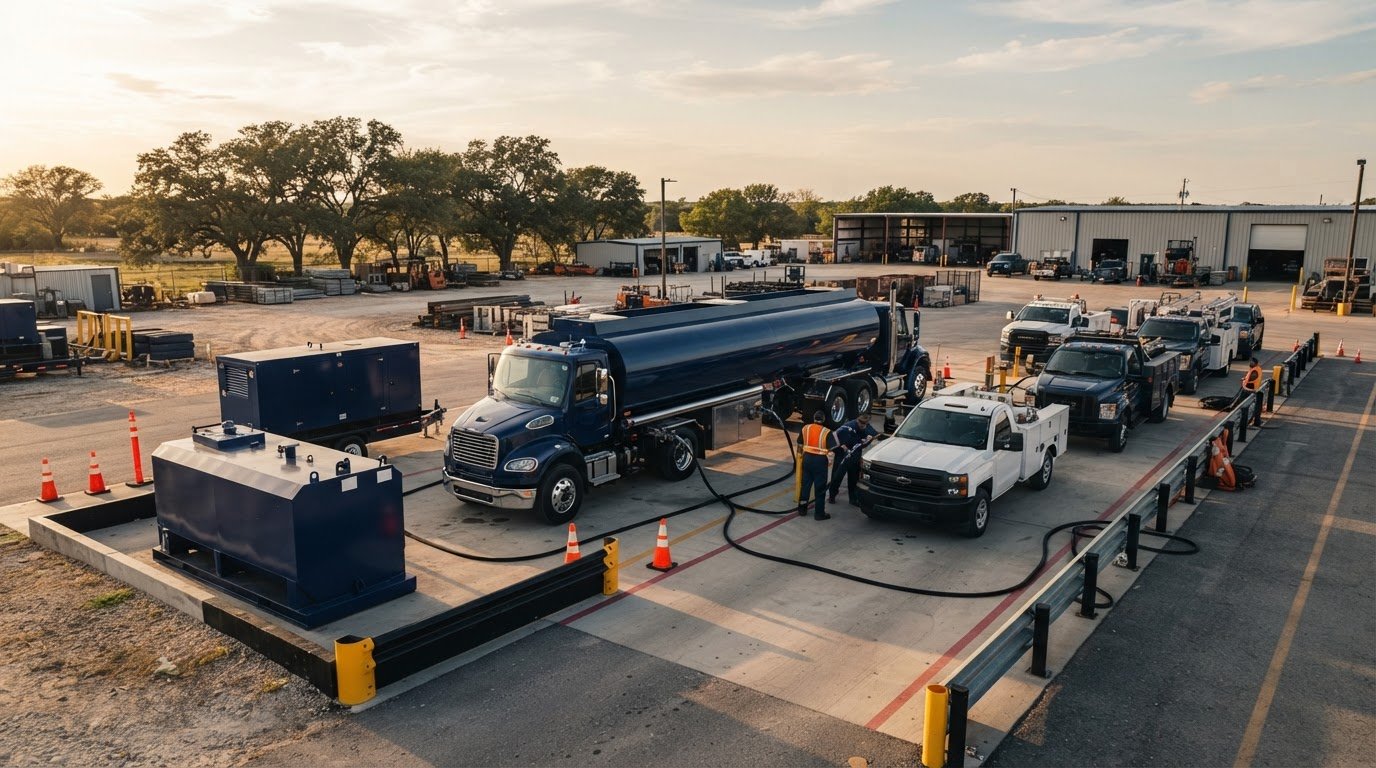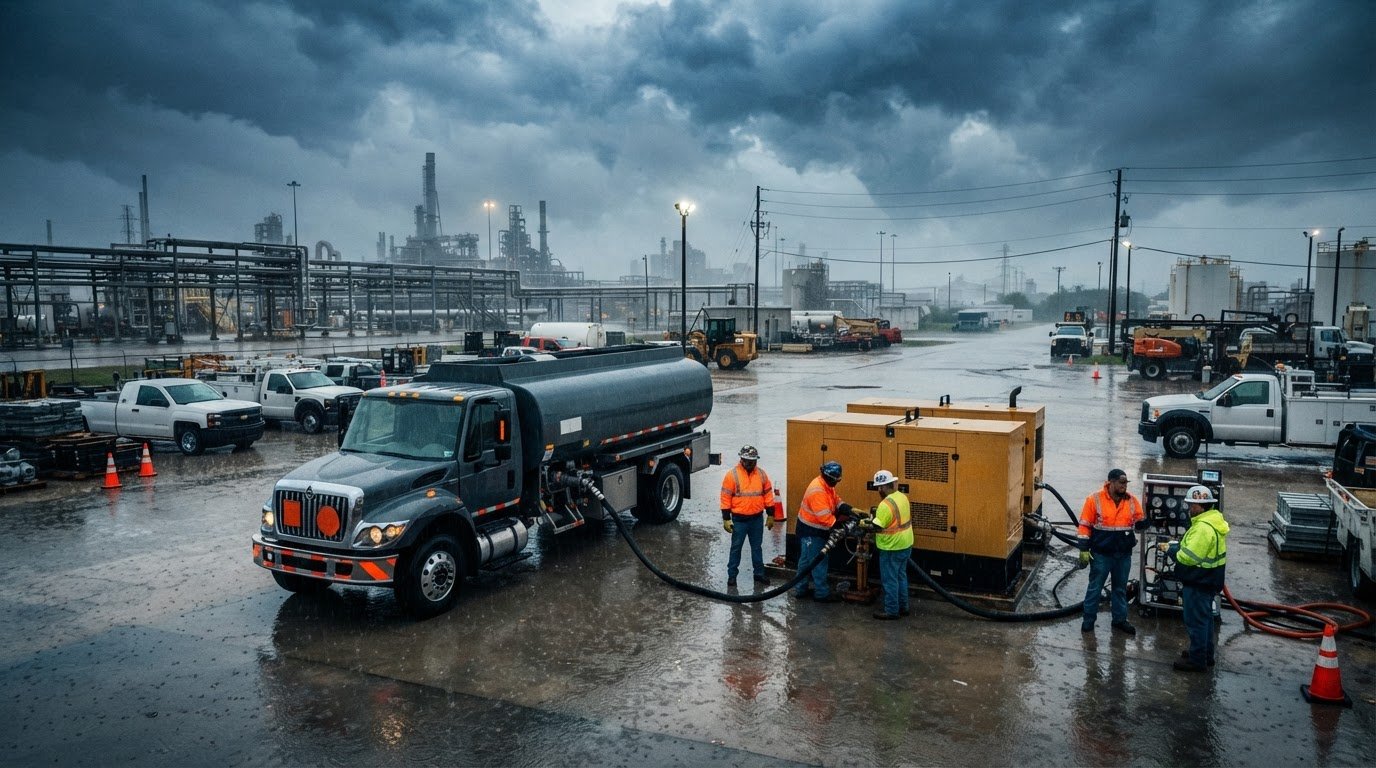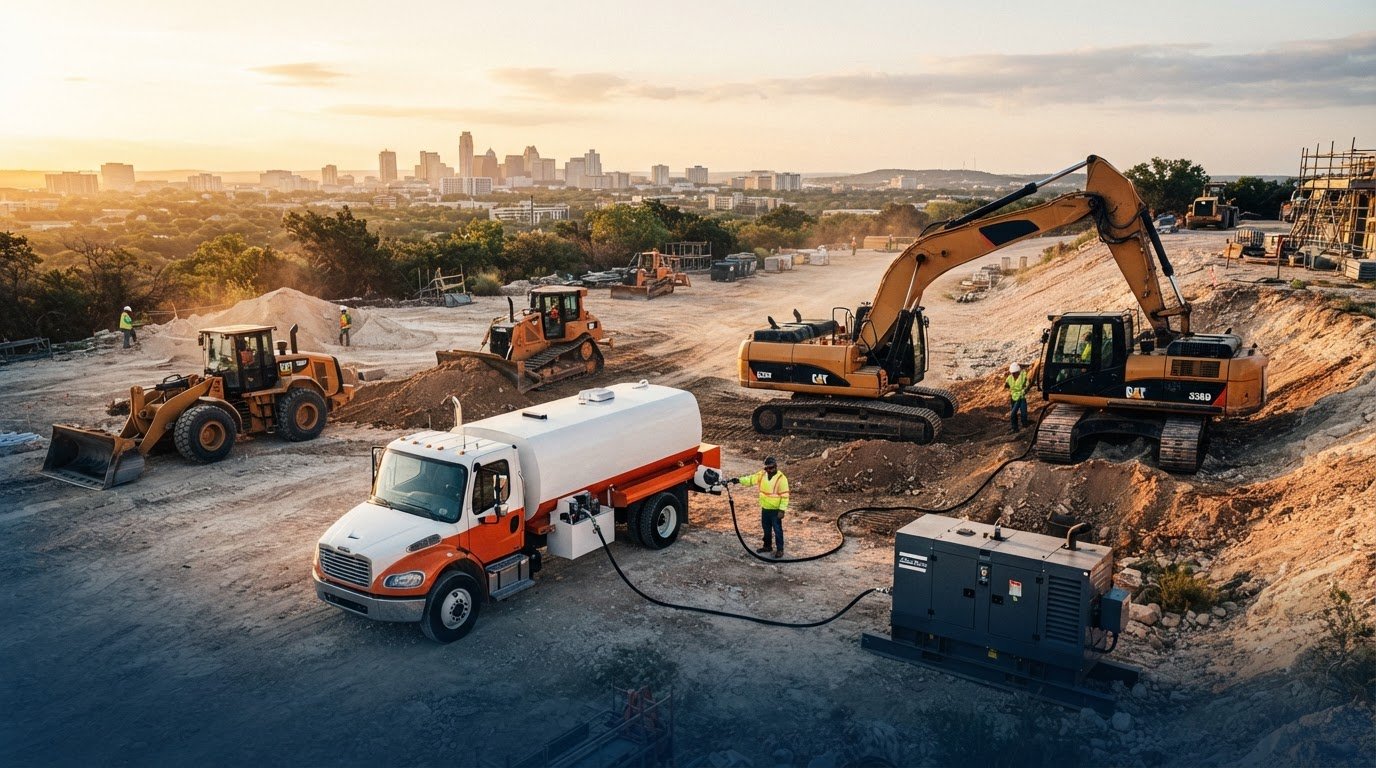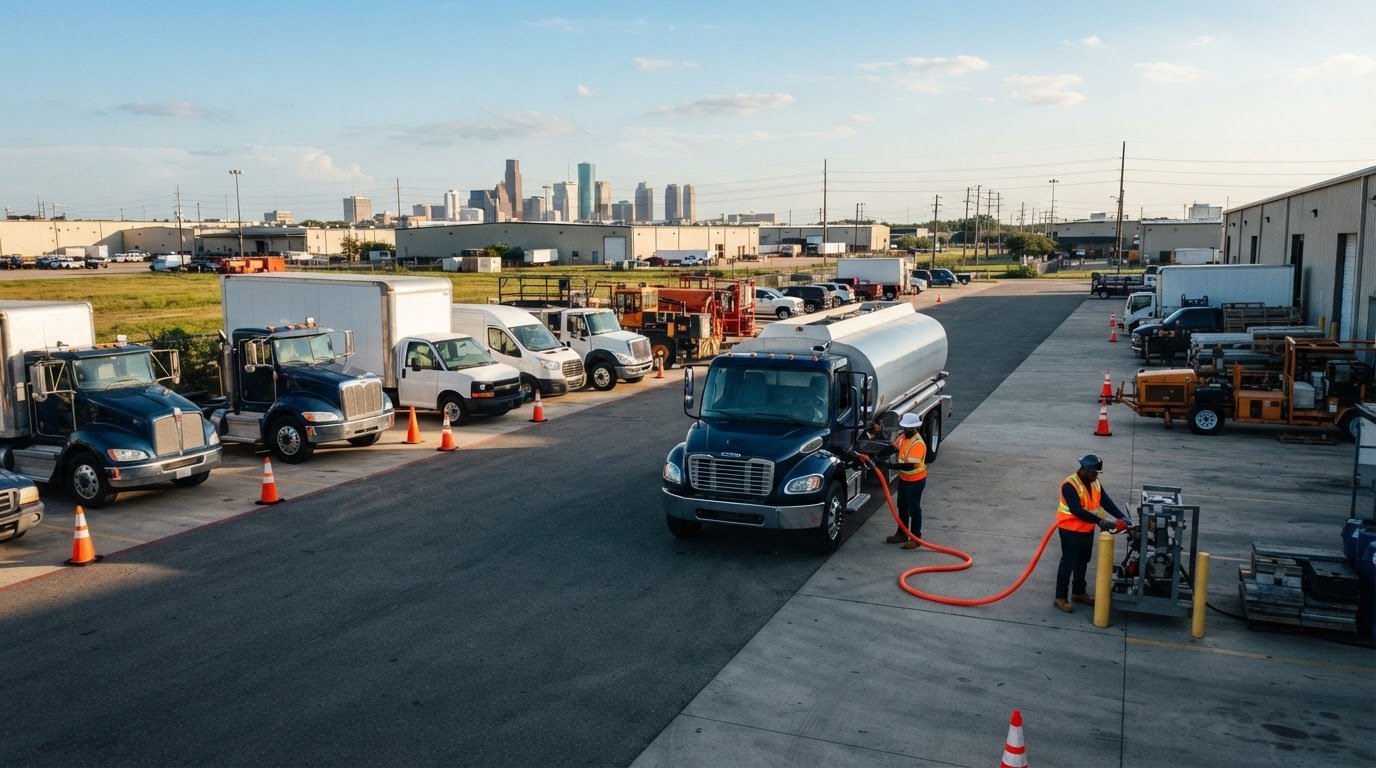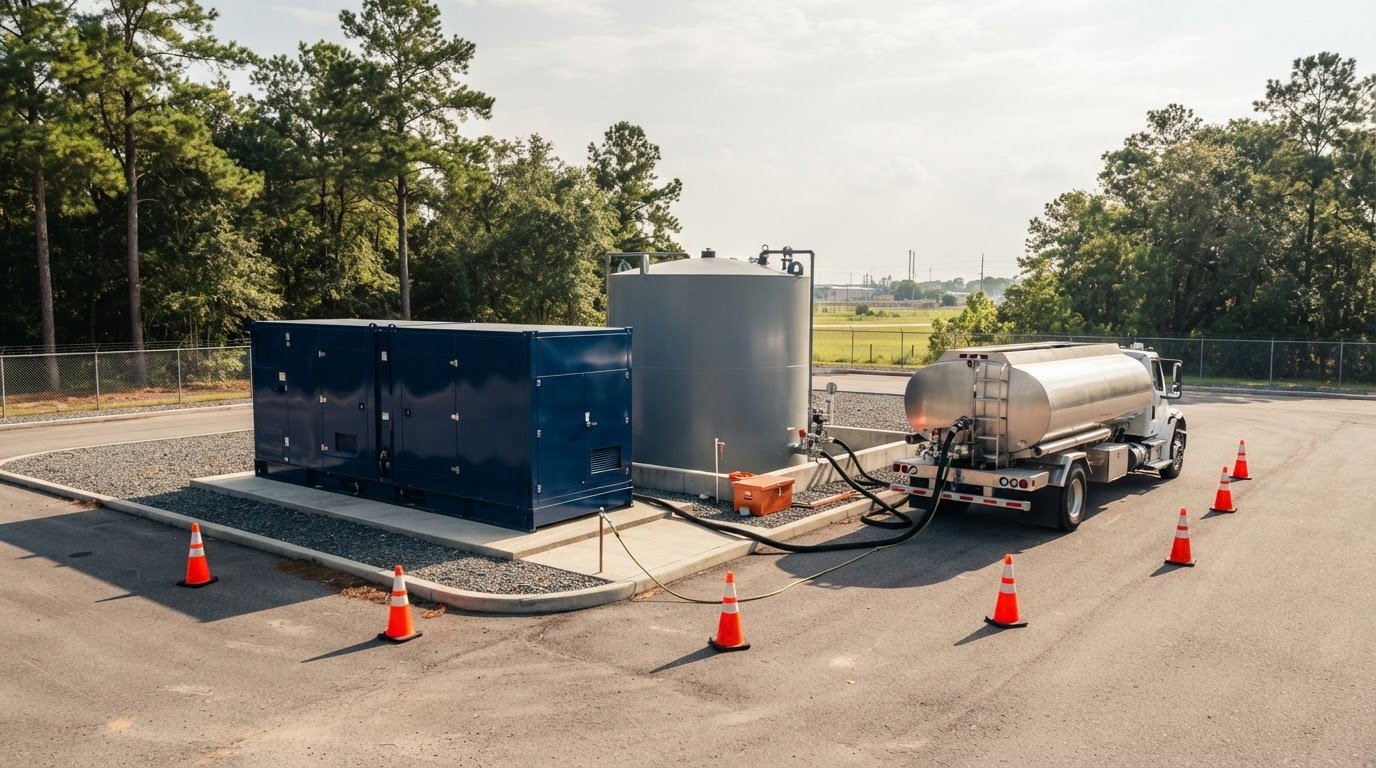
On August 28, 2026, a severe storm left more than 110,000 CPS Energy customers without power at its peak, KENS 5 reported. For San Antonio businesses, a standby generator is only part of the continuity plan. The emergency fuel supply for generators San Antonio facilities depend on must be ready to reach the site, too.
It’s reasonable to focus first on the generator and the fuel already in its tank. But an extended outage can disrupt normal access to fuel, and an unclear delivery plan adds pressure when operations are already strained. Readiness means knowing how long current reserves can support critical loads and how to replenish them safely.
This guide explains how to assess generator fuel reserves, plan for emergency delivery, and gather the site details needed to coordinate fueling without disrupting facility operations. You’ll also learn how on-site storage can support different needs and how React Fueling’s generator fueling and emergency fuel delivery fit into a commercial continuity plan in San Antonio.
Why Emergency Generator Fuel Supply Matters for San Antonio Businesses
Emergency generator fuel supply involves more than the fuel already in a tank. It combines a planned reserve with a workable way to replenish that reserve if normal purchasing or delivery is disrupted. For San Antonio businesses, fuel is part of backup-power planning, alongside the generator, transfer equipment, operating procedures, and the people responsible for essential systems.
A generator can support operations only while it has usable fuel and is operating as intended. If fuel runs low before utility power returns or replenishment arrives, equipment that depends on backup power may go offline. The Emergency Power System Overview explains how generators fit into broader emergency power systems. Each facility must plan around its own loads, equipment, and operating needs.
Generator capacity describes the power a unit can provide; fuel reserves determine how long that power can be sustained. A site-ready plan accounts for both. React Fueling’s generator fueling service supports commercial facilities as part of a broader fuel continuity plan.
Which San Antonio facilities should plan generator fuel continuity?
Any business facility that depends on backup power for operations or essential systems should define its fuel needs before an interruption. This can include hospitals, data centers, industrial sites, warehouses, and commercial buildings with critical building systems. Each facility has its own loads and runtime requirements, so the plan should reflect its actual operations.
Start by separating loads into two groups: systems that must remain powered and equipment that can stay offline temporarily. A facility might prioritize life-safety or process-critical systems, then identify nonessential lighting, comfort equipment, or production tasks that can be paused. Use generator documentation and facility operating plans to understand the unit’s fuel use under the loads it will actually serve.
What can disrupt access to generator fuel?
Severe weather, transport disruption, and increased regional demand are planning considerations, not predictions about a specific San Antonio event. Any of them can affect normal purchasing routines, site access, or fuel movement. A routine order placed during ordinary operations may not address the coordination and access constraints of an active outage.
Prepare for those constraints in advance. Map the delivery entrance and tank location, identify site contacts, and note access controls or operating restrictions that could affect fueling. Keep the information current so staff can share it quickly when arranging emergency delivery.
A practical continuity plan also makes responsibilities clear. Assign someone to monitor fuel levels, set an internal notification point for replenishment, and document which loads take priority if reserves become constrained. Record the generator’s fuel type, tank capacity, current usable reserve, and the facility contact who can coordinate access. These details connect the generator’s operating needs with a realistic replenishment plan, reducing last-minute uncertainty while protecting essential operations.
How Emergency Fuel Delivery Supports Generator Runtime During an Outage
Fuel delivery is most useful when it follows a defined process, rather than starting with a rushed call after reserves are nearly depleted. For facilities planning an emergency fuel supply for generators San Antonio operations depend on, connect fuel readings, generator requirements, site access, and staff responsibilities before an outage occurs. This makes replenishment a coordinated part of continuity planning.
Generator load and fuel consumption determine operating duration, so runtime depends on how the equipment is used and how much usable fuel is on site. A single runtime estimate won’t apply to every generator or operating condition. Consult the manufacturer’s documentation for fuel-consumption and capacity specifications, then use site records to understand performance under your facility’s actual load.
What information helps coordinate an emergency generator fuel delivery?
Prepare a concise site record for the designated contact to share during an interruption. Include the facility location, delivery entrance and access instructions, generator fuel type, current tank reading, and estimated amount needed. Note receiving procedures, relevant safety requirements, operating restrictions, and the person authorized to coordinate fueling. Clear information helps align the delivery with the site’s equipment and conditions.
Use this sequence to organize the handoff:
- Assess: Record the current fuel level and whether the generator is operating.
- Identify: Confirm fuel type, estimated demand, and equipment-specific requirements in the manufacturer’s documentation.
- Coordinate: Share the address, access route, receiving instructions, and designated site contact.
- Receive: Direct the delivery to the intended tank or receiving point while following facility procedures.
- Document: Log the replenishment and update fuel status for the next shift or operating review.
A designated contact reduces confusion during a stressful handoff. That person can relay current conditions, coordinate site access, and let facility staff know when fueling is taking place. Commercial emergency fuel delivery can be part of this replenishment plan.
How should facilities track generator fuel and runtime?
Keep a consistent record of how fuel status changes while the generator runs. Log tank readings, operating hours, generator load when available, and each replenishment. Record the time and source of each reading so staff can compare like with like. Use the manufacturer’s documentation to interpret consumption and runtime figures; don’t treat a past observation as a universal estimate for different loads or conditions.
Review the record during shift handoffs and after each test or operating period. If fuel use changes, note whether the load or operating conditions changed too. This gives the next decision-maker a clearer basis for estimating remaining runtime and arranging replenishment before the reserve becomes a constraint.
Stored Fuel, Tank Rentals, and Emergency Delivery: Compare Your Options
A sound emergency fuel supply for generators San Antonio businesses can rely on may combine on-site reserves, planned replenishment, and a response path for unexpected shortages. Each option addresses a different operational need. The right mix depends on fuel consumption, site access, available storage, and how the facility organizes its backup-power operations.
An existing tank can be a useful starting point, but its capacity alone doesn’t show how long fuel will last. Actual consumption varies with generator load, and the tank’s usable fuel level and ability to receive a delivery matter too. Assess these factors together before deciding whether current storage is enough or another replenishment method is needed.
| Option | Advantages | Planning demands | Suitable circumstances |
|---|---|---|---|
| On-site reserve | Fuel is already at the facility when needed. | Monitor fuel condition and level, safe placement, and replenishment. | Sites that need an immediate buffer or face access constraints. |
| Planned replenishment | Fuel deliveries can be organized around recurring demand and operating routines. | Track consumption, establish a reorder process, and coordinate receiving. | Facilities with predictable generator use or regular fuel needs. |
| Emergency delivery | Can help address an unexpected shortage that threatens continuity. | Share accurate fuel, access, and receiving details during coordination. | Sites whose reserves are running low during an unplanned interruption. |
When does an on-site fuel reserve make sense?
Stored fuel can provide an immediate buffer if normal delivery access is disrupted, but it requires active management. Monitor levels, plan replenishment before reserves become constrained, and place storage in accordance with applicable site requirements. Portable fuel tank rentals can support temporary on-site storage needs. Choose storage capacity based on site operations, not a universal reserve target.
When should a facility arrange commercial generator fueling?
Planned fueling suits recurring demand and established operating routines, helping facilities organize replenishment before a shortage develops. Emergency delivery addresses an unexpected fuel gap that threatens continuity. Generator fueling services support commercial sites as part of a broader fuel plan, while emergency delivery responds to an unplanned need.
These approaches can work together. A facility might hold an on-site reserve as its first buffer, organize routine replenishment based on observed consumption, and include emergency delivery in its response plan. Review the arrangement whenever generator loads, site access, or storage needs change. This keeps the plan grounded in operating conditions instead of assumptions about tank size or outage duration.
Build a Generator Fuel Readiness Plan for Your San Antonio Site
A written plan turns fuel readiness into assigned tasks instead of assumptions. For an emergency fuel supply for generators San Antonio facilities can manage under pressure, record equipment details, define who monitors inventory, and map how a delivery would reach the site. Keep the plan with facility continuity documents, make it accessible to the people responsible for operations, and review it before seasonal weather risks may disrupt routines.
What should the fuel readiness checklist include?
Build a practical record for each generator and fuel storage setup. Use manufacturer documentation to capture specifications and operating guidance, then pair it with current site information. Identify critical loads and assign an internal escalation owner who can make replenishment decisions or route them to the right person.
- Equipment: Generator specifications, approved fuel type, tank configuration, and relevant manufacturer instructions.
- Fuel status: Current inventory checks, consumption records, and a site-defined replenishment threshold based on operating needs.
- Delivery coordination: Location, gate and route instructions, receiving procedures, safe delivery area, and on-site point of contact.
- Responsibilities: The staff member who monitors fuel, the escalation owner, and backup contacts if the primary contact is unavailable.
- Records: A place to log readings, generator use, deliveries, and changes to access or operating procedures.
Set the replenishment threshold using the facility’s consumption history and manufacturer guidance, not a generic reserve target. Specify who checks the level, how the escalation owner is notified, and what information that person needs to arrange replenishment. Keep a current copy available to operations, security, and the generator operator.
How can San Antonio facilities prepare for delivery constraints?
Map the delivery path from the site entrance to the intended receiving area. Document gate access, vehicle routes, operating-hour restrictions, and the safe delivery location. Include alternate instructions for a blocked entrance or a change in site operations, and make sure the on-site contact knows how to communicate those conditions.
Coordinate the handoff among facility operations, security, and the generator operator. Operations can share current fuel status and receiving requirements; security can explain site access; the generator operator can provide equipment information. A brief internal walkthrough can expose gaps, such as outdated gate instructions or an unclear approval process, before they complicate an outage response.
Review the plan before seasonal weather risks, after changes to the generator or storage setup, and when site access procedures change. Update contact details and confirm staff know where the current plan is kept. For a broader continuity perspective, use this emergency generator fueling guide alongside your facility’s own procedures.
Once the checklist, roles, and access details are in place, discuss your generator fuel readiness plan with React Fueling as part of preparing for commercial fuel delivery in San Antonio.
Arrange Emergency Generator Fuel Support in San Antonio with React Fueling
A dependable fuel plan needs a commercial logistics partner who understands the practical details of fueling a facility. React Fueling serves San Antonio with commercial fuel delivery, emergency fuel delivery, generator fueling, and portable fuel tank rentals. The company also serves Houston, Magnolia, College Station, Austin, and Dallas. These services can support different parts of a continuity plan, from fueling a generator to adding on-site storage.
Start the coordination process with clear, current information. Identify the site, explain what the generator needs, describe its fuel status, and share how delivery vehicles can access the receiving area. Precise details help shape a fueling plan around actual equipment and site conditions, rather than assumptions about tank size or operating demand.
What to include when requesting generator fuel support
Prepare a concise intake record and keep it accessible to the person responsible for coordinating fuel. Include the facility address, generator fuel type, tank configuration or relevant tank details, and current fuel level. Add operating conditions, estimated demand, access instructions, receiving procedures, and the name and contact details of the staff member overseeing the handoff.
- Site: Facility location, delivery entrance, gate instructions, and route to the receiving point.
- Equipment: Generator fuel type, tank details, and applicable manufacturer guidance.
- Status: Current fuel level, operating condition, and estimated demand based on site records.
- Coordination: On-site contact, access requirements, and any procedures that affect receiving.
These details give the fueling team a useful operational picture. Update them when equipment, access routes, or facility procedures change so staff aren’t relying on an outdated record during an interruption.
Connect emergency fueling to broader facility continuity
Fueling works best when it aligns with the facility’s backup-power procedures. Assign responsibility for monitoring the generator’s fuel status, set an internal escalation path, and make sure operations, security, and the generator operator understand their roles. That coordination helps the facility manage access and fueling alongside other continuity decisions.
Include React Fueling’s emergency fuel delivery service in the facility’s fuel support plan. Keep the plan grounded in your site’s documented requirements and the operating conditions at the time. A delivery plan works alongside clear internal procedures, equipment guidance, and accurate information about site access.
For San Antonio facilities, emergency fuel supply for generators is strongest when delivery arrangements and backup-power responsibilities work together. Bring your location, equipment details, current status, and access instructions into the conversation to make planning specific to your operation. Contact React Fueling about generator fuel support.
Put Your Generator Fuel Plan Into Practice
A readiness plan is most useful when it becomes part of routine facility operations. Assign responsibility for keeping equipment and access details current, and make sure the people who may coordinate fueling can find those details quickly. A brief review before seasonal weather risks can reveal outdated contact information, changed site procedures, or gaps in who makes replenishment decisions.
For facilities planning an emergency fuel supply for generators San Antonio operations can depend on, turn those records into a site-specific arrangement. React Fueling serves San Antonio with commercial generator fueling and emergency fuel delivery, while portable fuel tank rentals can support on-site storage needs. Bring your generator requirements, current fuel status, and delivery instructions into the conversation to focus planning on your facility’s actual conditions.
Contact React Fueling to discuss generator fuel support and take a practical step toward keeping critical operations prepared. A clear plan helps your team respond with greater confidence when normal operations are interrupted.
Frequently Asked Questions
Can emergency fuel delivery refuel a generator while it is operating?
Not automatically. Whether a generator can be refueled while running depends on its design, tank arrangement, and site safety procedures. Never assume fueling active equipment is safe. Check the manufacturer’s instructions and have the responsible facility operator determine whether the unit must be shut down or isolated before fueling. Share the generator’s operating status with the delivery coordinator so the fueling plan accounts for site requirements.
How do I know whether my generator uses diesel or another fuel?
Check the generator’s identification plate and manufacturer’s documentation for its specified fuel type. Tank labels and facility maintenance records may provide additional confirmation, but don’t rely on appearance or assumptions based on the equipment’s size. If records conflict, pause before adding fuel and have the facility’s generator operator resolve the discrepancy using the equipment documentation. Using the wrong fuel can prevent proper operation and may require corrective service.
What happens if a generator runs out of fuel during an outage?
The generator stops supplying backup power, so the systems connected to it may lose power until the unit can be safely restarted. Depending on the engine and fuel system, air may enter the fuel lines, and restarting could require steps specified by the manufacturer. Don’t repeatedly crank the unit or improvise a restart procedure. Follow its operating manual and facility protocol, then have the responsible operator assess the equipment and fuel system.
How long can diesel fuel remain in a generator storage tank?
There isn’t one reliable storage duration for every tank and operating environment. Diesel condition can change with storage conditions, fuel handling, and exposure to water or contaminants. Use the generator and fuel-system manufacturer’s guidance to set inspection and maintenance practices. Keep records of fuel additions and inspections, and arrange appropriate fuel-quality assessment if the fuel’s condition is uncertain before relying on it for backup power.
Is stored generator fuel affected by heat or severe weather?
Yes, environmental conditions can affect stored fuel and the tank or equipment holding it. Heat, water intrusion, debris, and physical damage are practical concerns to include in facility inspections. Follow the tank and generator manufacturers’ storage instructions, keep the area maintained, and check for visible damage or contamination after severe weather. Don’t move or alter a fuel tank during an event unless site procedures and qualified personnel permit it.
Does a standby generator need a load test after refueling?
Refueling alone doesn’t establish whether a load test is required. Follow the generator manufacturer’s maintenance schedule and the facility’s testing procedures, which may specify checks based on operating history, maintenance, or an outage event. A facility operator can determine whether a test is appropriate and ensure it’s conducted safely with the required equipment and oversight. Record the test and any observations so future maintenance decisions are based on the unit’s history.
What information should I provide when requesting emergency generator fuel in San Antonio?
Provide the facility location, generator fuel type, tank details, and current fuel level. Explain whether the generator is running, describe operating conditions and estimated demand, and share delivery access instructions, receiving procedures, and relevant site safety requirements. Identify the on-site contact responsible for coordinating access. These details help React Fueling organize commercial emergency fuel supply for generators San Antonio facilities need around actual equipment and site conditions.