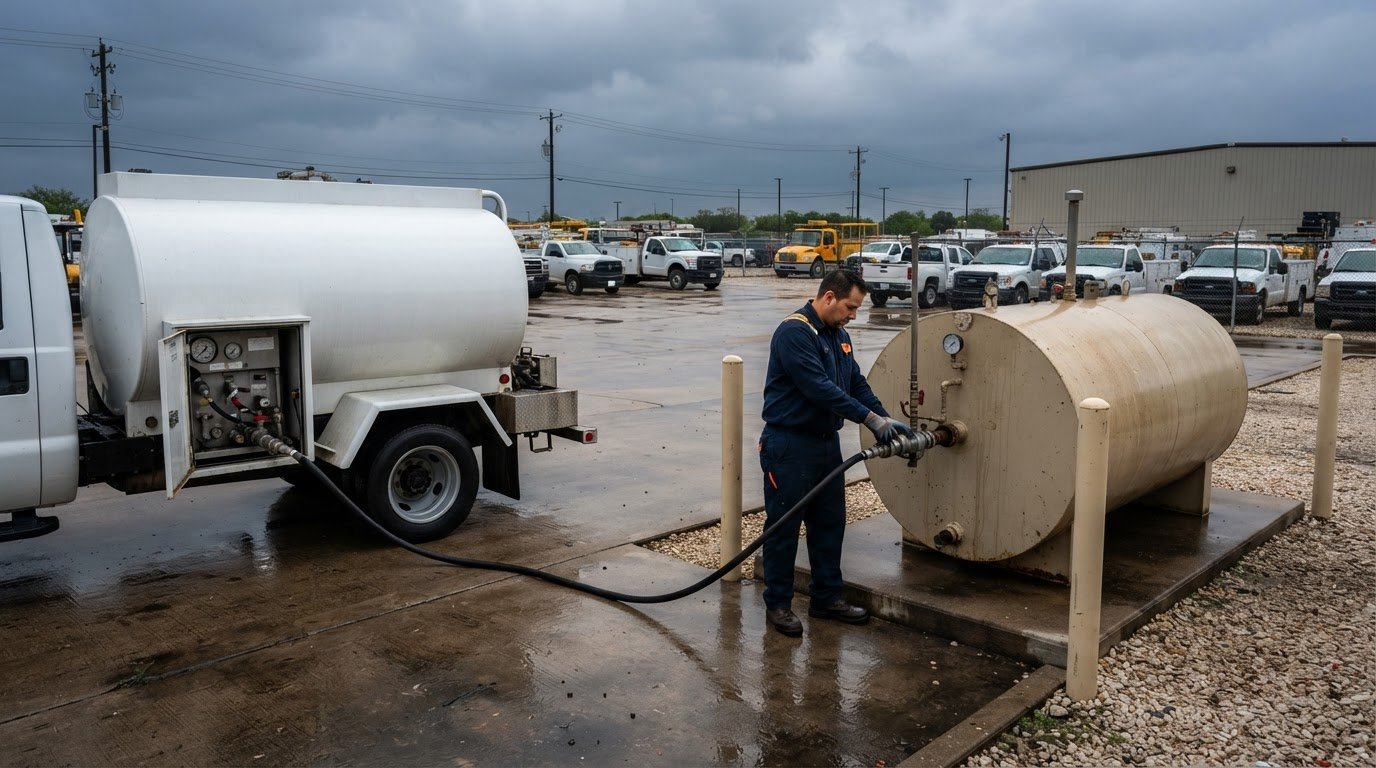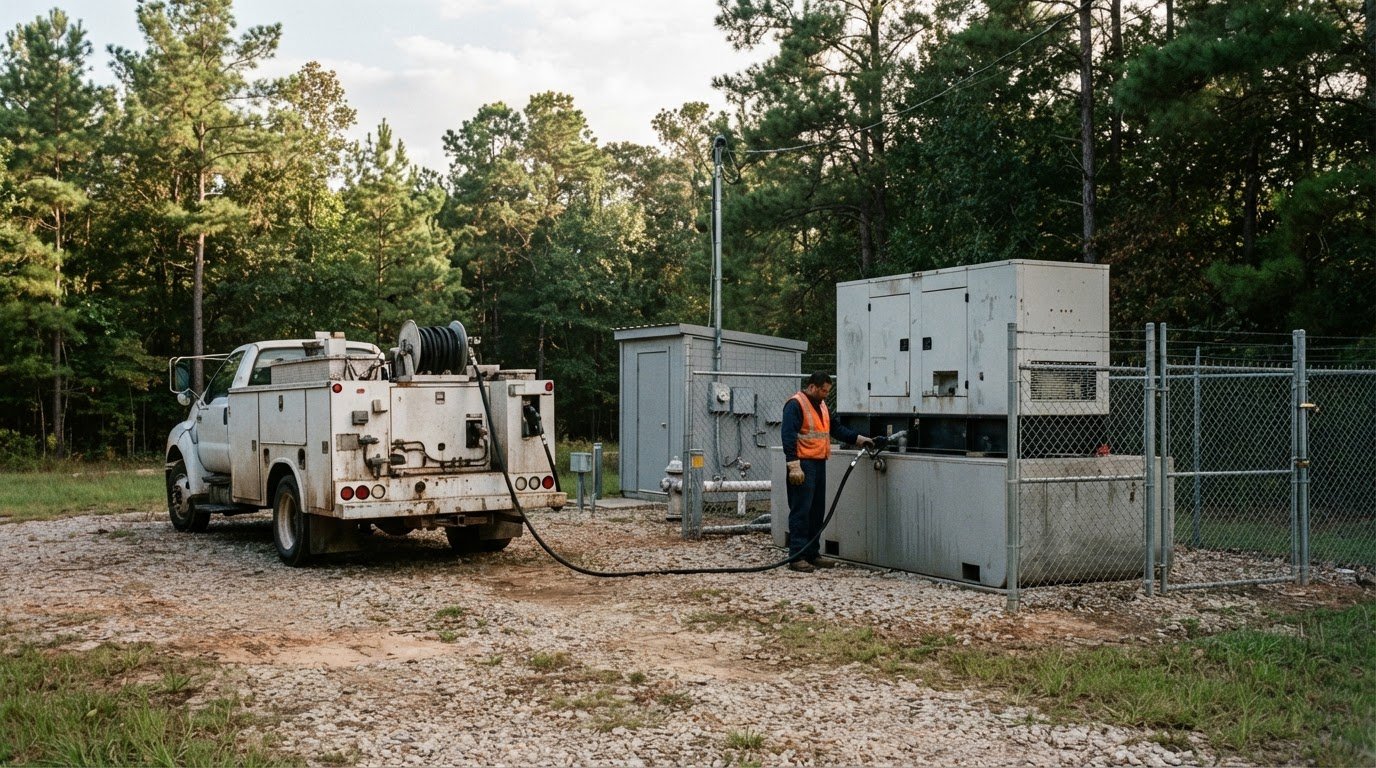
Fuel storage compliance in Texas involves both state and federal requirements. TCEQ handles UST registration and permitting, while federal requirements for fueling-facility USTs are established under 40 CFR Part 280, according to the U.S. Environmental Protection Agency. The best practices for on-site fuel storage compliance in Texas start with identifying the tank type and the requirements that apply to it.
Keeping fuel available while managing inspections, leak detection, spill prevention, and records can feel like a moving target. Understanding which agencies oversee fuel storage and what the site must do makes compliance part of routine operations, not a last-minute scramble.
This guide explains who oversees fuel storage in Texas and outlines practical steps for registration, inspections, monitoring, and recordkeeping. It also explains how fuel delivery and on-site fueling can support operations without replacing compliance duties.
1. Who Regulates Fuel Storage in Texas?
The Texas Commission on Environmental Quality (TCEQ) regulates underground storage tanks (USTs). Federal UST requirements for fueling facilities are established under 40 CFR Part 280, according to the U.S. Environmental Protection Agency. Tank type, capacity, and use determine which requirements apply. Facilities may also need to meet EPA Spill Prevention, Control, and Countermeasure requirements when total underground storage capacity exceeds 42,000 gallons.
For USTs, spill and overfill prevention depends on functioning equipment and documented inspections. Spill prevention equipment must be inspected every 30 days. During each inspection, check for liquid and debris; remove and properly dispose of them within 96 hours. Overfill prevention equipment must be inspected at least once every three years.
Overfill inspections should confirm that the equipment is set to activate at the correct level and will do so when the regulated substance reaches that level. Test it according to the manufacturer’s requirements or a code of practice developed by a nationally recognized association. Keep inspection logs, test results, installation records, and records of repairs or replacements together.
Delivery, transfer, labeling, and training: Texas UST facilities renew their delivery certificate each year, and UST systems generally need spill and overfill prevention equipment. The exception applies when transfers do not exceed 25 gallons per transfer. Use automatic shut-off nozzles and fuel-specific transfer equipment; clearly identify fuel in site records and containers. Each facility must have one named individual for each operator class, A, B, and C, and operators must be retrained every three years.
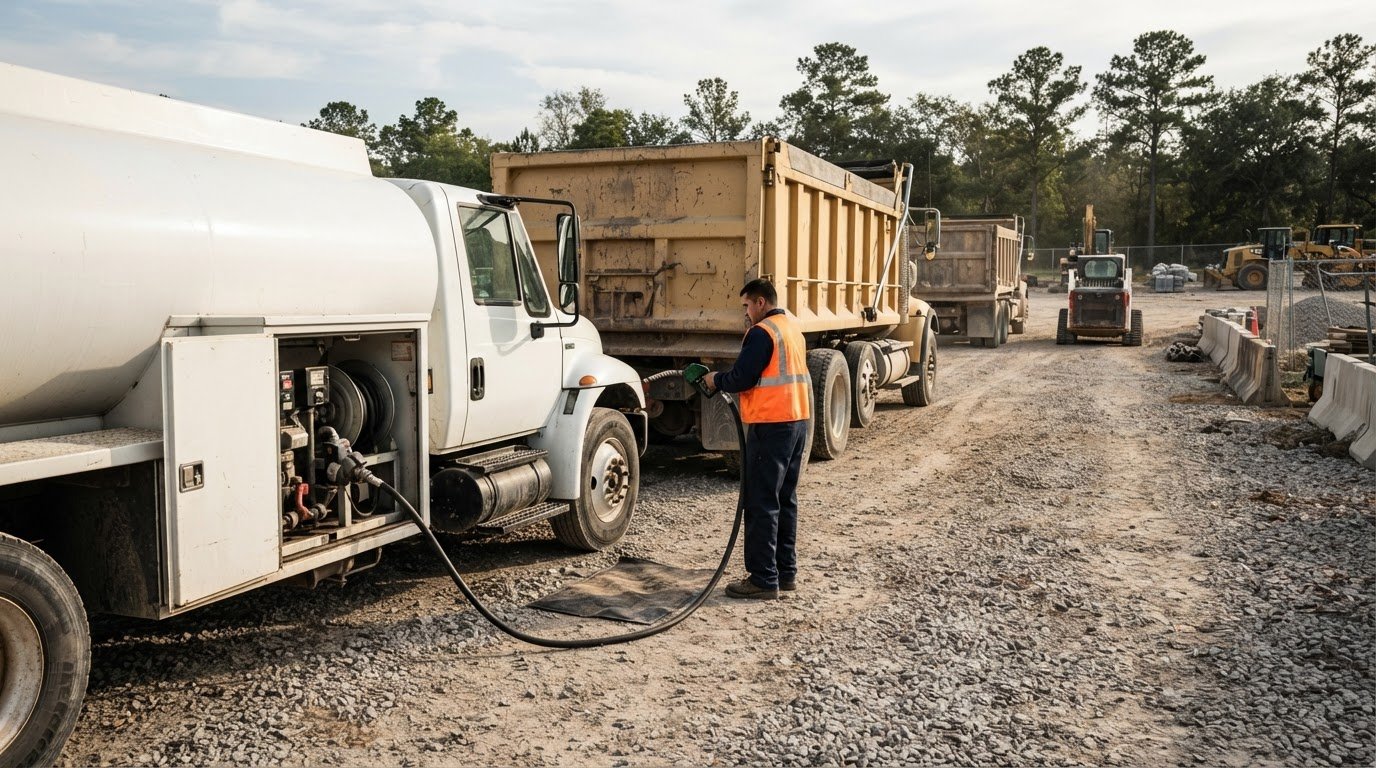
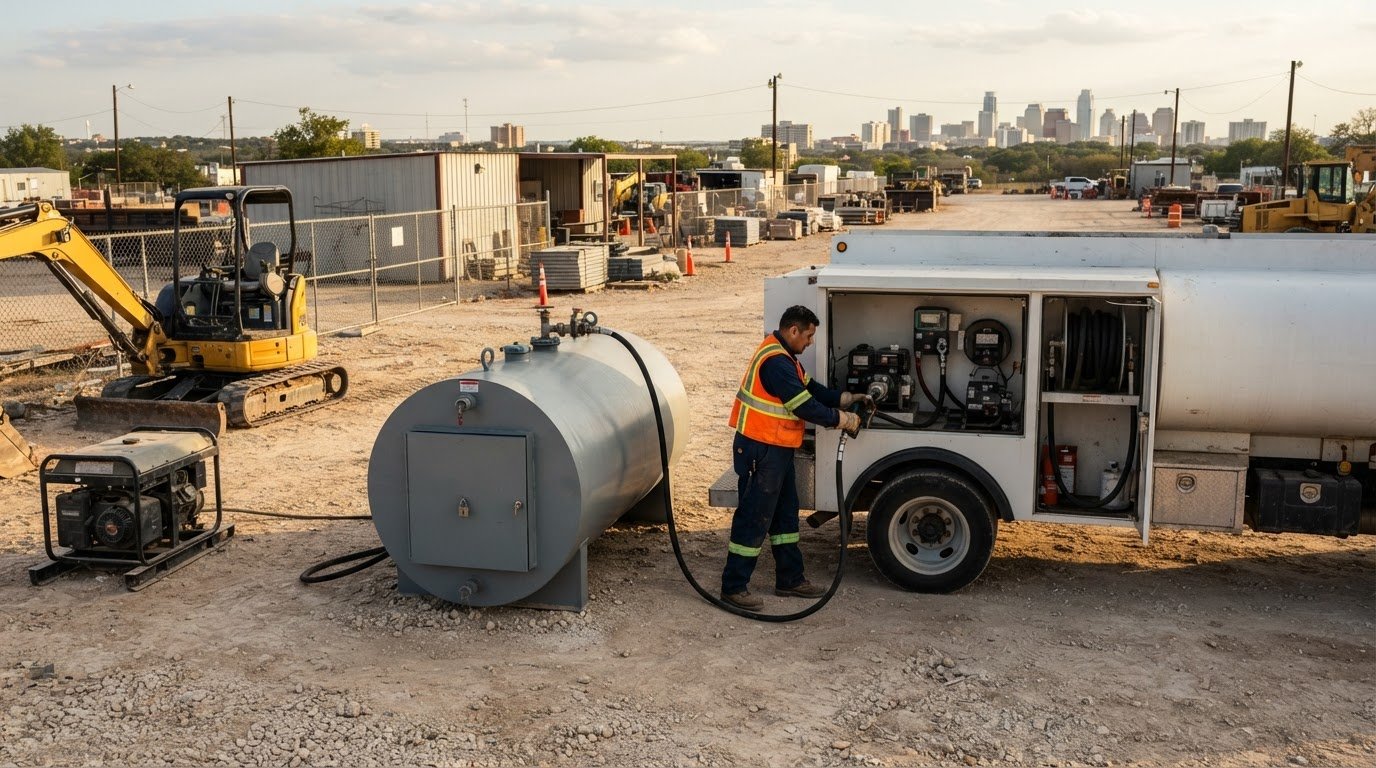
Spill containment and prompt response help protect workers and the site. Use containment around tanks and during fuel transfers, including at construction fueling areas. Keep spill-response kits ready for immediate use. If a spill occurs, contain it promptly and dispose of spilled fuel and contaminated materials properly. A written response plan helps employees understand their roles during a release.
Record the inspection date, findings, and inspector’s name in the site logbook. Preserve testing and maintenance documents so staff can track recurring issues, such as debris in a spill bucket or equipment that fails to activate. Clear records connect leak prevention work to corrective action.
Penalties: Federal fines can reach $25,000 per day per violation. The consequences make prompt correction and complete inspection records important parts of operating a compliant facility.
Typical tank and containment costs: Costs depend on tank capacity, construction, containment requirements, and site conditions. Pricing is provided after a quote request.
Petroleum storage tank spill and overfill prevention requires mechanical or electronic methods, not just human observation. Automatic shut-off nozzles help prevent overfilling during fueling. Test overfill equipment according to the manufacturer’s requirements or a code of practice developed by a nationally recognized association.
A complete prevention file should include inspection logs, testing and inspection results, installation records, and documentation of repairs or replacements. At construction fueling sites, keep spill kits ready for immediate response to fuel spills.
2. Registration, inspections, and compliance practices
Start with the tank’s classification and the facility’s registration status. Texas underground storage tanks generally must be registered and permitted through the Texas Commission on Environmental Quality (TCEQ). Farm or residential tanks holding 1,100 gallons or less are exempt when storing motor fuel for noncommercial purposes. That exemption covers TCEQ regulation, registration, testing, recordkeeping, and reporting.
Ownership changes need a separate registration step. After a UST facility ownership transfer, obtain a new delivery certificate within 30 days, or sooner if the current certificate expires first. Keep the transfer documents with facility records so staff can identify the responsible operator and the current tank information. Registration records should match the tanks actually present at the site.
Inspection frequency depends on the tank component and construction. Texas UST sumps must be inspected every year, with requirements varying according to whether the tank was built before or after January 1, 2009. Single-walled spill prevention equipment and containment sumps used for interstitial monitoring need liquid-tightness testing at least once every three years. Double-walled equipment and sumps can have wall integrity evaluated during 30-day walkthrough inspections instead.
During each sump inspection, check for liquid, debris, damage, or signs of a product release. Record the date, findings, and inspector’s name in the facility logbook. If you find a defect, document the affected component, corrective work, and completion date. Keep the original finding with the repair record to show how the facility responded.
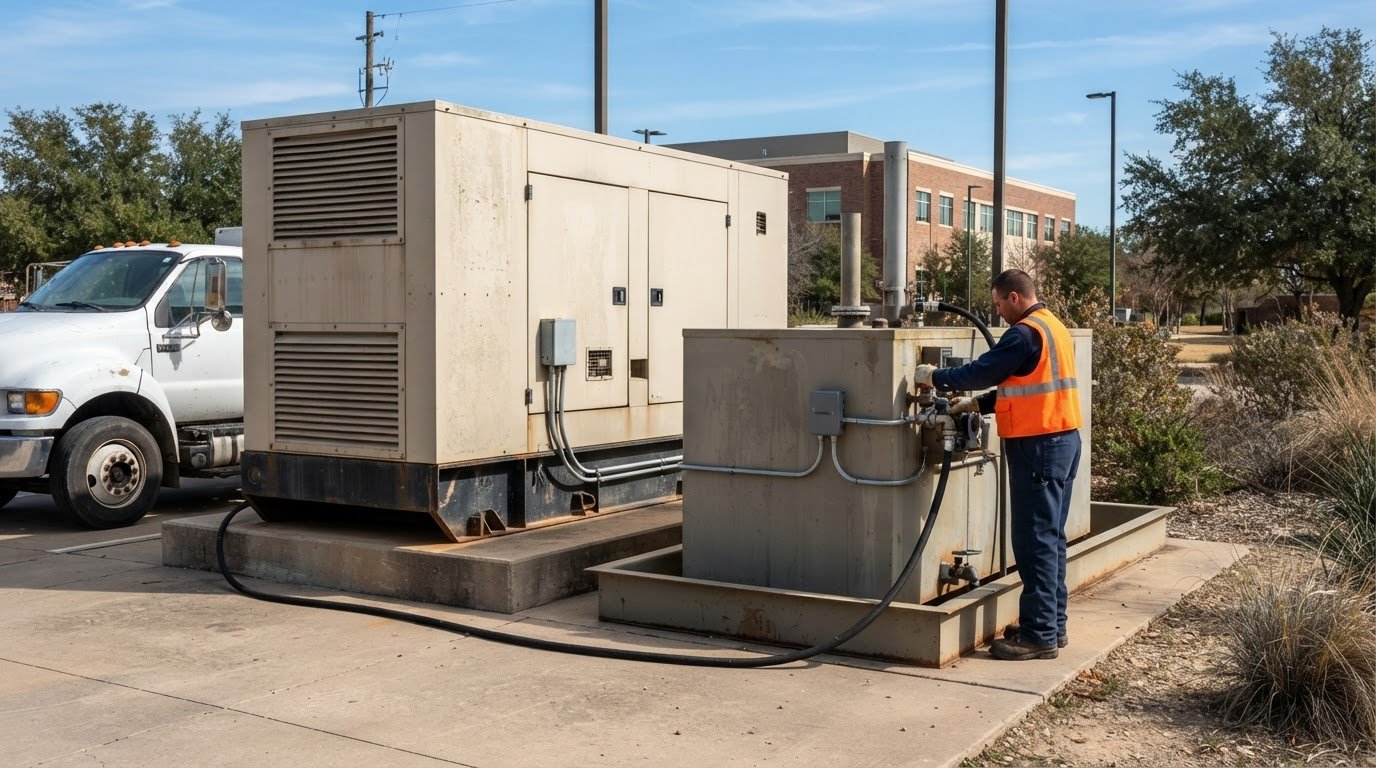
Aboveground tanks and related equipment also need regular condition checks. Inspect tanks for corrosion, leaks, and structural damage, and check foundations for deterioration. Confirm that valves, pumps, gauges, hoses, and connections work properly. Record and address issues such as a damaged hose or sticking valve before they disrupt fuel transfers.
Link each tank to its inspection and maintenance history. Keep installation documents, test results, walkthrough logs, repairs, and replacement records together. Clear files help staff distinguish recurring faults from isolated issues and respond promptly when equipment needs attention. Apply the same process to pumps and fueling equipment at construction sites.
Planned maintenance also affects site fueling schedules. To coordinate fueling around an inspection or repair window, plan site fueling needs alongside the facility’s operating calendar.
Planned maintenance also affects the inspection and maintenance record: businesses should keep detailed records of fuel storage tank inspections, maintenance, and repairs. Construction companies should maintain records of fuel transactions, inspections, and maintenance activities for construction fueling equipment. Construction fueling equipment, including pumps, hoses, and storage tanks, should be frequently inspected and maintained.
Texas UST operators must keep a logbook of inspection dates, results, and inspectors’ names. Regularly inspect fuel storage tank foundations for damage or deterioration and address problems promptly. The University of Texas at Austin’s underground storage tank program includes annual tank registration and self-certification, leak detection monitoring and inspection, and inventory control.
3. Underground and aboveground tank operating requirements
Texas regulates underground storage tanks through TCEQ, following federal EPA guidelines. Federal UST requirements for fueling facilities are established under 40 CFR Part 280, according to the U.S. Environmental Protection Agency. For Texas rules, Title 30, Chapter 334 of the Texas Administrative Code identifies tank exemptions and requirements. Tank type, product, capacity, and site location shape the rules that apply.
Facilities may also need to meet federal Spill Prevention, Control, and Countermeasure requirements when total underground storage capacity is greater than 42,000 gallons. This threshold concerns underground capacity, not a single tank’s capacity. Review the combined storage configuration when assessing whether SPCC requirements apply. SPCC planning addresses spill prevention and response, while UST rules govern covered underground systems.
Capacity matters for aboveground tanks, too. In Texas, an aboveground tank holding more than 1,100 gallons of qualifying petroleum product requires regulation and registration. Construction notification also applies to retail service stations. Farm or residential tanks holding 1,100 gallons or less may qualify for an exemption when storing motor fuel for noncommercial purposes. Keep the tank’s product and use clear in facility records.
Operating controls should match the tank and transfer setup. UST fill ports should have spill buckets in good working condition. Overfill prevention may use automatic shutoff valves, ball float valves, or alarms; test equipment regularly. UST systems generally need spill and overfill prevention equipment, except facilities where transfers do not exceed 25 gallons per transfer. These controls reduce releases during routine fueling.
Aboveground tank design also affects fire protection. Texas ASTs must follow NFPA 30 standards for flammable and combustible liquids. Local fire marshals require UL-2085 fire-rated tanks for aboveground storage near public facilities. Keep tanks away from ignition sources, buildings, and high-traffic areas. Maintain secure transfer connections and working valves, and keep response equipment accessible for an emergency.
Site location can trigger additional requirements. Texas petroleum storage tanks must be at least 100 feet from a water well. A permanent aboveground tank on the Edwards Aquifer recharge or transition zone requires a facility plan. Since October 18, 2002, underground tanks cannot store petroleum products or other regulated substances in the Edwards Aquifer recharge zone.
For tank installation or removal, account for local requirements and required permits. Before removing a regulated underground storage tank, notify TCEQ and the local fire department at least a month in advance. A transfer plan should identify the tank, its safeguards, and emergency steps so operators can act quickly if a release occurs.
4. Monthly leak detection and monitoring records
The best practices for on-site fuel storage compliance in Texas include consistent monthly monitoring. Visually inspect each petroleum storage tank and its accessible components, including piping, fittings, and connections. Look for stains, unusual odors, damaged surfaces, or unexplained changes in product levels. Record your observations, even if you see no sign of leakage.
Use an approved monthly monitoring method, such as interstitial monitoring or an automatic tank gauge. These methods track conditions around or inside a tank and may indicate a possible release. Measure tank levels at least monthly to identify unexplained changes. If a reading differs from the expected level, investigate rather than assuming normal fuel use explains it.
Keep a separate monitoring record for each underground storage tank. Include the inspection date, monitoring method, readings or system results, the person who completed the check, and any follow-up action. Store installation details and equipment information with the monitoring history. Identify the tank and monitored piping so staff can trace an alert to the right equipment.
Corrosion protection requires its own testing history. Cathodic protection systems should be tested regularly, usually every 3 years. Record the test date, results, and any corrective work. If results point to a problem, identify the affected system and document the response. Pair test records with visual checks for corrosion or damage, so staff can track changes between formal tests.
Organize monthly and annual records so staff can retrieve them by tank or component. Group monitoring results, corrosion tests, maintenance, and repairs in one file or log. Use consistent labels on paper forms and in digital records. For example, matching a tank label to its piping record helps staff spot repeated alarms instead of treating each as an isolated event.
If monitoring suggests a petroleum leak, investigate promptly and document the response. Record the initial warning, affected equipment, steps taken to control further release, and cleanup actions. Document the handling and proper disposal of spilled fuel and contaminated materials. A clear timeline shows how the facility moved from detection to containment and cleanup.
A monthly review is one of the best practices for on-site fuel storage compliance in Texas because it can reveal gaps before an inspection. Check for missed months, recurring alerts, and changing readings. Assign responsibility for completing each check and filing the results, then include the records in the facility’s annual compliance review.
5. Texas fuel-storage regulatory agencies
Texas fuel storage is subject to state and federal oversight. The Texas Commission on Environmental Quality (TCEQ) regulates underground storage tanks, including registration and permitting. The U.S. Environmental Protection Agency (EPA) establishes federal UST requirements and oversees Spill Prevention, Control, and Countermeasure requirements. Identify the tank type first, then determine which regulatory frameworks apply.
For a UST facility, TCEQ is the central state agency for registration, permits, and delivery-certificate compliance. Federal UST requirements for fueling facilities fall under EPA regulations. Keep state registration documents with tank information, and maintain operational records of inspections, monitoring, and corrective work. This organization helps staff respond accurately to agency requests for facility information.
SPCC requirements add a federal spill-prevention layer. Texas facilities may need to meet EPA SPCC requirements when total underground storage capacity is greater than 42,000 gallons. Assess the combined underground capacity rather than looking only at an individual tank. SPCC planning focuses on preventing and responding to oil discharges; secondary containment helps contain releases around storage and transfer areas.
Local authorities also have defined roles at certain operational points. Before removing a regulated underground storage tank, provide notice to TCEQ and the local fire department at least a month beforehand. For a spill of 25 gallons or more, report it immediately to TCEQ and local authorities. A site response plan should identify who makes the report and where incident details are recorded.
Aboveground storage tanks bring distinct requirements. Texas regulates and requires registration for an aboveground tank holding more than 1,100 gallons of qualifying petroleum product. Permanent aboveground tanks on the Edwards Aquifer recharge or transition zone require a facility plan. Local fire marshals may also apply fire-protection requirements, including UL-2085 fire-rated tanks near public facilities. Keep tank location, capacity, product, and containment details accessible for agency review.
Clear internal roles make agency coordination practical. A Class A operator oversees overall petroleum storage tank compliance, while a Class B operator manages daily operations. A Class C operator is usually the on-site first responder to spills or other issues. Assigning these responsibilities helps ensure inspections, reporting, and emergency response reach the right people.
The key takeaway is to map each tank to its regulator, capacity, location, and use. That mapping identifies which requirements apply and which records support them. For help coordinating fuel needs around facility procedures, discuss your site’s fueling requirements.
React Fueling
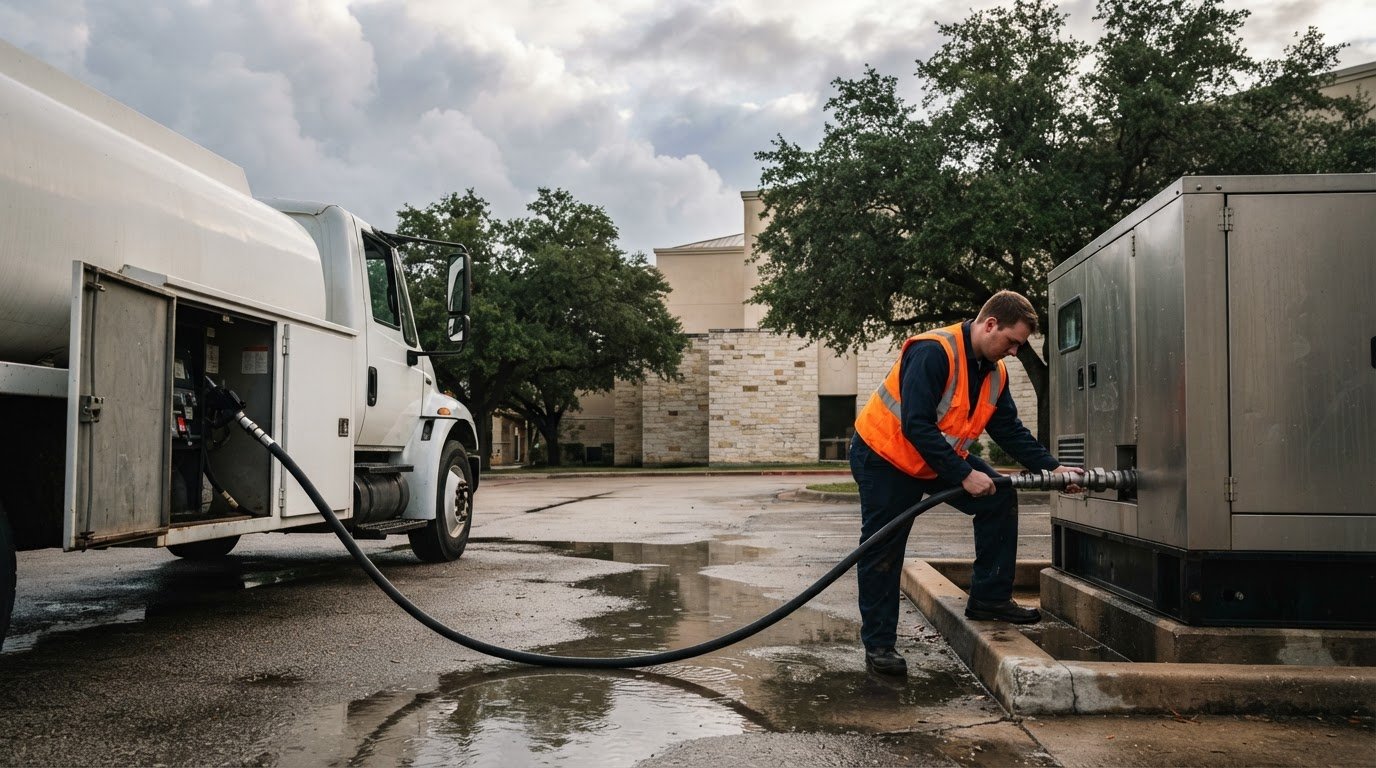
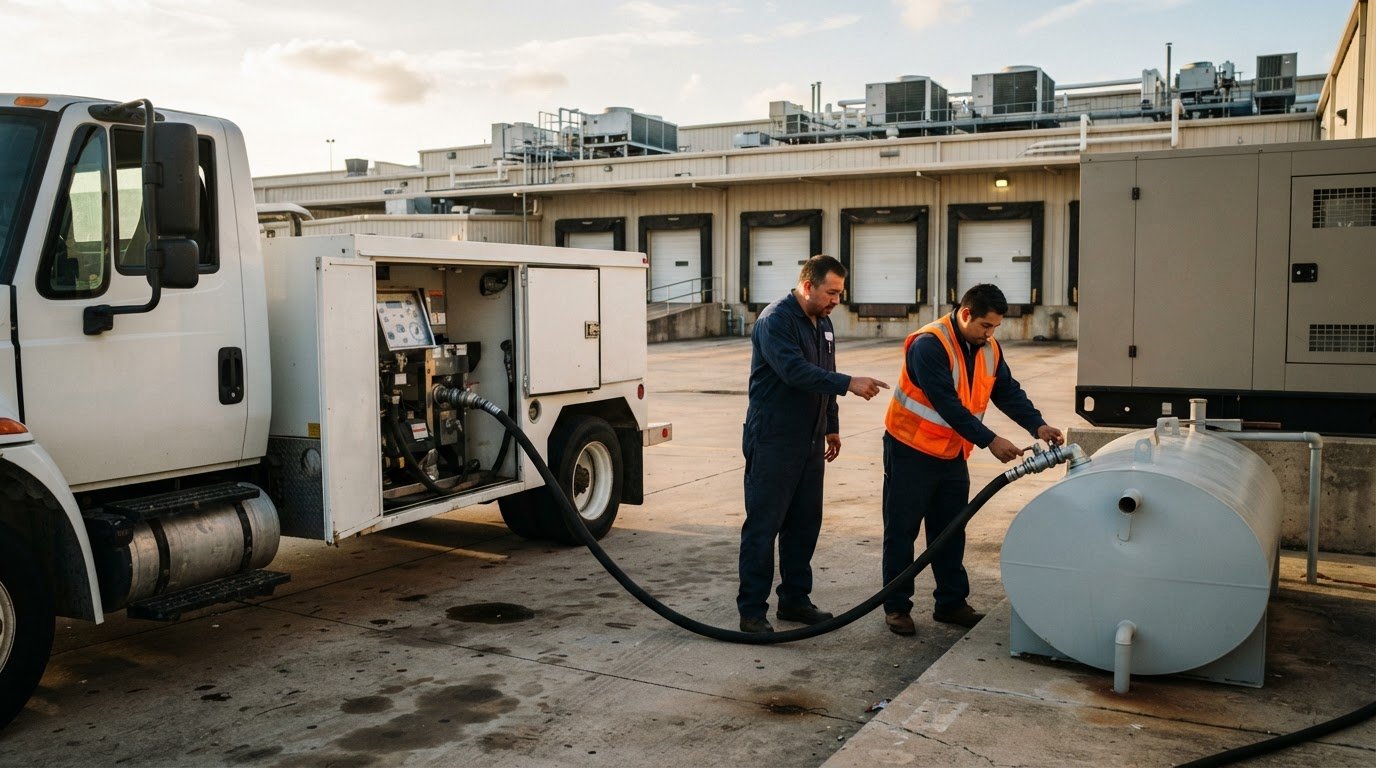
React Fueling supports commercial sites that need dependable fuel supply alongside their storage and compliance procedures. Its diesel and fuel delivery, equipment fueling, and generator fueling services help keep work equipment and critical generators supplied while site teams handle inspections, monitoring, and records.
Turn to React Fueling when fuel logistics need to fit an operating plan, such as coordinating deliveries for construction equipment or maintaining generator fuel supply. Fuel delivery supports operations, but it does not replace required tank registration, inspections, spill controls, or recordkeeping. Keep those compliance responsibilities within the facility’s established procedures.
For help aligning fuel delivery with your site’s operating needs, contact React Fueling.
Keep Compliance Part of Daily Operations
Fuel storage compliance works best as an operating discipline, not a task reserved for inspection days. Build site procedures into everyday planning so changes in equipment, staffing, or fuel demand prompt a timely review of facility operations. This keeps compliance connected to the realities of the worksite.
Applying the best practices for on-site fuel storage compliance in Texas means making careful decisions before routine operations change. When a project expands or equipment needs shift, align fuel planning with established facility procedures. React Fueling supports commercial operations with fuel delivery in Houston, Magnolia, San Antonio, College Station, Austin, and Dallas.
Keep your operation moving with a clear plan for fuel supply and site responsibilities. Contact React Fueling to discuss your fueling needs and take the next step with confidence.
Frequently Asked Questions
Who Regulates Fuel Storage in Texas?
The Texas Commission on Environmental Quality (TCEQ) oversees Texas underground storage tank requirements, while federal agencies address separate requirements. Federal UST rules for fueling facilities fall under 40 CFR Part 280, according to the U.S. Environmental Protection Agency. Local authorities can also have a role in specific situations, such as tank removal or spill response. For a site in Houston, Magnolia, or another Texas city, identify the tank type and activity before determining which rules apply.
What are the TCEQ requirements for aboveground and underground fuel storage tanks in Texas?
TCEQ regulates and requires registration for Texas USTs; qualifying aboveground petroleum tanks holding more than 1,100 gallons also require regulation and registration. Requirements depend on tank type, product, capacity, use, and location. For example, a facility with an underground tank and an aboveground tank should track each separately rather than assume one registration covers both. Texas facilities in Houston, Austin, and other cities should maintain records that clearly identify each tank and its function.
What secondary containment and spill-control requirements apply to Texas fuel storage?
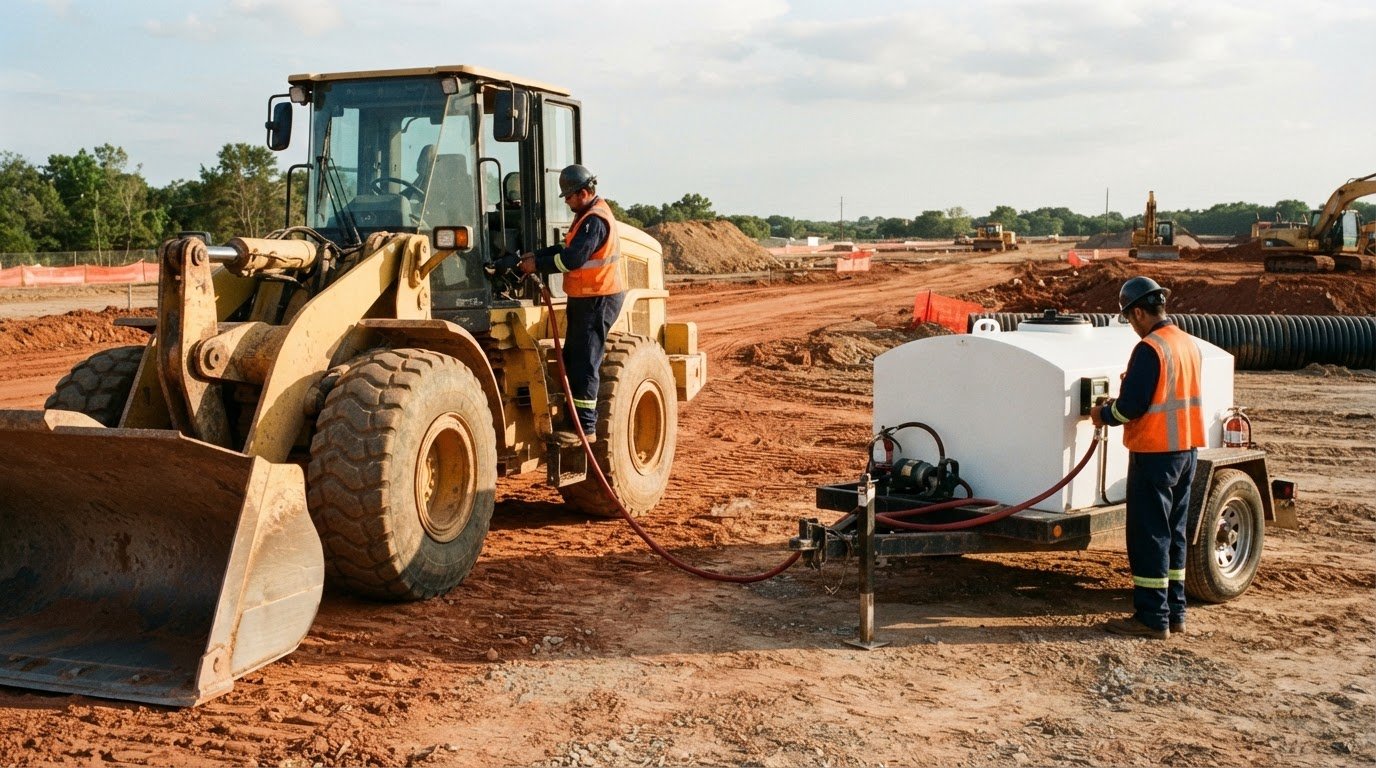
Use containment around fuel tanks and transfer points to help control releases, and keep UST spill buckets in working condition. UST systems generally require spill and overfill prevention equipment, except where transfers do not exceed 25 gallons per transfer. At a construction site, containment at the transfer area and a readily available spill kit support prompt response. The setup should account for how fuel moves between delivery equipment, storage, and operating machinery.
What spill reporting and cleanup steps are required for a fuel release in Texas?
For a spill of 25 gallons or more in Texas, report it immediately to TCEQ and local authorities. Contain the release promptly, use an appropriate spill-response kit, and properly dispose of spilled fuel and contaminated materials. For example, a site response plan can show employees where supplies are kept and who handles notifications. Record the incident and cleanup actions so facility staff can follow the response and retain relevant documentation.