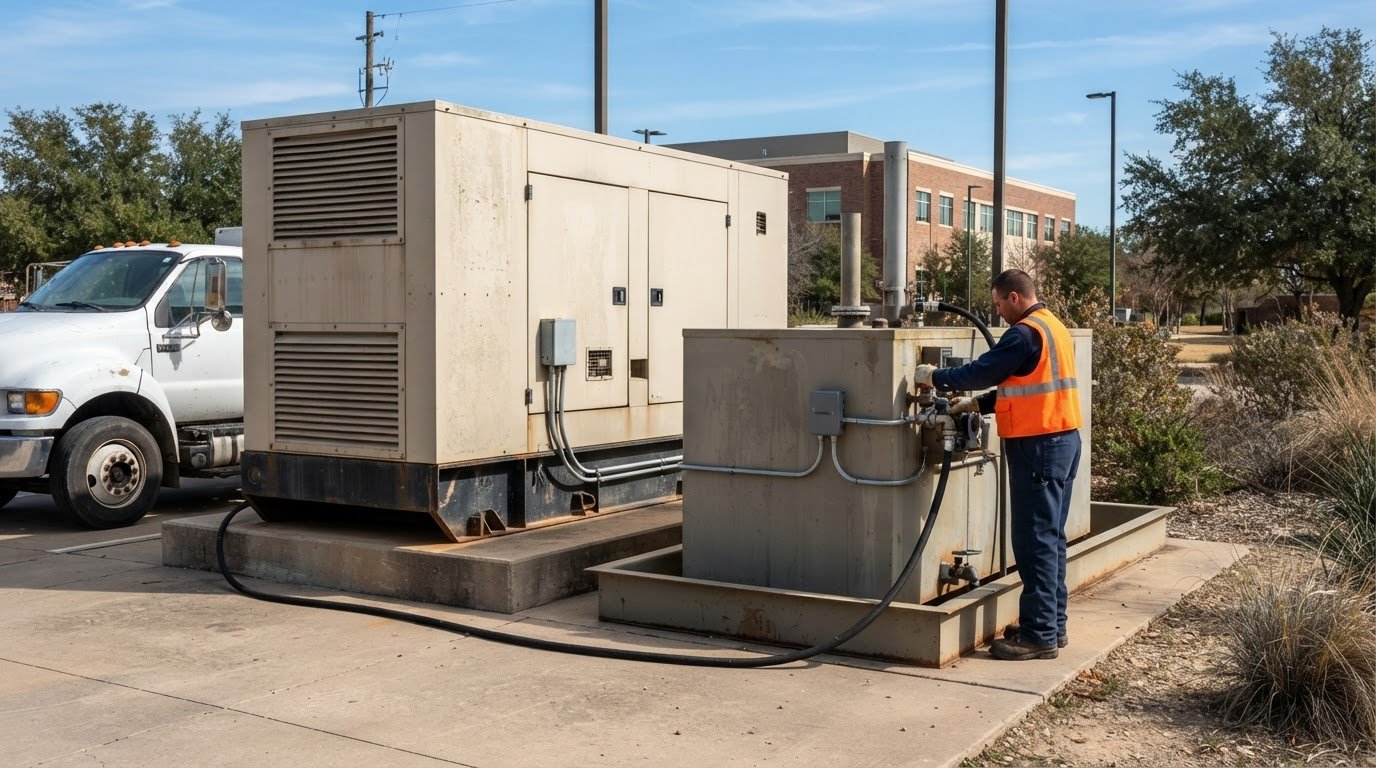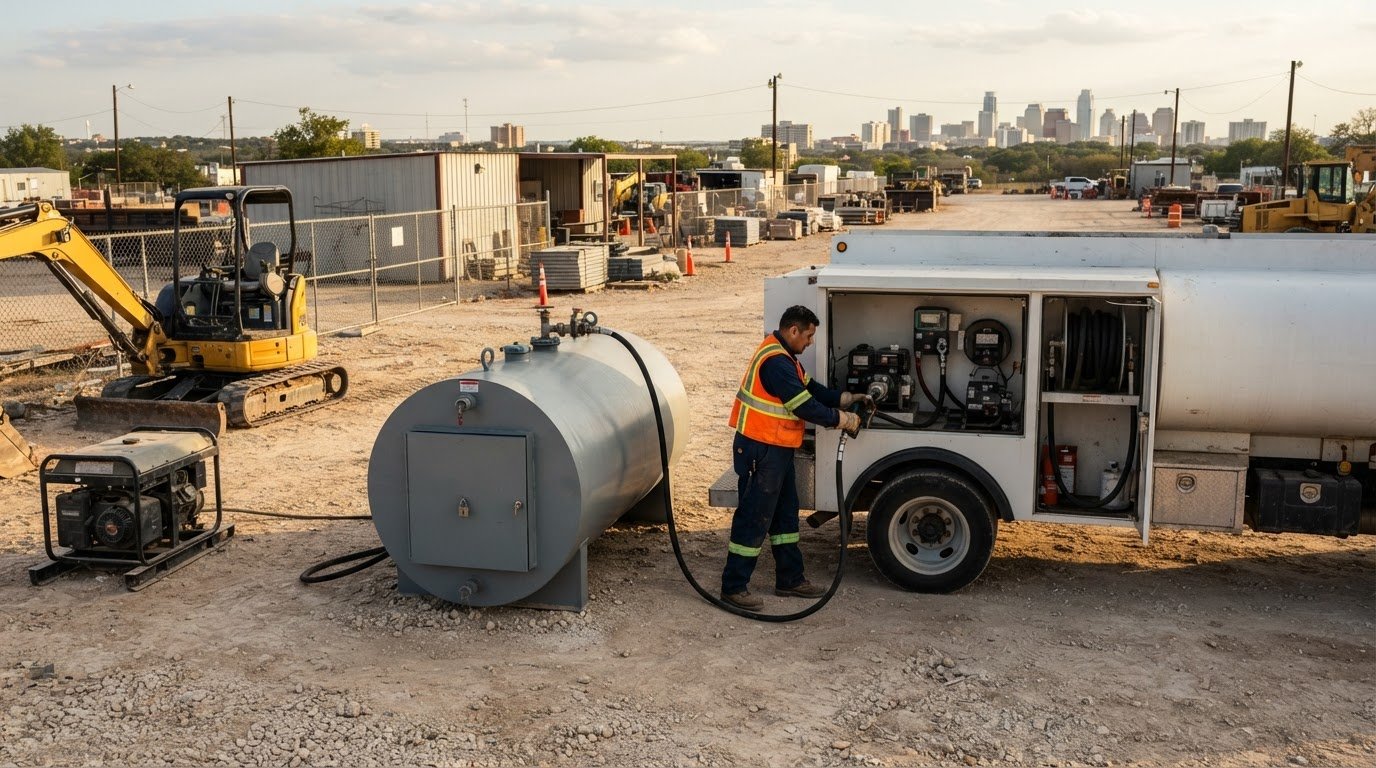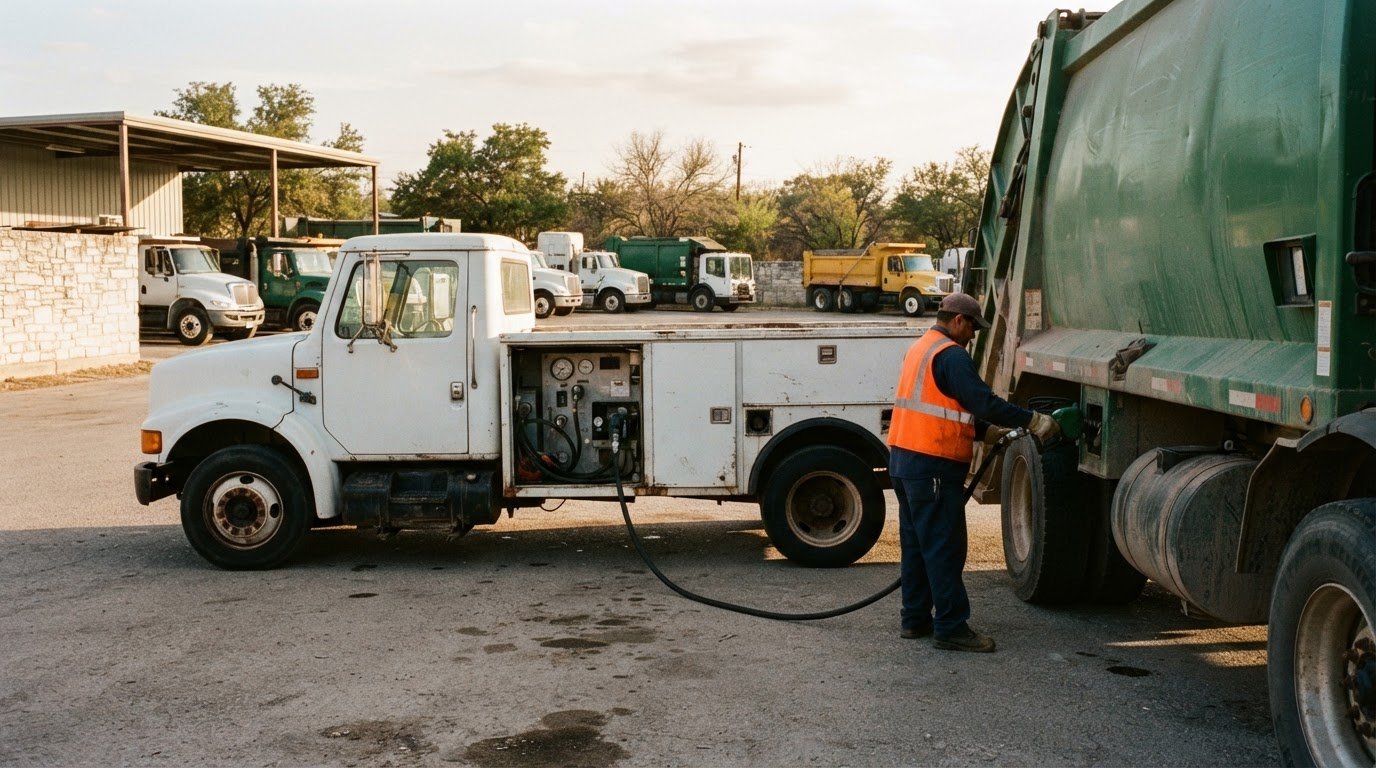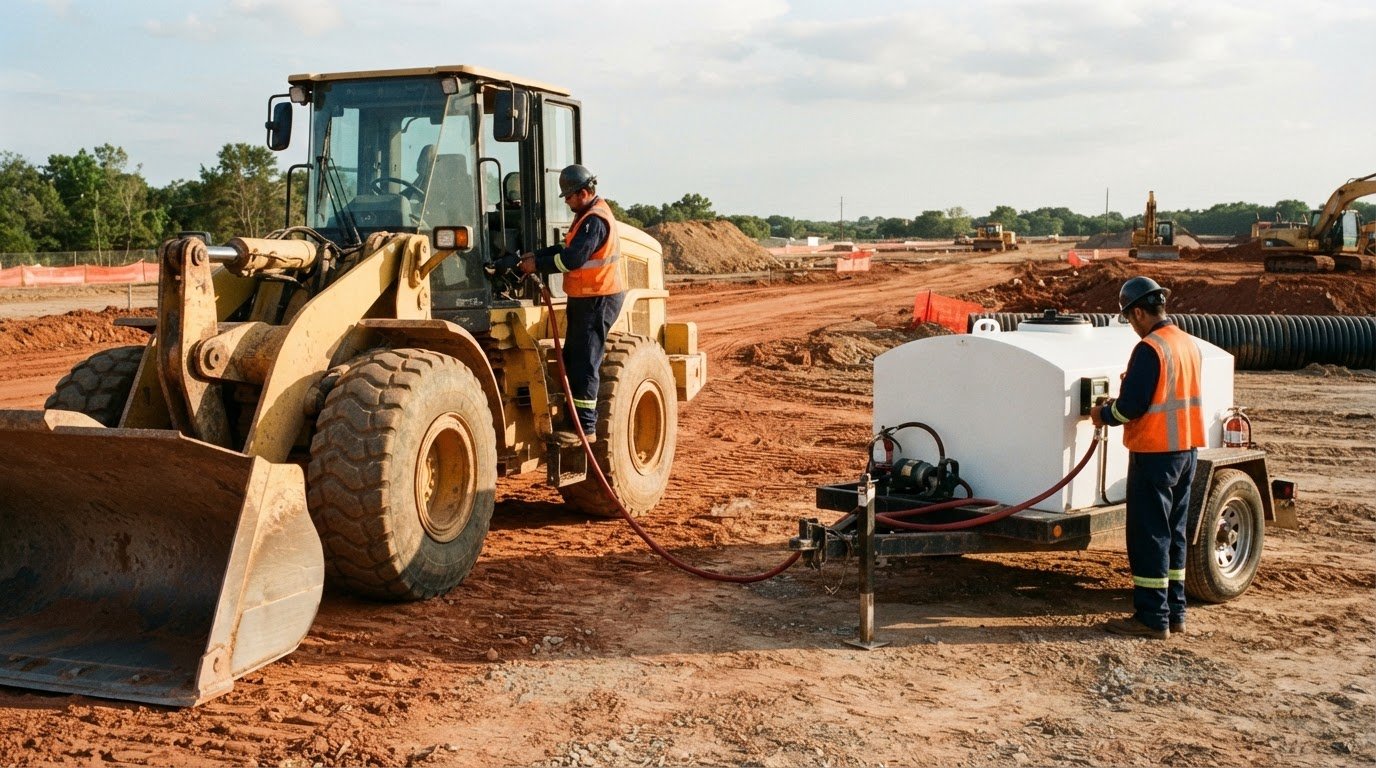
Gas station fueling may look cheaper at the pump, but the cost of sending employees to a gas station versus delivery in Dallas depends on more than the per-gallon price. Delivery can reduce employee travel time, vehicle wear, and work interruptions, while a nearby station may make more sense for a small, immediate fuel stop.
It’s easy to focus on the posted fuel price. A full comparison also includes the time employees spend driving, waiting, pumping, and returning to work, as well as how often vehicles need fuel and whether they’re parked together.
This guide explains how fleet size, site location, fueling schedules, and downtime shape the decision. You’ll learn when station trips may be practical, when delivery can support smoother operations, and which costs to include when comparing the two for your Dallas business.
Bulk Fuel Delivery vs Gas Stations: Which Saves More?
Bulk delivery may reduce hidden refueling costs, while a gas station can suit a small, immediate purchase. The cost of sending employees to a gas station versus delivery in Dallas depends on fuel volume, employee time, detour miles, and work interruptions. For a 20-vehicle fleet using 3,000 gallons of diesel monthly, compare equivalent fuel volumes and periods.
At a station, drivers see the pump price and can refuel when a nearby station is open. A stop may make sense when a vehicle needs only a small amount or already passes a station. Delivery brings fuel to a planned location, which can reduce detours when vehicles or equipment are parked together. The best fit depends on where fueling can happen without disrupting assigned work.
A station round trip, including travel, waiting, pumping, and return, can take 30 to 60 minutes per vehicle. For a 20-truck fleet fueling twice weekly, station trips can account for 20 to 40 labor hours per week. Delivery may reduce these interruptions, but it requires a schedule that fits site access and operations.
Track spending daily, weekly, monthly, and yearly. Record gallons, pump purchases, employee hours, and extra miles, then compare equivalent periods. For example, compare a monthly delivery quote with station purchases for the same month and fuel volume. Include applicable taxes, delivery fees, service charges, and minimum order requirements in the quoted total.
To assess the cost of sending employees to gas stations versus delivery in Dallas, compare full operating costs, not just pump prices. Fuel spending as a share of delivery earnings is calculated by dividing fuel spending by earnings for the same period, then multiplying by 100. Consistent periods make changes in that share easier to interpret.
Texas and Dallas requirements for on-site fueling and storage depend on the fuel, quantity, equipment, and property. Applicable site, fire, and environmental considerations can differ by setup. Workplace fueling also involves potential spill, fire, vehicle, and property-damage risks. Responsibility depends on site control, equipment, and the fueling process.
| Option | Best fit | Cost factors | Timing |
|---|---|---|---|
| Gas station | Small or immediate fuel needs | Pump purchases, employee time, detours, and vehicle miles | Drivers choose an open station |
| On-site delivery | Planned fueling at a shared location | Quoted fuel total and related charges | Fueling follows an arranged schedule |
Choose by matching fuel volume, location, timing, and total operating costs to the way your fleet works.
Mobile fueling can also reduce or avoid vehicle wear associated with driving to a gas station. A station may still be more convenient when a driver wants snacks, air, or a car wash alongside fuel, and it can suit a small purchase or a route that already passes a station. The station option lists fuel at the pump; mobile delivery pricing is quoted through the provider’s process.
Treat that estimate as a comparison point rather than a guarantee. Actual results depend on the quoted price and related charges, as well as the time and travel involved in station stops. A practical choice balances the visible fuel price with operational convenience, vehicle wear, and the demands of the work schedule.
Travel time, vehicle wear, and employee downtime
A fueling stop costs more than the gallons on the receipt. Each trip can add off-route miles, interrupt a shift, and delay a vehicle’s next assignment. In Dallas, the effect depends on how far the station is from the route, local traffic, vehicle fuel economy, and how often drivers refuel.
Measure the extra distance from the normal route to the station and back. A fleet averaging 10 extra miles per fueling trip, twice weekly across 20 vehicles, adds 20,800 miles per year. Those miles consume fuel and add use to tires, brakes, and other vehicle components. For January through June 2026, the Internal Revenue Service standard mileage rate for business driving was 72.5 cents per mile. This rate can help frame business-driving costs, but it isn’t a direct estimate of a particular fleet’s maintenance expense.
Fuel economy changes the cost of each detour. A lower-MPG vehicle uses more fuel for the same distance, so calculate each vehicle class separately instead of applying one fleet-wide average.
Employee downtime matters because a driver away from a job or route can’t perform assigned work during the stop. Record departure time, return time, and miles for each station trip. Compare those records by vehicle and shift. This shows whether a station stop creates a brief gap or repeatedly pushes back route departures and scheduled work.
Fueling several vehicles at one location changes the logistics. Drivers can avoid separate station detours when vehicles are parked together, while a site schedule can group fueling around shift changes or planned breaks. For equipment at a fixed worksite, an equipment fueling service can fuel machinery without driving it to a retail station.
Preparing vehicles before morning routes can also protect departure schedules. Fueling parked vehicles before drivers arrive means they can start assigned routes without adding a station stop first. A consistent schedule helps operations teams plan vehicle availability, while route changes, late returns, or limited site access can affect timing.
Use a simple comparison: log station detour miles, time away, vehicle MPG, and fuel price for each trip. Then compare those totals with the time and vehicle movement avoided when several vehicles are fueled at one site. A site-fueling planning discussion can help align fueling logistics with parked equipment and morning routes.
Fueling needs by fleet size, location, and schedule
Fleet size is only one part of the decision. A business with five vehicles may benefit from delivery if those vehicles need frequent fueling at one site; a larger fleet may still use stations if vehicles return separately across Dallas. Monthly fuel volume adds another useful measure: operations using more than 1,000 gallons per month are candidates for on-site bulk delivery. The pattern matters as much as the vehicle count.
Which fuel delivery companies serve businesses in Dallas, Texas? Commercial fuel-delivery providers serving Dallas support fleet, construction-site, and industrial fueling needs. The right service depends on the fuel type, where vehicles or equipment are parked, and the operating schedule.
Recurring delivery can suit businesses with predictable usage. A fleet manager can map typical fuel demand against shift start times, vehicle return times, and site access. For example, a construction operation with equipment kept at one worksite can plan fueling around work cycles instead of sending each machine to a station. A business with vehicles spread across Dallas may need a different plan because one location and time may not suit every route.
Scheduling affects both labor and vehicle availability. A fueling stop during a shift can interrupt a route, delay the next task, or leave other employees waiting for a vehicle. A planned fueling window can reduce those disruptions when several vehicles are parked together. Compare actual departure times, return times, and job schedules. A shift change or overnight parking period may offer a practical window without pulling drivers from active work.
Use these factors to assess whether a recurring arrangement fits:
- Fleet size: Count vehicles and equipment that can be fueled at a shared location.
- Monthly volume: Track gallons used, especially if demand exceeds 1,000 gallons per month.
- Location: Map where vehicles park, how site access works, and how far stations sit from active routes.
- Schedule: Identify shift changes, planned breaks, and return periods when fueling won't interrupt assigned work.
- Fuel need: Separate the requirements for vehicles, heavy equipment, and generators.
Location can outweigh fleet size. Five vehicles at one accessible site may be easier to fuel together than a larger group spread across separate jobs. Conversely, a driver already passing a station may refuel with little route disruption. For recurring planning, compare the same operating weeks and note how often location changes or schedule shifts create extra trips.
Choose a method by matching monthly usage, shared parking locations, and fueling windows to the way each crew works. A schedule that supports one Dallas site may not suit crews moving between jobs.
Employee travel time and off-route fueling stops
Station runs add employee time and route miles to a fuel purchase. Separate labor costs from gallons purchased to see how each stop affects operations.
Employee Travel Time
A station run includes the drive away from the planned route, any wait, fueling, and the return. A typical round trip takes 30 to 60 minutes per vehicle, so the effect depends on whether that time overlaps with productive work. A driver stopping during a delivery shift loses route time; a driver fueling during a planned break may create less disruption.
Compare each vehicle’s schedule, not just the station’s distance. A nearby pump may be practical for a vehicle already passing it, while a station detour adds time for a driver assigned to a tight route. Record departure and return times, gallons purchased, and miles added. Those entries show whether fuel stops repeatedly shift deliveries or job tasks.
Fuel-Run Labor Costs
It’s a planning estimate, not a Dallas-specific wage quote. Actual labor expense depends on the employee’s compensation and the time spent away.
To estimate a particular run, multiply the employee’s hourly cost by the time spent traveling, waiting, and fueling. What are typical employee labor costs for a fuel run in Dallas? A longer queue or a farther station increases the time-based total.
Separate labor from fuel consumption. The receipt shows the gallons bought, but not the fuel used reaching the pump or the cost of time away from assigned work. For example, a fleet manager can log those items separately for each run, then compare recurring stops with the work schedule. This avoids treating the purchase itself as the only cost of refueling.
Multiple fueling stops can affect dispatch in different ways. If three drivers leave at once, a team may have fewer vehicles available for active routes; if they leave at separate times, the disruption may be spread across the shift. Review dispatch records alongside fueling logs to spot repeated gaps, delayed departures, or missed planned tasks.
For a useful Dallas comparison, track each vehicle’s gallons, off-route miles, and employee time over the same operating period. Then compare station-run totals with the cost and timing of fueling vehicles at their work location. A fueling logistics discussion can help connect site access and work schedules to a practical plan.
Mobile gasoline delivery compared with gas station fueling
Mobile delivery and station fueling solve different timing problems. A gas station offers an immediate option when a nearby pump is open; delivery can bring fuel to parked vehicles or equipment at an arranged location. Compare the full operating process, not just the act of pumping.
With station fueling, drivers control when and where to stop. That flexibility helps when a vehicle needs fuel during a route or is already passing a station. The tradeoff is time spent driving, waiting, and returning. A dedicated stop can also take a vehicle away from its worksite when it could otherwise remain available.
Delivery changes the sequence. A business arranges fueling around vehicle locations and its operating schedule, which can help prepare parked vehicles before a shift. This works best when vehicles are together and site access is practical. A spread-out fleet or a last-minute need may make individual station stops easier to coordinate.
Availability is a key distinction. Gas station fueling is usually immediate when a nearby station is open. Delivery can be scheduled around planned needs, making it a practical fit for parked vehicles, equipment, and generators. A delivery plan should reflect the actual site, fueling window, and vehicles involved, rather than assume every location can use the same arrangement.
Use a consistent comparison for each option:
- Fuel amount: Compare the same gallons and fuel type across both methods.
- Employee time: Include the full station trip, from leaving the route to returning.
- Vehicle movement: Record detour miles and whether the vehicle must leave its work location.
- Timing: Identify whether the need is immediate or can fit a planned fueling window.
- Invoice total: Include applicable taxes, delivery fees, service charges, and any minimum order requirement in the delivery quote.
For example, a vehicle already passing an open station may be fueled with little extra driving. A group of vehicles parked at one worksite may be easier to fuel together, avoiding separate trips. The comparison changes with route proximity, site access, and whether employees can leave their assignments without disrupting operations.
Fuel availability and consistency also depend on the operating setup. Station drivers choose among available pumps, while a delivery schedule centers on a planned location and time. Keep fueling records by vehicle and date so managers can identify recurring station detours, missed windows, or changing worksite needs.
The practical takeaway: use a station for an immediate, isolated need, and consider delivery for planned fueling at a shared site. Discuss a fueling plan for your fleet to align site logistics with operating schedules.
React Fueling
React Fueling helps Dallas-area commercial operations plan fueling around vehicles, equipment, and work schedules. For fleets or job sites where station detours interrupt daily work, its fuel delivery brings fueling to the operation. Businesses with diesel-powered fleets can use diesel delivery, while equipment and generators can be fueled at their work locations.
The right approach depends on fuel needs, where vehicles or machinery are parked, and how fueling fits the workday. These details help connect a delivery plan to the operation without relying on station trips for every fueling need.
Contact React Fueling to discuss your fueling needs.
Build a fueling plan around the work ahead
The next step is to turn your fueling records into an operating plan. Assessing the cost of sending employees to gas stations versus delivery in Dallas means looking at where vehicles work, when they return, and how fueling affects the next assignment. Use those patterns to decide which fueling method fits each part of your operation, rather than forcing every vehicle into one routine.
React Fueling supports commercial operations with Fuel Delivery, Diesel Delivery, and Equipment Fueling Service. These options help businesses plan fueling around fleets, machinery, and site schedules. A clear picture of your locations and fueling needs gives the conversation a practical starting point.
Contact React Fueling about fleet delivery to discuss a fueling approach for your operation. With a plan matched to the work, your team can make its next fueling decision with greater clarity.
Frequently Asked Questions
How much does it cost an employer to send an employee to a gas station for fuel?
The estimate includes wages, benefits, and vehicle operating costs, so it’s a planning benchmark rather than a Dallas-specific wage rate. Add fuel consumed during the detour separately, and track whether the employee’s time away delays a route, job task, or other assignment.
How do gas station trips compare with fuel delivery costs for a business fleet?
Compare the total cost of fueling the same vehicles with the same fuel volume over the same period. Station trips include pump purchases, employee time, and detour miles. For delivery, compare the quoted total, including delivery or service charges and any minimum order requirement. For a mixed fleet, separate vehicles fueled individually from groups parked at one location, since their travel and scheduling costs differ.
What is the break-even point for fuel delivery versus sending employees to refuel?
The break-even point occurs when the delivery total equals the station option’s full operating cost for the same fuel quantity. Add pump spending, employee time, detour fuel, and vehicle-use costs for station trips, then compare them with the delivery quote and related charges. Recalculate when route patterns, fleet locations, or fueling frequency change, because those factors shift the station-trip total even when gallons purchased stay similar.
How much employee time and vehicle mileage does a gas station trip typically add?
A typical station round trip takes 30 to 60 minutes per vehicle, including driving, waiting, fueling, and returning. Added mileage depends on the vehicle’s route and the station’s location, so there isn’t one useful distance for every Dallas fleet. For a practical estimate, compare the planned route with the actual trip and record the additional miles alongside each fueling stop’s start and return times.
What are Dallas-area mobile fuel delivery fees, minimum orders, and surcharges?
Bulk delivery minimums are typically 250 to 500 gallons. Quotes may include delivery or service charges; confirm the provider’s current pricing terms and whether the total includes taxes, fees, surcharges, and any minimum-order requirement.