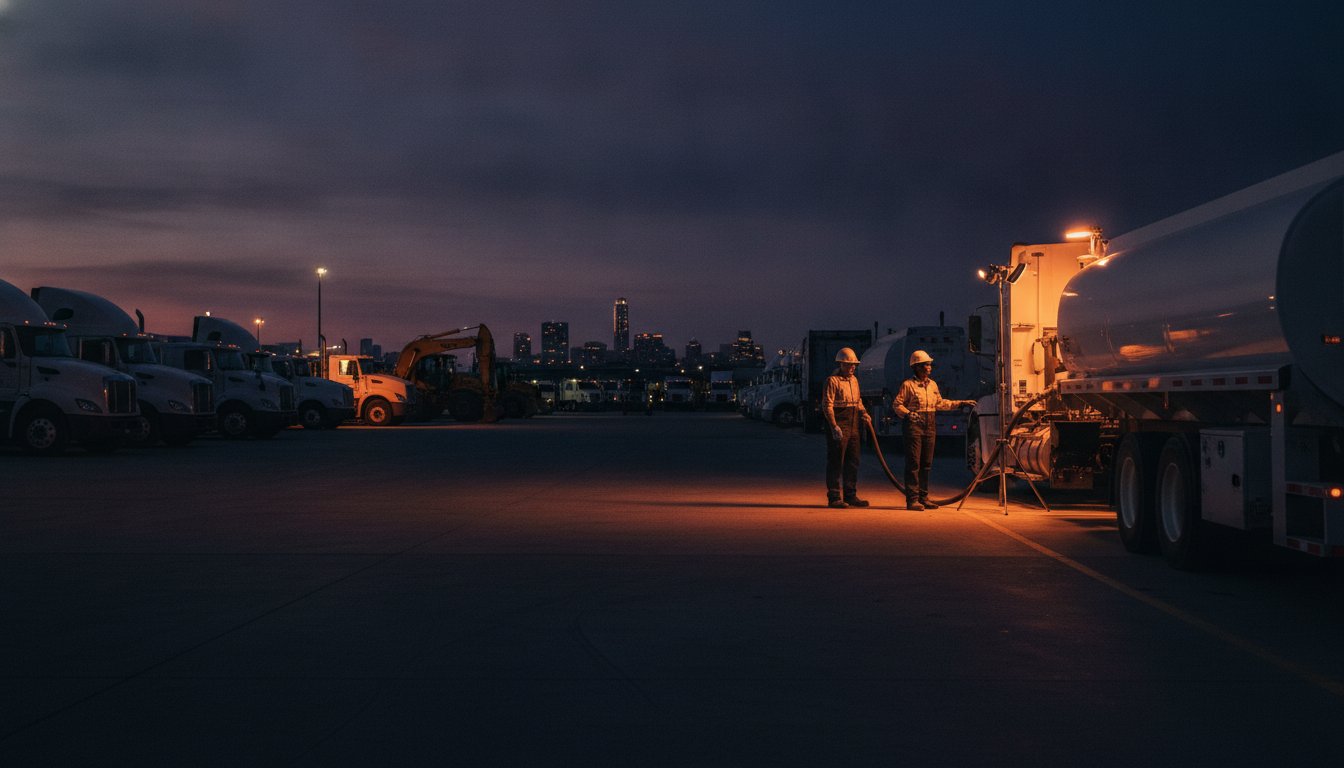
Relying on ad-hoc emergency refills to power an off-grid project is an expensive gamble that inevitably backfires. Every hour a piece of heavy equipment sits starved of diesel, direct idle costs mount and project milestones slip out of reach. Establishing dependable remote site fuel delivery requires engineered logistical planning rather than reactionary phone calls after a machine runs dry.
You already know the operational friction of coordinating off-road diesel and DEF across unforgiving terrain while staying ahead of strict secondary containment regulations. When you're managing complex operations, figuring out how to establish a reliable fuel delivery schedule for equipment on an off-grid site shouldn't be what stalls your progress. In this comprehensive field logistics guide, you'll master practical off-grid fuel management strategies to eliminate equipment downtime, maintain rigorous environmental compliance, and secure continuous power across your entire equipment spread.
What Is Remote Site Fuel Delivery & Why Is It Critical?
Remote site fuel delivery is the specialized transport and dispensing of petroleum products to operational zones that lack municipal utilities, paved access roads, and established commercial supply chains. Projects across pipeline construction, utility-scale renewable installations, civil infrastructure builds, and energy exploration cannot rely on retail fueling stations or standard roadside drops. Without an engineered supply line bringing fuel directly to the workface, heavy machinery sits idle and critical milestones slip out of reach.
The Mechanics of Off-Grid Energy Logistics
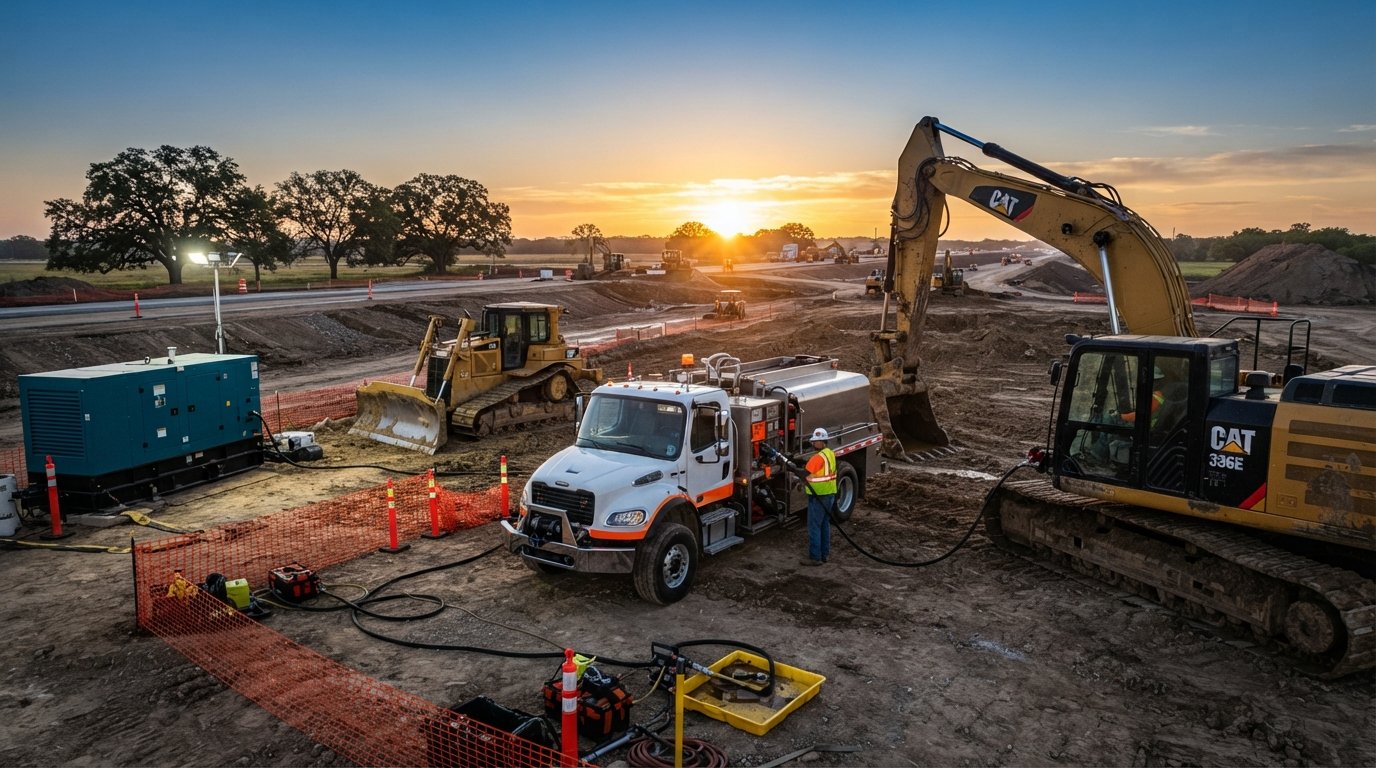
Urban bulk carriers depend on paved interstate routes and level concrete unloading pads. In contrast, off-grid transport demands ruggedized, high-clearance distribution units engineered to navigate rutted rights-of-way, steep grades, and unstable ground conditions. Integrating specialized commercial fuel services directly into the job-site schedule keeps iron moving without pulling operators away from active production. Field logistics teams rely on digital fuel management systems to track consumption rates, balance reserves across distributed machinery, and coordinate precision dispatches matched to operational shifts.
The Financial Impact of Equipment Fuel Starvation
Fuel starvation triggers immediate financial waste across an active site. According to fleet cost data from DozerHub, an idle excavator or bulldozer generates $50 to $150 or more per hour in static equipment costs. Idle operator wages add another $25 to $75 per hour for every crew member waiting on fuel. When dry tanks disrupt a project, the financial impacts compound rapidly:
- Disabled Support Utilities: Generator shutdowns halt essential site systems, including dewatering pumps, security systems, and nighttime task lighting.
- Liquidated Damages: Industry reviews by MapTrack show that project milestone delays frequently trigger contractual liquidated damages ranging from $1,000 to $5,000 per day.
- Margin Erosion: Fuel accounts for roughly 40% to 45% of total off-highway fleet operating expenses, meaning unmanaged delivery delays quickly consume bidding margins.
Dependable remote site fuel delivery eliminates these bottlenecks entirely, protecting project margins and ensuring heavy iron runs without interruption from start to finish.
Key Challenges in Managing Remote Job-Site Fuel Logistics
Treating off-grid fuel supply as a standard urban route delivery with longer drive times invites operational disaster. Remote jobsites lack smooth thoroughfares, stable staging pads, and predictable navigation markers. Unpaved accessways can turn into impassable quagmires within hours, and off-grid GPS systems frequently fail along unmapped utility easements. Managing remote site fuel delivery requires navigating physical terrain barriers, shifting regional climates, and strict handling standards across multiple petroleum and chemical products.
Navigating Harsh Terrain and Unimproved Access Roads
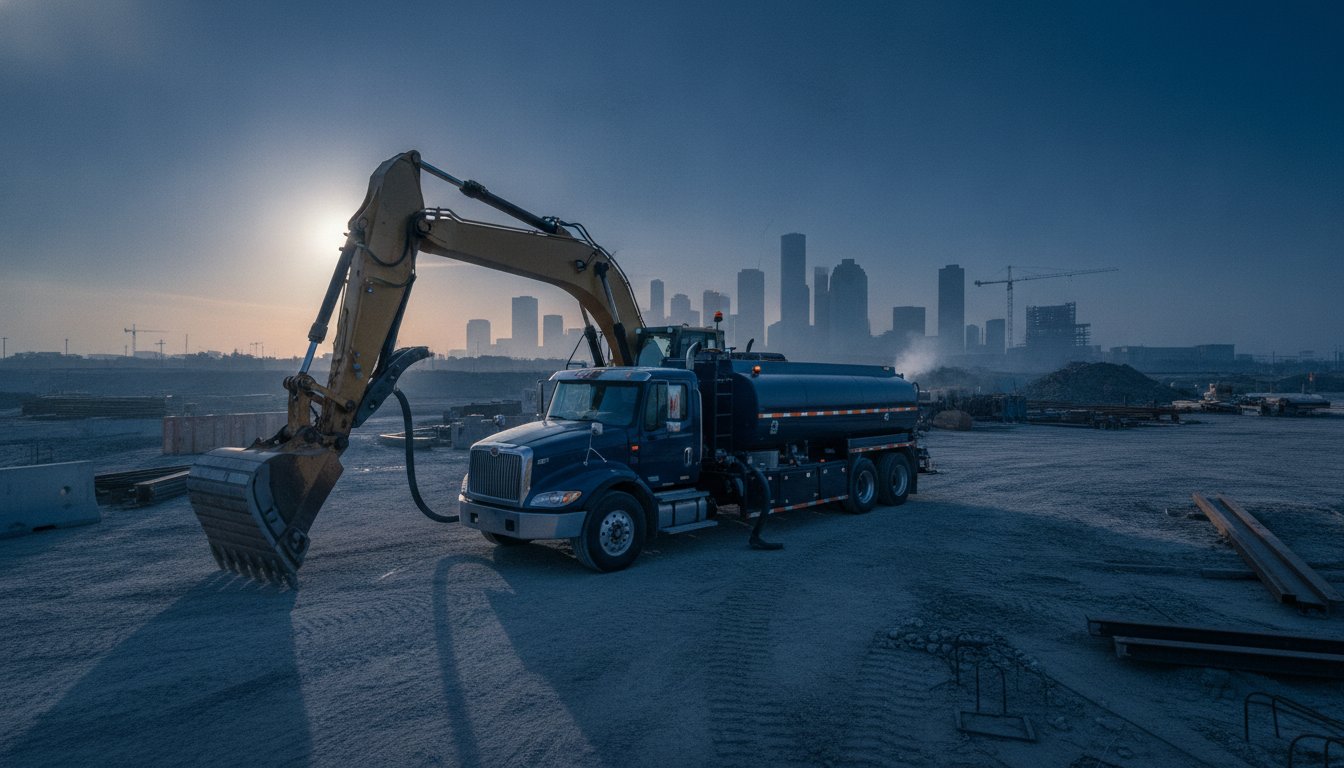
Standard 9,000-gallon transport tankers cannot negotiate soft dirt easements, narrow lease roads, or rural bridges with restricted axle ratings. Reaching dispersed machinery demands agile bobtail tankers engineered with short wheelbases, higher ground clearance, and specialized pumping gear. Drivers must possess deep local geographic familiarity to bypass washed-out low-water crossings and tight switchbacks during flash floods or seasonal heatwaves across Texas. A successful drop relies entirely on professional logistics teams that map haul roads before dispatch.
Multi-Product Management: Diesel, Dyed Fuel, and DEF
Balancing multiple fluid types across an active project creates significant supply complexity. Off-road machinery utilizes tax-exempt red-dyed diesel, while highway support pickups require clear ultra-low sulfur diesel. Tier 4 Final machines also demand consistent Diesel Exhaust Fluid consumption, typically running at 2% to 5% of diesel burn rates. DEF degrades rapidly when exposed to heat above 86 degrees Fahrenheit and crystallizes when contaminated by dust or water. Coordinating unified DEF fluid delivery alongside diesel distribution prevents machinery from de-rating into limp mode, while eliminating redundant tanker traffic across crowded access roads.
Security and Fuel Quality Preservation
Static storage in remote locations invites shrinkage and fuel deterioration. Industry telematics surveys show unmonitored tanks suffer average shrinkage rates of 3% to 7% from unauthorized siphoning, undocumented dispensing, and theft. Protecting bulk reserves requires strict protocols:
- Static Bonding Protocols: Drivers must ground dispensing gear according to the OSHA flammable liquids standard 1926.152 to neutralize static discharge risks during rapid liquid transfer.
- Digital Flow Metering: Electronic registers log every gallon pumped per asset, stopping theft and delivering real-time accounting data to project managers.
- Particulate Filtration: High-efficiency particulate and water-coalescing filters keep bulk fuel free of condensation and microbial sludge, shielding high-pressure common-rail injectors from costly clogs.
Field managers seeking to stabilize complex supply corridors can consult our logistics team to build a dependable, multi-product delivery schedule tailored to their terrain.
Mobile Wet-Hosing vs. On-Site Fuel Tank Rentals: Choosing the Right Model
Selecting the right fuel deployment strategy determines whether an off-grid project runs smoothly or bleeds capital. Contractors typically choose between two core models: dispatching mobile fueling trucks directly to dispersed machines or staging stationary storage on site. Operating conditions dictate the approach. Large spreads with high mobility require different logistical support than concentrated, stationary hubs. Analyzing site footprints, labor usage, and environmental containment requirements ensures your remote site fuel delivery strategy maintains machine momentum without unnecessary overhead.
Direct-to-Equipment Mobile Fueling (Wet-Hosing)
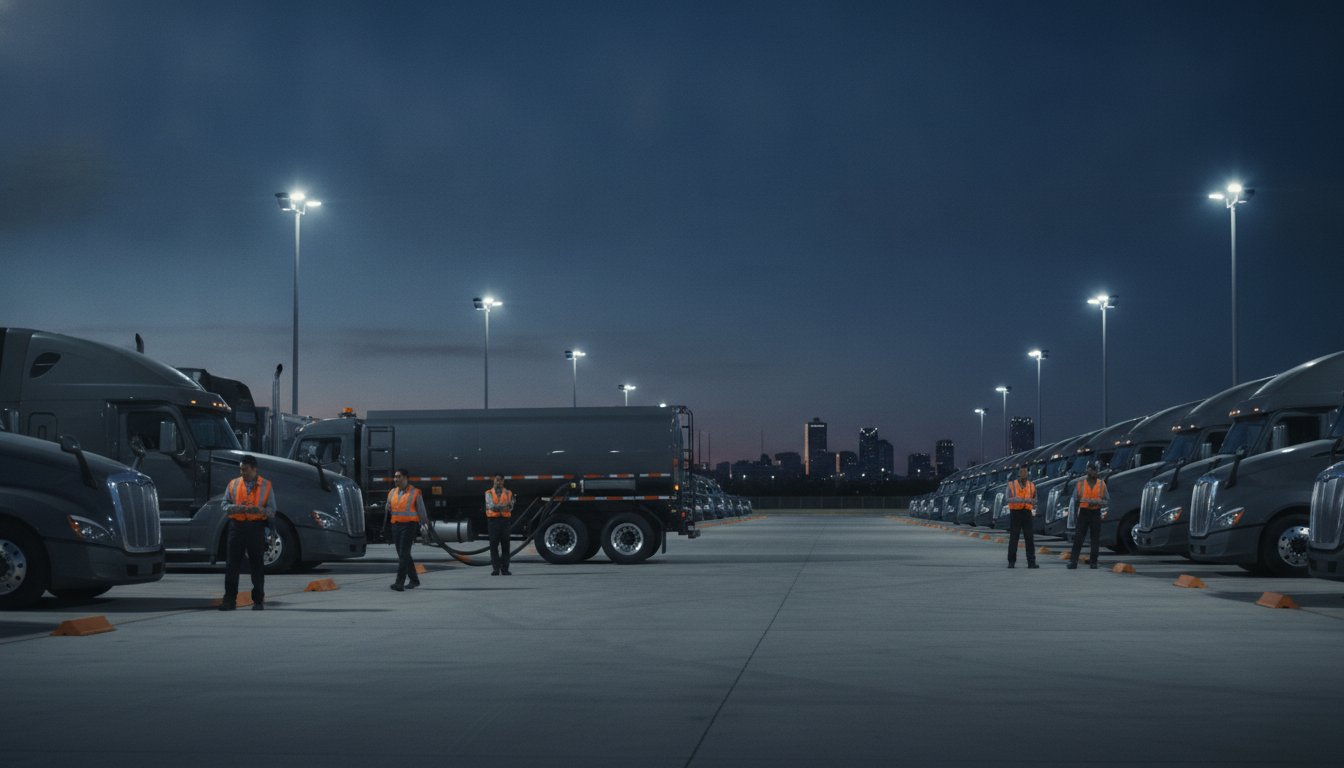
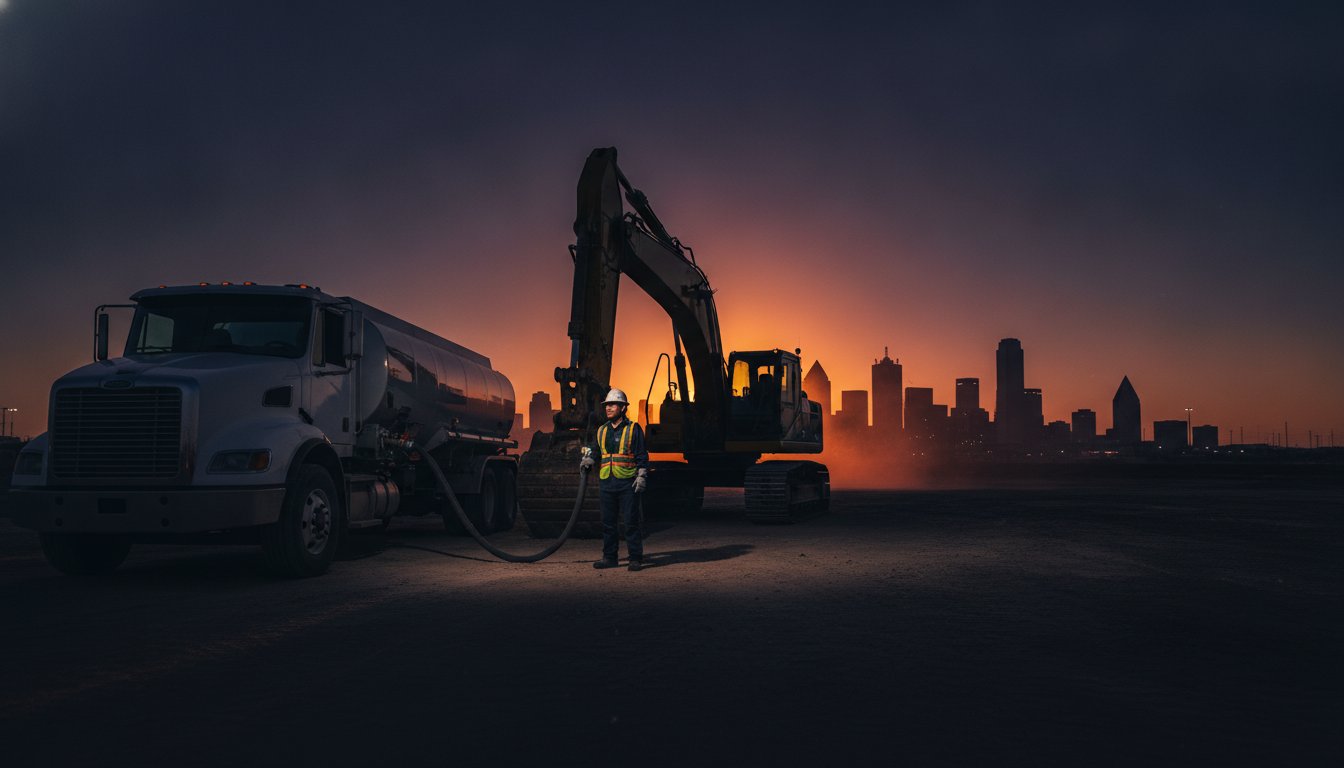
Direct wet-hosing delivers fuel straight into machinery tanks during scheduled shift lulls or overnight windows. Utilizing a dedicated equipment fueling service eliminates the need for operators to track down fuel trailers or crowd central skid tanks at the start of a shift. Field operational studies show this model recovers 20 to 45 minutes of productive labor per machine every day. It delivers maximum value on linear rights-of-way, pipeline projects, highway paving, and expansive grading operations where bulldozers and scrapers move miles away from a central yard each day.
Stationary On-Site Fuel Storage Tanks
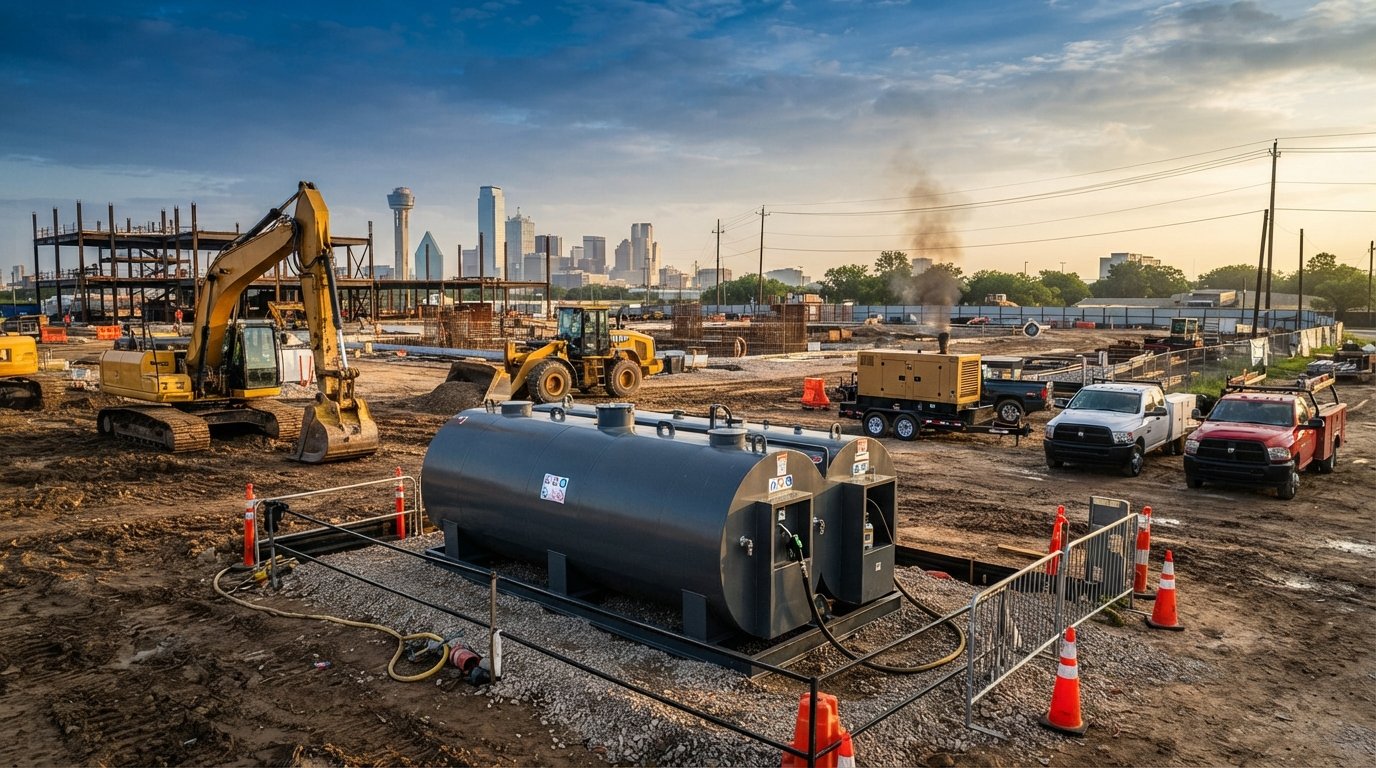
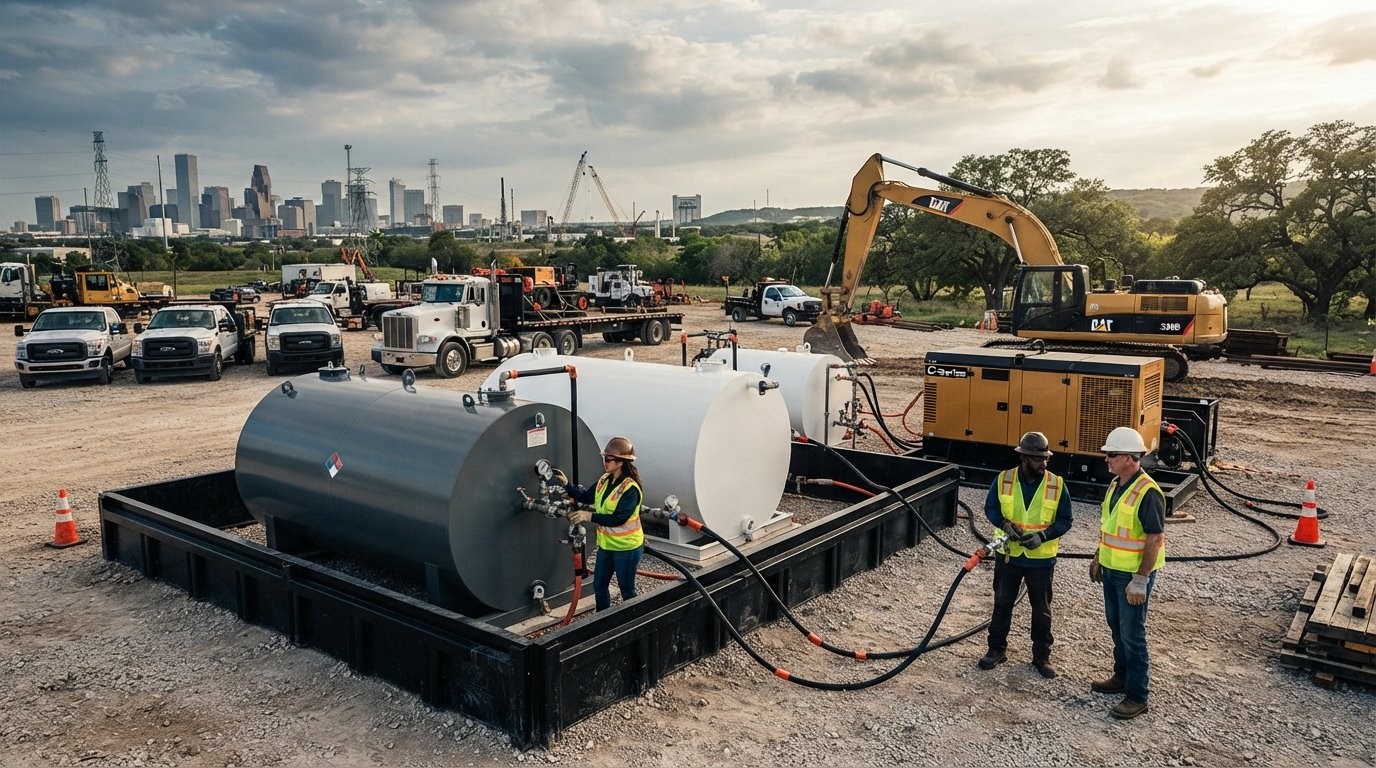
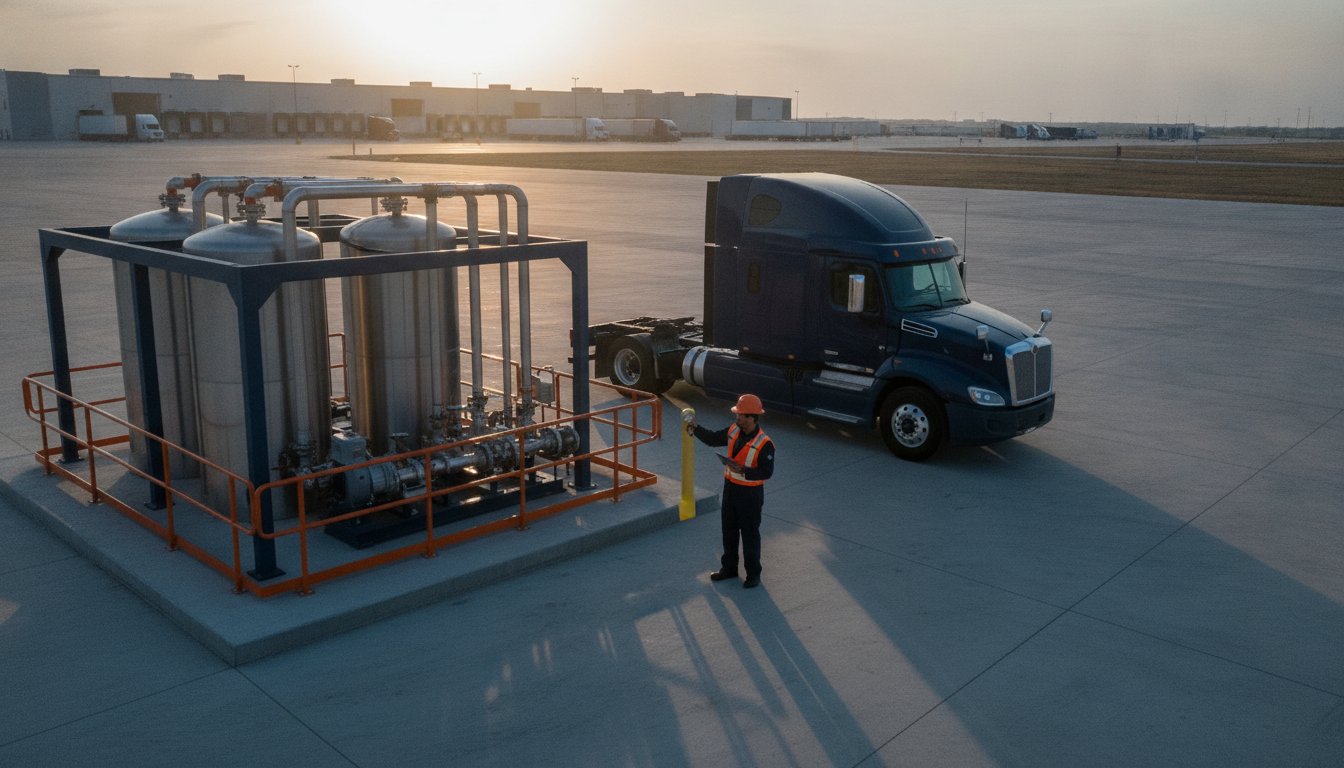
Stationary bulk tanks create a centralized fuel depot for long-term or static installations. Deploying modern fuel tank rentals equipped with double-walled containment satisfies rigorous environmental standards without requiring built-in-place concrete berms. These self-contained units provide steady reserves against supply delays caused by severe regional weather. Fixed bulk storage excels on sites with high, concentrated fuel demand, such as aggregate crushing plants, concrete batch setups, and long-term civil utility projects running massive generator banks.
Decision Framework: Selecting Your Delivery Model
Determining the right distribution method requires weighing specific site realities rather than relying on default operational habits:
- Site Mobility: Choose mobile wet-hosing when machinery moves constantly across rugged rights-of-way. Choose stationary storage when assets remain clustered around a central operating radius.
- Environmental Compliance: Storing over 1,320 gallons of bulk fuel above ground triggers formal EPA SPCC spill prevention guidelines, requiring secondary containment and designated site plans. Wet-hosing shifts primary containment liabilities to the delivery provider's certified mobile equipment.
- Hybrid Deployment: High-production industrial projects often combine both models. They stage stationary double-walled tanks for base power generators while using mobile bobtails to wet-hose earthmoving iron scattered across outer perimeters.
Aligning your equipment spread with the proper fueling model streamlines daily workflow and optimizes overall project labor.
How to Establish an Uninterrupted Remote Site Fueling Protocol
Preventing fuel run-outs on isolated jobsites requires a structured operational process rather than reactive refilling. By engineering delivery schedules around real-world consumption patterns, project managers eliminate downtime risks before ground breaks. Establishing a dependable remote site fuel delivery protocol relies on five core operational steps: tracking machinery burn rates, surveying haul routes, enforcing containment compliance, deploying automated tank telemetry, and contracting priority emergency response.
Burn Rate Calculations and Delivery Scheduling
Map hourly fuel burn across all active machinery, support vehicles, and continuous prime-power generators under peak mechanical load. Field teams must maintain a strict 48-hour reserve cushion on site to protect operations against transport disruptions or sudden demand spikes. Implementing scheduling practices proven in construction site fuel delivery in Houston helps contractors align bulk drops and off-shift mobile wet-hosing schedules with actual machine usage cycles.
Regulatory Compliance and Environmental Safety
Off-grid bulk fuel storage carries heavy environmental responsibility. When aggregate job-site storage exceeds 1,320 gallons across containers of 55 gallons or larger, federal law requires a certified Spill Prevention, Control, and Countermeasure (SPCC) plan. Staged tanks require secondary containment designed to hold at least 110% of tank capacity. Field supervisors must position fully stocked spill kits within 75 feet of all dispensing points and maintain fuel transfer records to ensure total alignment with Texas Commission on Environmental Quality (TCEQ) environmental mandates.
Emergency Continuity and Generator Reliability
Off-grid operations rely entirely on continuous generator power for dewatering, lighting, and living quarters. Establishing a contract for an emergency generator fueling service guarantees priority dispatch during severe weather events, such as Gulf Coast hurricanes or severe winter freezes. Integrating structured protocols detailed in integrated fuel management for industrial sites guarantees uninterrupted power delivery when regional supply chains freeze up.
Ready to lock in a dependable fueling schedule for your active job site? Contact React Fueling today to build a dedicated off-grid logistics plan tailored to your operational footprint.
Engineered Fuel Logistics: Partnering with React Fueling for Remote Uptime
Securing an off-grid energy supply chain demands an experienced logistics ally with dedicated field assets and proven distribution protocols. React Fueling operates as a specialized division within the React Holdings family, delivering engineered fuel management strategies built specifically for high-stakes industrial, civil infrastructure, and energy developments. Choosing a dedicated partner transforms remote site fuel delivery from a recurring logistical risk into a predictable, seamless routine that protects project schedules.
Comprehensive Fleet and Site Support Capabilities
Modern job sites require versatile fueling solutions that adapt to changing field demands. React Fueling provides high-volume diesel delivery, direct-to-machinery wet-hosing, and heavy-duty portable fuel tank rentals tailored to remote job footprints. Logistics teams coordinate off-road diesel, highway fuel, and bulk DEF delivery in unified dispatches to keep all site machinery running at peak performance. Drivers utilize digital flow metering systems on every drop, generating transparent electronic tickets per asset to streamline project-level cost accounting.
Rapid Response Infrastructure Across Texas
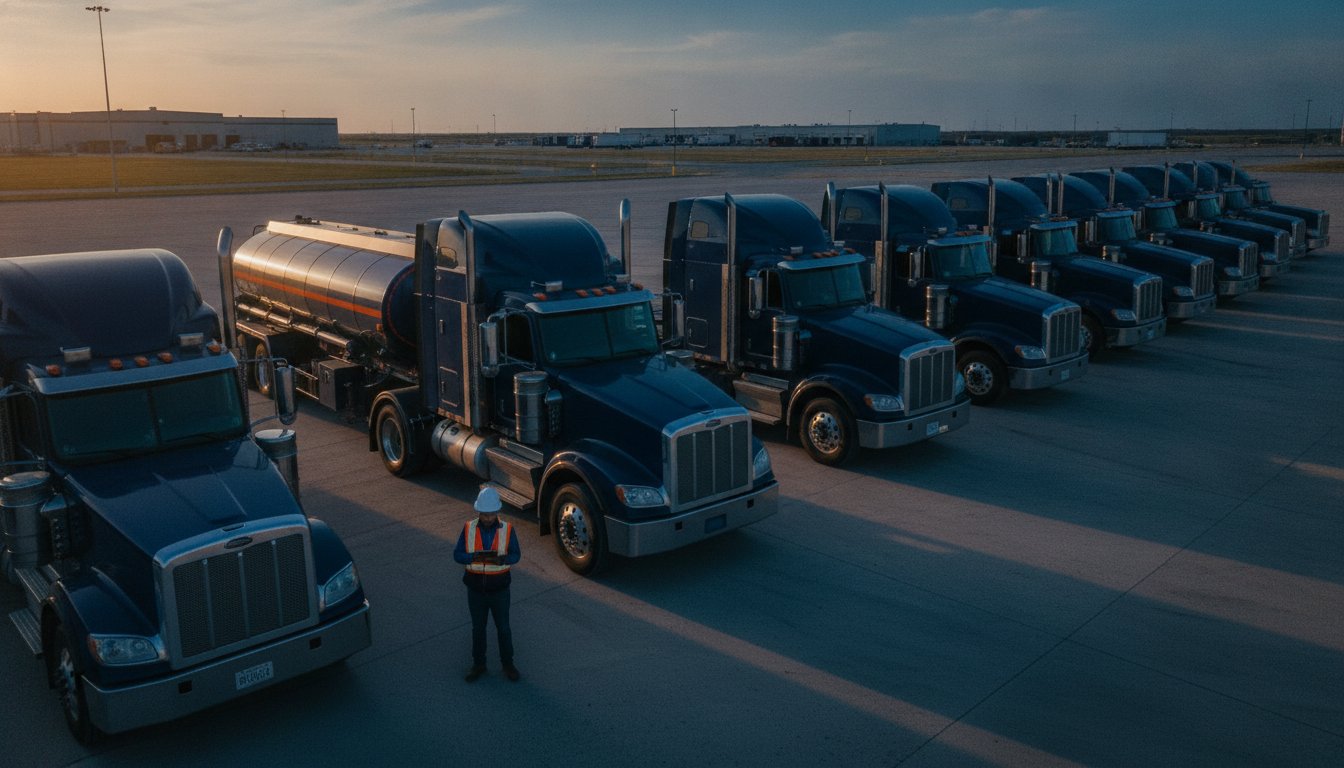
Maintaining uptime across Texas requires extensive regional reach and deep geographic familiarity. React Fueling maintains strategic terminal coverage spanning Houston, Dallas, Fort Worth, Austin, San Antonio, and College Station. Regional distribution centers position specialized bobtails and transport tankers close to active industrial corridors and remote rights-of-way. This dedicated presence ensures fuel dispatches arrive reliably at rural jobsites, helping contractors maintain steady production and meet strict operational milestones.
Secure Your Remote Site Fuel Supply Today
Operational continuity begins long before the first piece of iron unloads at the job site. Project managers should audit consumption curves, site access corridors, and on-site storage capacity well before ground breaks to prevent costly starvation events. Whether your project requires stationary double-walled tanks or scheduled off-shift equipment refueling, our team designs a customized delivery plan matched to your exact site layout. Request a remote fueling consultation with React Fueling to protect your machinery uptime and secure your operating timeline.
Take Command of Your Off-Grid Fuel Logistics
Eliminating machine downtime on off-grid projects requires deliberate logistical planning rather than reactionary refilling. Calculating precise daily burn rates, maintaining strict secondary containment, and selecting the right balance between mobile wet-hosing and stationary storage turn volatile field conditions into predictable routines. When you approach remote site fuel delivery as an engineered discipline, you protect your bidding margins and keep heavy iron running without interruption.
As part of the React Holdings family, React Fueling delivers reliable, boots-on-the-ground commercial energy logistics across Houston, Dallas, Austin, San Antonio, and expanding rural Texas corridors. Whether your scope requires off-shift equipment fueling, dedicated generator support, integrated DEF replenishment, or double-walled fuel tank rentals, our fleet is equipped to navigate difficult terrain and safeguard your site continuity.
Don't wait for empty tanks to stall your operational progress. Request a customized remote site fueling consultation today to establish an airtight supply schedule that keeps your crews productive from groundbreaking to final inspection.
Frequently Asked Questions
How does remote site fuel delivery work for locations without paved roads?
Remote site fuel delivery relies on specialized high-clearance bobtails and multi-axle tankers configured specifically for rough terrain rather than standard highway trailers. Logistics teams conduct pre-dispatch route scouting to map pipeline right-of-ways, private lease roads, and low-water crossings across regions like Magnolia and College Station. Drivers coordinate directly with site superintendents to stage fueling windows, deploying extended hoses up to 100 feet to reach machinery parked across uneven or unpaved ground.
What is the minimum volume required for scheduled remote site diesel delivery?
Delivery thresholds vary depending on job-site location, tank capacity, and delivery frequency. Most industrial operations schedule drops starting around several hundred gallons for direct machinery wet-hosing, while bulk fuel tank deliveries typically require larger volumes to maximize efficiency. React Fueling works directly with project managers across Texas to structure scheduled routes that align with specific daily burn rates rather than imposing rigid volume minimums that disrupt site workflows.
Can remote fuel delivery providers supply both off-road dyed diesel and on-road clear diesel?
Yes, certified providers utilize split-tank delivery trucks equipped with dedicated hoses, pumps, and digital meters for each product. This compartmentalization ensures non-taxed red-dyed diesel for heavy off-road equipment never mixes with clear ultra-low sulfur diesel intended for highway transport trucks. Consolidating both products into a single dispatch cuts down vendor traffic on narrow right-of-ways and simplifies fuel tax reporting for project accounting teams.
What are the environmental containment requirements for storing fuel on a remote job site?
Aboveground storage exceeding 1,320 aggregate gallons requires a written Spill Prevention, Control, and Countermeasure (SPCC) plan under federal EPA regulations. Bulk storage tanks must provide secondary containment holding at least 110% of total tank capacity. Using double-walled fuel cubes fulfills these containment standards without requiring earthen dikes or concrete catch basins. Sites must also maintain certified spill response kits and follow Texas Commission on Environmental Quality (TCEQ) reporting protocols.
How do you prevent fuel theft and unauthorized consumption on unattended remote sites?
Stopping shrinkage on remote jobsites requires a combination of physical hardware and telemetry monitoring. Double-walled storage tanks feature lockable access hatches that secure dispensing pumps, valves, and electrical connections. Paired with cellular automated tank level gauges and electronic flow meters, these systems track dispensing events in real time. Discrepancies between machine engine hours and fuel draw alert site managers immediately, cutting unmonitored loss across isolated spreads.
What happens if severe weather or flooding cuts off access to our remote site?
Contingency planning starts before severe storms strike by establishing guaranteed supply agreements and topping off static tanks to maintain a 48-hour buffer. React Fueling maintains strategic terminal hubs across Houston, Dallas, Austin, and San Antonio, deploying emergency dispatch teams to navigate alternate corridors during severe weather events. If ground routes wash out, priority emergency delivery protocols keep critical power generators and dewatering pumps supplied without delay.
How is DEF handled and delivered alongside diesel to remote machinery?
Diesel Exhaust Fluid is transported in dedicated, closed-loop containers like IBC totes or specialized truck compartments to prevent particulate and mineral contamination. Because Tier 4 engines shut down without pure DEF, suppliers deliver packaged or bulk fluid concurrently with off-road diesel dispatches. DEF requires strict climate controls to avoid crystallization in cold conditions or rapid chemical breakdown in extreme Texas summer heat, ensuring injection systems operate smoothly.