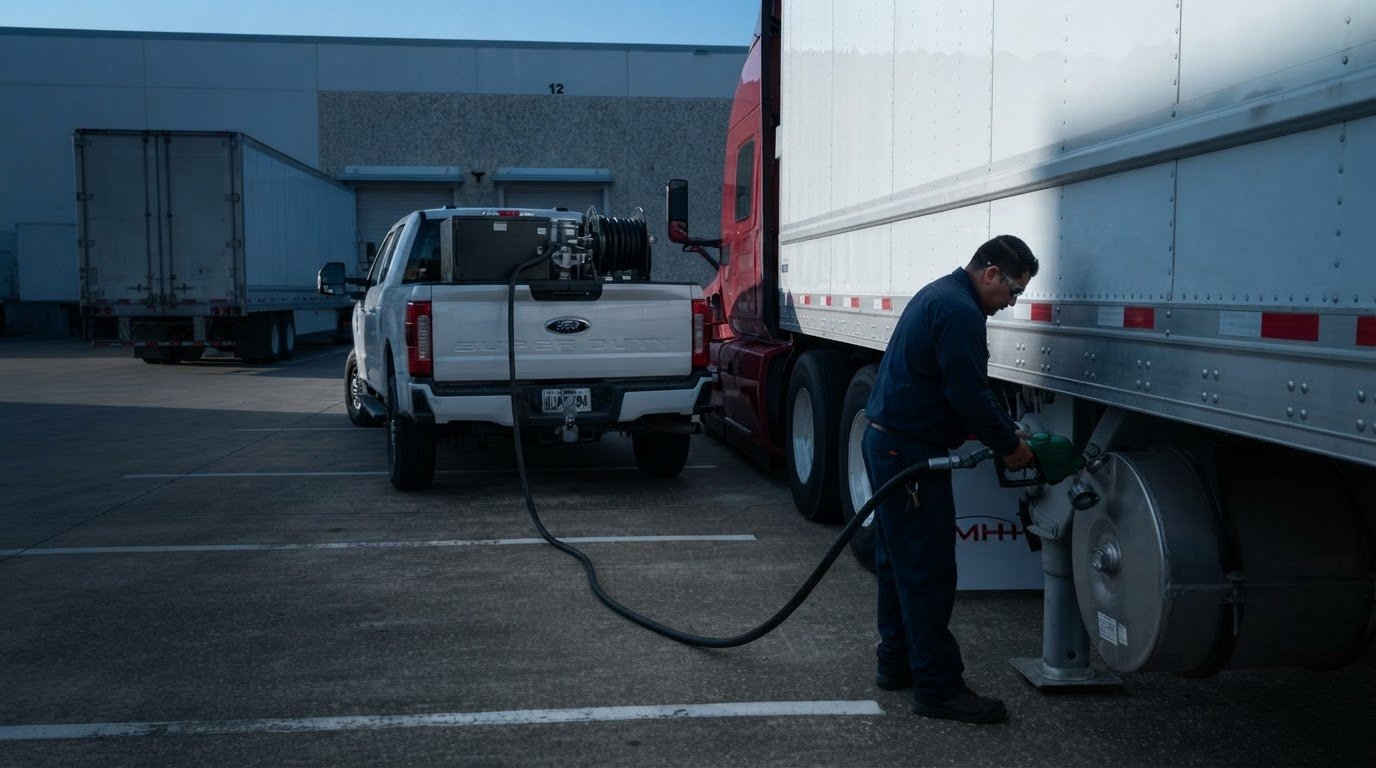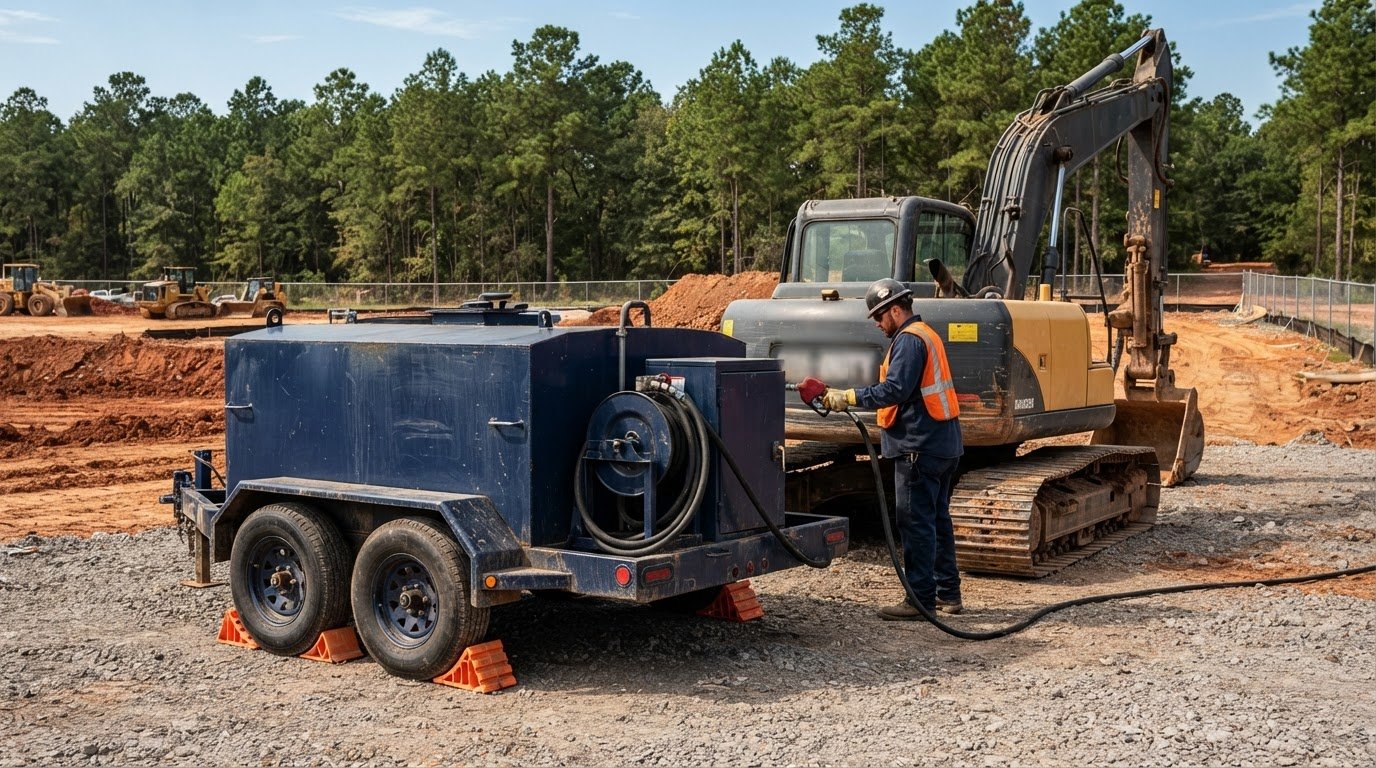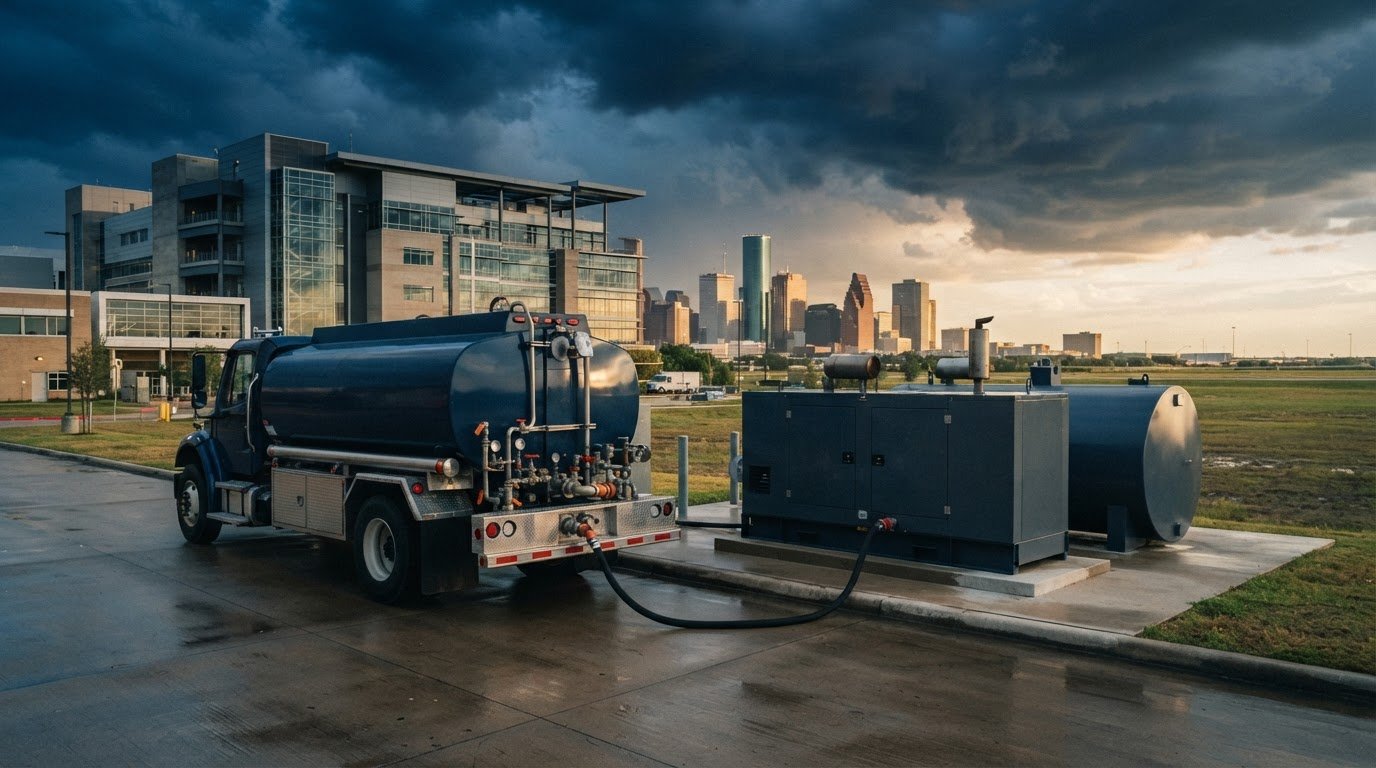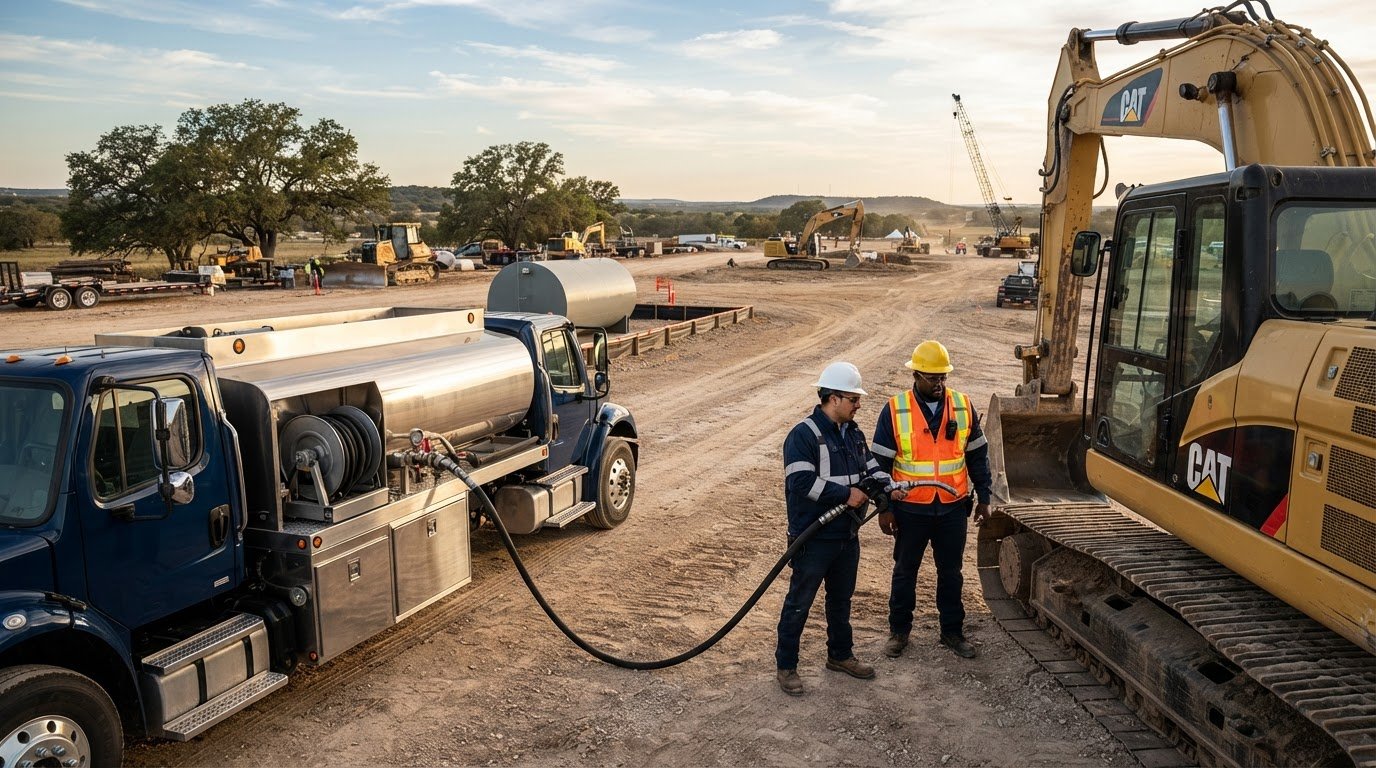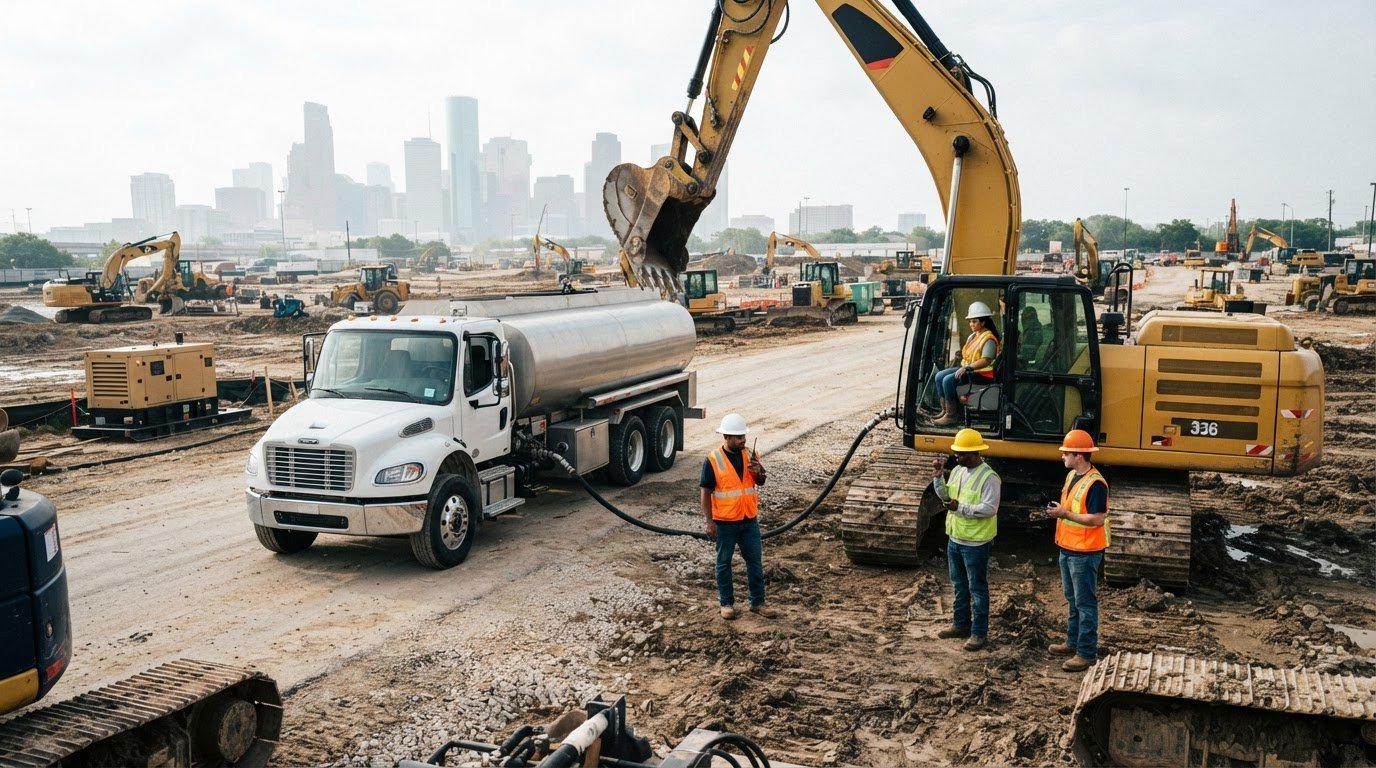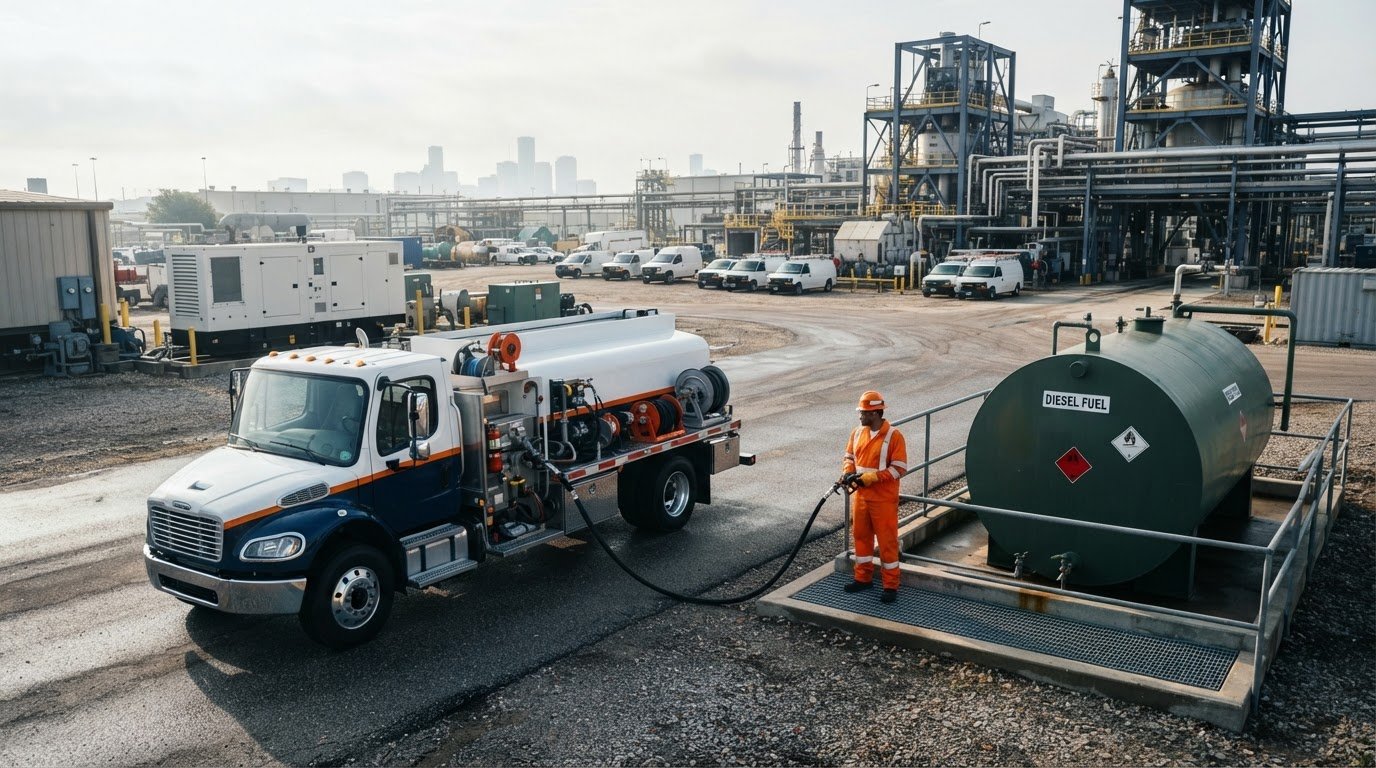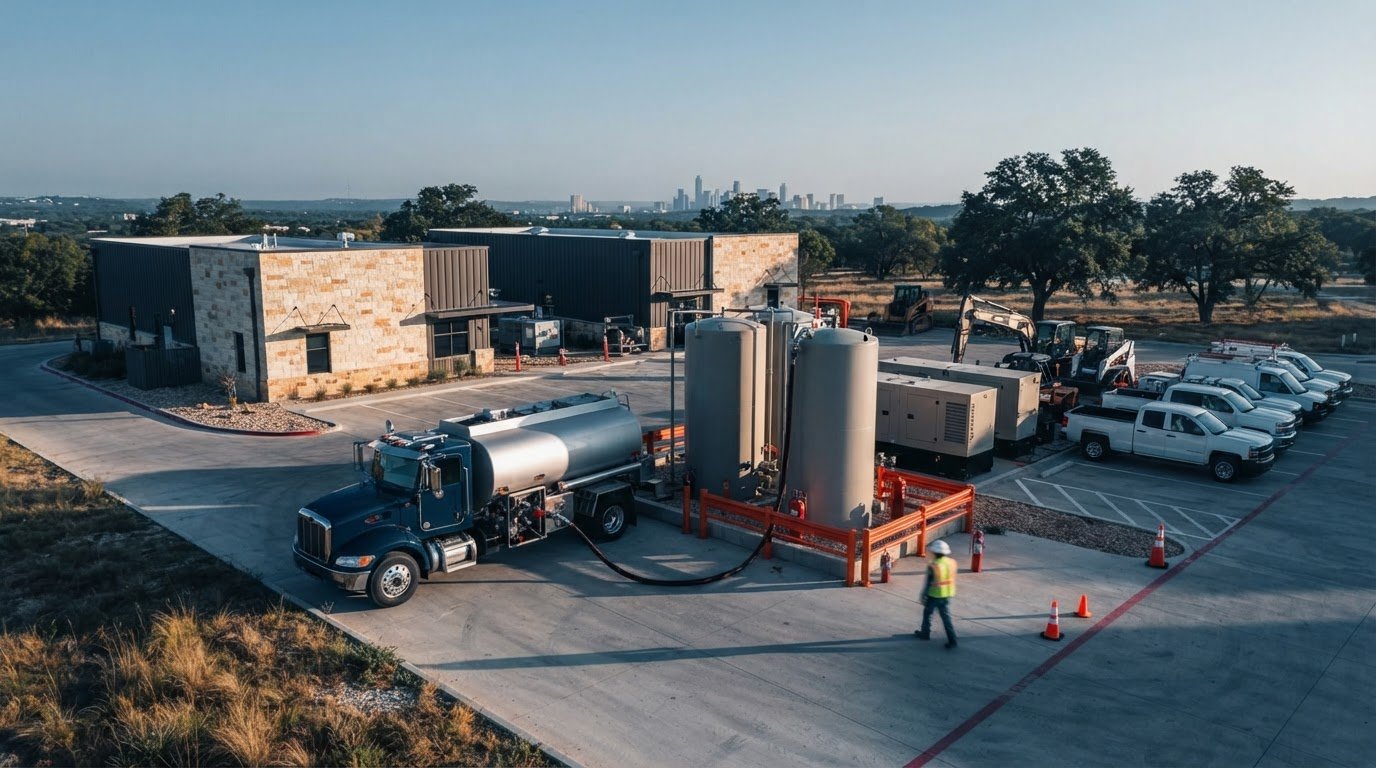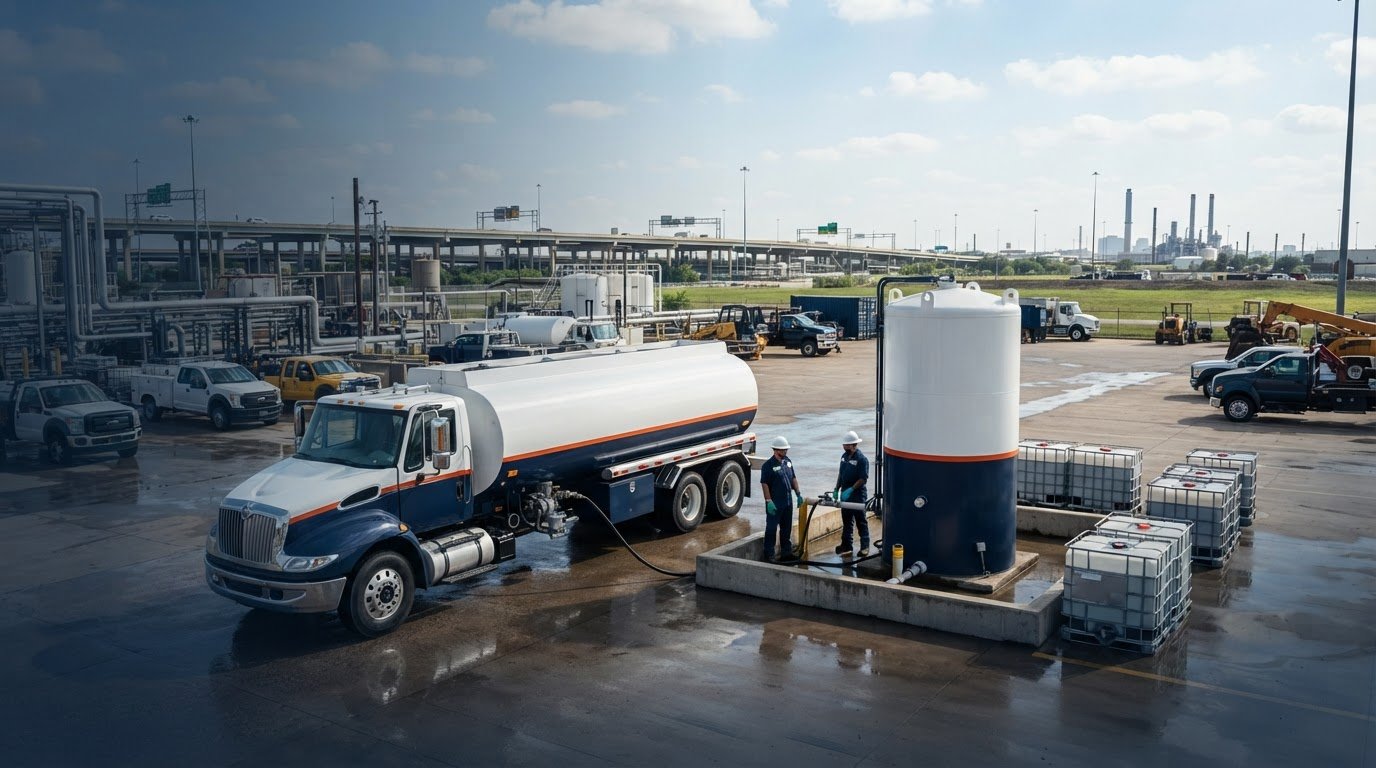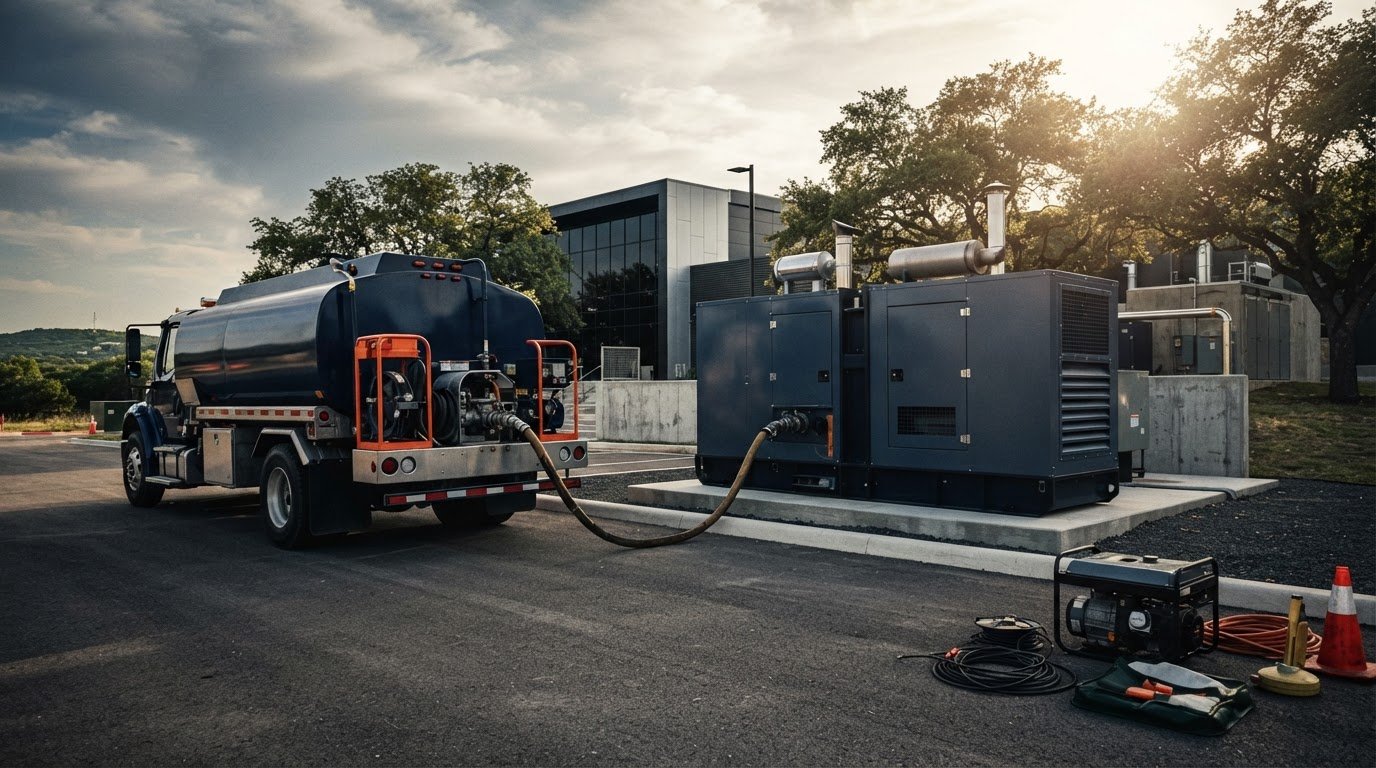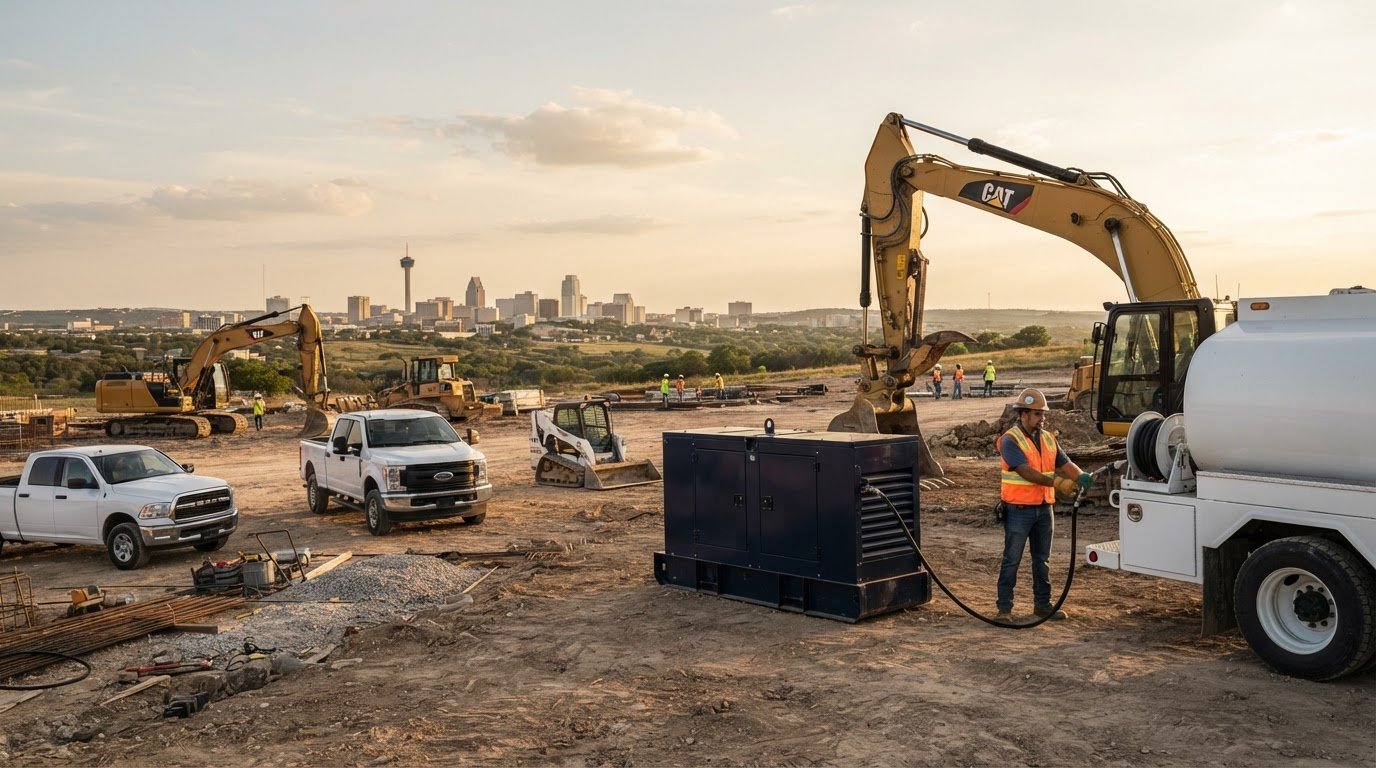
Fuel availability is an operational control, not a back-office task. In Dallas, industrial fuel supply management depends on matching delivery timing and on-site inventory to the needs of fleets, equipment, and facilities. On-site refueling can save Dallas businesses 30 minutes or more per unit per day compared with sending equipment off-site for fuel.
Transportation, construction, and industrial teams need fuel to be ready where work happens, without disrupting schedules to refuel. Inventory monitoring helps teams see when supplies need replenishing, while automated dispatch can coordinate deliveries around operational demand.
This guide explains how fuel supply planning supports fleet and site operations, what shapes delivery schedules, and how inventory monitoring and dispatch fit into a reliable process. It also covers on-site fueling for construction equipment, generators, and commercial operations, and when dedicated fuel delivery can help keep work moving.
Fuel supply for transportation and distribution
Transportation fuel planning connects inventory, delivery timing, and dispatch priorities. In Dallas, this coordination supports fleet routes, construction equipment, and industrial operations.
Transportation and Delivery Logistics
Map fuel demand by vehicle group, route, shift, and operating location. Then set reorder points against actual consumption and delivery windows, so dispatch can prioritize the sites that risk a work stoppage. Wholesale fuel distribution in Dallas depends on coordinating supply, truck access, unloading space, and delivery timing. On-site refueling can save Dallas businesses 30 minutes or more per unit per day compared with sending equipment off-site for fuel.
For transportation and distribution teams, track deliveries against planned routes and inventory records. A missed delivery or inaccurate tank reading can affect the next dispatch, so assign responsibility for logging receipts and reporting unusual consumption.
Storage, Transport, and Dispensing Rules
Industrial fuel storage, transport, and dispensing in Dallas are subject to applicable state and local requirements. The controls depend on fuel type, tank design and placement, transfer method, and facility use. Assess these details before installing or changing equipment.
At a Dallas County site, identify the tank type, capacity, location, and dispensing setup to determine applicable permits and inspections. Include installation condition, leak prevention, and safe transfer arrangements in the site review. Keep tank and delivery records together so staff can match each fuel receipt to the correct storage location.
Bulk Fuel Prices and Delivery Options
Current bulk diesel, gasoline, propane, and natural gas prices depend on the case and are given after a quote request. Fuel type, volume, delivery timing, and site access shape the quote, so compare the same requirements when planning a supply cycle.
Tank sizes and delivery options vary with site demand and equipment needs. Select capacity based on consumption patterns, available space, fuel type, and how often a delivery can be received. Options can include bulk delivery, on-site equipment refueling, and rented fuel tanks. For example, a fixed facility and a mobile construction site may need different delivery points and storage arrangements.
Emergency Delivery and Safety Planning
Emergency fuel delivery addresses urgent shortages that threaten fleet or equipment operations. After-hours response is a separate coverage commitment, so include response expectations in the operating plan rather than assuming emergency service automatically means after-hours delivery. Record site access instructions, delivery contact roles, and priority equipment before a shortage occurs.
Plan for spills, fire exposure, fuel contamination, and unsafe vehicle movement around transfer areas. Keep delivery access clear, establish procedures for stopping a transfer, and assign staff to report leaks or damaged equipment. A written site plan should identify storage locations, transfer routes, and who is responsible for escalating an incident.
Fuel supply for construction and industrial facilities
Construction sites and fixed industrial facilities need fuel plans suited to changing workloads. Before machinery starts each shift, a site supervisor can align fuel records, equipment schedules, and delivery access.
Match Supply to Site Demand
Start with an equipment register that identifies each machine, its fuel type, operating location, and expected use. A loader near a site entrance may need a different fueling arrangement from a generator beside a control room. Keep the register current as projects move equipment between work zones.
Next, compare recorded consumption with planned work. If a construction crew adds a shift or moves machinery to a remote area, update the delivery plan before the new schedule begins. This gives dispatch a clear view of changing demand and helps prevent one machine from using fuel reserved for another task.
Separate site demand from facility demand. A manufacturing plant may have predictable equipment use, while a construction project changes as crews, phases, and machinery shift. Review both patterns when coordinating transportation and distribution, but keep separate inventory records for each location.
Build Inventory Controls
Assign someone to record every delivery and transfer. At receipt, log the delivery date, fuel type, amount received, and tank or equipment destination. During each inventory review, compare the record with current readings and recent consumption. Investigate mismatches before they become planning assumptions.
Set a reorder trigger based on operational needs, delivery access, and expected consumption. A facility with a generator serving critical equipment, for example, should plan replenishment around its operating schedule, not only routine vehicle demand. Base contingency stock decisions on documented use and available storage.
Coordinate Site Operations and Tax Records
Industrial fuel purchases in Texas are not exempt solely because a business uses the fuel at a worksite. Tax treatment depends on fuel type and use, so record each purchase and its end use for accurate classification.
Connect purchasing records to project or facility cost codes. A construction manager can record fuel against a site phase, while a plant operator can assign it to a generator or production area. This makes cost reviews more useful and helps explain consumption changes when equipment or work schedules change.
Before a delivery arrives, identify the receiving contact, accessible route, and intended fueling location. Keep instructions aligned with the current site map, especially when construction fencing or stored materials alter truck access. A documented handoff helps direct fuel to the right tank or equipment without disrupting active work.
Industrial and commercial fuel supply
Commercial fuel procurement works best when purchasing decisions reflect actual site use. In Dallas, businesses can organize supply around fuel type, delivery location, and operating schedule.
Dallas-Area Supplier Selection
Assess a supplier’s fit against your operation’s delivery requirements, not just the fuel type. Identify which sites need deliveries, how vehicles or equipment receive fuel, and who handles receipts. A transportation company with a central yard needs a different arrangement from a contractor moving between Dallas job sites.
Prepare a consistent procurement brief before arranging service. Include fuel type, delivery address, access instructions, receiving contact, and expected usage patterns. These details help establish a practical delivery plan. Keep one approved version for purchasing and site teams, and update it when a project location or operating schedule changes.
Review how the delivery process fits your internal controls. For example, a business may require a manager to approve orders and a site contact to record each receipt. Clear responsibilities reduce confusion between procurement, dispatch, and the people receiving fuel.
Available Industrial Delivery Fuels
For industrial delivery planning, diesel is a core fuel for commercial fleets, construction machinery, and generators. React Fueling also delivers DEF for trucks and equipment. DEF is not fuel, so keep its usage and stock records separate from diesel inventory to avoid confusing replenishment needs.
Match each product to the equipment or vehicle that uses it. A fleet manager can group diesel demand by vehicle or site, while facility staff can track generator requirements separately. This helps purchasing teams make accurate requests and gives receiving staff a clear destination for each delivery.
Gasoline, propane, and natural gas can have different applications and delivery arrangements. Include the exact fuel type in procurement documents, rather than using a broad label such as “fuel.” This avoids ambiguity when teams discuss equipment requirements, storage, and delivery scheduling.
Commercial Accounts and Delivery Scheduling
To organize a commercial account, prepare the business and site details used for ordering: legal business name, billing contact, delivery locations, receiving contacts, and fuel requirements. Then establish who can place orders and who records completed deliveries. These roles connect procurement decisions with field operations.
Set delivery timing around operating patterns and site access. A distribution yard may need a delivery window that avoids vehicle departures, while a construction site may require coordination with changing work areas. Share access directions and receiving instructions with dispatch, then revise them as site conditions change.
Use a repeatable ordering routine. Review recent usage, identify upcoming schedule changes, submit the order through the agreed account process, and reconcile the delivery record when fuel arrives. A monthly review can help teams compare planned use with actual receipts, spot changing demand, and adjust future orders without relying on guesswork.
Inventory monitoring and automated dispatch
Dallas operations can connect inventory records to dispatch decisions before a site faces a shortage. A useful process combines reliable tank readings, documented fuel use, and clear delivery priorities across the region.
Begin by assigning each tank or fueling location a distinct record. Include its fuel type, capacity, recent receipts, and readings from each inspection. For example, keep a construction yard’s diesel inventory separate from a facility generator’s supply. Separate records make it easier to spot unusual consumption and direct deliveries to the correct location.
Choose a consistent monitoring method that fits the equipment and site routine. Staff can record readings during scheduled inspections, then compare them with delivery receipts and operating activity. If inventory changes unexpectedly, review recent transfers, equipment use, and measurement entries before adjusting the replenishment plan. Reliable records matter more than a complicated process crews do not maintain.
Automated dispatch uses defined triggers and order details to move replenishment requests into a delivery workflow. A trigger might be a recorded inventory level or a scheduled review. Dispatch instructions should identify the destination, fuel type, access route, receiving contact, and priority. Automation can organize routine requests, while staff resolve exceptions such as a changed entrance or unexpected demand.
For example, a Dallas facility can compare generator use with its operating schedule during a regular review. If a reading reaches the facility’s internal reorder point, the system can flag the location for dispatch review. A staff member should verify unusual readings and confirm that instructions match current site conditions before routing a delivery.
- Record: Log receipts, transfers, readings, and the location responsible for each entry.
- Compare: Match inventory changes against equipment activity and delivery records.
- Prioritize: Route requests by operational impact, site access, and current demand.
- Reconcile: Compare the delivery record with the updated inventory after receipt.
Keep exception handling visible to operations staff. A missed reading, duplicate request, or closed access point should create a clear task rather than disappear into a queue. Assign responsibility for reviewing flagged items and updating dispatch notes when a project moves or equipment changes location.
When assessing a supply partner’s dispatch process, consider how it handles order details, inventory changes, and delivery records. Years of experience in the region may inform familiarity with business operating needs, but a buyer should still assess the specific workflow. Clear records and defined handoffs help procurement and site teams act on the same information.
Which industrial fuel suppliers serve businesses in Dallas, Texas?
Dallas businesses can use commercial fuel delivery for fleets, construction sites, and industrial facilities. The right fit depends on fuel type, delivery location, equipment needs, and how orders coordinate with operations.
Start by defining the service required at each site. A fleet yard may need diesel for parked vehicles, while a construction project may need equipment fueled where it operates. A facility with backup power has different requirements from a business that primarily fuels vehicles. Identify each use before arranging delivery.
Assess the delivery process as well as the product. Provide the Dallas delivery address, site access details, receiving contact, fuel type, and intended use. Request a clear ordering process and delivery documentation. These details help procurement teams compare arrangements on equivalent requirements, rather than relying on different assumptions.
Distinguish between routine delivery and urgent replenishment. A planned order supports ordinary consumption; an unexpected shortage calls for an emergency process. Record who can authorize each request and how dispatch receives site instructions. If a project entrance changes, for example, update the delivery notes before the next order.
- Fuel fit: Match the product to the vehicles, equipment, or facility use.
- Delivery location: Provide accurate access and receiving instructions for each Dallas site.
- Ordering roles: Identify who places orders, approves exceptions, and records receipts.
- Documentation: Keep delivery records aligned with inventory and purchasing records.
For industrial fuel supply management in Dallas, compare suppliers against your operating workflow. A company with multiple sites may need consistent records across locations, while a single construction project may prioritize changing access and equipment locations. Make sure the delivery instructions and documentation account for those differences.
Use a short internal review before setting up a delivery arrangement. Procurement can confirm fuel and billing details; site staff can validate access and receiving procedures; operations can check timing against work schedules. Each group assesses a different risk, helping prevent a plan that works on paper but fails at the delivery point.
After selecting an arrangement, document order contacts, delivery locations, fuel requirements, and recordkeeping responsibilities in one shared process. Review it whenever a project moves, a site changes access, or equipment needs shift. This gives Dallas teams a practical basis for coordinating supply without relying on informal instructions or outdated assumptions.
Local hiring and operations references can help businesses understand the skills associated with fuel coordination, though they do not replace a supplier service review. The Fleet Repair Solutions Parts and Assets Manager position in Seagoville, Texas, was scheduled Monday through Friday from 7:00 AM to 4:00 PM. LinkedIn listed a Manager, Fuel Product Schedulers position at 7-Eleven in Irving, Texas, 16 hours before the page was viewed.
The University of Texas at Dallas lists SYSM 6334 as the course Systems Operations Management. It lists OPRE 6366 as the course Global Supply Chain Management, with SYSM 6334 as a prerequisite, and OPRE 6369 as the course Supply Chain Software with SAP. It also lists OPRE 6370 as the course Logistics and Distribution, with SYSM 6334 as a prerequisite. These course topics may be relevant when teams review supplier coordination, distribution, and systems processes.
React Fueling: Diesel Delivery
React Fueling supports Dallas fleets, construction sites, and industrial facilities with diesel delivery and on-site fueling. Scheduled delivery can supply vehicles, equipment, or generators as part of an operating plan, reducing the need to send assets off-site for fuel.
Use diesel delivery when a fleet or site needs replenishment. Equipment Fueling Service brings fuel to machinery at work locations, while Generator Fueling Service supports facilities that rely on backup power. Share delivery locations, fuel needs, and site access details to plan service.
For businesses coordinating industrial fuel supply management in Dallas, React Fueling provides a practical option for commercial fuel needs. Contact React Fueling to discuss your operation’s fuel delivery requirements.
Put your fuel plan into operation
Turn your supply plan into a working routine by assigning responsibility for orders, delivery instructions, and receipt records. As projects change, review those responsibilities alongside your operating schedule. This keeps fuel decisions connected to the people managing vehicles, equipment, and facilities on the ground.
For industrial fuel supply management in Dallas, React Fueling offers Diesel Delivery, Equipment Fueling Service, and Fuel Delivery for commercial operations. Services support businesses aligning fuel supply with fleet and site requirements. Share your delivery locations and operational needs to request a quote.
Contact React Fueling to discuss your fuel supply and take the next step toward a plan that fits your operation.
Frequently Asked Questions
How can Dallas businesses manage fuel usage, monitor tanks, and prevent outages?
Dallas businesses can reduce outage risk by reviewing tank readings alongside asset-level fuel use and upcoming work. During each shift handoff, record equipment moved between sites and flag usage that differs from the work plan. A generator used longer than scheduled, for example, may change the next replenishment decision. Assign a supervisor to review exceptions and adjust the internal reorder trigger before the next delivery cycle.
What fuel storage tank sizes and delivery options do Dallas suppliers offer?
Tank sizes and delivery options vary with site demand and equipment needs. Options can include bulk delivery, on-site equipment refueling, and rented fuel tanks.