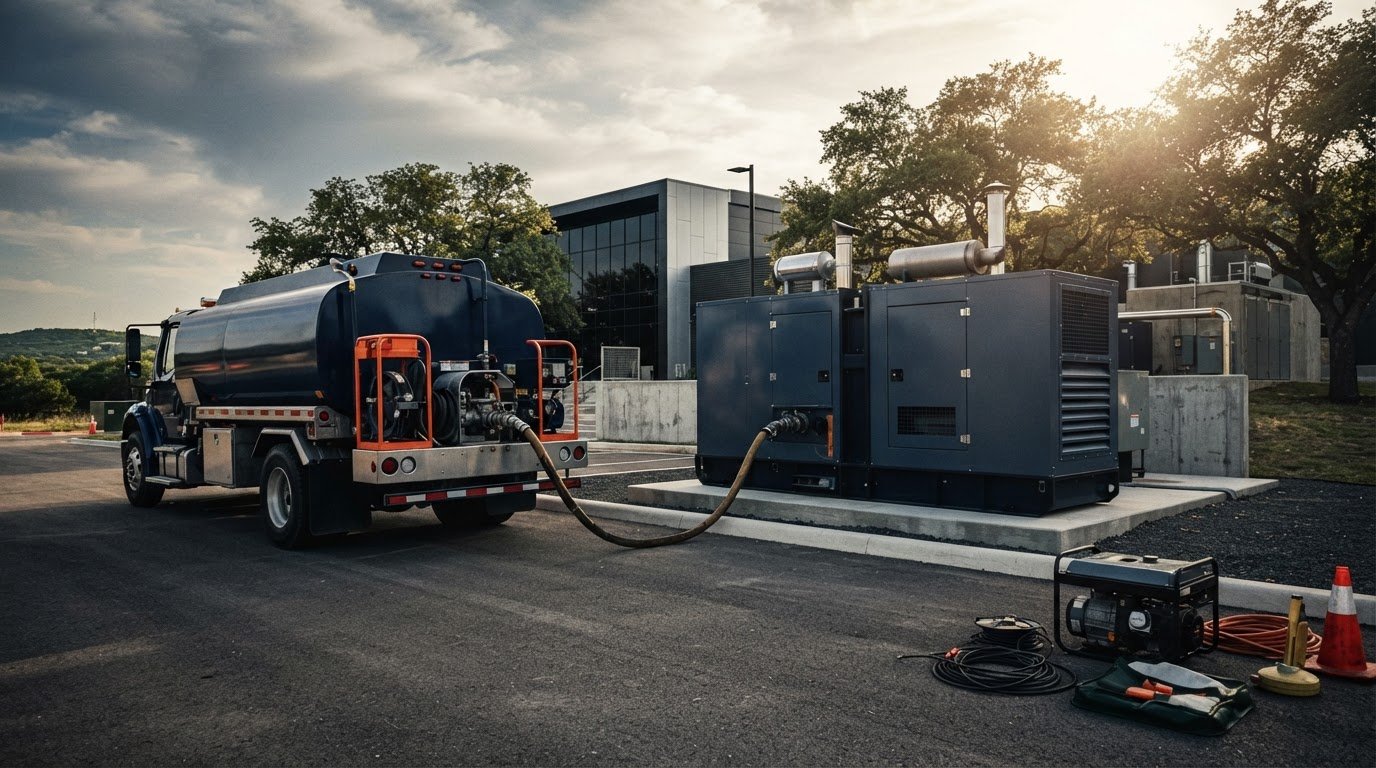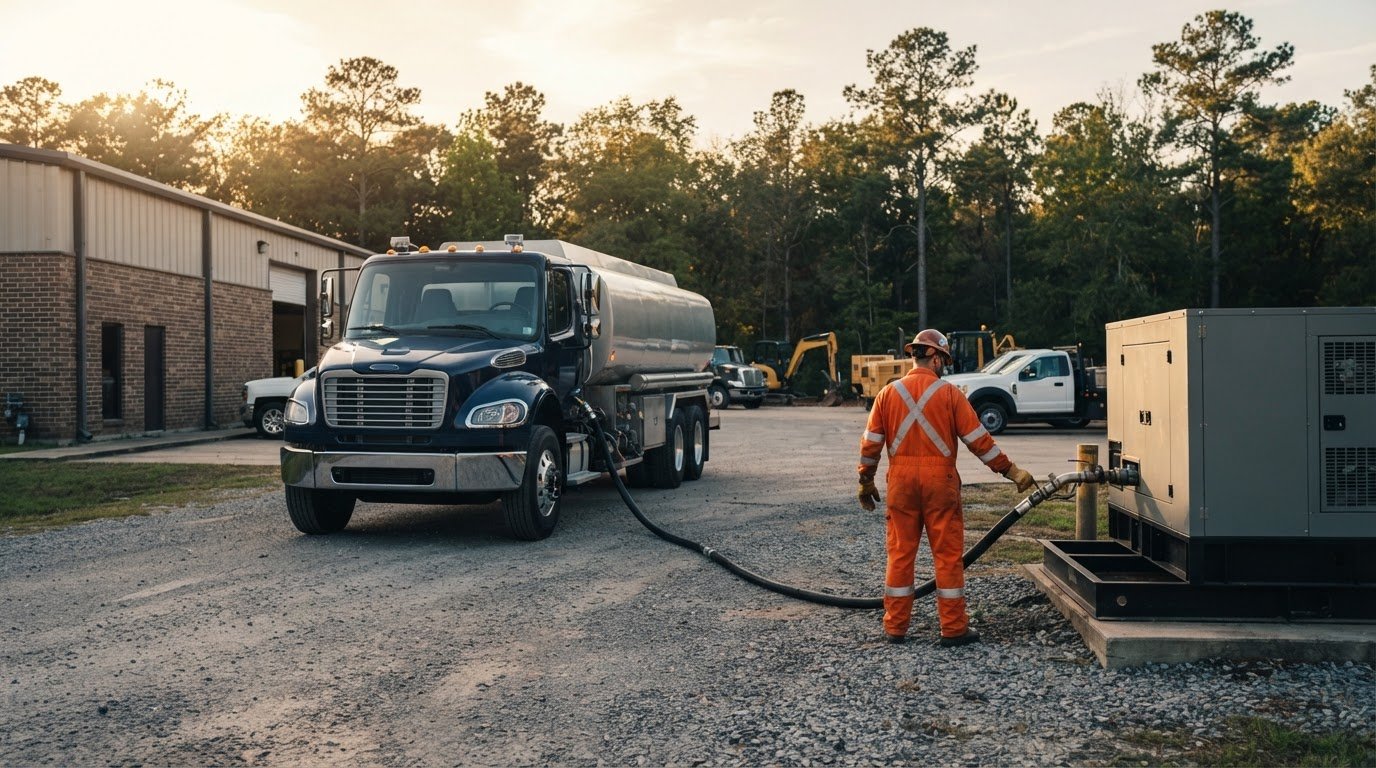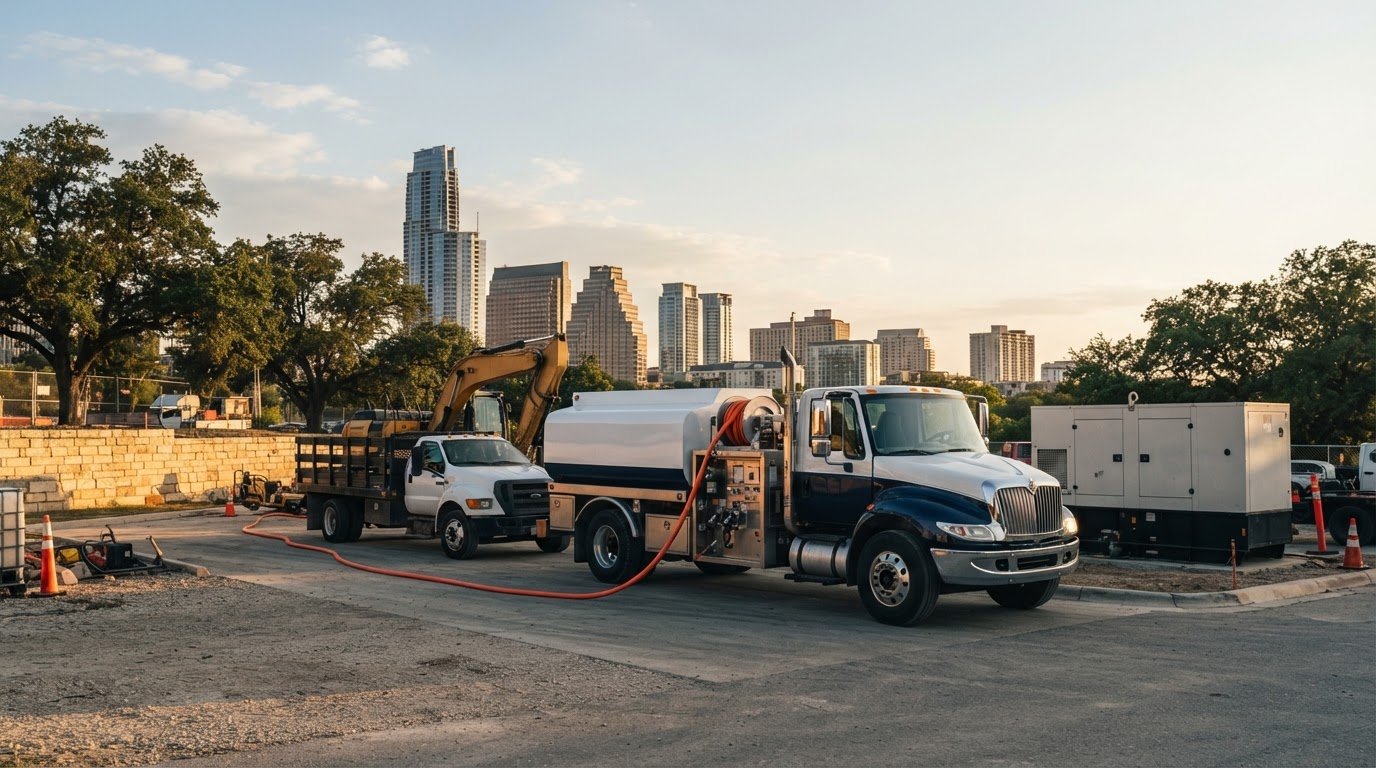
Fuel logistics can keep fleets and equipment moving without requiring vehicles or machines to leave the job site to refuel. An industrial fuel delivery provider in College Station can bring fuel to commercial locations, while on-site fueling and tank rentals support ongoing work at construction sites, farms, industrial operations, and facilities that rely on generators. The right setup depends on where equipment operates and how fuel needs to reach it.
For fleet and project managers, fuel planning is part of keeping schedules on track. This guide explains how fuel delivery, storage tanks, and on-site fueling work, what to consider for construction equipment and generators, and how needs differ across commercial operations. It also covers how React Fueling’s diesel delivery, equipment and generator fueling, emergency fuel delivery, DEF fluid delivery, and fuel tank rentals can support those operations.
Bulk fuel delivery for commercial and industrial operations
Commercial fuel delivery in College Station can supply work sites, facilities, and fleets without sending each vehicle off-site. Plan delivery around where fuel is stored and how equipment uses it.
Texas permits, safety rules, and environmental requirements depend on the fuel, storage setup, and site conditions. Account for permitting, fire safety, spill prevention, and environmental obligations when planning fuel storage and delivery.
Commercial suppliers serving College Station may provide bulk delivery, on-site tank filling, or fleet fueling, depending on their services. Match the delivery method to your locations, equipment, and operational requirements. React Fueling provides commercial fuel delivery, equipment fueling, generator fueling, and fuel tank rentals.
Retail and commercial fueling serve different needs. Retail fueling supports individual purchases at a public location; commercial delivery brings fuel to a business site, storage tank, fleet, or machine. A construction company, for example, may need equipment fueled at a job site, while a facility may need fuel delivered to a storage tank.
On-Site Filling and Fleet Fueling
On-site tank filling replenishes a storage tank at a facility or job site. Bulk delivery suits operations that use fuel steadily and can store it safely; fleet fueling brings fuel to vehicles where they are parked or working. Compare these methods by delivery location, tank access, vehicle schedules, and the type of equipment using the fuel.
Before arranging delivery, map tank locations and vehicle parking areas. Note access routes, operating hours, and site restrictions that could affect a delivery truck. This helps match the delivery method to the workday, whether fuel goes into a fixed tank, directly into fleet vehicles, or to equipment across a project site.
Provider Credentials and Safety Practices
Review the provider’s insurance, driver training, site access procedures, and spill response practices. These details help you assess whether delivery operations fit your facility’s risks and procedures. Specify site requirements, including who directs vehicle movement and where fueling can take place.
Commercial fuel products can include diesel for heavy equipment and fleet vehicles, as well as DEF for trucks and equipment. Match each product to the vehicle or machine, then plan how it will be stored and dispensed. Clear product and delivery instructions help prevent mix-ups between fleet needs, equipment fueling, and facility storage.
To compare fuel delivery options, first define the fuel type, delivery location, storage arrangement, and fueling schedule. Then match the service to those requirements in College Station. A construction fleet with equipment spread across sites may need on-site fueling, while an industrial facility with fixed storage may need tank replenishment.
Fuel services for construction projects
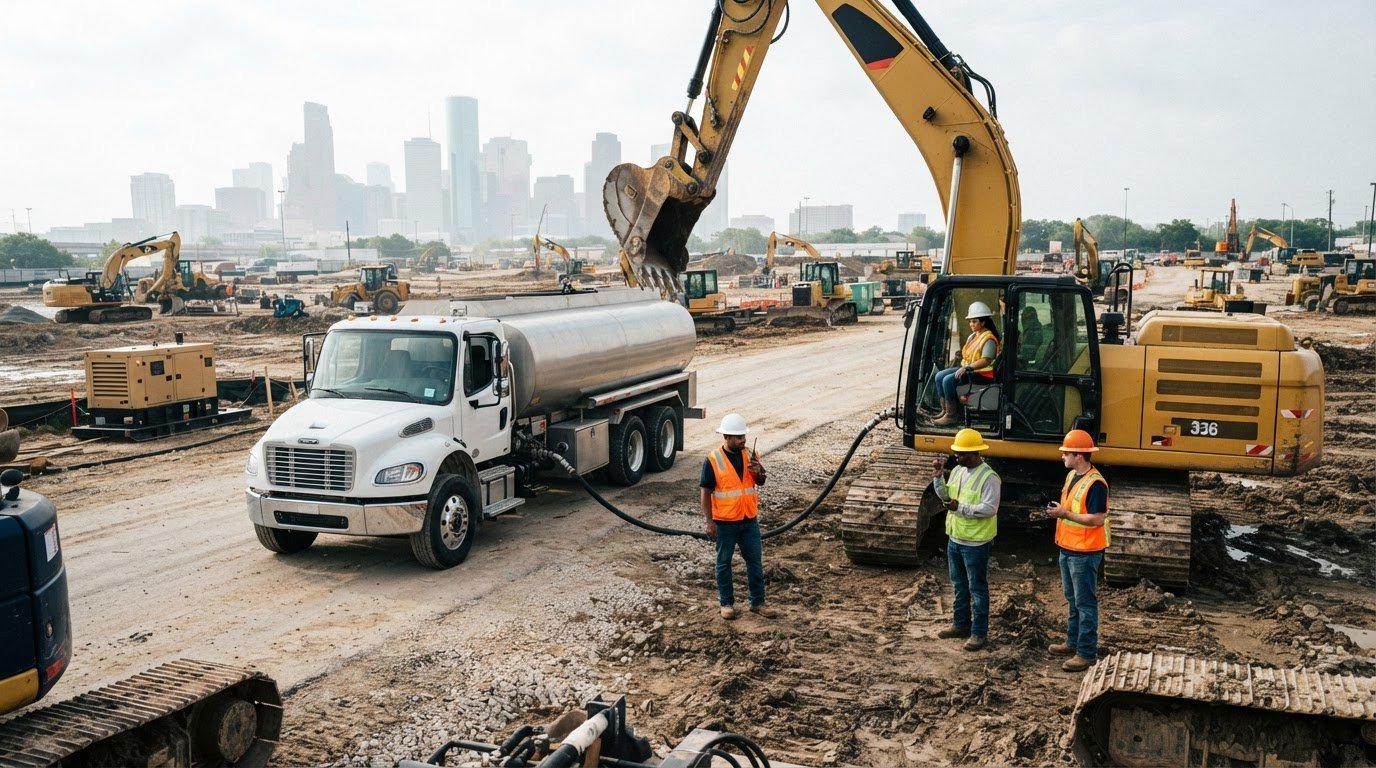
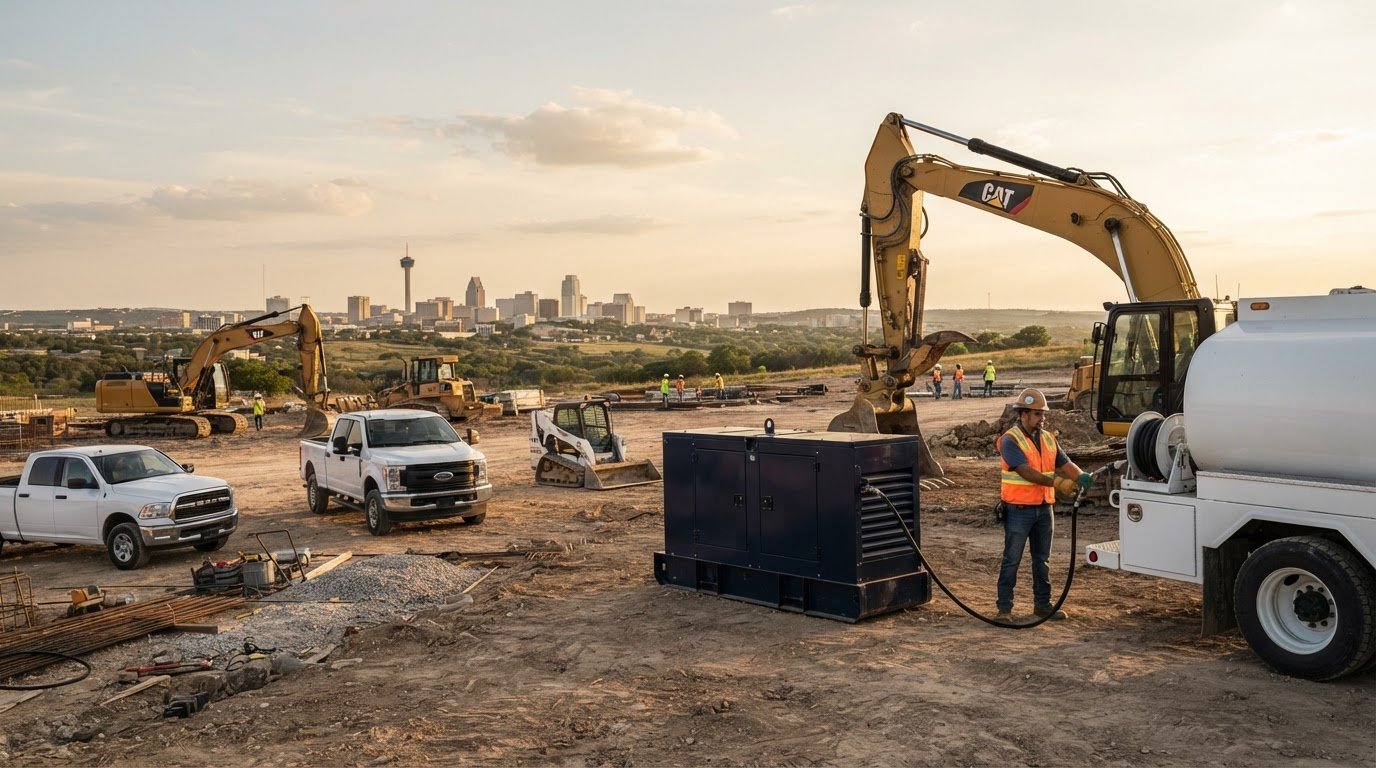
A construction site may have loaders, excavators, generators, and service vehicles spread across separate work zones. Plan fueling around each machine’s location, operating pattern, and access route so crews spend less time moving equipment to fuel.
Start with a site fuel map. Mark equipment staging areas, generator locations, delivery entrances, and restricted zones. Group machines by fuel type and usual work location. For example, a loader near the entrance may be easier to fuel at a central point, while machinery in a remote section may need direct on-site fueling.
Make delivery requests more efficient by sharing practical details together: the project address, fuel type, equipment locations, access instructions, and expected use. Update the plan when machinery moves or project phases change. A grading phase may concentrate equipment in one area; later utility work can spread machines across new sections.
React Fueling reports an average response time of 4 hours across Texas. Treat response timing as a planning input, not a substitute for routine scheduling. Construction managers can reduce urgent requests by tracking tank levels, recording equipment use, and arranging replenishment before a machine reaches a critical low level.
Coverage matters when crews move between projects. React Fueling serves major Texas metro areas with on-road and off-road fuel. For a College Station operation working across Texas, coordinate the fuel plan with each site’s access, equipment mix, and delivery requirements.
On-road fuel supports vehicles that travel between locations, while off-road fuel serves machinery operating at the job site. Identify these needs separately, especially when a project uses both highway vehicles and heavy equipment. Clear instructions help direct delivery to the intended vehicles or machines.
- Before ordering: List the site address, fuel type, equipment locations, and access directions.
- During the project: Track machine moves, consumption patterns, and changes in work phases.
- For a new site: Share staging areas and delivery access details before the first scheduled visit.
For construction work in College Station, map equipment, identify fuel needs, and plan replenishment around project activity. If the site also relies on a generator, include its location and fuel requirements in the same operating plan. This helps the project team track which machines need attention as work shifts across the site.
That company description can be one consideration when evaluating a fuel arrangement, alongside whether a provider can work with the site’s access instructions, equipment locations, and changing phases. Keep expectations explicit: confirm the delivery point, contact person, and any site restrictions in the order, then revise those details when the work area shifts. React Fueling describes itself as family owned and operated in Texas. For project teams, the useful next step is to connect that information to a site-specific discussion of delivery needs rather than assume every job follows the same pattern.
Fueling generators and agricultural operations
Generators and farm equipment have different fueling patterns, even when they share a site. A standby generator may need fuel during an outage, while tractors and irrigation pumps follow fieldwork schedules. Plan around each asset’s location, fuel type, operating cycle, and importance to the operation.
For generator fueling, identify the unit, fuel connection, tank location, and access route. Include the generator’s role, such as supporting refrigeration, water systems, communications, or production equipment. A site map can show the delivery point and any gates or work zones that affect truck access.
Routine planning starts with a staff member recording fuel levels and operating changes. Compare readings with generator use during tests or outages, then set a replenishment trigger suited to the site. Keep delivery instructions with the generator’s location and tank details so staff can provide consistent information during a disruption.
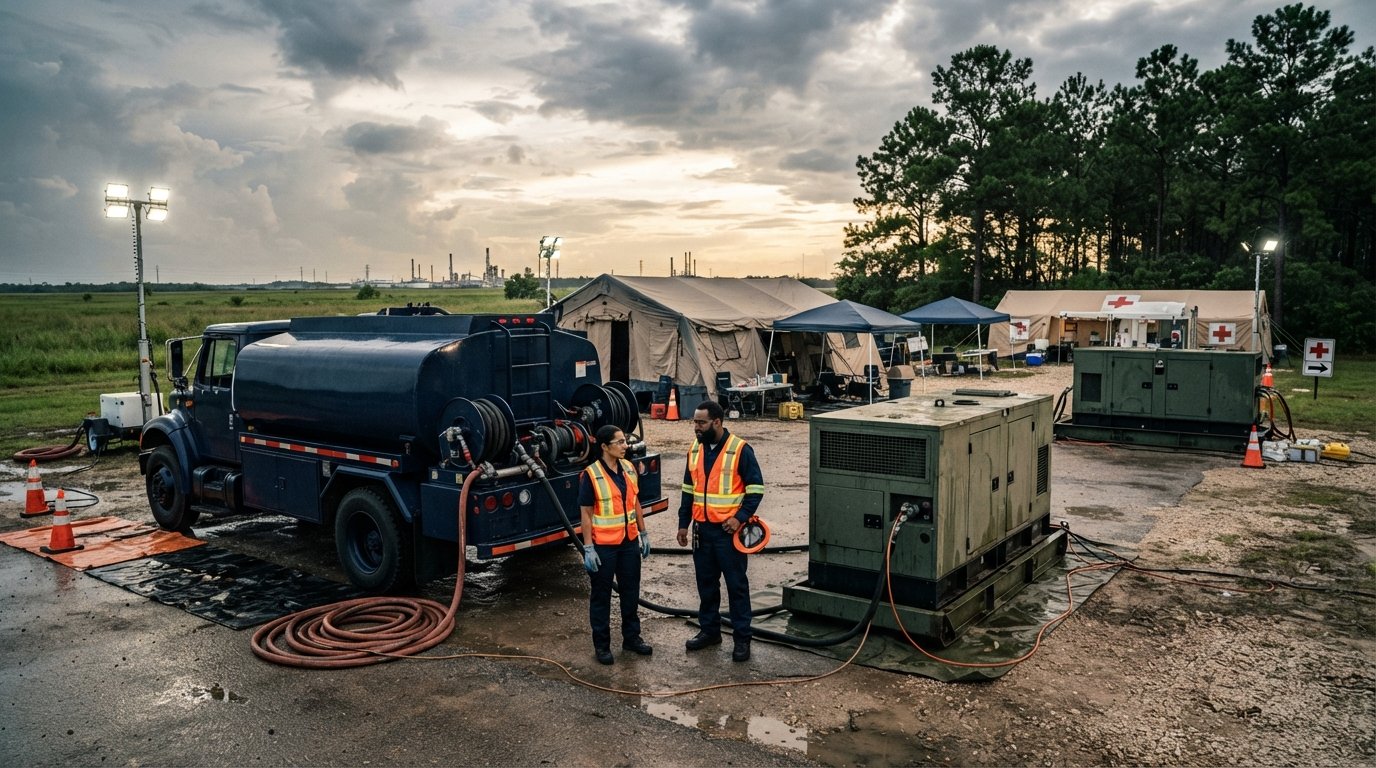
Emergency fuel delivery can help when an unexpected outage or period of high use puts a critical generator at risk of running low. In your request, identify the College Station site, access instructions, fuel type, generator location, and urgency. If several units operate on the property, name the specific generator and its priority.
Agricultural operations need a similar plan across fields, barns, and equipment yards. A tractor working far from the main yard may need a different delivery point than a generator serving a barn. Irrigation pumps and grain-handling equipment can also create changing demand as farm tasks shift. Record those changes before requesting replenishment.
- List the assets: Record each generator, tractor, pump, or other fuel-using machine.
- Mark delivery points: Note field entrances, equipment yards, and generator locations.
- Set priorities: Identify which assets support essential operations during outages or busy work periods.
- Update instructions: Revise locations when equipment moves or farm activity changes.
During an outage, one contact person can coordinate site access and direct the delivery team to the intended tank. Keep generator details and current location information available rather than relying on memory during an urgent situation. For farms, update the plan when equipment moves between fields or seasonal tasks change. These steps make requests clearer and help align delivery with operating needs.
In College Station, businesses can include generator and agricultural fueling in a broader site plan. Separate routine replenishment from emergency needs, and keep instructions specific to each tank or machine. This helps staff communicate the right location, equipment, and priority when conditions change.
Businesses can keep fuel planning aligned with current needs by reviewing tank information alongside equipment locations and priorities. React Fueling offers remote tank monitoring and detailed usage reporting. This information can help staff assess when to request replenishment and which assets need attention first. Make sure the responsible contact understands the monitoring and reporting available, and keep delivery instructions specific to the intended tank and access point.
Bulk fuel delivery and storage tanks
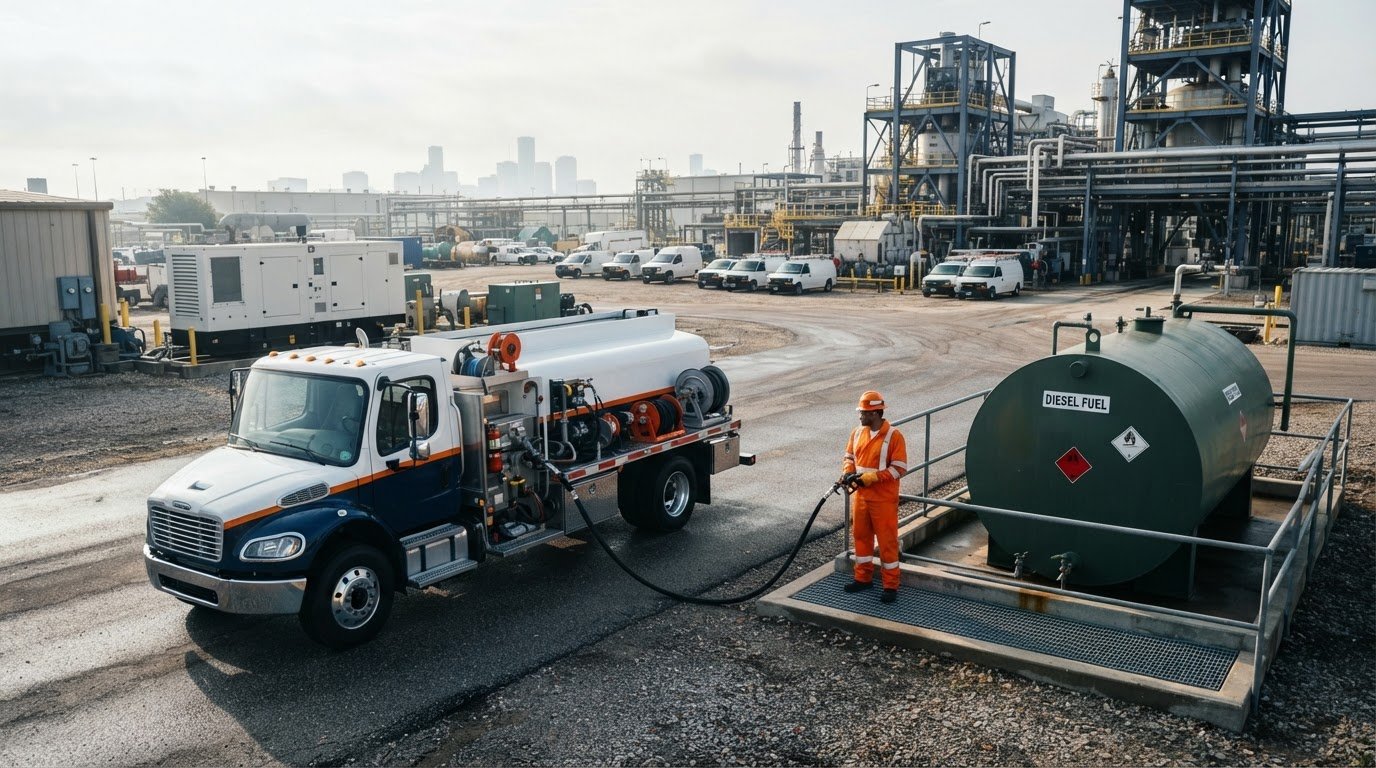
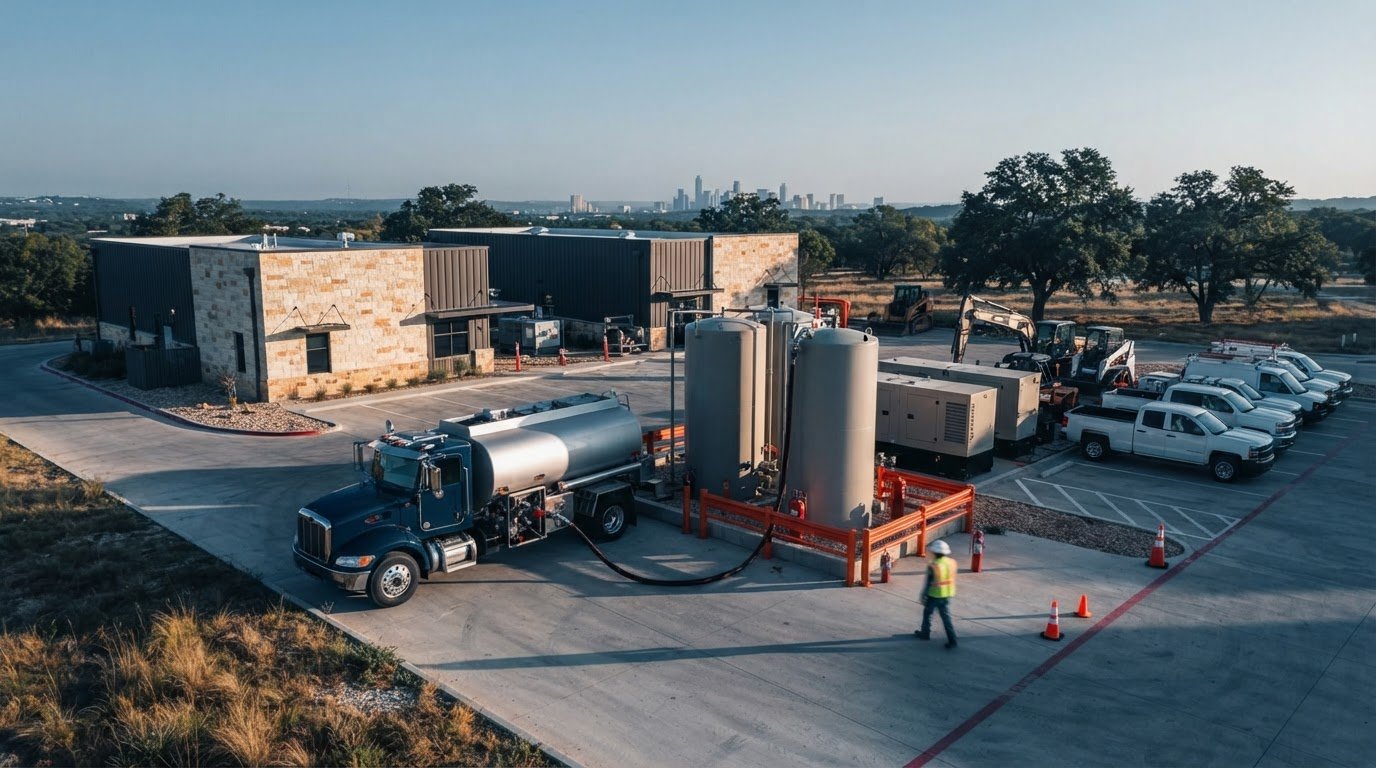
Bulk delivery works best when tank placement, fuel use, and truck access are planned together. For a College Station facility, map each storage point and identify the equipment or operation it supports. A tank serving a generator may require a different access route from one supplying a fleet or production equipment.
Estimate storage needs from actual consumption, not a generic assumption. Review fuel use during normal operations, seasonal work, and periods of heavier demand. A farm, for example, may use fuel differently during fieldwork than during quieter periods. Revisit the estimate when equipment or operating schedules change.
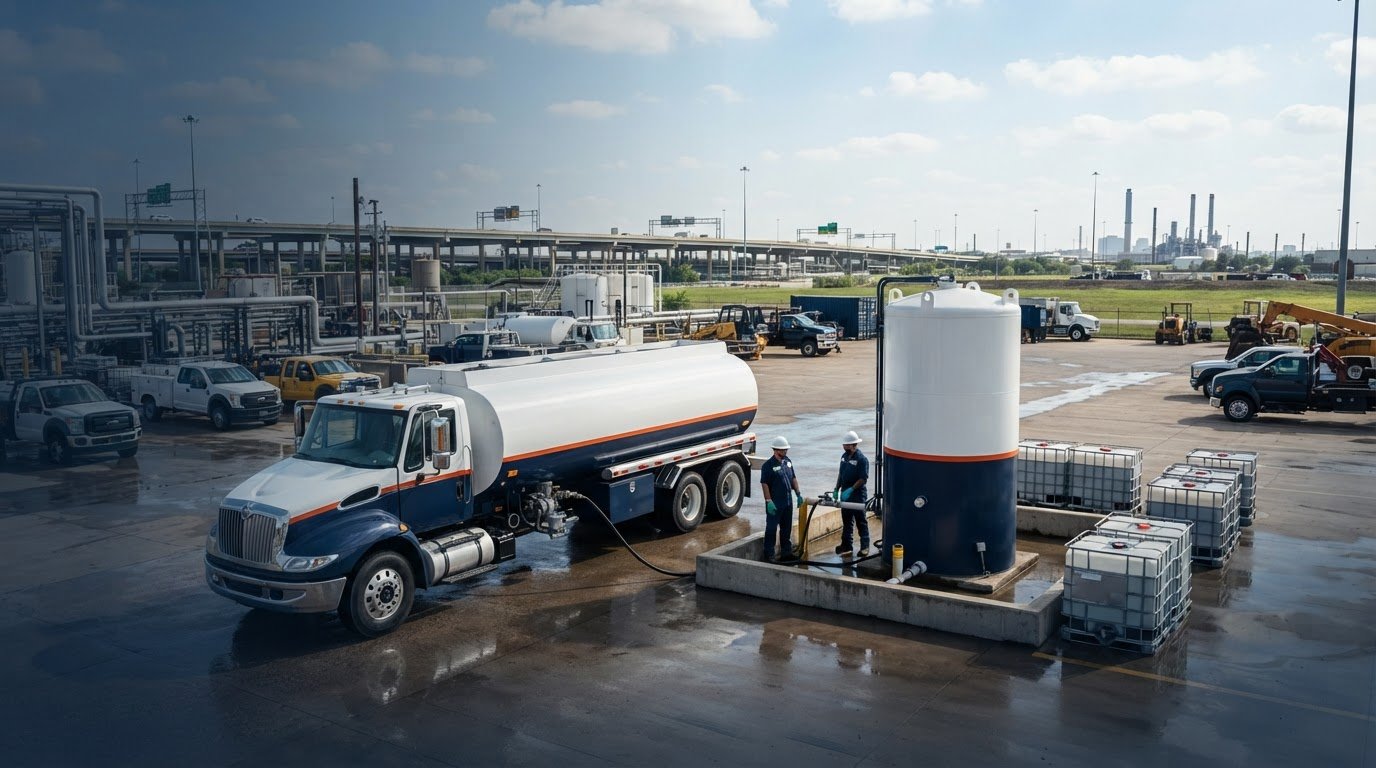
Tank selection and placement affect delivery access and daily use. Consider the fuel type, available space, how staff reach the tank, and whether a delivery vehicle can approach safely. Keep the fill point accessible and clear of routine work zones. Label the tank’s purpose so staff can direct fuel to the correct location.
React Fueling’s fuel tanks are double-walled tanks, with spill containment and strict adherence to regulations. Include the tank area in your site plan and keep it orderly. Staff should know where the tank is, which equipment it serves, and how to report a spill or visible damage. These steps help maintain a controlled fueling area.
Set a replenishment process using regular tank readings and delivery records. Assign responsibility to a specific role, such as the facility manager or site supervisor. A simple log can show how quickly a tank is being drawn down and help schedule delivery before operations are affected. Update the log when use patterns shift.
- Identify each tank: Record its location, fuel type, and operating purpose.
- Plan delivery access: Note gates, approach routes, and areas that must remain clear.
- Track fuel use: Log readings and deliveries to reveal changing demand.
- Maintain the area: Keep fill points accessible and containment areas clear.
Bulk fuel delivery can support facilities that use fuel steadily, while direct fueling may suit equipment working away from a fixed tank. Choose the arrangement based on where fuel is used and how equipment moves. A site with stationary generators and mobile machinery may need both storage and direct equipment fueling.
For College Station operations, connect tank planning with delivery instructions. Provide the tank location, fuel type, access route, and contact responsible for receiving the delivery. Clear directions help prevent confusion between nearby tanks or separate work areas. Review the plan when a tank moves or the site layout changes.
Fuel delivery for fleets and construction equipment
Fuel planning for fleets and machinery should follow the work, not just the vehicle list. In College Station, a contractor may have pickups returning to a yard while excavators remain at active job sites. Treat these as separate fueling patterns to plan around equipment use and avoid unnecessary travel.
Start by grouping assets by where and how they operate. A service truck might refuel at a depot between calls, while a loader works through a shift at a construction site. Record each asset’s fuel type, usual location, work schedule, and responsible supervisor. This creates a practical picture for scheduling and prioritizing deliveries.
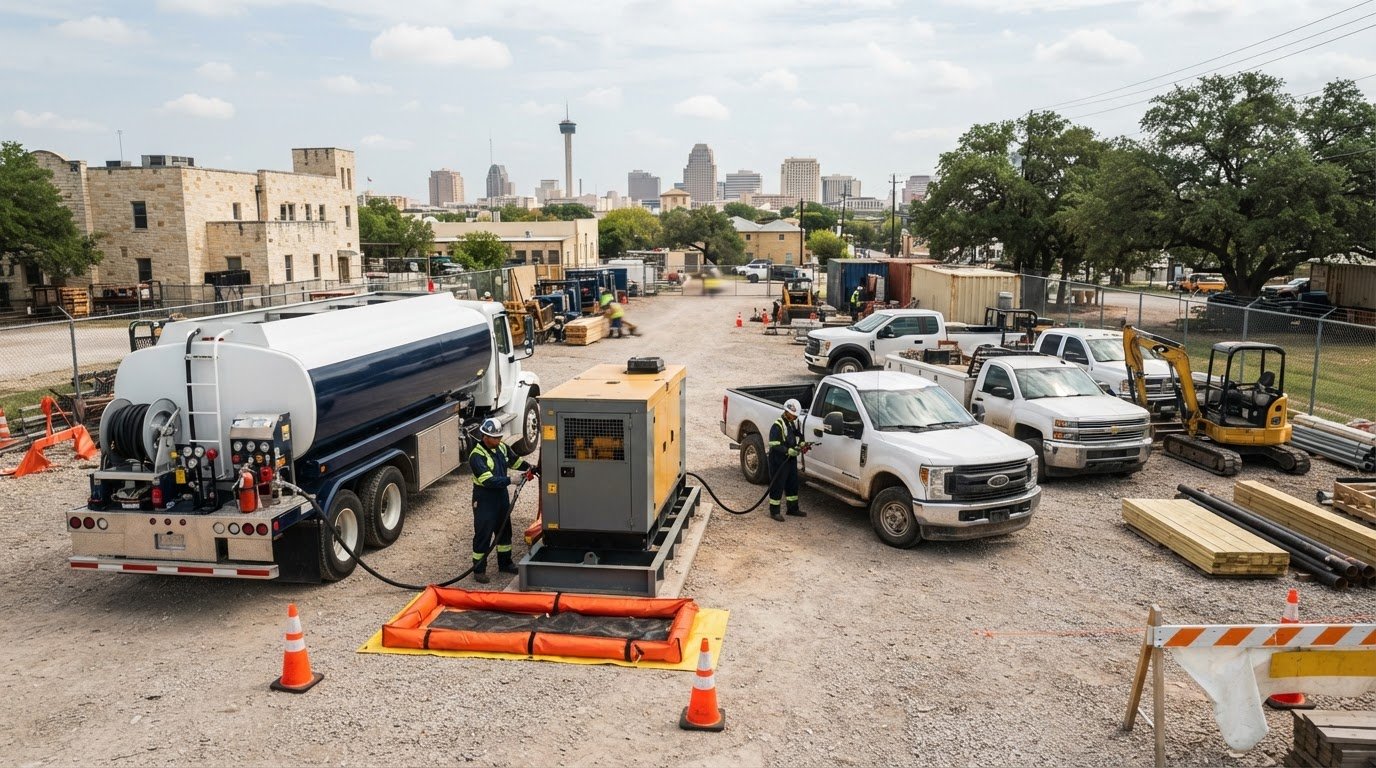
Next, identify machines that cannot easily leave their work area. Excavators, graders, and compressors may be spread across a project, while fleet vehicles can often gather at a central yard. Direct equipment fueling suits assets that remain on site; a central fueling point may suit vehicles returning to the same location. Match the method to how the equipment moves.
Construction phases change fueling needs. During excavation, heavy machinery may concentrate near earthwork; later, paving or utility work can shift equipment elsewhere. Update location instructions as the project advances. For a fleet serving several sites, keep separate asset and location records so a change at one job does not send fuel to an outdated staging area.
- Separate asset groups: Distinguish road vehicles, heavy equipment, and stationary machinery.
- Track work locations: Note which machines remain at a job site and which return to a yard.
- Set priority: Identify equipment that supports active work or time-sensitive tasks.
- Revise instructions: Update access and location details when the crew or machinery moves.
Clear records also help manage diesel and DEF needs across compatible fleet vehicles and equipment. Tie each product requirement to the correct asset rather than relying on a broad fleet label. For example, distinguish a diesel-powered work truck from equipment that needs DEF to make fueling instructions clear.
Review the plan whenever equipment is added, reassigned, or moved between College Station projects. A supervisor can send updated asset locations and priorities before the next planned delivery. For a fleet with mobile equipment, a simple shared record can keep dispatchers, site leads, and drivers working from the same instructions.
Build a fleet and equipment fueling plan around your College Station work locations and changing project demands. Discuss your fleet and equipment fueling needs to determine a practical next step.
React Fueling: Diesel Delivery
React Fueling provides diesel delivery, fuel delivery, equipment fueling, and generator fueling for commercial operations. For College Station fleets and construction sites, these services bring fuel to vehicles, machinery, and generators where work takes place, helping managers coordinate fueling around operational needs.
Choose the service that fits the equipment: diesel delivery for fleet requirements, equipment fueling for machinery working on site, or generator fueling for power systems. Share the delivery location, fuel needs, and access instructions so the plan fits your operation. Contact React Fueling to discuss fuel delivery for your fleet, equipment, or generator.
Plan the next step for your operation
A dependable fuel plan starts with clear priorities: which vehicles or machines need fuel, where they operate, and how delivery fits the work schedule. With those details organized, you can discuss a setup for your College Station operation instead of relying on a one-size-fits-all approach. If you’re looking for an industrial fuel delivery provider in College Station, connect your site’s needs with the right service.
React Fueling offers Diesel Delivery, Equipment Fueling Service, and Fuel Delivery for commercial operations. Share the equipment types, work locations, and fueling requirements that matter to your team to start a practical discussion about your needs.
Contact React Fueling to discuss your fuel delivery needs. A clear plan can help your operation move forward with greater confidence.
Frequently Asked Questions
What types of industrial fuel can be delivered in College Station, including diesel, gasoline, propane, and lubricants?
Commercial fuel delivery in College Station covers gasoline and diesel, and DEF fluid is available for trucks and equipment. For example, a fleet can plan diesel for its vehicles and DEF replenishment for compatible equipment. Propane and lubricants are separate product categories, while the delivery options described here focus on gasoline, diesel, and DEF. Identify the product your operation uses when outlining its fuel needs.
What areas near College Station do industrial fuel delivery providers serve?
React Fueling’s Texas service areas are Houston, TX; Austin, TX; San Antonio, TX; Dallas, TX; College Station, TX. A business managing equipment in College Station and Austin can share the locations and fueling requirements for both operations when arranging service. Provide the delivery address and access details for each location so the request reflects where vehicles, equipment, or generators operate.
What are the minimum order sizes and delivery fees for industrial fuel in College Station?
Minimum order sizes and delivery fees depend on the specific request, and pricing is provided after a quote request. Relevant details include fuel type, requested volume, delivery location, and whether fuel is for a tank, fleet, or equipment. For example, a facility supplying a fixed tank should describe that setup, while a contractor should identify equipment fueling needs. React Fueling states its rates are clear and competitive, with no long-term commitments or hidden fees.
What delivery schedules and emergency or after-hours fuel services are available in College Station?
Scheduled diesel delivery and emergency fuel delivery are available for commercial operations, including generator and equipment needs. Emergency fueling is available 24/7. For example, a facility facing an outage can identify the generator, its location, fuel type, and site access instructions when requesting urgent delivery. For routine service, describe the operating schedule and how fuel is used, so the delivery plan can account for the site’s recurring requirements.
How can a business request an industrial fuel delivery quote or set up a commercial account in College Station?
To request a quote, use the “GET ESTIMATE” or “REQUEST A QUOTE” option on React Fueling’s website, or call (936) 828-6581. A business seeking an industrial fuel delivery provider in College Station can prepare its site address, fuel type, delivery purpose, and access instructions before submitting a request. Include whether the need involves fleet vehicles, construction equipment, or a generator. These details help frame the service request; account setup can be discussed directly with React Fueling.