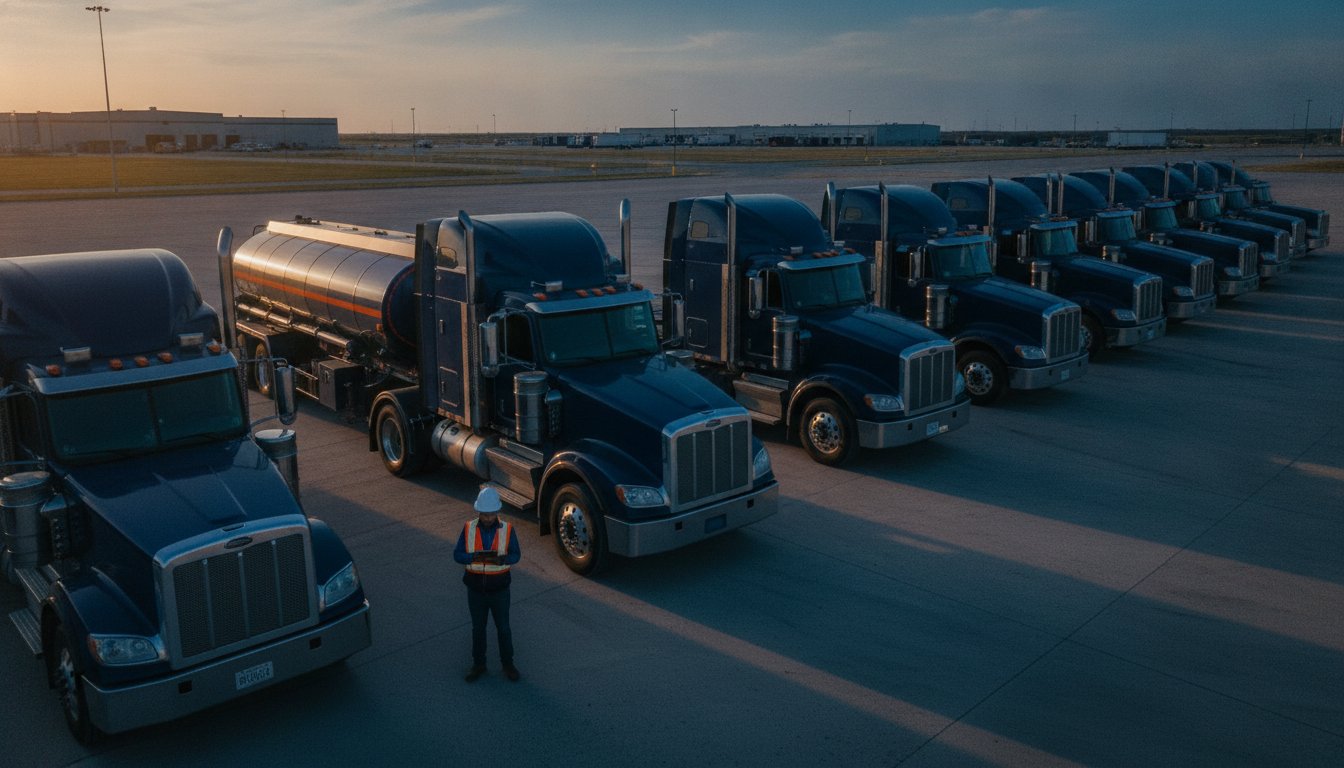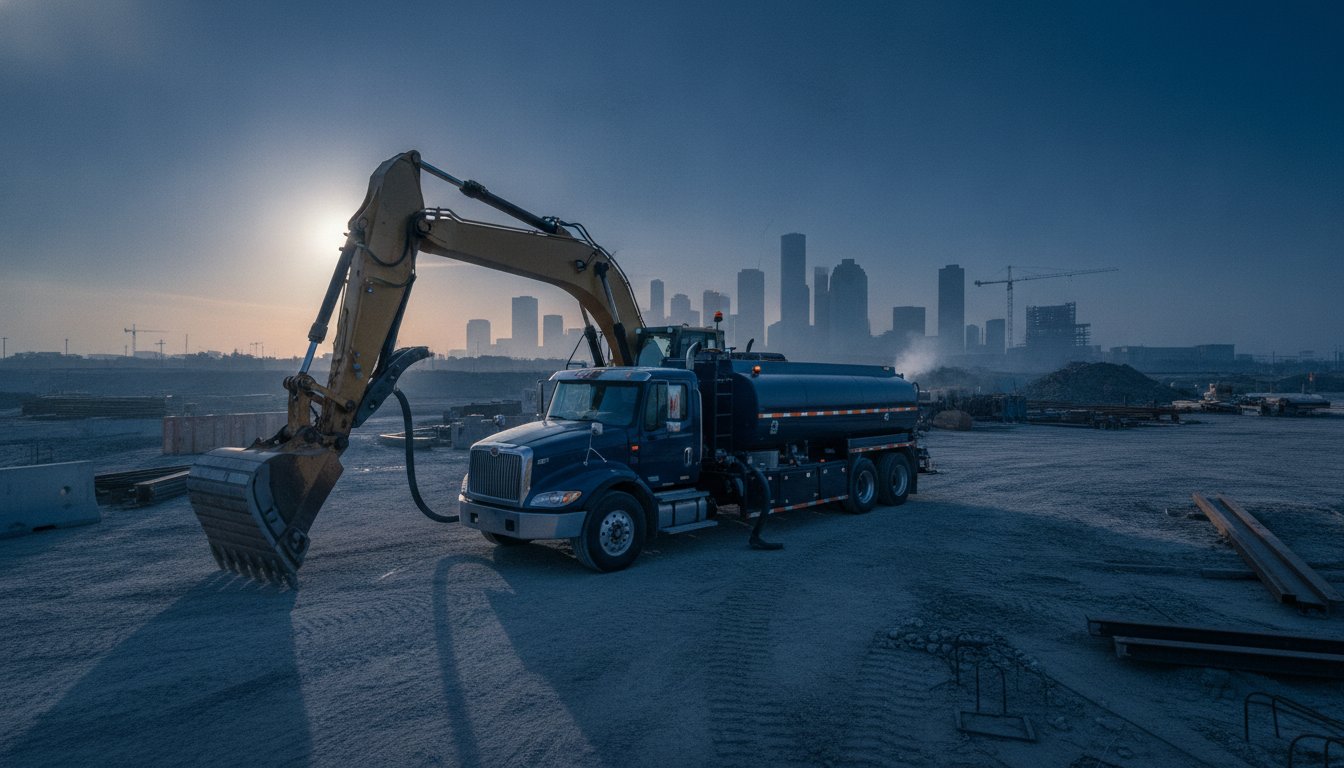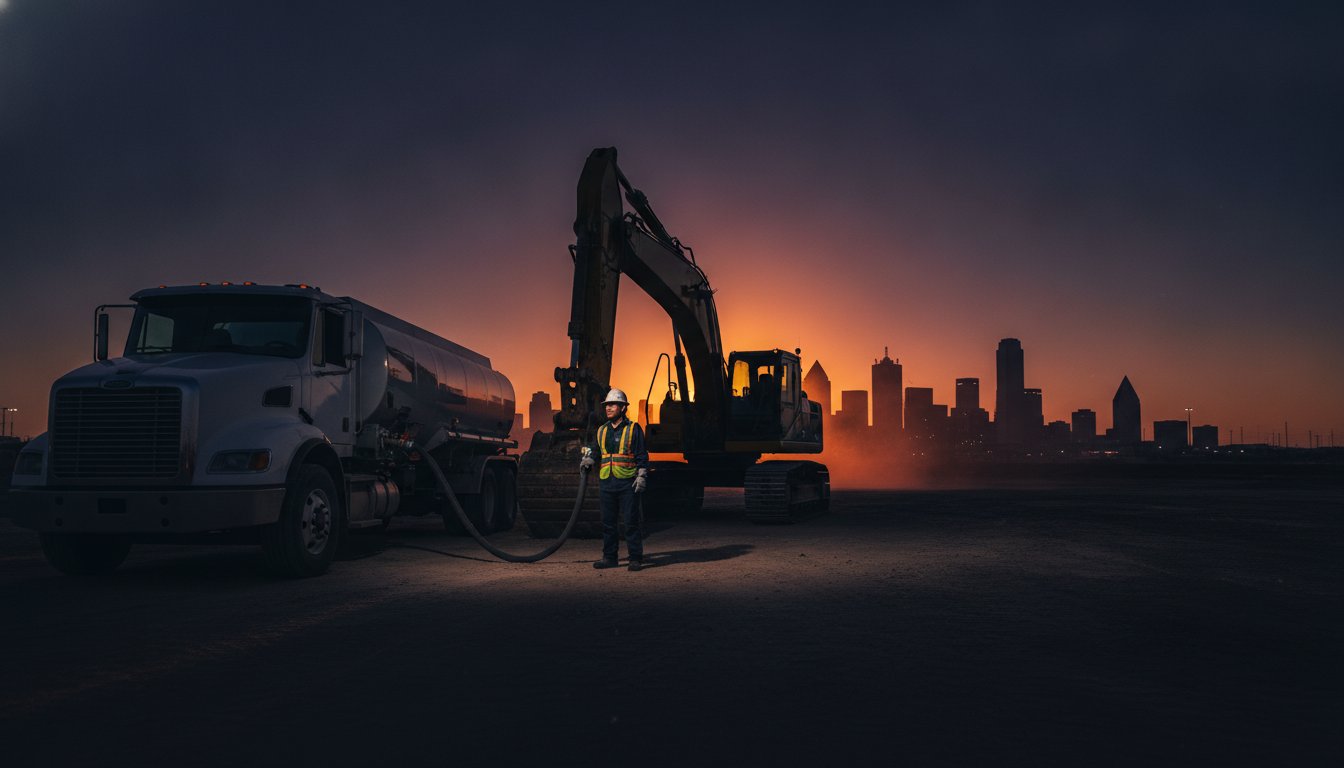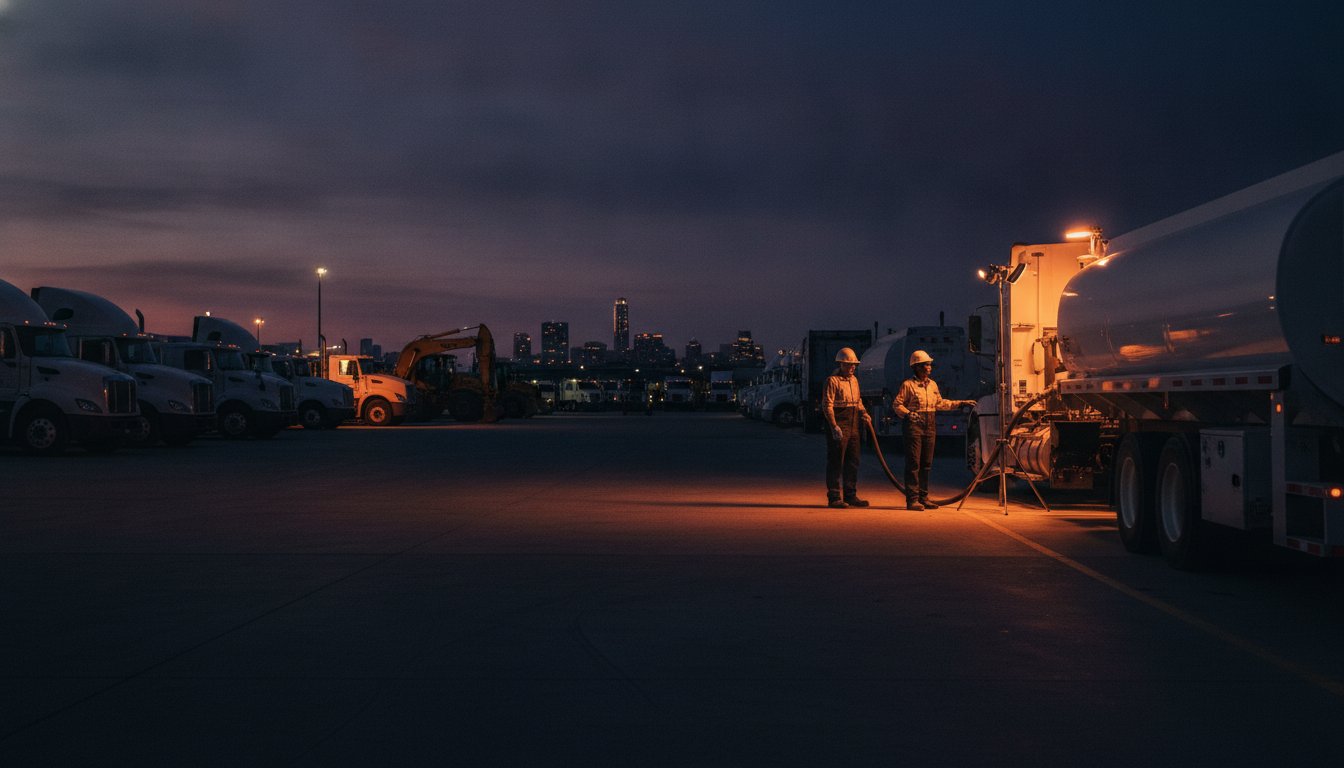
Relying on daily mobile wet-hosing trucks quietly drains your operating margin long before an excavator swings its first bucket. Securing a dedicated portable diesel tank rental for job sites Dallas contractors run is the most direct way to eliminate that vulnerability. You already know that every minute heavy machinery idles waiting on an off-site fuel delivery, labor costs compound and deadlines slip. Coordinating separate vendors for tank hardware, bulk off-road diesel, and DEF fluid replenishment only multiplies logistical friction across an active build.
In this guide, you will discover how to select, size, and deploy portable diesel tanks across Dallas job sites to eliminate costly equipment downtime and maintain continuous, secure operations. We outline the technical standards for double-walled storage, local Dallas Fire-Rescue setback requirements, and TCEQ environmental compliance mandates. You will also examine how turnkey fuel logistics and telemetry tracking safeguard your budget from unexpected delays and unauthorized dispensing from start to finish.
Evaluating Portable Diesel Tank Rentals for Dallas Job Sites
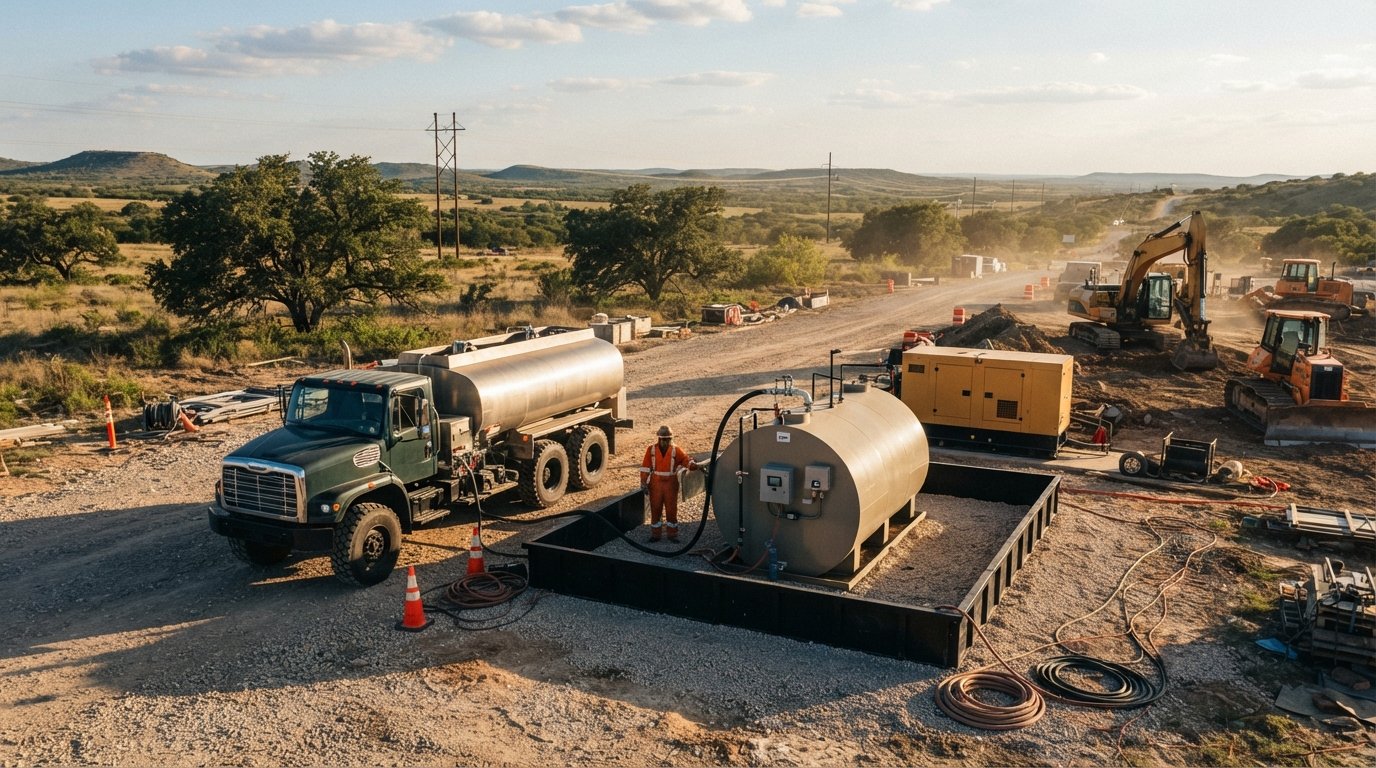
Commercial builds across the Dallas-Fort Worth metroplex operate under tight delivery milestones. Earthmoving fleets, site generators, and heavy equipment require an unbroken fuel stream to maintain momentum. Securing a dedicated portable diesel tank rental for job sites Dallas developers manage creates autonomous, around-the-clock fuel access directly where work happens. Instead of halting operations for off-site runs or waiting in line for third-party wet-hosing trucks, your operators refuel on demand. This self-contained setup protects your project schedule against regional fuel distribution snarls during peak North Texas construction seasons.
The True Cost of Fuel-Related Downtime in DFW
Fuel disruptions rapidly erode project margins. Idle excavators burn billable operator hours while secondary trades wait down the line. Sending site trucks to nearby retail pumps introduces heavy traffic delays along corridors like I-35 and Loop 12, increasing vehicle wear and collision liability. Large civil and commercial jobs running staggered or 24-hour shifts cannot pause for morning fuel deliveries. They need continuous access so night shifts and early prep crews work without disruption.
Why Dedicated On-Site Fuel Storage Outperforms Retail Pumping
Relying on retail cardlock stations scatters job accounting and pulls labor off task. Placing industrial storage tanks directly on your Dallas job site transforms fuel logistics into a controlled, predictable system. Crews gain immediate access, keeping high-consumption assets productive on the work pad.
- Minimizes transit delays: Equipment refuels directly on the project footprint, reclaiming hours lost to off-site travel.
- Improves budget predictability: Sourcing bulk fuel avoids fluctuating retail pump surcharges and unauthorized credit-card swipes.
- Maintains storm readiness: Having dedicated reserves on-site keeps standby generators and earthmovers operational when severe North Texas weather halts local infrastructure.
Pairing heavy-duty fuel hardware with scheduled bulk diesel delivery eliminates vendor chaos and ensures your machinery runs at full capacity from ground-breaking to closeout.
Essential Tank Specifications: Capacity, Containment, and Pumping Systems
Selecting the right portable diesel tank rental for job sites Dallas superintendents supervise requires aligning storage capacity with actual fleet burn rates. Rugged equipment demands robust hardware that prevents ground contamination, delivers fast dispensing, and safeguards fuel stock from theft.
Sizing Storage Capacity to Match Daily Machinery Burn
Right-sizing on-site fuel volume prevents equipment starvation without cluttering active work zones. Match your storage volume to the operational profile of your machines:
- 500 Gallons: Ideal for compact utility spreads, skid steers, mini-excavators, and light towers on targeted commercial footprints.
- 1,000 Gallons: Built for medium grading packages, structural steel cranes, and continuous prime-power site generators.
- 2,000 to 4,000 Gallons: Engineered for mass earthmoving operations, data center foundations, and highway infrastructure projects operating multiple heavy spreads.
Double-Walled Containment and Environmental Engineering
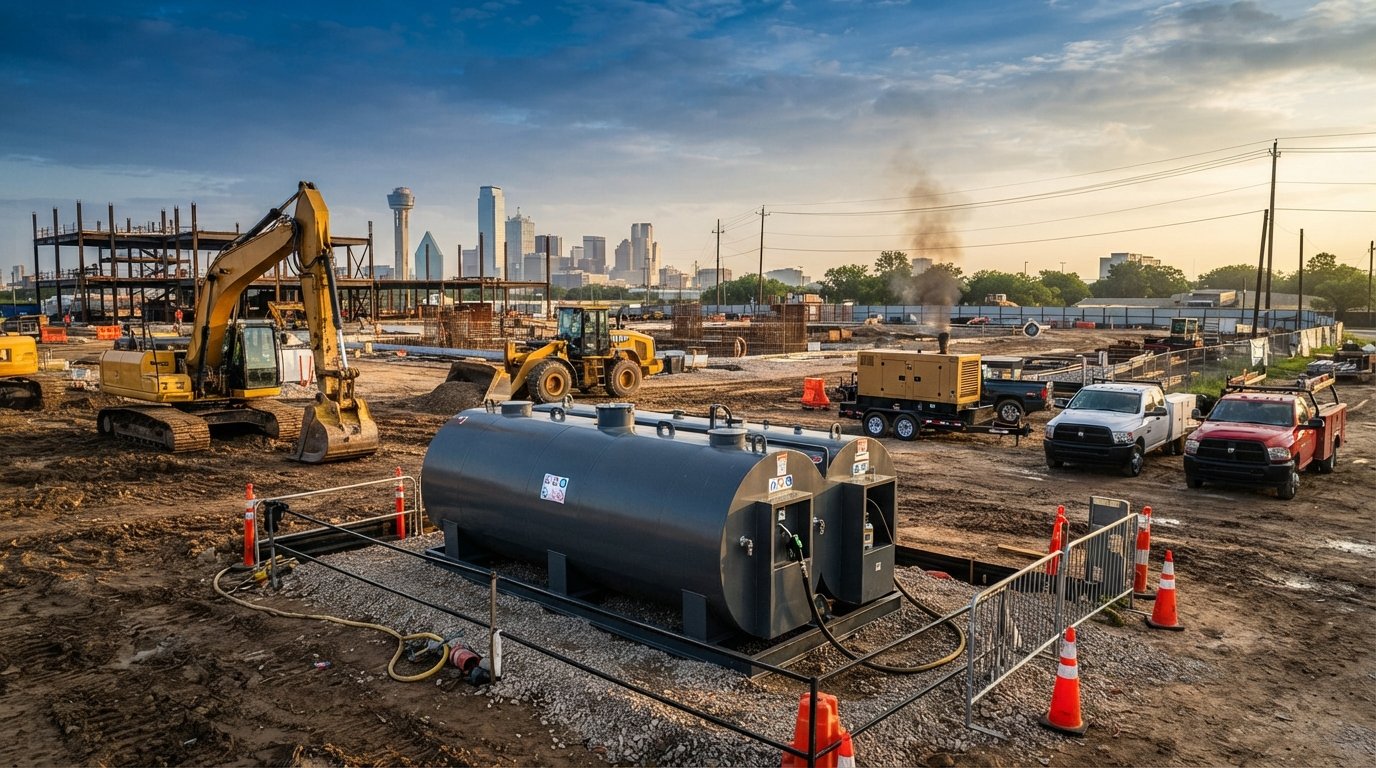
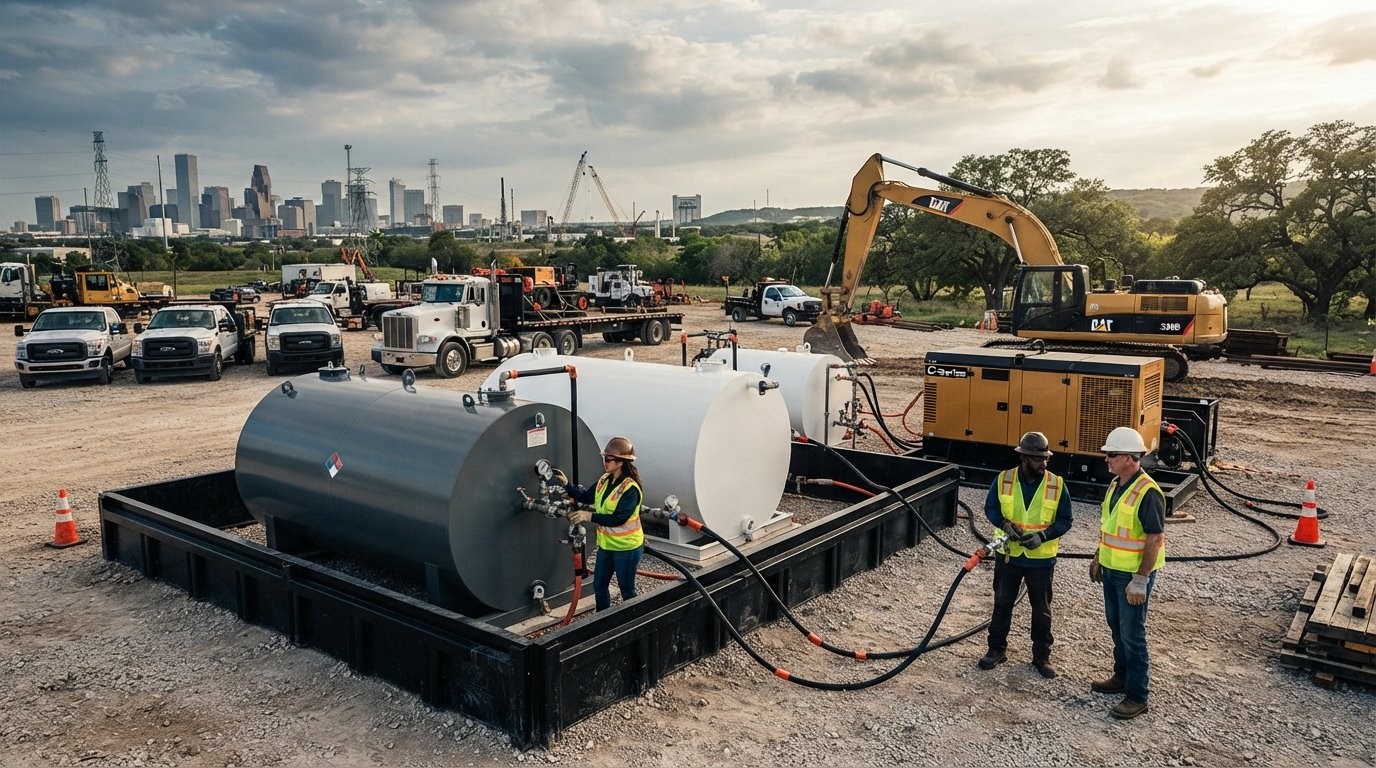
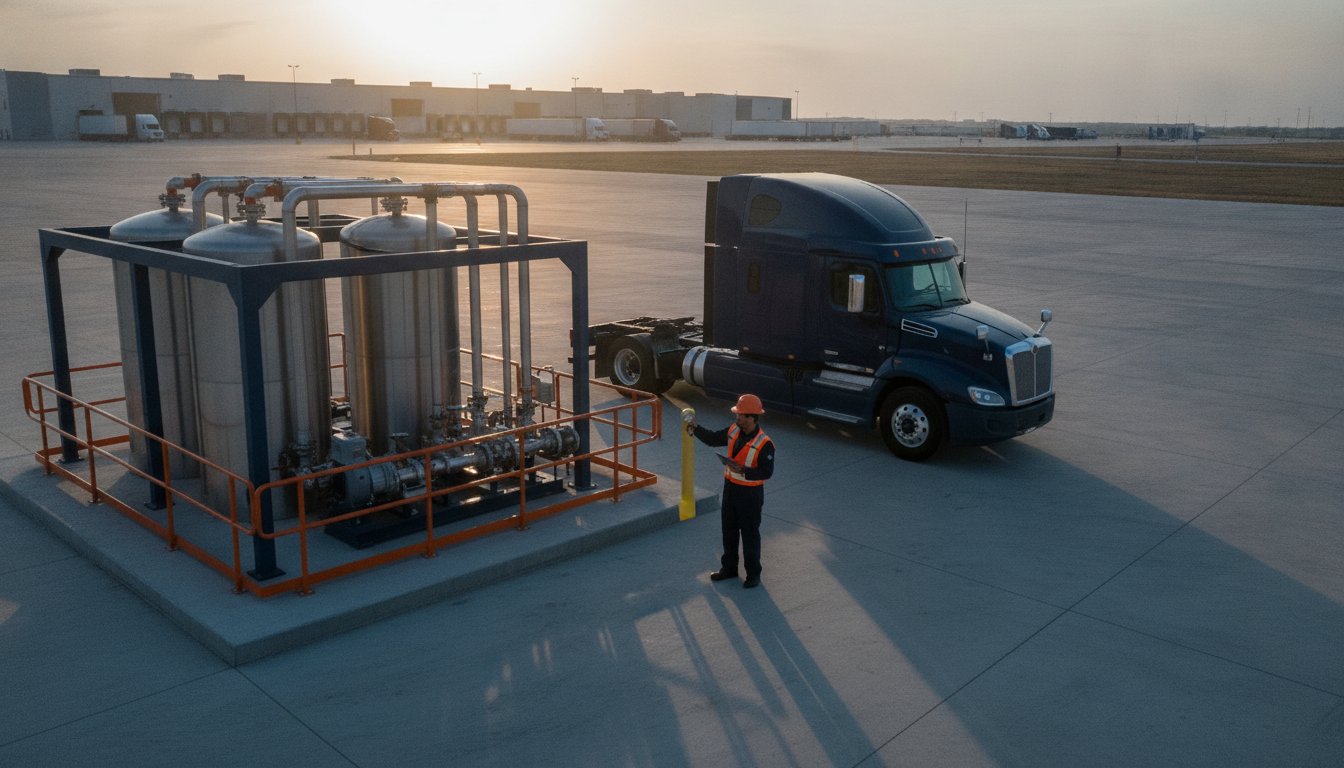
Preventing soil contamination protects both project timelines and regulatory standings. Modern industrial tanks utilize 110% integral secondary containment constructed from heavy-gauge UL 142 listed steel, eliminating the need for temporary earthen berms or separate containment pans. These units align strictly with OSHA flammable liquid storage rules for temporary job-site installations. Internal structural baffles stabilize fuel surge during crane picks or site repositioning, while reinforced, padlock-ready cabinets protect pumps, hoses, and mechanical flow meters against fuel theft and site dust.
Pump Options and Automated Level Telemetry
Dispensing speed dictates how quickly machinery returns to work during morning shift changes. Tank configurations range from 12V DC setups running off auxiliary batteries to 110V AC packages tied into temporary utility drops. For remote highway or raw-land grading where electrical utilities don't exist, self-sustaining solar-powered pump assemblies provide continuous dispensing capability.
Eliminate manual dipsticks with cellular telemetry monitoring. Digital tank monitors transmit continuous volume levels back to centralized dispatch teams, triggering automated replenishments before fuel tanks run empty. Because modern Tier 4 heavy iron cannot operate without emissions treatment, coordinating your fuel system alongside bulk DEF fluid delivery prevents unexpected engine de-rates. To determine the ideal tank volume and dispensing setup for your upcoming job, consult with our Dallas fueling specialists for a custom site assessment.
On-Site Tank Rental vs. Mobile Wet Hosing: A Strategic Operational Comparison
Deciding between dedicated bulk storage and direct mobile wet hosing shapes daily productivity across North Texas job sites. While both methods keep iron moving, they solve distinct logistical challenges. Choosing an on-site portable diesel tank rental for job sites Dallas contractors operate gives crews total dispensing autonomy, while scheduled mobile delivery addresses tight spatial constraints where physical equipment footprints aren't viable.
Operational Efficiency and Fuel Access Flexibility
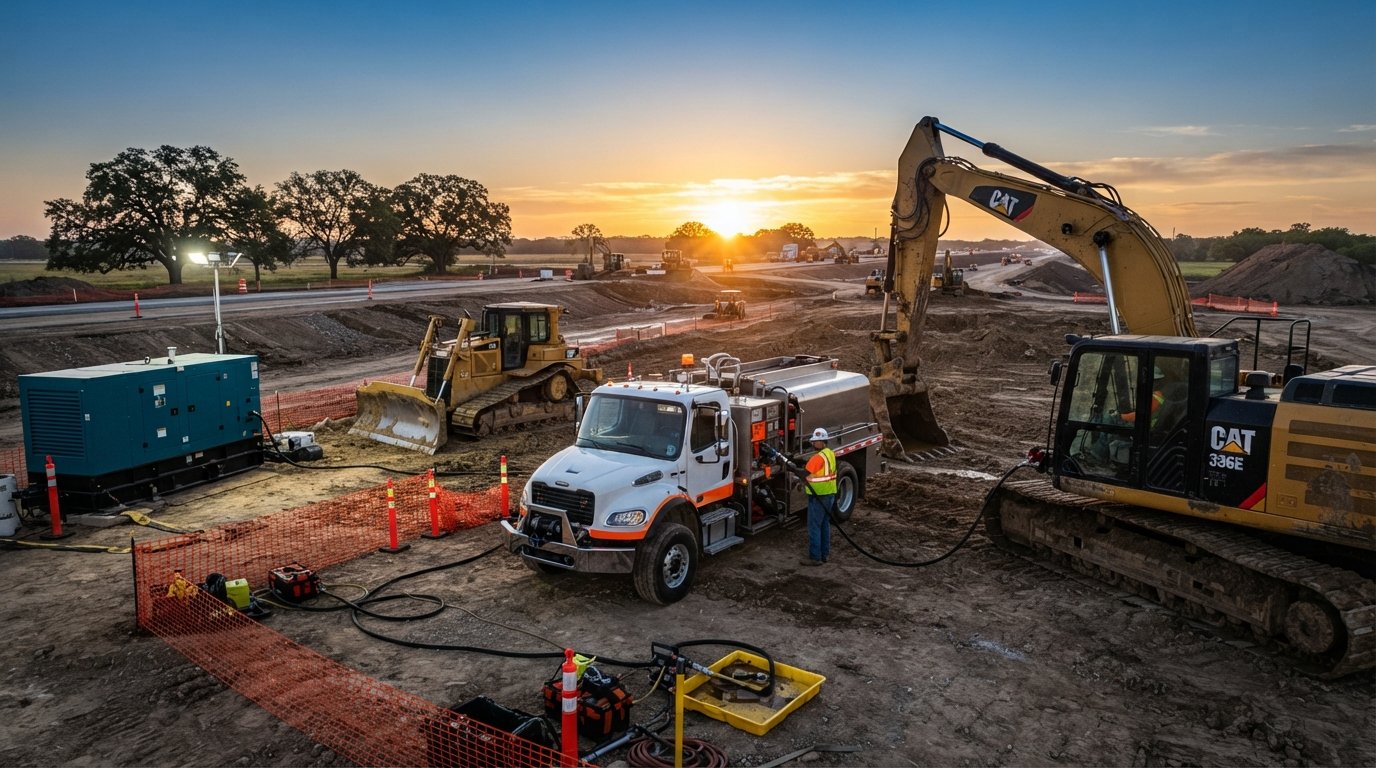
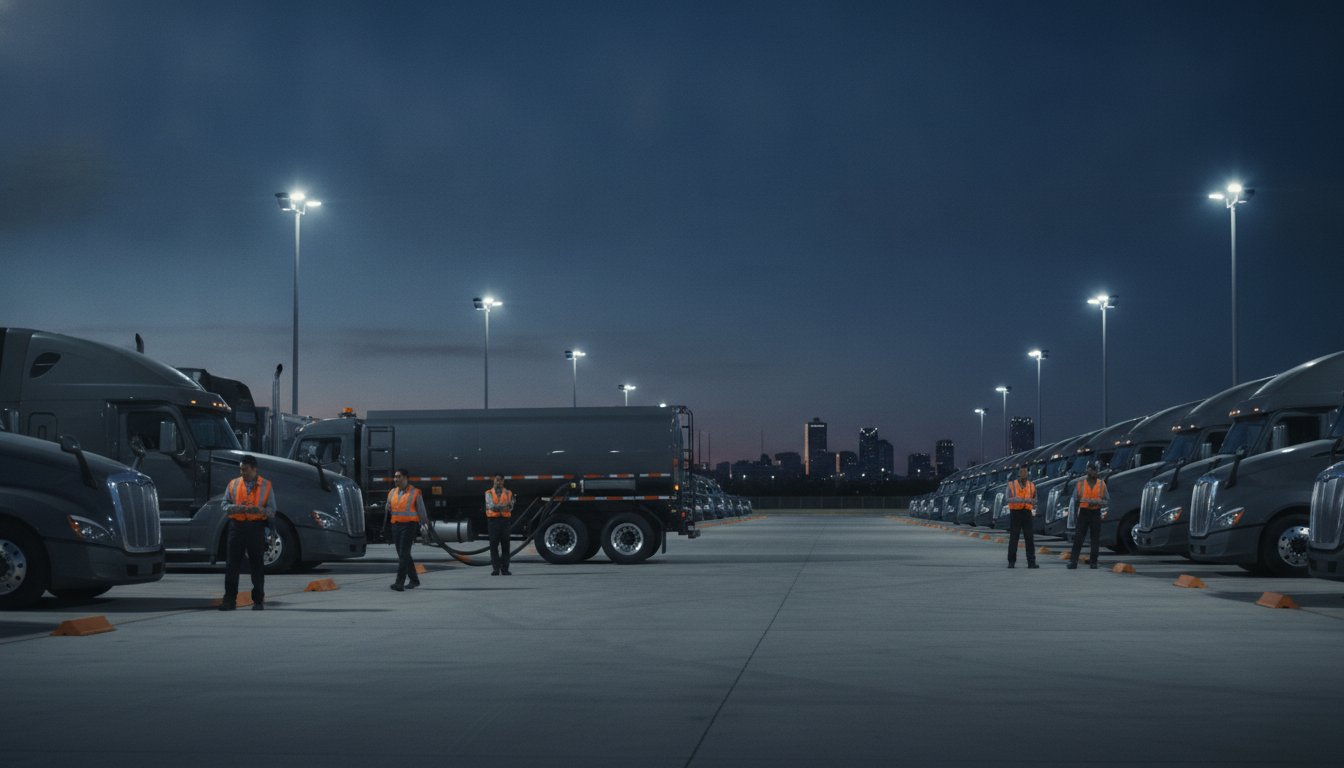
Stationary tanks let operators refuel whenever machinery pauses between cycles, preventing bottlenecks during shift handoffs. Machines don't have to park in precise clusters at the end of the day. Conversely, traditional mobile wet hosing, or direct-to-machine equipment fueling service, requires operators to stage scrapers, dozers, and excavators within hose reach of an access road before the delivery truck arrives. If a machine is working across unpaved grading or rough terrain after heavy rainfall, mobile trucks can't always reach it. Dedicated site storage also powers stationary assets like dewatering pumps and continuous light plants, providing reliable fuel reserves without waiting on dispatch schedules.
Financial and Risk Comparison for Dallas Projects
Stationary tanks offer distinct financial advantages for high-consumption earthmoving packages. Sourcing full transport or bobtail drops directly into bulk storage avoids the repetitive handling charges that accompany nightly mobile wet hosing. Storing fuel directly on-site also insulates your critical path against sudden regional distribution delays or winter freezes that disrupt North Texas highway transit.
Confined infill builds in downtown Dallas often operate with zero lot lines, where physical space for an aboveground tank simply doesn't exist. In those tight footprints, mobile truck delivery makes sense because it leaves no hardware behind. For sprawling master-planned communities, logistics hubs, and highway expansions across DFW, securing a portable diesel tank rental for job sites Dallas civil contractors run delivers lower operating costs and dependable schedule control. Many contractors ultimately deploy a hybrid approach: stationary tanks support high-burn mass excavation iron, while scheduled mobile deliveries top off dispersed support gear.
Dallas Job-Site Compliance, Permitting, and Safe Tank Placement
Deploying a portable diesel tank rental for job sites Dallas inspectors oversee involves strict regulatory boundaries. Storing combustible fuel in municipal jurisdictions means meeting environmental containment standards and local fire codes before dispensing a single gallon. Failing to secure the right clearances exposes projects to stop-work orders, costly environmental penalties, and site shutdowns.
Navigating EPA SPCC and TCEQ Storage Mandates
Environmental compliance starts with aggregate site capacity. Under federal EPA Spill Prevention, Control, and Countermeasure (SPCC) rules, any project with an aggregate aboveground fuel storage capacity of 1,320 gallons or more must maintain a certified, site-specific SPCC plan. Renting double-walled steel tanks built with integral 110% secondary containment satisfies these requirements directly, removing the hassle of building temporary earthen dikes. At the state level, the Texas Commission on Environmental Quality (TCEQ) enforces strict guidelines to prevent ground contamination. For individual aboveground storage tanks with capacities exceeding 1,100 gallons, TCEQ requires a construction notification filed at least 30 days prior to installation. Jobs must also keep stocked spill response kits and containment materials immediately adjacent to all fuel dispensing points.
Dallas Fire Code Setbacks and Placement Protocols
Municipal oversight within city limits falls under Dallas Fire-Rescue. An operational permit is mandatory for the temporary outdoor storage of more than 60 gallons of Class II combustible liquids like diesel. Securing this permit requires strict adherence to spatial setbacks:
- Property Line Clearance: Dallas Fire-Rescue inspectors enforce a 10 to 15-foot minimum buffer between temporary diesel tanks and adjacent property lines.
- Structural Protection: Tanks must sit on level, compacted surfaces safely away from open excavation cuts, active crane swings, and stormwater inlets.
- Impact Barriers: Position heavy concrete ecology blocks or high-visibility steel bollards around the hardware to deflect contact from moving haul trucks and excavators.
- Transport Ingress: Delivery access paths must provide stable crushed-rock bases and wide turning radiuses capable of handling full-size transport fuel tankers without blocking site traffic.
Managing fuel storage permits, containment rules, and site logistics doesn't have to stall your job launch. Ensure complete municipal and environmental compliance on your next build by coordinating directly with our team; contact our Dallas fuel logistics team today to schedule a site compliance audit.
Securing Turnkey Diesel Tank Rentals and Scheduled Logistics in Dallas
Managing multiple subcontractors on a high-stakes North Texas build leaves zero room for fragmented fuel logistics. React Fueling delivers fully prepped, double-walled equipment directly to active commercial and civil jobs across Dallas-Fort Worth. As part of the React Holdings logistics network, our operations back every deployment with 24/7 rapid dispatch capabilities to maintain round-the-clock machine productivity. Securing a reliable portable diesel tank rental for job sites Dallas developers manage eliminates the headaches of coordinating separate vendors for hardware rental, bulk fuel drops, and emissions fluid.
The React Fueling Turnkey Rental Advantage
Industrial units arrive on-site fully wired, tested, and ready for immediate service. Whether your project requires a 500-gallon setup for utility trenching or a 4,000-gallon installation for highway mass excavation, flexible rental agreements adapt to shifting construction phases. Dedicated logistics coordinators manage every phase of hardware deployment, handling transport positioning, planned job-site relocations as grading footprints move, and prompt equipment pickups during project closeout.
Coordinated Diesel and DEF Replenishment Schedules
Physical storage hardware is only as effective as the distribution network behind it. We pair industrial tank rentals with scheduled off-road dyed diesel drops, keeping your non-highway fleet operating while minimizing fuel tax liabilities. Integrated cellular telemetry tracks liquid levels continuously, signaling our dispatch team to route bulk deliveries well before fuel reaches critical levels.
Tier 4 Final diesel engines also require diesel exhaust fluid to operate cleanly and reliably. React Fueling bundles scheduled DEF fluid delivery alongside your bulk diesel drops, eliminating the storage hassle and contamination hazards of loose jugs or damaged palletized totes. When severe storms or sudden grid interruptions threaten project milestones, our rapid emergency fuel delivery assets mobilize across DFW to maintain prime generator power. Take complete command of your site energy by contacting our Dallas fueling specialists.
Eliminate Fleet Downtime with Dedicated Job-Site Fuel Logistics
Securing a reliable portable diesel tank rental for job sites Dallas contractors oversee protects critical project schedules and prevents margin erosion. Combining bulk storage with automated telemetry ensures heavy iron stays powered without waiting on daily delivery queues or risking municipal code citations. When environmental compliance and bulk fuel converge into a single operational system, site managers gain complete predictability.
Supported by the extensive React Holdings Texas logistics fleet, React Fueling deploys fully compliant double-walled UL 142 tanks built with 110% integral secondary containment. With integrated 24/7 emergency fueling capabilities and digital tank telemetry monitoring, your project avoids costly surprises and equipment starve-outs. Don't let refueling delays compromise your delivery milestones. Request your Dallas job-site portable diesel tank rental quote today and keep your crews operating at peak productivity.
Frequently Asked Questions
What size portable diesel tank do I need for a commercial job site in Dallas?
Tank sizing depends directly on your fleet's daily burn rate and delivery frequency. Compact utility sites running skid steers and light towers typically require a 500-gallon tank. Medium-scale sites with excavators or primary site generators operate best with 1,000-gallon units. For large earthmoving packages and civil infrastructure runs, selecting a portable diesel tank rental for job sites Dallas contractors deploy in 2,000 to 4,000-gallon capacities prevents frequent delivery disruptions.
Do portable diesel fuel storage tanks require special EPA containment in Texas?
Yes, environmental regulations govern aboveground diesel storage across Texas. Under federal EPA SPCC rules, any facility or job site with an aggregate aboveground fuel capacity of 1,320 gallons or more requires a written spill prevention plan. Deploying double-walled tanks engineered with 110% integral secondary containment satisfies these standards without requiring separate earthen dikes, providing full environmental compliance while keeping mobile setups clean and safe.
What is the difference between on-road and off-road dyed diesel for site tanks?
The primary difference is tax status and chemical dye. Off-road diesel contains red dye and is legally designated for non-highway equipment like scrapers, loaders, and stationary generators. It is exempt from federal and state motor fuel road taxes, substantially reducing per-gallon fuel costs for construction machinery. On-road clear diesel includes standard highway taxes and is strictly intended for licensed commercial vehicles traveling public roadways.
Can you deliver Diesel Exhaust Fluid (DEF) alongside portable diesel tank rentals?
Yes, integrated DEF replenishment is bundled directly with our bulk diesel logistics across Dallas-Fort Worth. Modern Tier 4 Final diesel engines will de-rate or shut down if DEF reservoirs run empty. React Fueling delivers dedicated DEF fluid supply in bulk or packaged quantities simultaneously with scheduled diesel replenishments, keeping your site inventory synchronized and eliminating the hassle of sourcing emissions fluid through separate vendors.
How quickly can a portable fuel tank be delivered and setup in Dallas-Fort Worth?
Portable tanks can be dispatched rapidly across the DFW metroplex through the React Holdings logistics network. Standard deployments typically occur within 24 to 48 hours of completing site layout verification. For active critical-path operations or sudden utility failures, our emergency fuel delivery teams mobilize rapidly around the clock to place hardware, stage hookups, and dispense initial fuel fills without delay.
How does automated wireless telemetry prevent our job-site tank from running dry?
Telemetry devices use electronic level sensors that continuously monitor fuel levels inside the tank and transmit data cellularly to our dispatch team. When your supply drops below a predetermined operational threshold, our dispatch system automatically schedules a replenishment run. This automated loop eliminates manual stick measurements, protects your equipment from unexpected outages, and guarantees continuous power across long shifts without site supervisor intervention.
What permits are required to keep a temporary diesel storage tank on a Dallas build?
Dallas Fire-Rescue mandates an operational permit for outdoor storage of more than 60 gallons of Class II combustible liquids like diesel fuel. Tank placements must comply with the local fire code, which enforces minimum 10 to 15-foot clearances from property lines and combustible materials. For any individual tank exceeding 1,100 gallons, TCEQ also requires submitting a construction notification at least 30 days prior to installation.