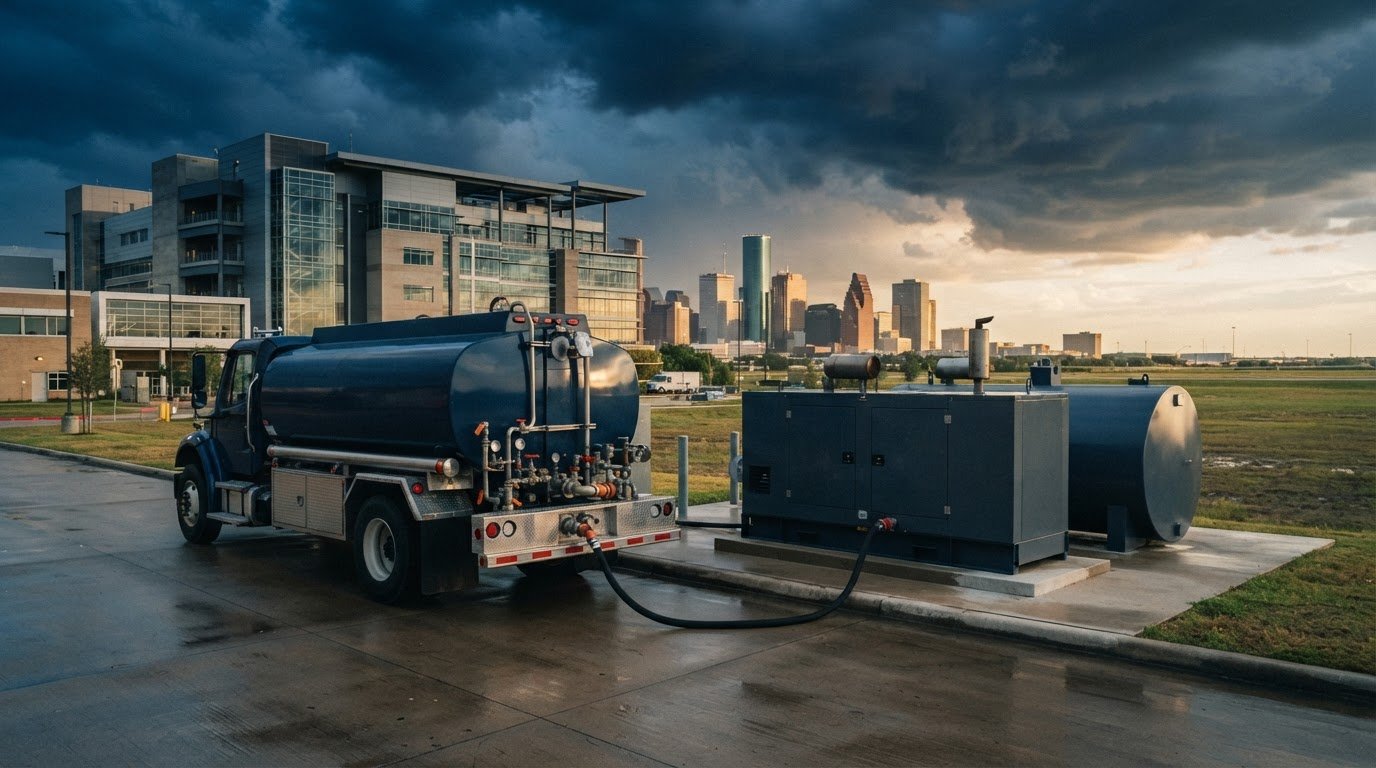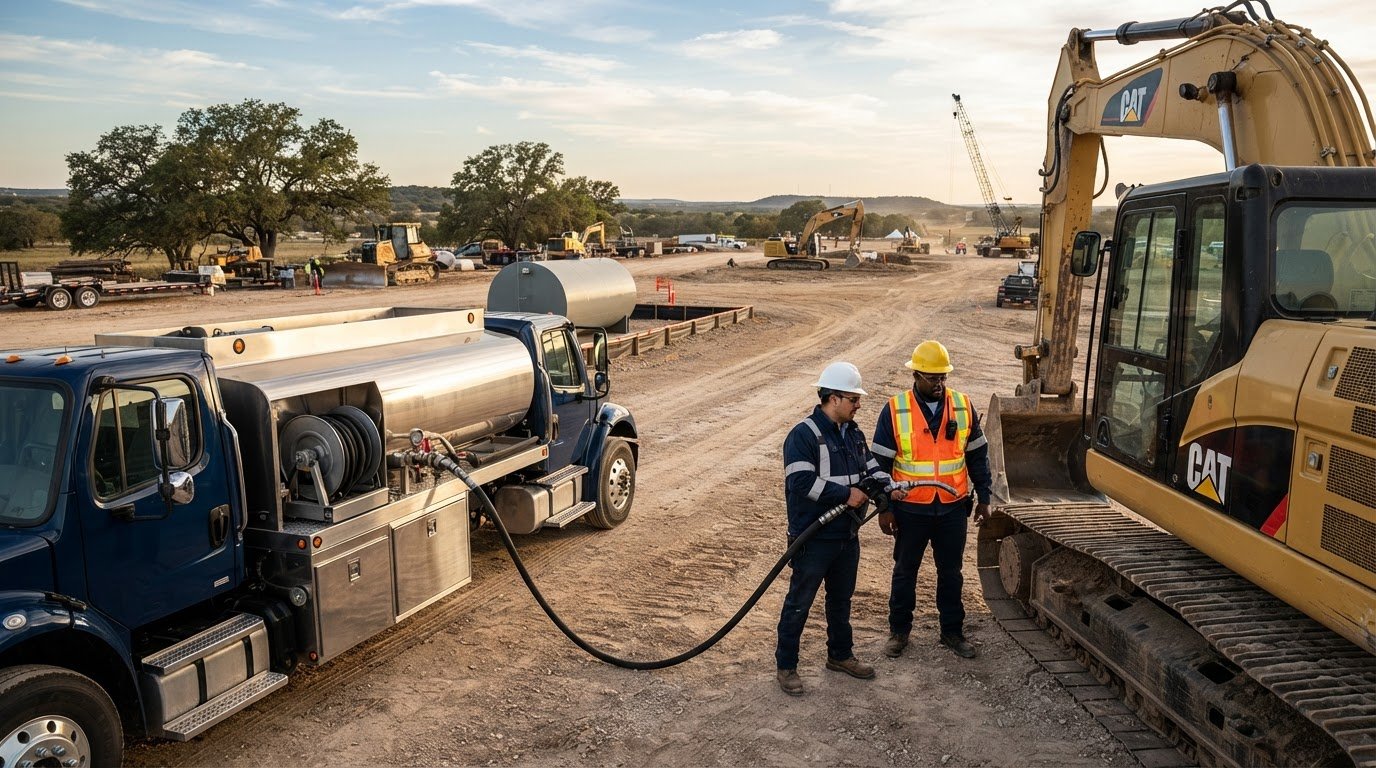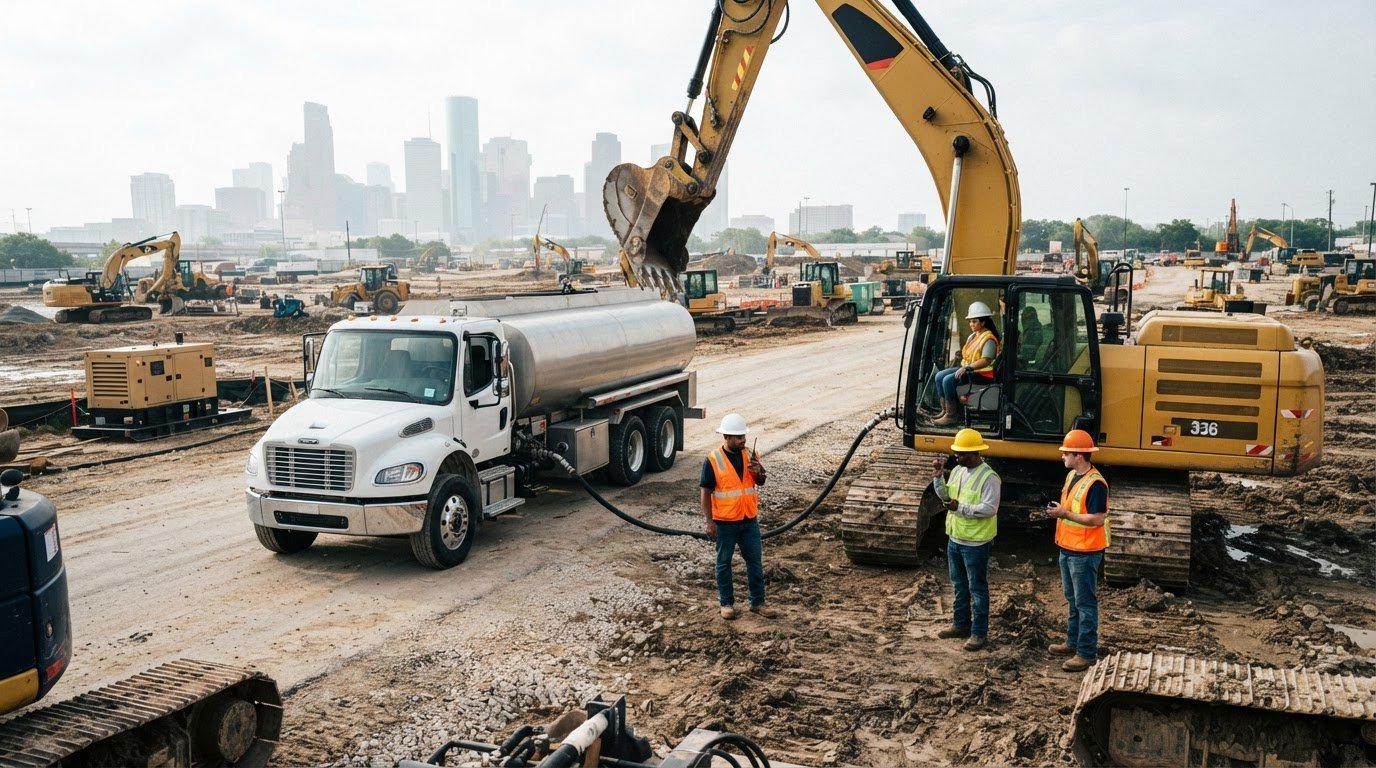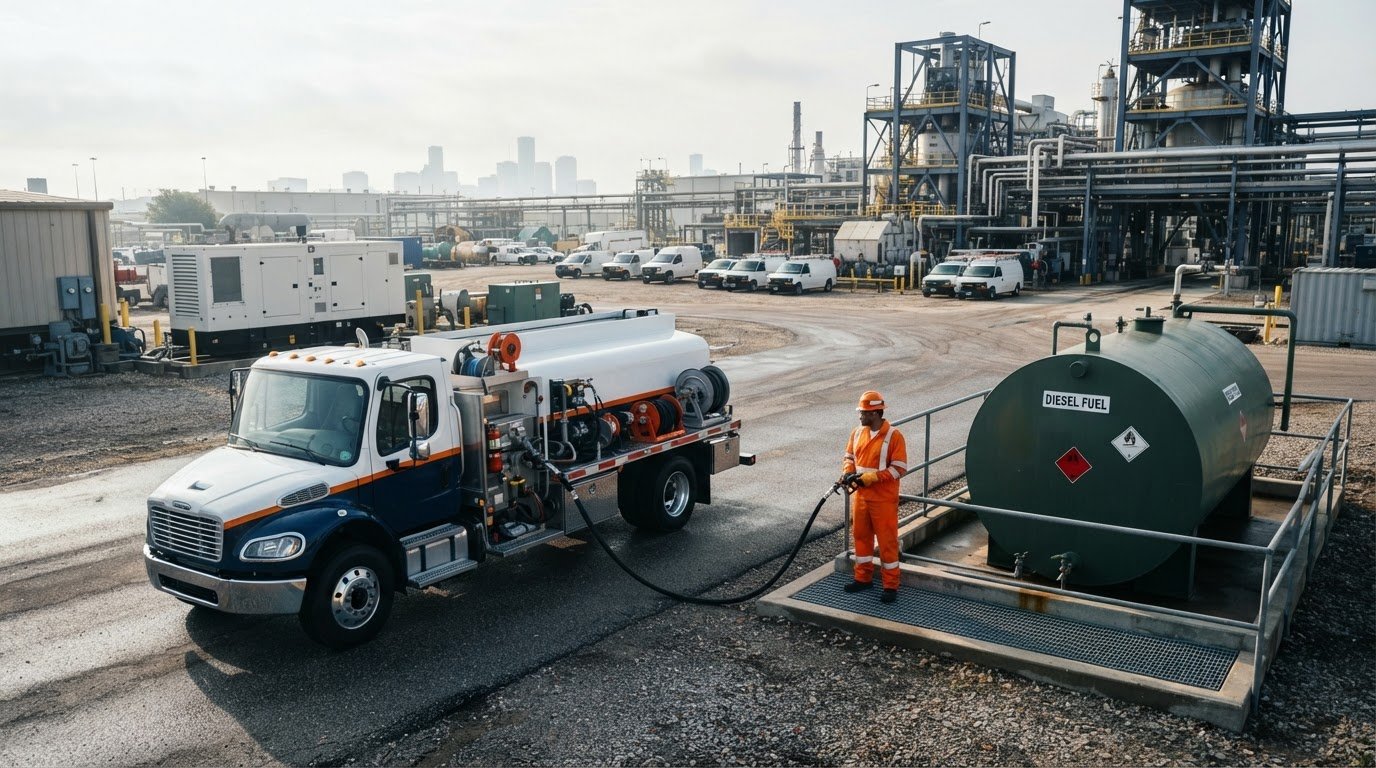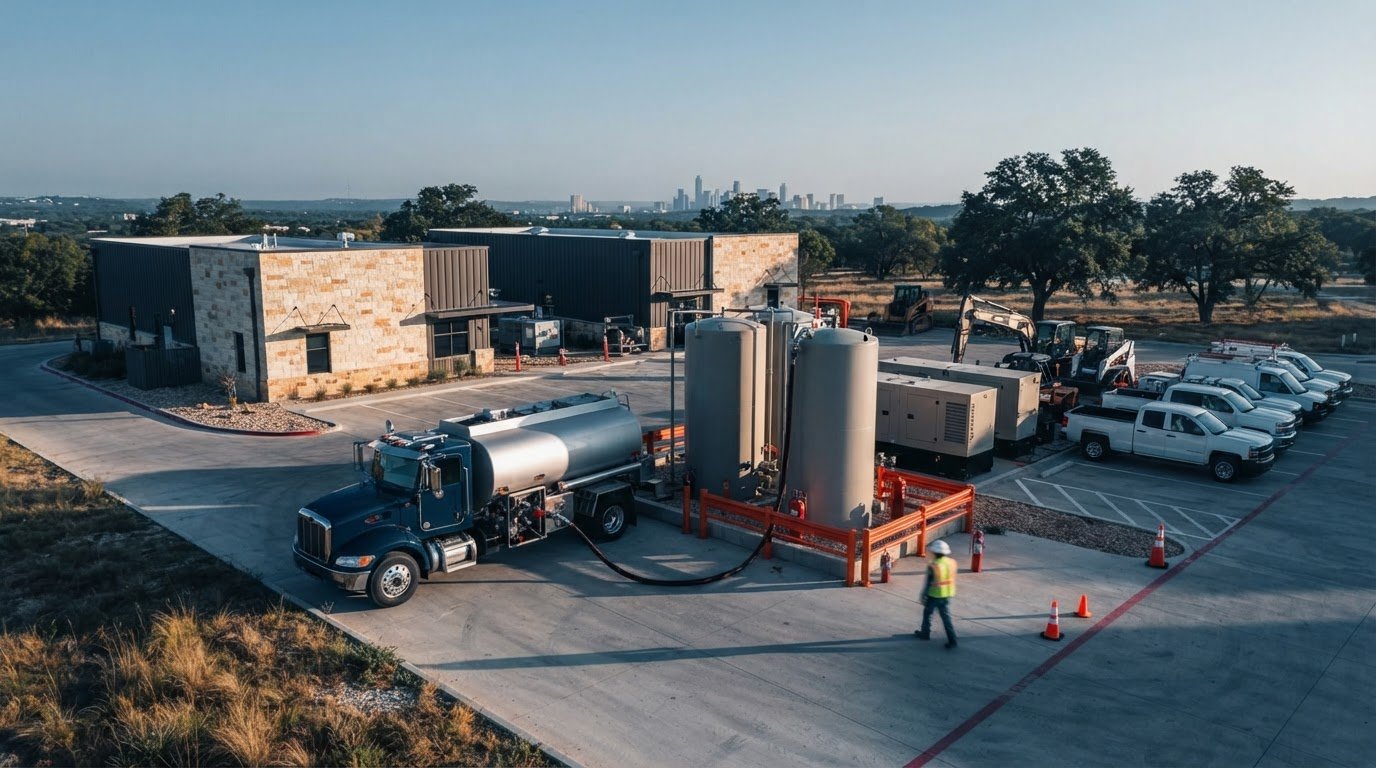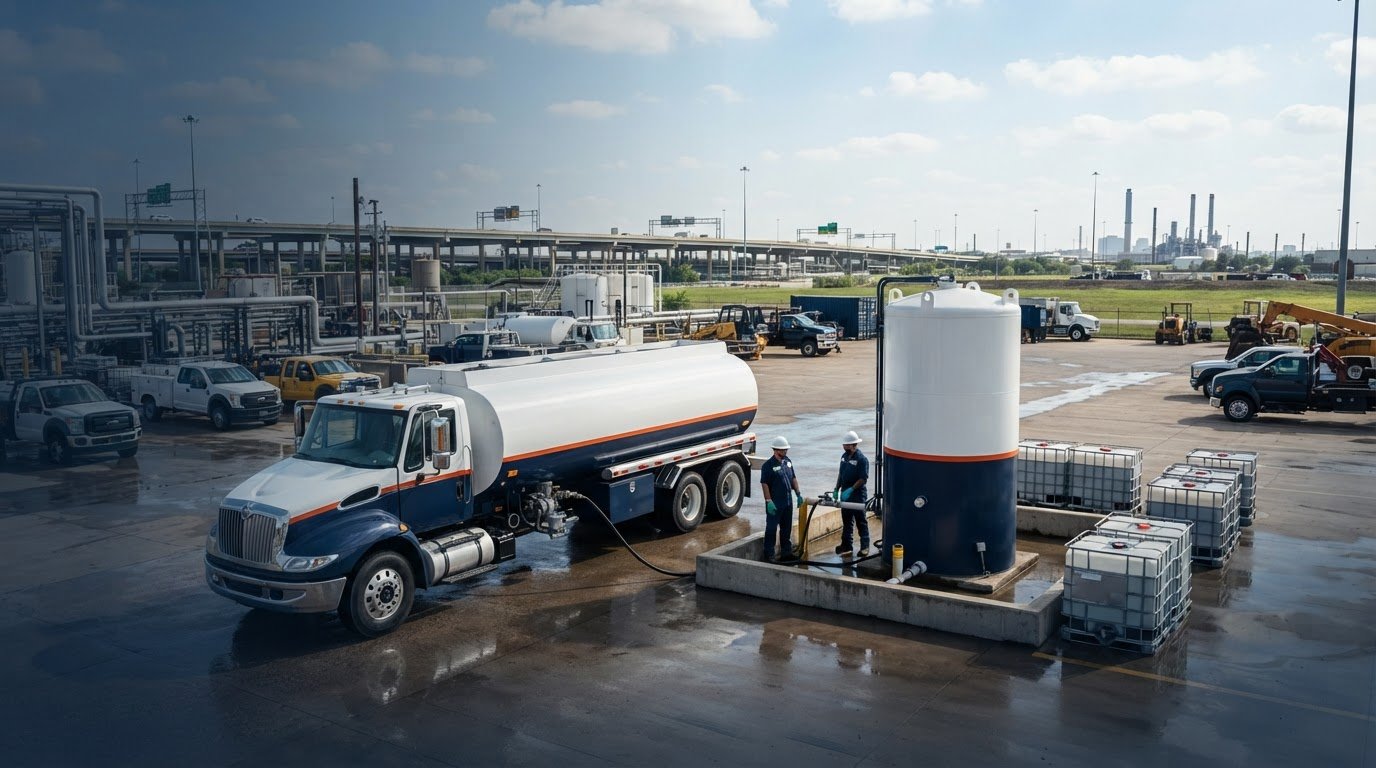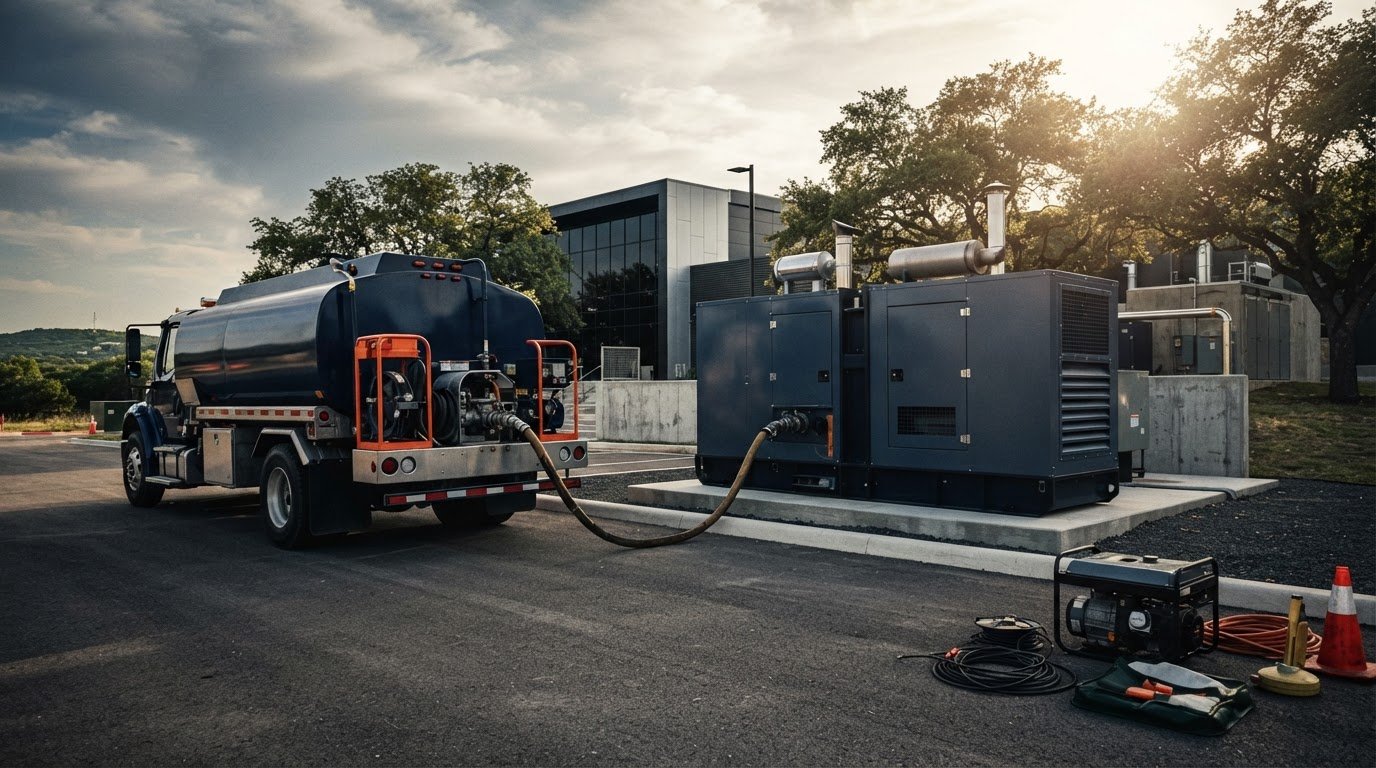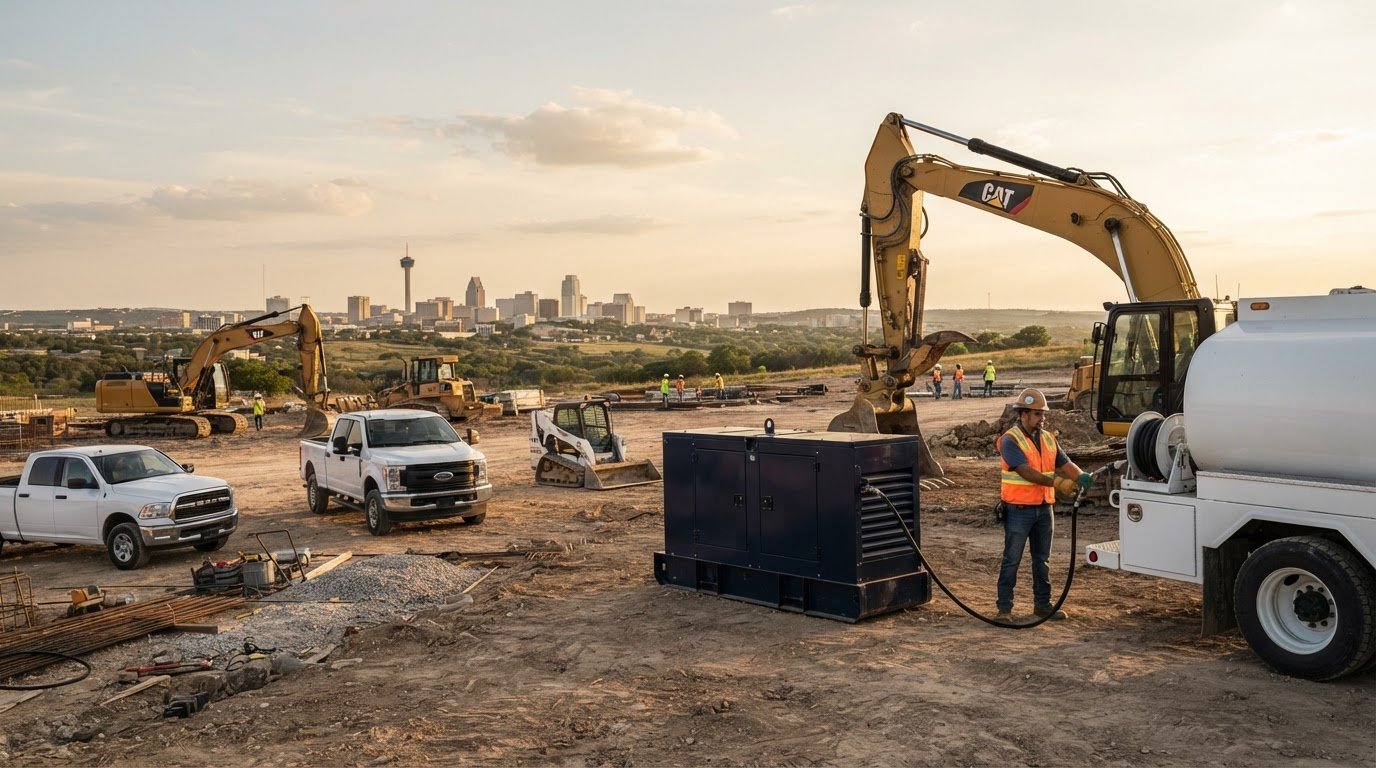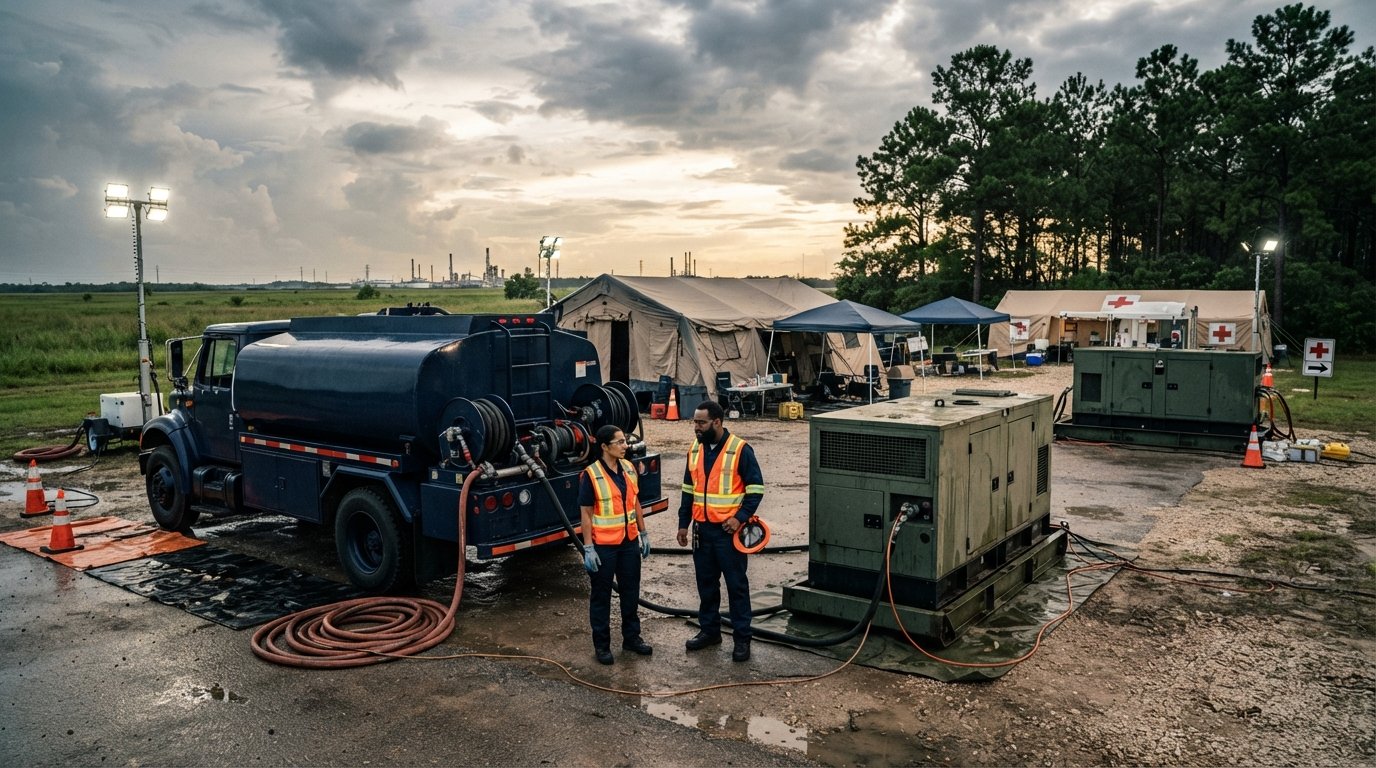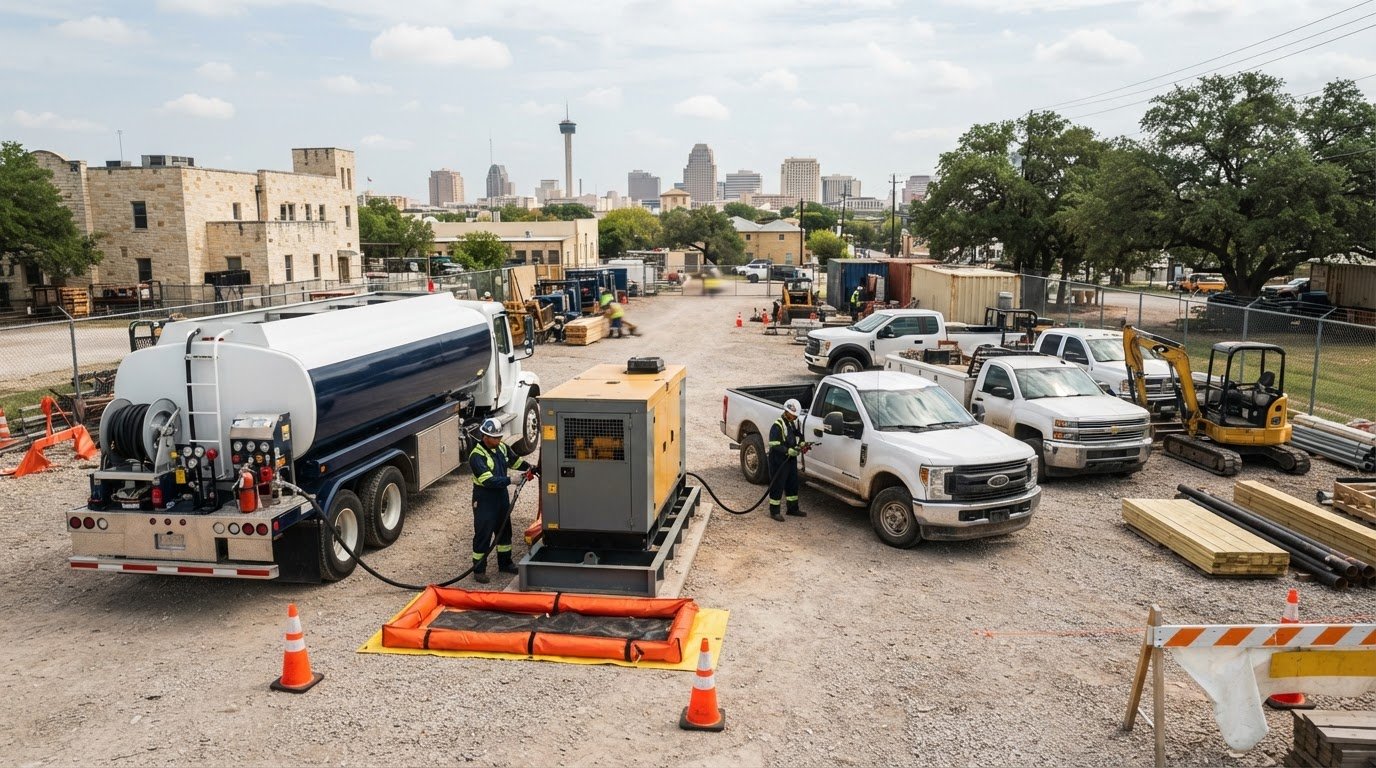
A trailer isn’t automatically the right choice: portable fuel storage for construction projects in Magnolia should suit fuel demand, available space and ground conditions, and how the tank needs to move. A truck-mounted tank works when the vehicle can reach the equipment; a trailer can make sense when the tank needs to move separately. Consider tank construction too, especially if it will face rough handling.
It’s sensible to focus first on capacity and towing, but those choices work best alongside the type of fuel, project demands, and the tank’s safety features. This guide explains how to compare plastic and steel tanks, consider single- and double-wall designs, and weigh the practical differences between truck and trailer transport. It also covers how on-site refueling fits into a project and which approvals and standards to consider, so you can plan fuel storage around the work rather than interrupt it.
Balancing fuel capacity, size, and towing needs
Choose capacity based on equipment demand, refill timing, and site access. Match the filled tank’s size and weight to the truck, trailer, and handling equipment available.
Portable Container Sizes
Portable fuel tanks range from smaller units for occasional use to larger tanks that supply several machines. Compare usable capacity with expected fuel demand, then consider where the tank will sit. A larger tank takes up more space and may require a heavy-duty truck. On a confined Magnolia site, access routes and staging areas can limit the practical size.
Tank Capacity and Refill Frequency
A larger tank may reduce refill frequency when a project runs several vehicles or fuel-consuming machines. Estimate demand by listing each machine, its work schedule, and the fuel it needs during that schedule. Add the expected use across equipment sharing the supply. For example, an excavator and generator drawing from one tank may need more capacity than occasional use by a single machine.
Onsite Storage Capacity
Compare expected fuel use with the project’s available storage space. A concentrated work area with several machines may suit a larger shared supply, while separate work zones may need smaller tanks closer to equipment. On-site refueling with pumps and hoses can deliver fuel directly to machinery without moving the tank, so plan hose reach and tank placement together.
Before choosing a size, map the route from the delivery point to the storage location. Account for turns, ground conditions, work areas, and space for loading or unloading. A full tank can be heavy and may require lifting equipment, a towing vehicle, or a forklift to move. Keep the plan practical for the equipment and access available on that site.
Match towing capacity to the full tank, not its empty weight. A larger portable tank may need a heavy-duty truck, while a smaller unit may suit occasional transport. Check the towing vehicle and trailer against the filled load. For example, a tank that fits a truck bed when empty may leave too little room for hoses and other job materials.
Use this sequence to narrow the choice:
- List the machines and vehicles drawing fuel on the project.
- Estimate their combined demand over the planned refill interval.
- Choose a tank size that fits the storage area and access route.
- Plan how the full tank will be transported or repositioned.
This approach ties capacity to actual work instead of defaulting to the largest tank. For portable fuel storage for construction projects in Magnolia, look for a balance: enough fuel for equipment demand, with a tank that suits the site’s towing and handling conditions.
On-site storage for business and remodeling projects
Plan storage around where equipment works, where a tank can sit, and how workers will access it. A remodeling crew and a multi-machine construction site have different access needs, so map fuel movement before placing a tank.
On-Site and Warehouse Options
An on-site tank keeps fuel near active equipment, while a warehouse can support centralized storage and job-supply coordination. These locations serve different purposes: choose according to the project’s operating needs, and don’t assume a general storage container is designed to hold fuel. In Magnolia, UNITS containers have all-steel construction and lockable steel doors, but they are storage containers, not fuel tanks.
For a remodeling project, identify the work zone, equipment parking area, and delivery access before choosing a tank location. On a larger site, map the machines sharing fuel and the routes workers use between them. Keep storage clear of material staging and vehicle movement, while positioning it to serve equipment efficiently.
Storage Access and Refueling Equipment
Access affects how quickly a crew can refuel and return equipment to work. UNITS containers in Magnolia are accessible on-site 24 hours a day, 7 days a week, which can support access to stored project materials. For fuel, plan the tank location and refueling method separately, based on the equipment’s position and the site layout.
On-site refueling uses pumps and hoses to deliver fuel directly to equipment or vehicles without moving the tank. It can work well when machinery stays in a fixed area. Consider hose reach, equipment parking, and clear access for the person refueling. A generator near a building, for example, may need a different tank position from mobile equipment moving around the site.
Build the storage plan around the daily workflow:
- Mark the fuel tank location and the route used to reach it.
- Identify which equipment needs fuel and where it operates.
- Choose whether refueling happens at the tank or through pumps and hoses.
- Keep warehouse storage and fuel storage roles distinct.
Planning the layout helps prevent placing a tank where equipment cannot reach it or crews must repeatedly move supplies. On a Magnolia remodeling site, the work zone may shift as the project advances, so revisit the layout when equipment or access routes change. At a fixed business site, align the tank and refueling point with the equipment that uses fuel most consistently.
Reliable equipment access also depends on the supply plan. Equipment fueling support can help keep on-site machinery supplied without making every operator leave the work area to refuel.
Fuel storage approvals and compliance
Before placing a portable fuel tank on a Magnolia project, review its approval status and the requirements that apply at the federal, state, and local levels. Also assess whether the system meets relevant environmental, operational, and safety standards for its intended use.
Start with access control and regular checks of the tank body, fittings, hoses, caps, and pump for leaks or damage. Plan for spills, fire, theft, and environmental contamination. Overfill protection can reduce spills, flame arrestors help guard against sparks igniting vapors, and locking caps can help deter theft and contamination.
Use a practical review process before storing fuel and whenever the setup changes. Confirm the tank’s intended fuel and use, inspect its condition, and review its safety features. Then assess the location, nearby work, and equipment access. A tank moved to a new area may face different traffic, ground conditions, or exposure to site activity.
During inspections, look for visible damage, loose connections, worn hoses, compromised caps, and signs of leaks. Check that ventilation features can release fuel vapors and that overfill protection works as intended. A double-walled tank has an additional containment layer designed to help prevent leaks and spills, but it still needs regular condition checks.
- Approval: Review the system with relevant federal, state, and local authorities.
- Condition: Examine the tank, fittings, hoses, pump, and closures for damage.
- Protection: Assess overfill controls, ventilation, flame arrestors, and locking lids or caps.
- Placement: Keep the tank on suitable ground, with its position considered alongside traffic and equipment movement.
For example, a tank beside a busy equipment route may face impact risk, while one near active work may be more exposed to sparks. Adjust placement to reduce these hazards and keep access clear for inspection and refueling. Locking lids and caps can also help protect fuel from water and soil contamination.
Keep a consistent record of inspections, findings, and corrective actions. A written log helps the site team track recurring problems, such as a hose that loosens or a cap that no longer closes securely. It also makes handoffs clearer when responsibility for storage changes between crews.
Approvals and safe operation depend on the tank, its use, and its location. Include the review in site planning rather than leaving it until fuel arrives. For portable fuel storage on a Magnolia construction project, match the tank’s protections and inspection process to the work happening around it.
Transportable and mobile fuel tanks
Choose a tank based on how it will move through the project, not just how much fuel it holds. A tank transported by truck or trailer serves a different purpose from a mobile unit repositioned around an active worksite.
Plastic and steel have different trade-offs. Plastic tanks are lightweight, corrosion-free, and suited to light use, while steel tanks are heavier and offer greater strength and shock resistance for heavy-duty work. Plastic doesn’t rust and is more affordable, but may be less tolerant of physical abuse. Steel can handle impact but may rust without proper maintenance.
For a tank that travels between locations, account for the vehicle or trailer carrying it and the handling equipment needed at each end. A full tank may require a suitable towing vehicle or specialized equipment. Moving it around a site may call for a towing wagon or forklift, so plan the route and transfer method before filling it.
Mobile tanks with wheels or casters can be repositioned without arranging transport for every move. Larger wheels may make a tank easier to move over rough ground. You still need to assess the full load, terrain, access, and available moving equipment.
- Plastic: Consider it for lighter use where resistance to corrosion is useful.
- Steel: Consider it for heavy-duty use where strength and shock resistance matter.
- Wheels or casters: Assess whether the worksite needs frequent repositioning.
- Vehicle, trailer, or forklift: Plan these when the filled tank is too heavy for manual movement.
On a compact remodeling site, a lighter tank that workers move occasionally may be more practical than a heavy-duty steel unit. On rough construction sites, steel may better suit demanding handling, while larger wheels can help with repositioning. Choose material based on expected use and handling, not appearance alone.
Before selecting a mobile setup, trace the route from storage to equipment. Note narrow turns, uneven ground, and areas shared with vehicles. Then decide whether workers will move the tank on its wheels, tow it, or use a forklift. This helps reveal handling constraints before the tank is filled.
For transport between sites, confirm that the vehicle or trailer can manage the filled tank and its placement. For movement within a site, assess wheel size, surface conditions, and distance to equipment. These are separate tasks: a tank suitable for road transport may still be difficult to maneuver over rough ground.
Consider material, movement method, and site conditions together. A steel tank intended for heavy use may need planned lifting or towing, while a plastic tank for lighter use may be easier to handle. Choose a tank the crew can transport, position, and maintain for its specific role.
Portable fuel tank types and materials
Magnolia construction projects can use portable plastic or steel tanks, including double-walled designs. Compare material, containment, and safety features with the fuel, site conditions, and handling demands.
Portable Tank Types
Portable tanks vary by material and containment design. Plastic and steel suit different conditions, while a double-walled tank adds a second containment layer intended to help prevent spills and leaks. Consider the tank’s construction and how it will be used. A unit exposed to rough handling calls for different considerations from one used for lighter site demands.
Tank Materials
Plastic tanks are lightweight and corrosion-free, making them suitable for light use. They don’t rust and are more affordable, but may withstand physical abuse less effectively than steel. Steel tanks are heavier and offer greater strength and shock resistance for heavy-duty use. They can be durable and impact-resistant but may rust without proper maintenance.
Construction Project Storage Options
Choose a tank for a construction site based on use, exposure, and handling. Plastic may suit lighter fuel needs where corrosion resistance matters; steel may suit demanding use involving tougher handling. A double-walled design adds a containment layer. Compare material and containment as separate selection factors.
Containment design matters because an outer layer provides additional protection if the inner tank leaks. For example, a project storing fuel near active equipment may prioritize spill containment alongside material suited to site handling. The extra wall doesn’t eliminate the need to consider tank placement or how crews move around it.
Consider built-in safety features separately. Portable tanks may include ventilation systems, overfill protectors, flame arrestors, and locking lids or caps. Ventilation helps fuel vapors escape, overfill protection stops fuel flow when full, and flame arrestors help protect against sparks igniting vapors inside the tank.
Locking caps and lids help deter theft and contamination, including exposure to water and soil. This can matter on an open construction site where fuel remains stored between equipment shifts. Consider who needs access, how the tank closes, and whether its protection features suit the storage conditions.
Use a simple comparison before selecting a tank:
- Material: Match plastic or steel to expected use and handling.
- Containment: Consider a double-walled design for its added spill-control layer.
- Features: Compare ventilation, overfill protection, flame arrestors, and locking closures.
- Maintenance: Account for steel’s need for proper rust prevention.
For portable fuel storage on Magnolia construction projects, match tank construction to site demands. Light use may favor plastic; heavy-duty handling may favor steel. Then compare containment and safety features with how the tank will be stored and accessed.
React Fueling: Diesel Delivery
React Fueling supports construction operations with diesel delivery, fuel delivery, and equipment fueling service. These services suit projects that need fuel brought to the worksite, so operators don’t have to take equipment elsewhere to refuel. Generator fueling service can also support sites that rely on generators for power.
Choose a fueling approach based on the equipment and project setup. Equipment fueling can support machinery working across a site, while generator fueling serves a fixed power source. These services complement portable storage by connecting tank decisions with how fuel reaches essential equipment.
For construction fuel delivery and equipment fueling, contact React Fueling to discuss your project’s needs.
Set Your Magnolia Fuel Plan in Motion
Turn the tank decision into a working fuel plan: identify who manages supply, how equipment receives fuel, and what may change as the project progresses. For portable fuel storage for construction projects in Magnolia, this coordination connects the storage setup with everyday fueling needs.
React Fueling offers Diesel Delivery, Equipment Fueling Service, and Fuel Delivery for commercial fuel needs. These services can complement a storage plan when a project needs fuel delivered or equipment fueled at the worksite. To get started, outline the equipment, operating pattern, and fueling arrangement so the service request reflects practical site needs.
Build a clear plan before fueling demands disrupt the work sequence. Contact React Fueling about your project’s fuel needs and move forward with a more coordinated approach.
Frequently Asked Questions
Truck or Trailer Tank?
Choose a truck-mounted tank when the truck can carry fuel to the equipment; choose a trailer when the tank needs to move separately. A trailer may be useful if the towing vehicle must leave while the fuel supply stays on site. For either setup, consider the filled tank’s weight, site access, and how crews will position it. Match transport to the worksite’s routes and available equipment.
What tank sizes and fuel capacities are commonly used on construction sites?
Tank capacity varies with equipment demand, project duration, storage space, and refill arrangements. A crew fueling one machine occasionally has different needs from a site supplying several machines and a generator. List the equipment, estimate fuel use across planned work, and decide how often replenishment can be arranged. This gives you a project-specific capacity target without choosing a tank based on size alone.
What permits and fire codes apply to temporary fuel storage in Magnolia?
Approval requirements depend on the temporary storage setup and applicable local, state, and federal rules. Review the tank’s intended use, fuel, capacity, placement, and safety features against requirements for the project. Include storage in site planning, especially if the tank location may change during construction. This helps identify approval and fire-safety considerations before installation or filling.
What EPA and state regulations govern diesel and gasoline storage at construction sites?
Requirements depend on the fuel, storage system, site, and operating conditions. Assess diesel or gasoline storage against relevant federal, Texas, and local environmental, operational, and safety standards. Consider spill prevention, containment, tank condition, and fueling practices. If the site stores both fuels, assess them as separate planning cases and document the storage setup and inspection process for the project team.
What safety distances and secondary containment are required for portable fuel tanks?
Required separation distances depend on applicable standards and the tank’s location and use, so one distance won’t suit every setup. Consider nearby equipment, work activity, and potential ignition sources when planning placement. Secondary containment helps limit releases; a double-walled tank adds a layer intended to help prevent spills and leaks. Include placement and containment in the project’s fuel-storage review.
How do fuel trailers, skid tanks, and portable tanks compare for construction projects?
Fuel trailers are designed for towing between locations, while skid tanks can be positioned on site and moved with suitable equipment. Portable tanks include a wider range of designs, from units for transport to those for repositioning. Compare how often the tank must move, which vehicles or lifting equipment are available, and whether there is room for the setup. Choose the format that fits the project’s movement needs.
How can a contractor arrange fuel delivery and tank rental in Magnolia?
Contractors can request a quote from React Fueling for fuel delivery or portable fuel tank rentals. Share the Magnolia project location, whether the site needs gasoline or diesel, the equipment to be fueled, and whether a rental tank is part of the plan. React Fueling serves Houston, TX; Austin, TX; San Antonio, TX; Dallas, TX; College Station, TX. Clear project details help shape the request.