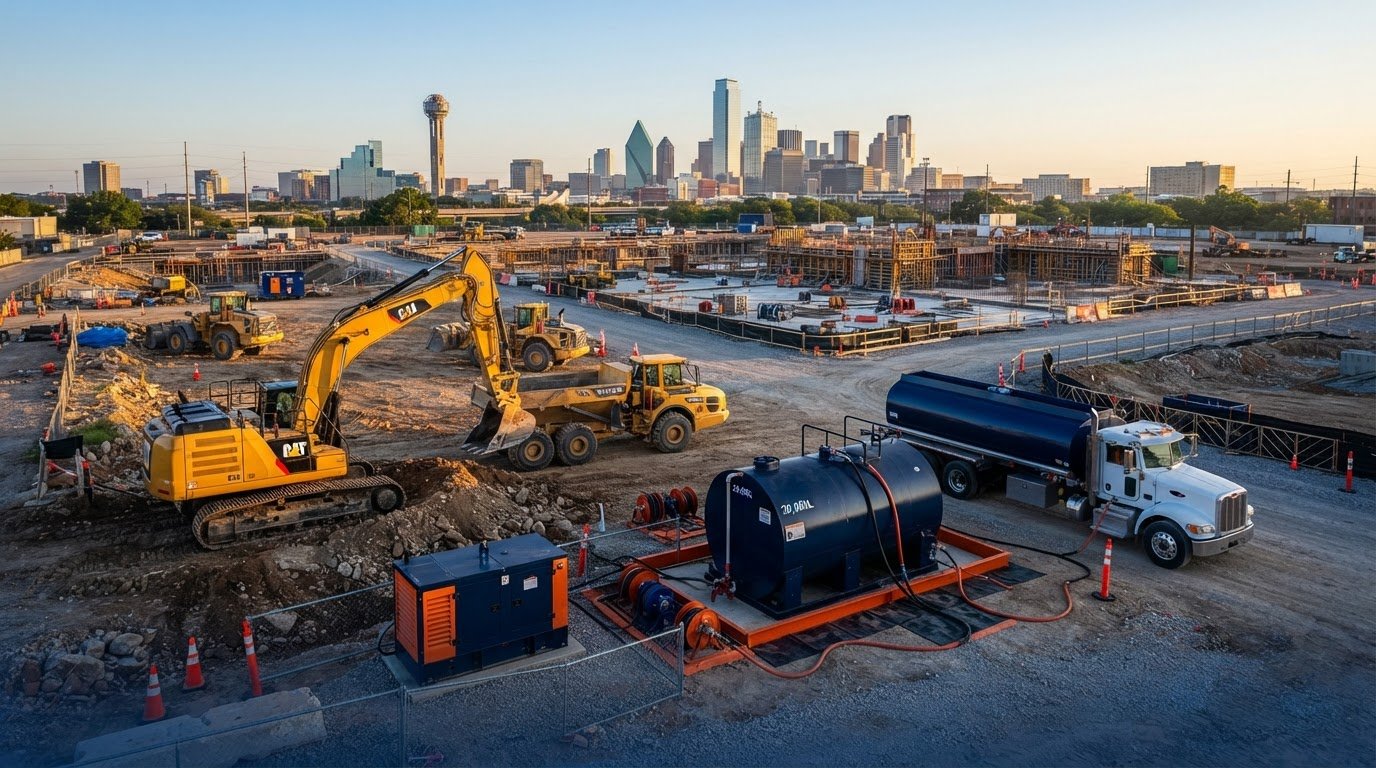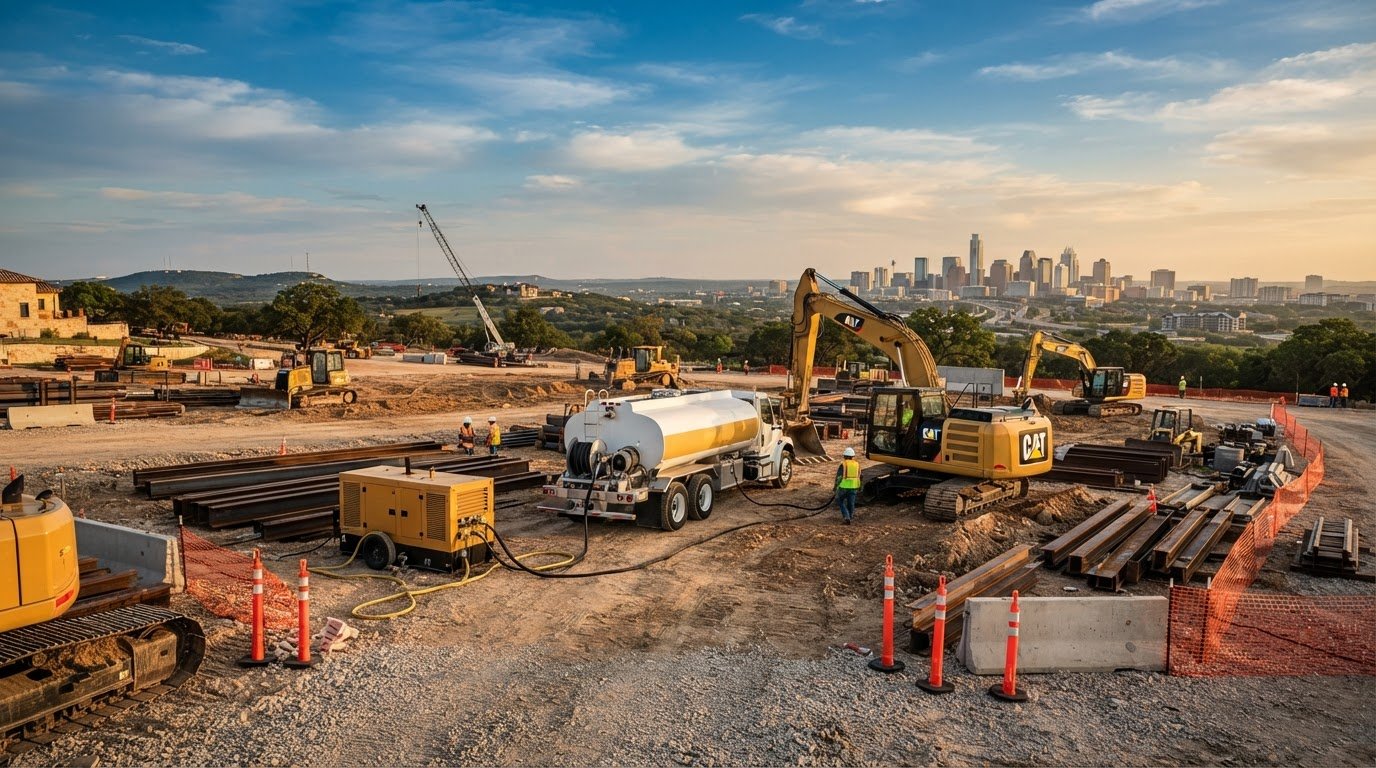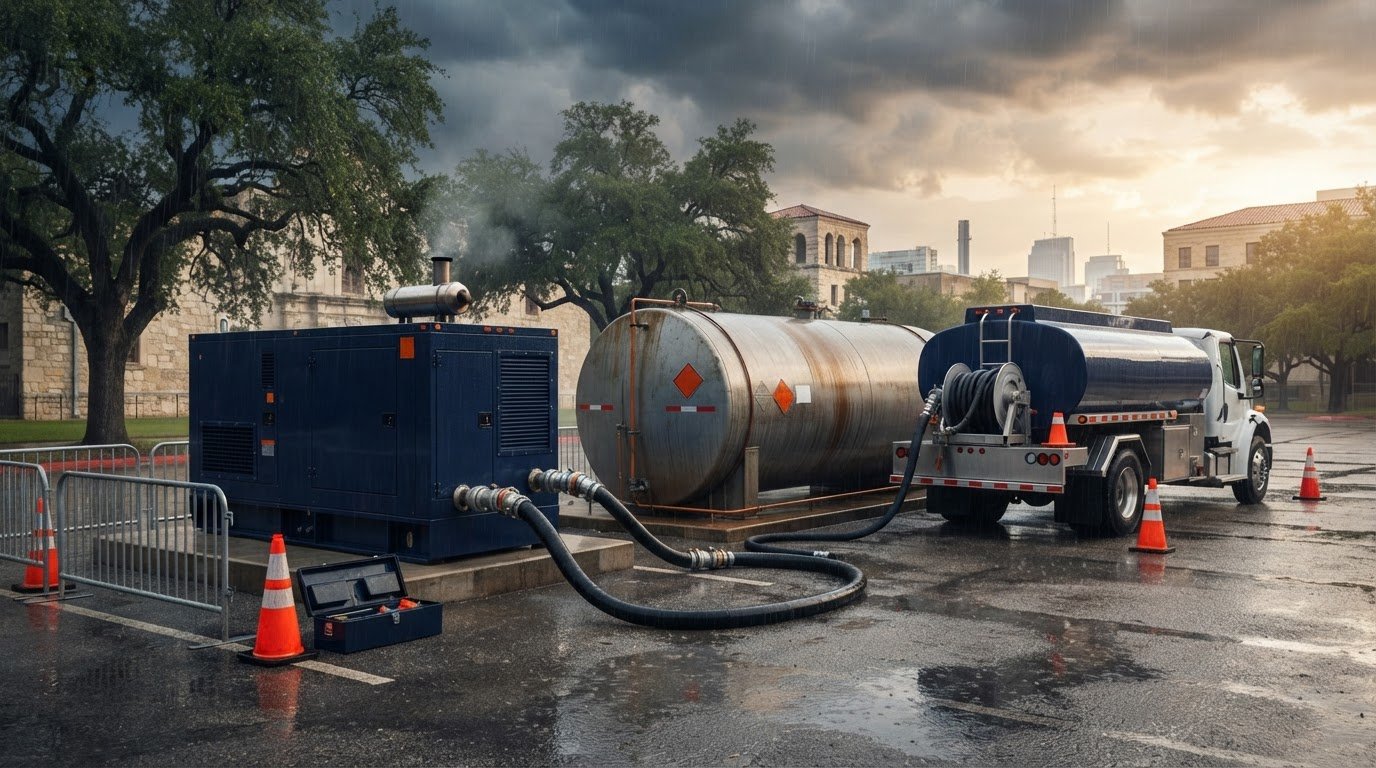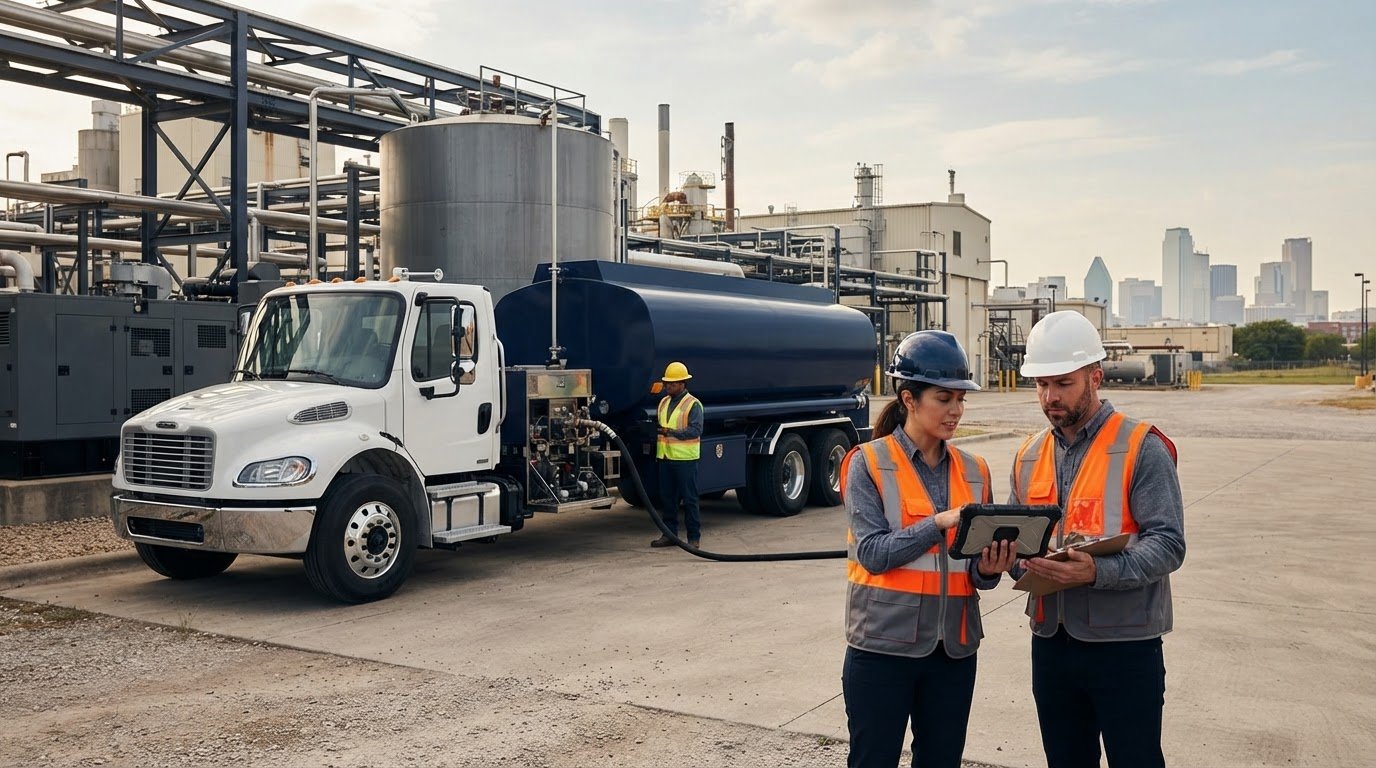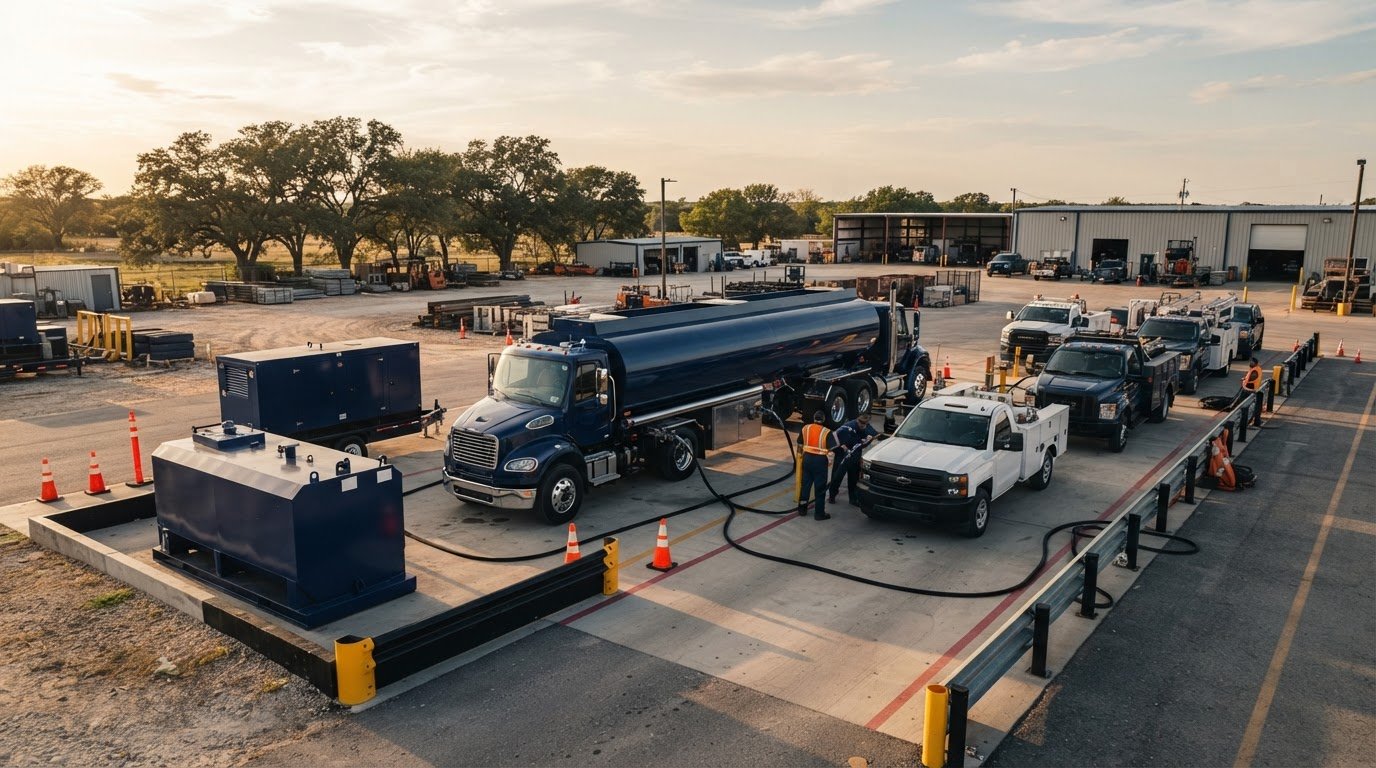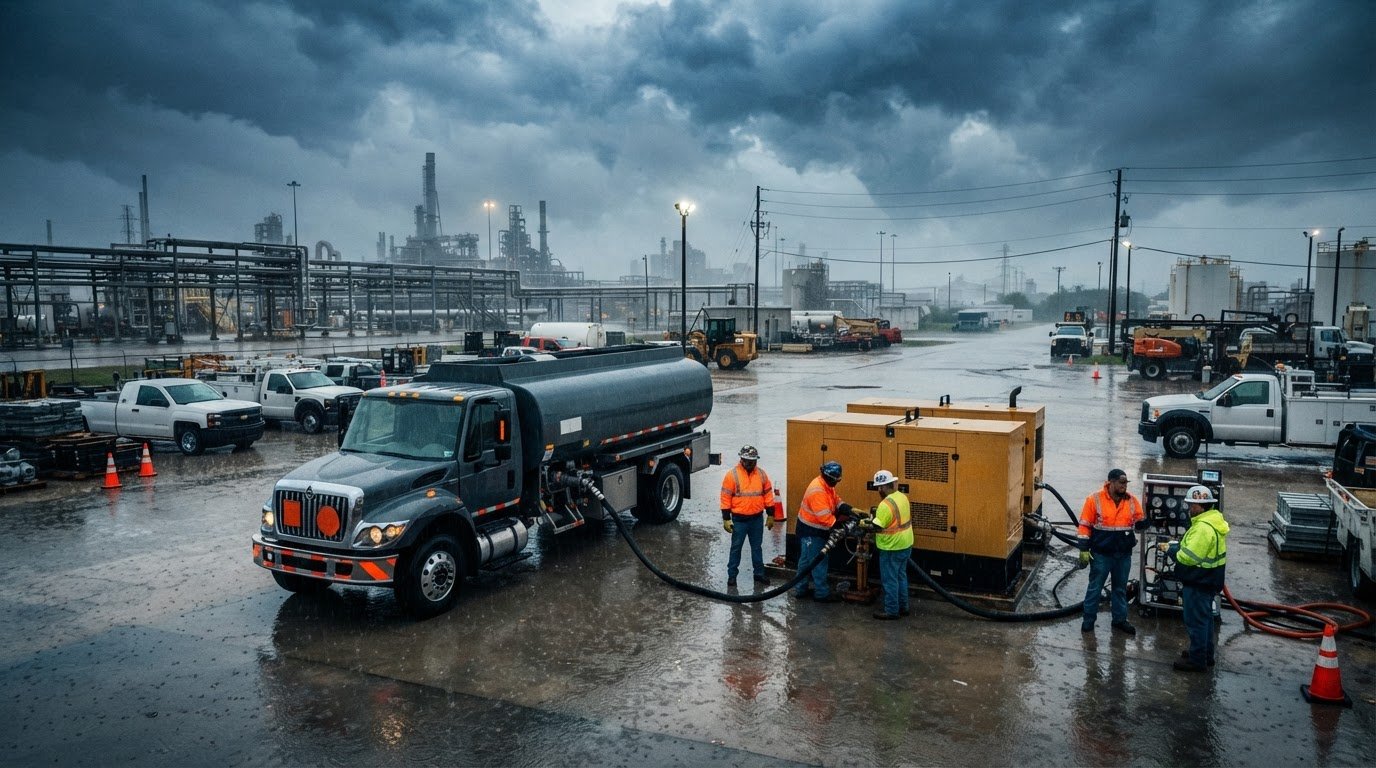
Waiting at a retail pump while a Texas storm front moves in isn't just a logistical delay; it's an operational failure that bleeds your bottom line. With fuel often making up 60% of a fleet's total operating budget, every minute your drivers spend in line or idling is capital you'll never recover. You're likely already managing the stress of fluctuating prices and the constant anxiety of keeping generators ready during unpredictable weather cycles. Choosing on-site fuel tank leasing transforms your yard into a private fueling hub, giving you the control to bypass retail volatility and keep your crews moving without interruption.
This guide shows you how to eliminate downtime and secure your operational continuity across the Texas industrial landscape. We'll break down the latest 2026 TDLR motor fuel quality standards and the TCEQ compliance requirements that keep your site protected from environmental liabilities. You'll discover how a managed tank solution reduces your total cost of fueling while providing the peace of mind that comes with guaranteed fuel availability. We'll also explore how to navigate upcoming TCEQ workshops and spill reporting protocols to ensure your operations remain resilient and compliant through 2026 and beyond.
What is On-Site Fuel Tank Leasing and How Does it Work?
On-site fuel tank leasing represents a fundamental shift in how Texas industrial operations manage energy. Rather than treating fuel as a retail commodity purchased at public stations, leasing transforms it into a private infrastructure asset. This service-based model provides the physical hardware and logistical support needed to maintain a constant supply on your own property. It eliminates the logistical friction of sending high-value equipment to retail pumps, which often results in wasted labor and increased wear on vehicles. This transition reduces the total cost of fueling by cutting out the middleman and the hidden expenses of driver downtime.
The core of this solution involves three integrated elements: the physical storage tanks, a high-speed dispensing system, and advanced monitoring technology. By 2026, this model has become the operational standard for Texas construction and industrial sectors. It offers a reliable hedge against price volatility and ensures that critical machinery stays powered during peak demand or emergency weather events. Transitioning to on-site fuel tank leasing allows project managers to focus on core operations while the fueling partner handles the complexities of maintenance and regulatory compliance.
Types of On-Site Tanks Available for Lease
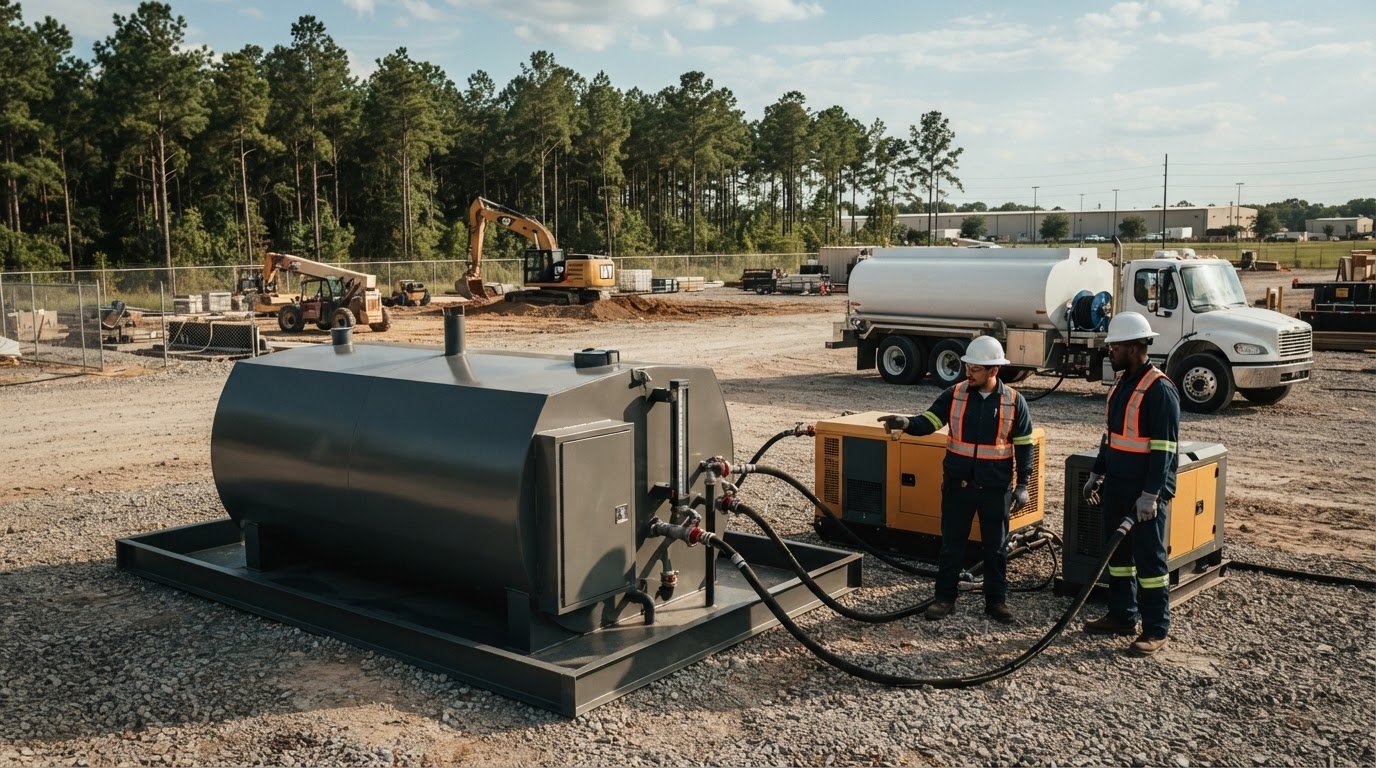
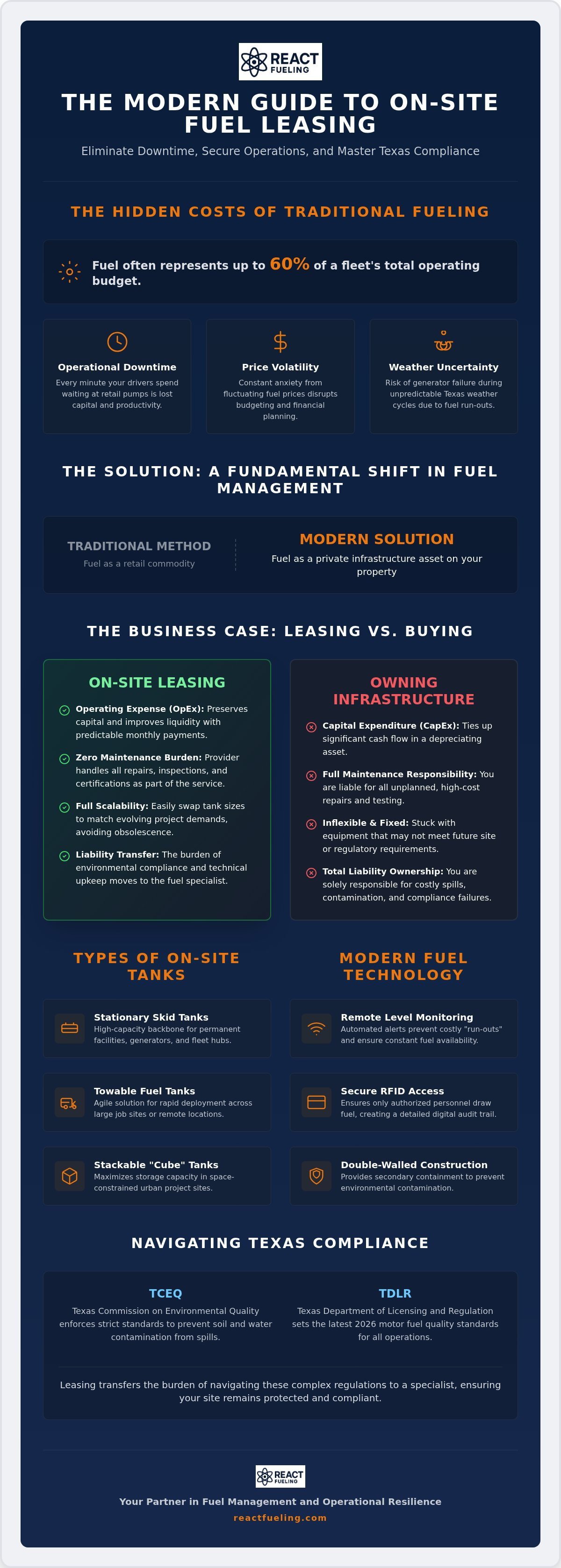
Selecting the right hardware depends on your site’s footprint and mobility requirements. Stationary skid tanks serve as the backbone for permanent facilities, providing high-capacity backup for generators and fleet hubs. These units are built for durability and long-term placement. For projects requiring agility, towable fuel tanks allow for rapid deployment across sprawling job sites or remote roadwork sections. Urban Houston projects with limited space frequently utilize stackable "cube" designs, which maximize storage capacity without expanding the site's footprint. These cubes are often used to feed multiple generators simultaneously, providing a compact power solution for vertical construction.
The Technology Behind Modern Fuel Storage
Modern fuel tank rentals leverage sophisticated telematics to provide real-time visibility into your inventory. Remote level monitoring systems send automated alerts before levels reach a critical low, effectively preventing "run-outs" that stall production. Integrated dispensing systems now feature secure RFID access, ensuring that only authorized personnel can draw fuel while creating a detailed digital audit trail for every gallon used. Double-walled construction serves as a critical engineering standard that provides secondary containment to prevent environmental contamination in the event of a primary tank breach. This technology ensures that your fuel remains secure, accounted for, and ready for immediate use.
The Business Case: Leasing vs. Buying Your Fuel Infrastructure
Deciding whether to purchase fuel hardware or opt for on-site fuel tank leasing is a high-stakes financial choice for any Texas operation. Purchasing a tank represents a significant Capital Expenditure (CapEx) that ties up cash flow in a depreciating asset. This capital is often better deployed toward heavy machinery or expanding your workforce. Leasing shifts this cost to an Operating Expense (OpEx), which allows for a leaner balance sheet and improved liquidity for your business.
Maintenance remains the most overlooked cost of ownership. When you own a tank, you are responsible for every repair, inspection, and certification. A single pump failure or a failed integrity test can result in thousands of dollars in unplanned expenses and immediate downtime. In a leasing model, the service provider retains responsibility for the physical equipment. They handle the testing, repairs, and routine maintenance as part of the service agreement. This ensures your infrastructure stays operational without the headache of managing a fleet of storage vessels.
Scale your infrastructure as your project requirements evolve across the state. A project in Dallas might require a 2,000-gallon tank today, but a massive infrastructure expansion in San Antonio next month could demand 10,000 gallons. Leasing allows you to swap tank sizes as your operational needs change. You avoid the obsolescence trap where owned equipment no longer meets site requirements or falls out of date with new engineering standards.
Financial Incentives and Tax Considerations
Leasing preserves your existing credit lines for mission-critical needs rather than sinking them into storage hardware. Lease payments are typically treated as a direct operating cost, which may offer tax deductibility benefits depending on your corporate structure. This approach removes the depreciation burden from your balance sheet, providing a cleaner financial profile for investors or lenders. It replaces the uncertainty of asset management with a transparent, fixed cost.
Operational Risk Management
Liability transfer is perhaps the most significant advantage of a managed service. By leasing, you move the burden of environmental compliance and technical upkeep to a specialist. This includes staying ahead of complex Texas fuel storage regulations that dictate how aboveground storage tanks must be installed and monitored. Leasing provides a predictable monthly cost compared to sporadic, high-cost repair bills that can disrupt a project's budget. Securing your fuel supply with a professional tank rental agreement ensures you are always ready for the next shift.
Safety and Compliance: Navigating Texas Fuel Storage Standards
Compliance isn't just a legal checkbox; it's a critical layer of protection for your site and the local environment. In Texas, the Texas Commission on Environmental Quality (TCEQ) enforces strict standards to prevent soil and water contamination. Any spill exceeding 25 gallons requires immediate reporting to both the TCEQ and local authorities. Understanding SPCC (Spill Prevention, Control, and Countermeasure) requirements is mandatory for operations storing significant fuel volumes. These federal guidelines ensure that your facility has a documented plan to contain leaks before they reach navigable waters or sensitive soil zones.
Permitting requirements vary significantly across major Texas hubs. Facility managers in Houston and Dallas must navigate municipal fire codes that often exceed state-level requirements. These local codes dictate the distance a tank must sit from property lines and the specific electrical grounding required for dispensing systems. When evaluating on-site fuel tank leasing , verify that the equipment includes essential safety features like overfill protection valves, pressure vacuum vents, and emergency shut-off switches. These components work together to mitigate human error and mechanical failure during high-volume fueling operations.
Double-Walled Protection and Secondary Containment
The "tank-in-a-tank" design has become the industry standard for 2026. This double-walled construction provides built-in secondary containment, which effectively eliminates the need for expensive external concrete dikes or earthen berms. It simplifies site setup and reduces the overall footprint required for storage. React Fueling ensures all fuel tank rentals meet these rigorous engineering standards, providing a secure barrier against primary tank breaches. This design is vital in industrial zones where soil contamination leads to massive remediation costs and regulatory fines.
Texas-Specific Environmental Considerations
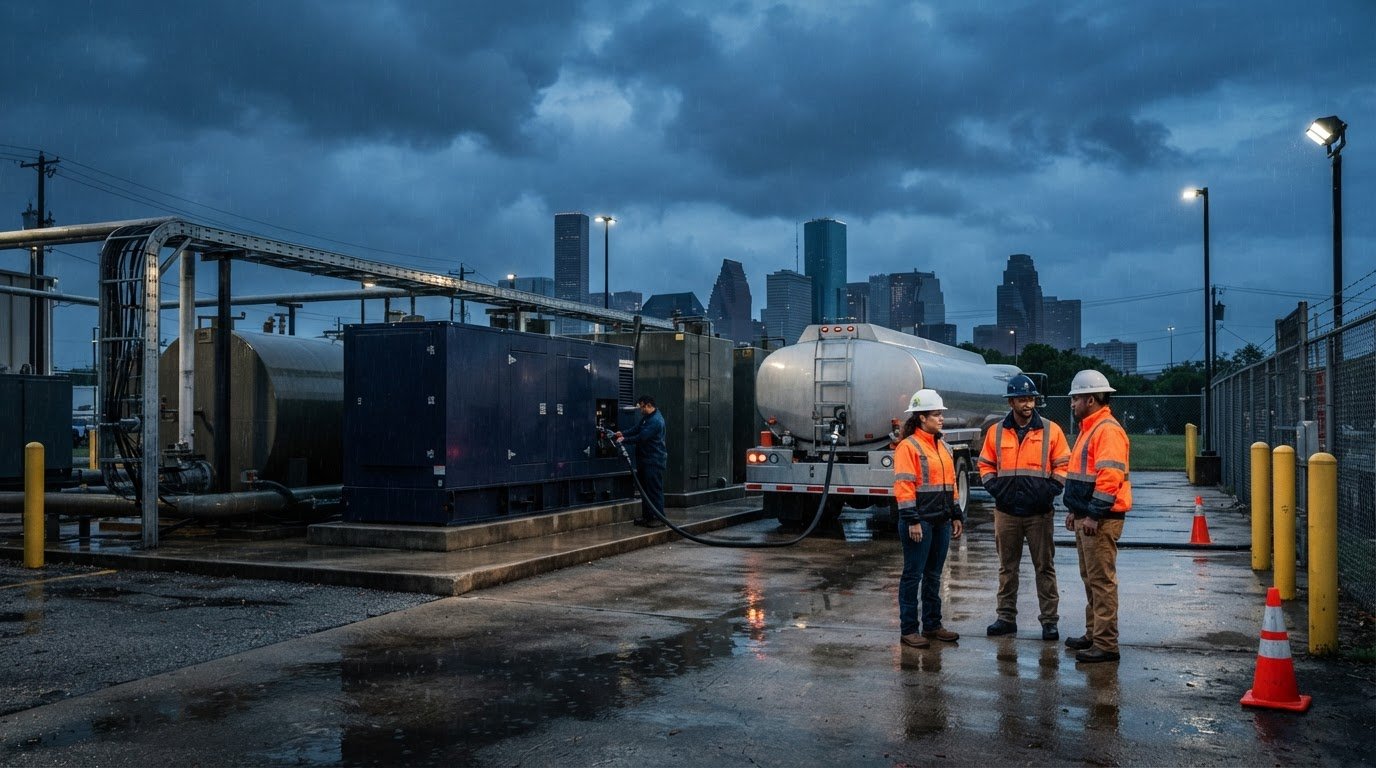
Texas weather presents unique challenges for fuel integrity. Extreme heat and high humidity can lead to condensation and microbial growth within a tank, which eventually clogs filters and damages engine injectors. Utilizing on-site fuel tank leasing through a partner that understands these local conditions ensures your fuel remains stable and free of contaminants. Along the Gulf Coast, tanks must be engineered for flood resilience and hurricane-force winds. This includes secure anchoring systems that prevent tanks from becoming buoyant during storm surges. Integrating these storage solutions with a reliable emergency fuel delivery plan is essential for rapid disaster recovery, ensuring your mission-critical equipment stays powered when the local grid fails.
Implementation Logistics: From Site Prep to First Fill
Successful implementation of on-site fuel tank leasing begins with a precise assessment of your average daily burn rate. This data determines whether your project requires a high-capacity stationary tank or multiple agile units. Selecting the correct capacity ensures you have enough buffer to handle peak demand periods without the risk of a "run-out" that halts production. Once the hardware is selected, site preparation is the next critical phase. The designated area must be level, compacted, and capable of supporting the significant weight of a fully loaded storage vessel. Access is equally vital; delivery trucks require a clear, stable path with sufficient turning radii to reach the tank safely.
Professional commissioning follows the physical delivery of the equipment. This process involves pressure testing the dispensing systems and calibrating the remote monitoring telematics to ensure accuracy from day one. Integrating the tank with a reliable diesel delivery schedule creates a seamless energy supply chain. Finally, your staff must receive training on safe dispensing protocols and emergency shut-off procedures. This ensures that every team member understands how to interact with the infrastructure safely while maintaining the integrity of your fuel inventory. Contact our specialists to coordinate your site assessment and begin the deployment process.
Optimizing the Tank Location for Efficiency
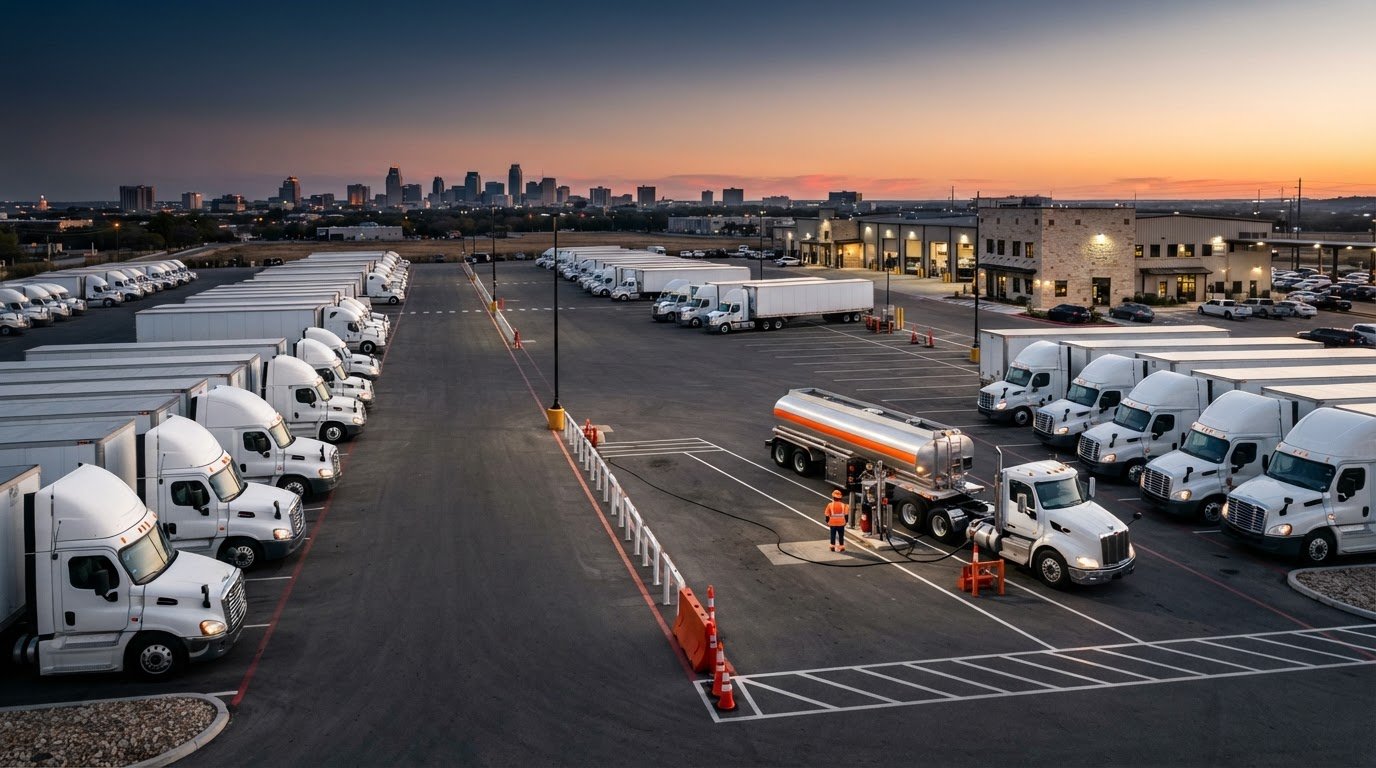
Strategic placement of the tank can significantly reduce internal equipment travel time, which directly impacts your daily productivity. Position the fueling hub centrally to active work zones while maintaining safe clearance for large delivery tankers. In urban environments like Houston, this often requires balancing tight site constraints with the need for 24/7 accessibility. Security must also be a priority; the location should be well-lit and visible to site supervisors to prevent unauthorized access or fuel theft during off-hours. Proper placement ensures that refueling becomes a brisk, methodical part of the shift rather than a time-consuming detour.
Managing the Refueling Cycle
Automated monitoring technology removes the guesswork from inventory management by triggering a commercial fuel service call as soon as levels hit a predetermined threshold. Many Texas operations utilize "Keep-Full" programs, where the provider monitors levels remotely and schedules deliveries automatically to maintain a constant supply. This proactive approach is essential for maintaining operational uptime during high-stakes projects. It is also the ideal time to coordinate your DEF fluid delivery. Keeping your Diesel Exhaust Fluid levels synchronized with your diesel supply prevents modern Tier 4 engines from entering a derated mode, which can effectively shut down your equipment until the fluid is replenished.
The React Fueling Advantage: More Than Just a Tank Rental
React Fueling operates as a vigilant partner rather than a simple equipment vendor. We understand that a storage tank is only one component of a larger, high-stakes logistical puzzle. Our team manages the physical infrastructure, maintenance, and compliance of your storage assets so you can remain focused on your primary project milestones. This "boots-on-the-ground" approach ensures that your fuel supply is never a point of failure. We take pride in our ability to show up when it matters most, providing a level of responsiveness that distant, faceless corporations cannot match.
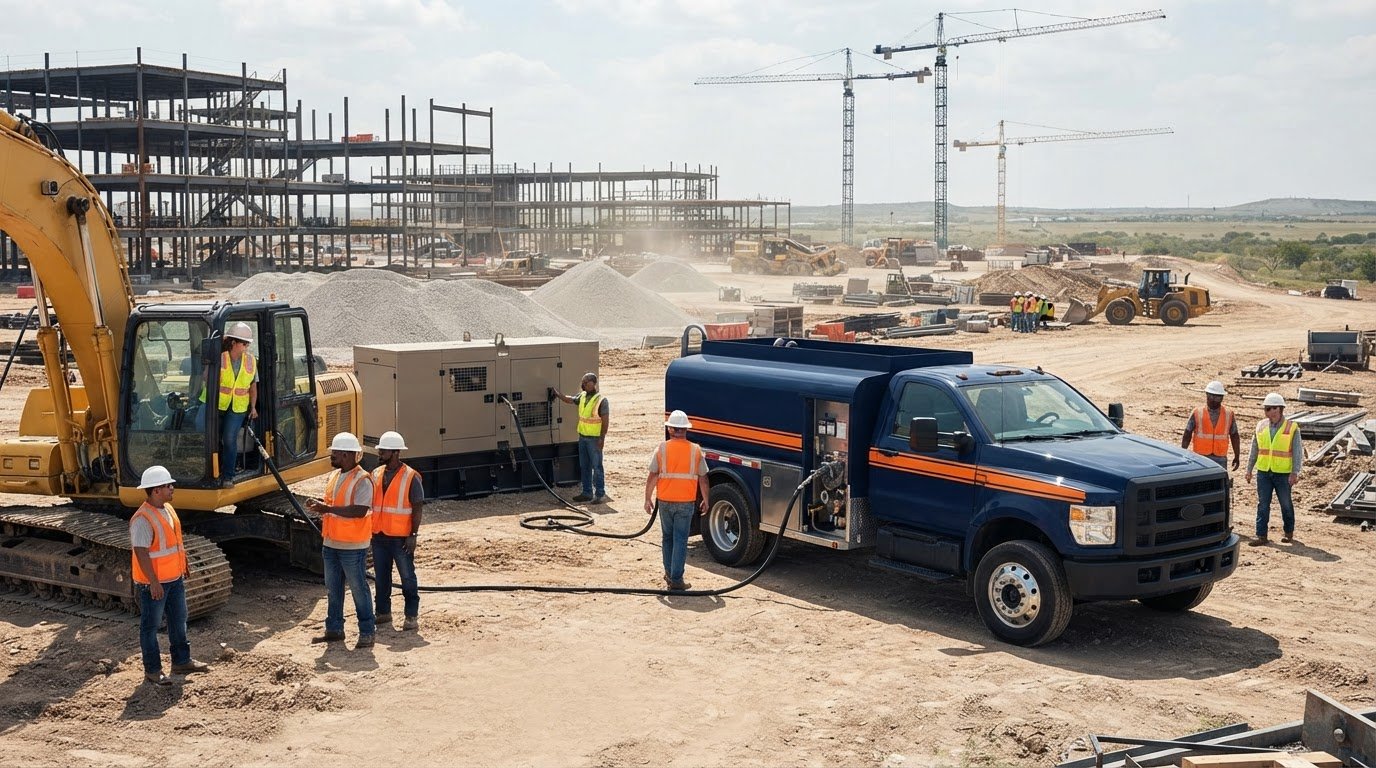
Our deep local expertise across Houston, San Antonio, and Dallas allows us to navigate the unique logistical challenges of the Texas Triangle. We coordinate every delivery with a precise understanding of local traffic patterns, site restrictions, and municipal regulations. By integrating on-site fuel tank leasing with our comprehensive on-site equipment fueling services, we create a closed-loop energy system. This synergy eliminates the need for multiple vendors and ensures that every piece of machinery on your site has the fuel it needs to maintain peak productivity.
Total Fuel Management for Houston Projects
Operations in the Houston area require a specialized approach to energy security. We combine generator fueling with on-site storage to create a robust defense against power interruptions. As a member of the React Holdings family, we leverage a vast network of energy logistics to provide customized reporting for your fuel usage. This data allows for precise project cost-tracking and inventory management, giving you total control over your fueling budget. Our systems provide the transparency needed for complex industrial environments where every gallon must be accounted for.
Ready for the Unexpected
Texas industrial sites must be prepared for sudden grid failures and extreme weather events. React Fueling maintains a 24/7 emergency response capability to ensure your operations stay online when the local supply chain is stressed. Our local presence in major Texas hubs means we have the assets and personnel nearby to respond immediately to changing site conditions. We value discipline and foresight, ensuring that your storage is always replenished before a crisis occurs. Contact React Fueling today for a custom on-site fuel tank leasing quote and secure the continuity of your Texas operations.
Secure Your Operational Future in Texas
Maintaining a competitive edge in the 2026 Texas industrial landscape requires more than just hard work; it demands logistical foresight. Shifting to on-site fuel tank leasing removes the volatility of retail pumping and the hidden costs of equipment downtime. By transferring maintenance and regulatory burdens to a specialist, you ensure that your site remains compliant and your budget stays predictable. You've seen how modern storage technology and strategic site placement create a resilient energy supply chain that withstands both market shifts and extreme weather.
React Fueling stands ready as your vigilant partner, backed by the extensive React Holdings logistics network and a team of local Texas service specialists. We provide the 24/7 emergency readiness necessary to keep critical infrastructure powered through any disruption. Don't leave your productivity to chance when you can secure a dedicated fuel reserve today. Secure Your Energy Reserve – Get an On-Site Tank Quote and keep your operations moving forward with total confidence.
Frequently Asked Questions
Is it better to lease or buy an on-site fuel tank in 2026?
Leasing is often the better choice because it preserves your credit lines and liquidity for other machinery needs. It converts a massive upfront CapEx into a manageable monthly OpEx. You don't have to worry about depreciation or the technical burden of routine inspections. This model ensures you always have access to modern, compliant hardware without the long-term liability of ownership.
What is the most common fuel tank size for a construction job site?
Most Texas construction sites utilize tanks ranging from 500 to 2,000 gallons for daily operations. The 1,000-gallon double-walled tank is the industry standard for medium-sized projects because it balances high storage capacity with a compact footprint. Larger infrastructure developments often deploy 10,000-gallon units to support entire heavy machinery fleets. Choosing the right size ensures your fuel supply matches your burn rate without excessive delivery frequency.
Do I need a special permit to lease a fuel tank in Houston?
Yes, Houston requires specific permits from the Fire Marshal's Office for any above-ground storage. These municipal codes often dictate precise setback distances from property lines to mitigate fire risks. While the equipment provider handles the physical maintenance, the site operator is responsible for securing these local occupancy permits. We recommend consulting with a specialist to verify city-specific fire codes before your scheduled installation.
How does remote fuel monitoring work with a leased tank?
Remote monitoring uses integrated telematics sensors to track your fuel levels in real-time. These sensors transmit data via cellular networks to a centralized management portal for constant visibility. When your fuel drops below a set threshold, the system automatically triggers a refill request from your provider. This technology eliminates the need for manual stick readings and prevents production-halting run-outs during high-stakes shifts.
What are the safety requirements for on-site diesel storage?
Standard safety protocols mandate double-walled construction for secondary containment alongside a documented SPCC plan. Tanks must include overfill protection valves and emergency vents to handle pressure changes safely. Texas law requires immediate reporting for spills over 25 gallons. Beyond hardware, you must maintain clear access for emergency vehicles and display high-visibility safety signage. These measures ensure your site meets both federal and state environmental standards.
Can I lease a tank for both diesel and DEF fluid?
Yes, many operations utilize split-tank designs or separate leased units for Diesel Exhaust Fluid (DEF). Since Tier 4 engines require DEF to operate at full power, having on-site storage prevents equipment from entering a derated mode. Coordinating your on-site fuel tank leasing for both fluids ensures that your entire fleet remains operational without the logistical hurdle of sourcing DEF from retail stations.
What happens to the fuel tank during a major Texas storm or hurricane?
Properly commissioned tanks are secured with specific anchoring systems to prevent buoyancy during flood events. High-quality leased tanks feature sealed lids and pressure vents to keep floodwater out and fuel contained. Our 24/7 emergency response team monitors storm paths to ensure your tanks are topped off before the event begins. This proactive approach secures your energy reserve when the local utility grid fails.
How quickly can a leased tank be delivered and set up?
Delivery timelines depend on tank availability and site readiness, but most standard units can be deployed within a few business days. Rapid deployment is a core feature of on-site fuel tank leasing for emergency or short-term projects. Once on-site, professional commissioning and first-fill integration usually take only a few hours. This allows your team to begin fueling operations with minimal delay to the project schedule.