Integrated Fuel Management for Industrial Sites: Houston 2026 Reference
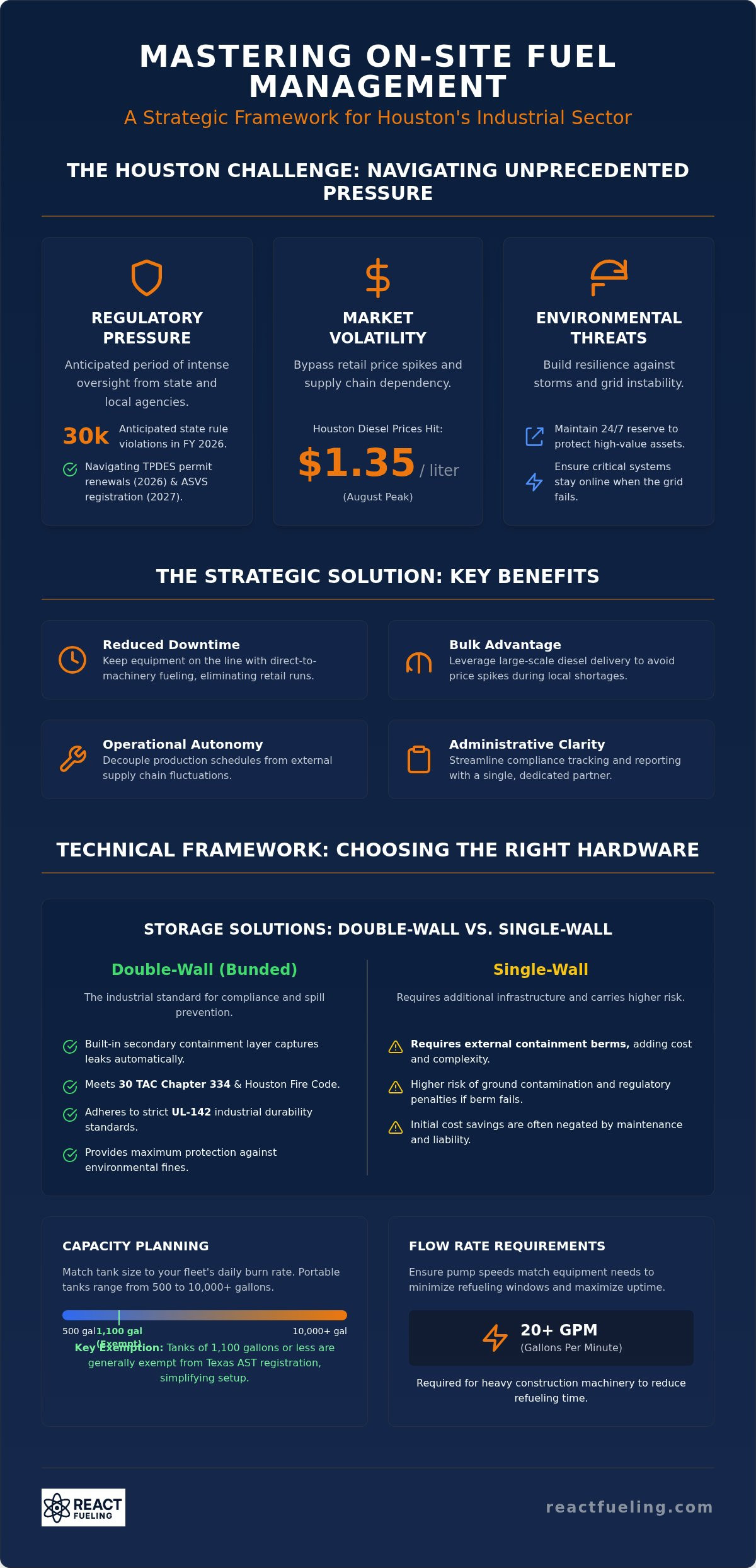
The Railroad Commission of Texas anticipates approximately 30,000 violations of statewide rules in fiscal year 2026, signaling a period of unprecedented regulatory pressure for local facilities. You understand that even a few hours of fuel-related downtime can derail a week's worth of progress, especially as Houston diesel prices reached $1.35 per liter this August. Implementing a robust strategy for integrated fuel management for industrial sites Houston is no longer just an operational preference; it's a necessity for maintaining a 24/7 reserve while navigating the tightening grip of TCEQ and local fire codes.
We agree that your focus should stay on production, not on the logistical nightmare of retail fuel runs or complex environmental filings. This reference guide provides the technical framework to master on-site storage and ensures full compliance with the 2026 TPDES permit renewals and the September 2027 ASVS registration deadlines. We'll preview the essential strategies for meeting the updated 0.8 acre-feet stormwater detention rates, managing Class II liquid permits for quantities over 60 gallons, and eliminating the hidden costs of off-site pumping through precision logistics.
The Strategic Importance of On-Site Fuel Storage for Houston Industrial Facilities
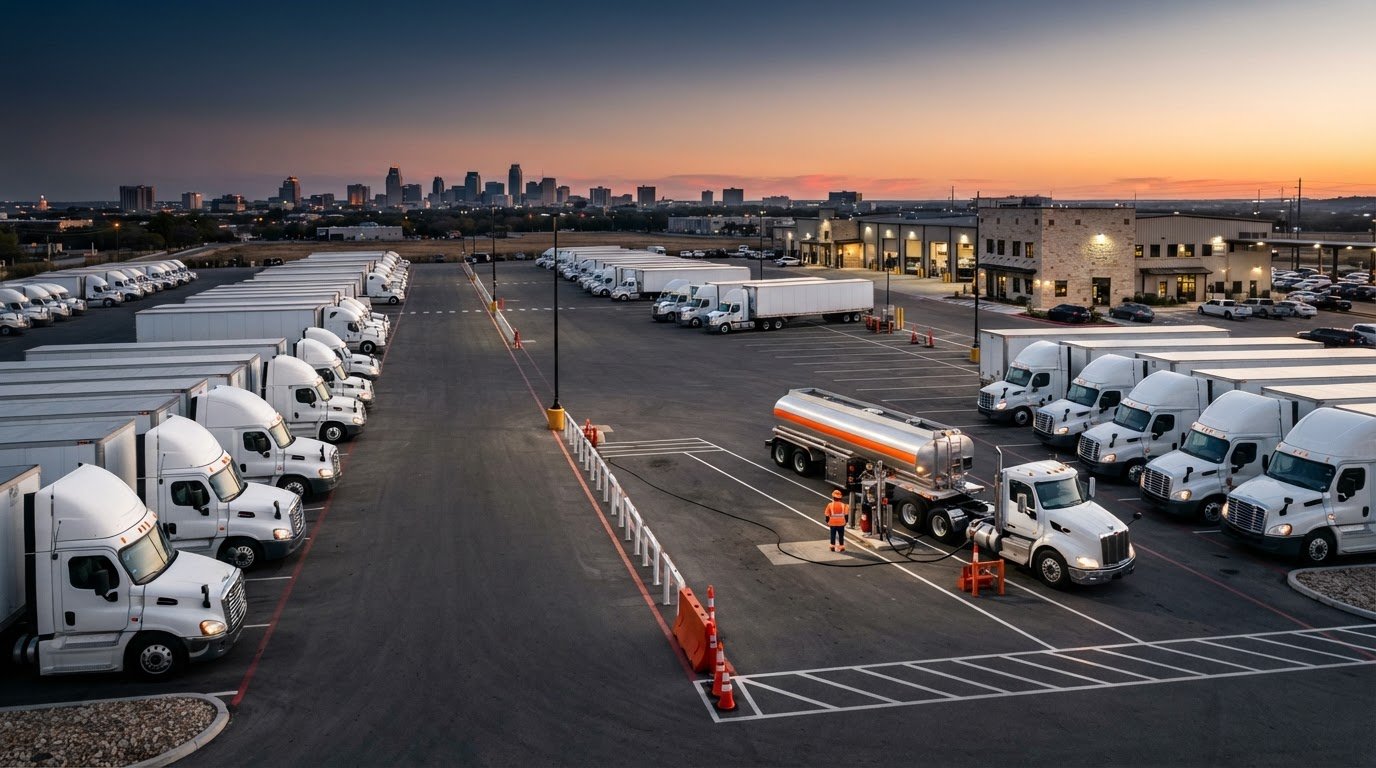
Integrated fuel management for industrial sites Houston represents a strategic shift from reactive purchasing to proactive resource control. It's the synergy between high-spec storage hardware and professional fuel delivery logistics. This fuel management system allows facility managers to bypass the volatility of the retail market, where prices in Houston reached $1.35 per liter in August 2026. By housing reserves on-site, you eliminate the vulnerability of depending on public infrastructure that often fails during peak regional demand. This approach ensures that your production remains steady even when the local supply chain is under duress.
Resilience Against Houston Weather and Grid Events
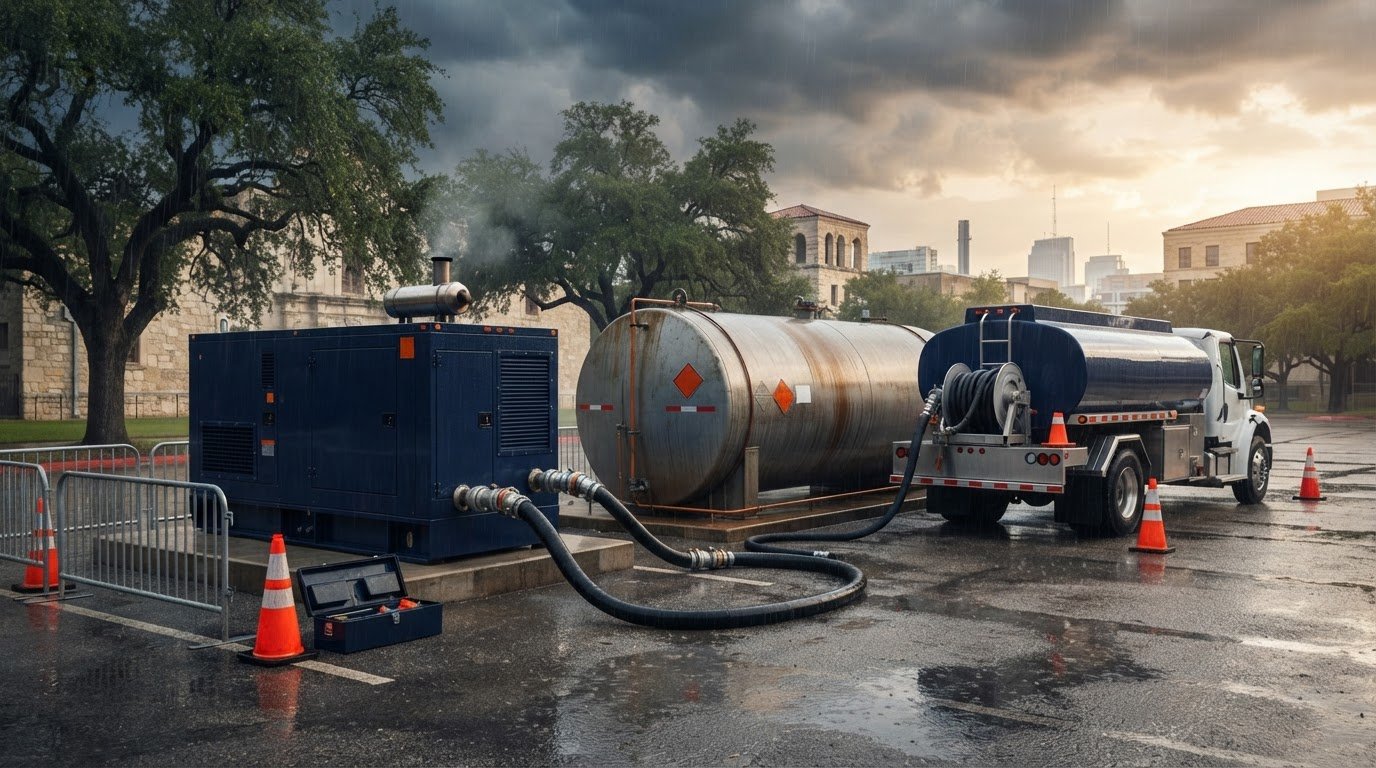
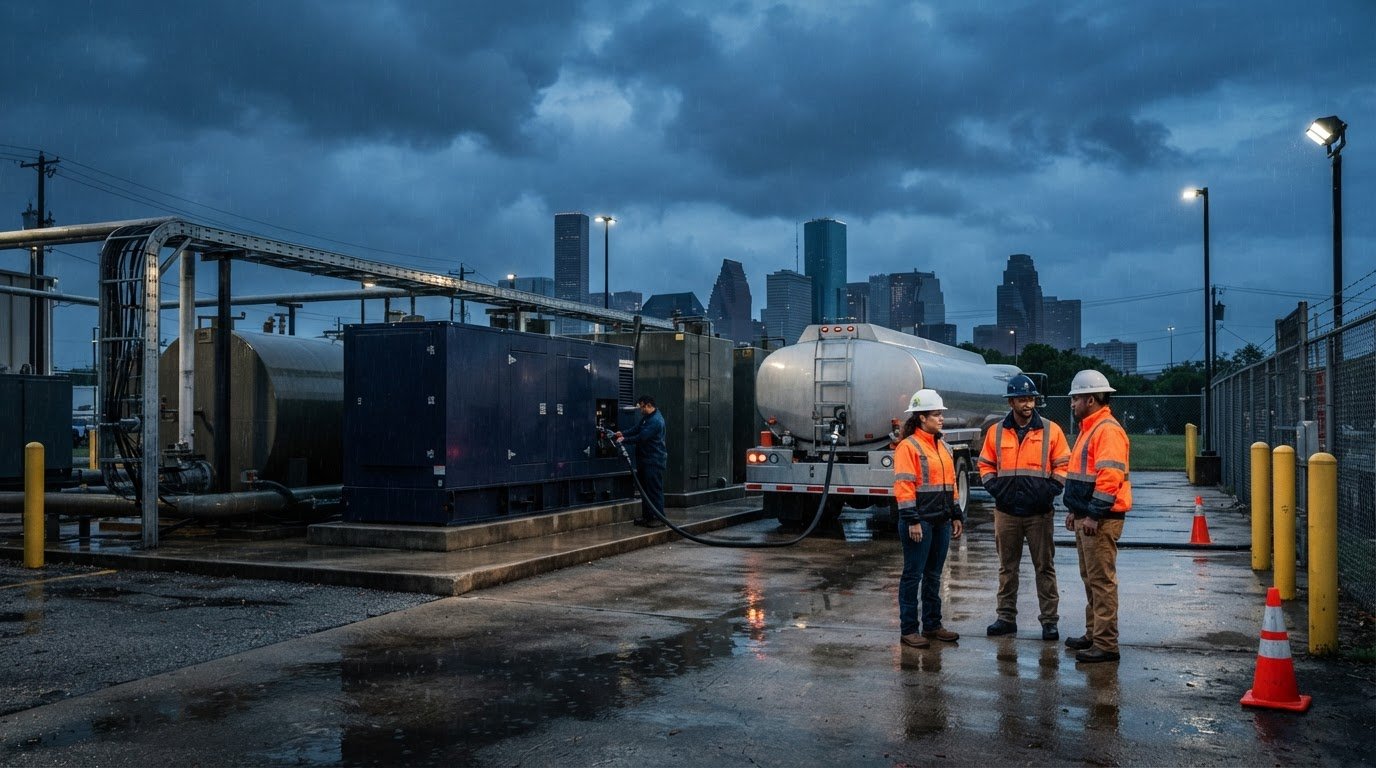
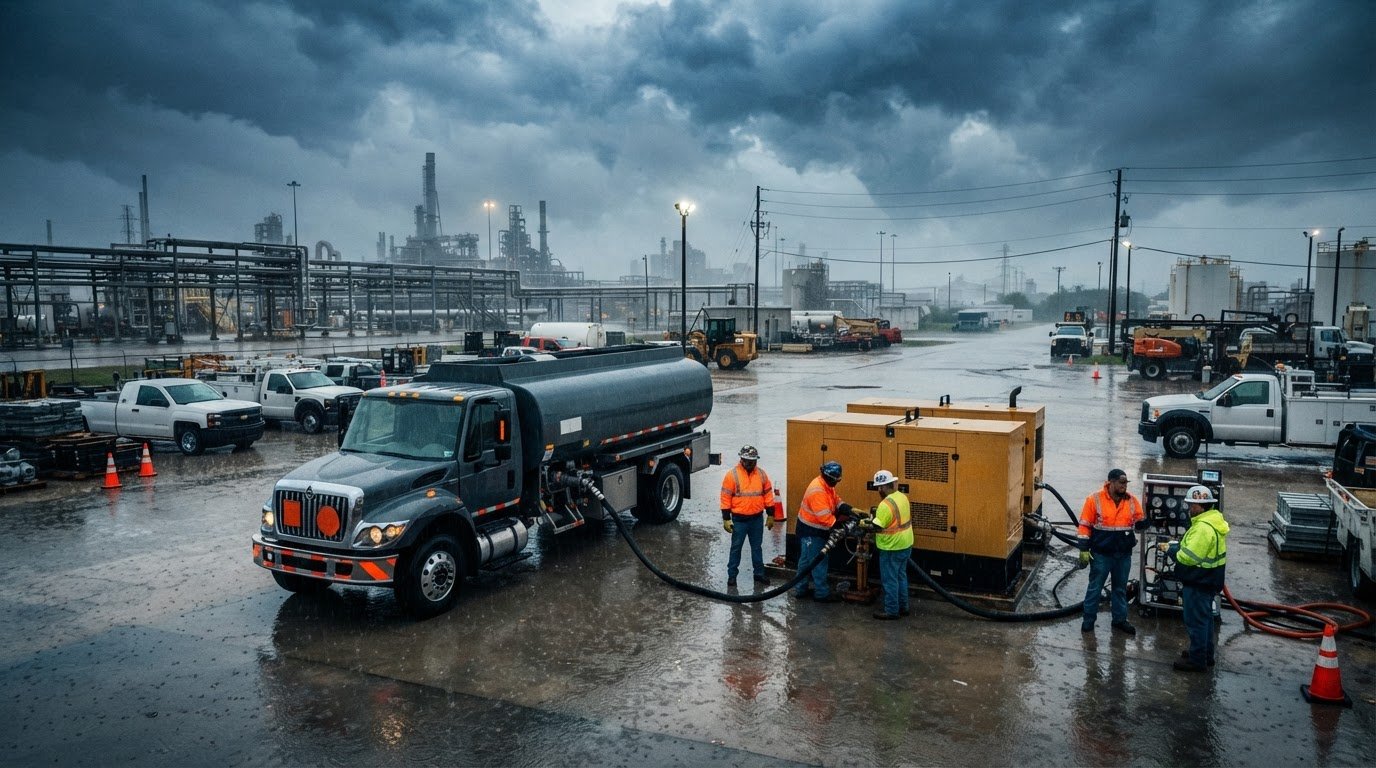
Houston's industrial corridor faces recurring environmental threats. Tropical storms and power grid instability can sever traditional supply lines for extended periods. Maintaining a 24/7 reserve is a mandatory standard for protecting high-value industrial assets. During hurricane season, logistics become a battle of foresight. A robust strategy includes integrating generator fueling services into your facility's backup power plan. This ensures that when the grid fails, your site's critical systems remain online. Reliable energy during these high-stakes moments preserves both your operational continuity and your professional reputation.
The Economics of Bulk On-Site Reserves
The financial impact of fuel management extends far beyond the raw cost of the commodity. Consider the "soft costs" of equipment idling and the labor hours lost during retail refueling trips. Utilizing fuel tank rentals provides a flexible alternative to permanent infrastructure, allowing you to scale capacity as project demands shift without heavy capital expenditure. When you control your supply, you control your schedule.
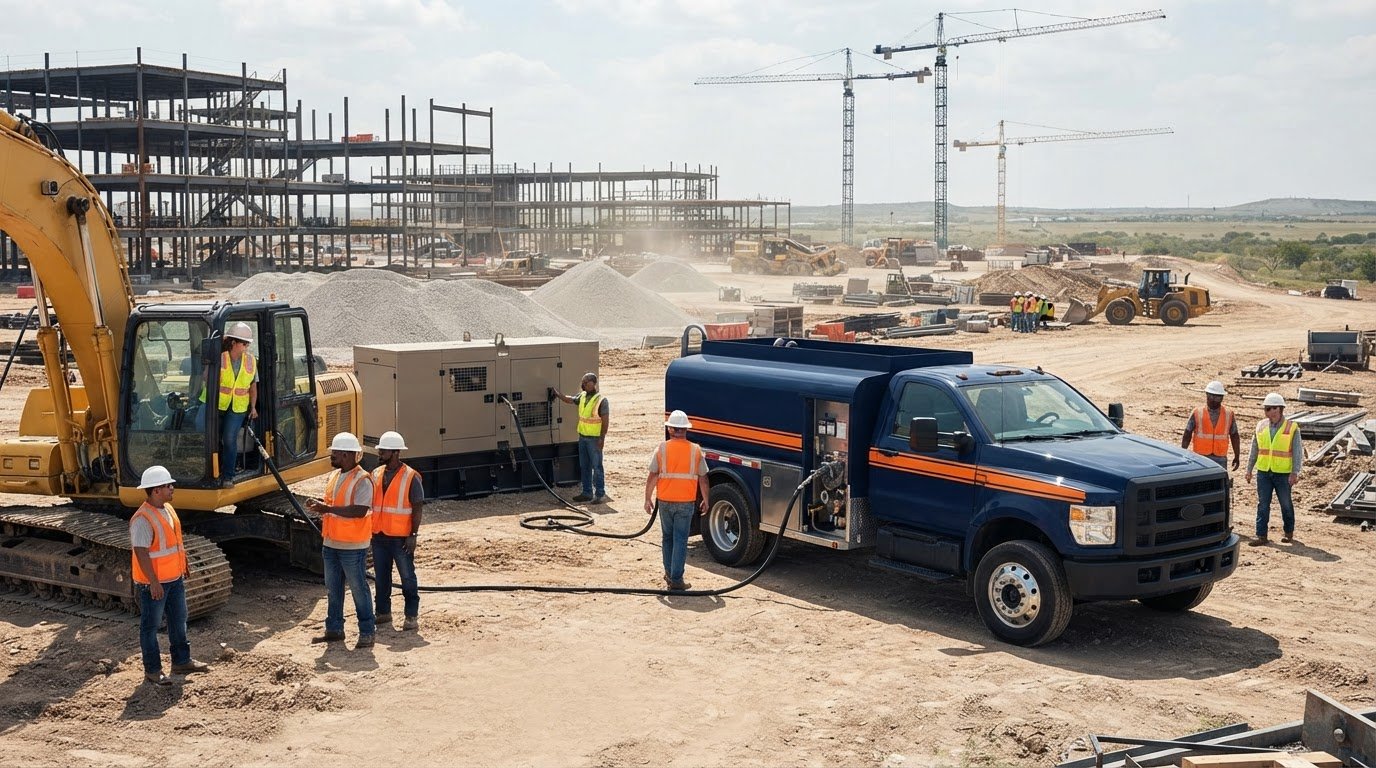
- Reduced Downtime: Keep heavy equipment on the line by bringing the fuel directly to the machinery through equipment fueling service.
- Bulk Advantage: Leverage large-scale diesel delivery to avoid the price spikes common at retail pumps during local shortages.
- Operational Autonomy: Decouple your daily production schedule from external supply chain fluctuations and fuel shortages.
- Administrative Clarity: Streamline tracking and compliance reporting through a single, dedicated industrial partner.
Operational autonomy means you no longer wait for the market to stabilize before making critical production decisions. This level of discipline ensures your facility remains productive while competitors are sidelined by logistical gaps. By treating fuel as a strategic asset rather than a utility, you build a foundation of stability that supports long-term growth in the Houston market.
Technical Specifications: Choosing the Right Portable Fuel Tank for Your Site
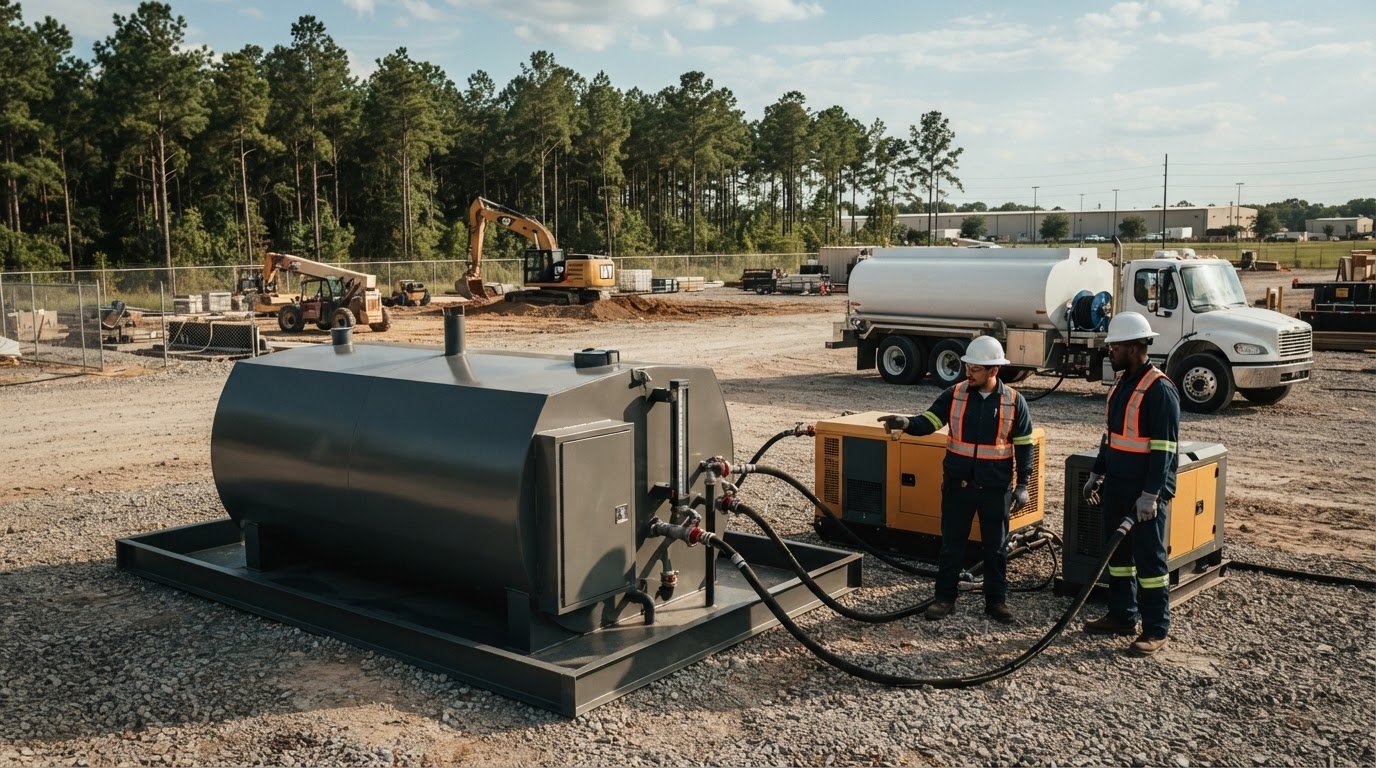
Selecting the correct hardware is the foundational step in implementing integrated fuel management for industrial sites Houston. Industrial durability requires strict adherence to UL-142 and API standards to prevent structural failure under pressure. These benchmarks ensure the tank can withstand the rigorous conditions of Houston’s high-humidity industrial zones. High-quality portable units feature integrated pumps, precision meters for accurate inventory tracking, and heavy-duty filtration systems that remove water and sediment before they reach your machinery.
Double-Wall vs. Single-Wall Storage Solutions
Double-wall, or bunded, designs are the industrial standard for spill prevention across Texas facilities. These tanks feature a built-in secondary containment layer that captures primary tank leaks before they reach the ground. This design is critical for maintaining compliance with 30 TAC Chapter 334 regulations and meeting the stringent Houston Fire Code requirements for Class II liquids. While single-wall tanks might appear cost-effective initially, the added logistical burden of constructing and maintaining external containment berms often negates those savings. The UL-142 standard establishes the requirements for the design, fabrication, and inspection of steel aboveground tanks for flammable and combustible liquids. Choosing a double-wall configuration provides the peace of mind that your site remains protected against environmental accidents and regulatory fines.
Capacity and Flow Rate Requirements
Capacity planning involves matching tank size to your fleet's daily burn rate to avoid frequent, emergency refueling. Portable assets typically range from 500 to over 10,000 gallons depending on the intensity of the work. For many regulated ASTs in Texas, those with a capacity of 1,100 gallons or less are generally exempt from registration, which simplifies the setup process for shorter-term projects. Fleet managers must also evaluate pump speeds to ensure efficiency. Heavy construction machinery requires high-flow systems, often exceeding 20 gallons per minute, to minimize refueling windows and maximize uptime. Conversely, smaller assets or backup generators may only require standard flow rates for consistent performance.
Modern industrial engines also require a steady supply of Diesel Exhaust Fluid to stay operational. Integrating DEF fluid delivery alongside your diesel storage prevents the logistical friction of managing two separate supply chains. Selecting specialized fuel tank rentals allows you to customize your hardware setup based on current project scope without long-term capital commitments. This flexibility is essential for Houston facility managers who need to scale operations quickly. If you are unsure which configuration fits your specific Houston site requirements, consult with a fueling specialist to review your equipment list and consumption patterns.
Navigating Houston Compliance: Regulations for Industrial Fuel Storage
Executing integrated fuel management for industrial sites Houston requires a deep understanding of overlapping federal, state, and local mandates. In the Houston Ship Channel and surrounding industrial corridors, regulatory oversight is intensive. Failure to maintain strict adherence to these rules can lead to significant fines or immediate operational shutdowns. Facility managers must treat compliance as a core component of their logistical strategy, ensuring every tank placement and delivery protocol meets the current 2026 standards.
TCEQ and SPCC Compliance Framework
Federal law mandates a Spill Prevention, Control, and Countermeasure (SPCC) plan if your facility's total aboveground oil storage capacity exceeds 1,320 gallons. This plan must be site-specific and often requires certification by a professional engineer. For temporary fuel tank rentals, you must ensure the hardware meets 30 TAC Chapter 334 standards. TCEQ requires a construction notification via Form TCEQ-00495 at least 30 days before installing new regulated tanks. While ASTs with a capacity of 1,100 gallons or less are generally exempt from state registration, larger vessels exceeding 21,000 gallons must now prepare for the Aboveground Storage Vessel Safety (ASVS) Program. The registration deadline for these existing vessels is September 1, 2027, with TCEQ workshops scheduled throughout 2026 to assist with the transition.
Local Houston Fire Codes and Safety Zones
Local enforcement by the Houston Fire Marshal adds a granular layer of safety requirements. Per the Houston Fire Code, a permit is mandatory for storing Class II or IIIA liquids, such as diesel, in quantities exceeding 60 gallons outside. The code defines a container as a vessel of 60 gallons or less, meaning anything larger triggers specific permit protocols. Tanks must adhere to strict setback distances from buildings, property lines, and potential ignition sources as defined by NFPA 30 standards. You must also maintain clear, unobstructed access for emergency fuel delivery vehicles. This ensures that during a crisis, high-volume trucks can reach your storage area without maneuvering through hazardous bottlenecks.
Every storage unit must display NFPA 704 diamonds and appropriate safety placards to inform first responders of the specific hazards present. Maintain audit-ready documentation, including fuel delivery manifests, monthly inspection logs, and spill kit inventory records. This level of discipline ensures that when an inspector arrives, your facility demonstrates unwavering readiness and total control over its logistical risks. By centralizing these records, you decouple your production schedule from the stress of surprise environmental audits.
Operational Logistics: Managing On-Site Fuel Inventory and Refilling
Integrated fuel management for industrial sites Houston transitions from a conceptual plan to a high-performance standard through daily logistical discipline. Managing on-site fuel requires more than just a full tank; it demands a systematic approach to inventory tracking and quality preservation. Traditional manual dipping methods are increasingly being replaced by automated telemetric monitoring systems. These systems provide real-time data, allowing you to establish a refilling cadence that prevents the tank from reaching the bottom where sediment contamination typically settles. By integrating your storage hardware with equipment fueling services, you can move fuel directly from your bulk reserve to individual machines without intermediate handling, maximizing site efficiency.
Automated Monitoring and Predictive Refilling
Telemetric tank monitors eliminate the guesswork of fuel procurement. These devices transmit volume data to a central dashboard, triggering low-level alerts based on your facility's specific consumption patterns. This predictive approach prevents operational run-outs and optimizes delivery routes, ensuring you only receive fuel when it is needed. Automated usage reporting also reduces the administrative burden on your staff, providing clear data for accurate invoicing and environmental reporting. This level of foresight allows you to maintain a lean but secure supply chain that responds to actual demand rather than estimated schedules.
Maintaining Fuel Quality in Texas Humidity
A successful strategy for integrated fuel management for industrial sites Houston must account for the physical reality of the Texas coast. Houston’s high-humidity environment presents unique challenges for fuel stability. Water accumulation from atmospheric condensation can lead to microbial growth, which clogs filters and damages engine injectors. Regular tank inspections and the use of high-micron filtration are essential for maintaining fuel integrity. You should also consider the role of fuel polishing and specialized additives to stabilize reserves during periods of low usage. Referencing our Construction Site Fuel Delivery Houston guide can provide additional site maintenance strategies to protect your heavy equipment. If your current system lacks real-time visibility or a reliable refilling schedule, contact our logistics team to discuss upgrading your inventory monitoring and delivery cadence.
React Fueling: Integrated Storage and Diesel Delivery Solutions in Houston
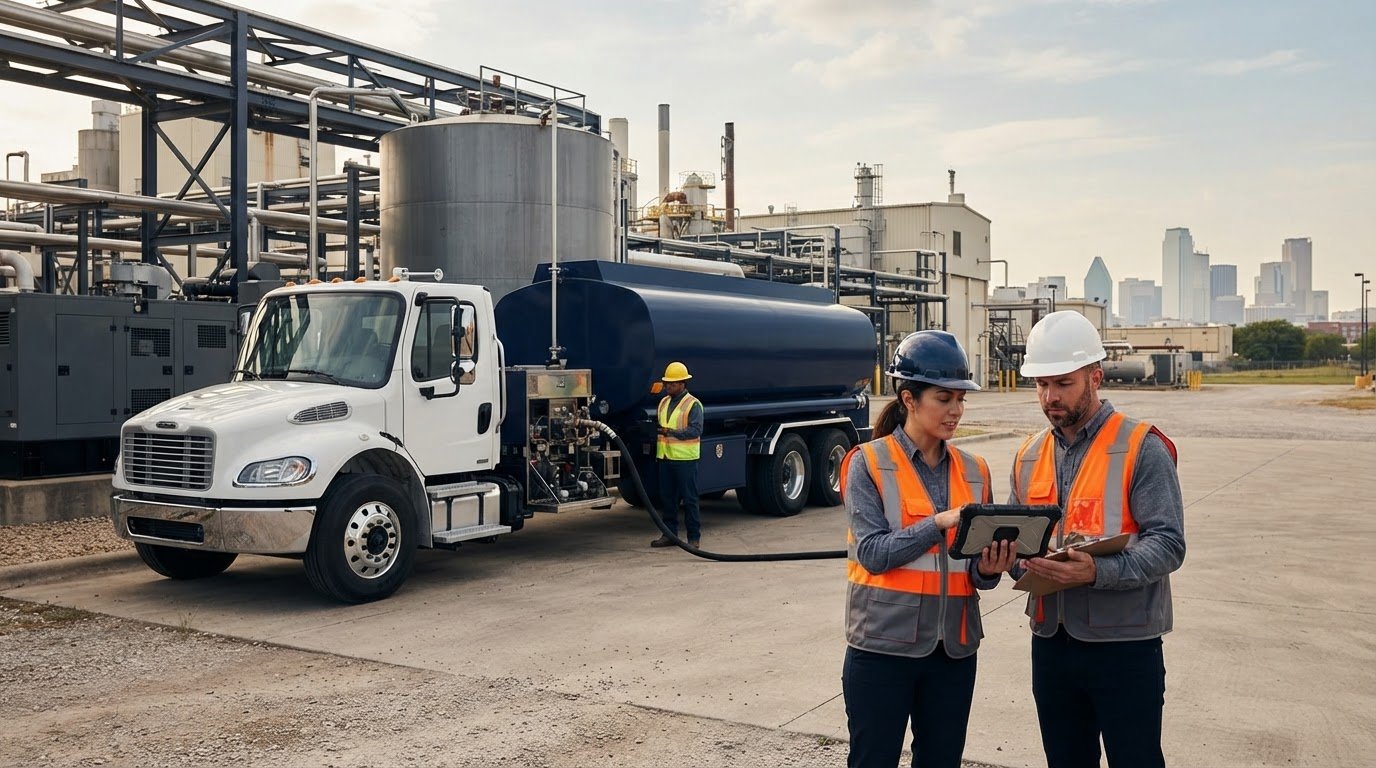
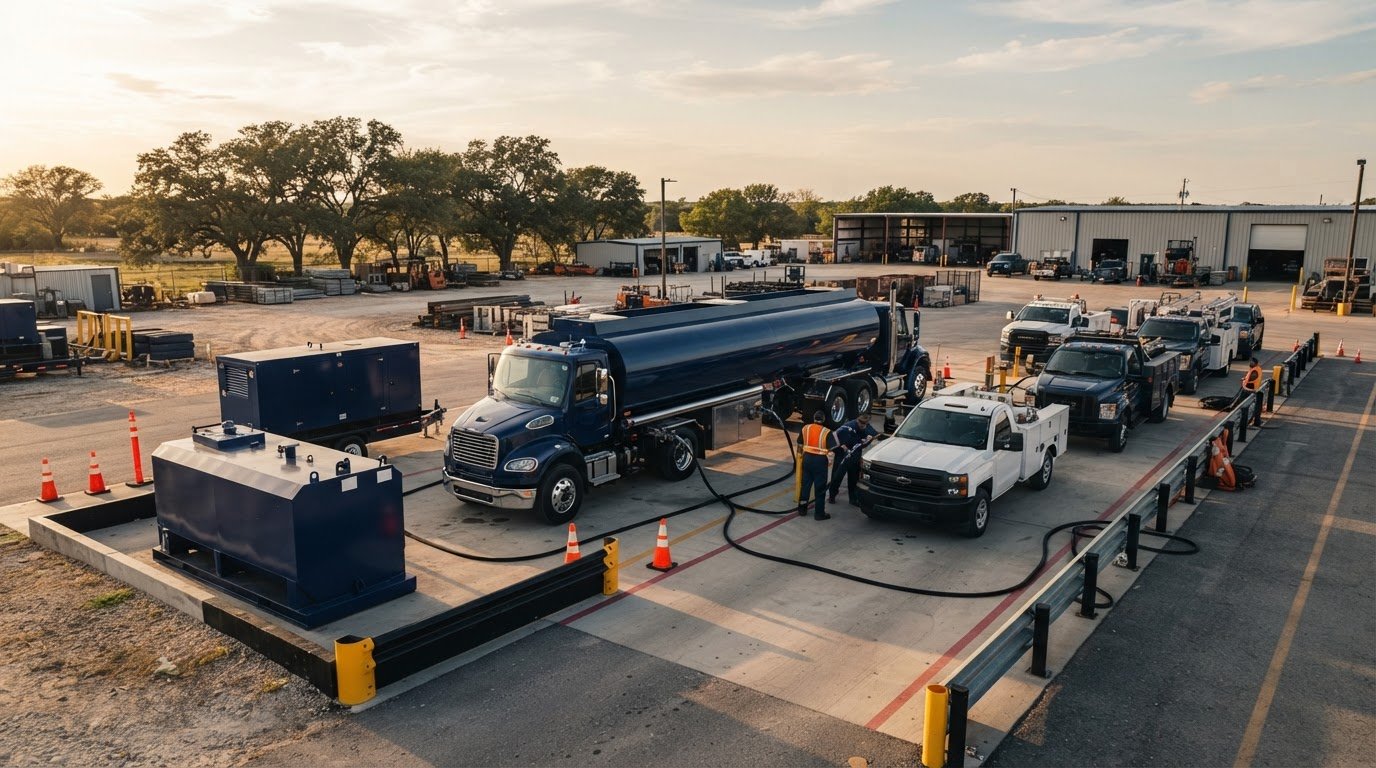
React Fueling delivers the precision logistics and high-spec hardware required for successful integrated fuel management for industrial sites Houston. We provide flexible fuel tank rentals tailored to fit diverse industrial footprints, from tight urban manufacturing zones to sprawling construction sites. Our service model eliminates the gap between storage and supply by linking every on-site asset directly to our 24/7 diesel delivery network. This integration ensures your facility remains self-sufficient, regardless of external market disruptions or infrastructure failures. We provide professional setup and ongoing compliance support, serving as a dedicated Houston-based partner that understands the high stakes of your operation.
The React Fueling Advantage for Houston Industry
Our team brings specialized knowledge of the Texas industrial landscape, maintaining a strong presence in Houston, Magnolia, Dallas, and Austin. We understand the physical reality of local operations, from navigating Ship Channel traffic to managing the humidity-related fuel degradation discussed in previous sections. React Fueling operates with a sense of urgency, utilizing dedicated equipment for the rapid deployment of storage assets during critical windows. We build custom fueling schedules that mirror your facility’s specific operational shifts. This discipline ensures your machinery is powered exactly when your crew is on the clock, eliminating the administrative friction of traditional fuel procurement.
During a 48-hour grid outage in the Houston metro area, a major manufacturing plant maintained 100% uptime through our integrated approach. By utilizing our pre-staged tank rentals and high-priority generator fueling services, the facility bypassed the regional power failure that sidelined nearby competitors. This level of readiness protected their production deadlines and prevented the significant financial loss associated with emergency equipment restarts.
Getting Started: Your On-Site Storage Strategy
Developing a resilient energy strategy begins with a professional site assessment. Our specialists evaluate your equipment list, daily burn rates, and local fire code setback requirements to determine the ideal tank placement and capacity sizing. This assessment ensures your storage solution is both compliant with TCEQ standards and optimized for your fleet's consumption patterns. Combining on-site storage with our commercial diesel delivery in Houston reliability guide creates a closed-loop system that protects your bottom line. Contact the React Fueling team today to secure your energy logistics and ensure your facility never stops moving.
Securing Your Houston Industrial Site for 2026 and Beyond
Mastering integrated fuel management for industrial sites Houston requires a disciplined approach to both technical hardware and regulatory standards. You've seen how double-wall storage and telemetric monitoring provide the operational autonomy needed to survive regional grid instability and price volatility. Maintaining compliance with the 2026 TCEQ mandates and local fire codes ensures your facility remains protected from the legal and environmental risks that sideline less prepared competitors. By treating fuel as a strategic asset rather than a variable utility, you build a foundation of unwavering readiness.
React Fueling stands ready as your vigilant partner, providing the local Houston logistics expertise required to navigate these complex requirements. We offer 24/7 emergency support and utilize TCEQ-compliant equipment to keep your production moving through any scenario. Don't wait for the next supply chain shock to test your facility's resilience. Take control of your energy future today by establishing a reliable, on-site reserve that supports your long-term growth.
Frequently Asked Questions
Do I need a permit for on-site fuel storage in Houston?
Yes, a permit from the Houston Fire Department is mandatory for storing Class II or IIIA liquids, such as diesel, in quantities exceeding 60 gallons outside. This requirement ensures that your tank placement adheres to safety setback distances and ignition source clearances defined by local fire codes. You should also verify if your specific industrial zone has additional local restrictions. Maintaining a current permit is a vital part of integrated fuel management for industrial sites Houston to avoid operational shutdowns.
What is the difference between single-wall and double-wall fuel tanks?
Double-wall tanks feature a built-in secondary containment layer that captures leaks from the primary vessel before they reach the environment. Single-wall tanks lack this integrated protection and typically require external berms or liners to meet Texas spill prevention standards. For most industrial sites, double-wall units are the preferred choice because they simplify compliance and reduce the risk of costly environmental remediation. They are often referred to as bunded tanks in industrial specifications and meet UL-142 standards.
How often should I have my on-site fuel tank refilled?
You should establish a refilling cadence based on your facility's daily burn rate and total storage capacity. We recommend refilling when the tank reaches 25% to 30% capacity to prevent drawing sediment or water from the tank bottom into your equipment. Using automated telemetric monitors allows for predictive scheduling, ensuring you never face a run-out during peak production. This proactive approach maintains fuel quality and ensures your fleet remains productive without interruptions, even during regional supply chain shocks.
Does React Fueling provide the tank or just the fuel delivery?
React Fueling provides a comprehensive solution that includes both portable fuel tank rentals and scheduled fuel delivery. We offer various tank sizes to fit your site footprint, ensuring you have the hardware needed for a reliable reserve. Our team handles the initial setup and provides ongoing diesel delivery to keep your tanks replenished. This turnkey service allows facility managers to consolidate their energy logistics under a single, reliable Houston partner while maintaining full operational autonomy.
What are the environmental requirements for portable fuel storage in Texas?
Texas environmental regulations require that regulated petroleum storage tanks be registered with the TCEQ if they exceed 1,100 gallons. Additionally, federal SPCC rules apply if your site's total aboveground oil storage capacity exceeds 1,320 gallons. You must have a certified spill prevention plan and maintain monthly inspection logs to remain compliant. These requirements ensure that integrated fuel management for industrial sites Houston remains aligned with both state and federal environmental protection standards, protecting your facility from heavy fines.
Can I store both diesel and DEF in the same on-site storage area?
You can store diesel and Diesel Exhaust Fluid (DEF) in the same storage area, but they must remain in separate, dedicated vessels. DEF is highly sensitive to contamination and will damage engines if mixed with diesel fuel. We provide both diesel and DEF fluid delivery to ensure your modern industrial engines stay operational. Using distinct, labeled tanks for each fluid prevents accidental cross-contamination and simplifies your site's logistical workflow while meeting the requirements of modern Tier 4 engines.
What happens if my on-site tank runs out of fuel during an emergency?
If your on-site tank runs out during an emergency, you should contact a provider with 24/7 response capabilities immediately. React Fueling specializes in emergency fuel delivery to minimize downtime during grid failures or storm events. We prioritize rapid deployment to keep your generators and critical machinery running. To prevent these high-stakes situations, we recommend using telemetric monitors that trigger automated alerts before your fuel levels reach a critical low, ensuring a seamless refilling process.
How do I ensure my on-site fuel stays clean in the Houston humidity?
Maintaining fuel cleanliness in Houston’s high humidity requires regular tank inspections and high-micron filtration systems. Atmospheric condensation can lead to water accumulation, which promotes microbial growth and damages engine injectors. You should utilize water-separating filters and consider fuel additives or polishing for long-term reserves. Keeping your tanks at least 75% full also reduces the headspace where condensation forms, protecting your fuel integrity from the physical realities of the Texas coast and preventing equipment failure.
Recent Posts