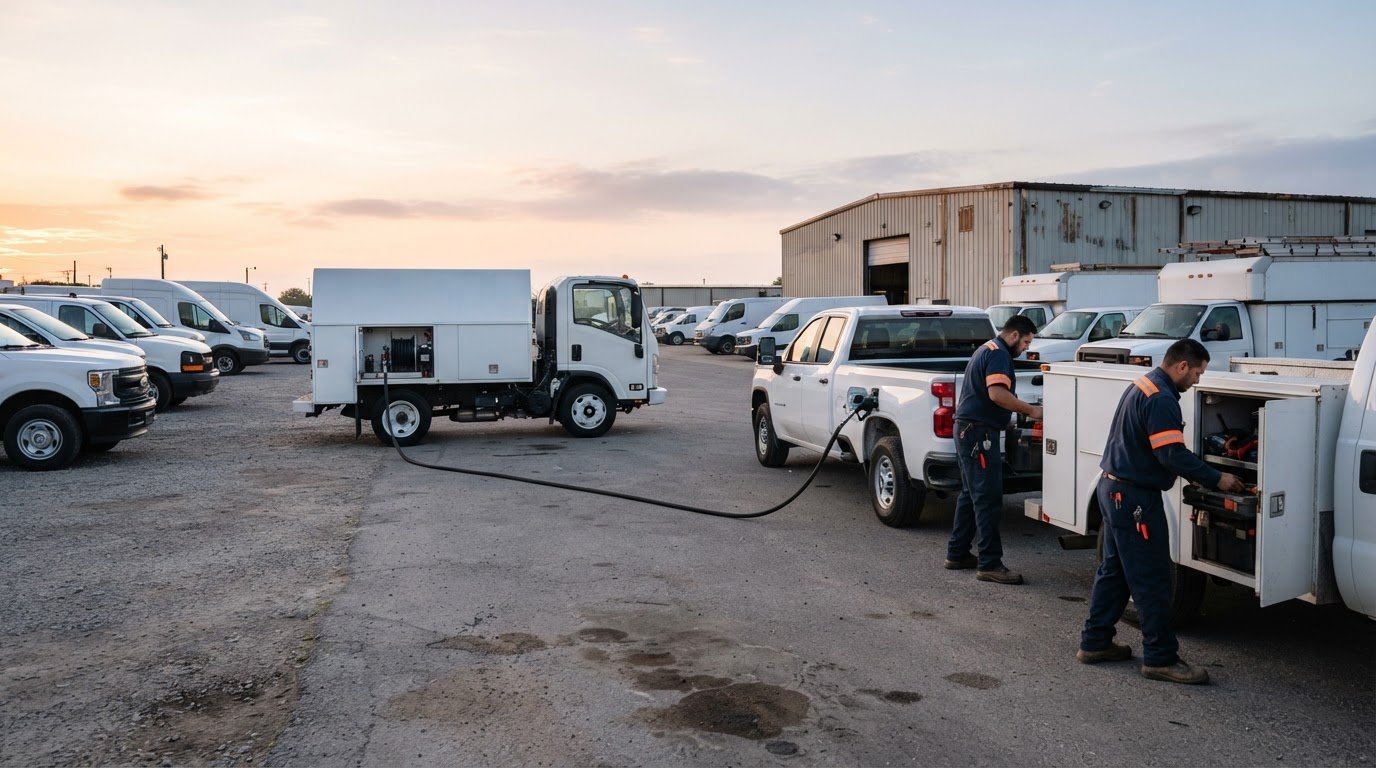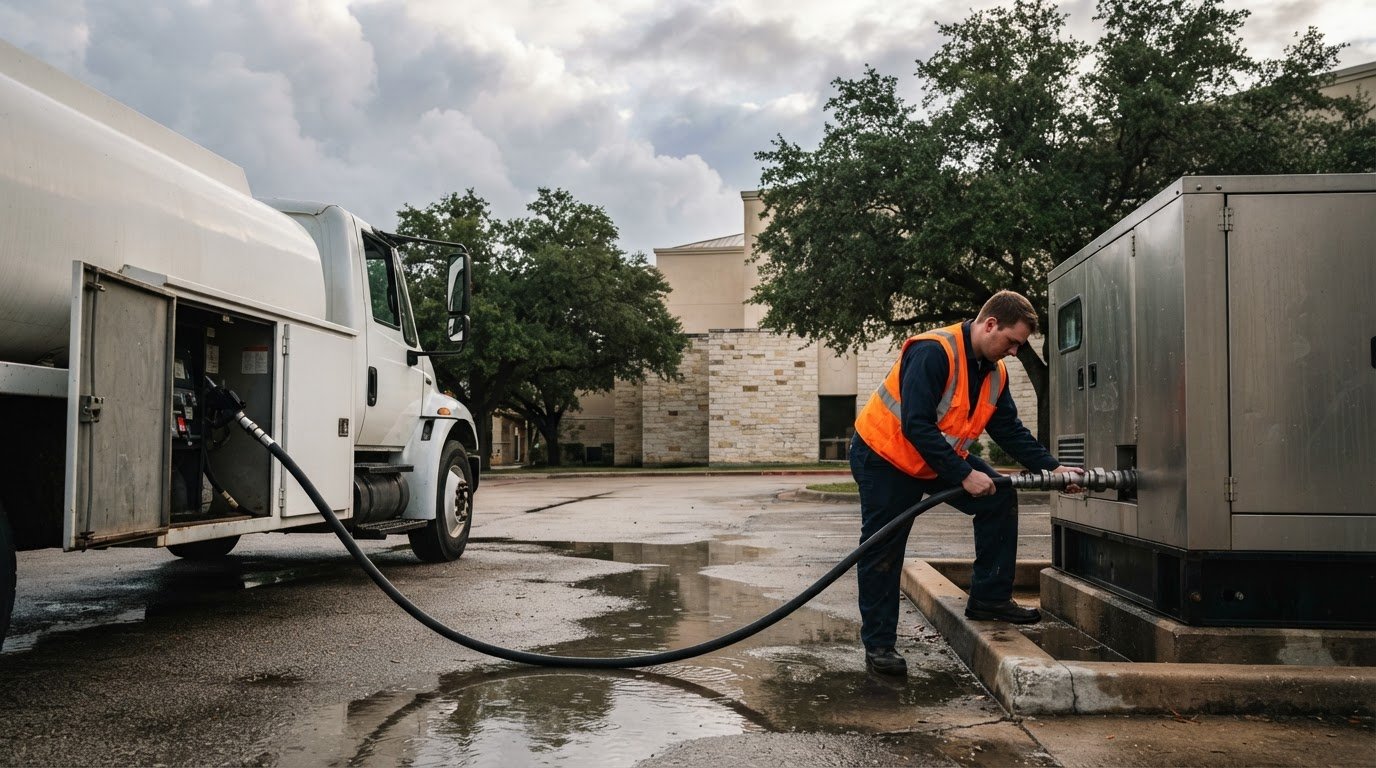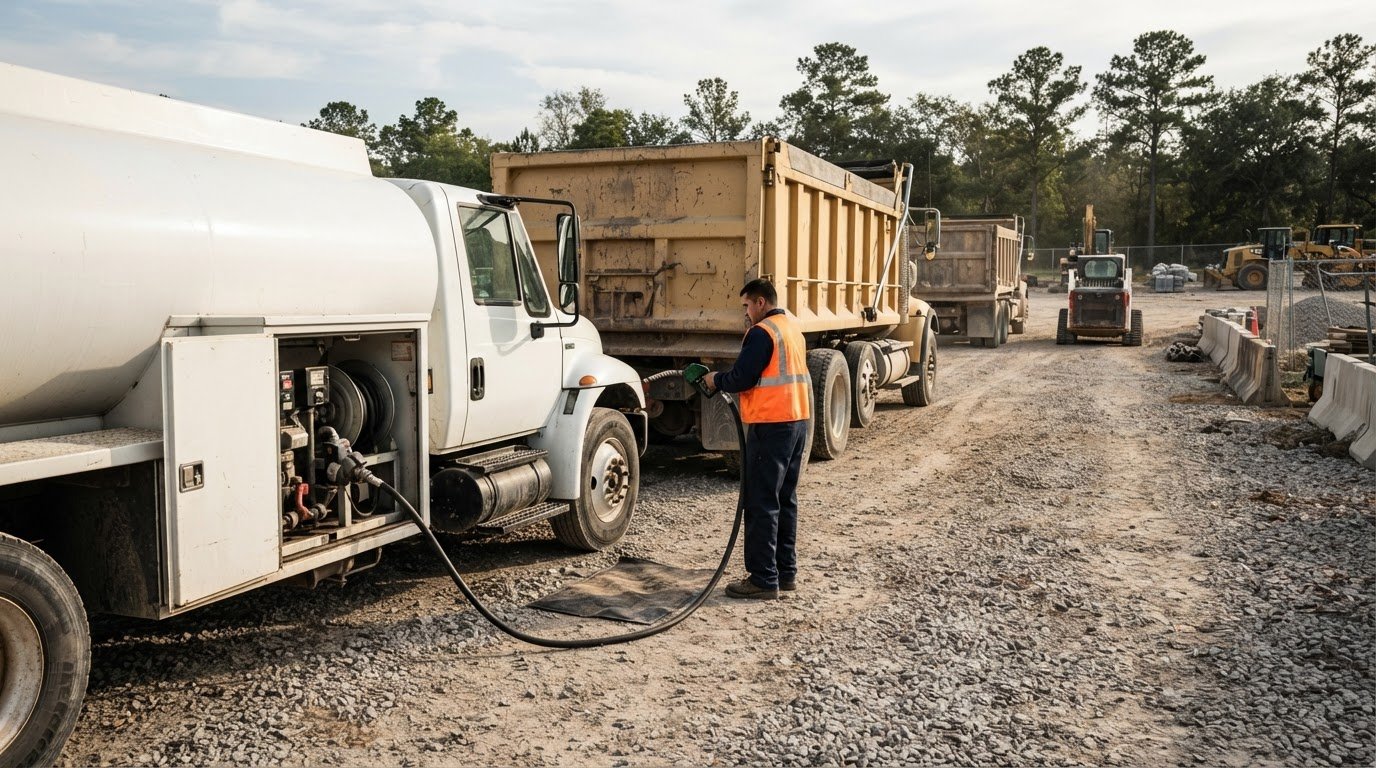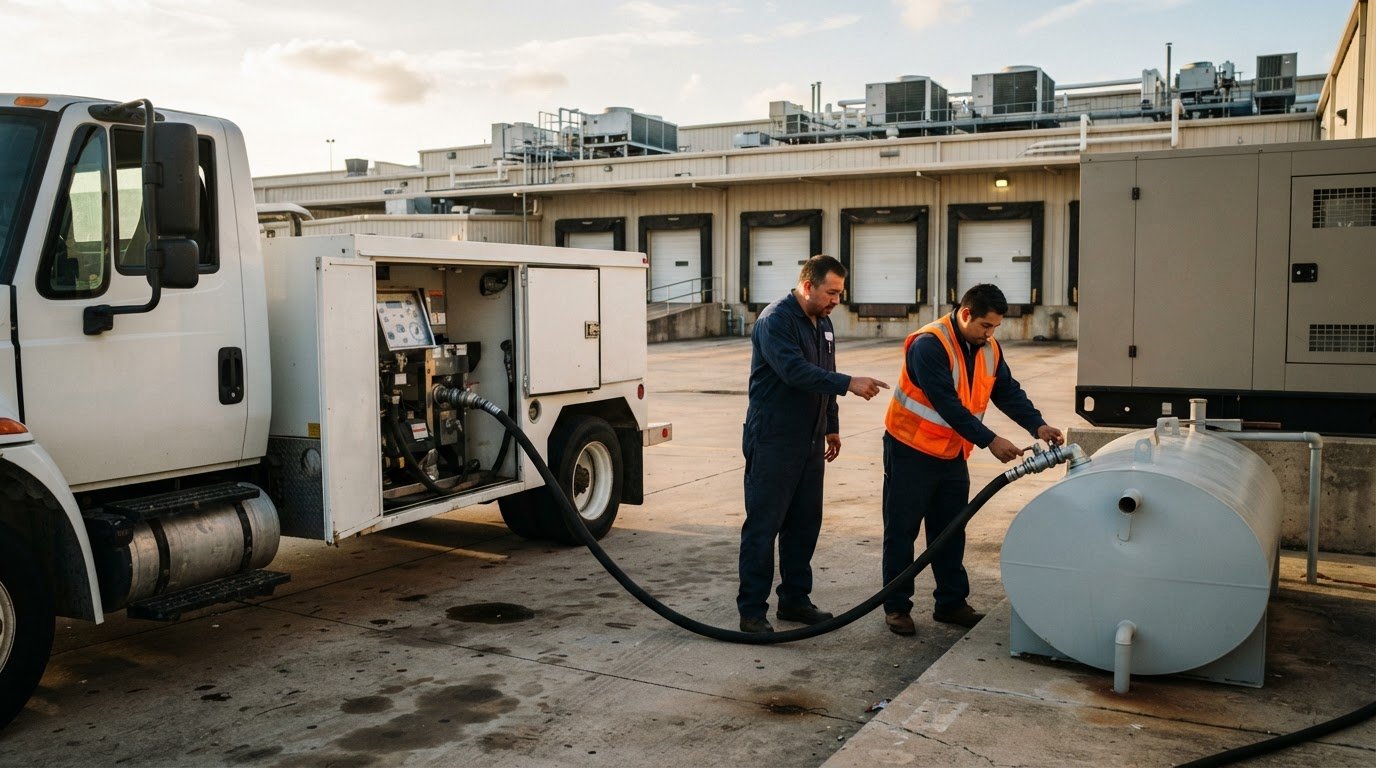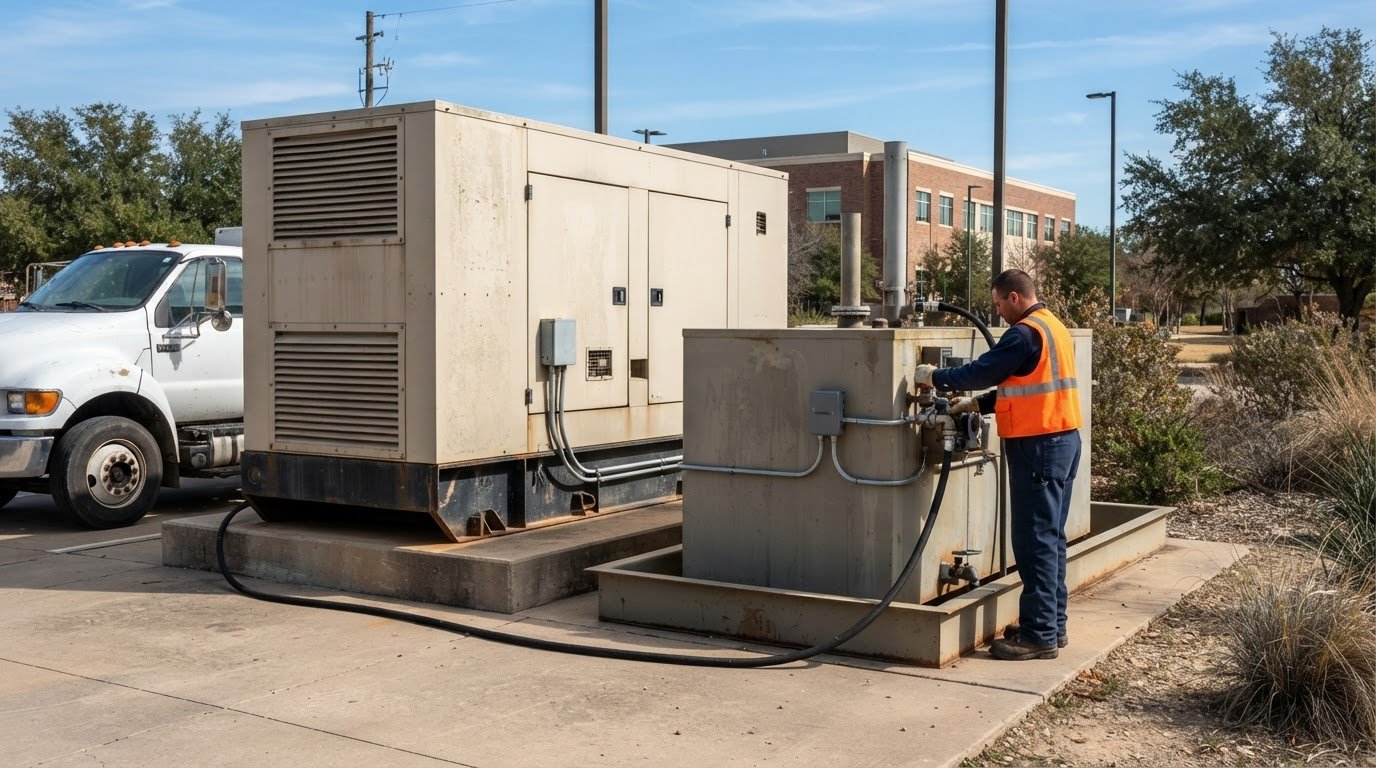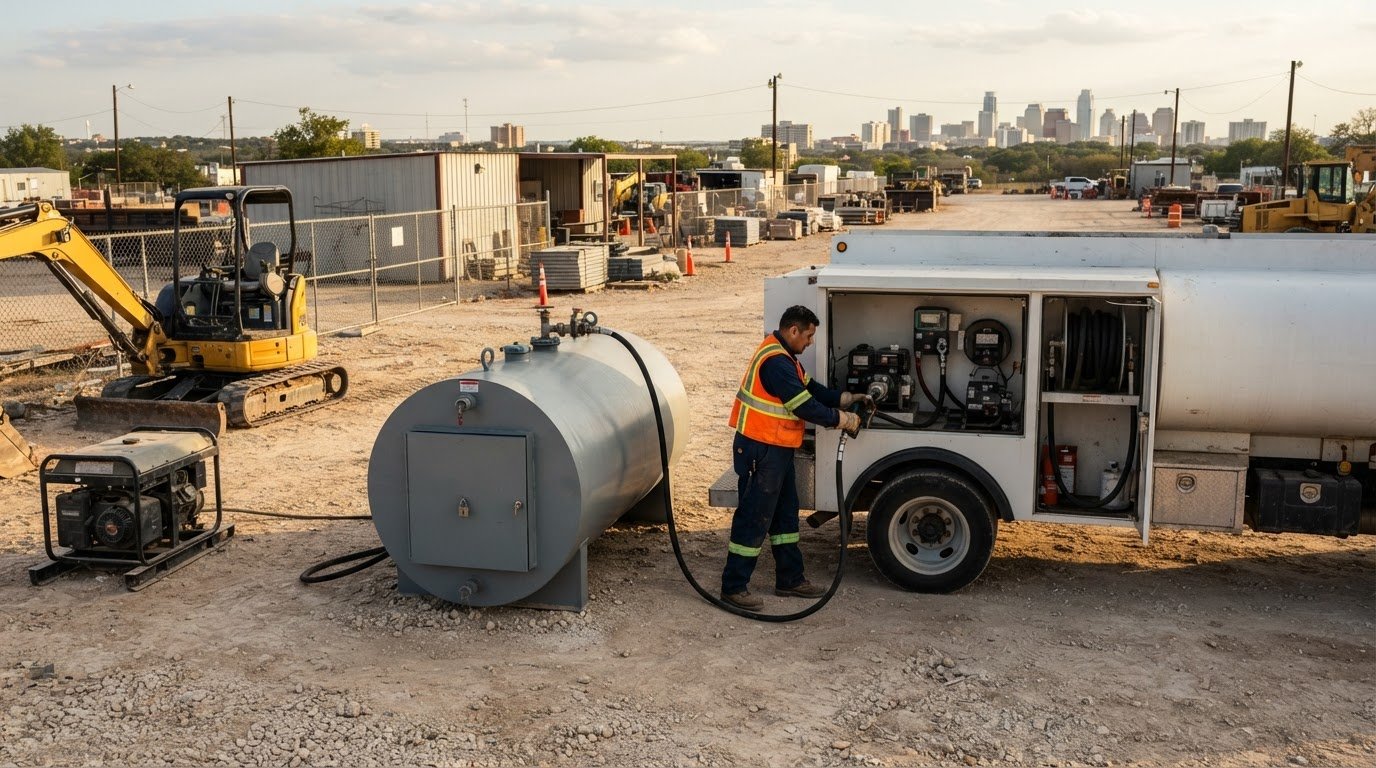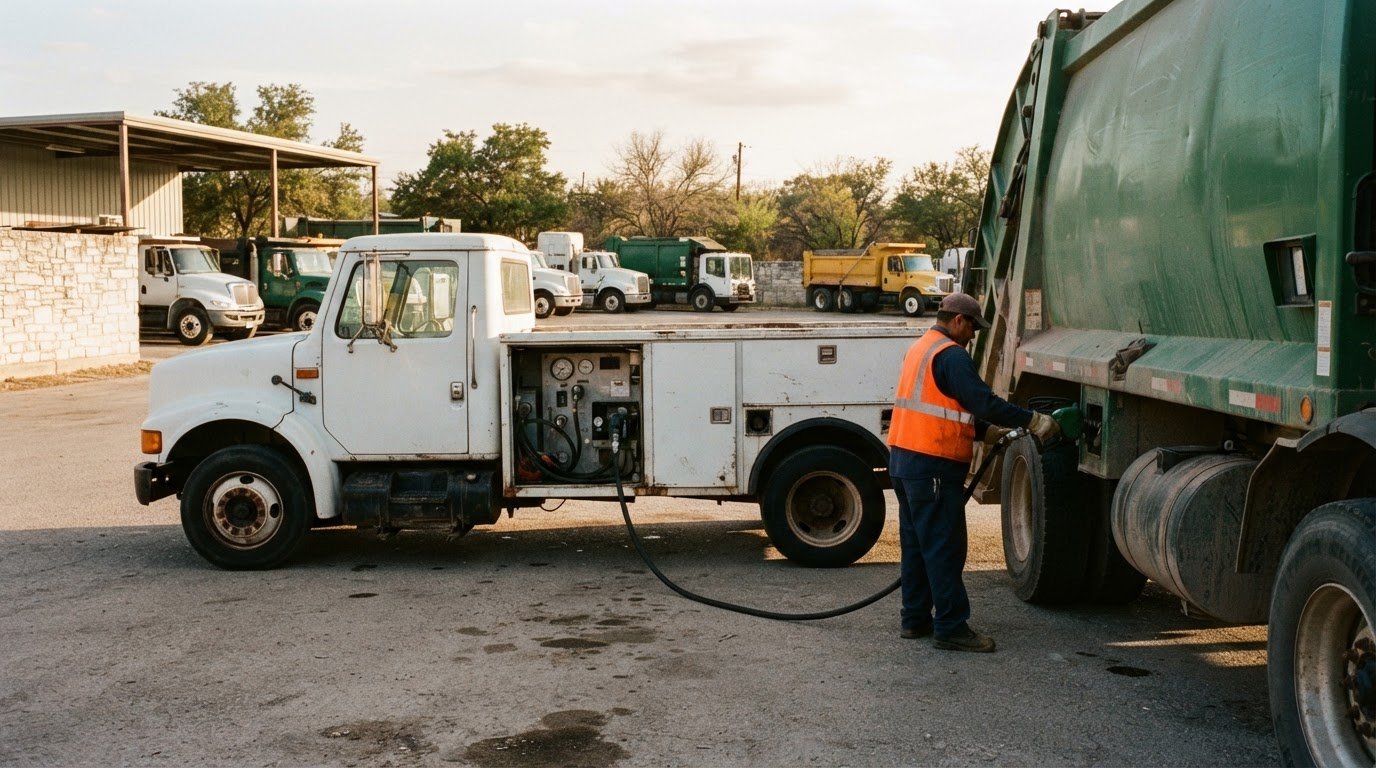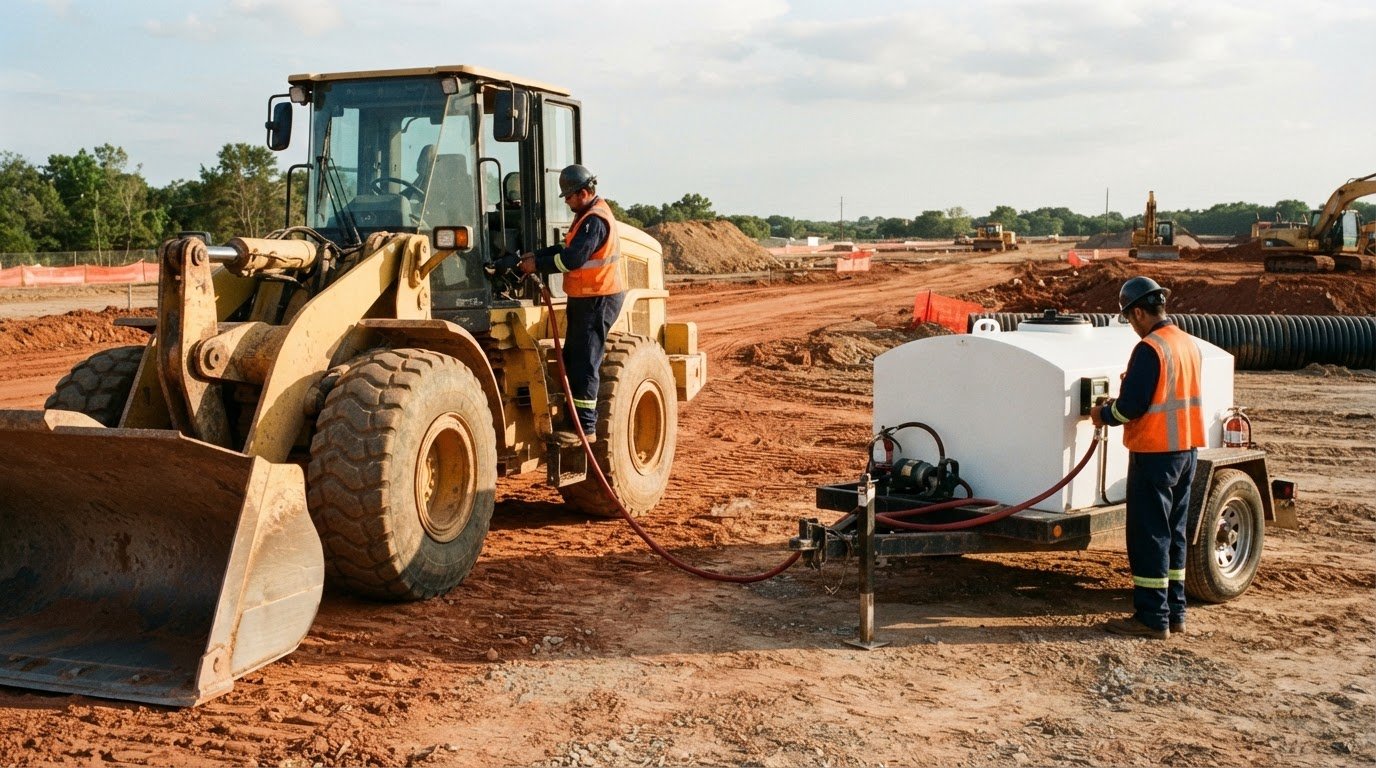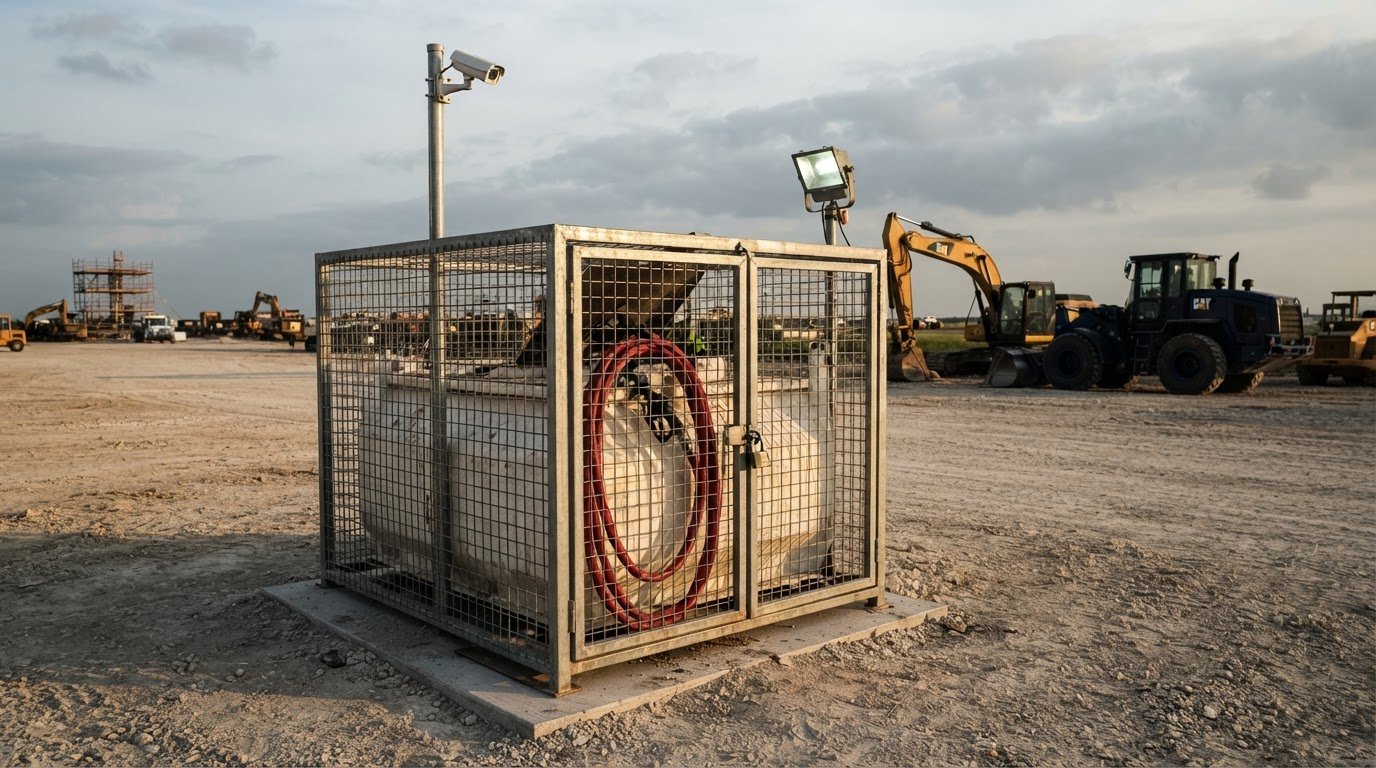
A Houston business should plan for 5 to 7 days of fuel for generators and essential vehicles, while keeping vehicle tanks and mobile reserves ready before a storm threatens the area. A fuel management plan for hurricane season in Houston should start at least a month before a storm, not when roads and fuel supplies are already under pressure.
A fuel management plan for hurricane season in Houston should do more than estimate generator use. Identify the equipment and vehicles that must stay operational, record on-site fuel levels during routine checks, and arrange backup deliveries before a storm disrupts access. Gas stations may run out of fuel or become inaccessible, so include everyday vehicle tanks as well as business reserves.
This guide explains how to estimate fuel needs, organize primary and backup deliveries, monitor stored fuel, and prepare vehicle tanks before a storm. Use these steps to build a practical plan that supports essential operations and gives your team a clear sequence to follow as conditions change.
Assessing generator, fleet, and backup-system fuel needs
Fuel shortages can stop generators and essential vehicles. Flooding can block access, while power outages can disrupt fuel handling. At Houston-area sites, assess flood exposure, drainage, contamination risks, and whether crews can safely reach stored fuel after a storm.
- List critical loads and vehicles. Identify which systems must operate during an outage, such as emergency lighting, communications, refrigeration, pumps, and security equipment. Add essential fleet vehicles and equipment needed for emergency response and recovery. A hurricane has sustained winds of at least 74 mph, according to the National Hurricane Center. Use that threshold as a reminder to plan for severe weather, not just a brief interruption.
- Estimate fuel use from operating demands. Record each generator’s expected run time and fuel consumption under the loads it must support. Include essential vehicles, backup systems, and equipment that may run concurrently. A baseline emergency reserve is 5 to 7 days of supply for generators and essential vehicles. Compare that reserve with the site’s actual operating schedule, then account for how outages lasting several days or weeks could affect demand.
- Match generator capacity to critical systems. Identify the equipment that requires continuous power before selecting a generator’s size and type. Separate essential loads from systems that can be shut down, and consider which equipment may start or operate at the same time. This inventory helps prevent nonessential demand from driving generator sizing while critical operations remain unsupported. Include the selected generator’s fuel needs in the site’s reserve calculation.
- Set a fuel-check schedule before landfall. Check generator levels during regular operational checks instead of waiting for a low-fuel alarm. The University of Houston checklist includes checking fuel for department vehicles and emergency generators 96 hours before landfall. Use that checkpoint to review levels, consumption assumptions, and vehicle readiness. Keep the records together so emergency management staff can quickly see what is available.
- Choose storage and inspection locations carefully. Consider Houston-area flooding, drainage, storm damage, and access routes when locating fuel storage. Keep tanks where crews can reach them after conditions permit, and avoid areas where standing water or debris could compromise access. Harris County guidance recommends operating generators at least 20 feet from doors and windows. After a storm, inspect the surrounding area from a safe position and look for visible damage, water intrusion, or signs of contamination before relying on stored fuel.
Fuel supplier sourcing and backup delivery agreements
Include supplier contacts and household essentials in the storm plan. Assign responsibility for coordinating fuel, define how updates will be shared, and prepare supplies to support staff and families before routes become difficult to use.
- Identify a primary fuel supplier and, if practical, an additional supplier located 50-100 miles away. A backup source can reduce reliance on one delivery route if tropical storms disrupt local access. Record the fuel type, delivery location, site access instructions, and the person authorized to coordinate each delivery. Include these documents in the emergency plan, where designated staff can find them.
-
Set Fuel Supplier Communication Protocols
Assign a coordinator to share site access details, fuel requirements, and changing delivery priorities with suppliers. Keep a current contact list and record updates, including delivery status and route changes. Agree on a backup communication method in case normal channels fail. During storm preparation, avoid relying on a single employee or an unrecorded verbal update.
-
Compare Backup Fuel Options
Match the fuel type to the equipment and supply infrastructure already in place. Gasoline and diesel work with compatible engines; propane requires suitable storage and equipment, while natural gas depends on a connected supply line. Don’t choose a fuel type based only on preference. Check compatibility, storage arrangements, and whether the supply can support the equipment during an outage.
-
Find Fuel During and After a Hurricane
Use local emergency management updates and fuel retailers’ current station outage maps, when available, to find operating stations. Check for updates before traveling because conditions and accessible routes can change after a storm. Follow officials’ instructions, avoid flooded roads, and account for damaged infrastructure during recovery. Houston residents returning after an evacuation should refuel before heading back.
- Prepare supplies for people and pets. Store emergency food and water separately from business fuel reserves. Houston-area emergency planning calls for at least 1 gallon of water per person daily for 3 to 7 days, with food supplies for 3 to 7 days. Set aside pet food, water, medications, leashes, carriers, and veterinary documents. Keep these items accessible if staff must leave home or change work arrangements.
For a commercial site coordinating fuel needs ahead of a storm, use the fuel delivery planning contact form to share site and delivery requirements.
Checking on-site fuel levels
Use routine inspections to track available fuel before severe weather threatens access. A written log helps staff compare tank readings, generator use, and delivery records.
- Set a recurring inspection schedule. Check diesel generator fuel levels during regular operational checks rather than waiting for a low-fuel alarm. Bi-weekly checks by on-site personnel can help identify and address minor generator issues. Assign each inspection to a named role, such as the facilities lead, and record the date, tank reading, and equipment served. Keep the log where the next shift can find it.
- Record readings consistently. Use the same gauge or measurement method at each inspection, and record the reading alongside the tank identifier. Compare each level with the previous entry and the generator’s operating record. A falling level may indicate increased demand, a leak, or an inaccurate reading. Document the change and report it to the responsible facilities contact before it affects emergency operations.
- Review fuel against operating conditions. Compare available fuel with the generator’s actual workload, not just its idle condition. A test under load can reveal issues that an unloaded test may miss. Record which critical systems were running and whether fuel consumption matched expectations. This creates a practical baseline for interpreting later readings during a storm warning or extended power outage.
- Escalate irregular readings promptly. If a gauge drops unexpectedly, readings conflict, or fuel appears contaminated, don’t treat the record as a reliable estimate. Note the tank, equipment, time, and visible condition, then follow the site’s inspection and maintenance process. Keep staff away from damaged equipment and unsafe areas. Don’t wait for a low-fuel alarm to reveal a supply problem.
- Connect site checks to weather updates. Increase coordination as local officials issue storm information, and make the latest tank log available to the person managing operations. During a hurricane warning, staff may need to prioritize generator loads, prepare evacuation arrangements, or move to a shelter. Federal and local alerts can guide decisions, but site readings show how much fuel is physically available.
- Close each check with a clear handoff. Record the next inspection, any unresolved maintenance issue, and the person responsible for follow-up. For example, a shift report can note that a generator tank reading changed and needs review before the next operational test. Keep delivery records with inspection logs so staff can distinguish fuel received from fuel currently available on site.
Hurricane-season gas tank readiness
Prepare vehicle and mobile fuel reserves before storm conditions restrict access. Houston hurricane season runs from June 1 to November 30, so build readiness into routine operations.
- Start preparations before a storm forms. Begin hurricane fuel preparation at least a month before a hurricane hits. Use that time to identify vehicles that must remain available, assign refueling responsibilities, and establish a process for sharing weather updates. Houston’s hurricane season peaks between mid-August and late October, so a standing checklist is useful throughout the season. Keep it with other disaster documents where responsible staff can access it.
- Keep vehicle tanks from running low. Houston-area residents are advised to keep vehicle gas tanks at least half-full during hurricane season. For business fleets, make refueling part of routine readiness rather than waiting for a storm warning. A full tank gives drivers more flexibility if routes change or evacuation becomes necessary. Track which vehicles have been fueled and share their status with the person coordinating fleet operations.
- Top off reserves as landfall approaches. Businesses are advised to top off tanks and mobile fuel reserves 48 to 72 hours before hurricane landfall. Schedule this step before weather or access conditions limit movement. During hurricane warnings, gas stations can run out of fuel within hours. Keep local alerts active and follow updates from officials, so the team can adjust plans as storm timing or routes change.
- Set a final vehicle refueling checkpoint. The University of Houston pre-storm checklist calls for refueling university vehicles 24 hours before landfall. Use a similar final review for assigned business vehicles, without postponing earlier top-offs. Record each vehicle’s status and identify any that still need fuel. If evacuation is ordered, drivers should follow official instructions and avoid delaying departure for a refueling stop.
- Plan for safe return and household readiness. People returning to the Houston area after evacuation should refuel before returning. Keep emergency supplies ready alongside the vehicle plan, including water, medications, and non-perishable food. Secure loose outdoor items and bring lightweight objects indoors before a storm. Keep household supplies separate from vehicle fuel, and make sure staff know where to find the fuel-status record and emergency plan.
People preparing for a hurricane should keep their vehicle fuel tanks filled. Make this part of routine vehicle care during hurricane season, rather than a task that starts only when a warning arrives. Give each driver a clear way to report fuel status, and have the operations coordinator review the record. If a vehicle is assigned an essential task, make its readiness visible to the staff who may need it. This helps the team spot gaps early and decide who will address them.
Keep the process simple enough to follow as conditions change. Make sure drivers know where to record a fill-up and whom to notify if a vehicle cannot be made ready. Keep the fuel-status record with the emergency plan so it’s easy to find when normal routines are disrupted. Review the arrangement with staff before storm conditions develop, and keep responsibilities clear if assignments change. A consistent routine supports the wider vehicle plan without relying on a last-minute check.
How should fuel be safely stored and rotated during hurricane season in Houston’s heat and humidity?
Use a documented storage routine to protect fuel quality and support reliable generator operation. Assign inspections, track fuel movement, and address signs of water intrusion or tank damage promptly.
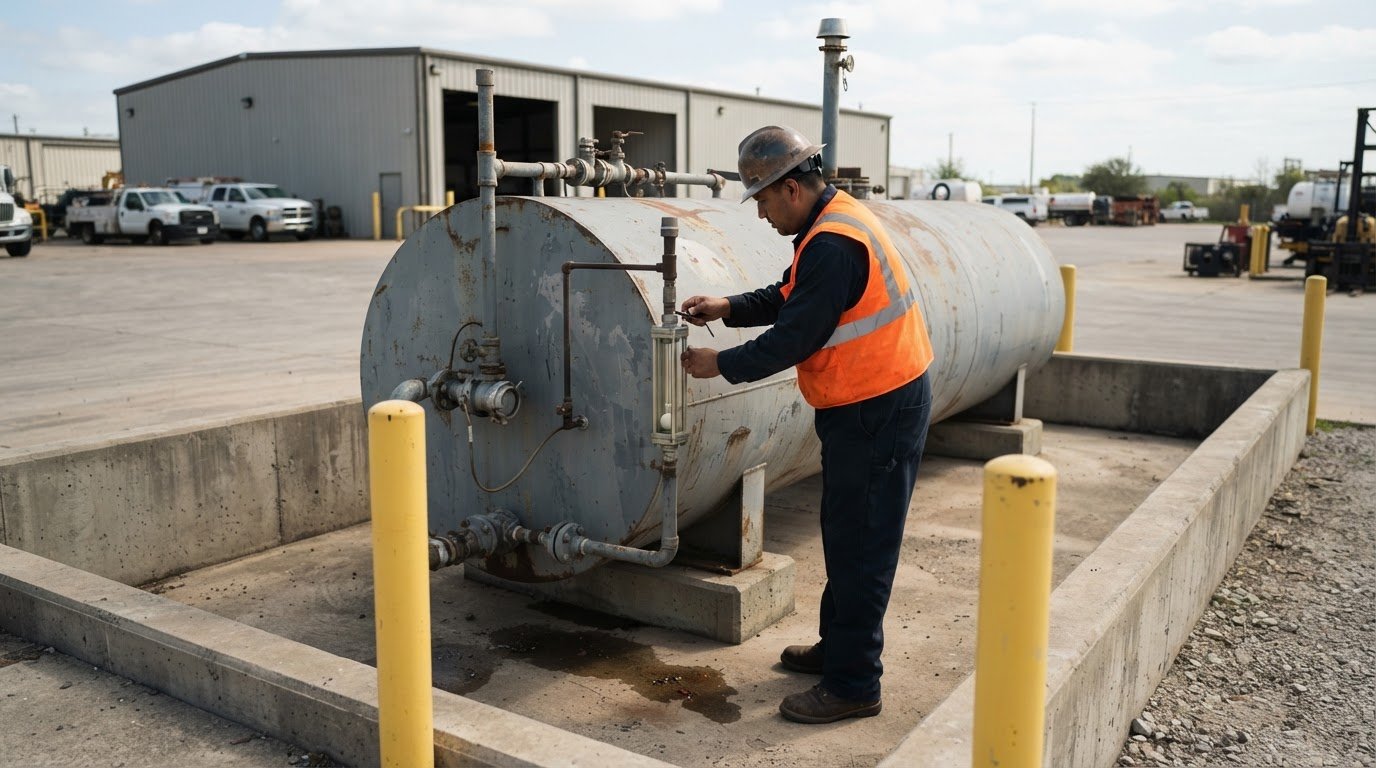
- Inspect tanks and surrounding areas. Check each storage tank, fill point, cap, hose, and connection for visible damage or leaks. Look for standing water, corrosion, loose fittings, or debris that could hinder access. Houston’s heat, humidity, and heavy rain make consistent inspections important. Record the tank location, inspection date, and any concerns for follow-up.
- Protect stored fuel from contamination. Test and treat stored diesel fuel to help prevent contamination and maintain fuel quality. During scheduled inspections, check for signs of water or sediment and document unusual appearances or test results. Don’t treat an uncertain reading as normal. Follow the site’s fuel-handling and maintenance procedures before returning questionable fuel to generator use.
- Rotate fuel with clear records. Log each delivery, test, treatment, and transfer by tank or container. Use these records to track which fuel has been stored longest and schedule rotation as part of normal operations. Businesses operating diesel generators are advised to test, rotate, and treat fuel to help prevent degradation and support readiness. Keep rotation records with generator inspection documents.
- Prepare storage areas for storm impacts. Review drainage and access around fuel storage before hurricane conditions arrive. Remove debris that could obstruct inspections or delivery, and note areas where floodwater could make tanks difficult to reach. Keep access routes clear for authorized personnel. If a storm damages a tank or affects its contents, document the condition and keep the affected fuel separate until assessed.
- Set responsibilities and action triggers. Name the person who checks tanks, maintains records, and reports concerns. Include a backup contact in case the primary person evacuates or cannot reach the site. Make sure the team knows how to report a leak, suspected contamination, or damage, and which site procedures govern the next steps. Review the process before hurricane season and again before forecast storms.
To discuss fuel support for generator operations, contact React Fueling about your site’s requirements.
Planning should also account for outage duration: Harris County residents should plan for possible power outages lasting weeks to months during a Category 4 hurricane, and days to weeks during a Category 2 hurricane. People preparing for a hurricane should stay informed about updates and evacuation orders. Businesses are advised to establish clear employee communication channels for before, during, and after a storm, so staff can receive relevant instructions as conditions change.
Hurricane emergency planning should include a destination in case evacuation is necessary, such as a relative’s or friend’s home or a public shelter. Include it alongside communication arrangements so employees know how evacuation decisions will be shared. Seniors should have at least a two-week supply of their medications. Add these considerations to the broader readiness plan alongside fuel inspections, records, and assigned responsibilities, so people can prepare for changing storm conditions and possible disruption.
React Fueling
React Fueling helps Houston businesses coordinate fuel for generators, equipment, and essential operations before hurricane conditions disrupt normal supply. Its diesel and fuel delivery, equipment fueling, and generator fueling services can support a plan built around your site’s requirements and operating priorities. Turn to React Fueling when you’re organizing planned fuel needs or responding to a disruption that affects on-site supply. Share your equipment, fuel requirements, and delivery location to help define the next step. For help aligning fuel delivery with your hurricane preparations, contact React Fueling.
Put Your Hurricane Fuel Plan Into Action
A fuel management plan for hurricane season in Houston works best as an active operating document, not a file created once and forgotten. Assign someone to review it, update supplier and site information, and communicate changes to the people responsible for critical operations. Clear ownership helps teams follow the same plan when conditions shift.
Use the next routine operations review to identify one practical improvement. Clarify who reports fuel-level changes, make delivery instructions easier to find, or add a handoff for staff who may be away from the site. After each review or exercise, record what needs adjustment and update the plan so it remains useful to the people relying on it.
For help aligning commercial fuel needs with your operating priorities, contact React Fueling. A clear next step now can help your team approach storm preparation with greater focus and control.
Frequently Asked Questions
What should a hurricane-season fuel management plan include for a Houston business or household?
Include fuel needs, decision-makers, communication steps, and accessible records. A fuel management plan for hurricane season Houston businesses can use should identify who authorizes deliveries, who tracks changing priorities, and how staff share updates. Household plans can assign family check-in roles and list essential supplies. Keep a current copy available if power or internet service is interrupted, and make sure someone else can find it.
How much gasoline, diesel, and propane should Houston residents or businesses store for hurricane emergencies?
Businesses commonly plan for 5 to 7 days of fuel for generators and essential vehicles; actual needs depend on equipment use and operating hours. Estimate consumption under expected loads, then account for essential vehicle and equipment demand. Match gasoline, diesel, or propane to compatible equipment and its supply setup. For households, keep vehicle tanks at least half-full during hurricane season and base other fuel needs on essential use.
How can Houston businesses arrange priority fuel delivery or contracts before a hurricane?
Set up a written delivery arrangement before storm conditions emerge. Document the fuel type, delivery address, site access instructions, authorized contacts, and how delivery changes will be communicated. A fuel management plan for hurricane season Houston operations rely on should also state which equipment receives fuel first if supply is constrained. Keep the procedures and escalation contacts with the emergency plan so another authorized employee can coordinate if needed.
How should fuel supplies be prioritized for generators, vehicles, and critical equipment during an evacuation or outage?
Allocate fuel first to equipment supporting life safety, essential communications, and critical operations. Next, account for vehicles needed for authorized emergency work or evacuation. Reduce or pause nonessential loads when doing so preserves fuel for higher-priority uses. Name the person responsible for allocation and record changes. Follow local officials’ evacuation instructions; a business fuel plan should never delay an ordered evacuation.