Every hour your driver spends idling at a retail pump or navigating traffic to find a station is a direct hit to your bottom line. In a high-stakes market where Texas diesel prices have reached an average of $5.46 per gallon as of September 2026, "windshield time" is no longer just a nuisance; it is a strategic liability. You already know the frustration of tracking fuel slippage at public pumps and the logistical nightmare of maintaining productivity during peak Texas construction or hurricane seasons. Integrating professional on-site fuel solutions for fleets eliminates these interruptions by bringing the energy directly to your equipment.
Transitioning to a strategic fueling model allows you to reclaim lost labor hours and secure your operational continuity. This 2026 operational guide provides a clear roadmap for Texas fleet managers to eliminate daily gas station trips, centralize cost reporting, and guarantee fuel availability during critical emergencies. We will examine the latest TCEQ storage regulations, the impact of recent EPA guidance on DEF sensors, and the specific steps required to convert your fuel logistics into a competitive advantage.
Moving Beyond the Pump: Why Retail Fueling Stalls Texas Fleet Growth
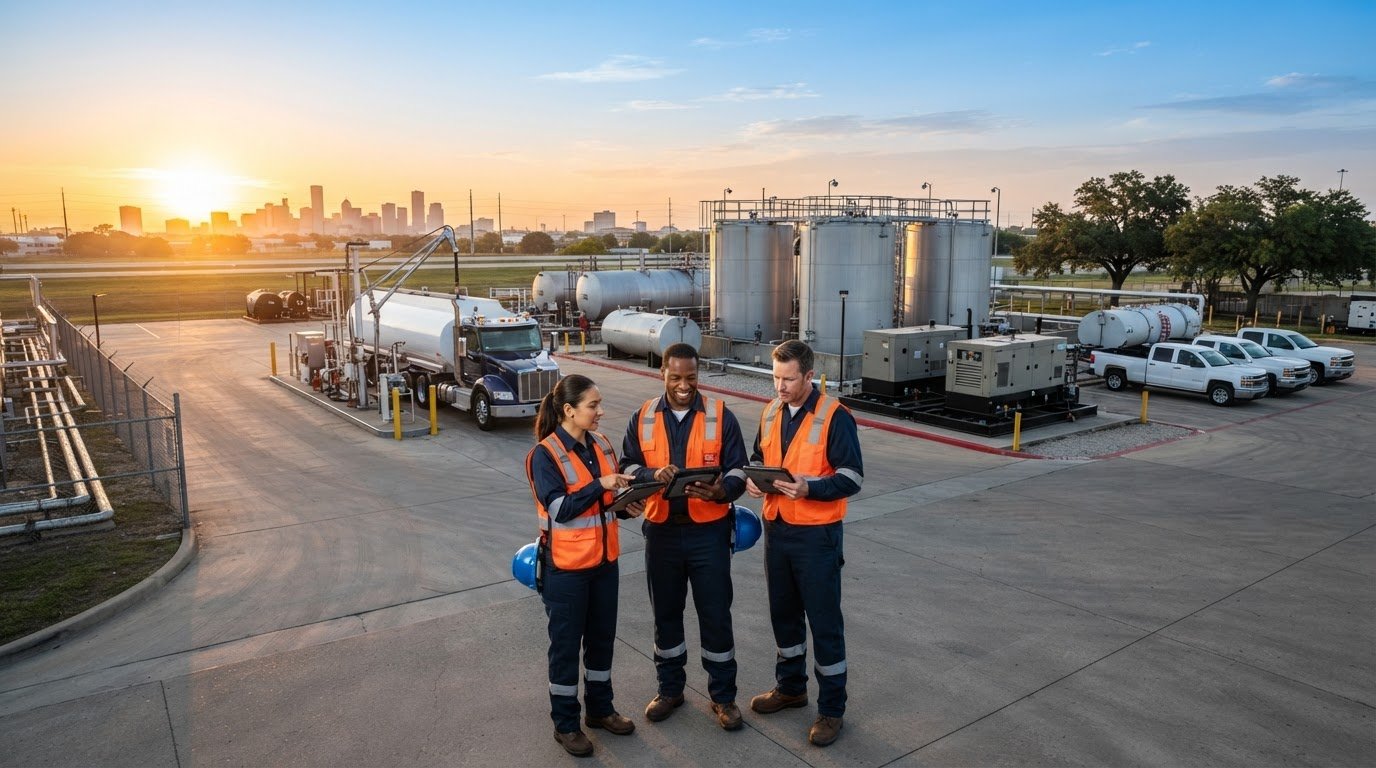
Traditional retail fueling creates a logistical bottleneck that limits the scalability of Texas fleets. On-site fuel solutions for fleets replace the inefficient "stop-and-go" retail model with a direct-to-tank framework. This approach ensures that every vehicle is fueled while it remains parked at your yard or job site, converting dormant overnight hours into productive preparation. Instead of forcing drivers to seek out stations, the fuel comes to the equipment, allowing your team to focus entirely on their primary operational objectives.
Every trip to a public station involves "windshield time." This is the period where drivers are paid their full hourly rate to navigate traffic and wait at pumps instead of moving cargo or completing infrastructure projects. For Texas crews, these delays often occur during the critical early morning window. When a fleet relies on retail stations, the "Ready-to-Work" start is frequently delayed by 30 to 45 minutes as vehicles queue for fuel. This ripple effect pushes back project milestones and reduces the total number of billable hours achievable in a single shift.
Calculating the Real Cost of the Gas Station Trip
A single fueling stop typically consumes 20 to 30 minutes of a driver's shift. When you multiply those minutes by a team of ten drivers over a month, the labor cost becomes a significant operational overhead. Beyond wages, off-route miles contribute to unnecessary wear and tear on heavy-duty suspensions, tires, and braking systems. These hidden expenses erode the margins of high-volume industrial operations. In a market where diesel prices averaged $5.46 per gallon in September 2026, the added cost of driver labor makes the retail pump an expensive choice for commercial fleets.
Fuel Management and Data Transparency
Relying on paper receipts and manual logs creates significant tracking gaps and opportunities for fuel theft. Transitioning to professional commercial fuel services allows managers to implement sophisticated fuel management systems. These digital tools provide precise accounting for every gallon delivered directly into the machine. This level of transparency eliminates the risk of fuel slippage or unauthorized purchases that often plague standard fuel card programs. By shifting to a direct-to-tank delivery model, you secure your inventory and ensure that your fuel budget is spent exclusively on powering your equipment.
The Mechanics of On-Site Fueling: Mobile Refueling and Technology Integration
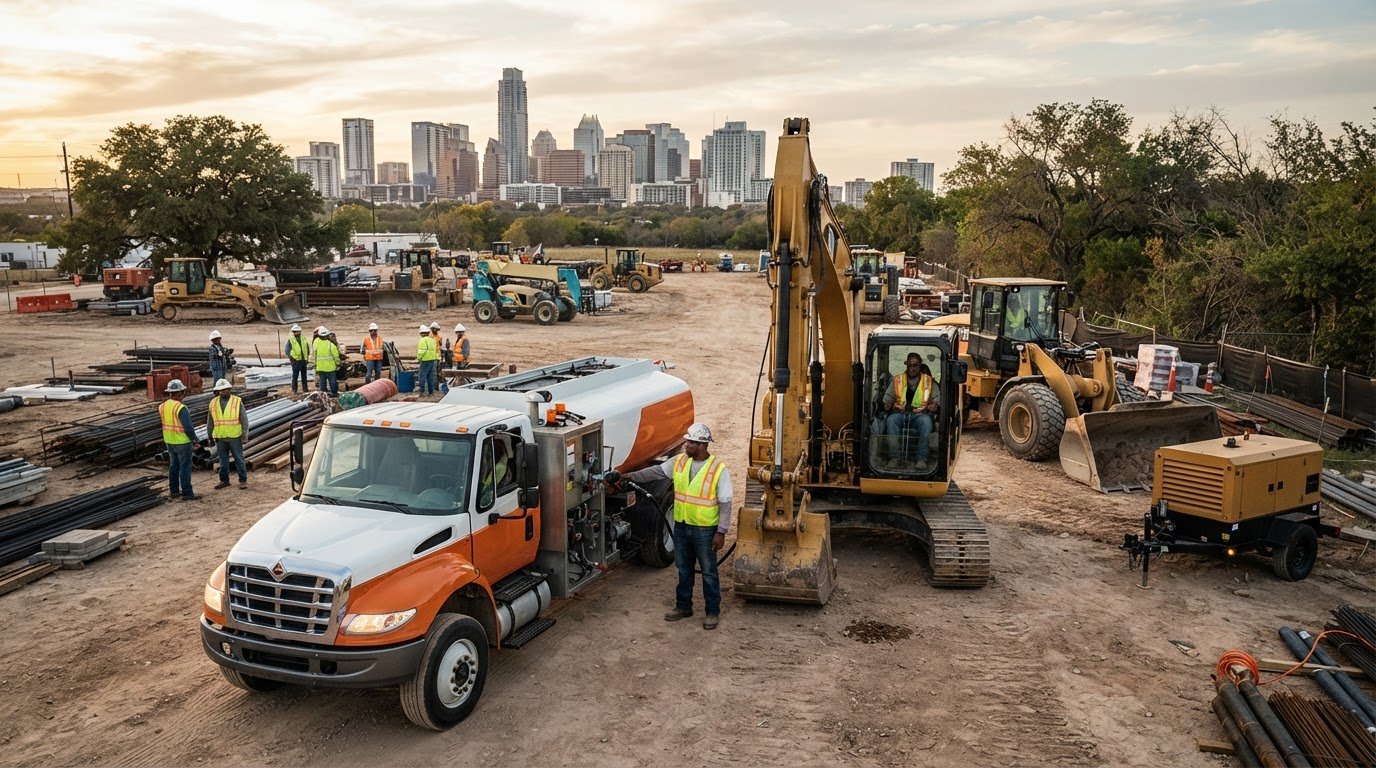
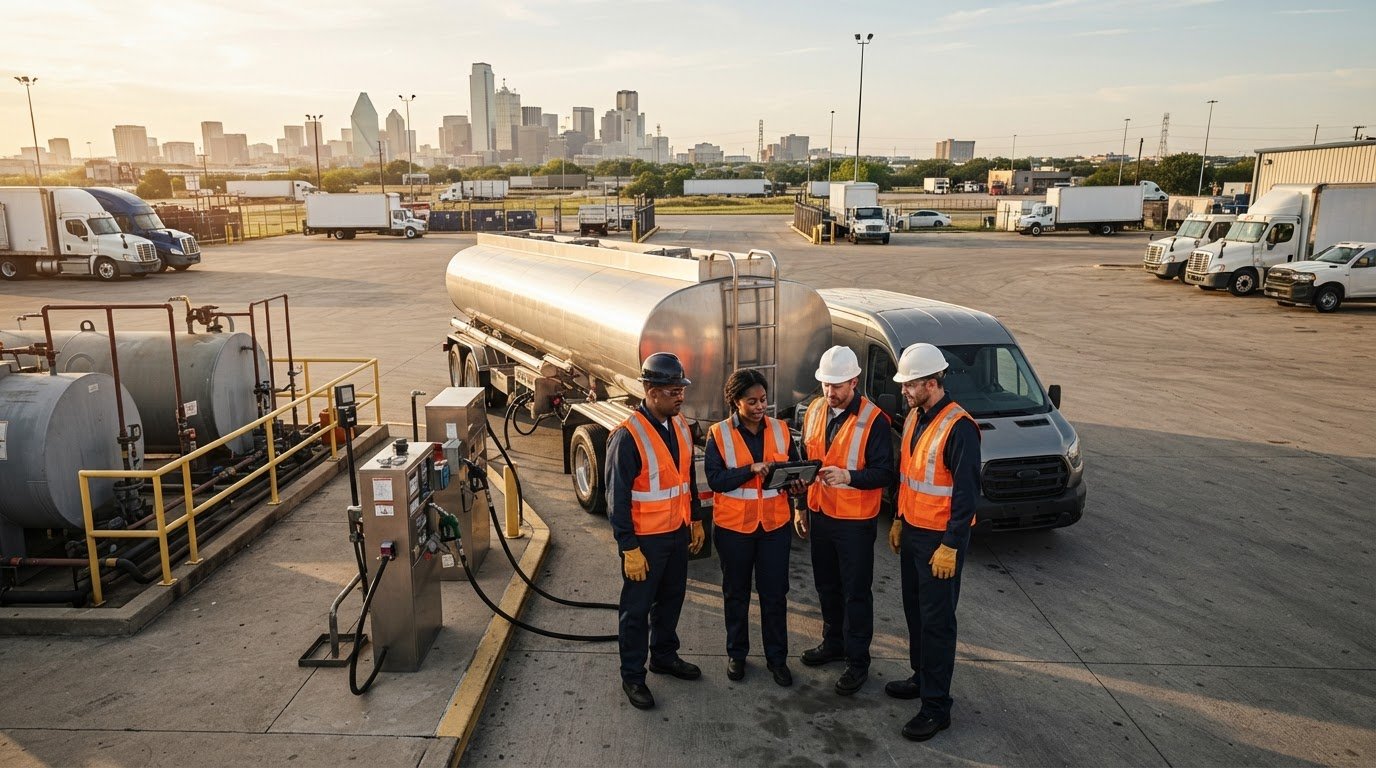
Mobile fueling units operate as a silent logistical force within your yard. These specialized trucks are designed to maneuver through tight rows of parked machinery, delivering diesel directly to each vehicle tank while your drivers are off-clock. This process, often called "wet hosing," represents the most efficient iteration of on-site fuel solutions for fleets. By utilizing high-flow pumps and state-of-the-art metered delivery, we guarantee that every gallon is tracked with surgical precision. This methodology removes the need for your staff to manage fuel inventories or monitor tank levels themselves.
Safety and compliance remain the foundation of every delivery. While mobile fueling minimizes the need for permanent infrastructure, any bulk storage on your property must strictly adhere to TCEQ storage tank rules and regulations. Our teams stay updated on these evolving standards to ensure your site remains compliant and your operations stay protected. We also monitor recent federal changes, such as the March 2026 EPA guidance regarding DEF sensors, to ensure our delivery methods align with the latest engine requirements.
The 24/7 Fueling Cycle: How Night-Shift Delivery Works
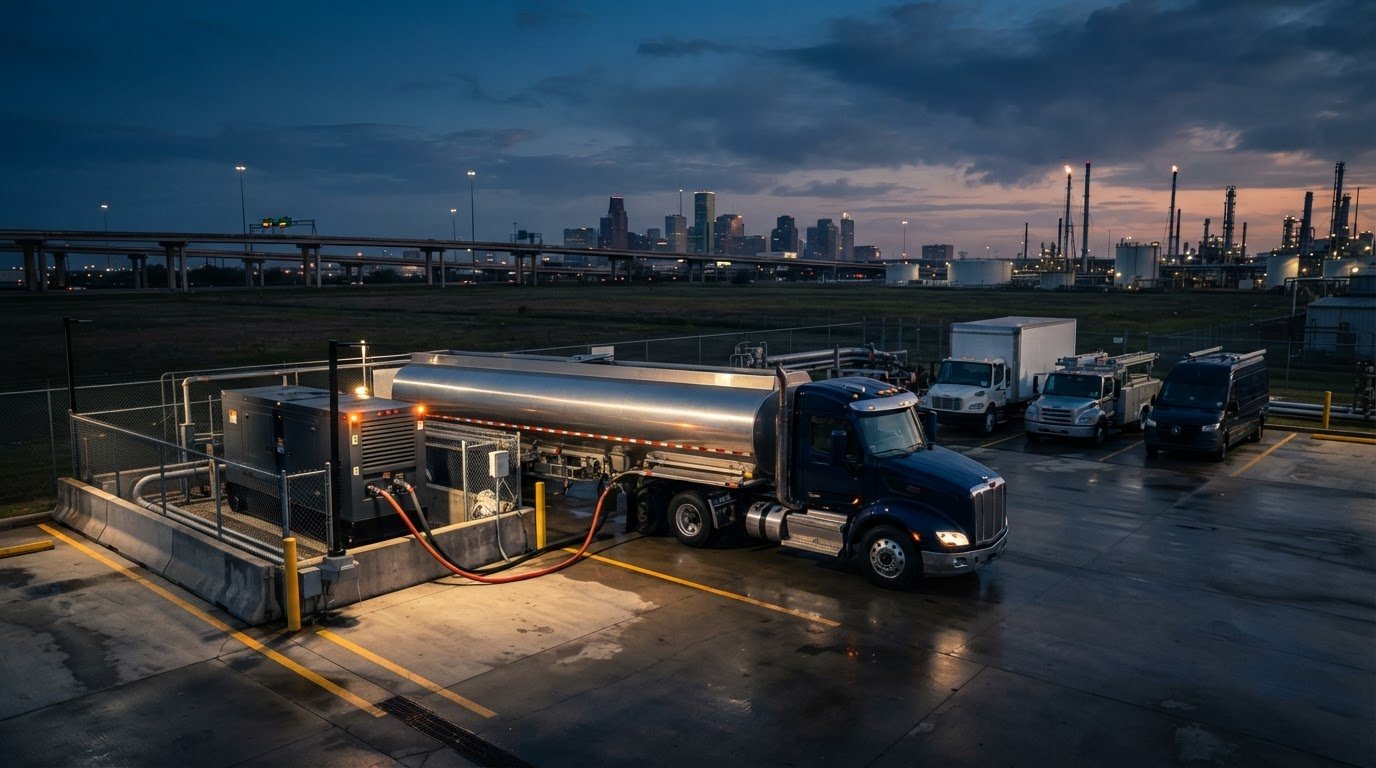
We operate on your schedule, not the other way around. By scheduling deliveries during fleet downtime, we ensure your equipment is ready to move before the first shift begins. This "Vigilant Partner" approach means your yard is serviced while it's quiet, preventing any interference with active loading or construction. Our technicians follow rigorous safety protocols for unmanned fueling, securing your yard and leaving behind a detailed digital record of the night's activity. This ensures that every truck is topped off and ready for the day's route without a second of wasted morning time.
Equipment and Asset Tracking
Technology integration transforms fueling from a simple chore into a data-driven strategy. We utilize barcode and RFID scanning to identify every individual asset before the nozzle is engaged. This ensures that our equipment fueling service provides reporting by specific vehicle ID. You can quickly identify inefficient engines or potential fuel leaks by comparing consumption patterns across your fleet. This level of transparency allows you to make informed decisions about maintenance and asset retirement. If you're ready to see how this level of transparency can stabilize your overhead, you can request a custom logistics review for your facility.
Evaluating Your Options: Mobile Wet Hosing vs. On-Site Tank Storage
Selecting the right on-site fuel solutions for fleets requires a strategic evaluation of your site footprint and financial priorities. You must decide between the zero-infrastructure approach of mobile wet hosing and the dedicated autonomy provided by fuel tank rentals. Both models succeed in eliminating the retail pump delays mentioned previously, but they differ significantly in their regulatory requirements and capital impact. Choosing the wrong model can lead to unnecessary permitting hurdles or logistical gaps that hinder your growth.
Mobile Wet Hosing: The Zero-Infrastructure Solution
This method is particularly effective for urban yards in Houston or Dallas where space is at a premium. Because the fuel is delivered directly from our truck to your equipment, you avoid the need for permanent storage infrastructure on your property. This eliminates the requirement for environmental permits and the recurring storage inspections mandated by the TCEQ for fixed tanks. It also offers a high degree of flexibility; our technicians can deliver both Diesel and DEF fluid in a single stop, ensuring your entire emissions system is serviced simultaneously without any equipment footprint.
On-Site Tank Rentals: Strategic Reserves for Remote Sites
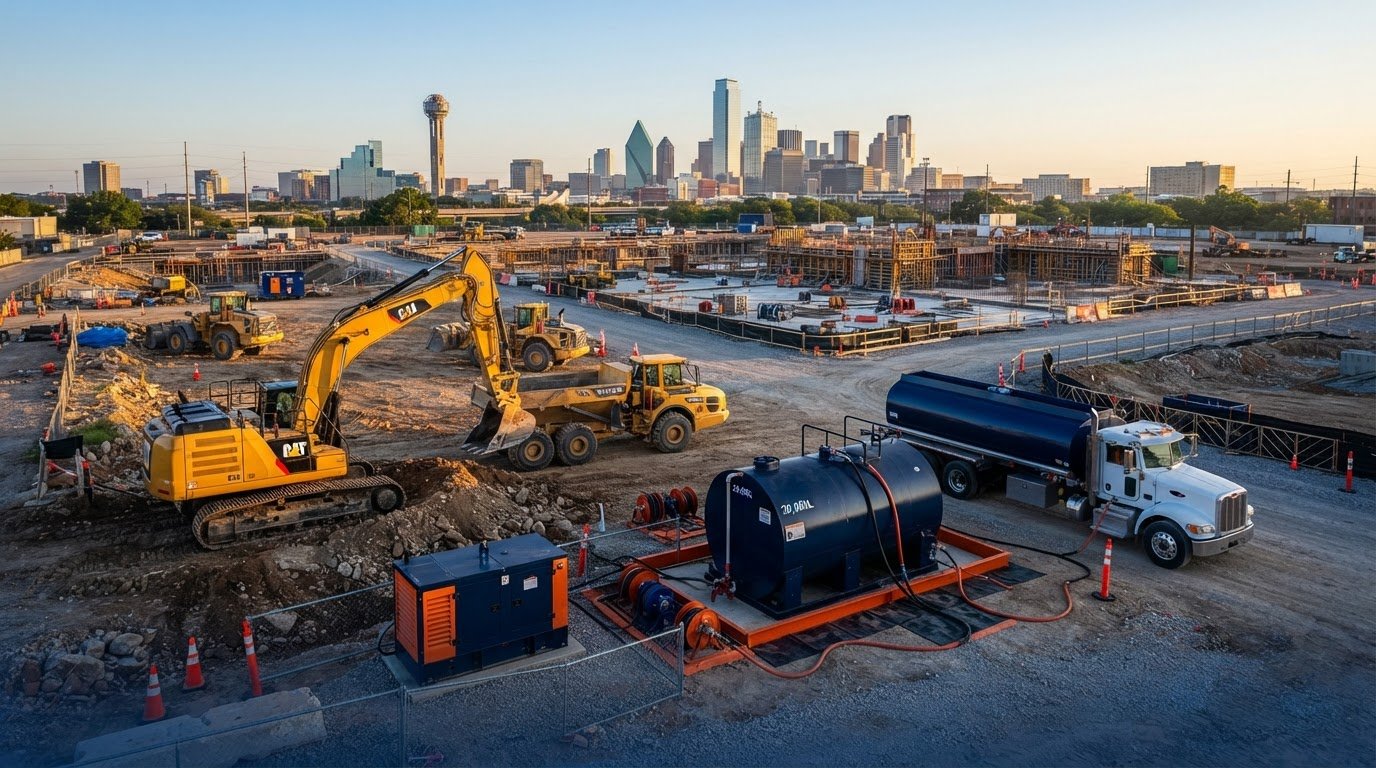
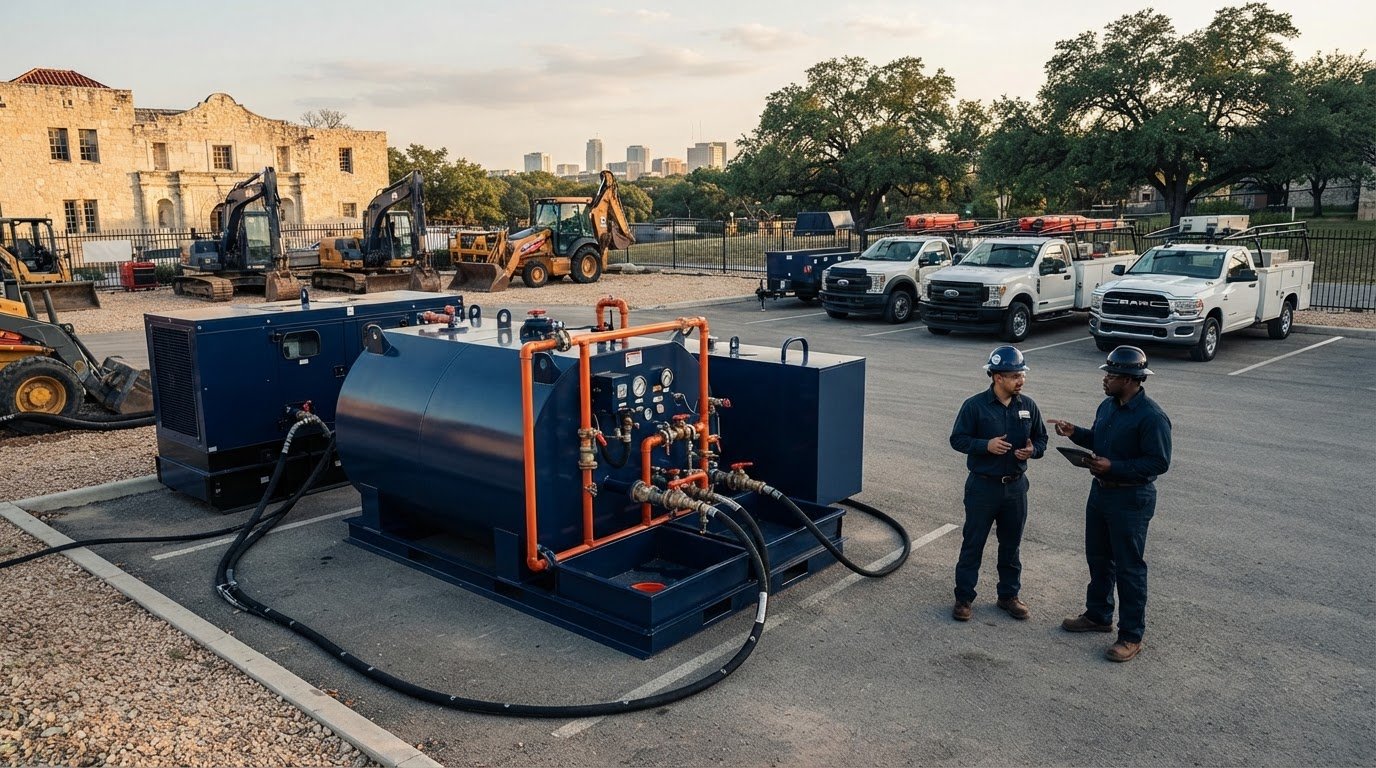
Remote Texas construction sites or sprawling industrial facilities often require a "strategic reserve" to maintain high-tempo operations. Utilizing on-site tanks provides your crew with total autonomy, allowing them to refuel machinery at a moment's notice. This model also supports a "Bulk and Fill" strategy. By utilizing high-volume diesel delivery to fill a central tank, you can manage costs more effectively by purchasing larger loads when market prices dip. It is a robust solution for sites where external traffic or remote locations make daily mobile delivery less practical.
Scalability is a critical advantage of these professional logistics models. As your fleet size fluctuates or your project locations move, you can transition between these methods. You might start with wet hosing during a project's mobilization phase and then deploy a rental tank as the equipment count grows. This adaptive approach ensures that your fuel supply always matches your operational demand without overextending your budget. By tailoring the delivery method to the specific environment, you maintain total control over your fuel supply chain regardless of where the job takes you.
Optimizing Fleet Compliance: DEF Fluid Management and Safety Standards
Modern diesel engines depend on Diesel Exhaust Fluid (DEF) as much as they do on diesel fuel. Managing this secondary fluid stream is a critical logistical challenge that directly impacts vehicle uptime. Our on-site DEF fluid delivery ensures your SCR (Selective Catalytic Reduction) systems remain functional without requiring separate trips to retail locations. While the EPA issued new guidance in March 2026 regarding NOx sensors, the core requirement for high-purity DEF remains unchanged. Failing to maintain proper fluid levels triggers "Limp Mode," a mechanical safeguard that reduces engine power and can bring your operations to a standstill.
Effective on-site fuel solutions for fleets must account for the physical properties of DEF, particularly in the harsh Texas climate. High temperatures can accelerate the evaporation of water in the urea solution, leading to crystallization that clogs injectors and sensors. We utilize specialized delivery equipment that protects fluid purity from contaminants and extreme heat. This meticulous approach prevents the costly repairs and downtime associated with poor-quality fluid, giving you total control over your engine health.
The Integrated Fuel and DEF Strategy
Synchronizing your fuel and DEF refills eliminates the risk of a "run-out" that could ground an entire crew. By using a single-source energy partner, you reduce the number of vendors entering your yard and simplify your accounting processes. This integrated strategy ensures that every diesel asset is topped off with both fluids during the same service window. For a deeper look at maintaining SCR systems, consult our On-Site DEF Fluid Delivery Guide to understand the latest 2026 fleet reliability standards.
Safety and Spill Containment in Texas
Regulatory compliance is a non-negotiable aspect of on-site energy management. Texas operations must adhere to federal SPCC (Spill Prevention, Control, and Countermeasure) regulations to protect local soil and water. This is especially vital when using on-site tank rentals, which require certified secondary containment systems to capture potential leaks. Our delivery personnel undergo rigorous training and certification to handle high-stakes industrial environments safely. We also monitor regional requirements, such as the Texas Low Emission Diesel (TxLED) program, which mandates specific fuel properties in 110 central and eastern Texas counties.
Ensuring your facility meets these evolving safety codes is essential for avoiding environmental fines and operational interruptions. We manage the complex details of spill prevention and safety protocols so you can focus on your core business. If you need a professional assessment of your yard's current compliance status, contact our logistics team to schedule a site safety review.
Deploying On-Site Fueling in Texas: A Roadmap for Operational Continuity
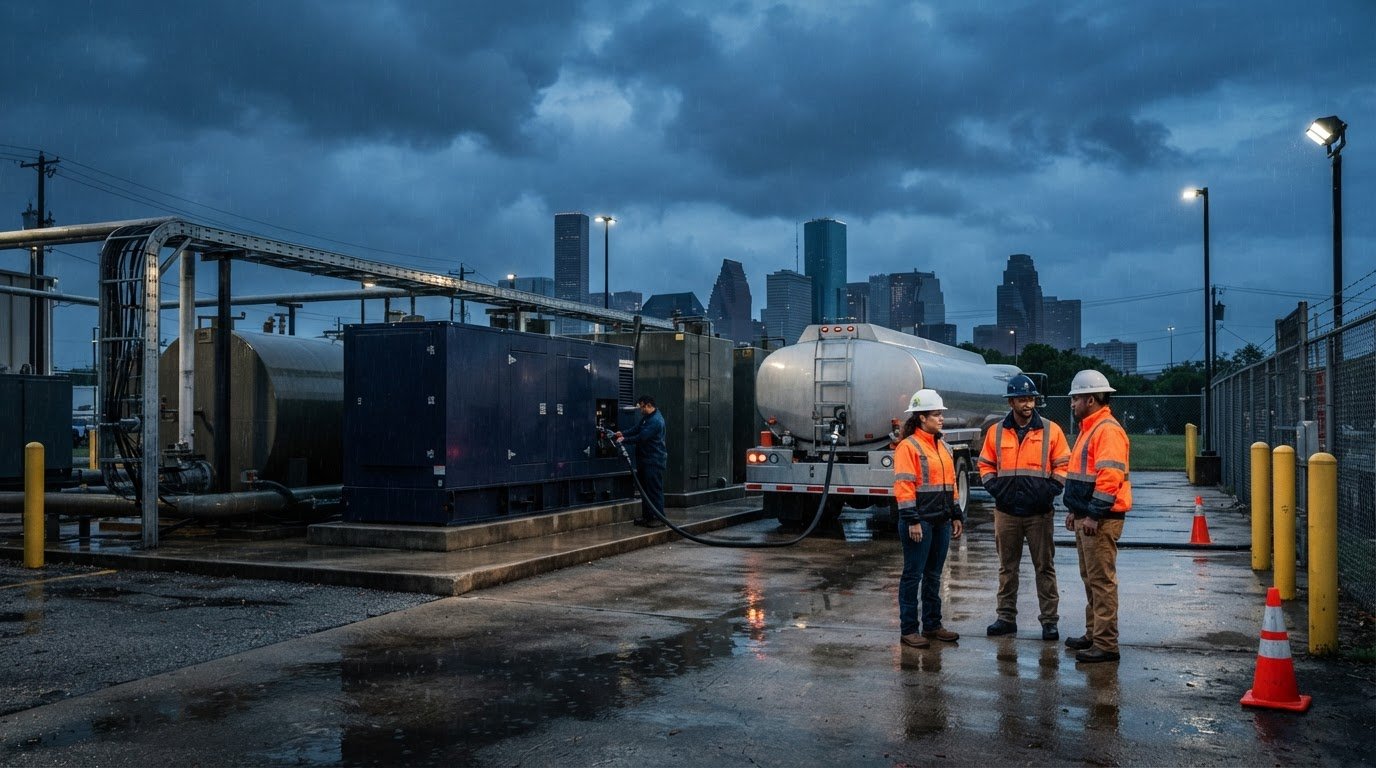
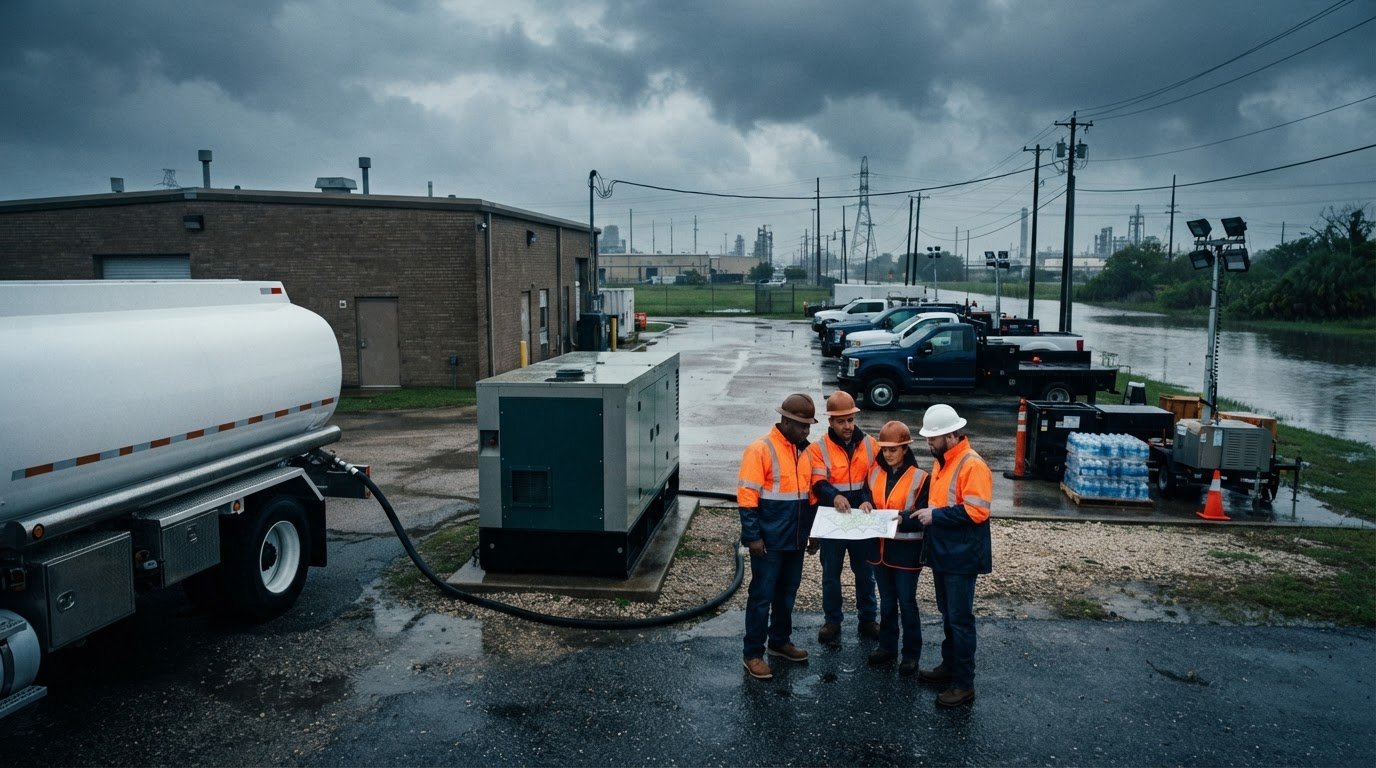
Operational continuity in the Texas market requires more than just a steady supply of diesel. It demands a logistics strategy that can withstand the unique pressures of the regional climate and infrastructure. Transitioning to on-site fuel solutions for fleets provides a critical buffer against the supply chain disruptions that often follow hurricane landfalls or severe winter storms. While retail stations frequently lose power or run out of inventory during these events, a dedicated delivery model ensures your fleet remains mobile when your community needs you most.
Building a robust disaster recovery plan starts with securing emergency fuel delivery before a crisis occurs. This proactive approach allows you to establish priority status, ensuring that your equipment and facilities are serviced first during widespread outages. Most fleets can complete the transition to an on-site model in 30 days or less. This timeline involves a comprehensive site audit, the installation of any necessary rental tanks, and the digital tagging of every asset to ensure total transparency from the first delivery.
Emergency Preparedness and Generator Support
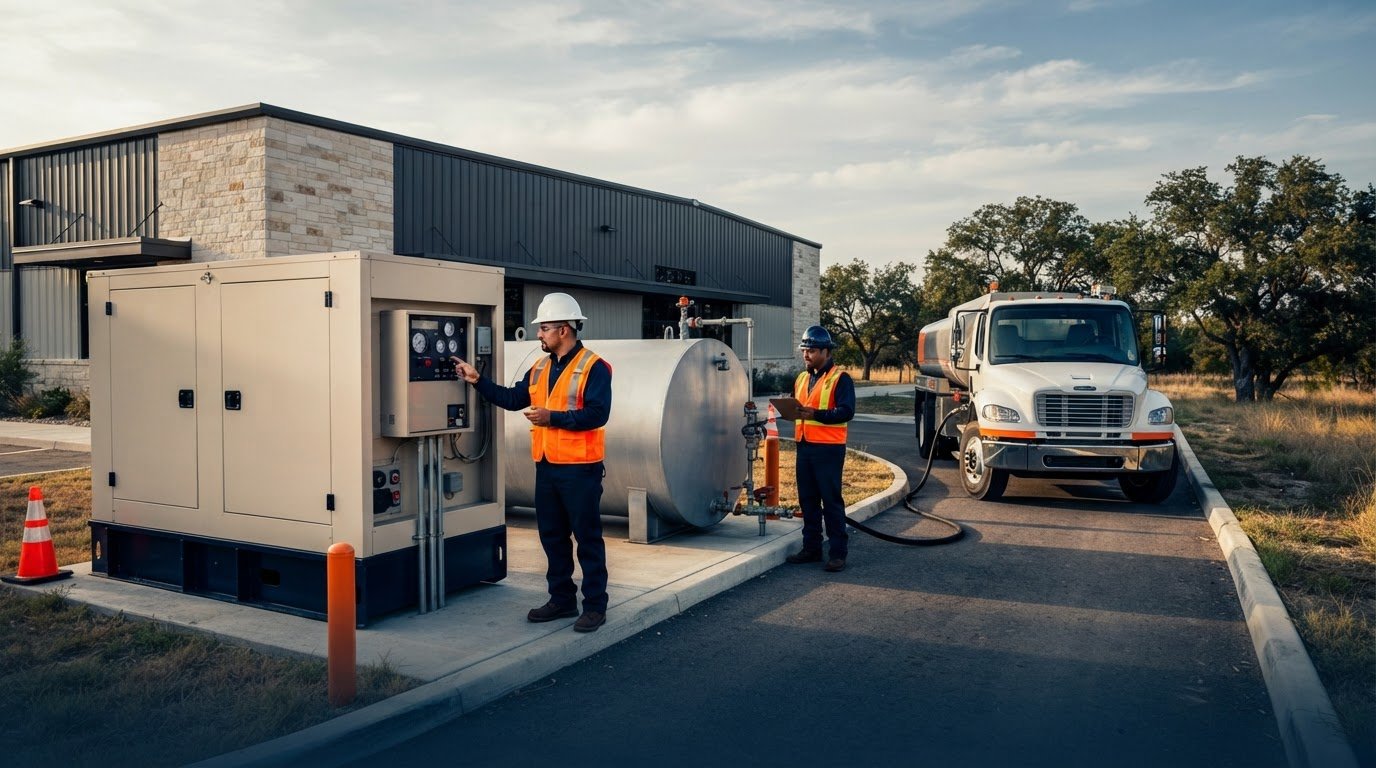
Power continuity is the second pillar of operational readiness. For many Texas facilities, maintaining a fleet is only part of the equation; keeping the lights on and data centers running is equally vital. We integrate our fleet services with a dedicated generator fueling service to provide a single, unified energy solution. This ensures that your backup power systems are topped off and tested long before the clouds gather. For a detailed breakdown of how to protect your facility, review our Emergency Generator Fueling Service Guide.
Selecting Your Texas Fueling Partner
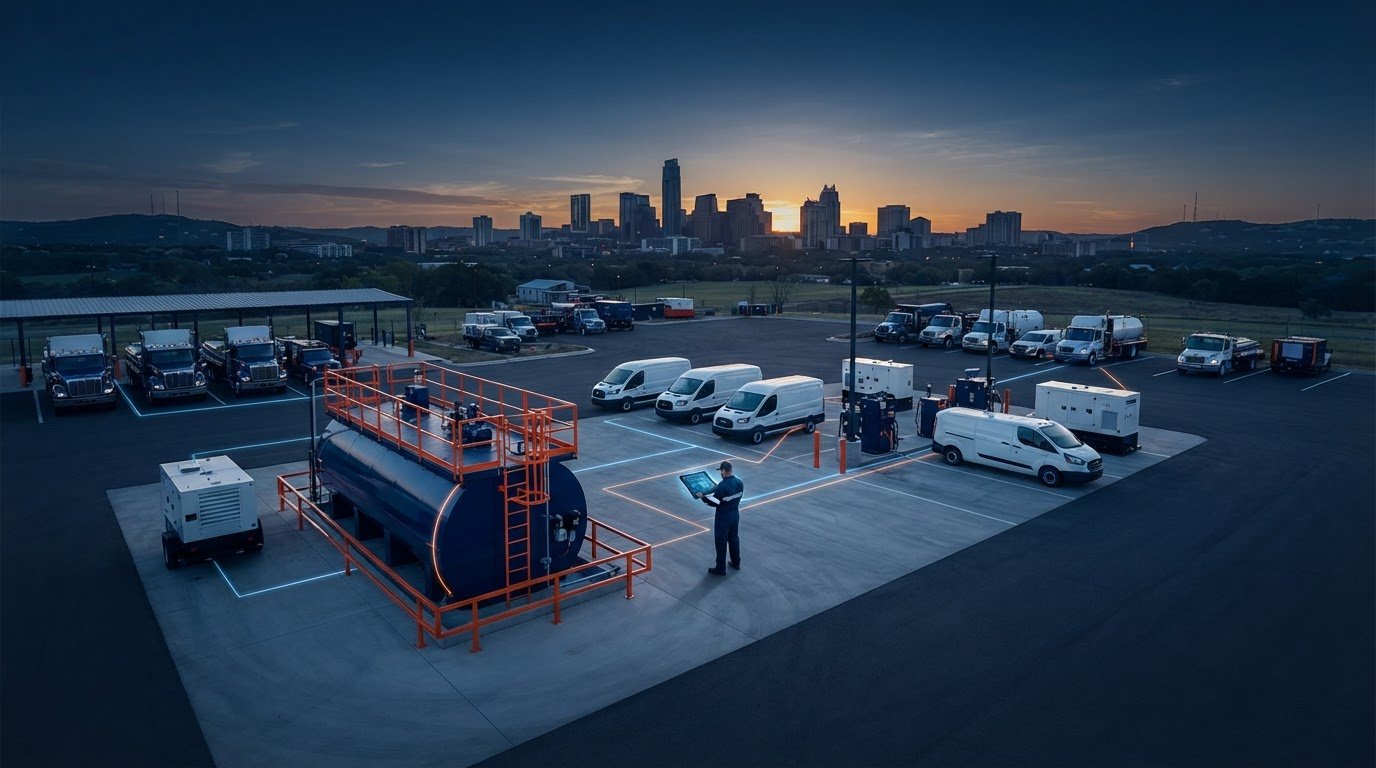
Local expertise is the deciding factor in the success of your fueling strategy. A partner with a physical presence in Houston, Dallas, Austin, and San Antonio understands the specific traffic patterns and regional regulations that impact delivery times. We maintain local yards in key hubs like Magnolia to ensure rapid response times and boots-on-the-ground support. When evaluating partners, prioritize transparency in billing and the ability to provide real-time delivery verification. This level of accountability ensures that every gallon is accounted for and every dollar is working toward your fleet's growth. If you're ready to eliminate downtime and secure your supply chain, contact React Fueling for a custom fleet assessment today.
Securing Your Competitive Edge in the Texas Market
Transitioning from the retail pump to a centralized logistics model is more than a convenience; it's a strategic necessity for Texas industrial growth. By eliminating "windshield time" and implementing precision asset tracking, you convert a recurring expense into a controlled operational advantage. Implementing strategic on-site fuel solutions for fleets ensures that your equipment is ready to work before the first shift begins, regardless of market volatility or seasonal weather disruptions. Utilizing a single-source partner for both diesel and DEF fluid delivery simplifies your supply chain while protecting your engines from costly downtime.
React Fueling brings local Texas expertise to every yard we service. Our 24/7 emergency response capability and integrated diesel and DEF solutions provide the stability you need to navigate high-stakes project timelines. Don't let retail bottlenecks stall your expansion or compromise your disaster readiness. Take the next step toward total operational continuity and Request a Custom Fleet Fueling Quote for Your Texas Operations today. Your fleet's future starts with a more resilient energy strategy.
Frequently Asked Questions
What is the difference between wet hosing and on-site tank fueling?
Wet hosing is direct-to-equipment fueling where we fill your vehicles individually at your yard or job site. On-site tank fueling involves bulk delivery into a stationary or portable tank on your property. Wet hosing eliminates infrastructure needs and environmental permitting for tanks. Conversely, tanks provide a strategic reserve for high-volume sites. Both models enhance operational efficiency by removing the need for retail station stops.
Is on-site fuel delivery more expensive than using a retail gas station?
On-site delivery results in a lower total cost of operation when you calculate driver labor and vehicle wear. Retail pump prices often hide the cost of "windshield time" paid to drivers idling in traffic or at stations. Our on-site fuel solutions for fleets convert these hidden expenses into billable uptime. This creates a more predictable budget for your Texas operations while eliminating the risk of unauthorized fuel card purchases.
Can you deliver DEF fluid at the same time as diesel fuel?
Yes, we provide integrated diesel and DEF fluid delivery during a single service window. This synchronized approach ensures that your SCR systems remain functional and prevents engines from entering "Limp Mode." Managing both fluids simultaneously reduces the number of vendors entering your facility and ensures your entire fleet is ready for the route. This integrated strategy is essential for maintaining modern diesel engine compliance.
How does on-site fueling improve my fleet's environmental compliance?
On-site fueling utilizes professional-grade metered delivery to minimize spill risks associated with manual fueling or retail pumps. We adhere to all federal SPCC regulations and TCEQ safety standards to protect your facility from environmental liability. Our technicians are trained in spill prevention and secondary containment. This ensures your fueling process meets strict Texas safety codes while maintaining the highest level of environmental protection for your site.
What happens to my fuel delivery schedule during a Texas hurricane or emergency?
We prioritize clients with established service agreements during hurricane seasons and regional emergencies. Our 24/7 emergency fuel delivery capability ensures that your fleet and backup generators remain powered when local infrastructure fails. We maintain a local presence in Houston and Magnolia to facilitate rapid response times. This vigilant approach provides total control over your fuel supply chain when your community and operations face critical disruptions.
Do I need special permits to have a portable fuel tank on my job site?
Yes, the Texas Commission on Environmental Quality (TCEQ) requires registration for most aboveground storage tanks. You must also comply with local fire marshal codes and federal SPCC spill prevention plans. We assist you in navigating these regulatory layers when you utilize our fuel tank rentals. This ensures your job site remains compliant with all regional and state laws regarding petroleum storage and safety standards.
How do I track exactly how much fuel each truck in my fleet receives?
We utilize barcode and RFID asset tracking to record every gallon delivered to specific vehicles. This technology provides precise digital reporting by vehicle ID, allowing you to monitor consumption patterns and identify mechanical inefficiencies. These detailed logs eliminate the errors of manual tracking or paper receipts. They provide the transparency needed for accurate IFTA reporting and centralized cost control across your entire Texas fleet operation.
Is there a minimum fleet size required to qualify for on-site fueling services?
We tailor our services to meet the needs of diverse commercial operations, from localized teams in Magnolia to large-scale industrial fleets in Dallas. There is no rigid minimum fleet size required to qualify. The transition is most effective for any business where the labor cost of retail fueling impacts daily productivity. We conduct custom assessments to determine which delivery model offers the highest return on investment for your operation.