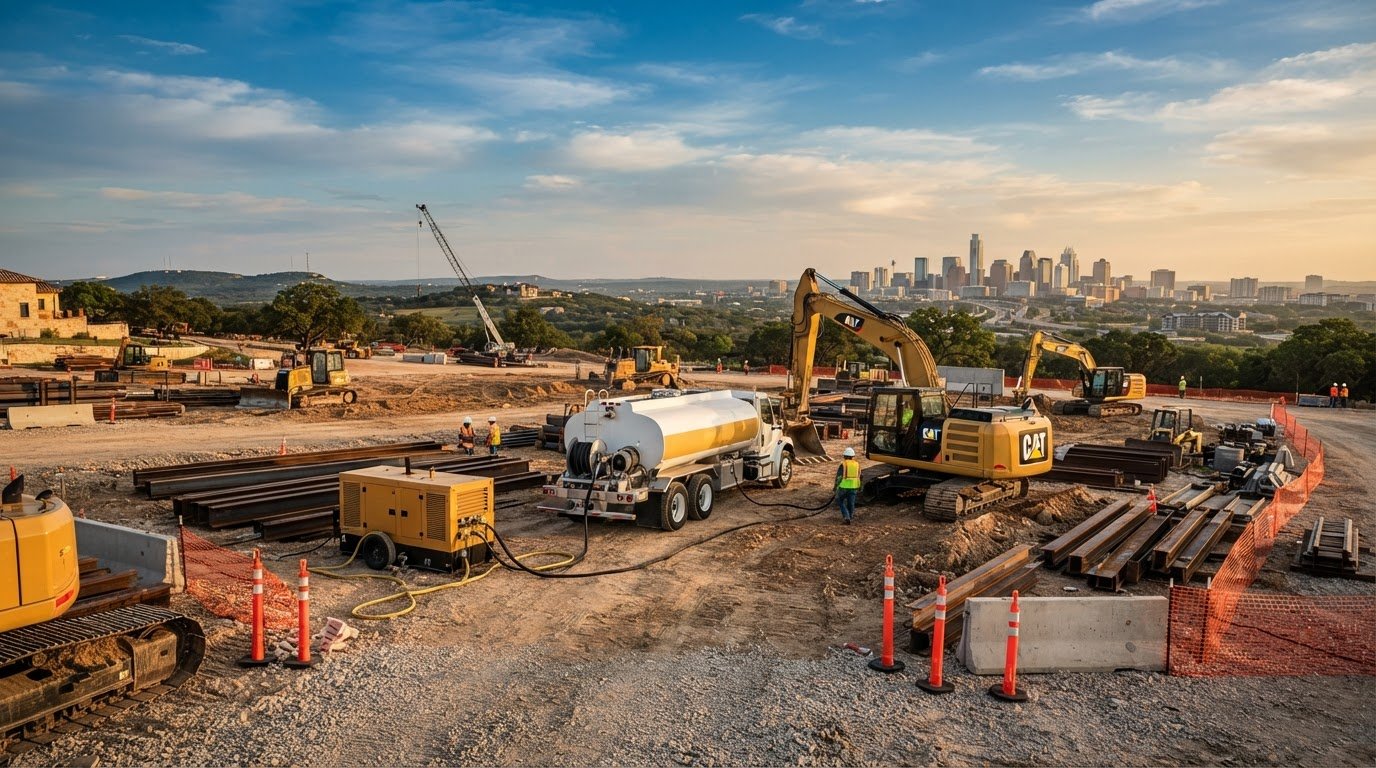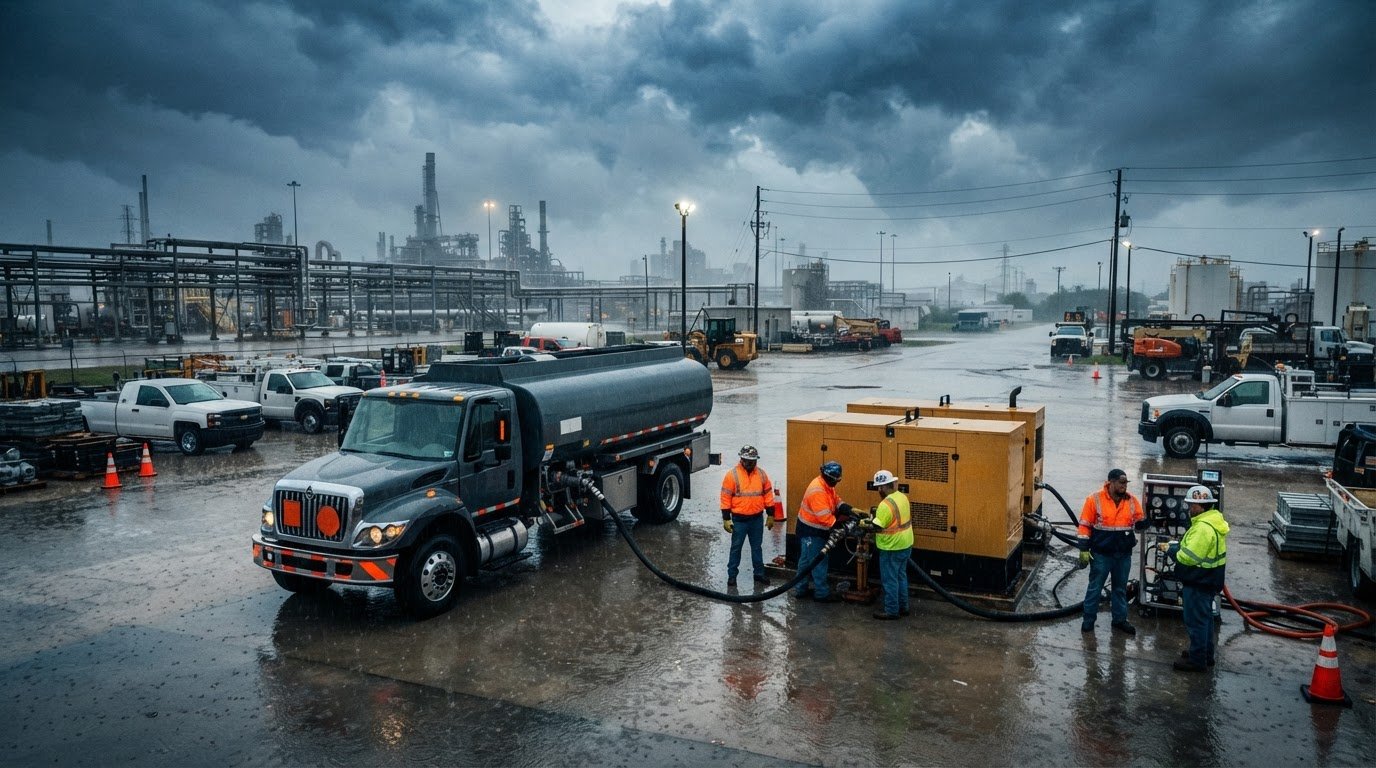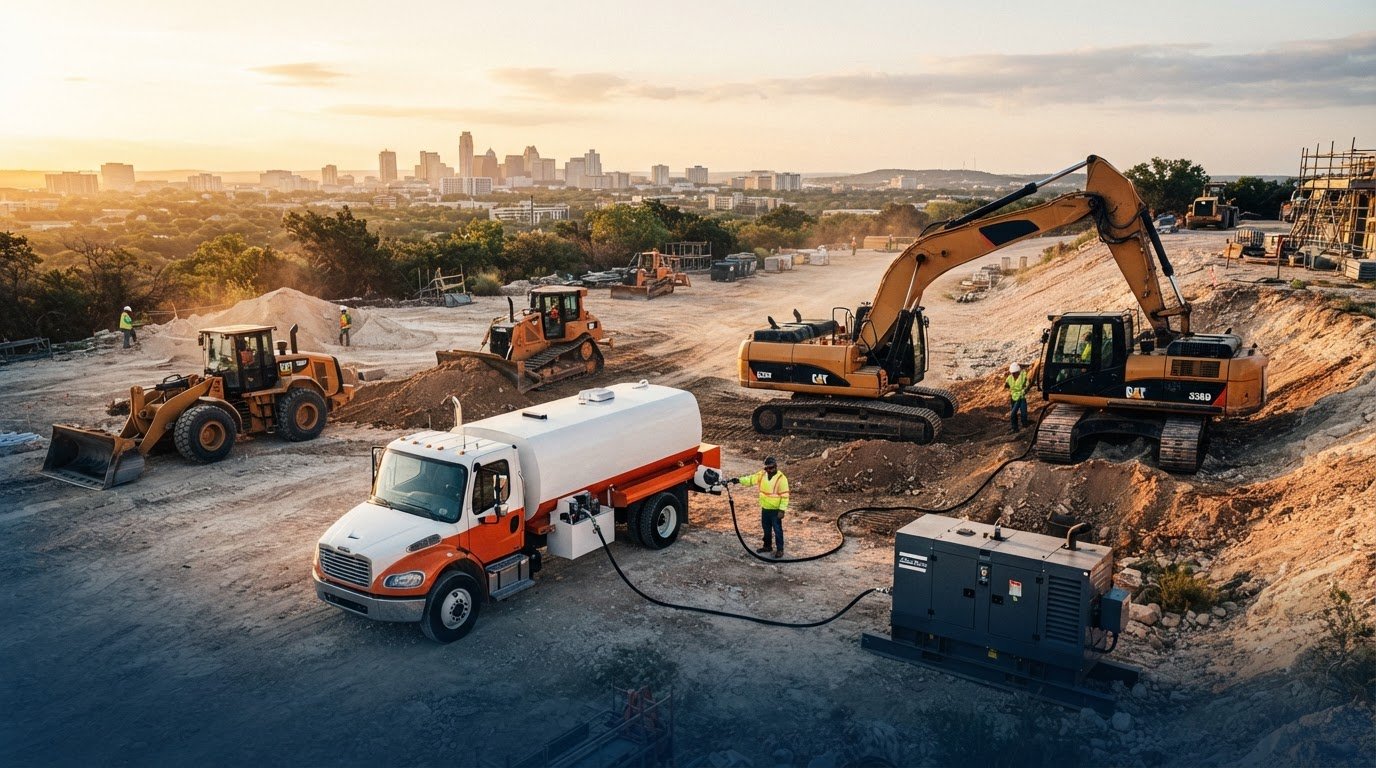
An idle excavator can hold up more than its own task. On a Dallas construction site, fuel access depends on where equipment operates, how delivery vehicles reach the work area, and whether on-site storage suits the project. The right construction fuel supply solutions Dallas teams choose can keep critical machinery fueled and reduce time spent traveling to a central refueling point.
Fuel planning gets more complicated as site access, equipment needs, and work areas change. Delivery to a central tank may suit one project, while direct equipment fueling may be a better fit when machinery operates across a large or shifting site. There’s no single setup for every job. The plan should reflect the site layout, equipment, and work schedule.
This guide compares fuel delivery, direct equipment fueling, fuel tank rentals, generator fueling, emergency delivery, and DEF supply. It also covers storage and coordination factors, so your team can match fuel access to project duration, equipment use, and site logistics.
Construction Fuel Supply Solutions in Dallas: Match the Plan to the Job Site
Start with the core decision: match fuel delivery, point-of-use fueling, and storage to equipment use, site access, and project duration. A compact site with machinery near a designated fueling area has different needs from a spread-out project where equipment moves between work zones. Plan around how crews and machines actually move, not just the site address.
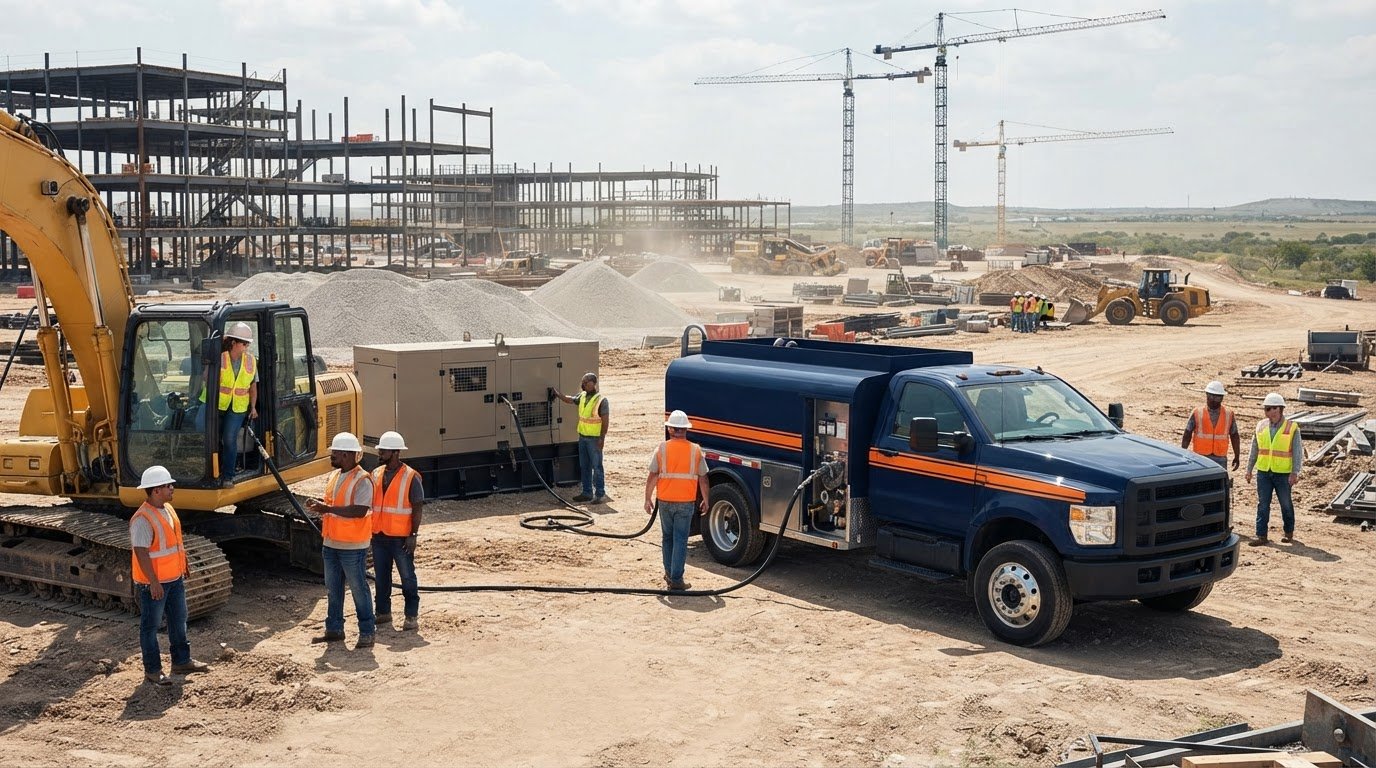
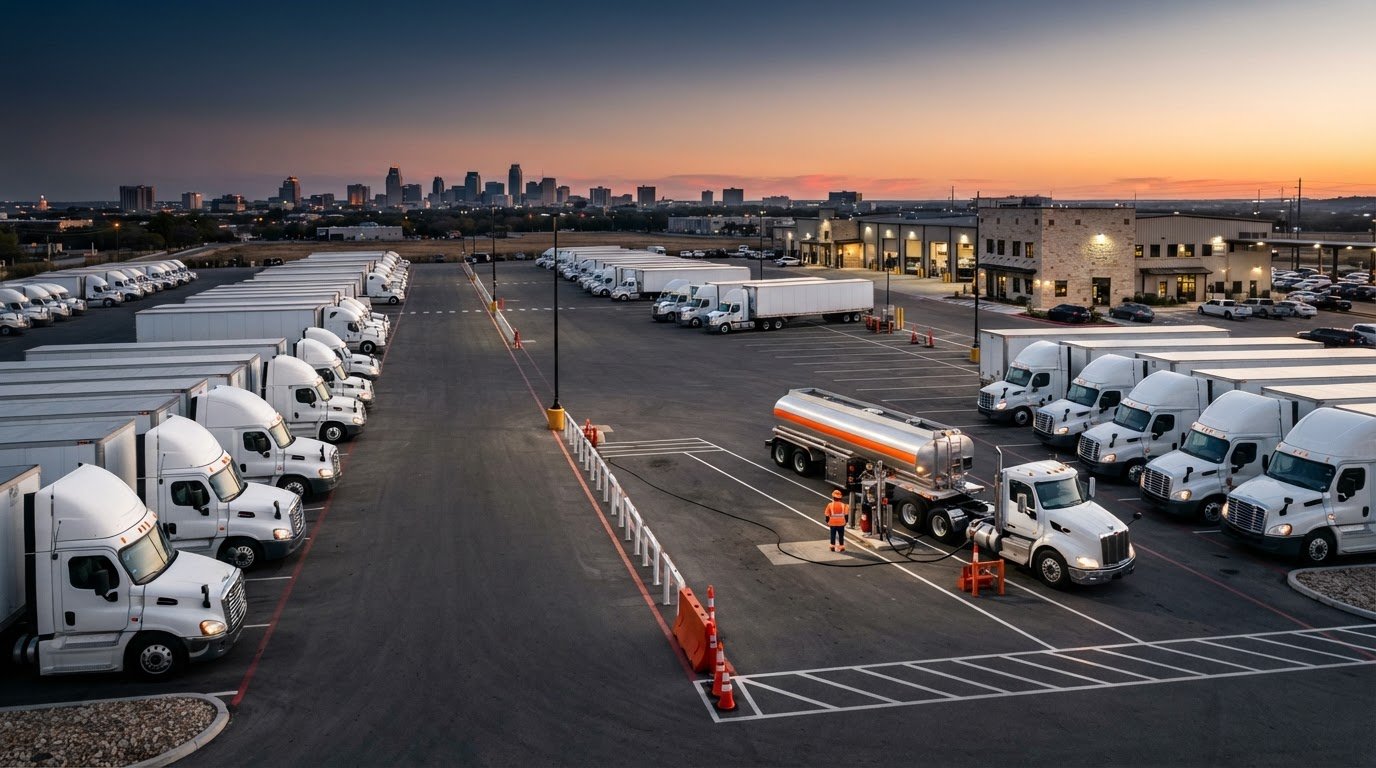
Construction fuel supply coordinates when fuel arrives, where it is stored, and how it reaches equipment. A fleet depot typically fuels vehicles at a fixed location. An active construction site must account for machinery working across changing areas and tasks happening in sequence. Direct equipment fueling service brings fuel to machinery at the job site, while fuel delivery and tank rentals support a planned on-site supply arrangement.
An integrated site fuel plan connects delivery, point-of-use fueling, and storage to the project’s equipment, access conditions, and operating schedule. Treat these as related decisions. When the work area or project phase changes, review the fueling setup before the change disrupts the routine.
Which Dallas construction operations need a site-specific fuel plan?
Any active job site benefits from fuel planning when several machines need fuel, work zones shift, or refueling access is limited. For example, earthmoving equipment may operate away from the site entrance while a loader or lift works near material staging. One fueling point may not serve both areas efficiently. Map equipment locations and delivery routes to determine whether delivery to storage, direct fueling, or a combination best suits the operation.
Separate routine demand from backup needs. Excavators, loaders, and other machinery use fuel during planned work, while generators serve a distinct purpose and need separate consideration. Emergency fuel delivery can support contingency planning, but it does not replace an ordinary supply plan. As a project moves from site preparation to structural work or finishing, the equipment mix and fueling locations can change.
What should a construction fuel supply plan cover?
Build the plan from practical site information. Record equipment and generator needs, expected operating patterns, fuel types, access points, storage requirements, and who will coordinate deliveries. Distinguish delivery coordination from storage: delivery timing and entry instructions govern how fuel reaches the site, while storage decisions determine where fuel is held and how crews access it.
- Equipment and use: Identify machinery and generators, their expected operating patterns, and any changes by project phase.
- Fuel and fluid needs: Note diesel requirements and whether equipment also requires DEF.
- Site access: Document entrances, active work zones, restricted routes, and changes that could affect delivery access.
- Delivery coordination: Assign a responsible contact and communicate site instructions and relevant schedule changes.
- Storage: Decide whether a rented fuel tank suits the site layout and project duration.
- Contingencies: Account separately for generator fueling and emergency delivery needs.
Project conditions determine the right service arrangement. A stable equipment roster, accessible storage area, and defined work zone call for a different setup than shifting operations and limited access. Review the plan as those conditions change.
How Dallas Construction Fuel Supply Combines Delivery, Equipment Fueling, and Storage
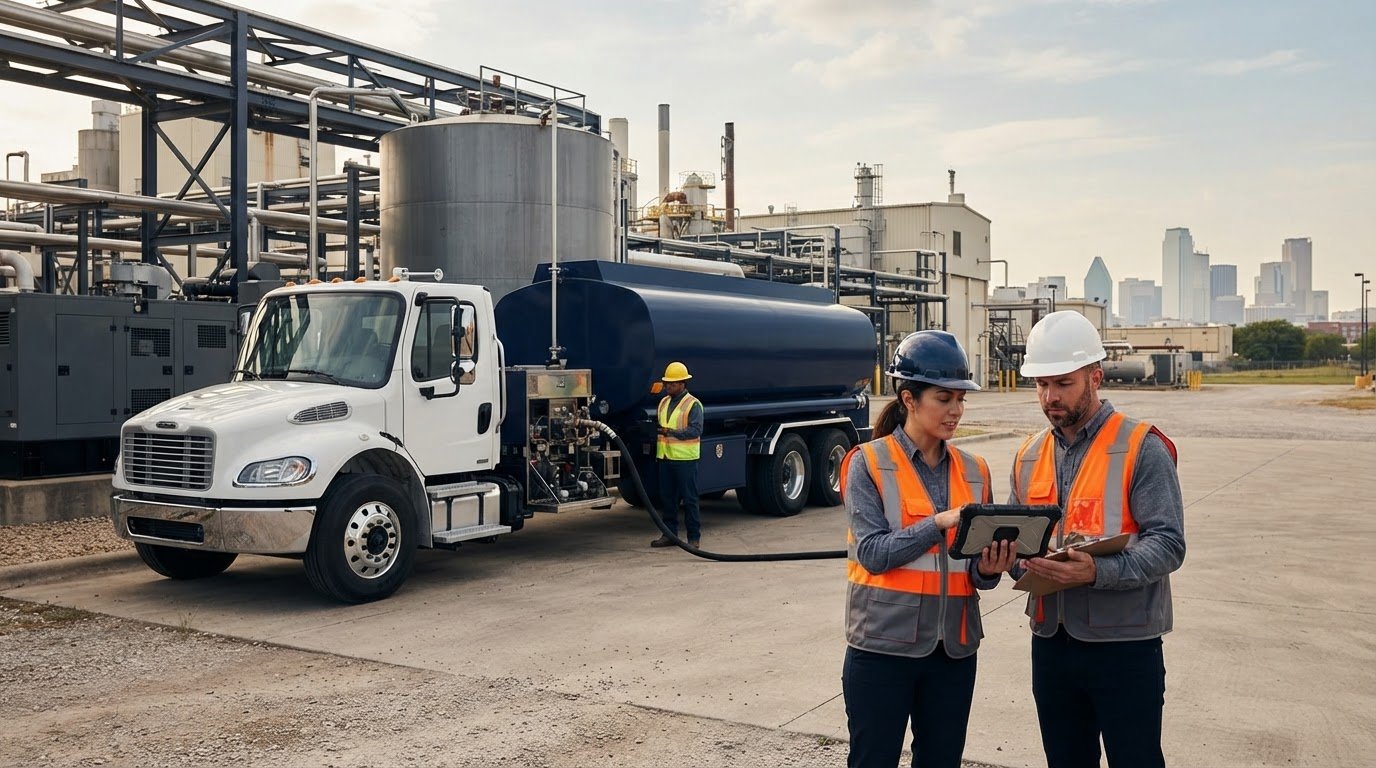
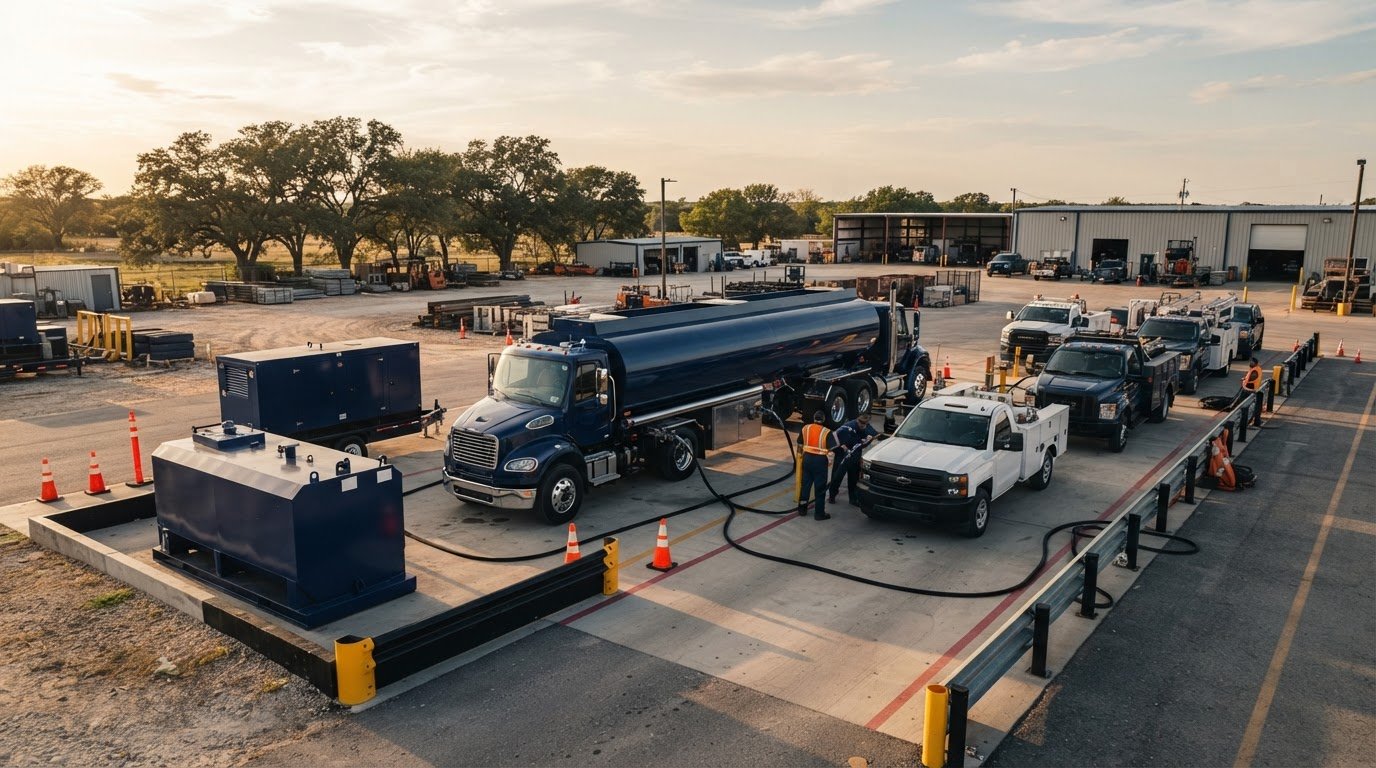
Each part of a site fuel setup has a distinct role. Fuel delivery brings fuel to the project; direct equipment fueling puts it into machinery where it is working; portable tank rentals provide on-site storage when operations need fuel at a designated location. Construction fuel supply solutions Dallas projects use can combine these services. The right mix depends on equipment locations, access routes, and the way work is sequenced.
For example, a site with a stable fueling area can use delivery to a rented tank, with crews refueling equipment there. If machinery is spread across a large work zone or moves as tasks progress, direct equipment fueling can reduce trips to a central point. The approaches can also complement each other: storage supports planned access, while direct fueling serves machines that are harder to bring to the tank.
When does direct-to-equipment fueling fit a project?
Direct fueling suits projects where equipment works in separated locations, refueling trips interrupt task sequencing, or machines are difficult to move from their work areas. Plan around each machine’s location, how fueling access will be coordinated, and whether active work zones will shift. A clear operating plan aligns equipment fueling with site movement instead of treating every machine as if it were parked at a depot.
React Fueling’s on-site equipment fueling guide explains more about the service model.
When should a site consider tanks, generators, or DEF?
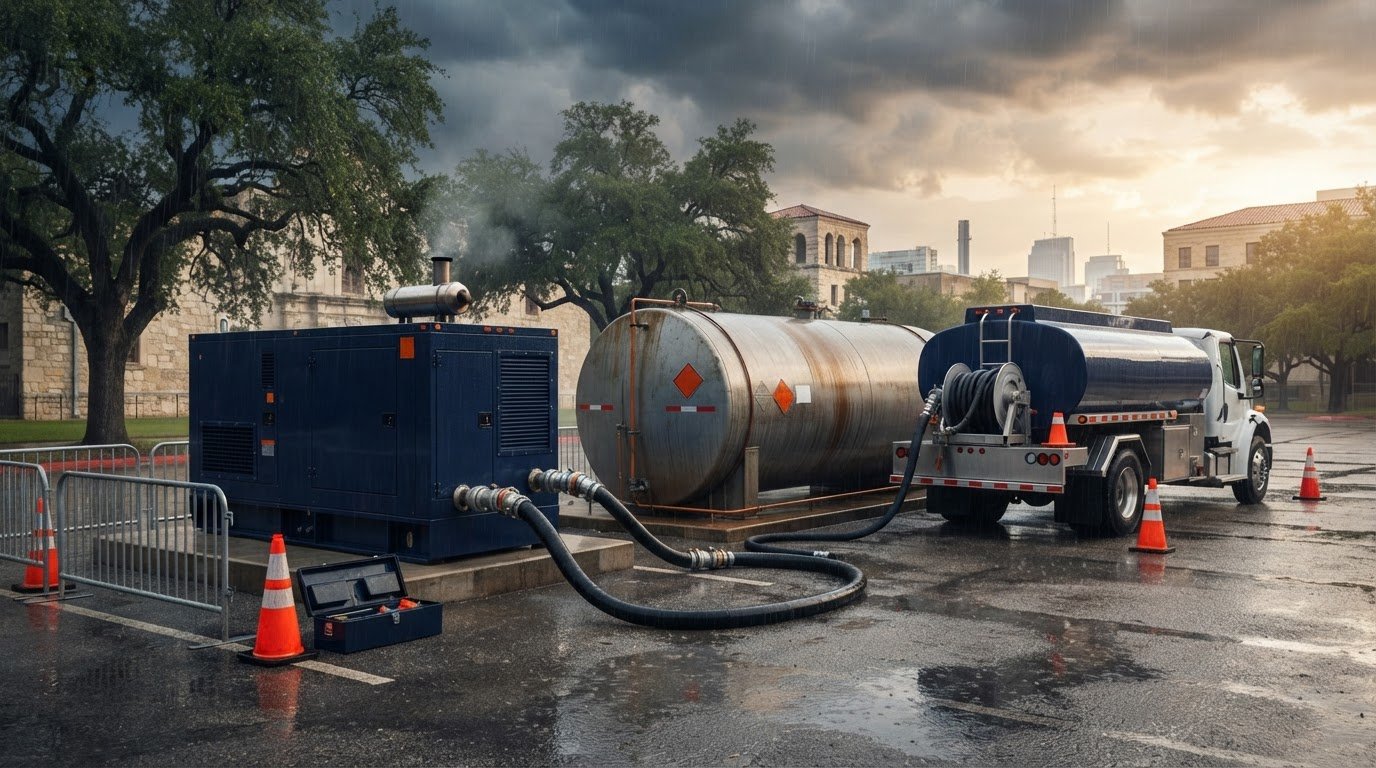
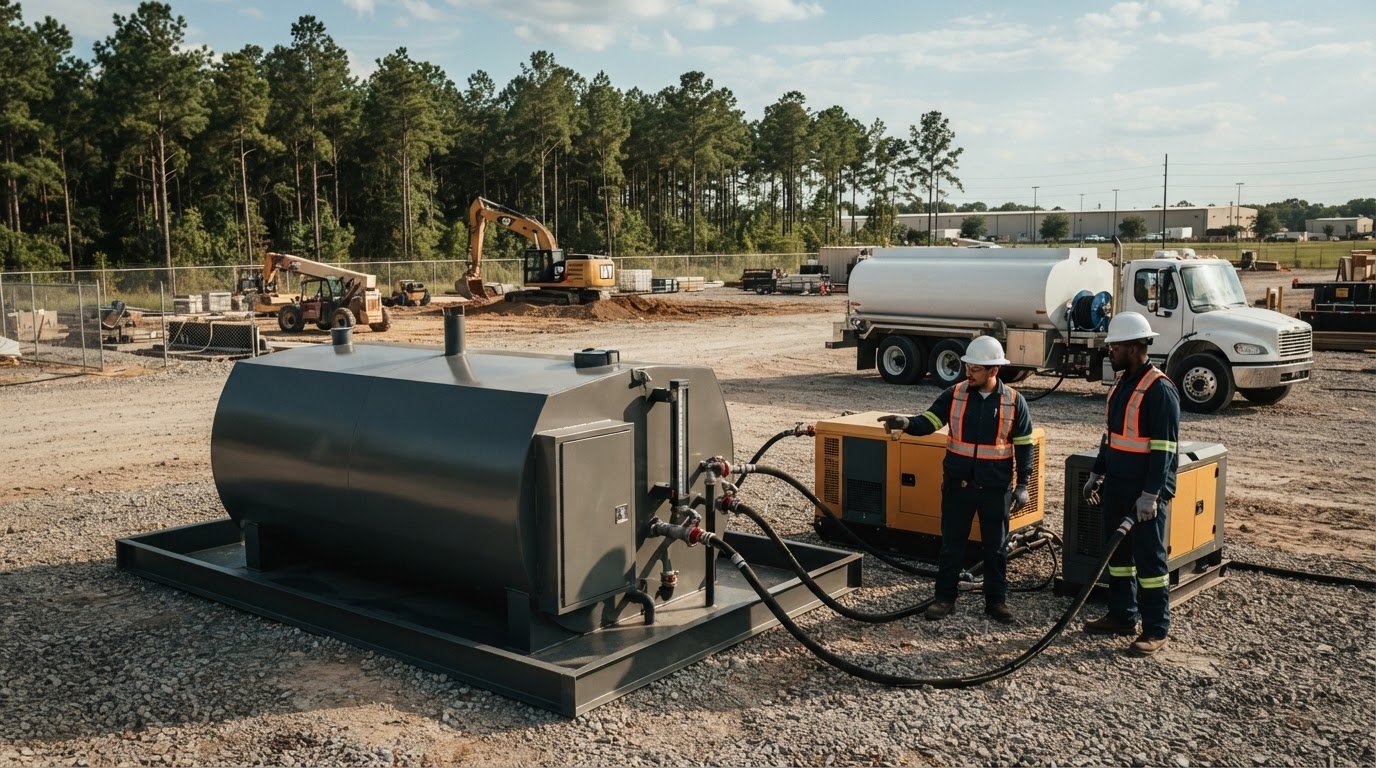
Portable fuel tank rentals suit projects that need fuel stored on-site for planned equipment use. Consider the tank’s location, how crews will access it, and how delivery vehicles can reach it. Storage is a separate decision from delivery: arranging for fuel to arrive does not determine where it will be held or how machinery will be refueled.
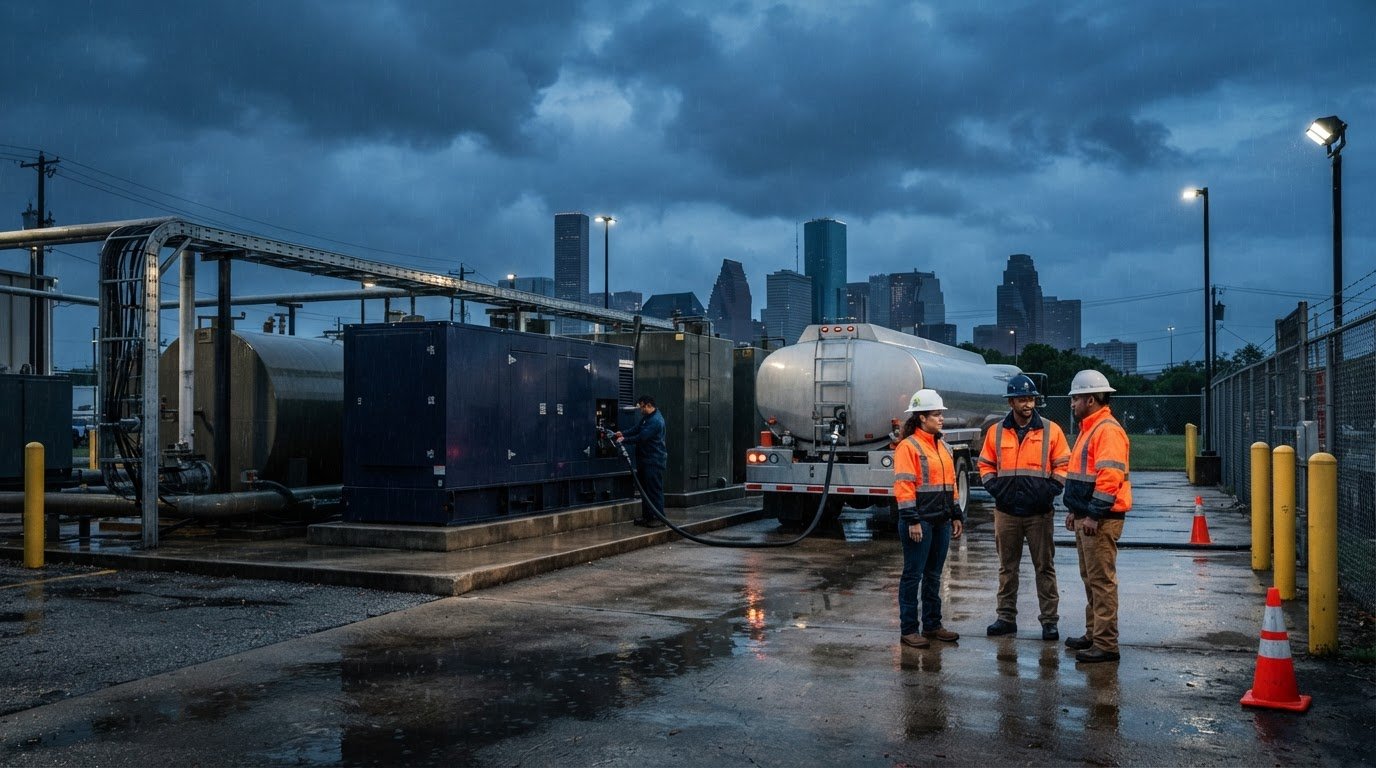
Include generator fueling in continuity planning when a generator supports site equipment or facilities. Treat generator demand separately from routine machinery use so backup-power needs are represented in the supply plan. DEF delivery can also support compatible diesel equipment that requires the fluid. DEF is a separate supply need from diesel; its use alone does not establish that equipment meets any particular emissions requirement.
Storage and handling require attention alongside logistics. OSHA’s regulations for fuel storage on construction sites address flammable and combustible liquids. Review the standard when planning applicable storage and handling practices, and account for the site’s specific conditions.
A practical plan assigns each service a clear role: delivery replenishes supply, direct fueling serves machinery at its work location, and rented tanks provide on-site storage. Generator fueling and DEF can be added where the project needs them. React Fueling provides these services to support construction site fuel plans.
How to Compare Construction Fuel Supply Options for a Dallas Project
Compare each fueling model against the work it needs to support instead of assuming one arrangement suits every project. Construction fuel supply solutions Dallas teams consider should account for equipment locations, delivery access, operating schedules, storage needs, and the effort required to coordinate refueling. A central tank can be practical for equipment clustered nearby, while machinery spread across changing work zones may be better served by direct fueling.
The right fueling model depends on site layout and operating patterns. Use the comparison below as a starting point, then weigh each option against actual project conditions and how the crew works day to day.
Fuel delivery
Fuel is brought to the job site or a designated receiving point. This suits sites with reliable entry access and a clear plan for where fuel will be stored or used. Consider delivery vehicle access, receiving contacts, and coordination with active work.
Direct equipment fueling
Fuel is delivered to machinery at its work location. This can reduce equipment trips to a central refueling area, particularly when assets are distributed across the site. Its fit depends on machine locations, fueling access, and work sequencing.
On-site storage
A rented fuel tank provides a place to hold fuel at the project. This suits sites with ongoing demand and an appropriate designated area. Consider how crews will access stored fuel, how deliveries will reach the tank, and how long the project needs the arrangement.
What criteria matter when evaluating a site fueling arrangement?
Start with the equipment: identify how many machines need fuel and map where they operate during each phase. Then assess entrances, delivery routes, designated fueling areas, and access changes as work zones move. A project with a clear receiving point and nearby equipment may take less coordination than one where machinery operates across separated areas. Include project duration and the team’s capacity to organize refueling.
- Access: Account for site entry, delivery vehicle movement, and constraints around active work.
- Equipment distribution: Note whether machines cluster in one area or move between zones.
- Operating pattern: Consider when equipment is used and how fueling fits around planned tasks.
- Storage and coordination: Evaluate the need for on-site fuel, a designated fueling area, and a clear point of contact.
How should buyers compare routine supply and contingency coverage?
Evaluate planned replenishment separately from emergency fuel requirements. Routine supply supports expected equipment use; contingency planning addresses disruptions that could affect critical machinery or backup power. If a generator supports site operations, include its needs as a distinct consideration rather than assuming routine equipment fueling covers them. Emergency delivery can form part of the contingency approach, but it should not replace planning for ordinary supply.
Also account for equipment requirements when assessing fuel and related fluids. Equipment manuals and internal operating procedures can help identify the correct fuel and fluid needs for machinery. Coordinated commercial fuel services can bring delivery, equipment fueling, generator fueling, and related project needs into one supply plan.
Plan Construction Fuel Supply in Dallas: A Practical Job-Site Checklist
A dependable supply process starts with accurate site information and clear ownership. Before selecting an arrangement, document where equipment will work, how delivery vehicles can enter, and who will coordinate updates. This gives the project team a practical basis for planning fuel delivery, equipment fueling, storage, and contingency needs without relying on assumptions that may no longer fit as work progresses.
- Record the project location and phases. Note the job-site address, active work areas, major phase changes, and expected project duration. Describe where machinery will operate at each stage so the fueling approach reflects actual site movement.
- List equipment and operating patterns. Identify fuel-using machinery, how it is expected to be used, and whether it moves between work zones. Track generator needs and DEF requirements separately from routine equipment demand.
- Map access and entry procedures. Document the delivery entrance, route to the fueling or storage area, site restrictions, and any instructions for entering active work zones. Include changes that could affect access as construction advances.
- Identify contacts and responsibilities. Assign a site contact for delivery coordination and another point of communication for schedule, access, or equipment-location updates if needed. Make sure relevant personnel know who is responsible for sharing changes.
- Define storage and fueling needs. Decide whether the work requires on-site fuel storage, direct fueling at equipment locations, or a combination. Consider the proposed storage location and fueling workflow in relation to the site layout and project conditions.
- Document routine and contingency workflows. Describe how planned replenishment will be coordinated, which equipment is critical to operations, and how the team will communicate a supply interruption. Keep contingency planning distinct from the normal fueling process.
What information should a project team assemble first?
Bring the location, equipment list, work-zone map, expected operating patterns, access instructions, and site contacts together in one working plan. Mark generators, DEF needs, and temporary storage as separate items so they are not overlooked within general fuel demand. A concise, current record helps the team communicate site conditions clearly when selecting construction fuel supply solutions Dallas projects can use.
How can the team coordinate a dependable supply process?
Assign one person to communicate schedule changes, site access updates, and equipment movements. Document where delivery vehicles should go, how direct fueling fits into site activity, and which personnel need to understand the workflow. Review the plan as phases change: a revised equipment location or blocked access route can affect the established arrangement.
Storage placement and site procedures must reflect project conditions and applicable requirements. Rules can differ by location and storage arrangement. Have the responsible project personnel review current requirements for the specific site and jurisdiction before establishing storage practices, and keep those procedures accessible to the people involved.
Project teams can find React Fueling’s contact details on the contact page.
Choose Construction Fuel Supply Solutions in Dallas with React Fueling
A workable fuel plan connects the project’s equipment and operating needs with services that fit the site. React Fueling serves commercial operations in Dallas, Houston, Magnolia, San Antonio, College Station, and Austin. Its services include commercial fuel delivery, direct equipment fueling, generator fueling, emergency fuel delivery, DEF delivery, and portable fuel tank rentals. The right combination depends on what the job requires, where machinery operates, and how the site handles fuel access and storage.
Which React Fueling services can support a construction site?
Match each service to a defined project need. Planned diesel delivery replenishes fuel for ongoing site operations. Direct equipment fueling brings fuel to construction machinery at the job site, reducing trips to a central refueling point. Generator fueling addresses generators as a distinct fuel requirement, particularly where backup power supports site equipment or facilities.
- Fuel and diesel delivery: Support planned site supply based on the project’s fuel needs and delivery access.
- Equipment fueling: Fuel construction machinery at its work location when equipment movement or site layout makes that approach useful.
- Generator fueling: Include generator demand in planning for equipment or facilities that rely on backup power.
- Emergency fuel delivery: Use it as part of contingency planning for potential supply interruptions, not as a replacement for routine replenishment.
- Portable fuel tank rentals: Address on-site storage needs when the project plan calls for a designated fuel supply point.
- DEF delivery: Include DEF for compatible diesel equipment that requires it, as a separate fluid need from diesel fuel.
What is the next step for a Dallas construction project?
Bring the job-site details together before discussing a service approach. Share the project location, equipment types and locations, expected operating patterns, delivery access instructions, and any generator, DEF, or temporary storage requirements. Include the site contact responsible for schedule or access updates, along with planned changes to work areas that could affect fueling coordination.
This information gives React Fueling a practical starting point to plan fuel delivery, direct equipment fueling, generator fueling, emergency delivery, DEF, or tank rentals around the project’s needs. It also helps distinguish essential services from options that do not fit the site.
Project teams can review service details and reach React Fueling’s contact team to discuss site conditions, equipment, and operating patterns.
Put Your Dallas Fuel Plan in Motion
A fuel plan works best when it stays connected to the job as it changes. Before mobilization, identify who will share updates when equipment moves, access routes shift, or project phases change. Clear ownership keeps the plan useful beyond the initial setup and helps your team address new fueling needs before they disrupt the work schedule.
React Fueling serves Dallas construction projects with direct equipment fueling, generator fueling, emergency fuel delivery, DEF, and portable tank rentals, alongside commercial fuel delivery. Bring your project location, equipment needs, access details, and operating patterns into the planning conversation. Those specifics create a clear starting point for shaping construction fuel supply solutions Dallas projects can put to work.
Discuss your Dallas project’s fuel supply needs with React Fueling. Share your site requirements and equipment needs to plan a fueling approach around the work.
Frequently Asked Questions
How do construction companies estimate daily fuel needs for a job site?
Estimate demand from equipment records and the work planned for each shift, then update the estimate as the project changes. Review recent fuel-use logs for each machine, expected operating hours, and the upcoming task schedule. An excavator assigned to extended earthwork may have different daily demand from equipment used intermittently. Track actual use against the estimate so the team can adjust its supply plan to observed site conditions.
Can diesel be delivered directly to construction equipment on site?
Yes. React Fueling provides direct equipment fueling for construction machinery, delivering fuel to equipment at the job site. This is useful when a machine operates away from a central fueling area or moves through a work zone. For example, a project team can identify priority machines and their locations in advance, then coordinate access around active work and changes to the site layout.
What is the difference between bulk fuel delivery and equipment fueling?
Fuel delivery brings fuel to a project’s designated receiving or storage point; equipment fueling delivers it directly into machinery. The distinction affects how your team handles refueling after delivery. With fuel stored at a central point, staff coordinate equipment trips or refueling from that location. Direct fueling can reduce those trips, and a project can use both approaches for different machines or stages.
Can a construction site rent a portable fuel tank for a temporary project?
Yes. React Fueling offers portable fuel tank rentals for projects that need temporary on-site fuel storage. Before arranging the setup, identify where a tank could be placed, how crews would access it, and how deliveries could reach it. A temporary site’s layout may change as work advances, so include storage location and access in phase planning. Site-specific storage practices should follow applicable requirements.
Why might construction equipment need DEF delivered to the site?
Some diesel equipment uses Diesel Exhaust Fluid (DEF) as part of its exhaust after-treatment system. If equipment manuals or fleet records indicate DEF is required, include it as a separate supply item rather than treating it as diesel fuel. Confirm which machines need the fluid and consider where crews will access it. React Fueling provides DEF delivery for construction projects with compatible equipment.
How should a construction project plan for generator fuel during an outage?
Identify which operations depend on backup power and which generator or generators support them. Review generator fuel-use information and expected operating scenarios with the project team, then make generator demand a distinct part of the fuel plan. Assign responsibility for monitoring fuel and communicating changing needs. Generator fueling and emergency fuel delivery can support contingency planning, but they do not replace preparation for routine supply.
What site information is useful when arranging construction fuel delivery in Dallas?
For construction fuel supply solutions Dallas teams arrange, useful details include the project address, delivery entrance, access instructions, designated receiving or storage area, and a site contact. Also share equipment types, locations, operating patterns, and any generator or DEF needs. Flag planned changes, such as a relocated work zone or restricted entrance, so delivery and fueling coordination reflect current site conditions.