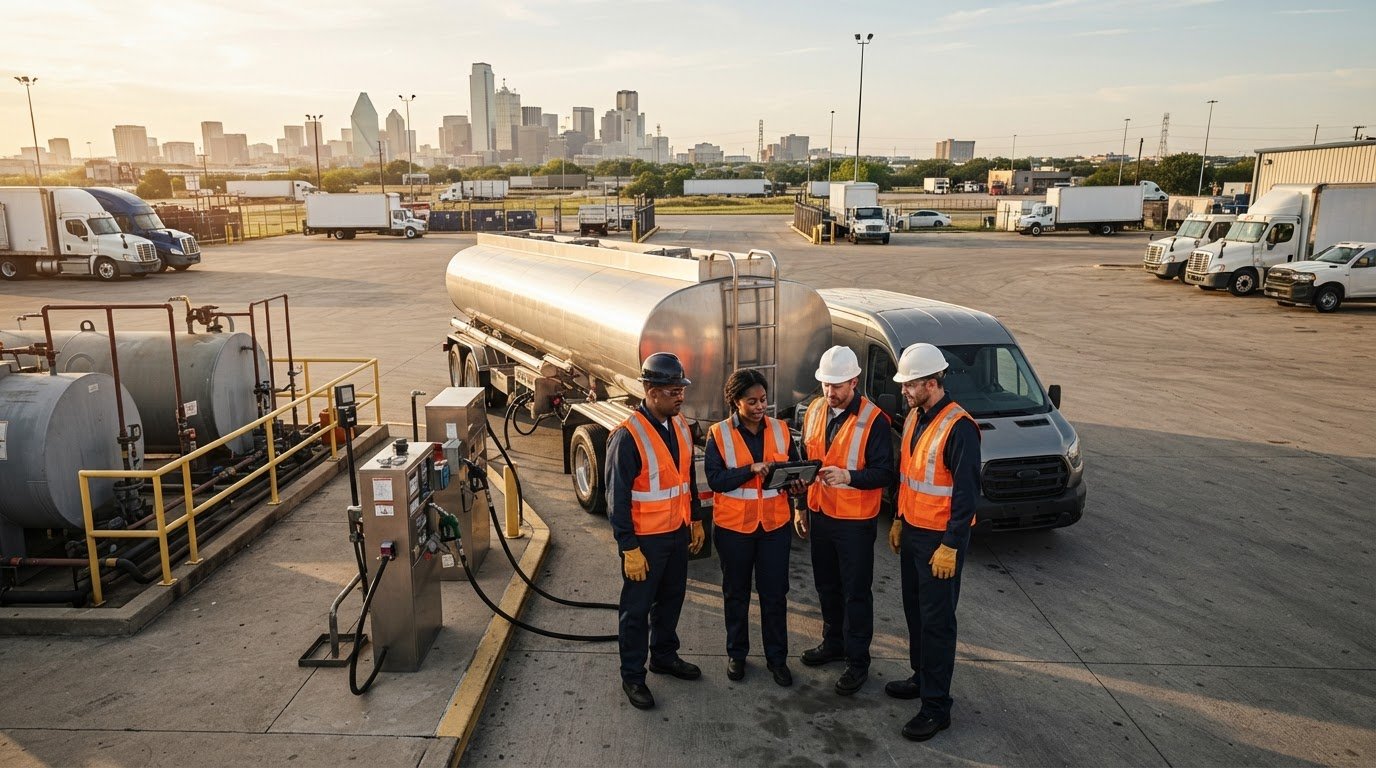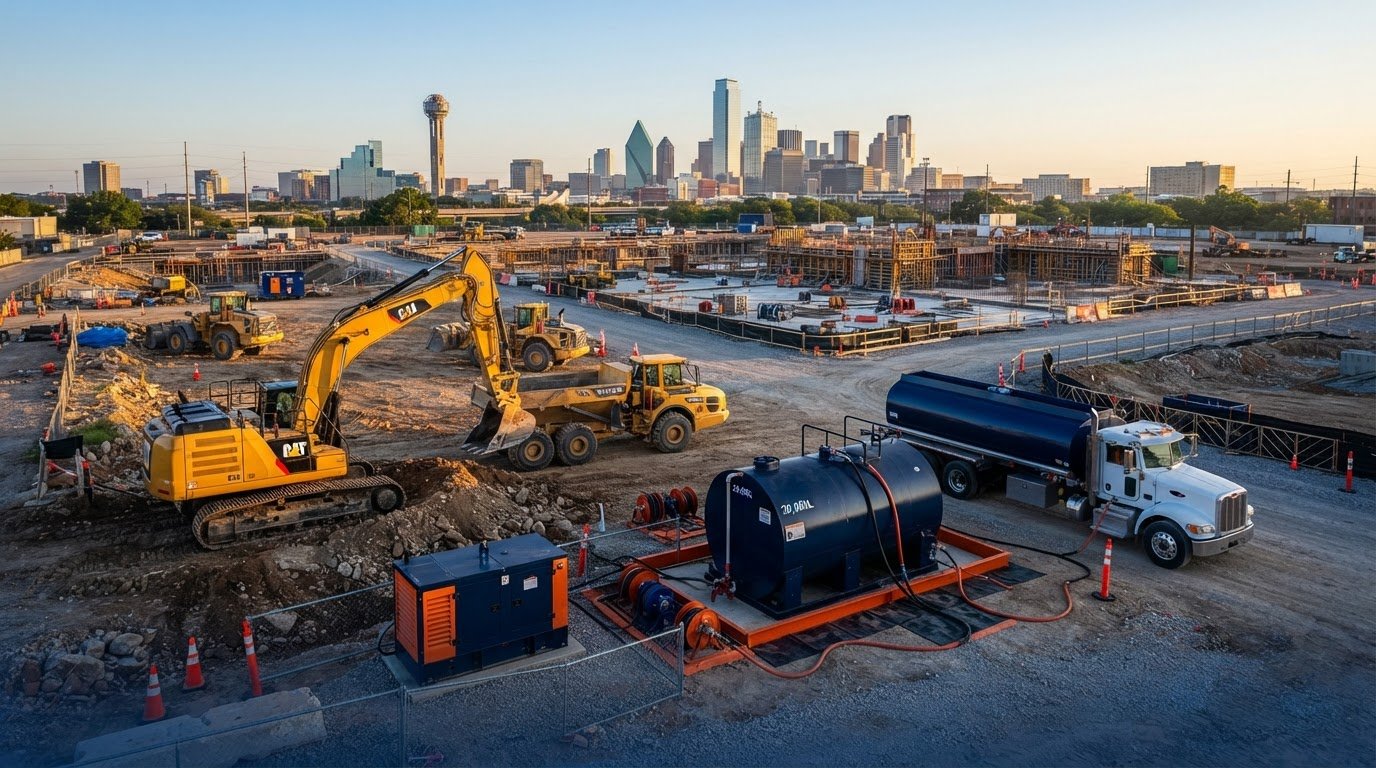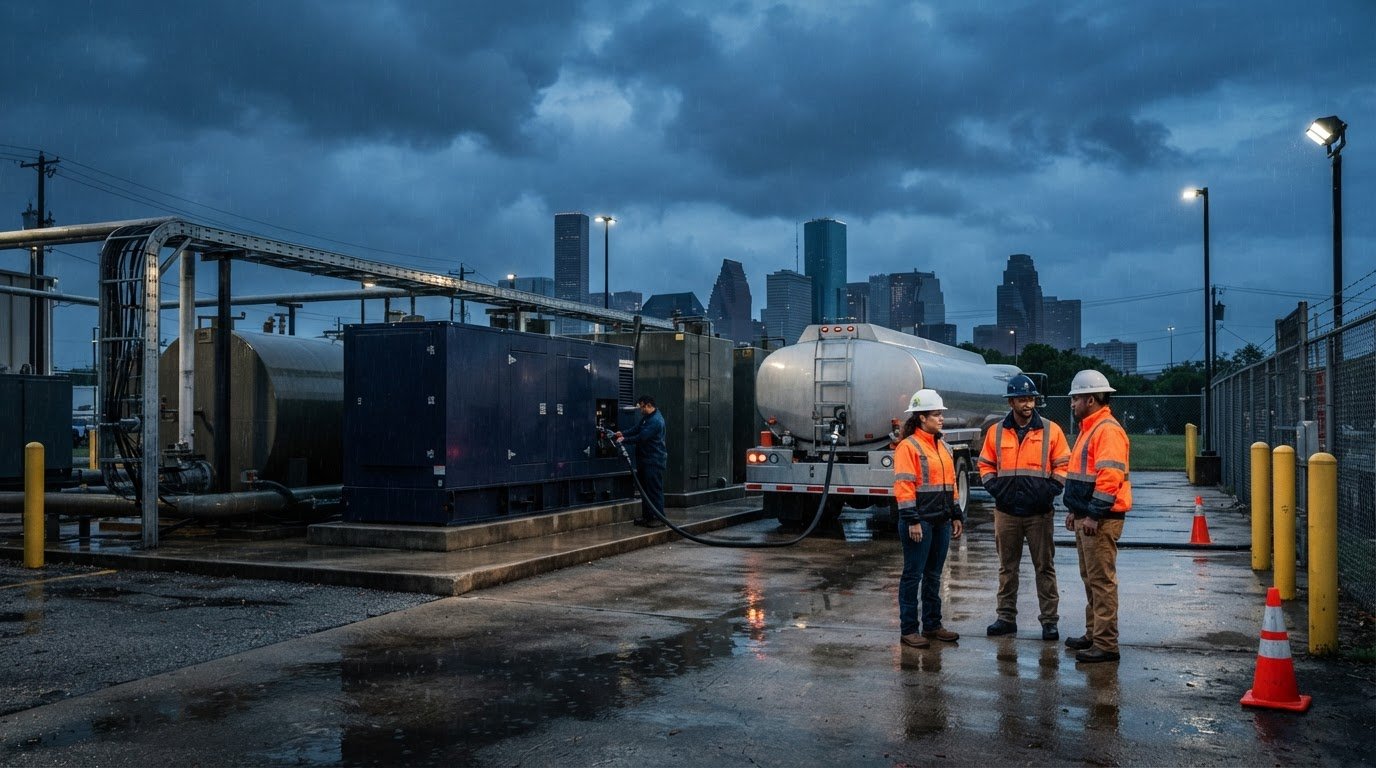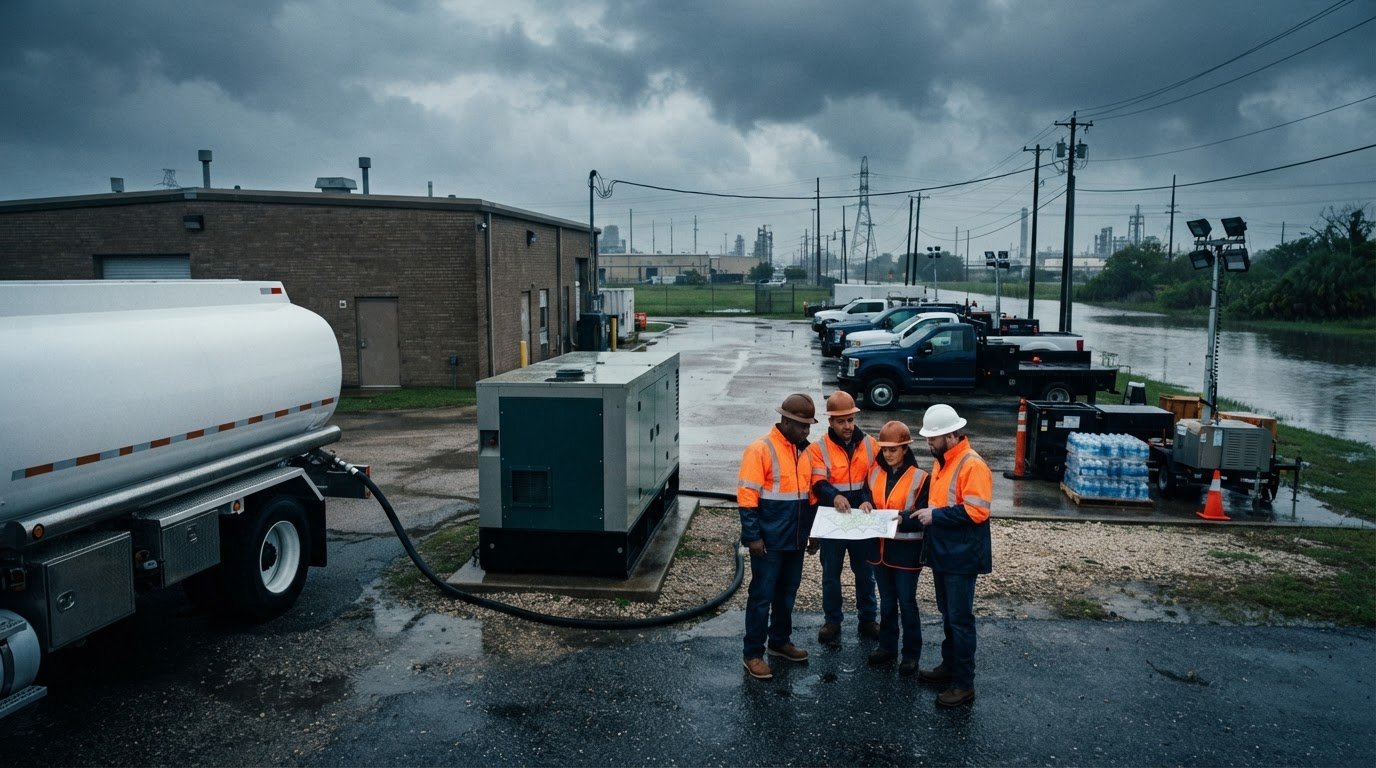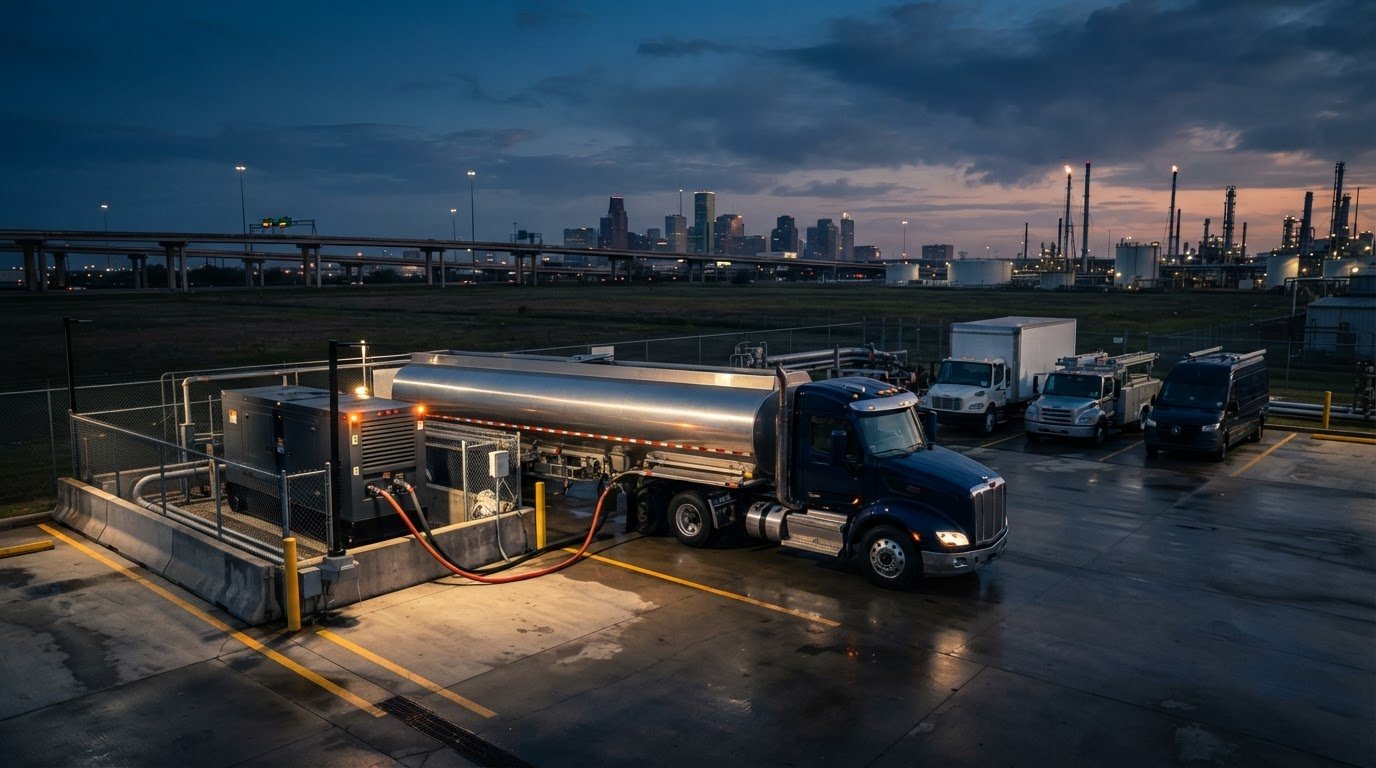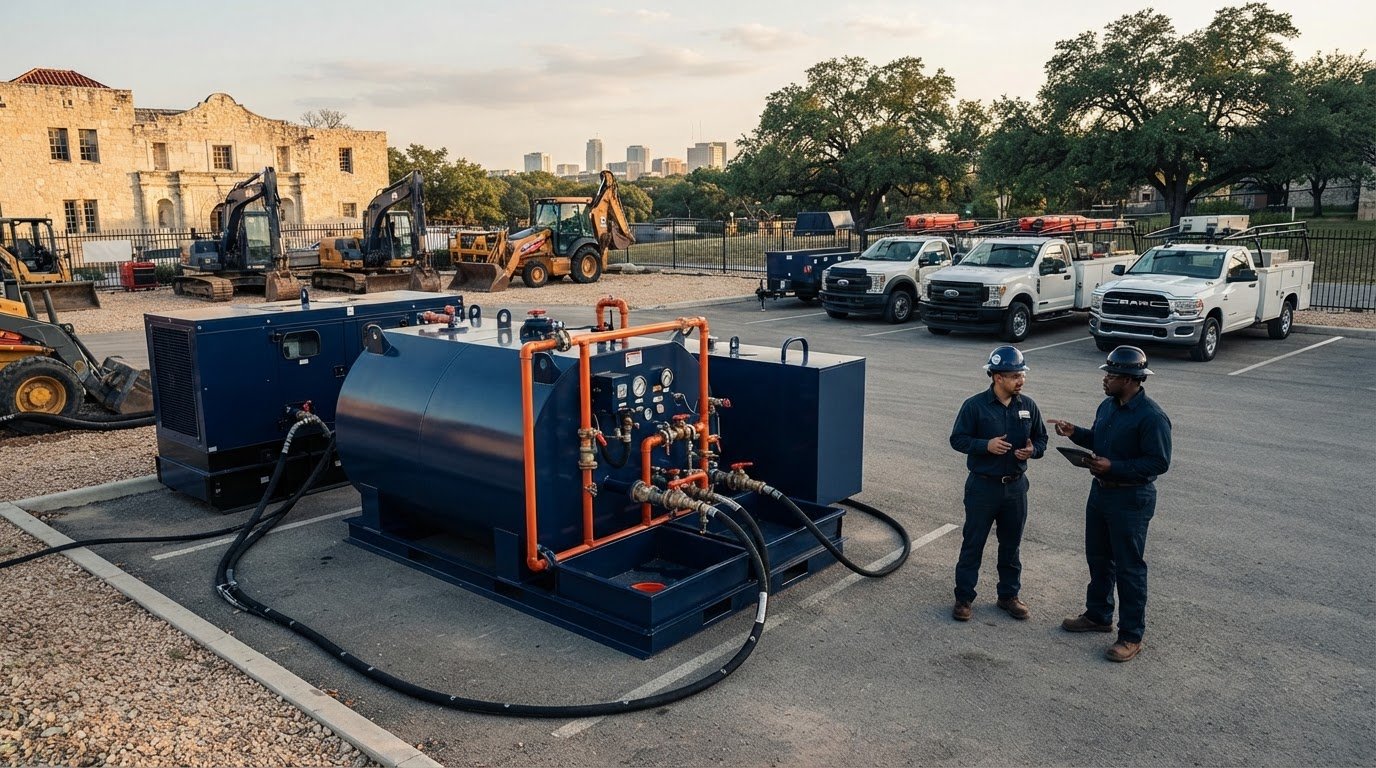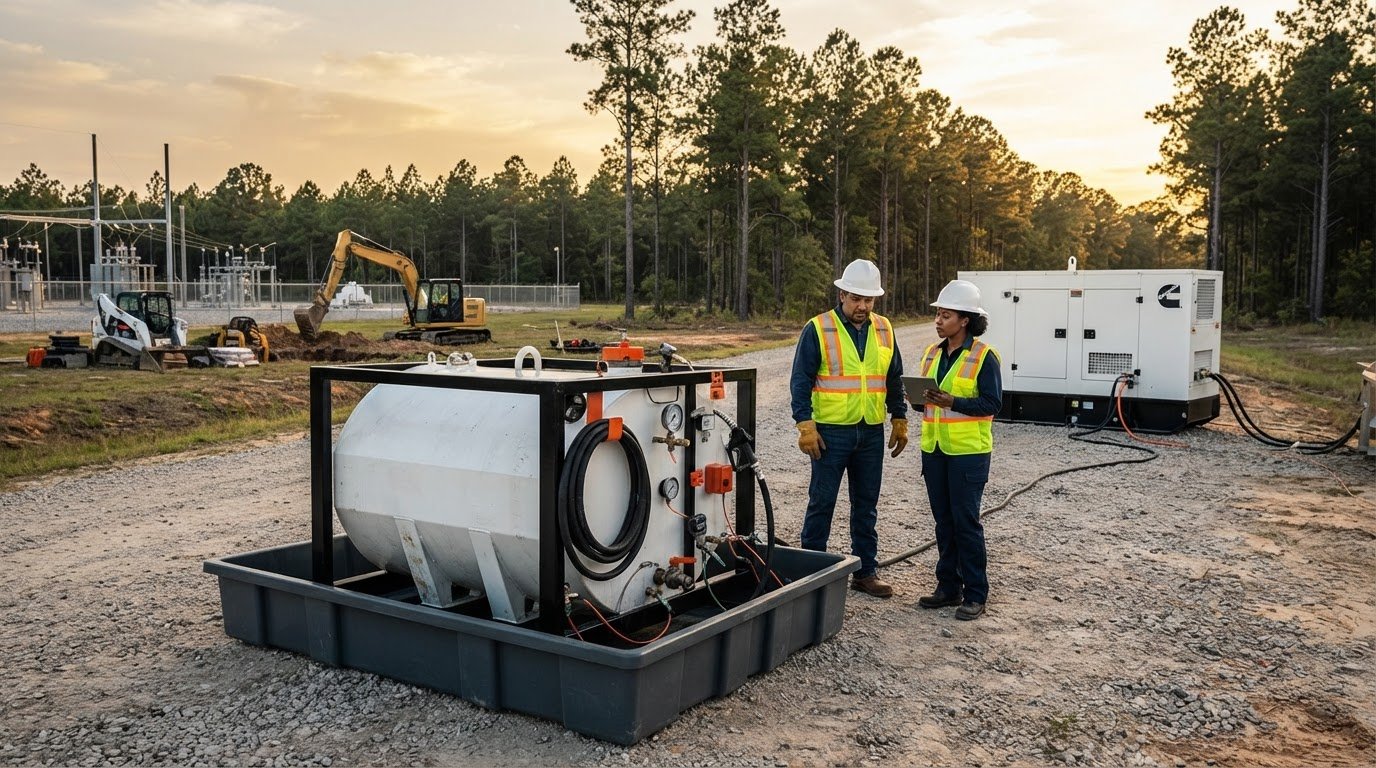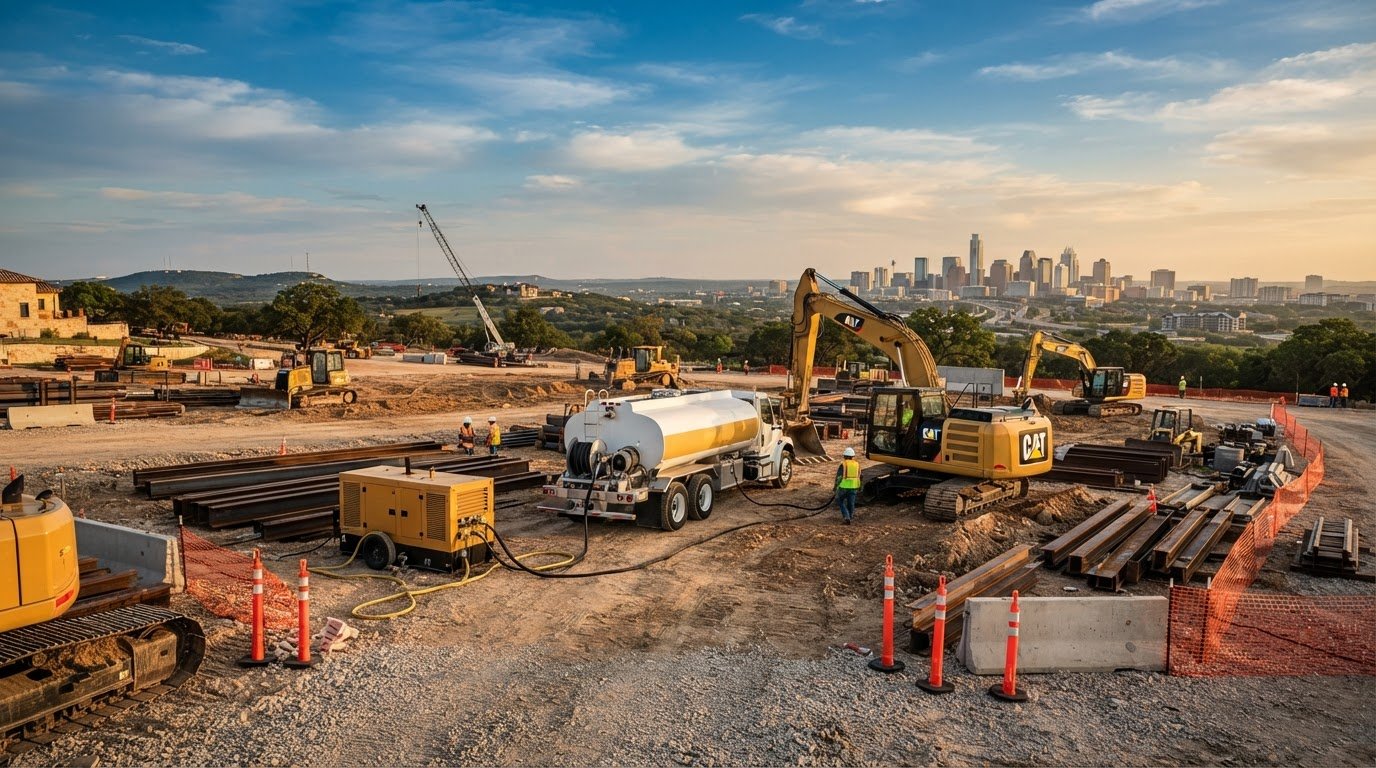
Can you outsource fuel logistics without giving up control of the decisions that keep your operation moving? Industrial fuel outsourcing can shift delivery coordination and on-site fueling to a specialist while your team retains oversight of fuel use, priorities, and schedules. It is worth considering when coordinating fuel pulls staff away from core work or supply interruptions put equipment, fleets, or facility operations at risk.
The goal isn’t to hand off everything. Separate the tasks a fuel partner can manage from the operational responsibilities your team should retain. This guide explains how to make that distinction, what information helps plan fuel support, and how to take a practical next step for a Texas operation.
We’ll look at how diesel and fuel delivery, equipment fueling, generator refueling, DEF delivery, emergency fuel delivery, and portable tank rentals can support different site needs. You’ll also learn how to assess fuel demand, access, storage, and scheduling before setting up an arrangement. React Fueling serves commercial fleets, construction sites, and industrial facilities in Houston, Magnolia, San Antonio, College Station, Austin, and Dallas.
What Industrial Fuel Outsourcing Covers, and What It Does Not
Industrial fuel outsourcing assigns agreed fuel logistics tasks to a specialist so your team can focus on operating the site, fleet, or facility. The scope may include physical fuel delivery, on-site fuel access, or fueling specific equipment. As with outsourcing more broadly, the arrangement defines which activities are handled externally and which remain internal. What is Outsourcing? offers a general overview of the concept.
The distinction matters. Fuel delivery and on-site fueling are physical logistics services. They don’t automatically include fuel-management software, purchasing strategy, supplier contracting, accounting, or other back-office functions. Industrial fuel outsourcing is most useful when it addresses a specific operational need, such as coordinating supply across sites, easing limited internal capacity, handling variable fuel demand, or supporting operations that depend on fuel availability. It shifts defined tasks, not all responsibility for fuel decisions.
Which fuel logistics tasks can be outsourced?
The right scope depends on where fuel is used, how demand changes, and what access each site requires. A business might arrange routine delivery to a facility, while a construction site may need fuel brought directly to equipment. Generator refueling serves a different purpose: supporting backup power equipment. Plan these activities separately when their schedules, locations, or operating requirements differ.
- Routine supply: Coordinate fuel delivery to a facility or designated site location based on operating needs.
- Equipment fueling: Arrange on-site fueling for machinery or fleets when moving equipment to a fueling point is impractical.
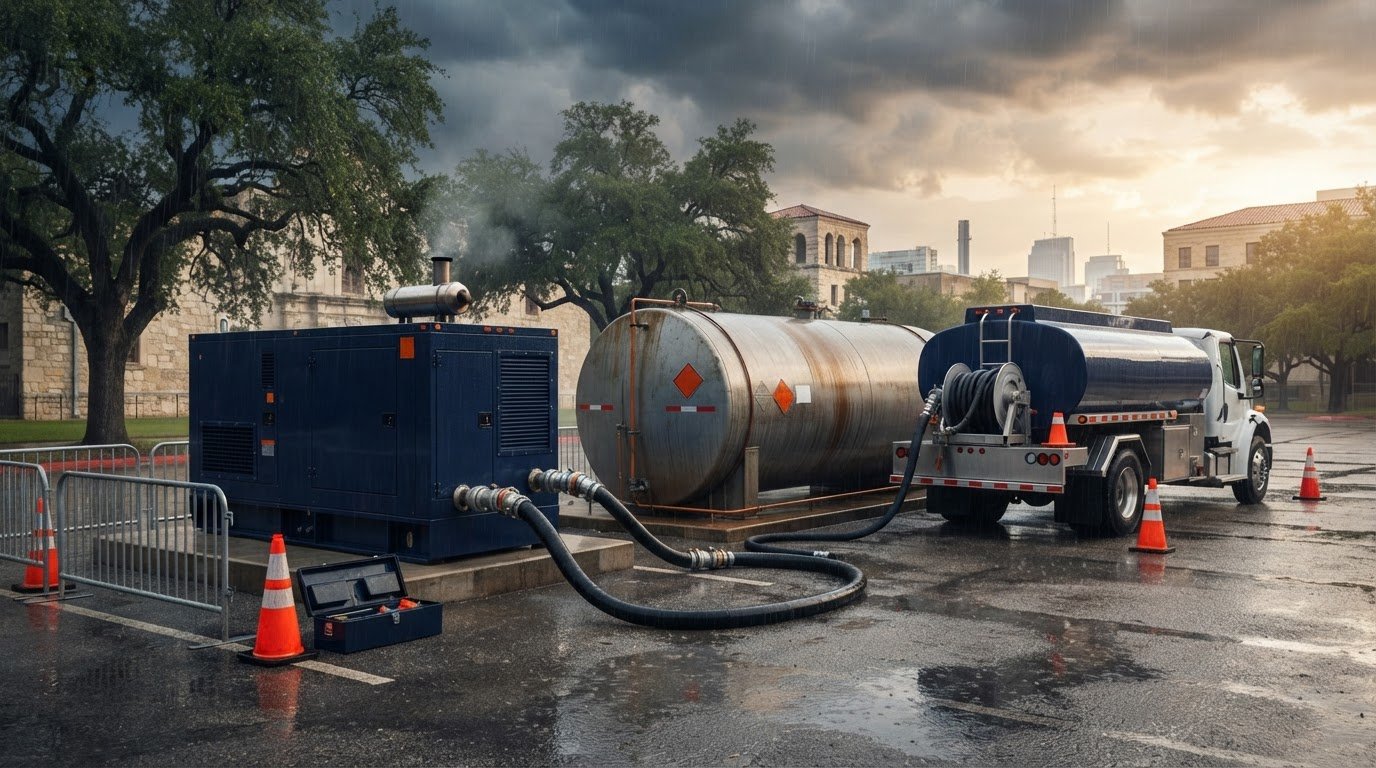
- Generator and site support: Plan generator refueling, emergency fuel delivery, DEF supply, or portable tank rentals around specific operational requirements.
For example, a company with stationary generators and mobile construction equipment may need both scheduled deliveries and equipment fueling, but not at every site. React Fueling provides commercial fuel services for fleets, construction sites, and industrial facilities, including equipment and generator fueling. Set the scope according to actual site operations, fuel use, and delivery access.
What remains under the customer’s control?
Your team retains the decisions that set direction and priorities. Internal leaders know production schedules, critical equipment, planned shutdowns, and which locations need attention first. Outsourcing delivery execution doesn’t replace that knowledge. It gives your team and fuel partner a defined way to act on it.
- Demand forecasts: Estimate expected use and flag changes in workload or operating schedules.
- Site priorities: Identify critical equipment, facilities, or locations when needs compete.
- Approvals and communication: Set who authorizes fuel activity, shares schedule changes, and receives delivery updates.
Industrial fuel outsourcing is delegated execution with retained oversight. Put responsibilities, approval paths, and communication routines in writing, then assign an internal point of contact for each site or operating group. This keeps your team informed and accountable while a specialist handles the agreed physical fuel logistics. The result is a clearer division of work, with operational priorities still set by the people responsible for the operation.
How an Outsourced Industrial Fuel Program Works
A workable program starts with a clear picture of how fuel supports each site, then turns that information into practical delivery coordination. Industrial fuel outsourcing works best when the plan reflects actual equipment, schedules, access conditions, and changing demand rather than relying on the same assumptions for every location.
Use this four-step sequence to build the operating plan:
- Define demand. Identify fuel needs tied to production, fleet activity, equipment use, and backup power. Note predictable peaks, seasonal changes, and planned work that could alter consumption.
- Map sites. Record each location, operating hours, delivery access, and the equipment or storage points fuel must reach. Include constraints that affect coordination, such as active work areas or changing site layouts.
- Set responsibilities. Decide who requests service, approves changes, communicates schedule updates, and handles exceptions. Clarify internal and provider roles before deliveries begin.
- Review service performance. Compare the coordination plan with actual site needs. Discuss missed assumptions, shifting demand, access issues, and adjustments that could make the plan more useful.
Map demand, sites, and operating schedules
Build a practical site profile, not just a list of addresses. For each location, document operating hours, equipment types, where fueling needs to occur, known consumption patterns, and periods when demand changes. A generator supporting a facility and mobile machinery on an active construction site have different fueling requirements, even if they operate within the same business.
Access details matter. Delivery coordination needs to account for where vehicles can enter, where equipment is positioned, and how fueling fits around site activity. Keep estimates and service cadence specific to the project. Don’t assume a standard volume or delivery frequency will suit every operation. For broader energy context, consult resources from the U.S. Department of Energy.
Set responsibilities and maintain visibility
Agree on a communication routine before operations depend on it. Name the internal contact for each site, establish who can authorize a request or schedule adjustment, and define how changes or exceptions are reported. A shift in production, equipment deployment, or access can affect fuel needs, so updates should reach the people coordinating the plan promptly.
Your team can retain oversight by reviewing fuel use against site priorities and sharing changes in operating plans. An integrated fuel management approach can help connect locations, equipment needs, and communication in one operating picture. Keep review discussions focused on whether the agreed service scope still matches what the sites are doing.
React Fueling serves commercial fleets, construction sites, and industrial facilities with commercial fuel services, including delivery and equipment and generator fueling. Share site requirements, operating schedules, and access details to develop a practical coordination plan that reflects each location’s needs.
Outsource or Keep Fuel Operations In-House? A Decision Framework
The choice isn’t all-or-nothing. A stable facility with consistent fuel use and staff available to coordinate supply may be well suited to in-house management. A business with dispersed locations, shifting site activity, or competing demands on its operations team may benefit from outsourcing defined logistics tasks. Assess each operation against the same factors before deciding.
Workload: In-house coordination may fit when requests are predictable and staff can manage them without losing focus on core duties. Outsourcing may help when arranging deliveries and site fueling regularly competes with other operational work.
Site distribution: A concentrated operation can be simpler to coordinate internally. Multiple sites with different access conditions, schedules, or priorities add coordination demands an outsourced logistics arrangement can address.
Demand variability: Stable, consistent use can support a routine internal process. Changing production schedules, equipment deployment, or project phases may call for a more adaptable plan.
Continuity needs: Consider how fuel availability affects essential equipment, fleets, or backup power operations. Outsourcing can support planning and delivery coordination, but it can’t guarantee uninterrupted operations.
Internal capacity: Keep coordination in-house if the team has clear ownership and enough time to manage it. If responsibilities are fragmented or fuel tasks routinely displace higher-priority work, defined external support may be worth evaluating.
These signals aren’t a cost formula. Outsourcing doesn’t automatically lower costs, and keeping work in-house isn’t automatically more efficient. Compare the time and attention required to coordinate fuel with the operational value of having internal staff focus elsewhere. For supply-chain context, the American Fuel & Petrochemical Manufacturers provides industry information on fuel and petrochemical manufacturing.
When does outsourcing make operational sense?
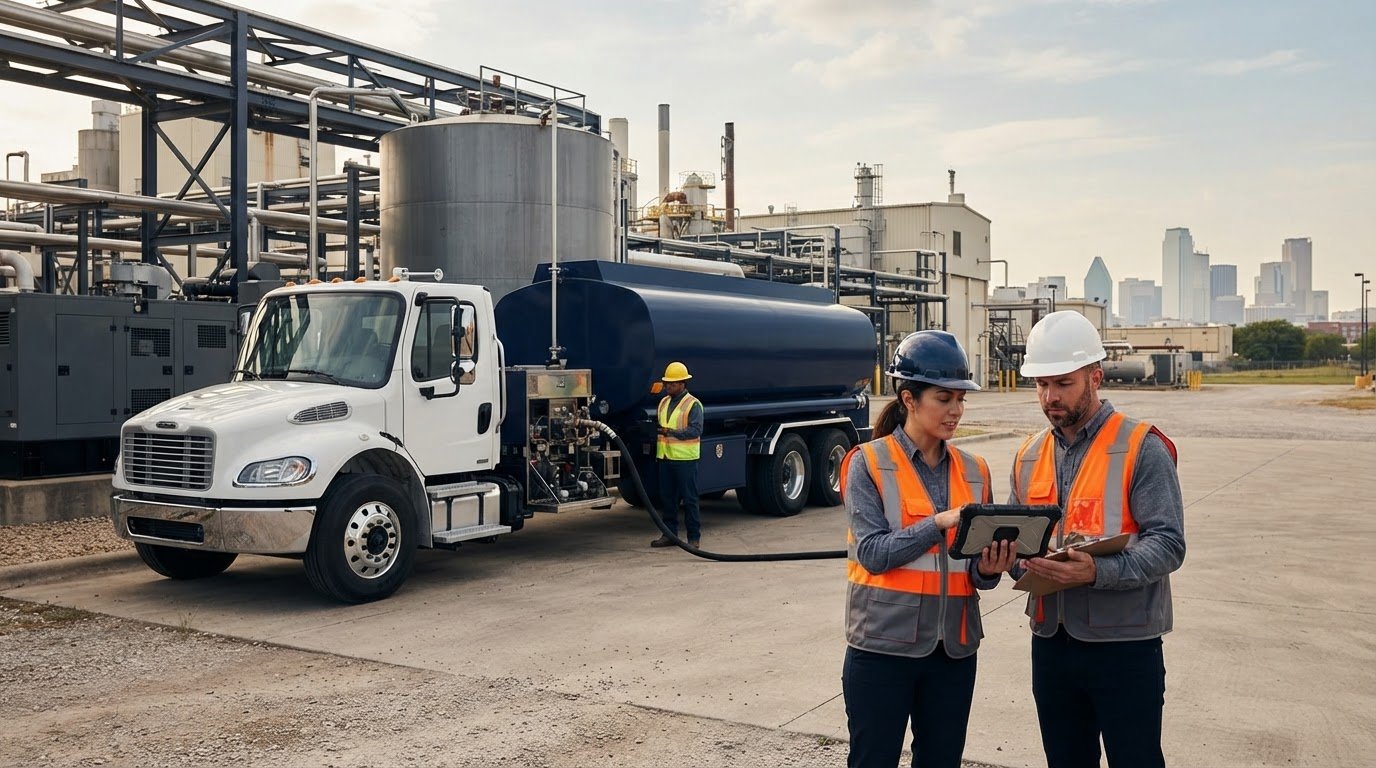
Look closely at the handoffs. A team coordinating several sites may spend time reconciling delivery needs, access constraints, and shifting priorities. If equipment fueling or generator refueling also needs to fit around active operations, a specialist can take on those agreed physical logistics tasks. For example, a construction operation with changing equipment locations may need a different arrangement from a facility with a consistent delivery point. Base the decision on actual site conditions, not a blanket rule.
How can a business retain control?
Define the boundary before work begins: which tasks are delegated, who can authorize requests, how site priorities are communicated, and when the arrangement is reviewed. Choose operational indicators that fit the work, such as planned versus actual coordination, changes to requests, or recurring access issues. Delegated fuel logistics need not mean delegated accountability. Internal leaders still set priorities and assess whether the arrangement supports operations. For sites that rely on direct fueling, an equipment fueling service can be part of a specifically scoped logistics plan.
Start with the locations where coordination takes the most effort or changing demand is hardest to manage. Compare them with operations that are stable and well supported internally. That contrast helps determine where to retain the process, where to delegate execution, and how to preserve clear oversight across both.
Plan Industrial Fuel Outsourcing for Texas Sites
A practical plan starts with accurate site information. Before coordinating industrial fuel outsourcing, assemble a readiness profile for each location rather than relying on one company-wide description. Sites can have different equipment, operating hours, access conditions, and fueling priorities. A clear profile helps align the logistics plan with how each operation runs.
What information should an operations team prepare?
Gather the details a fuel partner needs to understand the site and coordinate access. Keep information current as equipment moves, schedules change, or project demands shift. Use this checklist to prepare:
- Site details: Address, delivery entrance, relevant access instructions, and the appropriate on-site contact.
- Operating schedule: Hours of operation, active work periods, and known schedule changes that could affect coordination.
- Equipment inventory: Equipment and generators requiring fuel, their locations, and which assets take priority.
- Fuel requirements: Expected demand patterns, planned changes in use, and the types of fueling support needed.
- Communication roles: Internal request and approval contacts, escalation points, and who should receive updates about changes.
Share security-sensitive details, such as controlled-entry instructions, only through appropriate operational channels. For equipment-specific planning, include on-site equipment fueling alongside the site layout and work schedule. The objective is to make access and coordination clear without circulating sensitive information more widely than necessary.
How should Texas-specific requirements be handled?
Separate operational planning from legal and code review. A site profile can describe where fueling takes place, what equipment is involved, and how access works. It shouldn’t assume which permits, storage rules, or other requirements apply. Those questions can depend on the specific site, fuel, storage arrangement, and jurisdiction, so verify applicable requirements with qualified authorities using current, authoritative guidance.
This matters when a plan spans multiple locations. React Fueling serves Texas operations in Houston, Magnolia, San Antonio, College Station, Austin, and Dallas. Regional coverage provides useful context for planning commercial fuel support, but it doesn’t replace a site-specific review of applicable requirements or operating conditions.
Before finalizing the plan, assign an owner to keep each site profile accurate. Review it when equipment changes location, operating hours shift, or demand patterns change. A short, consistent record of those updates can prevent outdated instructions from disrupting delivery coordination.
For Texas operations preparing to coordinate commercial fuel delivery or on-site fueling, discuss your site requirements with React Fueling.
React Fueling's Industrial Fuel Outsourcing: Scope and Next Steps
For commercial fleets, construction sites, and industrial facilities, industrial fuel outsourcing can mean assigning specific on-site fuel logistics to a specialist while your team continues to set operating priorities. React Fueling provides commercial fuel support across Houston, Magnolia, San Antonio, College Station, Austin, and Dallas. The right scope depends on what each location needs, from planned supply to direct fueling for equipment.
Match the service scope to the operational need
Start by separating routine supply needs from the requirements of individual assets. React Fueling provides diesel and fuel delivery for commercial operations. For equipment that needs fuel at the worksite, an equipment fueling service is a distinct option. Generator fueling supports backup power assets. The plan can also include emergency fuel delivery, DEF, or portable tank rentals where those needs apply.
Match each service to a real operating requirement. A facility with established supply needs may prioritize delivery coordination, while a construction operation may need fuel brought to equipment as work progresses. A site with generators may have different requirements from its fleet. Avoid assuming a fixed schedule or identical scope across locations. Use site activity, access, and demand patterns to shape the arrangement.
Start a project conversation with clear requirements
A focused discussion is easier to scope when you can describe where support is needed and what it must serve. Prepare site locations, asset types, operating schedules, expected fuel needs, access considerations, and the internal contact responsible for requests or changes. Note which equipment or facilities take priority, and how demand may shift as work or production changes.
For Houston-area operations, commercial diesel planning should account for the location and operating needs of the fleet or facility, rather than relying on a generic delivery assumption. Share the site context and expected use so the discussion can focus on the practical requirements of that operation. The same approach helps teams with several Texas locations distinguish shared needs from site-specific ones.
Before reaching out, gather the information in a concise site summary. Include current priorities and known changes that could affect fuel use, such as equipment being added or moved. This gives the conversation a clear starting point without requiring your team to settle every detail in advance. React Fueling provides delivery, equipment and generator fueling, emergency delivery, DEF, and tank rentals to support the operational needs you outline.
Ready to scope fuel support for your operation? Share your site locations, operating needs, and fuel requirements with React Fueling to start a practical project discussion.
Put Your Fuel Plan Into Motion
The next step is to turn operational needs into a defined scope. Start with one site or a group of locations where fuel coordination creates the greatest strain, then identify what your team wants to manage internally and where outside logistics support could help. A focused starting point makes industrial fuel outsourcing easier to assess against real operating conditions.
React Fueling provides commercial fuel delivery for industrial facilities, fleets, and construction sites in Houston, Magnolia, San Antonio, College Station, Austin, and Dallas. Bring your site locations, operating priorities, and fuel requirements to the discussion so the scope reflects the work your operation needs to support.
Discuss your industrial fuel requirements with React Fueling and take the next step toward a practical plan. With clear priorities and a defined scope, your team can move forward with greater confidence in how fuel logistics fit the operation.
Frequently Asked Questions
Is industrial fuel outsourcing the same as fuel management?
No. Industrial fuel outsourcing usually means assigning defined physical fuel logistics, such as delivery or on-site fueling, to a specialist. Fuel management is a broader operational discipline that can include forecasting demand, monitoring consumption, setting purchasing policies, and reviewing usage. A company may outsource delivery while keeping its fuel planning and records in-house. Treat these as related but distinct functions, and define which responsibilities belong to each part of your operation.
Can a company outsource fuel delivery while keeping control of its operations?
Yes. Your team can retain authority over operating priorities, delivery approvals, and changes to site plans while a provider handles agreed delivery tasks. For example, an operations manager can determine which facility or asset takes priority during a schedule change, then communicate that direction through the agreed process. Clear authority and reporting help maintain visibility. Outsourcing delivery doesn’t transfer responsibility for the decisions that guide your operation.
How much of an industrial fuel operation should a business outsource?
There’s no universal share to outsource. A business might delegate only delivery coordination for a location while keeping its records and planning in-house. Another may also need direct fueling for equipment or generators. Start with the specific tasks that consume staff time or create difficult handoffs. Keep functions internal if your team can manage them effectively, and expand the outsourced scope only when a clear operational need supports it.
What information is needed to plan outsourced fuel delivery?
Provide enough detail to distinguish locations and their requirements: site addresses, delivery access instructions, operating hours, equipment or storage points, and the internal contact responsible for coordination. A recent example of a demand change, such as a new project phase or equipment shift, can help explain expected variation. Also identify priority assets and approval steps. Keep restricted entry or security information within appropriate channels rather than general planning documents.
Can outsourced fuel logistics support multiple Texas locations?
Yes. A multi-site plan can organize separate requirements while maintaining a consistent communication structure. React Fueling serves commercial operations in Houston, Magnolia, San Antonio, College Station, Austin, and Dallas. A fleet operating in Houston and a construction site near Austin, for example, may have different access arrangements and fueling needs. Document each location separately so site-specific requirements remain clear within the broader coordination plan.
What happens if fuel demand changes after an outsourcing plan is established?
Update the plan when operating conditions change. A new project phase, equipment relocation, revised work schedule, or unexpected increase in asset use can affect fuel requirements. Notify the designated contact, describe what changed, and identify any resulting priority shift. The parties can then review the requested adjustment against the agreed scope and site conditions. Avoid relying on old estimates when the operation has materially changed.
Does industrial fuel outsourcing include DEF and generator fueling?
It can, if those needs are included in the agreed scope. React Fueling provides DEF fluid delivery and generator fueling alongside commercial fuel and diesel delivery. These services address different operating requirements: DEF supports applicable diesel equipment needs, while generator fueling supports backup power assets. Identify the relevant equipment, locations, and operational priorities so the plan distinguishes these requirements from routine fuel delivery.