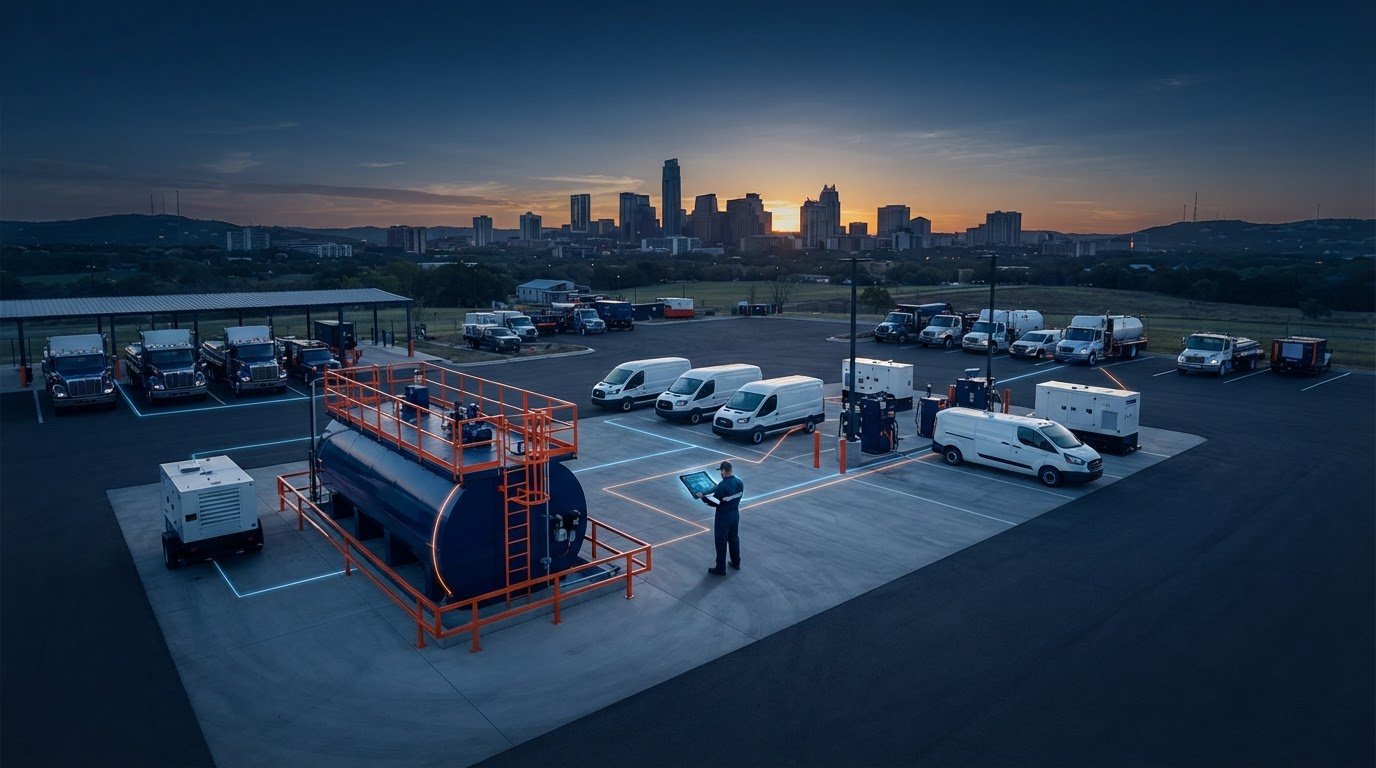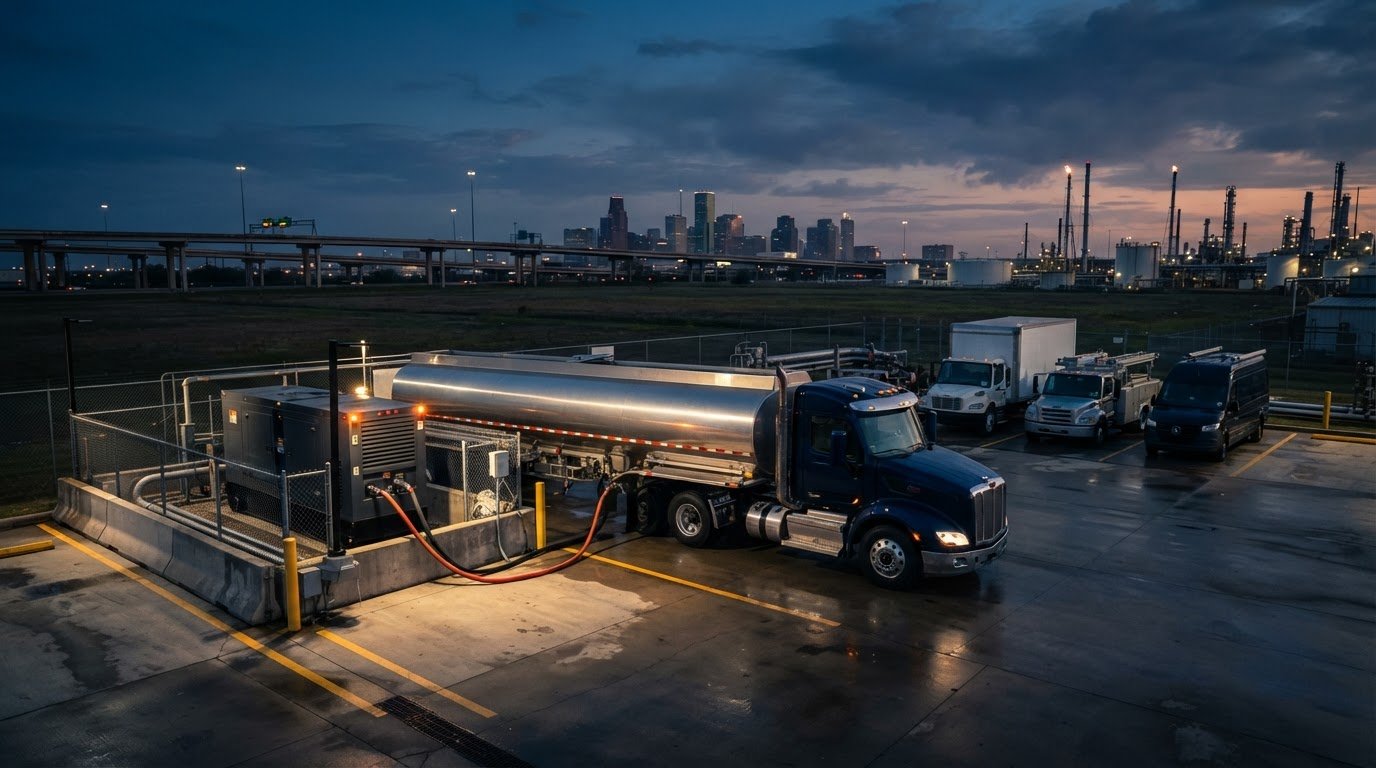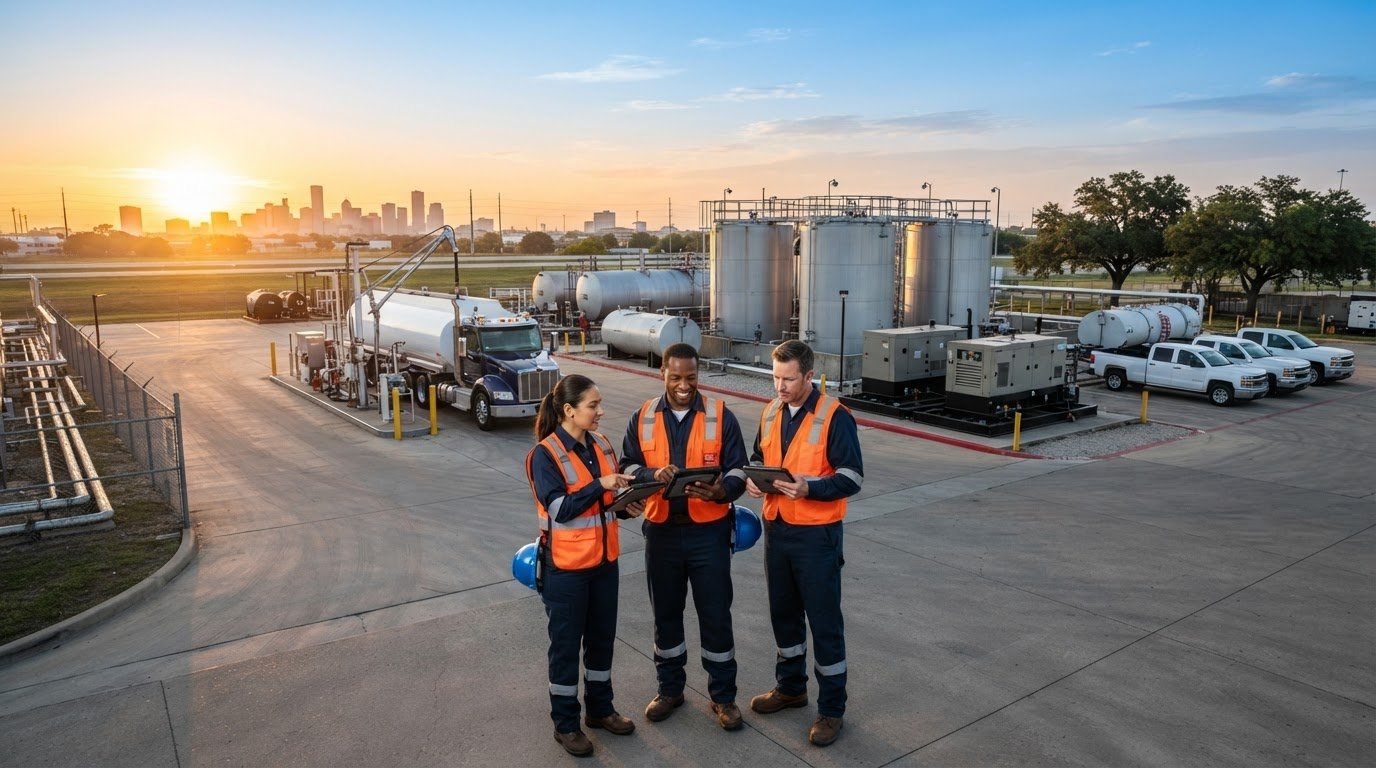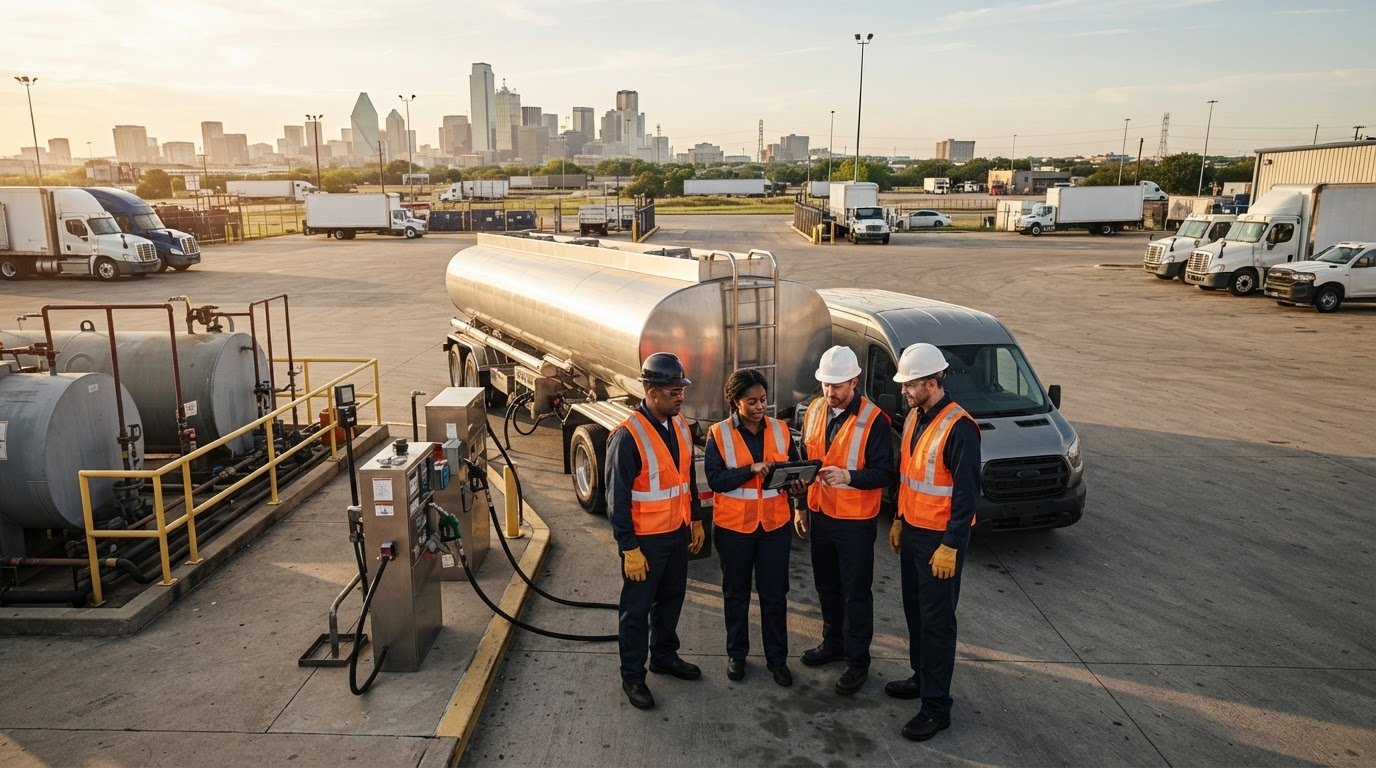
What if the fuel run, not the equipment, puts your job schedule behind? When operators or crew members leave an active site to refuel, a construction equipment refueling service near me can help keep work moving. Fuel access should fit the machinery, site layout, and operating schedule, rather than interrupt them.
Direct-to-equipment fueling brings fuel to machinery at the job site. Portable fuel tank rentals provide another option when a project needs fuel stored on-site. The right approach depends on where equipment operates, how often it needs fuel, and how the site can manage storage and access. Matching fueling to those conditions helps crews plan around the work.
This guide compares common job-site fueling approaches and explains what to prepare when arranging service. React Fueling provides equipment fueling, fuel delivery, and portable tank rentals for construction operations in Houston, Magnolia, San Antonio, College Station, Austin, and Dallas.
Need Construction Equipment Refueling Near You? Start With the Job-Site Fueling Problem
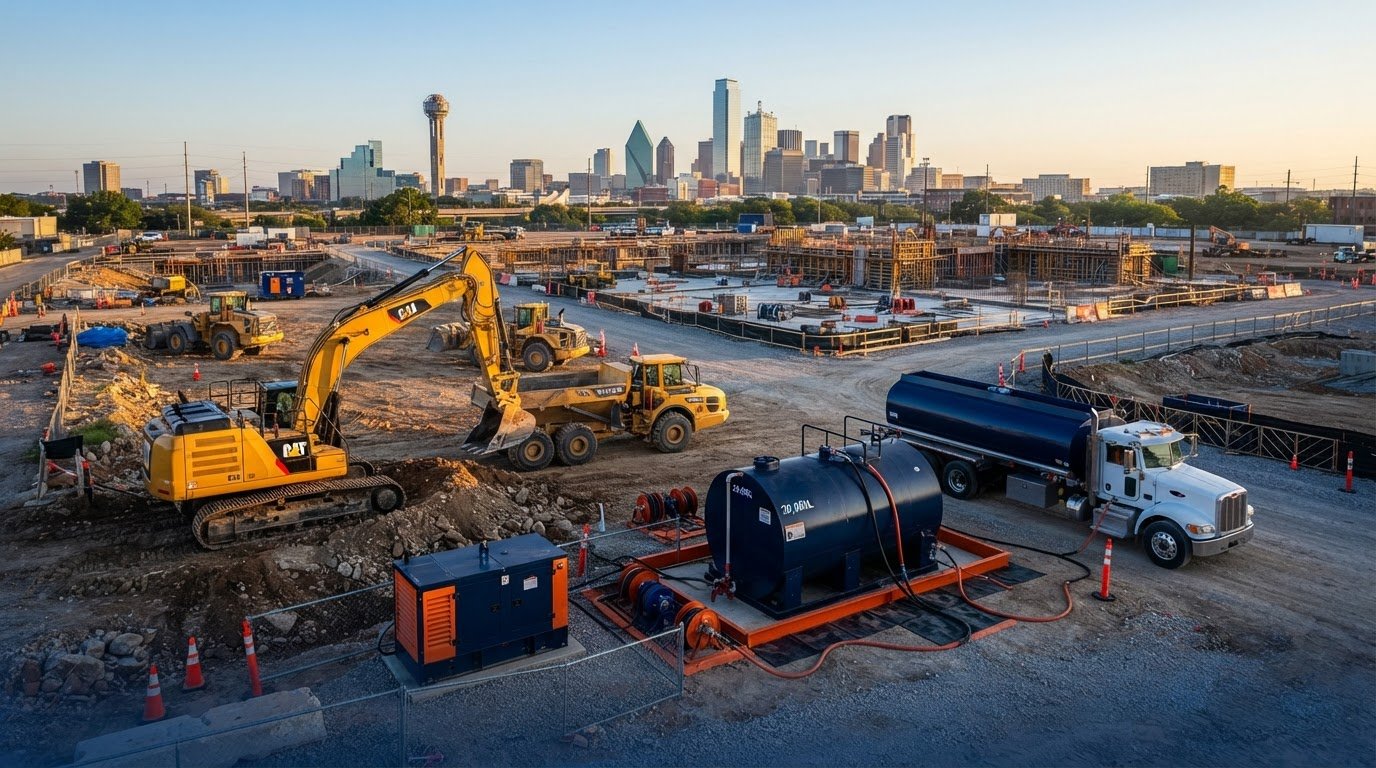
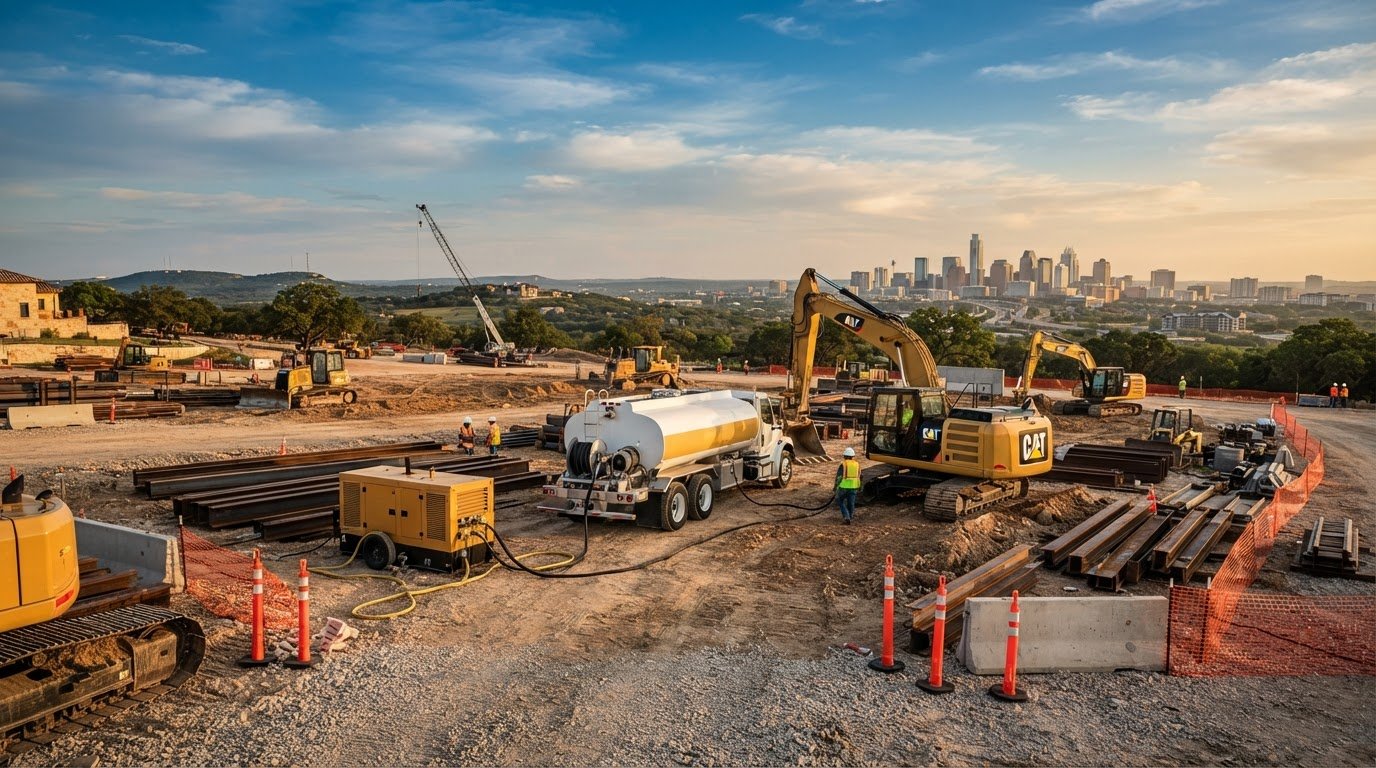
Construction equipment refueling brings fuel to machinery at an active job site, reducing the need to send operators or crew members away for fuel. That matters when a machine is needed for a planned task: an excavator waiting for its operator or a loader standing idle can disrupt the work sequence around it. A search for a construction equipment refueling service near me often starts with this practical problem: keeping equipment supplied while crews stay focused on site work.
Equipment fueling and bulk fuel delivery address related but different needs. Equipment fueling delivers fuel directly to machinery at the job site. A bulk fuel delivery brings fuel to a site for storage and dispensing as the project requires. The first approach centers on fueling equipment; the second can support a site that manages its own fuel supply. React Fueling provides equipment fueling and fuel delivery, so construction teams can choose the approach that fits their operating pattern. Learn more about equipment fueling service.
Which construction equipment can benefit from on-site refueling?
Excavators, loaders, dozers, and other diesel-powered machinery are familiar examples of equipment that may need fuel at the work site. The range of heavy equipment used in construction makes it important to plan for the project’s actual machinery, rather than assume one fueling routine suits every machine. Equipment type, fuel requirements, and how each unit is used all shape a practical arrangement.
Start by listing the machines operating on site, where they work, and how their fueling needs fit the schedule. This gives the fueling plan a useful foundation without assuming every piece of equipment uses the same fuel or follows the same procedure.
Why do local teams search for equipment refueling near me?
Local service-area fit matters because job sites have specific access points, active work zones, and operating schedules to coordinate around. Construction companies working across several Texas markets may also need a fueling approach that makes sense at more than one project location. React Fueling serves Houston, Magnolia, San Antonio, College Station, Austin, and Dallas, providing equipment fueling and related fuel delivery in those markets.
Before choosing an approach, map equipment locations and consider how fuel access can fit around site activity. These details help clarify whether direct-to-equipment fueling or on-site storage better suits the project. For a broader look at site-level planning, explore this construction site fuel delivery guide. A clear picture of the equipment, location, and work pattern makes coordination more practical.
How Construction Equipment Refueling Works at an Active Job Site
A coordinated request starts with a clear picture of the site and the equipment that needs fuel. Direct-to-equipment fueling brings diesel to machinery at the job site, while a portable fuel tank rental provides an option for storing fuel on-site. React Fueling’s equipment fueling service supports job-site plans based on the machinery and delivery needs the project identifies.
Prepare the details in sequence:
- Identify the equipment. List the machinery to be fueled and note differences in fuel needs or operating routines.
- Share the job-site location. Provide the project address and any details needed to identify the correct site.
- Discuss access. Explain which entrance to use, provide site access instructions, and identify active or restricted areas.
- Coordinate delivery requirements. Share preferred timing, equipment locations, and site procedures so planning accounts for active operations.
These details turn a general fuel request into a workable site plan. If machines are spread across different work zones, identifying where they operate can help clarify whether direct fueling or on-site storage better fits the project. Sharing access constraints and timing preferences also helps align delivery with site activity, rather than treating the job location as an unrestricted drop point.
What information helps coordinate equipment refueling?
Start with the machinery list, project location, and expected operating pattern. Then describe the site entrance, delivery route, active work zones, and procedures crews use to manage access. Include timing preferences and explain where equipment will be working. A search for a construction equipment refueling service near me is most useful when it leads to a plan based on these job-specific details.
When does a portable fuel tank make sense?
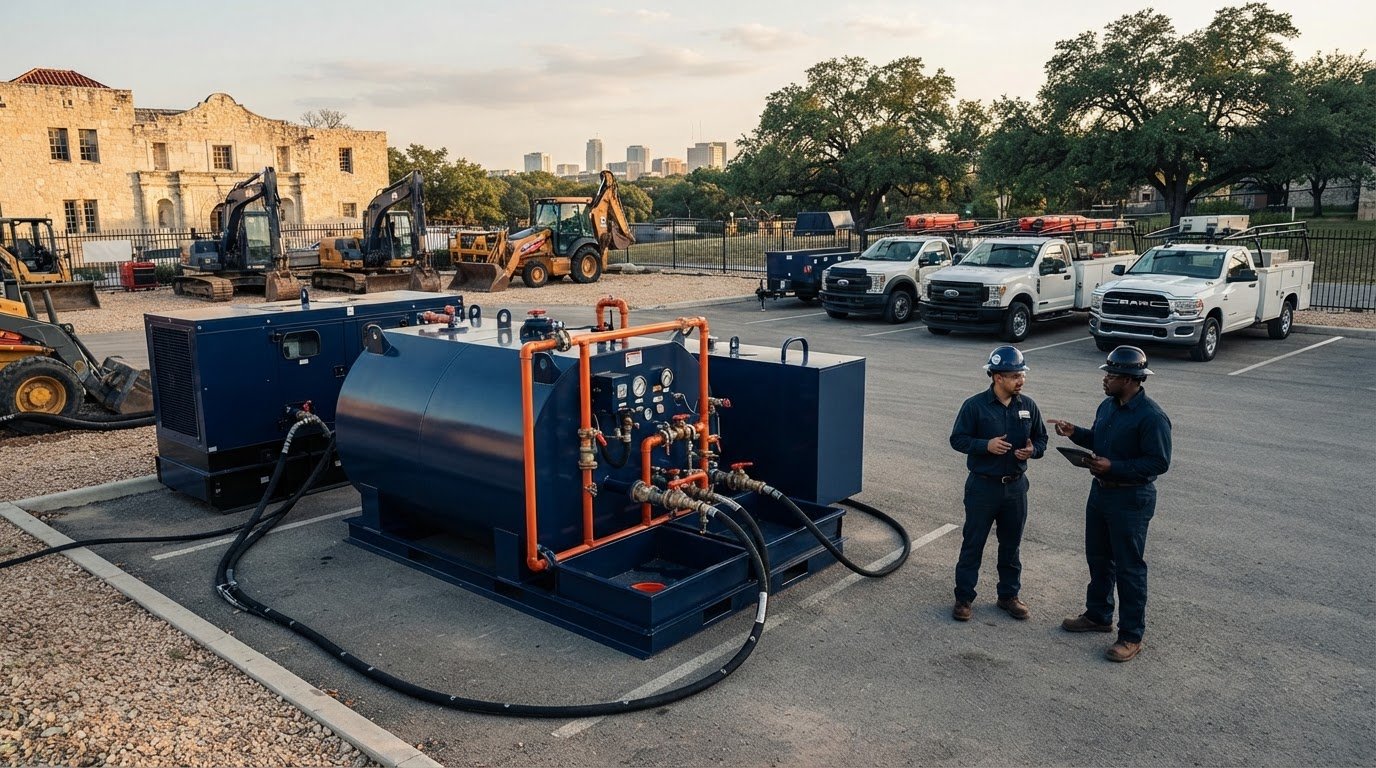
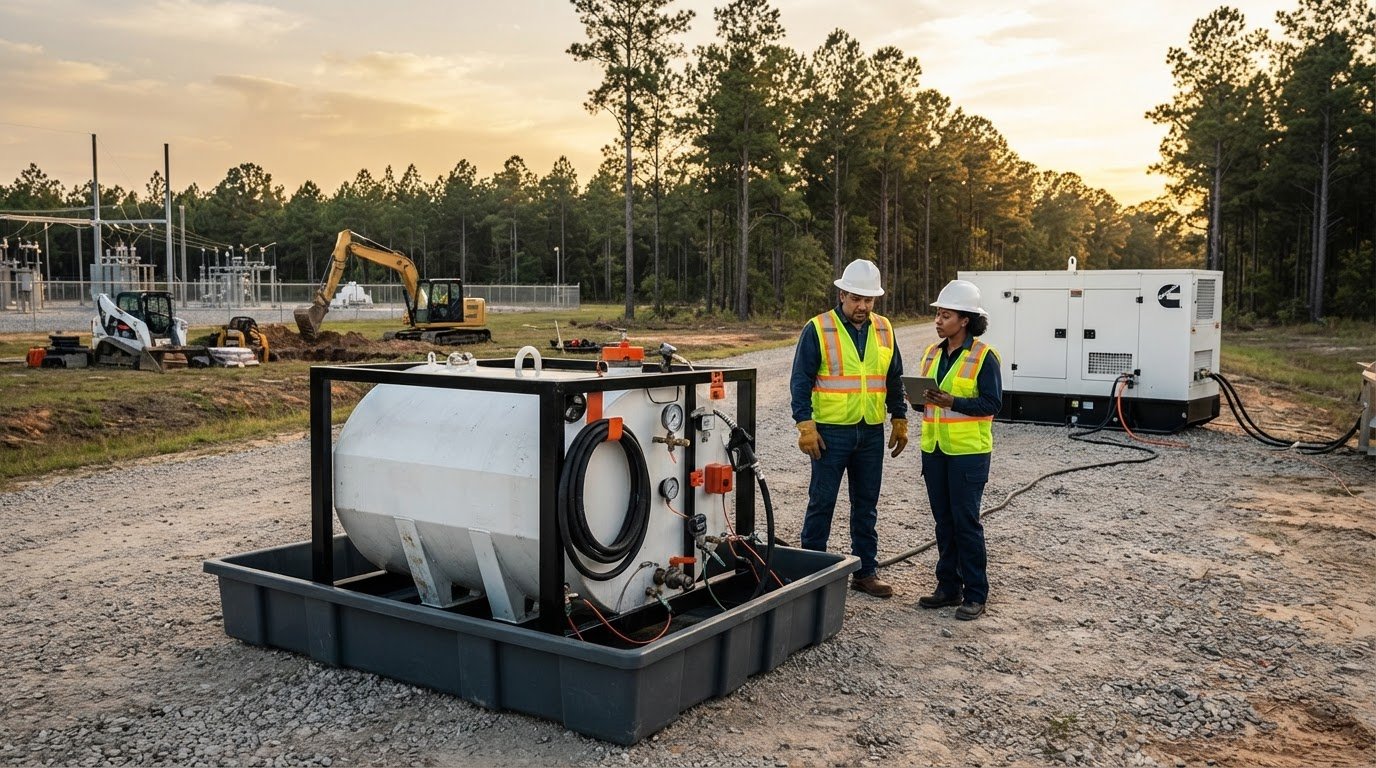
On-site storage may suit a project with recurring fuel needs or machinery spread across a broad work area. Direct fueling brings fuel to equipment; a portable tank keeps fuel at the site for project use. Neither setup is automatically right for every operation. Consider equipment locations, how often fuel is needed, and how the crew will manage site storage. For additional planning context, see this construction equipment fueling guide.
Storage also calls for attention to site requirements. Before establishing an aboveground tank setup, consult the Texas Commission on Environmental Quality guidance for aboveground storage tanks and account for the responsibilities that apply to your project. React Fueling offers portable fuel tank rentals alongside equipment fueling, giving teams distinct options to consider. To discuss project details and fueling needs, share your job-site requirements.
Direct Equipment Fueling vs. On-Site Fuel Storage: Compare the Job-Site Fit
Both approaches bring fuel closer to construction work, but they serve different operational needs. Direct equipment fueling delivers fuel to machinery; a portable tank rental gives a project an on-site storage point. Compare the options against equipment locations, how often fuel is needed, and how your team can manage access and coordination.
| Job-site factor | Direct equipment fueling | Portable fuel tank rental |
|---|---|---|
| Project duration | Can suit projects where machinery needs fuel delivered during operations. | May fit recurring needs over a project period. |
| Equipment concentration | Useful when equipment locations can be coordinated for fueling. | May suit equipment working across a broader site. |
| Fuel access | Fuel is brought to the machinery being serviced. | Fuel is kept at an on-site storage point for project use. |
| Site layout | Requires planning around equipment locations and delivery access. | Requires a suitable place for storage and site access. |
| Coordination | Teams share equipment and operating needs for delivery planning. | Teams plan storage use and how it fits site requirements. |
This is a job-fit decision, not a universal ranking. If machines are grouped and accessible, arranging fuel delivery to the equipment may reduce trips away from the work area. If equipment is dispersed or fuel is needed repeatedly throughout the project, a storage point may make access more practical. In either case, site layout and access shape the plan.
When is direct-to-equipment fueling the practical choice?
Direct fueling can suit a project where the team wants fuel brought to machinery rather than sending operators away from the work area. Consider where each machine operates, how it can be accessed, and how site activity affects delivery coordination. Sharing the equipment mix and operating needs helps align the fueling arrangement with the work instead of relying on assumptions.
When should a team consider rented fuel storage?
Consider portable storage when fuel needs recur or equipment works across different parts of a site. A rented tank creates an on-site storage option, subject to the project’s requirements and site arrangements. It means the team plans around storage, while direct fueling focuses on delivering fuel to machinery. React Fueling’s portable fuel tank rentals provide an option to include in that comparison.
Before relying on on-site storage, consider how it fits the site’s procedures and fuel-handling practices. OSHA resources on fuel storage and handling can inform a review of applicable safety guidance. The practical choice comes down to whether your priority is bringing fuel to equipment or keeping a supply point at the site. Share equipment locations, access conditions, and operating patterns to plan around the work.
Prepare a Texas Job Site for Construction Equipment Refueling
Good preparation gives delivery planning a clear picture of the work area before fuel is needed. Whether you’re arranging direct equipment fueling or another commercial fuel delivery, share practical site details early and update them as conditions change. A search for a construction equipment refueling service near me is only the starting point. Accurate access and equipment information helps connect the service plan to the job site.
Use this checklist to organize the request:
- Site address: Provide the project’s full address and any details needed to identify the entrance or work area.
- Gate instructions: Share the correct entry point, access process, and contact procedure for reaching the appropriate site representative.
- Equipment locations: Note where machinery is working and how its location may change during the planned coordination window.
- Timing preferences: Identify a preferred window and any active work periods that affect site access.
- Site procedures: Communicate relevant safety instructions, restricted areas, and coordination steps before delivery.
What access and safety details should a project team share?
Give clear directions from the entrance to the fueling area, identify who handles site communication, and describe active work zones that could affect access. If entry depends on a site-specific procedure, explain it in advance. Share applicable on-site safety requirements so delivery coordination accounts for how the project manages movement and work around equipment.
How should fueling plans adapt as work changes?
Project phases can shift machinery to new work areas, change the equipment mix, or alter operating patterns. Review the equipment list and expected fueling needs as conditions develop, then update delivery coordination when locations or access routes change. This keeps the plan tied to the current site instead of an outdated layout. For applicable diesel equipment, treat DEF as a separate supply need, not as fuel.
When project needs extend beyond machinery, coordinating the wider fuel picture can help keep requirements organized. React Fueling’s commercial fuel services overview provides context for related delivery needs alongside equipment fueling. Keep the site address, access instructions, equipment locations, and preferred coordination window together so the project team can share consistent details when plans change.
Preparing a new request? Share your job-site fueling requirements with React Fueling to discuss the equipment and site coordination needs.
Arrange Construction Equipment Refueling With React Fueling
Once you’ve identified how fuel access needs to fit the project, share the job-site details that shape a practical request. React Fueling provides equipment fueling, diesel delivery, portable fuel tank rentals, and DEF delivery for related site needs. For teams searching for a construction equipment refueling service near me , local service-area fit matters: React Fueling serves Houston, Magnolia, San Antonio, College Station, Austin, and Dallas.
What can React Fueling support at a construction site?
Equipment fueling is the core service for teams looking to fuel machinery at the job site. Depending on the project’s needs, diesel delivery and portable fuel tank rentals offer related ways to plan fuel access. DEF delivery is a separate option for applicable equipment. The equipment fueling service details explain the service most closely tied to construction equipment refueling.
These options address different needs. Direct equipment fueling brings fuel to machinery, while a rented tank provides a storage option at the site. A project may focus on one approach or consider related services as equipment and operating needs evolve. Sharing the work pattern and site conditions helps clarify which needs are central to the request.
What should you include when requesting service?
Give a concise summary of the Texas project and the equipment that needs fueling. Include the site address, preferred coordination window, and practical details about entry and work areas. If the project has a changing machinery mix or separate fuel-related needs, describe them clearly so the request reflects the site’s actual operations.
- Project location: Name the city and provide the job-site address.
- Equipment needs: Identify the machinery and describe the fueling requirements.
- Site access: Share gate instructions, entry procedures, and relevant access restrictions.
- Coordination: Note the preferred window and the areas where equipment is operating.
- Related needs: Mention portable fuel storage or DEF delivery if they apply to the project.
Clear details make it easier to frame a service request around the site, rather than relying on general assumptions. If project conditions change, update the equipment list, locations, or access information so coordination reflects current work. React Fueling serves construction teams in Houston, Magnolia, San Antonio, College Station, Austin, and Dallas. Describe the specific equipment and site requirements when requesting service.
Ready to discuss the details? Discuss construction equipment refueling for your job site with React Fueling and share your project location, equipment needs, site access details, and preferred coordination window.
Build Fuel Coordination Into the Next Work Plan
Make fueling part of project planning, not a last-minute task. Assign a team member to keep equipment needs and site access details current as project phases shift. This gives crews a clearer basis for coordinating fuel around the work instead of reacting only when a machine needs attention.
If you searched for a construction equipment refueling service near me , use what you’ve learned to turn that search into a site-specific plan. Consider how the equipment operates, how fuel should reach it, and what information will help coordinate access. Clear expectations help keep the fueling approach aligned with the job as it progresses.
React Fueling provides equipment fueling and related fuel services for construction sites in Houston, Magnolia, San Antonio, College Station, Austin, and Dallas. Start a conversation about your project’s fueling needs and share the details that will shape the request. A practical plan helps your team coordinate fueling with the work ahead.
Frequently Asked Questions
Does React Fueling provide construction equipment refueling near me?
React Fueling provides equipment fueling in Houston, Magnolia, San Antonio, College Station, Austin, and Dallas. If you’re looking for a construction equipment refueling service near me in one of these markets, include the project location in your request. Describe the equipment fueling need as well, including which machines need fuel and where they’ll be working on site.
What types of construction equipment can be refueled on-site?
Examples include excavators, loaders, dozers, and other diesel-powered machinery. Equipment requirements vary, so describe the actual machines on your job site instead of relying on a general equipment category. A useful request identifies which units need fuel and where they’ll be operating. Different machines may have different fuel requirements or fueling procedures, so don’t assume one method applies to every piece of equipment.
Can construction equipment be fueled without moving it to a gas station?
Yes. Direct-to-equipment fueling brings fuel to machinery at the job site, rather than sending an operator away to refuel. The setup depends on where equipment is located and how the delivery route reaches it. Share relevant access instructions, active work areas, and site procedures when coordinating. These details help shape the request around the job site and its layout.
Should a construction site use direct equipment fueling or rent a fuel tank?
Choose based on the project’s operating pattern, duration, and equipment layout. Direct fueling brings fuel to machinery, while a portable tank creates an on-site storage option for the team. For a project with equipment grouped in an accessible area, direct fueling may fit the work pattern. Recurring needs or dispersed equipment may make storage worth considering. Neither approach is automatically best for every site.
Does React Fueling deliver DEF for construction equipment?
Yes. DEF delivery is among React Fueling’s services. Diesel equipment that requires DEF has a separate fluid supply need, so include it as a distinct item in your job-site request rather than treating it as part of the diesel fuel requirement. DEF is not a replacement for diesel. Describe the equipment’s needs without assuming every machine uses DEF or that the same supply arrangement applies across the fleet.
What information should I provide when requesting job-site refueling?
Share the project address, equipment types, site entry instructions, preferred coordination window, and relevant site procedures. If machinery works in separate areas, note those locations so the request reflects the site layout. Include any access restrictions that could affect coordination. A concise, current description is useful, especially if equipment or work zones have changed since planning began. Focus on the details that will help coordinate the request.