During a Texas disaster, fuel continuity depends on delivery logistics and the infrastructure that produces, moves, and powers the supply. For critical infrastructure fueling services in Texas, a key rule is that critical customers are a subset of critical gas suppliers whose facilities require electricity to operate; operators must submit critical customer information to their electric utilities, according to the Railroad Commission of Texas.
That connection matters to public agencies planning for outages, road disruptions, and urgent fuel needs. Fuel may be available in Texas yet difficult to deliver where it is needed when energy and transportation systems are under pressure. This article explains how Texas’s energy network and critical-customer designations shape disaster response, how agencies can plan for supply and access constraints, and why coordination between public agencies and infrastructure operators matters.
Fueling support for government agencies during natural disasters
Disaster fuel planning starts by identifying facilities that depend on electric power and reliable fuel access. In Texas, critical customers are a subset of critical gas suppliers whose facilities require electricity to operate. Operators must submit critical customer information to their electric utilities, according to the Railroad Commission of Texas. This designation connects facility status with power planning before severe weather disrupts operations.
Build the fuel plan around essential sites, equipment, access routes, and delivery priorities. Texas facilities can arrange a fuel service contract or emergency plan by documenting generator and equipment needs, designating delivery locations, and setting priority procedures with a fuel provider. A commercial fuel service plan can organize those site-specific requirements into planned delivery instructions.
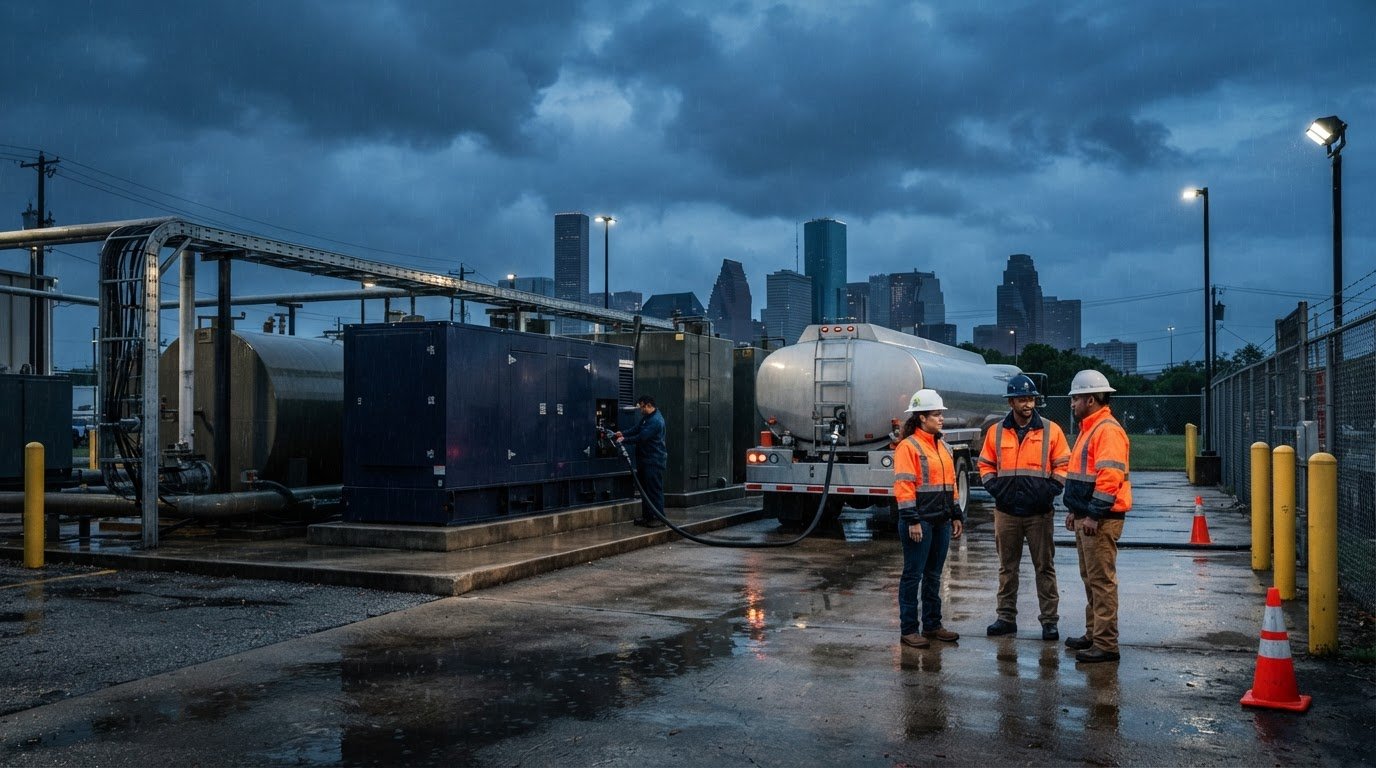
For example, if flooding blocks a route to a government facility, staff can use alternate access details and priority lists to coordinate deliveries. The Railroad Commission of Texas advises operators to monitor and report road conditions during extreme weather. Current route information helps responders and fuel planners adjust delivery instructions as conditions change.
Operators seeking an exception to critical designation must provide objective evidence showing reasonable cause and justification; Railroad Commission of Texas staff can deny an application. For Texas critical infrastructure inquiries, call the Critical Infrastructure Division at 512-463-6737. Keeping designation records, utility details, and emergency fuel procedures together gives agencies a clear basis for coordination during an incident.
Texas energy infrastructure and fuel supply
Texas produces approximately 40% of U.S. crude oil and refines roughly a quarter of the nation’s fuel. Yet production does not guarantee fuel can reach a facility during a disruption. The ERCOT grid serves most of Texas independently, linking electric reliability to regional operating conditions. For critical infrastructure fueling services in Texas, the takeaway is to plan for both fuel availability and the routes and power systems that support delivery.
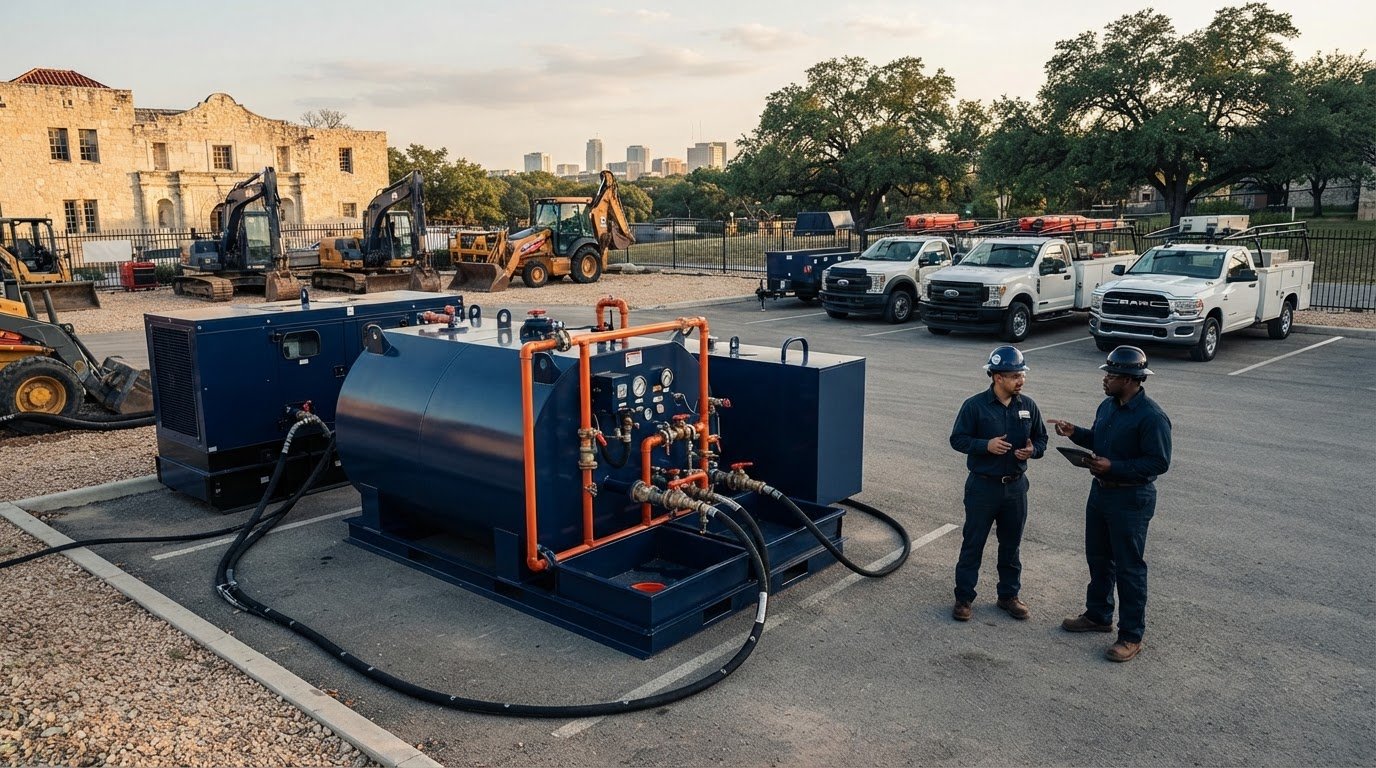
Fuel and equipment needs vary by site. Diesel may power generators and heavy equipment, and the fueling approach must suit each machine and its operating requirements. Texas facilities can assess service arrangements by reviewing stated coverage, delivery capacity, dispatch procedures, and emergency response options. Record the agreed response process in the fuel plan instead of assuming service is available around the clock.
Texas rules adopted by the Railroad Commission of Texas on November 30, 2021, implement House Bill 3648 and Senate Bill 3 for critical natural gas infrastructure designation. The Railroad Commission of Texas identifies gas wells, oil leases producing gas, natural gas pipeline facilities, underground natural gas storage facilities, and saltwater disposal facilities as critical gas suppliers. These designations do not mean every facility automatically qualifies for every fuel service.
Storage and transport requirements depend on the fuel, facility, and activity involved. For critical natural gas infrastructure, the Texas designation rules provide a relevant state framework; federal and other requirements must be assessed for the specific operation. The Railroad Commission of Texas maintains a 24-hour, toll-free emergency line for reporting leaks, spills, and gas pipeline damage.
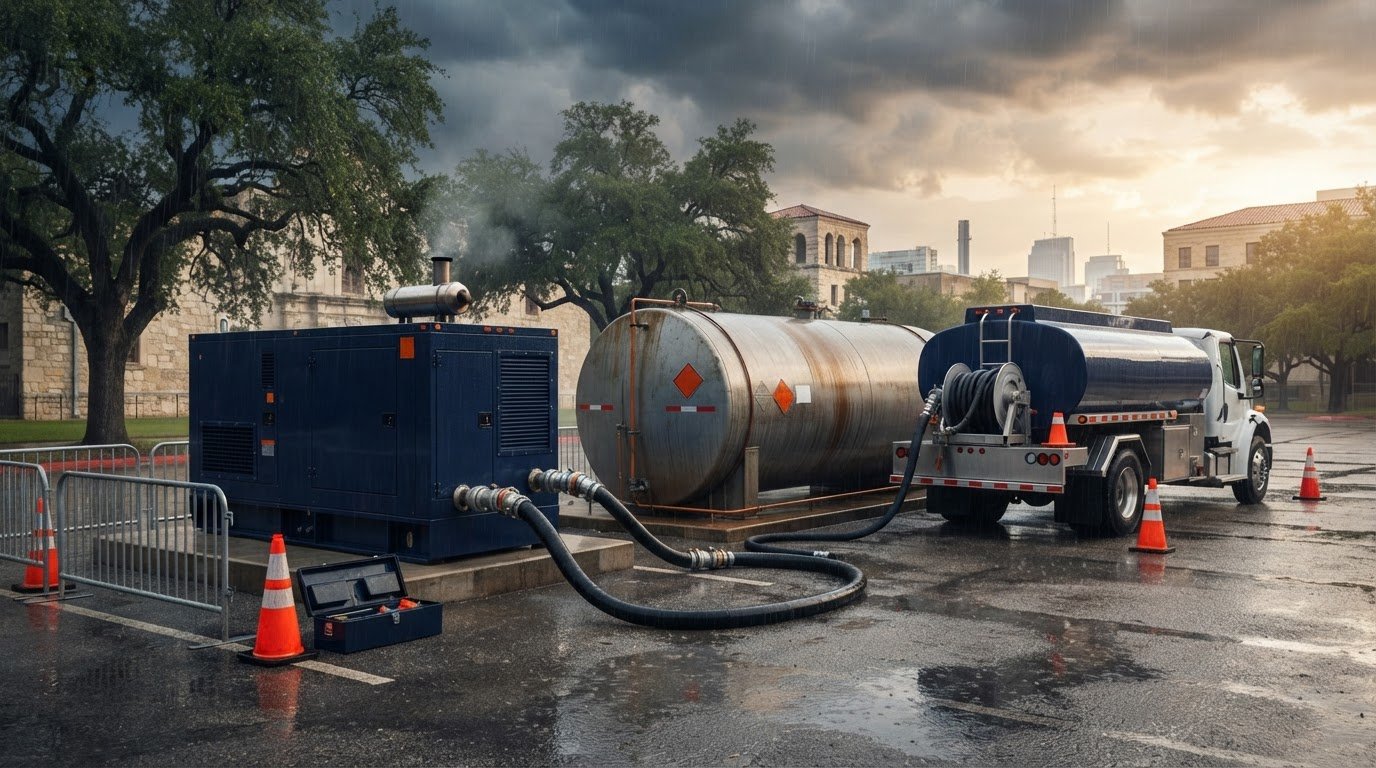
Severe weather, blocked roads, electric outages, and cyber incidents can interrupt supply or delivery. Facilities can reduce exposure by identifying alternate access routes, documenting generator needs, and setting fuel priorities before an event. To organize those site requirements into an emergency plan, discuss your fueling needs.
React Fueling: Diesel Delivery
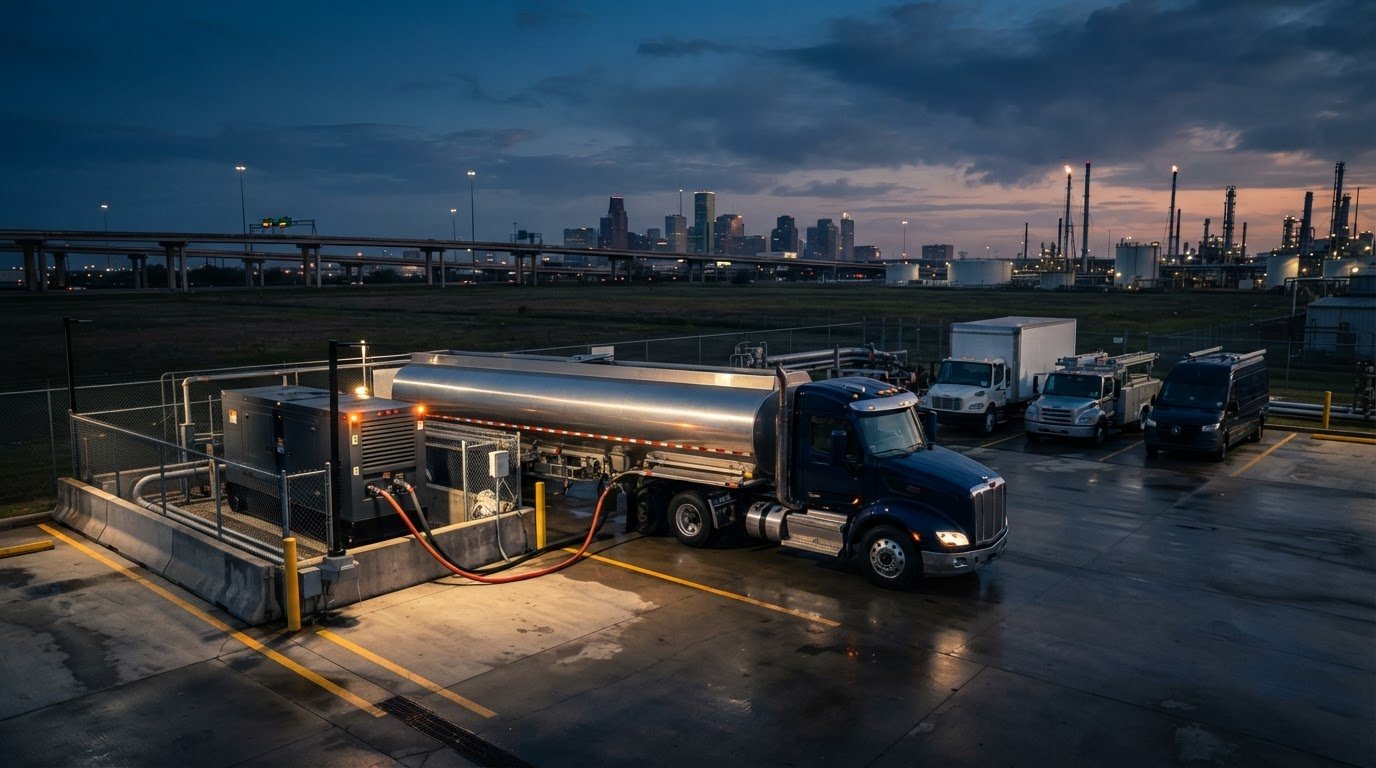
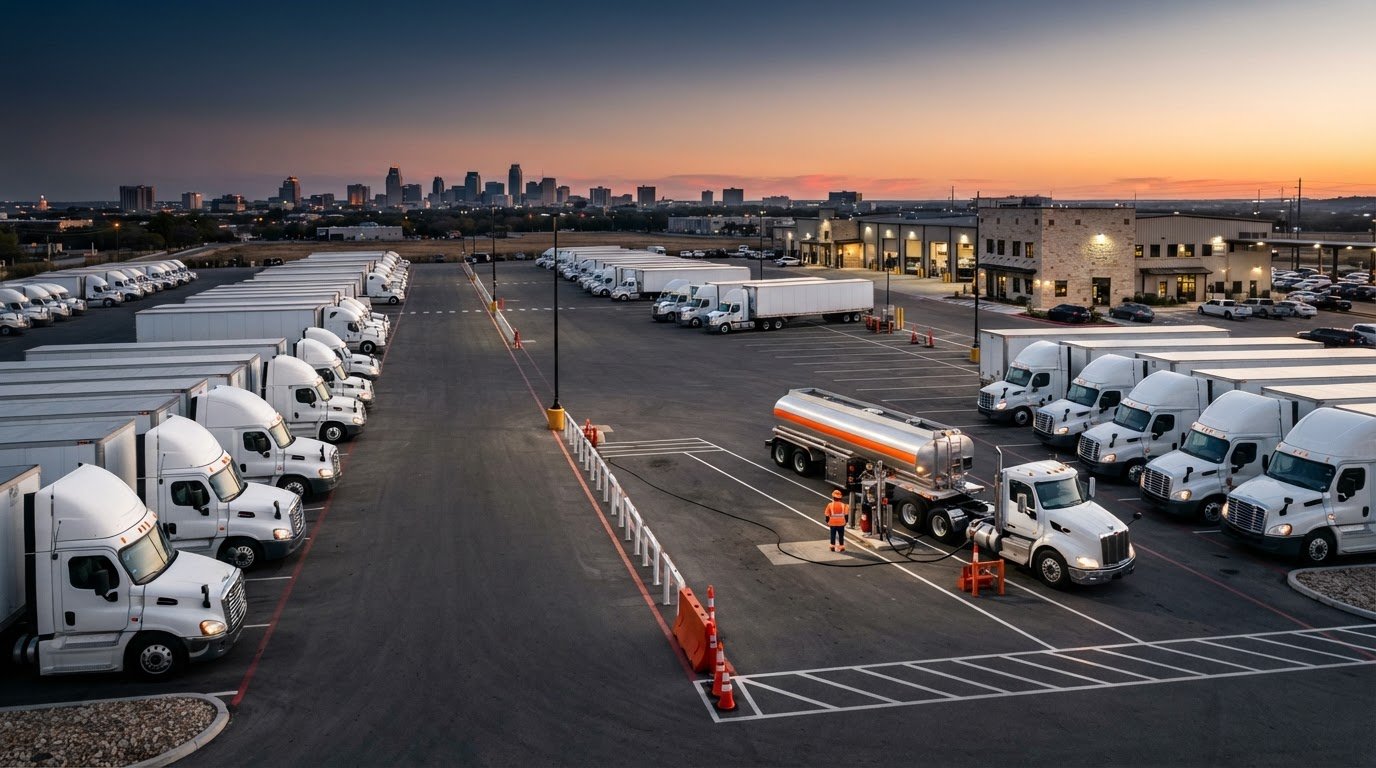
React Fueling supports commercial and industrial operations with diesel delivery, equipment fueling, and generator fueling. These services help facilities plan fuel supply around the equipment that needs to stay operational during disruptions.
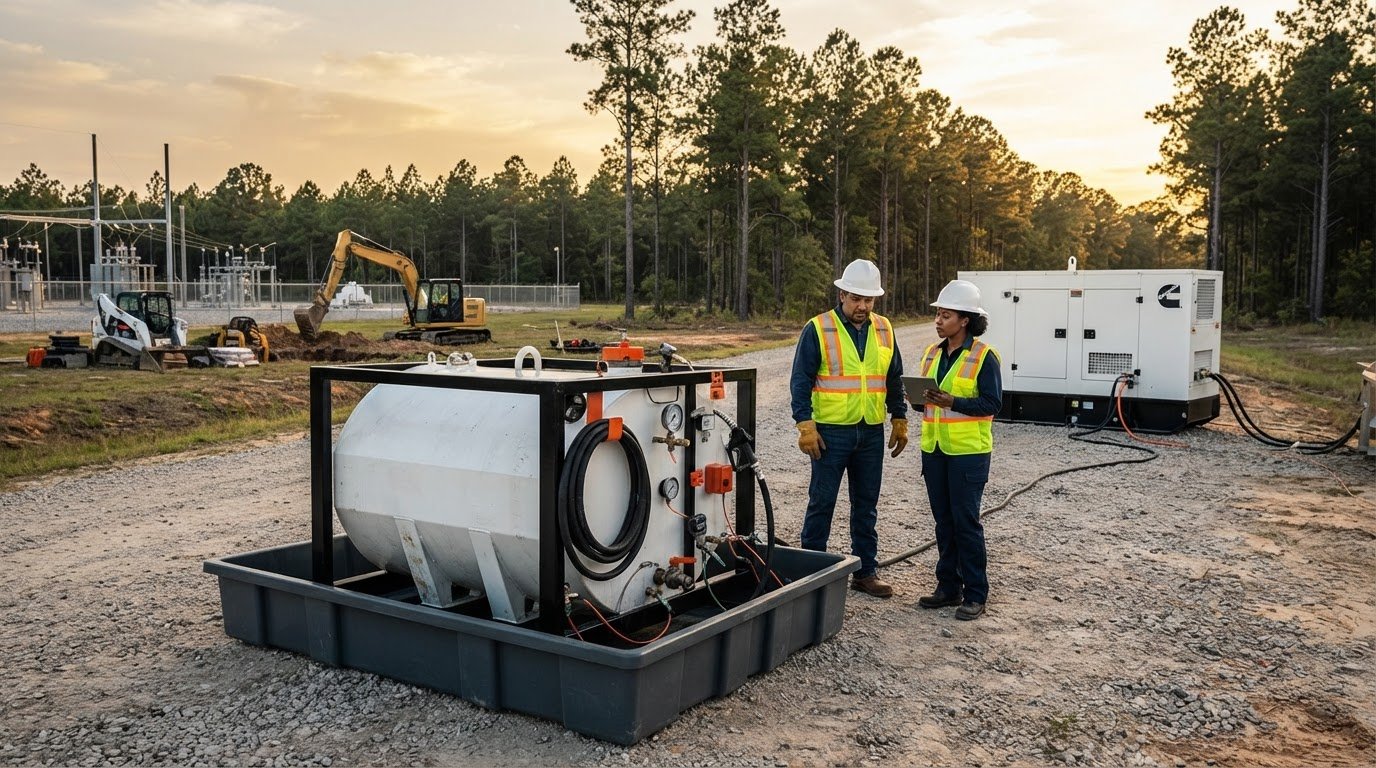
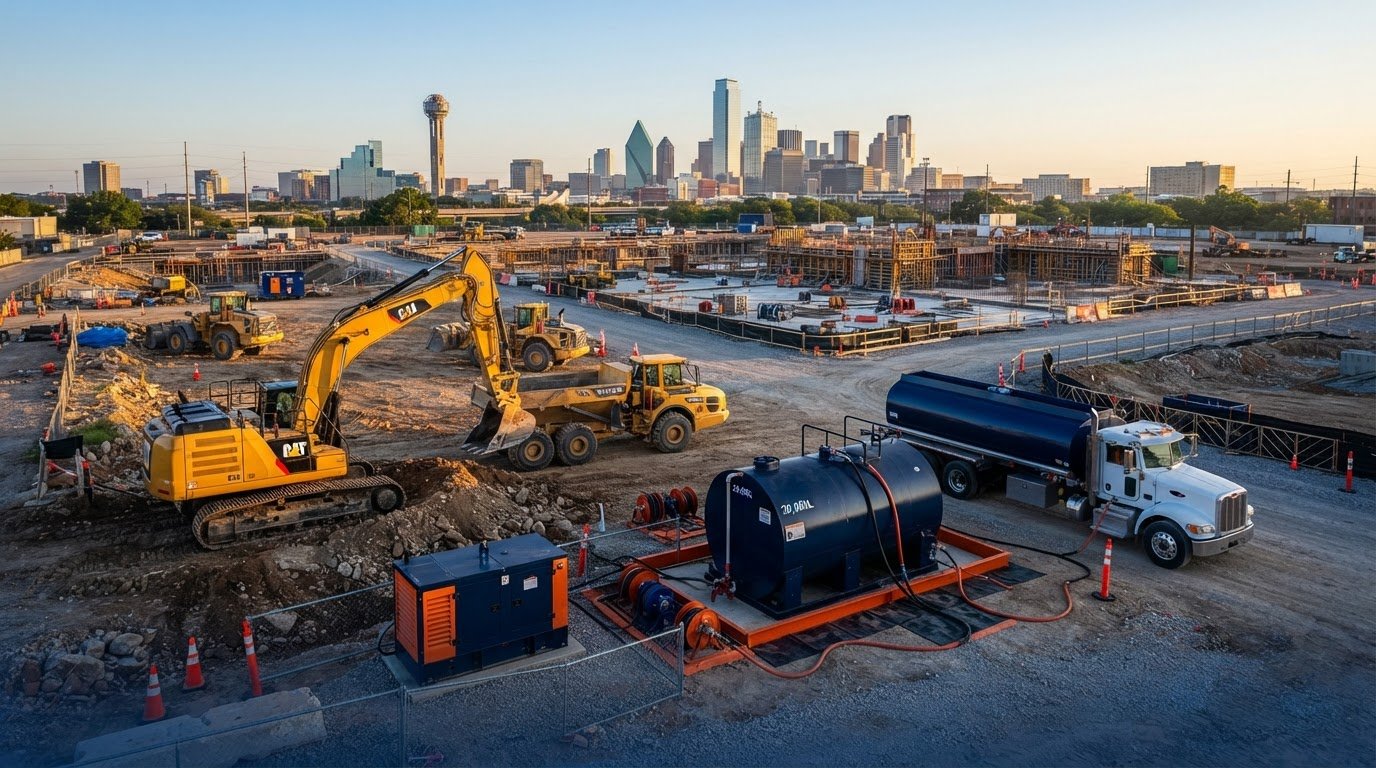
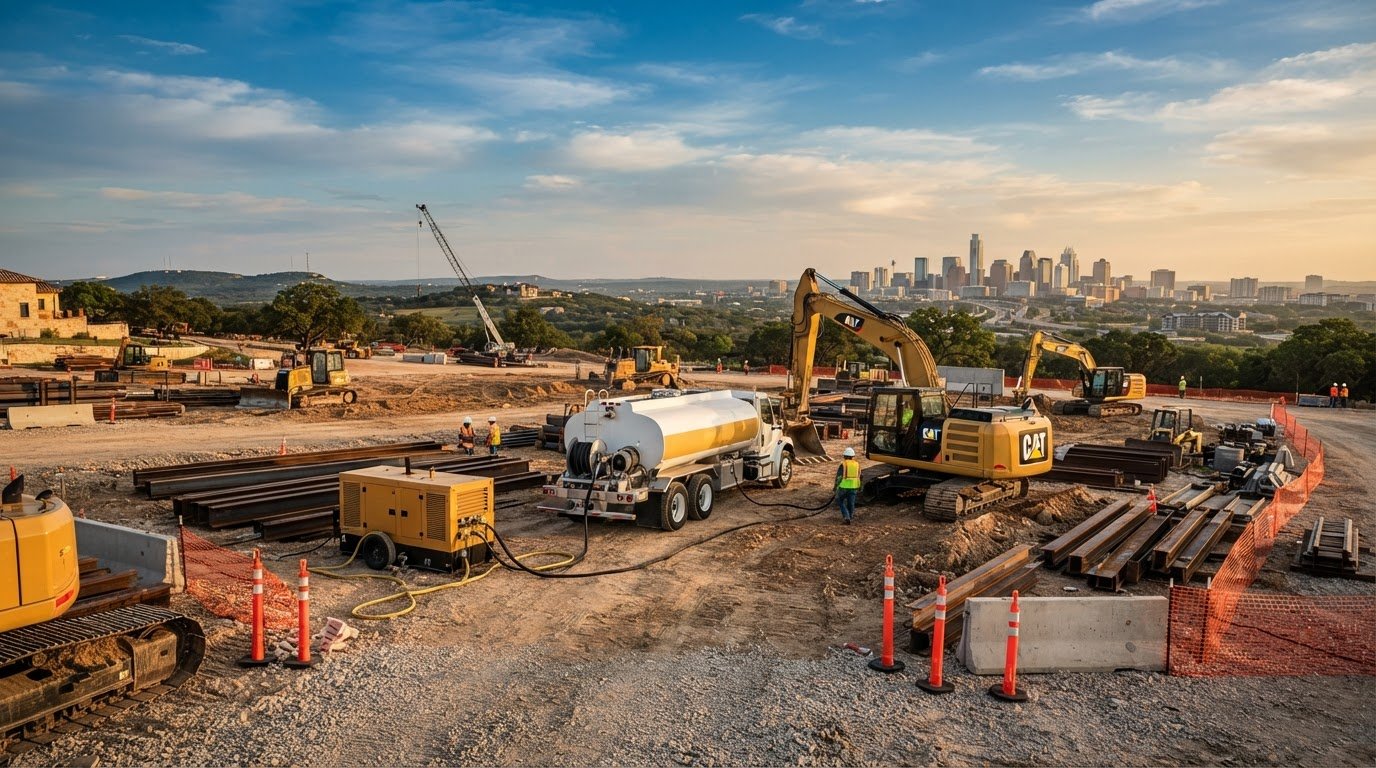
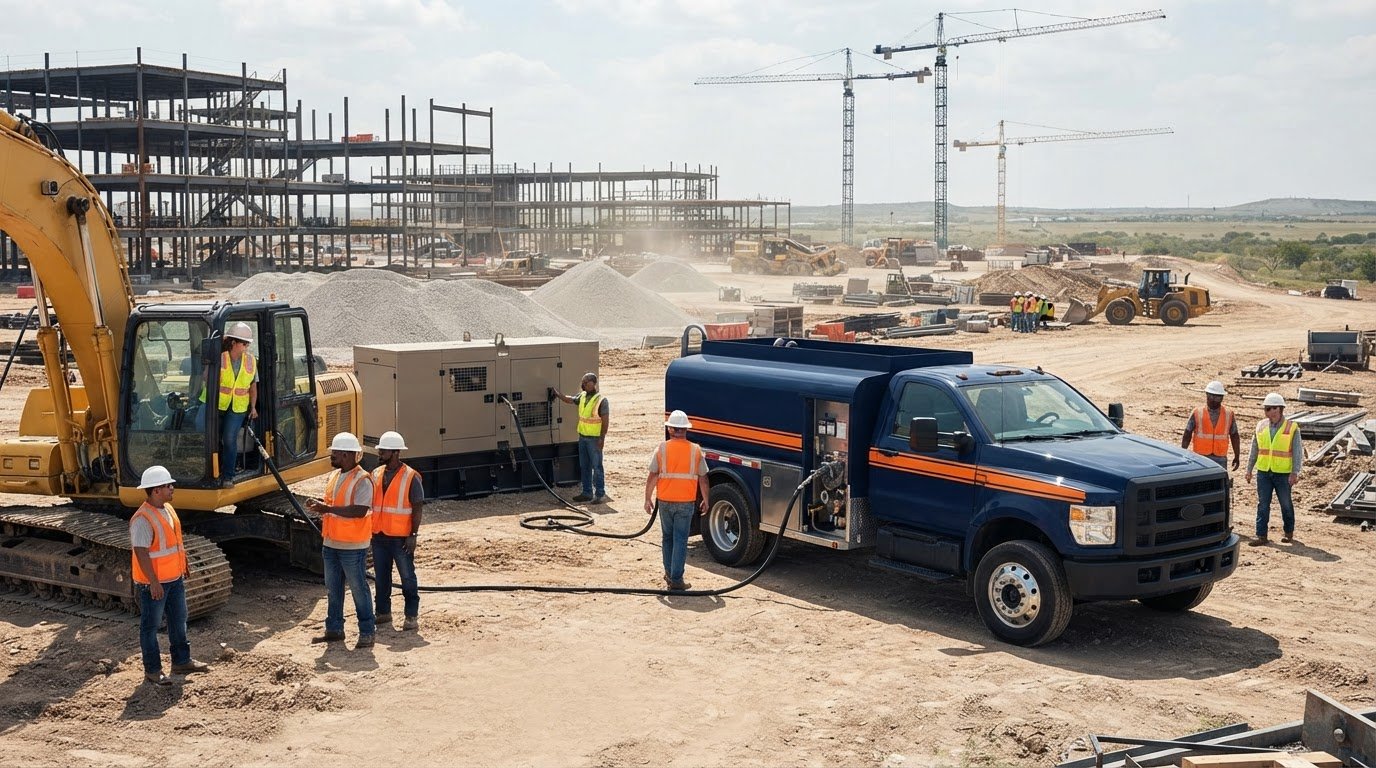
For a site with backup generators, generator fueling can support planned operating needs. At a worksite, equipment fueling delivers fuel directly to machinery. If needs change during an emergency, emergency fuel delivery can help address the immediate requirement.
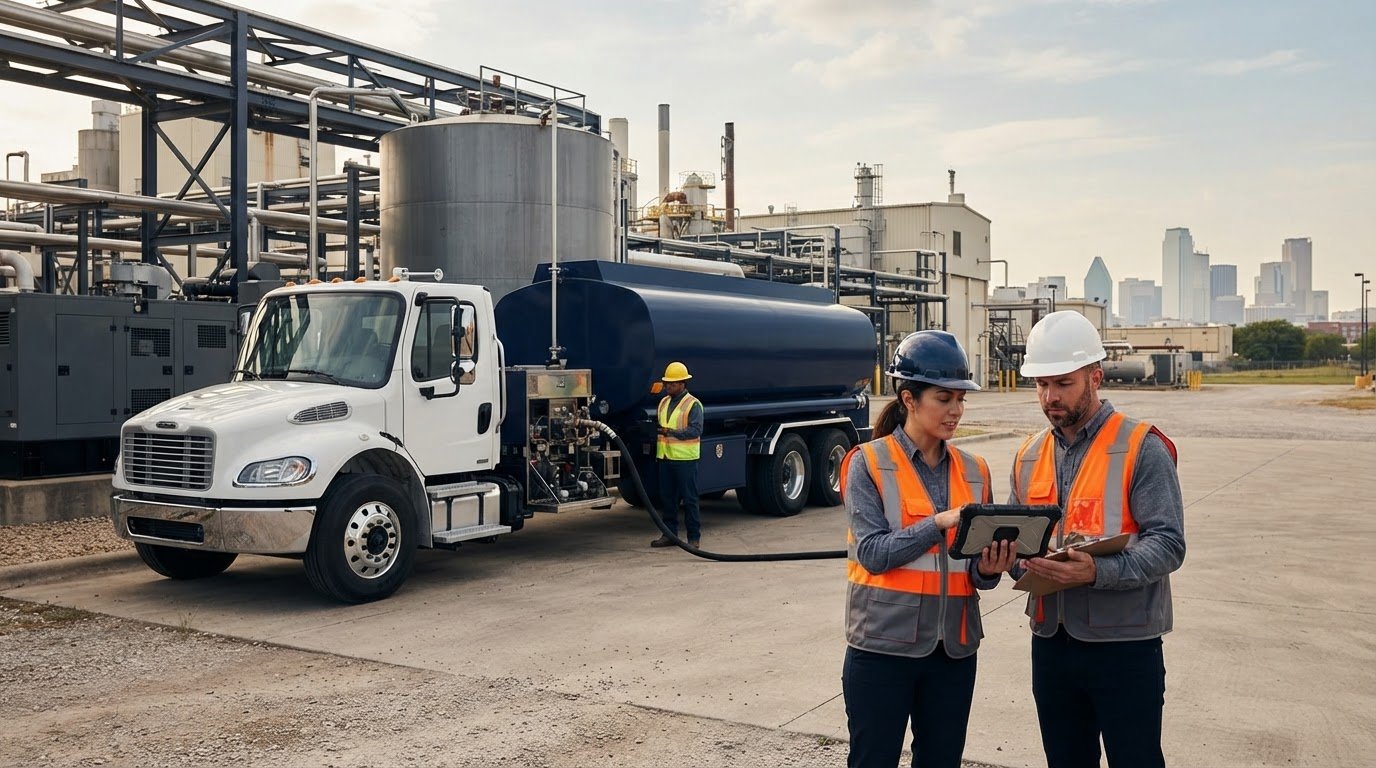
Use the site’s fuel plan to identify priority equipment, delivery points, and access instructions. Sharing these details helps coordinate fueling support with operational needs.
Contact React Fueling to discuss fueling support for your facility.
Make fuel readiness part of the next planning cycle
A disaster fuel plan becomes useful when it turns operational priorities into clear delivery instructions. For facilities evaluating critical infrastructure fueling services in Texas, the next step is to align fuel needs with site access, equipment priorities, and the people authorized to coordinate deliveries.
React Fueling provides diesel delivery, equipment fueling, and fuel delivery for commercial and industrial operations. Matching the service to the site’s operating plan helps make fuel logistics part of preparedness, rather than a task improvised during an emergency.
Set aside time to document delivery locations, priority equipment, and access procedures, then use those details to shape your plan. Contact React Fueling to discuss your fueling needs and take a practical step toward better-prepared operations.
Frequently Asked Questions
How do Texas fuel providers compare on coverage, capacity, and 24/7 availability?
Assess a fueling arrangement by its stated coverage, delivery capacity, dispatch procedures, and emergency response process. Include the agreed details in your plan rather than assuming service is available around the clock.
What Texas and federal regulations govern fuel storage, transport, and emergency fueling?
Texas’s critical natural gas infrastructure designation rules provide a relevant state framework. Storage and transport requirements depend on the fuel, facility, and activity, while federal and other requirements must be assessed for the specific operation.