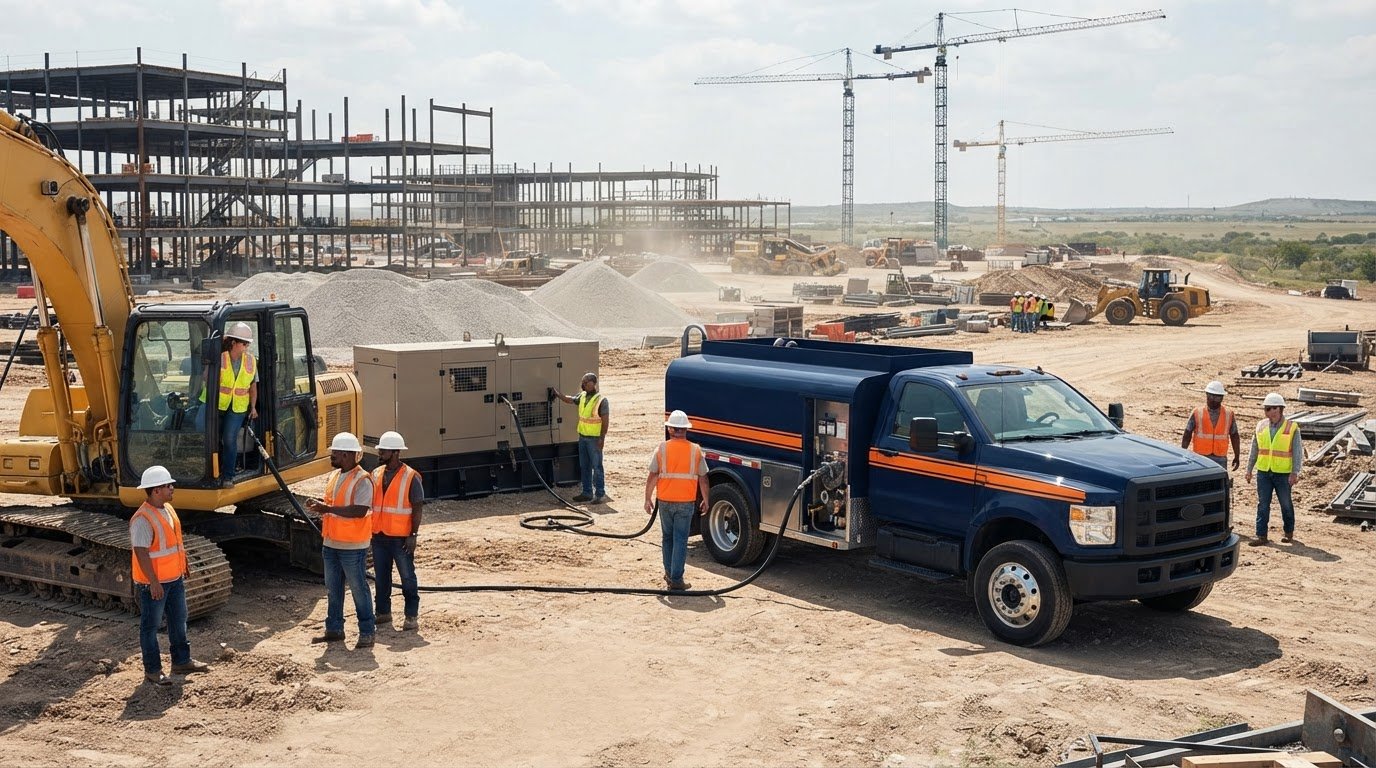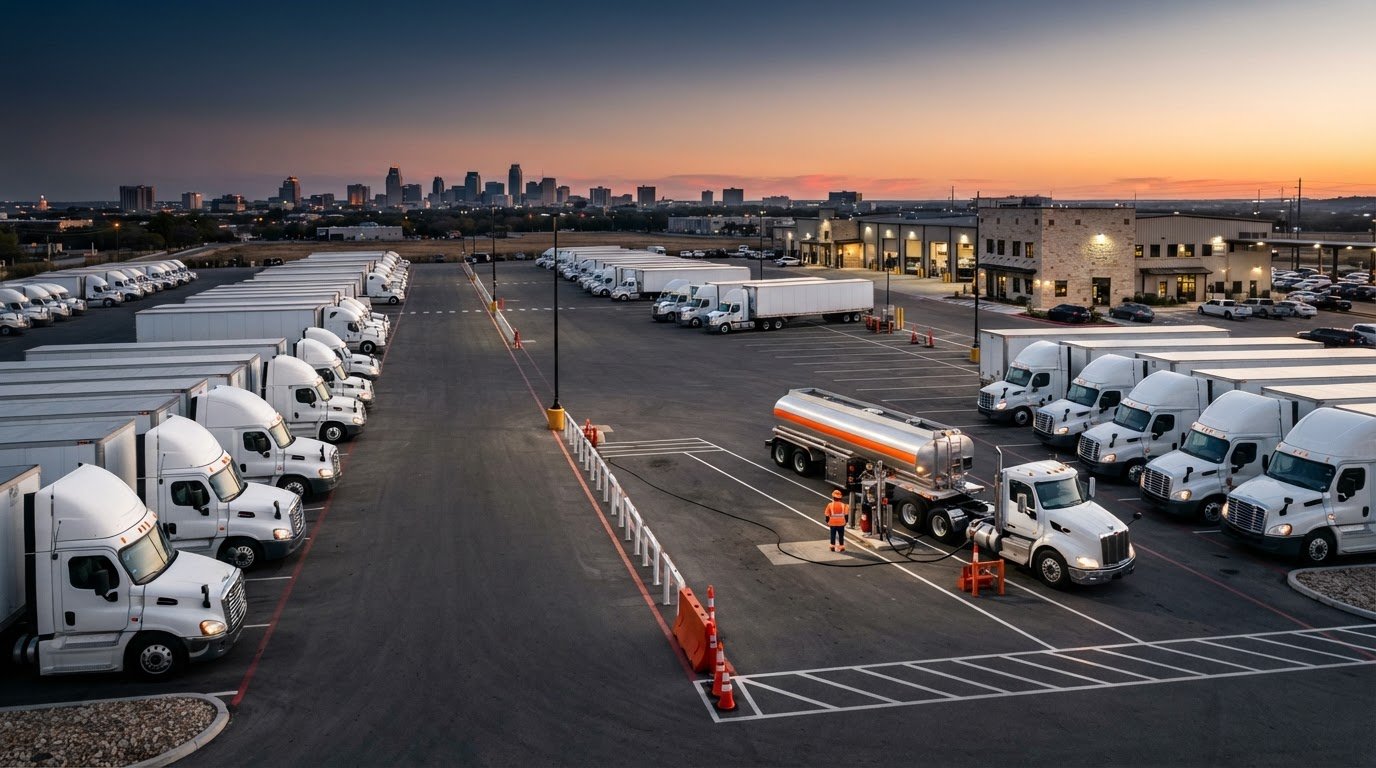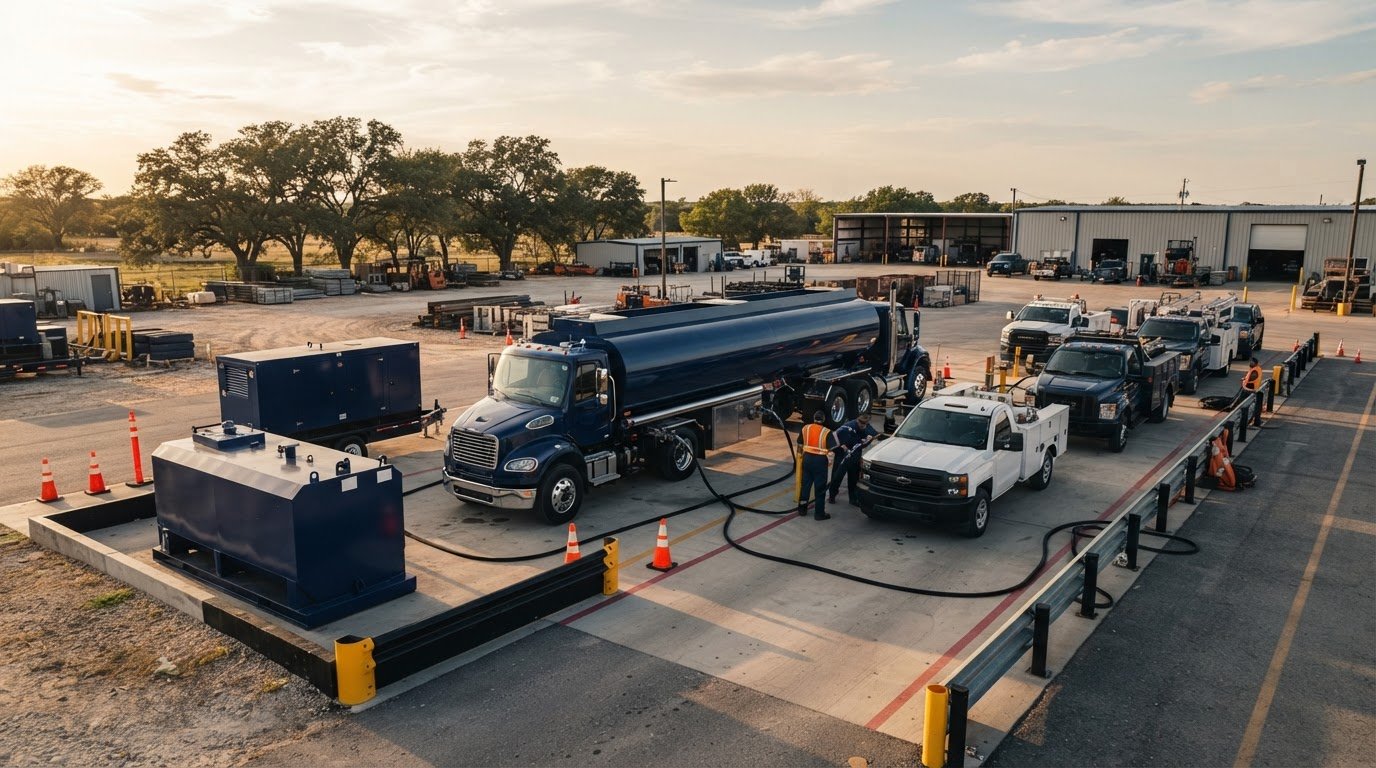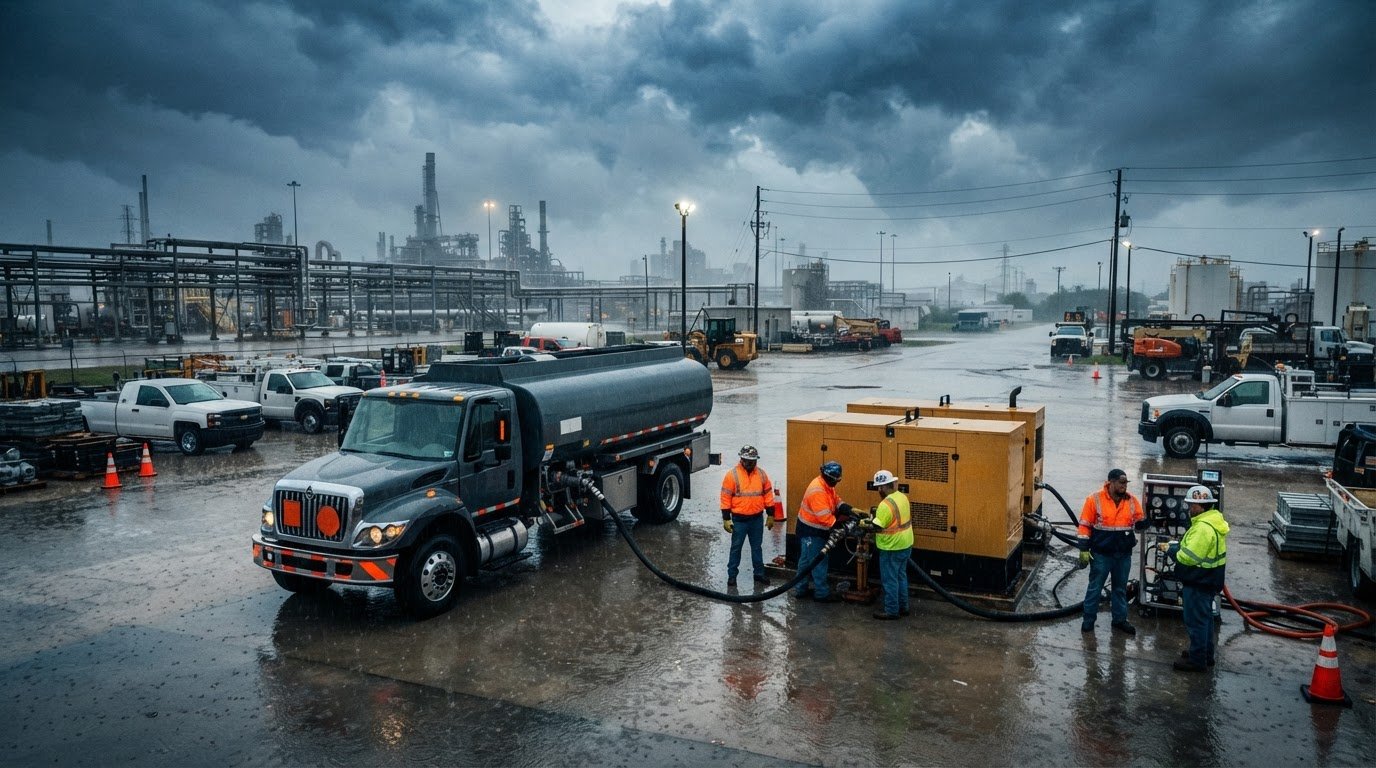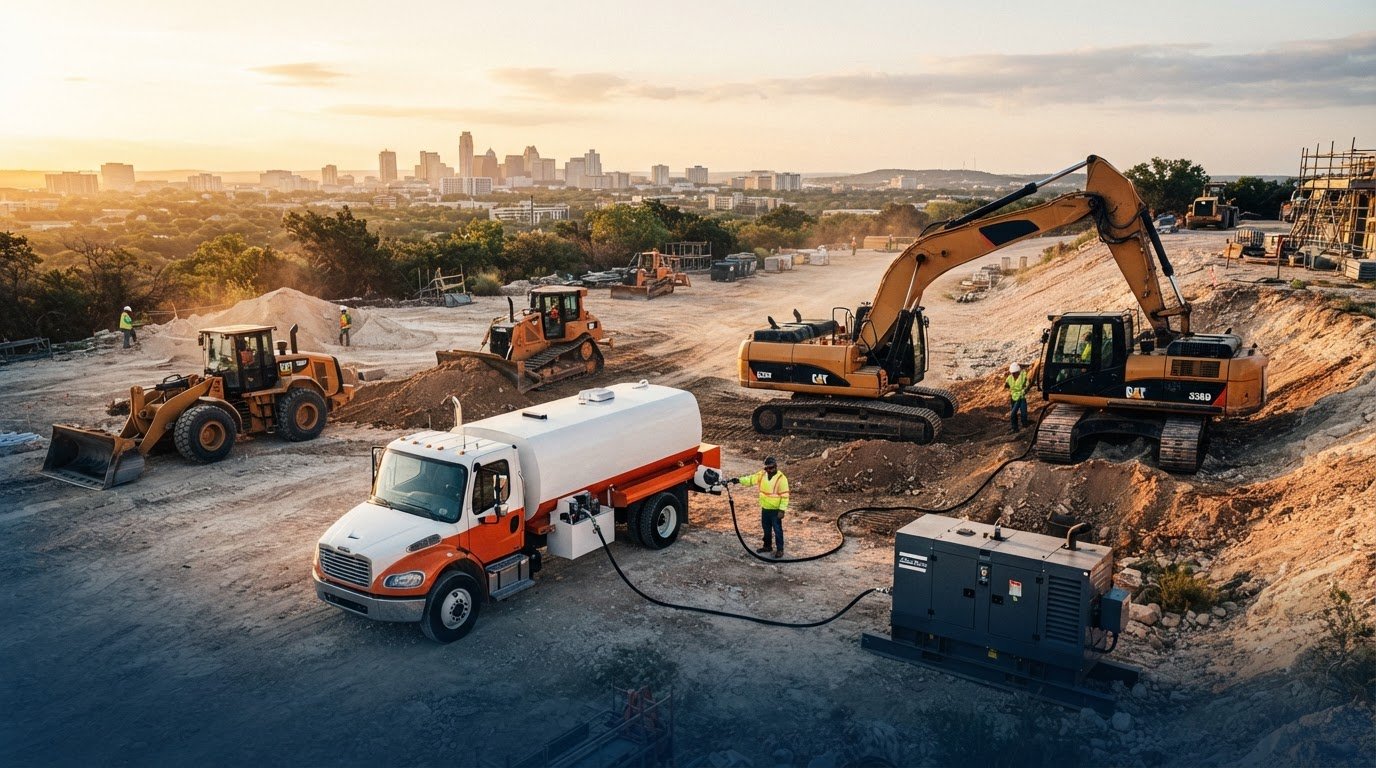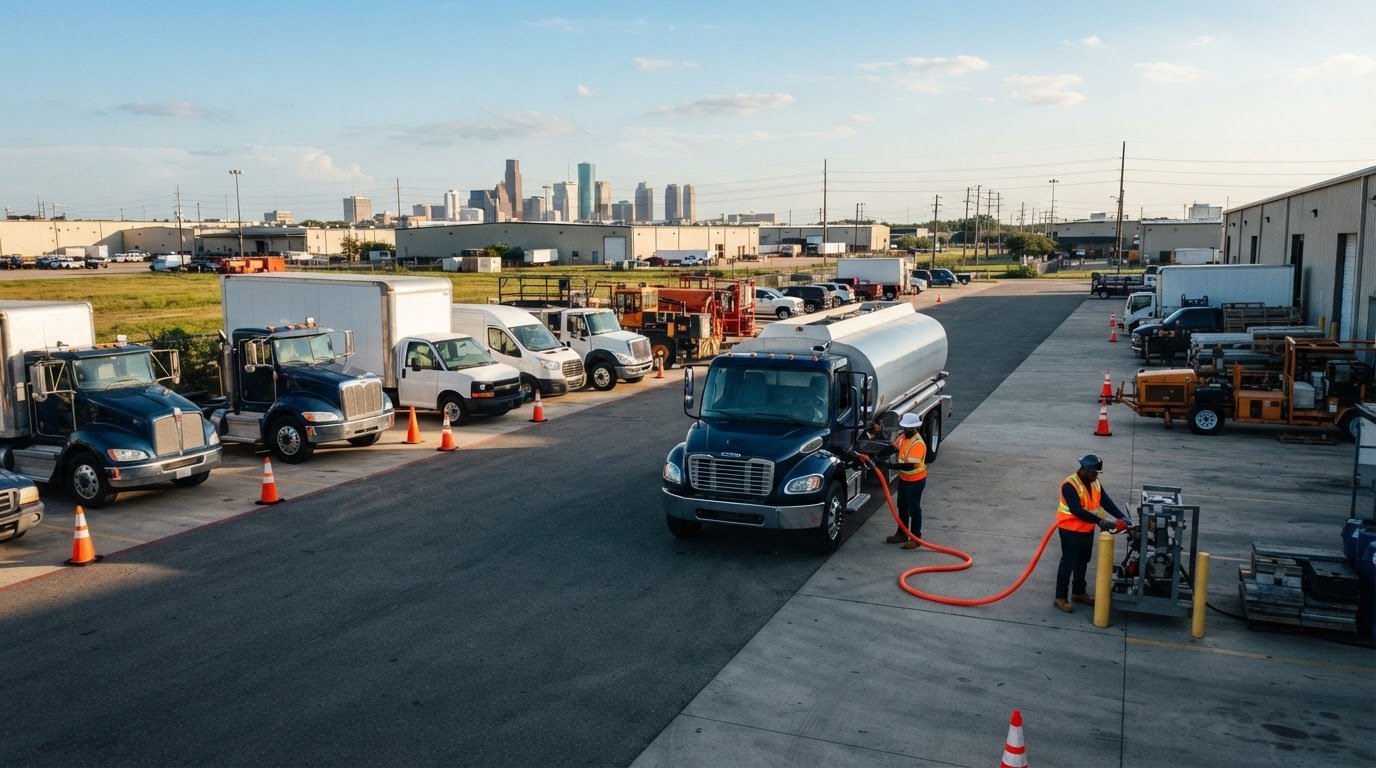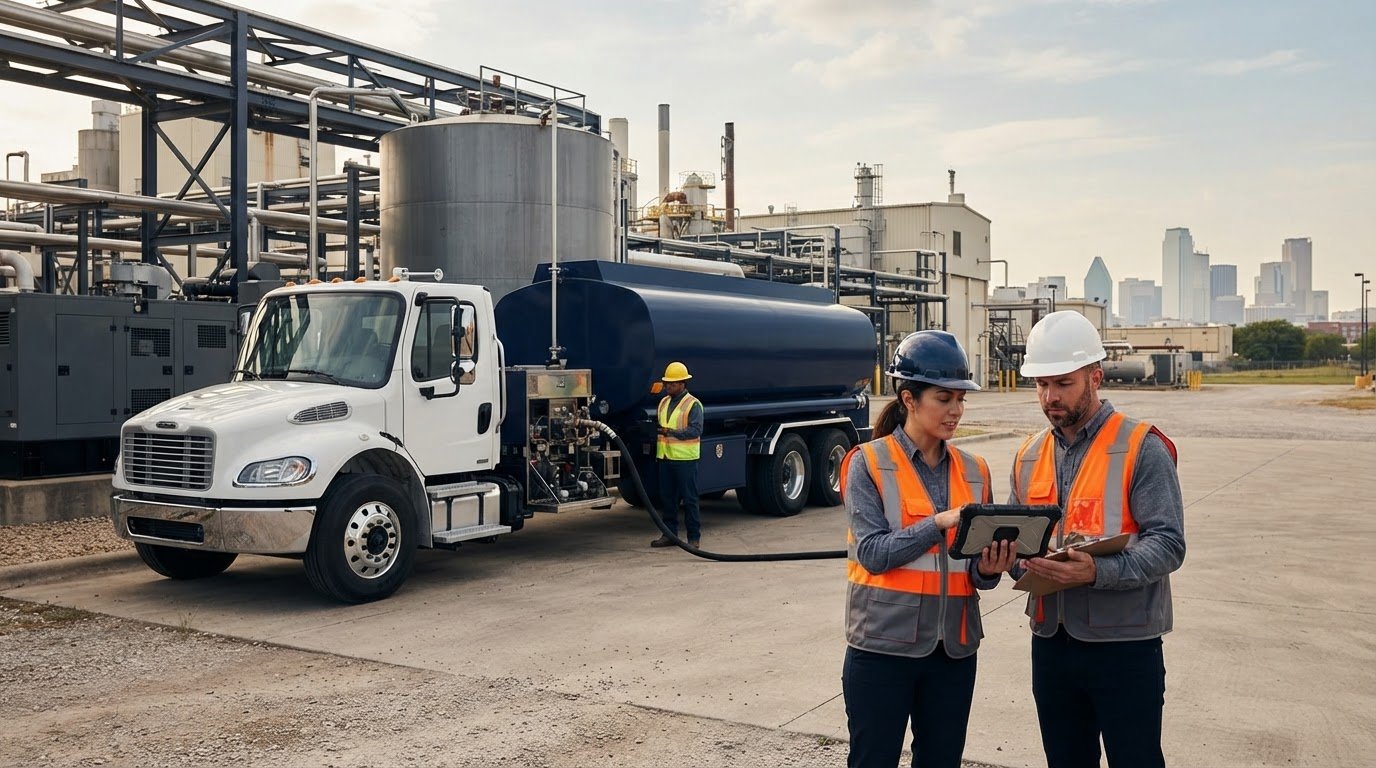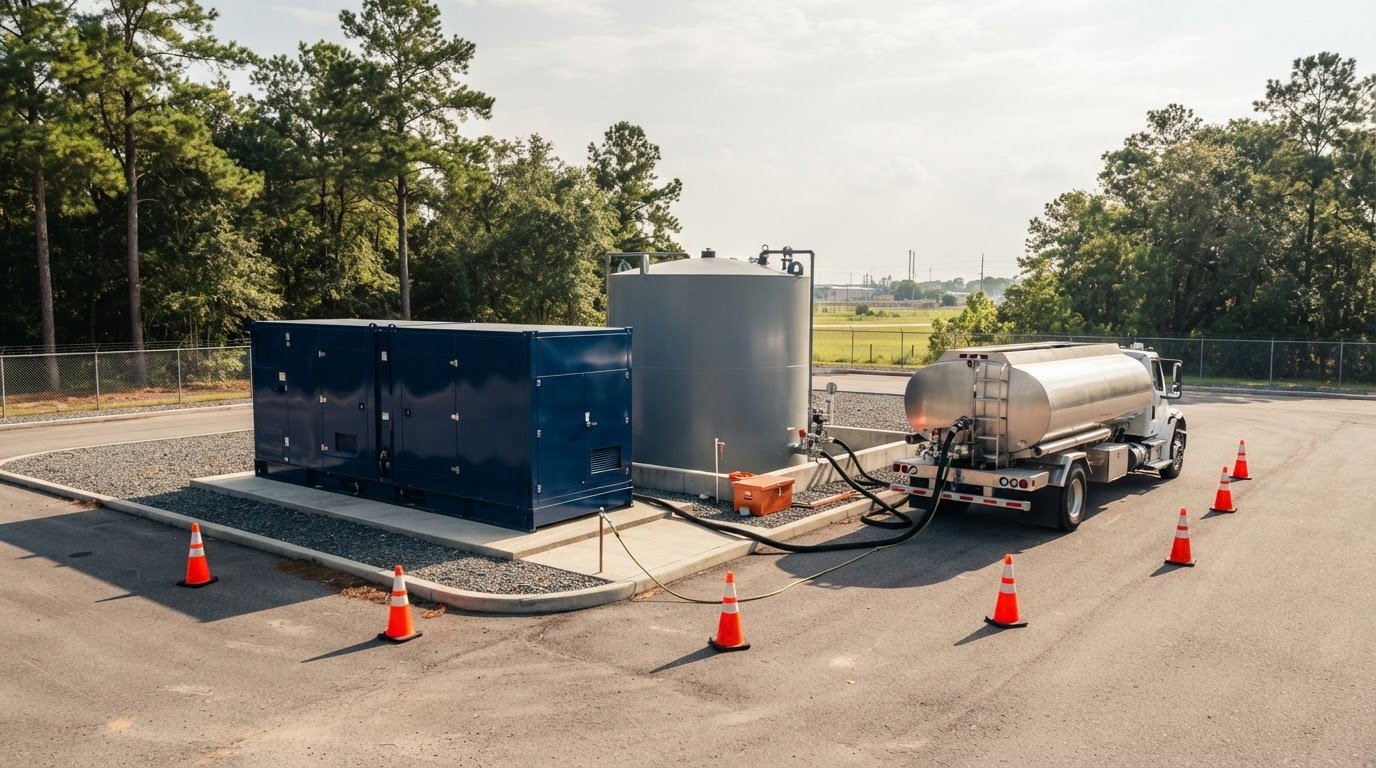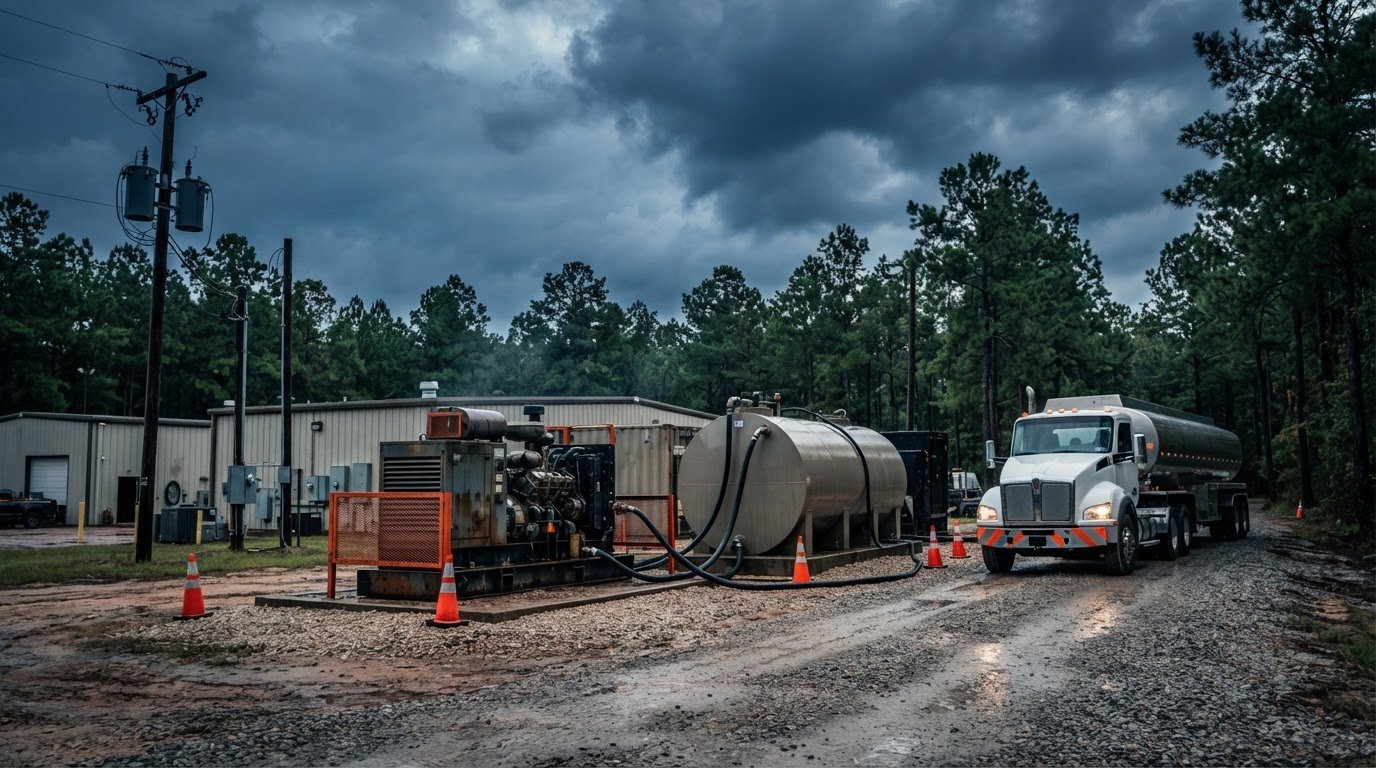
What if the generator is ready, but the fuel plan isn’t? During an outage, arranging emergency fuel delivery for critical infrastructure Houston facilities depend on takes more than calling when a tank runs low. Responders need clear information about fuel requirements, equipment locations, site access, and operating priorities, especially as conditions change.
Facility teams know backup power and essential equipment must keep operating through a disruption. The challenge is making fuel needs and delivery arrangements clear before pressure builds. A practical plan identifies critical loads, documents refueling requirements, and gives staff current access instructions to reduce avoidable confusion.
This guide explains how to prepare emergency fuel support around your facility’s operating priorities. You’ll learn what to document, what information to provide when arranging fuel and DEF delivery, and how to account for equipment and site access. React Fueling provides emergency fuel delivery and generator fueling for commercial operations in Houston and surrounding Texas areas, supporting a site-specific approach to continuity planning.
Why Houston Critical Infrastructure Needs an Emergency Fuel Plan
Fuel readiness is an operating decision, not just a delivery request. Emergency fuel delivery is the coordinated supply of commercial fuel during a disruption, planned around a facility’s priority equipment, fuel requirements, and site access. That coordination matters because generators and essential equipment can depend on fuel continuity to keep supporting critical operations when normal conditions change.
Critical infrastructure includes systems and facilities whose disruption can affect essential services and connected operations. The Critical Infrastructure overview provides useful context for those interdependencies. For Houston facilities, storm preparation should account for on-site fuel as well as changing access routes, gates, security procedures, and delivery priorities.
A planned fuel-response arrangement gives facility teams a shared process before supplies become urgent: what needs fuel, where it is, how a delivery can reach it, and which operations take priority. An unplanned request after fuel runs low starts with the same questions under greater pressure. Emergency fuel delivery and generator fueling can support a continuity plan built around a facility’s actual operating needs.
Which Houston facilities depend on uninterrupted fuel access?
Healthcare facilities may rely on backup power and fuel-dependent equipment to sustain priority operations. Data centers need power continuity for facility systems and essential equipment. Water and wastewater operations may depend on generators or fuel-powered equipment to maintain critical processes. Industrial facilities can also need fuel for backup generation and essential machinery. Assets and priorities vary by site, so plans should reflect the facility rather than assume a one-size-fits-all response.
What belongs in a critical-facility fuel readiness plan?
Build the plan from facility records and operating priorities. For each critical generator or piece of equipment, record its location, required fuel type, and the function it supports. Use equipment and usage records to estimate operating needs, then rank assets so teams can explain what must be fueled first.
Include practical delivery details: the site address, entry points, access instructions, on-site contact roles, and any conditions that could affect vehicle movement or equipment access. Review the information when site layouts, operating priorities, or procedures change. For generator-specific planning, the emergency generator fueling guide offers additional continuity guidance. A clear plan helps Houston teams explain what they need and coordinate emergency fuel delivery for critical infrastructure Houston operations rely on.
How to Evaluate Emergency Fuel Delivery for a Houston Facility
Evaluate fuel support against the job your facility needs done, not just the service name. Compare the required fuel type, the asset receiving it, the delivery location, and the site’s operating schedule. A generator at a fixed location may need a different fueling approach from essential machinery spread across an industrial site. The right arrangement should fit those operating details and make delivery instructions clear before a disruption.
Match fuel support to generators, equipment, and facility operations
Generator refueling is central when backup power supports priority operations and the generator needs more fuel. Direct-to-equipment fueling fits essential machinery that needs fuel at its working location. Broader commercial fuel delivery can support facility needs that don’t center on a single asset. React Fueling provides generator fueling and equipment fueling. See the commercial generator fueling service for service-specific details.
Facility need:
Backup generator supporting priority loads
Service consideration:
Generator fueling; document the generator location, fuel type, and access to the fill point.
Facility need:
Essential equipment operating across a site
Service consideration:
Equipment fueling; identify each asset’s location and the safest practical access route.
Facility need:
Fuel support for multiple facility requirements
Service consideration:
Commercial fuel delivery; specify fuel type, delivery point, intended use, and operating schedule.
Facility need:
A site with changing access or operating restrictions
Service consideration:
Provide current entry instructions, contact roles, delivery windows, and any limits on vehicle movement.
Evaluate delivery coordination and site readiness
Houston weather, traffic, and changing site conditions can affect access and coordination. Make instructions practical and flexible: note primary and alternate entry points, who can direct a driver on site, security or check-in procedures, and restrictions on delivery timing or vehicle movement. Update those details when conditions change instead of relying on a plan written for normal operations.
Clear fuel type, asset location, site access, operating restrictions, and an on-site contact give delivery coordination the details it needs. This approach aligns with resilience principles promoted by the EIS Council, where preparation helps essential services manage disruption. React Fueling supports emergency fuel delivery for critical infrastructure Houston facilities, with fuel support planned around generators, equipment, and commercial operating needs.
Compare Emergency Fuel Delivery Approaches Before a Disruption
Fuel continuity usually depends on a combination of routine supply, an emergency response process, and on-site storage where it fits the facility. These approaches serve different purposes. The right mix depends on demand patterns, available storage, delivery access, and which operations must continue during a disruption. Emergency delivery adds flexibility, but it doesn’t replace fuel monitoring, equipment maintenance, or the facility’s internal continuity procedures.
Planned replenishment versus emergency delivery
Routine replenishment helps facilities manage expected fuel use before supplies become urgent. Reviewing usage records and planned operating schedules can help teams identify when normal demand may change. For background on routine supply planning, see the Houston commercial diesel delivery guide.
Emergency delivery is a response option when an outage, changing site conditions, or increased equipment use disrupts the normal plan. Define activation triggers internally rather than relying on a universal threshold. For example, a facility might start its process when it reaches a reserve level documented in its procedures, when expected generator use increases, or when access conditions could affect replenishment. Specify who can activate the response and how the decision is communicated.
Keep the approaches connected: routine records inform expected demand, monitoring shows current conditions, and the emergency process addresses changes. Continue scheduled equipment maintenance and follow internal procedures for fuel checks. Delivery support is one part of the plan, not a replacement for those controls.
When on-site fuel storage may support continuity
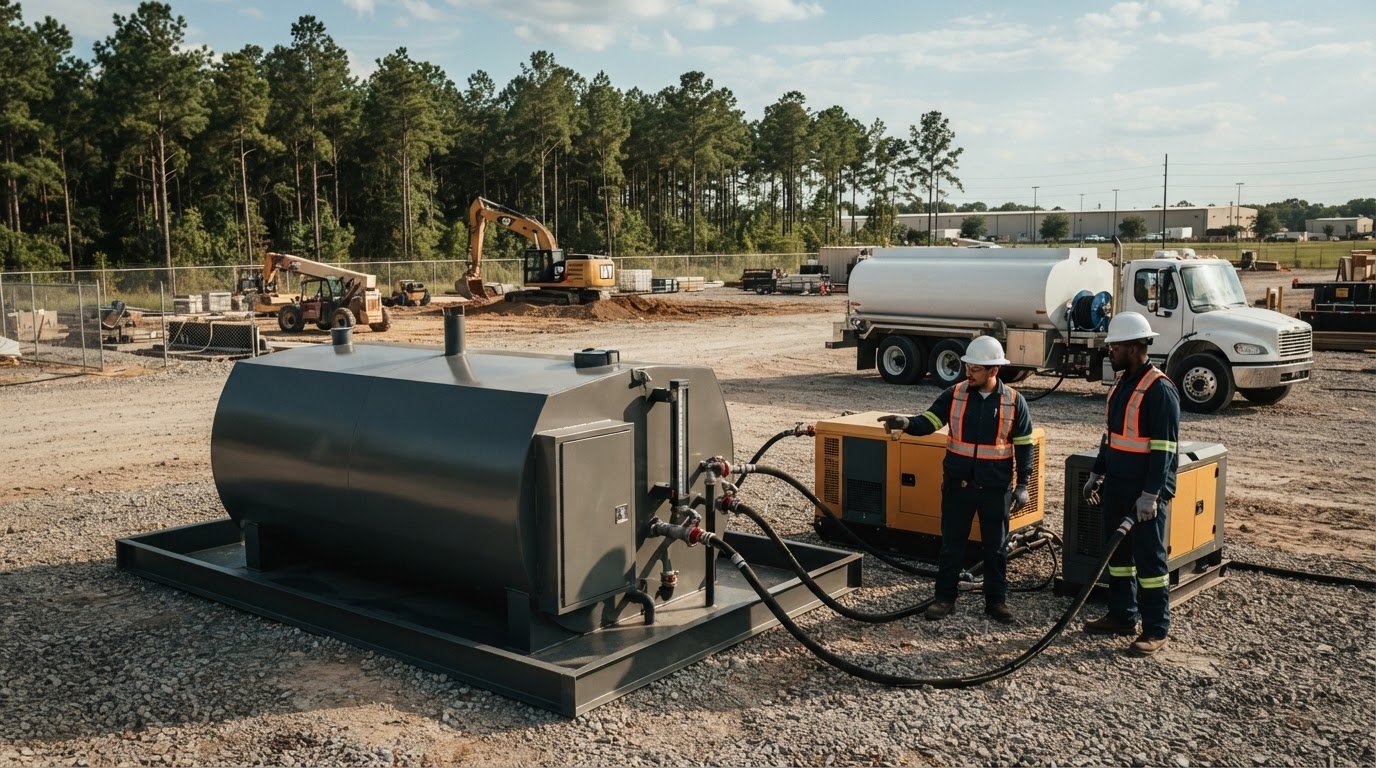
Portable fuel tank rentals can provide planned access to fuel at a commercial site, particularly where equipment or changing operations make a fixed delivery point less practical. Storage is not automatically the best fit. Consider the site’s needs, where fuel must be available, access for replenishment, and applicable safety requirements. React Fueling offers portable fuel tank rentals for commercial operations.
Use this comparison to guide planning:
- Routine replenishment: Suits predictable demand; review usage and delivery access.
- Emergency delivery: Suits changed or urgent fuel needs; define activation authority and response information in advance.
- On-site storage: May support access to fuel at the facility; assess location, operating needs, and safety requirements.
For emergency fuel delivery for critical infrastructure Houston facilities, the strongest approach connects these options to actual operating priorities while keeping monitoring, maintenance, and internal coordination in place.
Prepare a Houston Facility to Request Emergency Fuel
A clear activation process helps facility teams turn a developing fuel risk into an actionable request. Assign responsibilities before an outage or weather event: one role monitors fuel levels, an authorized person approves the request, and a designated on-site contact coordinates access. Keep the current plan somewhere the relevant team can find it, including during a shift handoff.
Create a practical activation checklist
Use this sequence to organize a request:
- Identify the risk. Review fuel levels, expected usage, and changes in operating conditions.
- Set priorities. Identify which generator or equipment needs fuel first and the operation it supports.
- Estimate the requirement. Use facility and equipment records to provide a practical quantity estimate and fuel type.
- Authorize the request. Follow the facility’s process and identify who can approve it.
- Share site instructions. Provide the delivery location, entry details, restrictions, and on-site contact information.
- Confirm current conditions. Communicate changes to access, safe delivery locations, or site operations.
Keep these details together in a current document. Update it when equipment, contacts, or operating conditions change so the person making a request isn’t relying on outdated instructions.
Before contacting a fuel provider, prepare:
- Facility name, full address, and delivery location
- Fuel type and estimated quantity needed
- Priority asset and the operation it supports
- Entry points, access instructions, closures, and site restrictions
- On-site contact name, role, and phone number
- Current weather or operational changes affecting access
Coordinate fuel delivery during changing site conditions
Weather, traffic, and facility operations across the Houston area can change access conditions. Treat current advisories and site updates as coordination information, not as a prediction of delivery timing. Report closed entrances, revised check-in procedures, restricted areas, and the location where fuel can be delivered safely. If conditions change after the request is made, update the designated contact so instructions stay current.
React Fueling provides emergency fuel delivery for commercial operations in Houston and surrounding Texas areas. A well-prepared request supports clear coordination without assuming a particular arrival time. To discuss emergency fuel support for your facility, contact React Fueling.
Arrange Critical-Infrastructure Fuel Support with React Fueling
React Fueling supports commercial and industrial operations with emergency fuel delivery and generator fueling in Houston and surrounding Texas areas. These services can be part of a facility’s continuity approach: emergency delivery addresses fuel needs during a disruption, while generator fueling supports backup-power equipment serving priority operations. The right service depends on the assets involved, their fuel requirements, and how the facility operates.
Match React Fueling services to the facility’s priority assets
Start with the assets your team has identified as essential. If backup generators support critical facility functions, generator fueling is directly relevant. If other commercial operations need fuel during a disruption, emergency fuel delivery can support those needs. React Fueling’s generator fueling service supports facilities planning around backup power.
This is a logistics conversation, not a substitute for internal readiness. Your facility’s inventory and operating priorities help clarify which asset needs support, where it is located, and how its fuel needs relate to the operation it serves. That context keeps planning focused on practical site requirements rather than a generic request for fuel.
Prepare the information needed for a focused request
Before discussing support, bring together the details that shape the delivery plan. An up-to-date asset inventory and activation checklist can help your team explain the need clearly, especially if the person coordinating the request is not the person who normally manages the equipment.
- Delivery location: Facility name and address in the Houston area, plus the specific point where fuel is needed.
- Fuel requirements: Fuel type and a reasonable quantity estimate based on facility or equipment records.
- Priority assets: The generator or equipment requiring fuel and the operation it supports.
- Site coordination: Entry instructions, access restrictions, current operating conditions, and a designated on-site contact.
Clear details connect the facility’s operating priorities with the fuel support being discussed. They also give your team a consistent reference if access or site conditions change. React Fueling can discuss commercial fuel and generator fueling needs with Houston-area facilities and operations in Magnolia, San Antonio, College Station, Austin, and Dallas.
Discuss your facility’s emergency fuel needs with React Fueling. Bring your asset priorities, fuel requirements, delivery location, and site instructions to the conversation.
Put Your Fuel-Readiness Plan into Motion
Critical-facility fuel readiness starts with a clear picture of priority assets, fuel requirements, and operating needs. Match routine replenishment, emergency delivery, and on-site storage to your facility rather than relying on a last-minute request. Keep activation roles, access instructions, and contact details current so your team can communicate clearly as site conditions change.
React Fueling provides commercial emergency fuel delivery and generator fueling for Houston and surrounding Texas areas as part of React Holdings. A current asset inventory and practical estimate of fuel needs can make a conversation about emergency fuel delivery for critical infrastructure Houston operations rely on more focused and actionable.
Discuss your facility’s emergency fuel requirements with React Fueling. A well-prepared plan gives your team a stronger starting point for protecting essential operations and navigating disruptions with greater confidence.
Frequently Asked Questions
How does emergency fuel delivery support critical infrastructure in Houston?
Emergency fuel delivery helps commercial facilities replenish fuel during outages or other disruptions, supporting generators and essential equipment. Planning emergency fuel delivery for critical infrastructure Houston facilities depend on means identifying priority assets, fuel requirements, delivery locations, and access instructions in advance. React Fueling provides commercial emergency fuel delivery and generator fueling in Houston and surrounding Texas areas, including Magnolia, San Antonio, College Station, Austin, and Dallas.
What information should a Houston facility provide when requesting emergency fuel delivery?
Provide the facility’s name and address, the exact delivery location, required fuel type, and a quantity estimate based on facility records. Identify which generator or equipment needs fuel first and the operation it supports. Include entry instructions, access restrictions, current site conditions, and the name and phone number of the on-site contact. Clear, current details help make the request actionable, especially if weather or operating changes affect access.
Can emergency fuel delivery support backup generators during a power outage?
Yes. Emergency fuel delivery and generator fueling can support commercial backup generators when fuel needs arise during an outage. Provide the generator’s location, fuel type, estimated need, and site access instructions. Generator fueling supports fuel continuity, but it doesn’t guarantee uninterrupted power or replace generator maintenance and monitoring. Follow equipment documentation and internal procedures while coordinating fuel support around priority loads.
How should a facility estimate its emergency generator fuel needs?
Use facility records and generator documentation to estimate fuel needs for expected operating conditions. Consider the generator’s documented fuel-use information, current fuel level, anticipated operating period, and the loads the facility plans to support. Avoid relying on a generic estimate because actual use depends on the equipment and operating conditions. Review assumptions with the staff responsible for generator operations, and update the estimate when equipment or priorities change.
When should a critical facility activate its emergency fuel plan?
Activate the plan when a facility-defined trigger indicates that normal fuel arrangements may not support priority operations. Triggers might include a reserve level established in internal procedures, a change in expected generator use, or site conditions that could affect access. Set these criteria in advance, assign who can authorize a request, and identify who will coordinate on site. A facility-specific trigger is more useful than a universal threshold.
Can portable fuel tanks help a facility prepare for fuel disruptions?
Portable fuel tanks may help commercial facilities keep fuel accessible at a planned site location, particularly when operations or equipment needs make a fixed delivery point less practical. Whether storage is appropriate depends on facility requirements, tank placement, access, and applicable safety requirements. React Fueling offers portable fuel tank rentals. Include storage decisions in the broader readiness plan alongside fuel monitoring, equipment maintenance, and the procedure for requesting replenishment.
What should a Houston facility include in an emergency fuel readiness plan?
Include an inventory of priority generators and equipment, each asset’s fuel type and location, and estimated needs based on facility records. Document operating priorities, who monitors fuel, who authorizes a request, and who meets the delivery team. Add the facility address, entry instructions, restrictions, and current contact details. Review the plan when equipment, staff roles, or site conditions change so Houston-area teams can use accurate information during a disruption.