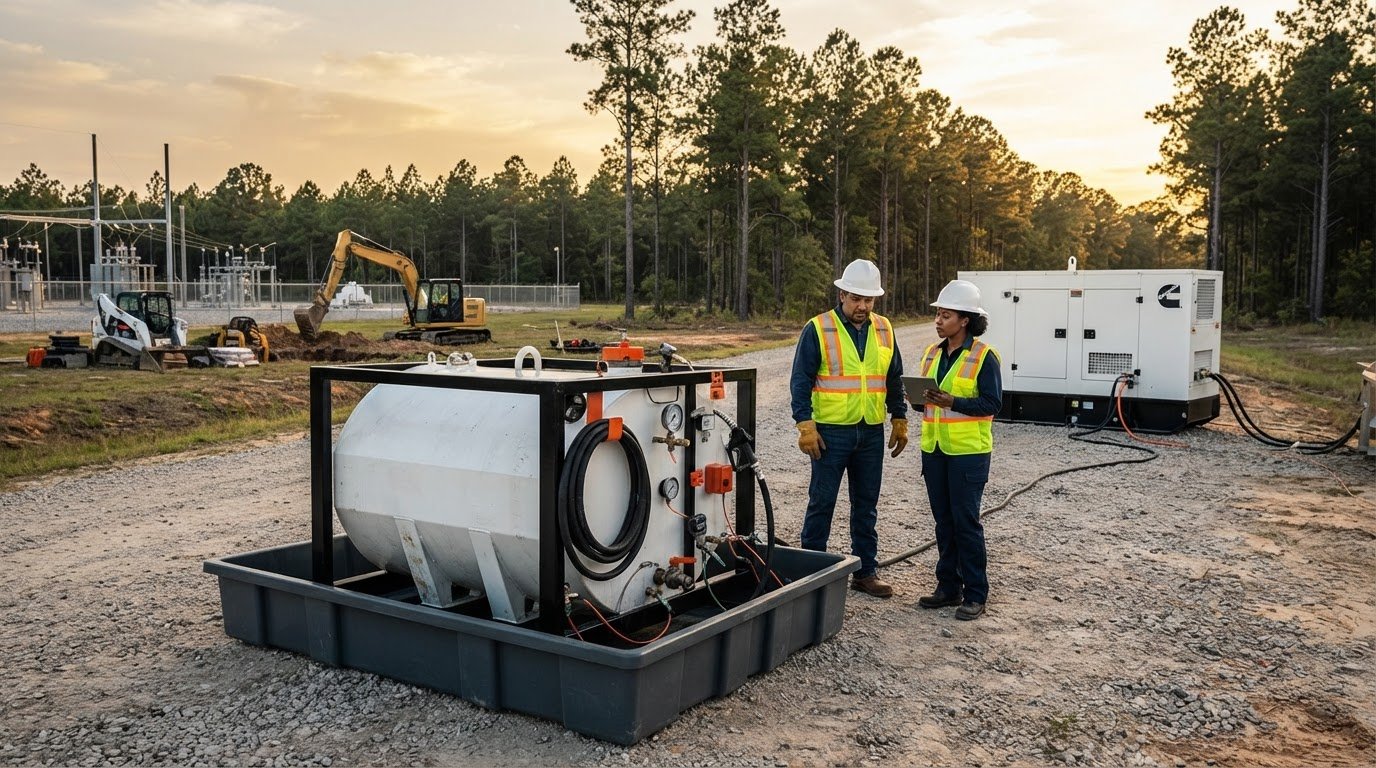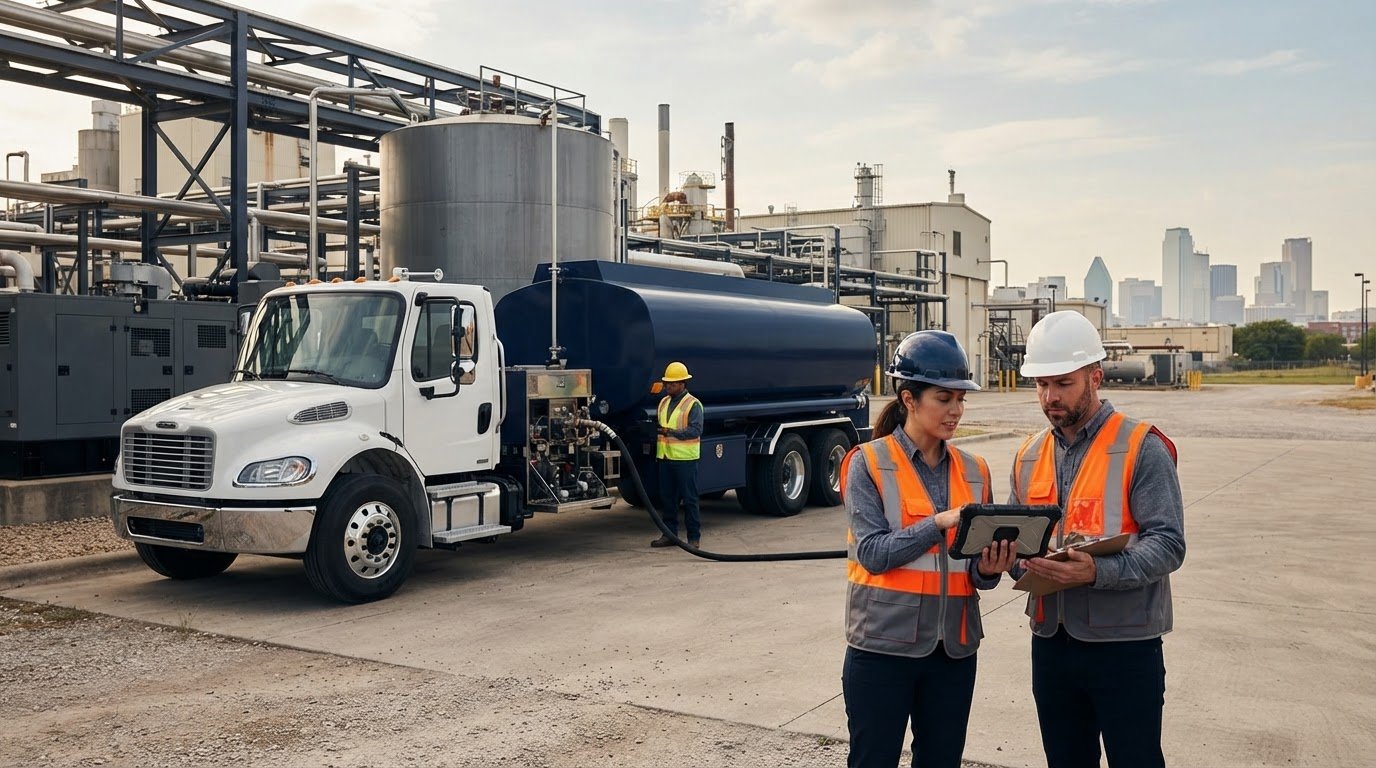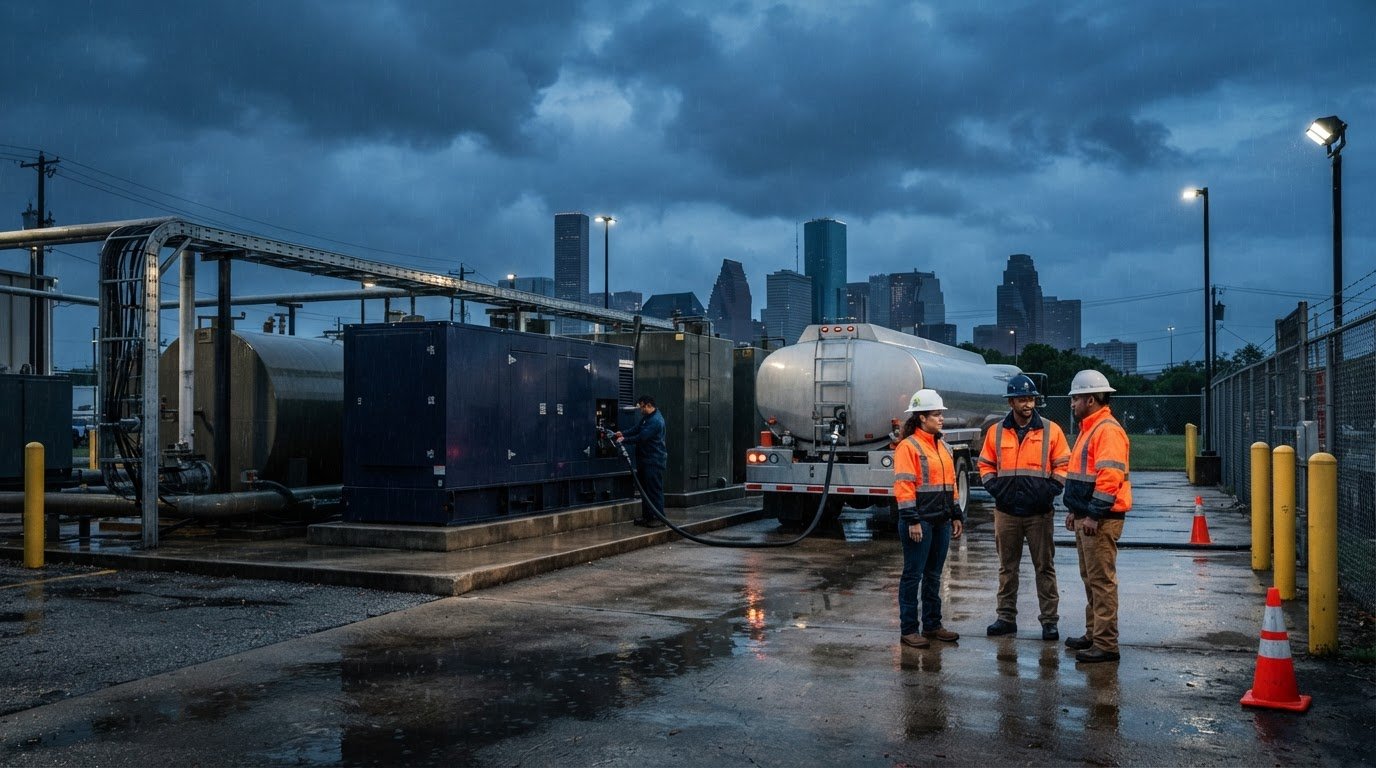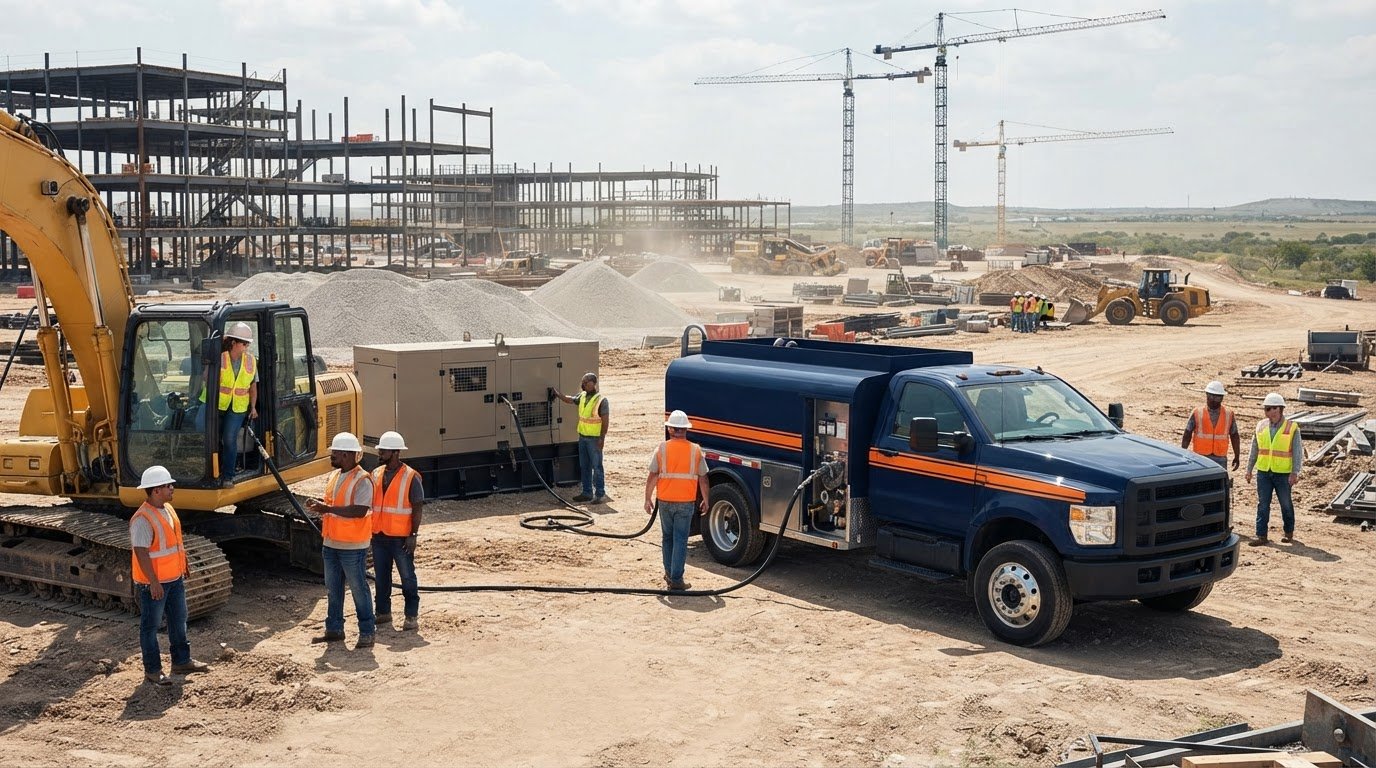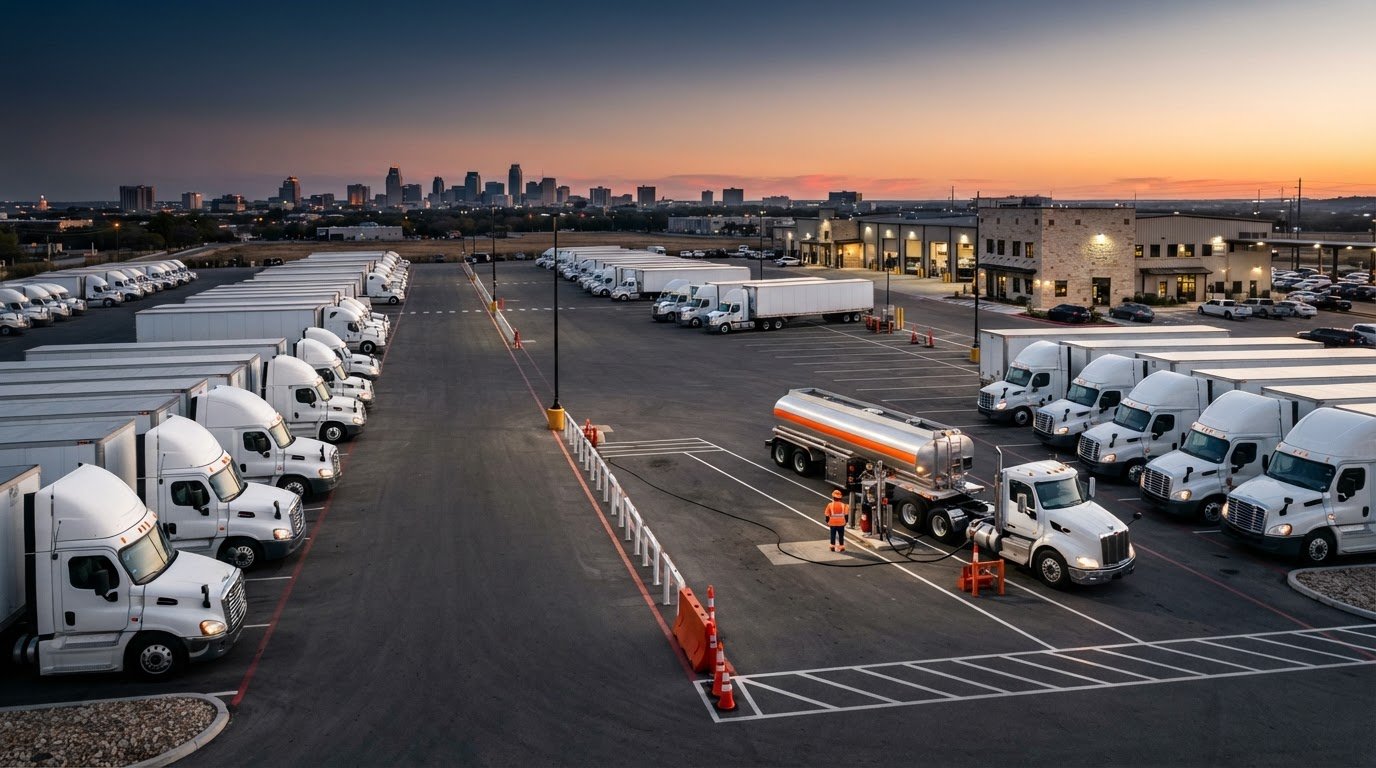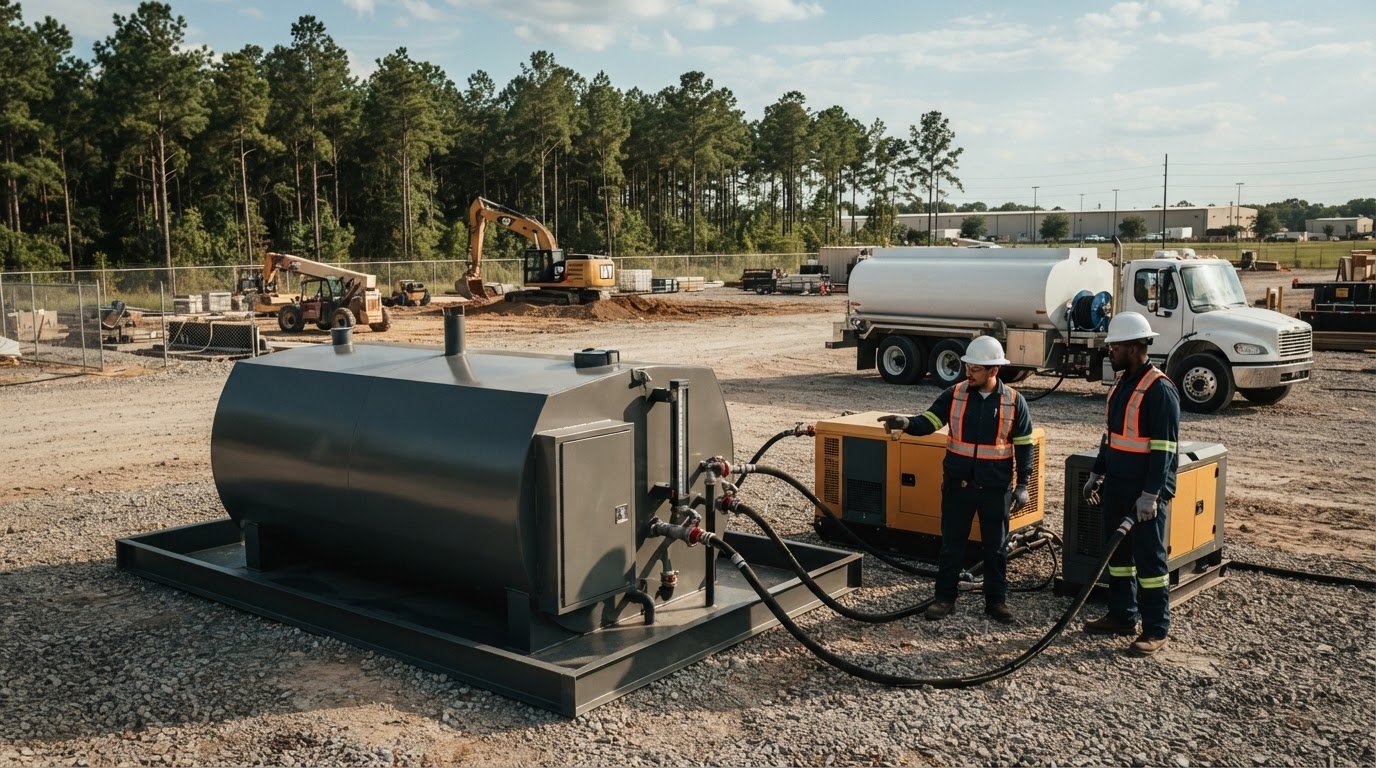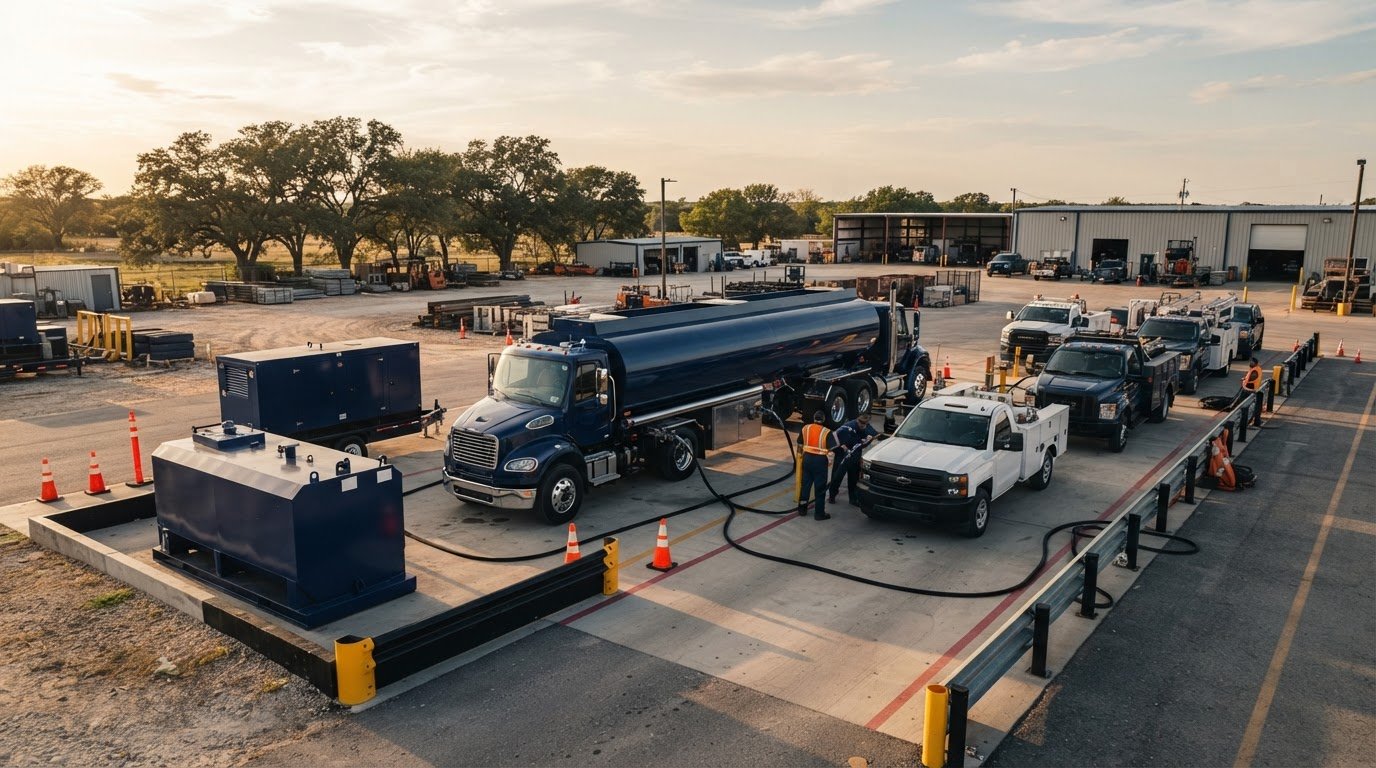
A missed fuel run can stall more than one machine. It can disrupt an entire facility’s operating rhythm. If you’re researching “portable fuel tank leasing for industrial use San Antonio,” the key decision is how to match on-site capacity with site conditions and a replenishment plan that keeps operations moving.
Undersized storage can mean more frequent deliveries, while a tank that doesn’t fit the site can restrict access and complicate daily work. Planning these details before arranging a rental helps connect fuel storage to the realities of your operation.
This guide explains how to estimate demand, assess tank placement and site safety, and compare rental arrangements alongside delivery logistics. It also shows how portable tank rentals can work with commercial fuel delivery and equipment fueling in San Antonio. The goal is a practical storage plan that supports your operation without adding avoidable disruption.
Why San Antonio Industrial Sites Consider Portable Fuel Tank Leasing
Equipment, generators, and industrial processes need dependable fuel access to keep work moving. When a site relies on trips to a central fuel point or public fueling location, travel time and operating schedules can create interruptions. A portable tank rental provides temporary on-site fuel storage without requiring the operation to purchase and own a tank. For businesses evaluating portable fuel tank leasing for industrial use San Antonio , start with the work the fuel must support, not a capacity chosen in isolation.
Rental can suit a defined project or changing demand, while purchasing may be worth considering when a site has a lasting need for owned storage. An ongoing operation may also benefit from a rental arrangement if it fits the site’s plans and fuel logistics. Backup reserves serve a different purpose: they provide on-site fuel for equipment or generators when routine supply is disrupted. Each use calls for its own consumption estimate and replenishment plan.
- Variable project demand: Construction activity and temporary workloads can change as crews, machinery, and schedules shift. Rental storage can align on-site access with project needs without making tank ownership part of the long-term asset base.
- Ongoing operations: Facilities with steady equipment or generator demand should consider regular consumption, delivery access, and the operational value of keeping fuel closer to where it is used.
- Backup reserves: Sites relying on standby generators or critical equipment can plan storage around the role fuel plays during interruptions and how reserves will be replenished.
Keeping fuel closer to the equipment and processes that depend on it can reduce avoidable refueling interruptions. That benefit depends on suitable placement and a replenishment plan. A tank alone does not keep fuel flowing.
Which San Antonio industrial operations benefit from on-site fuel storage?
Industrial facilities, construction operations, and equipment-intensive sites may all benefit, but their demand patterns differ. A facility with predictable generator use has different needs from a mobile worksite running several machines on a changing schedule. Distance from existing refueling points matters too. Longer trips and narrow fueling windows can make on-site access more valuable. Teams coordinating wider site requirements can connect storage planning with commercial fuel services, including delivery and equipment fueling.
What leasing solves, and what it does not
Leasing can bring storage closer to the work, but it does not guarantee lower total costs or resolve supply gaps by itself. Tank availability, fuel supply, delivery timing, and equipment fueling are separate parts of the plan. Site layout and operating needs determine whether storage is practical. For general background on one type of portable storage, see this overview of collapsible tanks. It is not a specification for any rental tank.
Before arranging storage, map consumption by equipment or process, note when and where fuel is used, and consider delivery vehicle access and available site space. These details help match a rental to actual work instead of relying on a broad estimate. React Fueling provides portable fuel tank rentals alongside commercial fuel delivery and equipment fueling for San Antonio operations.
How to Size and Site an Industrial Portable Fuel Tank
Choose tank capacity based on the work the site performs, then plan a location that won’t obstruct deliveries or equipment. A clear sequence for portable fuel tank leasing for industrial use in San Antonio connects storage to consumption, replenishment, and site conditions instead of defaulting to a catalog size.
- Estimate consumption. Review fuel-use records for the equipment, generators, or processes the tank will support. Use daily or weekly totals that reflect the actual operating schedule, including shifts, downtime, and workload changes. Separate the demand the tank will serve from fuel used elsewhere on site.
- Define reserve needs. Decide what reserve would support the operation if usage rises or a planned delivery shifts. The right reserve depends on the consequences of running short, demand variability, and the site’s operating priorities. Set it deliberately rather than relying on a generic rule.
- Plan replenishment. Compare the working consumption estimate with the expected delivery interval. If a site uses more fuel during certain phases or shifts, account for that variation and plan how delivery timing will respond. React Fueling offers fuel tank rentals alongside fuel delivery, connecting storage decisions with supply planning.
- Assess placement. Check delivery vehicle approach and access, the route fuel must travel to reach equipment, and how the proposed location fits the site layout. A tank that looks suitable on a plan may be impractical if it narrows a traffic lane or interferes with routine work.
Plan usable storage by considering demand, reserve, replenishment, and access together. The largest catalog option is not automatically the best fit. Unused capacity can take up valuable space, while capacity that doesn’t align with consumption and delivery intervals may not support the operation as intended.
Estimate capacity from consumption and replenishment
Start with recorded usage over representative operating days or weeks, then compare the total with the planned interval between deliveries. For example, if certain equipment runs only during a scheduled project phase, base the estimate on that phase rather than assuming full-time operation. Account for predictable peaks and planned schedule changes. This gives you a working estimate without imposing an unsupported consumption benchmark or reserve percentage.
Plan placement, access, and containment
Walk the proposed location with delivery access and daily traffic in mind. Consider whether a delivery vehicle can reach the tank and whether equipment, workers, and other site activity can continue without routine obstruction. Include secondary containment and spill-prevention measures in the site assessment, but don’t assume one configuration fits every tank or location. Verify applicable San Antonio fire, environmental, and site requirements with the relevant authorities before arranging placement. OSHA’s fuel-handling standard applies specifically to marine terminals, so consider its scope when using it as a reference.
With consumption records and a workable site layout, operations teams can develop a practical storage and replenishment plan. React Fueling’s contact page is available for discussing tank rental and delivery for your San Antonio operation.
Rental, Longer-Term Leasing, or Retail Fueling: Compare the Operating Fit
The right fuel arrangement depends on how long the need will last, how predictable consumption is, and how much coordination the site can manage. Short-term tank rental, longer-term rental or leasing, and repeated retail fueling each create different demands for site control, delivery planning, and staff time. Compare operational fit first; project scope and documented arrangement terms determine the financial comparison.
Short-term rental
Duration: Suits a defined project or temporary increase in demand. Demand: May vary as crews, equipment, or project phases change. Site control: Requires space and access for the rental period. Delivery coordination: Needs a replenishment plan that follows project use. Workload: Teams coordinate tank placement, supply, and eventual removal according to the arrangement.
Longer-term rental or leasing
Duration: Better aligned with recurring storage needs. Demand: Can support steadier consumption, although operations may still fluctuate. Site control: Requires a location that remains workable over time. Delivery coordination: Established usage patterns can inform a consistent replenishment plan. Workload: Staff coordinate ongoing storage and supply within the documented terms.
Repeated retail fueling
Duration: Can suit intermittent needs without maintaining on-site storage. Demand: May fit low or irregular use, depending on the operation. Site control: Avoids assigning space to a tank. Delivery coordination: Fuel access depends on trips to a retail location. Workload: Employees may need to schedule and make those trips, accounting for travel and operating windows.
When does a rental or longer-term arrangement fit better?
A short project with changing requirements may call for temporary storage that tracks the work, while an ongoing operation may need a more durable storage plan. As consumption becomes stable, usage records can help teams coordinate replenishment with a regular operating rhythm. Compare documented term conditions, including the period of use and responsibilities for placement and removal, rather than assuming arrangements are identical. React Fueling’s portable fuel tank rentals can be considered alongside the site’s delivery plan.
When does on-site storage outperform repeated retail fueling?
On-site storage may be a stronger operational fit when retail trips add travel, employee time, or interruptions to a tightly scheduled shift. Remote work locations and equipment that is difficult to move can make fuel access near the work more valuable. That doesn’t guarantee savings. Compare the time and coordination involved in each approach, along with the site’s ability to accommodate a tank and deliveries. If equipment access is central to the decision, include equipment fueling in the operating comparison.
For portable fuel tank leasing for industrial use San Antonio , weigh each option against the actual work pattern, site control, and fuel-supply plan. Comparing these factors helps identify an arrangement that supports operations with manageable coordination.
San Antonio Site-Readiness Checklist Before Arranging a Tank
A tank plan is easier to coordinate when the operational details are gathered in advance. For portable fuel tank leasing for industrial use in San Antonio, prepare a concise site brief covering fuel demand, access, operating constraints, and replenishment. This gives everyone involved a clearer picture of what the site needs and where planning questions remain.
Use this checklist to organize the information:
- Fuel and use: Identify the fuel type, expected daily or weekly use, and the equipment, generators, or processes it will support.
- Schedule and duration: Record operating hours, shifts, planned shutdowns, project duration, and periods when demand may change.
- Proposed location: Note the tank’s intended area, nearby work zones, equipment routes, and any site-specific restrictions on storage placement.
- Delivery access: Map the delivery route, access controls, vehicle entry instructions, and available delivery windows. Include constraints such as gates, check-in procedures, or restricted work periods.
- Site coordination: Identify the responsible site contact and the process for communicating access changes or coordinating fuel replenishment.
- Consumption tracking: Decide how fuel use will be recorded and who will monitor levels or usage patterns, so replenishment can be planned before supply becomes urgent.
What information should an industrial buyer prepare?
Bring together usage records, the operating schedule, project duration, and a list of equipment or generators. Add a site sketch or clear location description, the delivery route, access windows, and contact responsibilities. Decide how the team will track consumption and initiate replenishment. These details connect the rental arrangement to the operation’s routine instead of relying on assumptions.
Replenishment is part of site readiness, not an afterthought. Plan how fuel deliveries will fit the site’s access and work schedule, and how the team will communicate changing needs. Fuel delivery services can form part of that broader plan alongside rented storage.
Which safety and local requirements need verification?
Requirements can depend on the tank, fuel, location, and property conditions, so don’t assume a rule applies universally. Before placement, have qualified site and safety personnel assess fire-code, environmental, spill-control, and property considerations. Use the Texas Commission on Environmental Quality (TCEQ) and the City of San Antonio as starting points for authoritative guidance, then verify which requirements apply to the specific site and arrangement.
Include site procedures in the review: who is responsible for access, how delivery activity fits around routine work, and how the team responds to a spill or other site concern. Apply measures according to verified requirements and the conditions at the location, rather than treating a generic checklist as a universal standard.
Once the brief, access plan, and review responsibilities are in place, React Fueling’s contact page provides a way to discuss tank rental and fuel delivery for your site.
Arrange Industrial Fuel Tank Rental and Replenishment in San Antonio
A practical tank plan connects four decisions: how much fuel the operation uses, how long it needs on-site storage, whether the location is ready, and how replenishment will be coordinated. This keeps the storage arrangement tied to the work instead of treating the tank as a standalone piece of equipment. React Fueling provides portable fuel tank rentals alongside commercial fuel delivery and equipment fueling for San Antonio operations.
Before arranging a tank, bring together the details that shape day-to-day use: fuel type, equipment or processes to be supported, expected demand, project duration, and proposed location. Add the delivery route, site access instructions, operating constraints, and the person responsible for coordinating fuel. A concise, complete request makes it easier to discuss storage and supply as connected parts of the operation.
Coordinate tank storage with fuel supply
On-site storage serves its purpose when the site can replenish it in a way that fits consumption and work schedules. Consider how use may change across shifts or project phases, who will track consumption, and how delivery access will be arranged. A generator-dependent facility may also need generator fueling. A site supplying mobile machinery may need equipment fueling. Describe the operation because these needs differ, and one plan may not fit every site.
React Fueling’s portable fuel tank rentals can be coordinated with fuel delivery and equipment fueling logistics. Considering these elements together helps clarify what the tank must support and how fuel supply fits the site’s operations, without presuming a particular tank specification or delivery schedule.
Prepare a clear project request
Include the San Antonio site location, intended use, expected fuel demand, and project duration. Also share the operating schedule, access conditions, proposed tank location, and relevant equipment or generator needs. Include any access controls or restrictions that affect delivery. This information frames a practical discussion about storage and replenishment around the conditions on site.
Before proceeding, have the planned location and operating procedures reviewed by appropriate site personnel, and verify applicable local and Texas requirements. Then bring the project details together. For portable fuel tank leasing for industrial use San Antonio , a clear description of demand, duration, and site access helps focus the conversation on the arrangement your operation needs.
Discuss your San Antonio fuel tank needs with React Fueling, including your site’s intended use, expected demand, and project duration.
Put Your San Antonio Fuel Plan in Motion
A workable storage arrangement should support the operation you have planned, not create another task for the team to manage. Use site and consumption details to make the decision about portable fuel tank leasing for industrial use San Antonio a focused discussion about the rental arrangement and how replenishment can fit your work.
React Fueling offers portable fuel tank rentals and commercial fuel delivery in San Antonio, as well as Houston, Magnolia, College Station, Austin, and Dallas. Share your site location, intended use, expected demand, and project duration to map storage and fuel supply to your operation.
Discuss your San Antonio fuel tank needs with React Fueling. Share your site requirements to start planning tank storage and fuel delivery for your operation.
Frequently Asked Questions
What is the difference between portable fuel tank rental and leasing?
The terms can overlap, and the agreement defines the practical difference. Rental often describes a shorter or project-based arrangement, while leasing may refer to storage used over a longer period. Don’t rely on the label alone. Review the written terms for the use period, responsibilities, delivery coordination, and removal expectations so the arrangement matches the project and the way the site operates.
How do I choose a portable fuel tank capacity for industrial use?
Use fuel records from the equipment or process the tank will serve, then compare demand with the interval between planned replenishments. Keep separate needs distinct. For example, don’t combine generator use and mobile equipment consumption if they follow different schedules. Consider workload changes and the reserve the operation requires. Capacity should reflect this specific pattern, not simply be the largest option available.
Can a portable fuel tank be used at an industrial site in San Antonio?
A portable tank may be suitable, but site conditions and applicable requirements determine whether and how it can be used. For portable fuel tank leasing for industrial use in San Antonio, review the proposed location, fuel use, access, and operating procedures with qualified site personnel. Check relevant local and Texas guidance for the particular arrangement. React Fueling offers portable fuel tank rentals in San Antonio.
What site requirements should I check before placing a fuel tank?
Review the proposed location for delivery access, equipment traffic, nearby operations, and property restrictions. Also assess spill-prevention planning and any fire, environmental, or site-specific requirements that may apply. Requirements can depend on the tank and location, so don’t treat a general checklist as approval. Use the City of San Antonio and the Texas Commission on Environmental Quality as starting points, and involve qualified safety and site personnel.
Is it better to rent a fuel tank or refuel equipment at retail stations?
It depends on how much time and coordination retail fueling adds to the work. If equipment is difficult to move, the site is remote, or fueling trips conflict with shift schedules, on-site storage may better fit the operating pattern. For occasional use near convenient retail access, repeated trips may be workable. Compare travel, staff time, interruption risk, site space, and replenishment coordination rather than assuming either method will cost less.
How does fuel delivery work with a rented on-site tank?
Fuel delivery replenishes the tank according to the operation’s needs and the site’s delivery plan. The team should track consumption, communicate changing demand, and coordinate delivery access so supply planning reflects actual use. For example, a project entering a more equipment-intensive phase may need a revised estimate. A rented tank provides storage; delivery planning connects that storage to the fuel the operation consumes.
What information should I provide when requesting an industrial fuel tank rental?
Share the San Antonio site location, intended use, fuel type, expected demand, and project duration. Add the operating schedule, equipment or generator needs, proposed placement, delivery route, access windows, and any site restrictions. Identify the person coordinating deliveries and explain how the team tracks consumption. A map or simple site sketch can clarify access and placement, making it easier to discuss storage and replenishment.