Logistics companies in the U.S. allocated 29.6% of their total budgets to fuel costs in April 2026, a record high that forces every fleet manager to scrutinize their operational spend. You likely feel the pressure of these margins every time a truck idles at a retail pump or a driver spends 45 minutes off-route just to top off. It's frustrating to watch valuable labor hours evaporate at gas stations while also worrying about fuel shrinkage and unauthorized purchases. You know that every minute a driver isn't on the road, your bottom line takes a hit.
Transitioning to specialized diesel delivery for logistics companies is no longer just a convenience; it's a strategic labor-recovery tool designed for the high-stakes environment of the Texas Triangle. This guide explores how localized refueling models eliminate driver downtime, secure your supply chain, and optimize margins across Houston, Dallas, San Antonio, and Austin. We'll examine the shift toward on-site fuel reserves, automated IFTA reporting for compliance, and proactive DEF management that keeps modern engines running without interruption. You'll discover how to transform fuel from a volatile expense into a controlled, predictable asset for your 2026 operations.
The Logistics Fueling Crisis: Why Retail Pumping is Killing Your Margins
The retail refueling trap is a silent profit killer for Texas fleets. When your drivers deviate from their routes to find a station, you aren't just paying for the fuel. You're paying for windshield time where no cargo is moving. Industry research indicates that mobile refueling saves at least 30 minutes per vehicle every single day. In a high-volume logistics operation, these minutes aggregate into thousands of lost hours annually. If your fleet consists of 50 trucks, you're losing 25 hours of productivity every day just to the refueling process. This inefficiency is unsustainable in an economy where fuel costs represent nearly 30% of your total budget.
Safety risks further complicate the retail stop. Navigating a 53-foot trailer through a crowded retail lot designed for passenger cars is a liability nightmare. Tight turns, distracted pedestrians, and low-clearance canopies create constant hazards for heavy-duty equipment. Professional diesel delivery for logistics companies removes these variables entirely. By bringing the fuel to your yard or warehouse, you eliminate the risk of parking lot collisions and the stress placed on drivers trying to maneuver in cramped spaces.
The Hidden Costs of the Retail Fuel Stop
Direct labor is only the surface of the problem. Every retail stop involves stop-and-go traffic that significantly increases wear and tear on engines, clutches, and brake systems. Heavy-duty trucks aren't built for the constant idling and frequent gear changes required to enter and exit busy gas stations. Beyond mechanical strain, retail pumping opens the door to fuel card fraud and unauthorized purchases. When drivers enter a convenience store to pay or grab a snack, your company often ends up footing the bill for "convenience" items that have nothing to do with moving freight. Professional diesel delivery provides a closed-loop system where every drop is accounted for and dispensed directly into your tanks, eliminating shrinkage and administrative headaches.
Operational Continuity in the 2026 Economy
Modern supply chains demand total reliability. Just-in-time logistics requires a fueling model that mirrors its precision. When you utilize commercial fuel services, you ensure that every vehicle is ready to roll the moment the driver clocks in. There is a profound psychological benefit to this. Drivers who start their shifts with a full tank and a clear route are more focused and productive. They don't have to worry about finding a station that can accommodate their rig or dealing with broken pumps. For 24/7 warehouse and distribution operations, on-site fueling provides the backbone for continuous movement. It allows your team to focus on dispatch and delivery schedules while a vigilant partner handles the essential task of energy replenishment in the background.
Mobile Refueling vs. Bulk Tank Rentals: Which Model Fits Your Fleet?
Choosing between mobile refueling and bulk storage is a critical decision for fleet managers. It's not just about the fuel; it's about how that energy enters your trucks. Diesel fuel data shows the massive scale of consumption in the transportation sector, making your choice of delivery method a primary driver of operational costs. While one model prioritizes labor savings, the other focuses on supply security and volume-based pricing.
Yard space often dictates the feasibility of these models. Mobile refueling, or wet-hosing, requires zero permanent infrastructure, making it ideal for congested urban terminals. Conversely, on-site tanks require dedicated space that meets strict safety setbacks. You must evaluate whether your facility can accommodate large storage vessels without impeding the flow of trailers and loading dock operations.
Wet-Hosing: The Ultimate Labor-Saving Solution
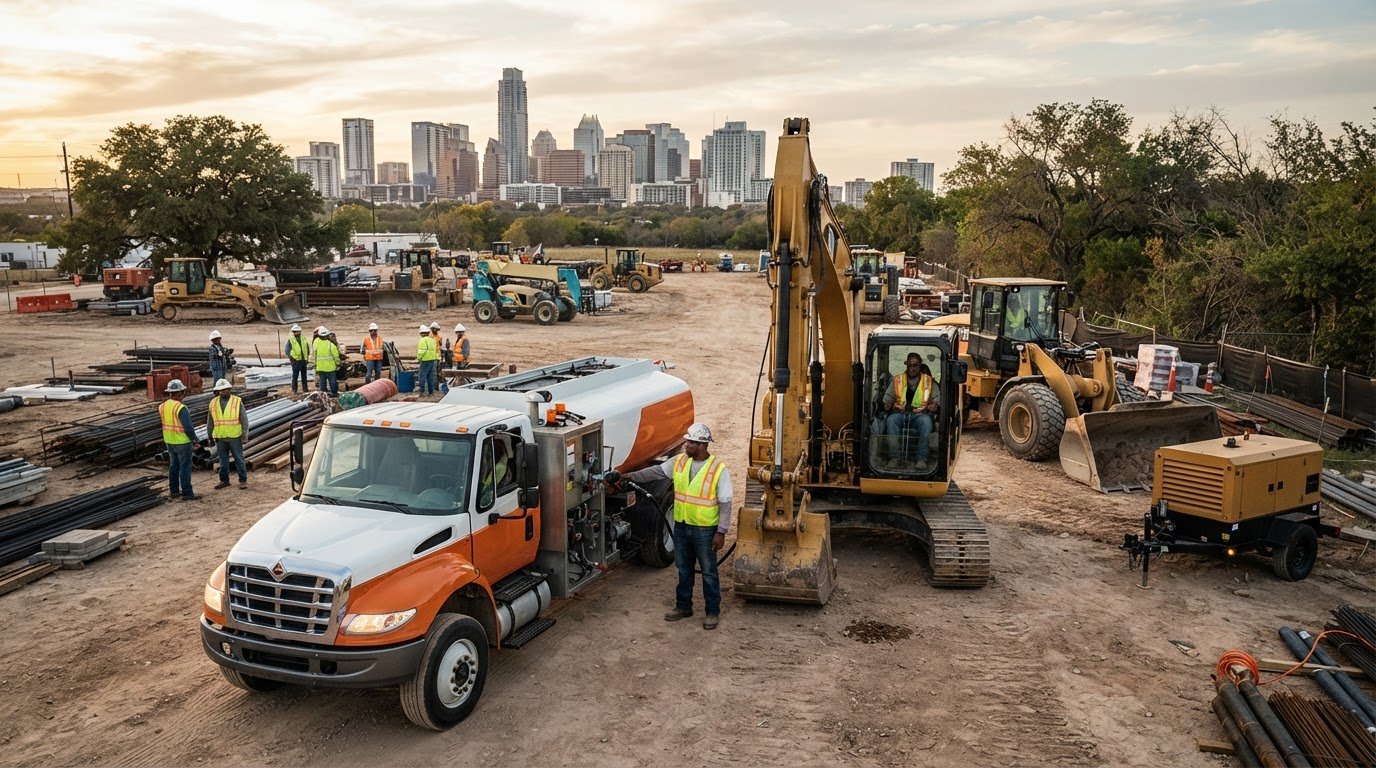
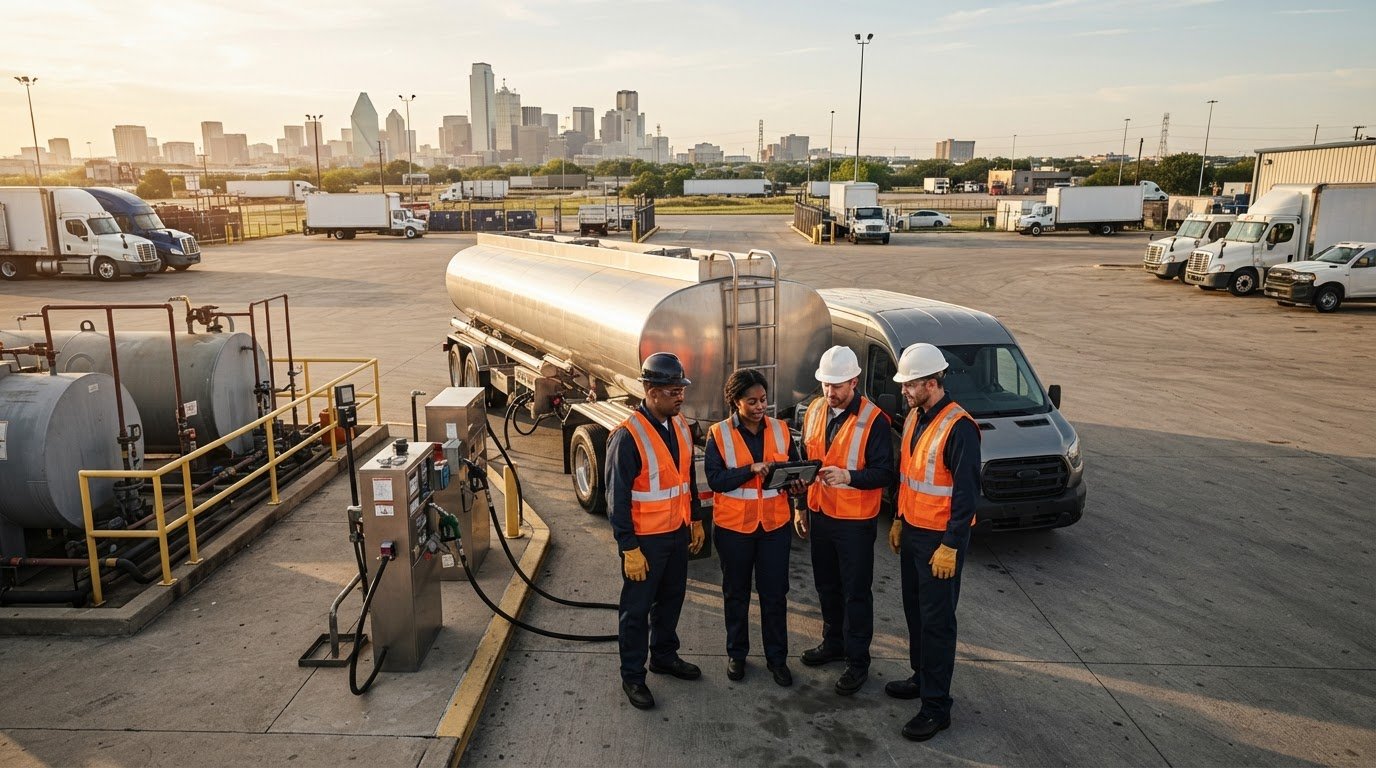
This is the most labor-efficient form of diesel delivery for logistics companies . While your drivers are off-duty, specialized trucks enter your yard and fill each vehicle individually. This process eliminates the need for drivers to queue at an on-site pump or stop at a station during their shift. It's the perfect solution for distribution centers where every square foot is dedicated to parking. Because each truck is metered directly at the nozzle, you receive precise per-vehicle fuel tracking that integrates seamlessly into your fleet management software.
On-Site Tank Rentals: Securing Your Own Reserve
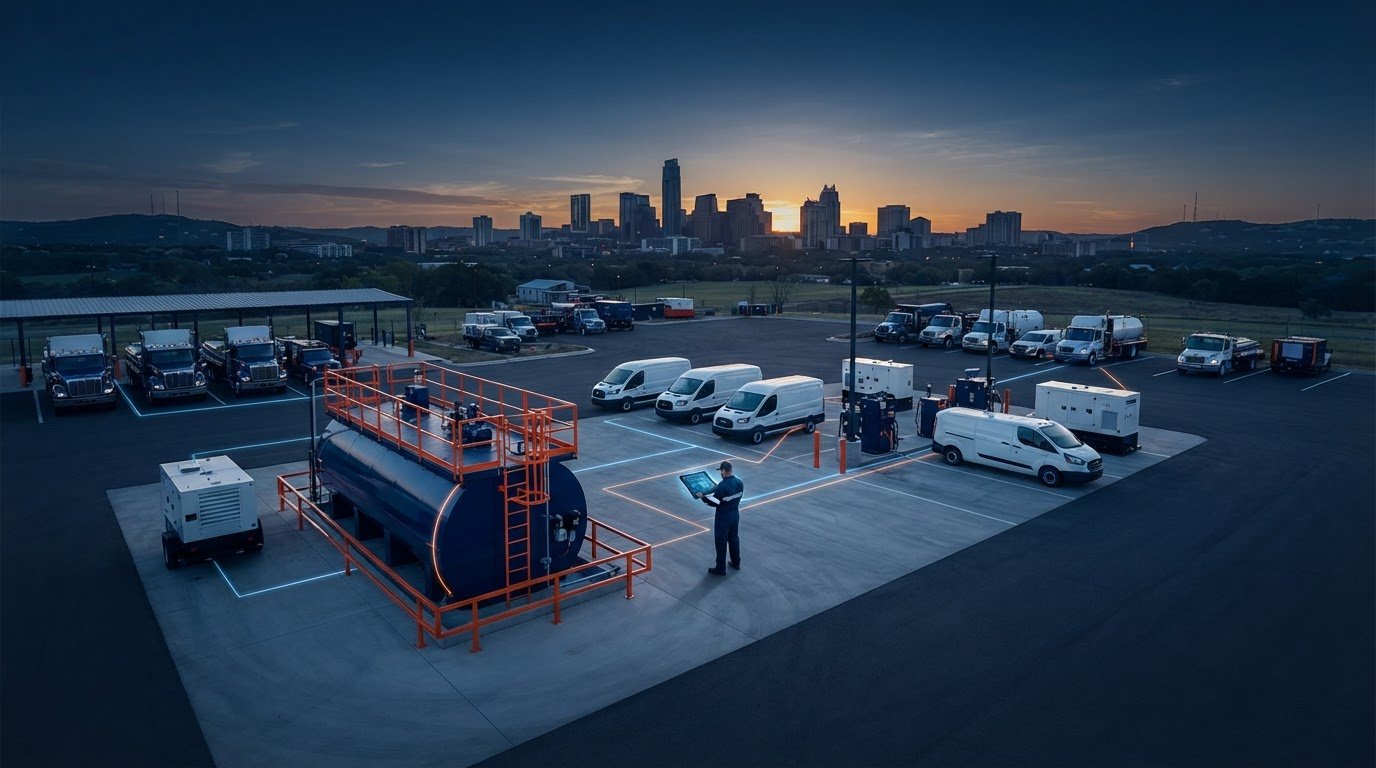
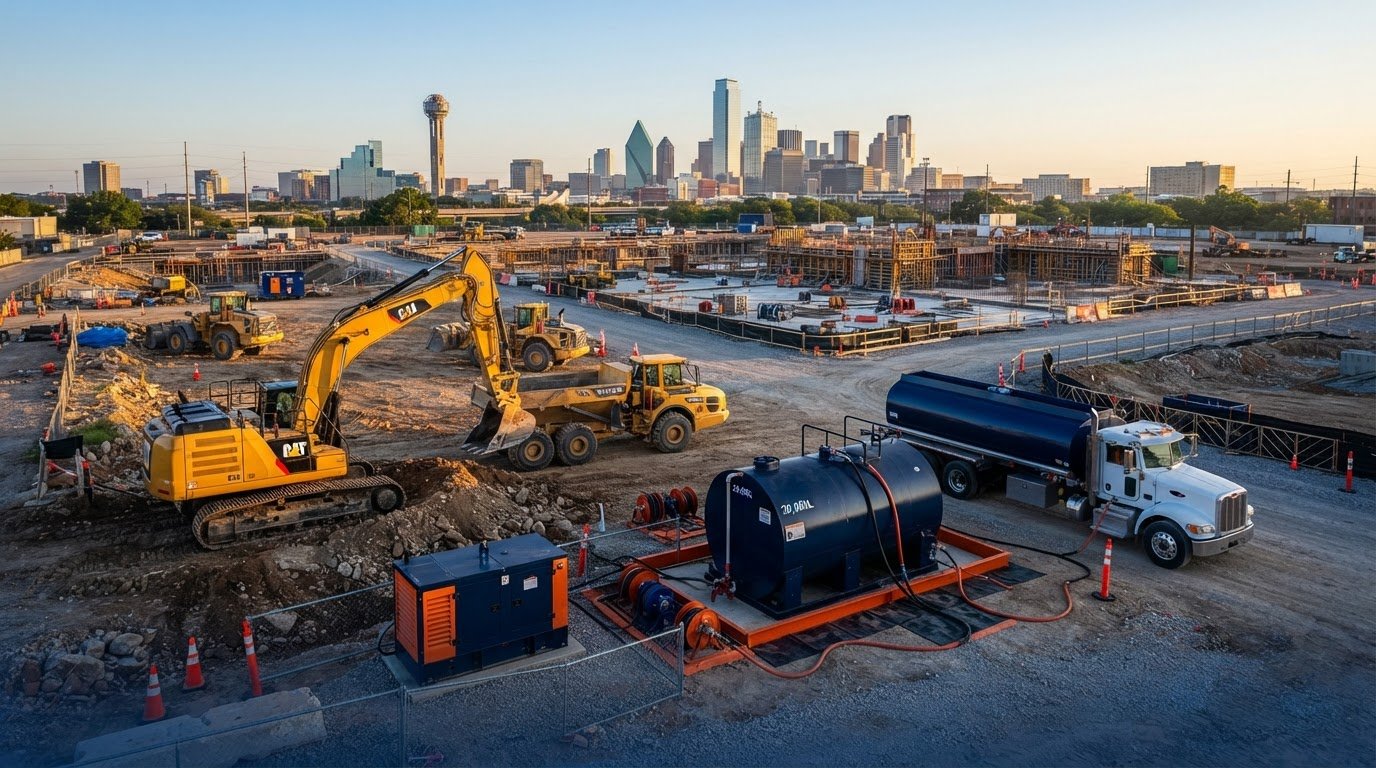
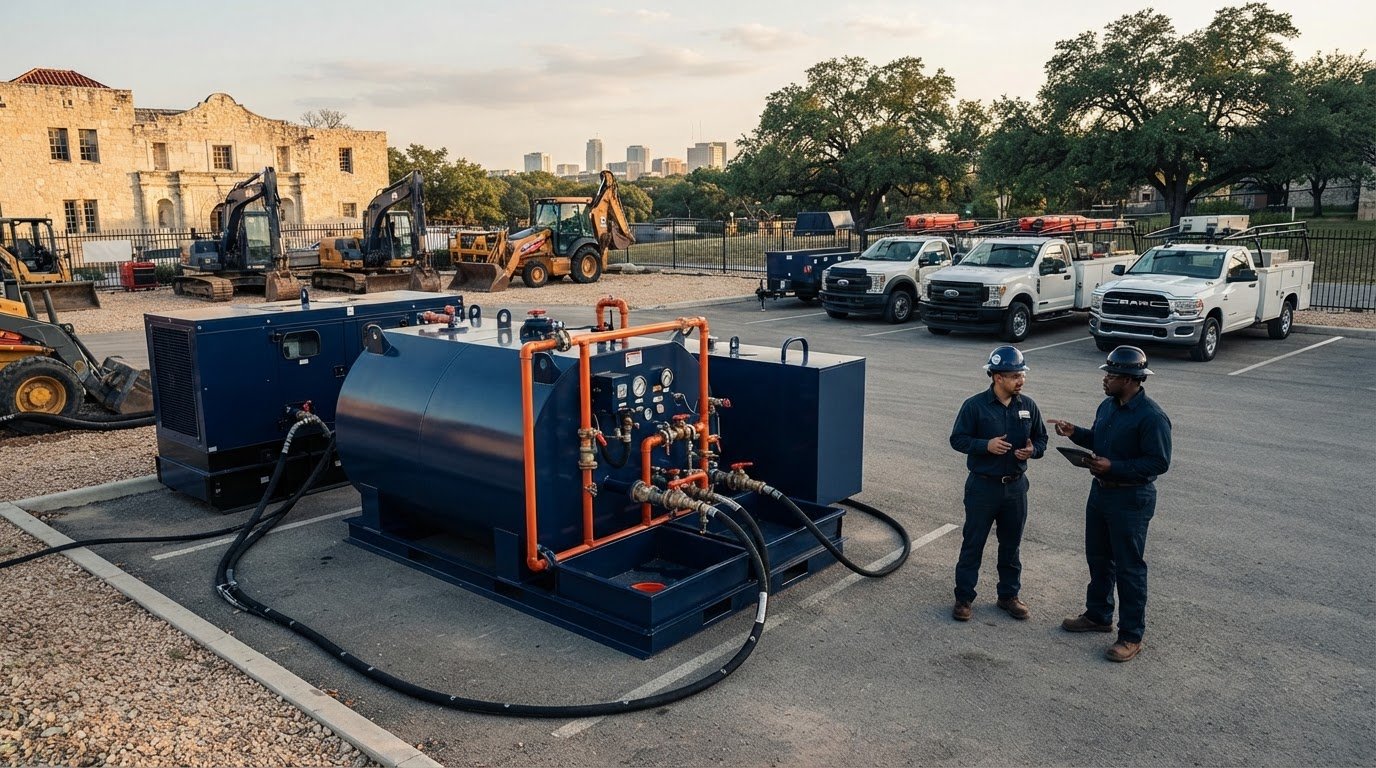
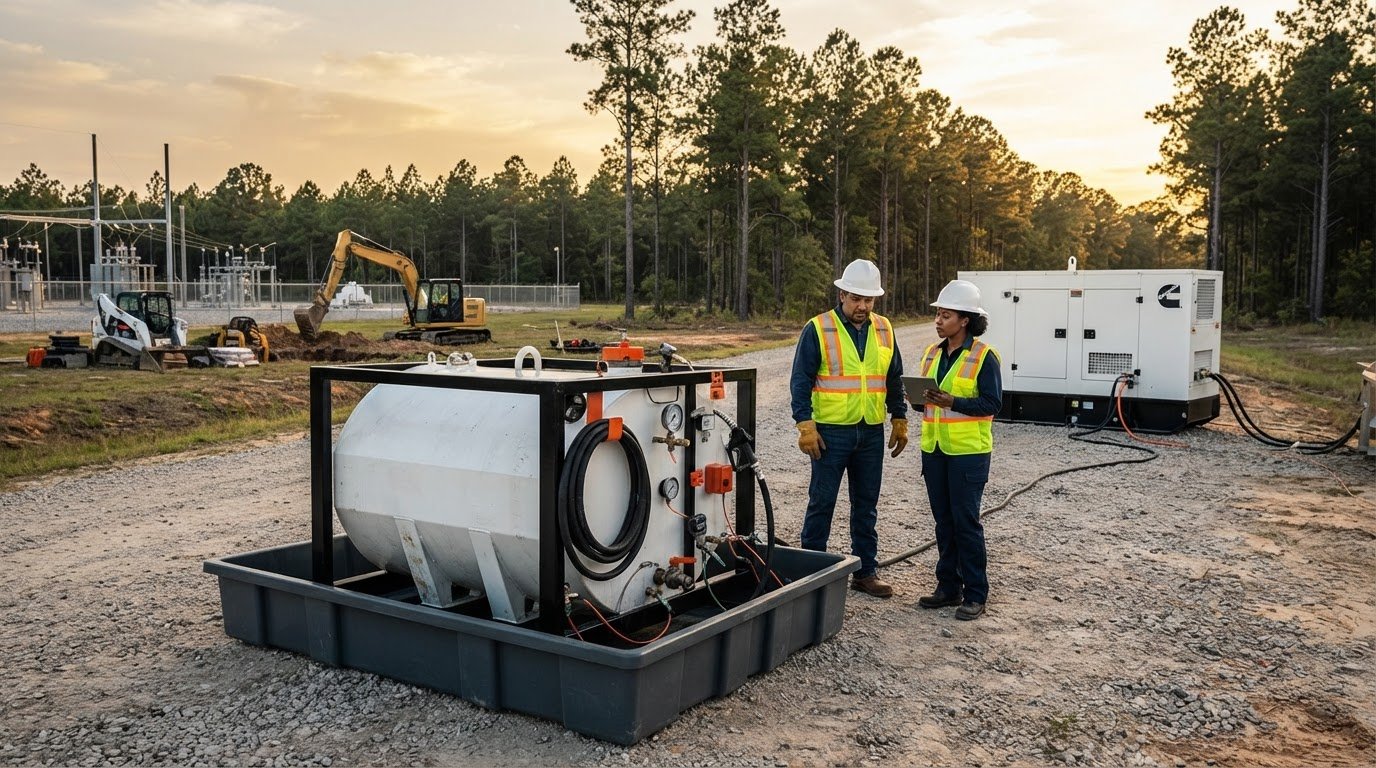
For fleets with more acreage, securing a private reserve is a tactical advantage. You can deploy portable fuel tank rentals ranging from 500 to 10,000 gallons to handle seasonal surges or secure supply during market instability. This model offers protection against price volatility by allowing you to buy larger volumes when rates are favorable. However, you must maintain strict compliance with EPA Spill Prevention, Control, and Countermeasure (SPCC) rules and local Texas Commission on Environmental Quality regulations to prevent leaks and spills.
From a financial perspective, mobile refueling is a pure operational expense. It avoids the costs of tank maintenance and environmental monitoring infrastructure. Bulk storage involves more logistical oversight but can lower the per-gallon cost for high-volume users. If you're unsure which model scales better with your current growth, speak with a logistics fueling specialist to audit your yard layout and delivery frequency. Identifying the right fit now prevents expensive pivots as your fleet expands across the Texas Triangle.
Beyond the Tank: Integrating DEF and Fuel Management Technology
Operating a modern fleet in the Texas Triangle requires a holistic approach to energy management. In 2026, diesel delivery for logistics companies involves more than just a fuel source; it's about the entire chemical and data ecosystem that keeps a truck moving. Siloed procurement, where fuel is purchased from one vendor and Diesel Exhaust Fluid (DEF) from another, often leads to operational gaps and administrative friction. Ensuring your fleet receives high-quality Ultra-Low Sulfur Diesel (ULSD) is non-negotiable for engine longevity and meeting emission standards, but it must be paired with consistent DEF supply to avoid costly derates.
Professional diesel delivery for logistics companies now functions as a technology-enabled service that prevents interruptions before they occur. By moving beyond a simple transactional model, you can leverage data to monitor consumption and ensure that every power unit remains compliant and road-ready. This integrated approach protects your engines and your schedule simultaneously.
The Synergy of On-Site DEF Delivery
The "DEF light" is an emergency that sidelines power units and disrupts tight delivery windows. According to best practices shared by the American Trucking Associations, proactive fluid management is key to maintaining fleet uptime. By utilizing on-site DEF fluid delivery alongside your diesel, you eliminate the need for drivers to handle heavy, contaminated jugs from retail shelves. In the intense Texas heat, proper storage is critical. DEF degrades when exposed to direct sunlight or temperatures consistently above 86°F. Integrated delivery ensures your supply remains fresh and within the required purity specifications for your Selective Catalytic Reduction (SCR) systems.
Data-Driven Fuel Management for Logistics
Technology bridges the gap between physical delivery and administrative compliance. Modern fueling services provide electronic delivery tickets that feed directly into your accounting systems. Integrating these electronic delivery tickets into your workflow allows for instant IFTA reporting, removing the manual burden of tracking state-by-state fuel consumption. Automated tank monitoring adds another layer of protection. These systems transmit real-time levels to your provider, triggering a dispatch before a "dry-out" occurs. By integrating this fueling data with your existing fleet management software, you create a single source of truth for your operational costs. You gain total visibility into consumption patterns, helping you identify inefficiencies and protect your margins across your entire service area.
Navigating the Texas Triangle: Logistics Fueling in Houston, Dallas, and San Antonio
The Texas Triangle represents the heartbeat of Southern freight movement, connecting the major hubs of Houston, Dallas-Fort Worth, and the San Antonio-Austin corridor. Managing diesel delivery for logistics companies within this high-traffic region requires a deep understanding of the Interstate 10, 35, and 45 corridors. Traffic congestion in these metro areas can turn a routine refueling stop into a multi-hour delay. By utilizing mobile delivery models, you bypass these urban bottlenecks and keep your power units positioned exactly where they are needed most. This localized approach is essential for meeting the demands of the Texas Triangle Multimodal Strategic Plan, which prioritizes the efficient movement of freight across this mega-region.
Regional compliance also plays a significant role in your fueling strategy. Municipalities across Texas often have varying environmental standards and storage permits. Working with a partner that understands these local nuances prevents costly fines and ensures your on-site storage meets all Texas Commission on Environmental Quality (TCEQ) requirements. This vigilance protects your operations and your bottom line as you move cargo between the state's most critical distribution points.
Houston and Magnolia: The Gulf Coast Logistics Hub
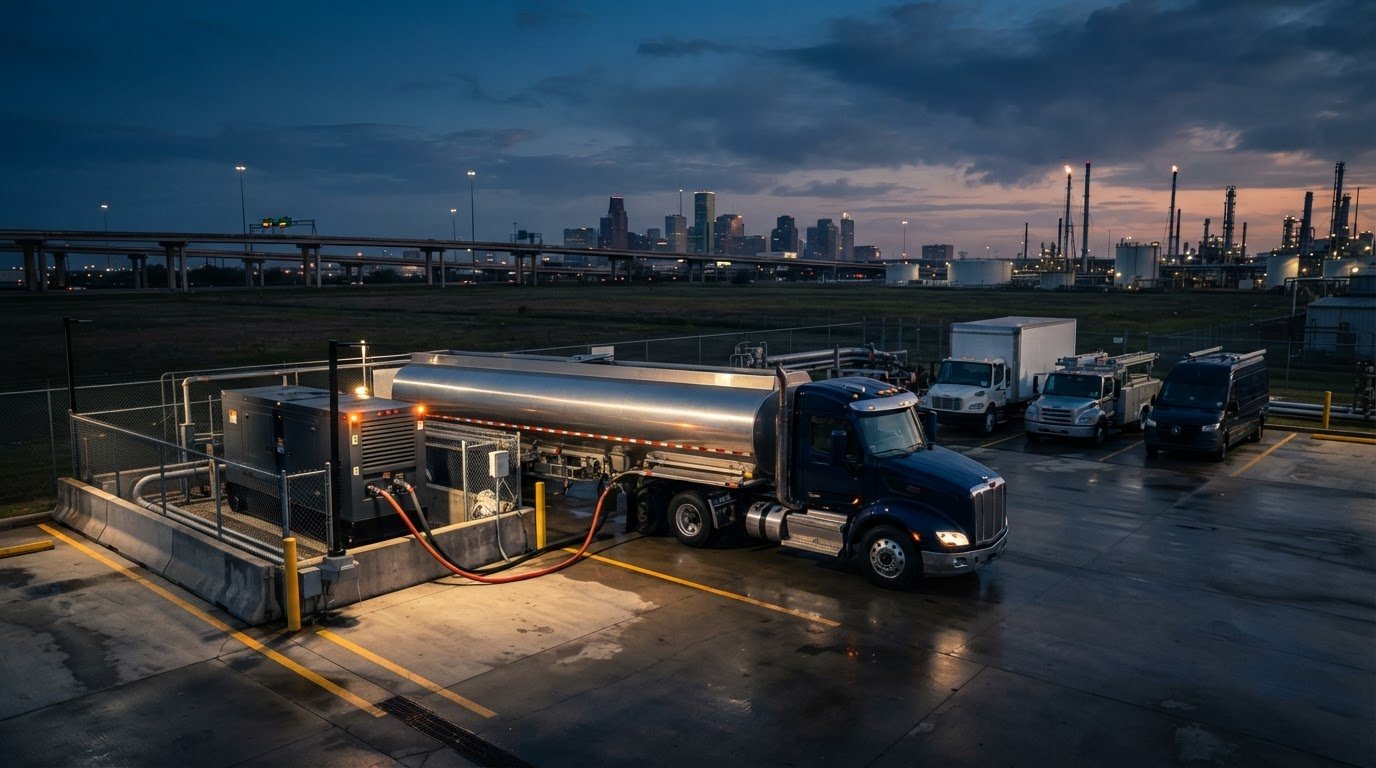
Logistics facilities near the Port of Houston face unique environmental challenges that can compromise fuel quality. High humidity levels in the Gulf Coast region increase the risk of water condensation in fuel tanks, which leads to microbial growth and fuel system failure. Implementing a strategy for commercial diesel delivery in Houston ensures that your fuel is handled with the local climate in mind. During peak hurricane season, having a partner with a physical presence in the Magnolia area allows for rapid response when supply chains become fractured. We provide the stability needed to keep port-adjacent facilities moving even when weather events threaten the region's energy infrastructure.
Emergency Readiness for Texas Logistics
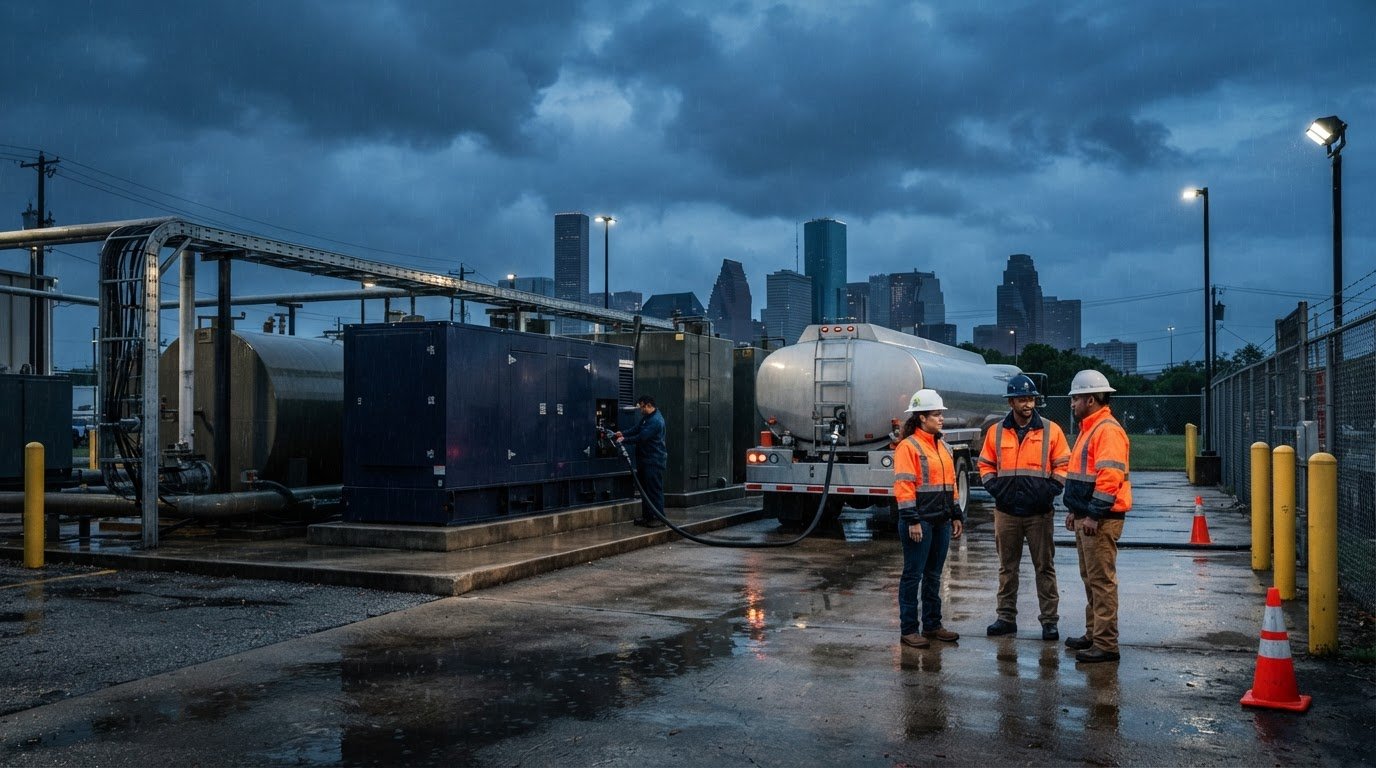
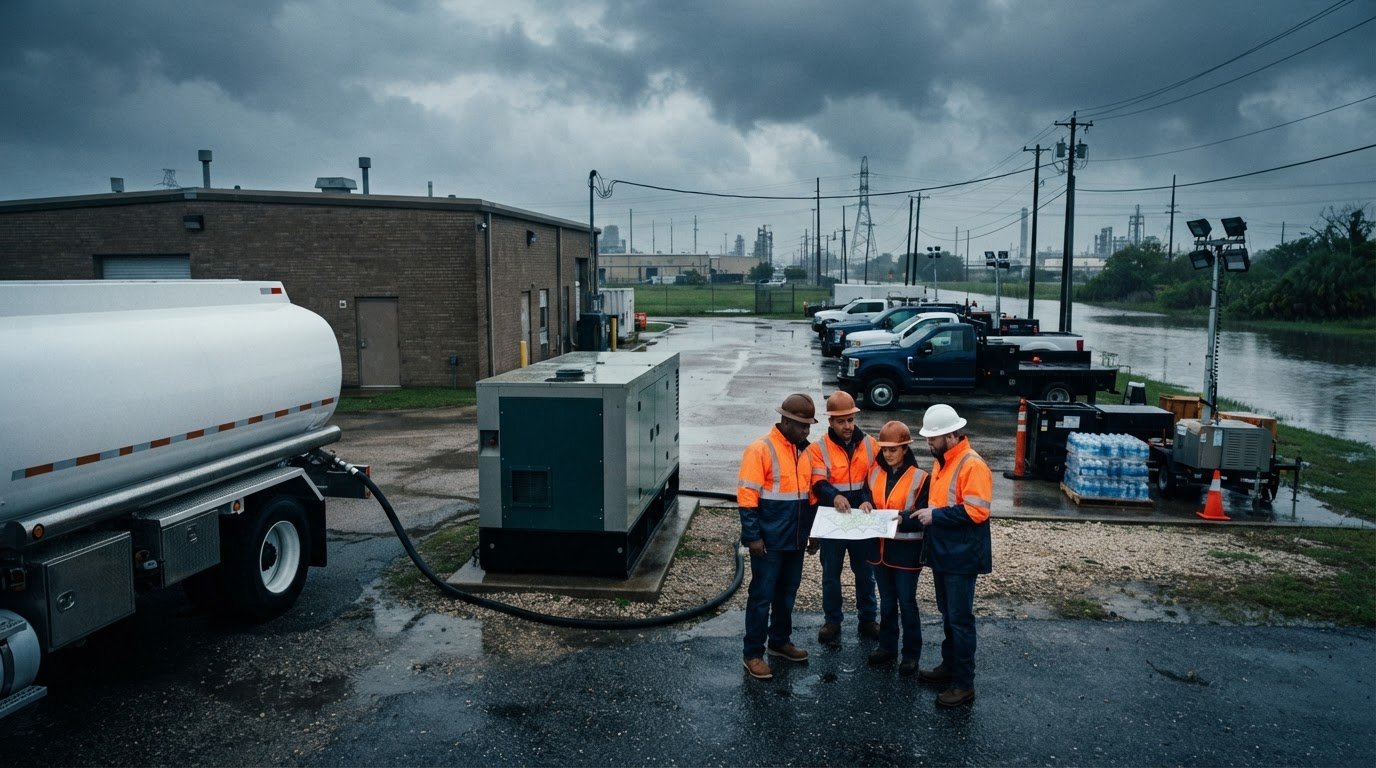
The Texas energy landscape remains vulnerable to extreme weather and grid instability. Power outages can disable retail pumps across entire counties, leaving logistics fleets stranded during critical delivery windows. Securing a 24/7 emergency fueling partner is a tactical necessity for maintaining operational continuity. We focus on ensuring fuel access when local grids fail, prioritizing the routes that keep the state's economy functioning. This level of foresight protects your reputation for reliability and secures your supply chain against unpredictable regional disasters.
If your fleet operates across these high-stakes Texas corridors, you need a partner that understands the local terrain and the pressure of your deadlines. Contact our Texas logistics team to build a resilient fueling plan that keeps your trucks moving regardless of traffic or weather conditions.
Partnering with React Fueling: Your Vigilant Logistics Ally
Logistics operations never truly sleep, and your fuel provider shouldn't either. React Fueling operates as a vigilant partner, combining deep local knowledge of the Texas Triangle with the high-stakes reliability of the React Holdings family. We understand that in the 2026 economy, a missed delivery or a dry tank isn't just an inconvenience; it's a threat to your operational continuity and your reputation. Our service model is built to alleviate the stress of downtime by providing a calm, steady confidence that your fleet is always ready for the next haul. We don't just drop fuel; we protect your margins through disciplined foresight and a commitment to keeping your cargo moving across Houston, Dallas, San Antonio, and Austin.
Transitioning from inefficient retail stops to a managed on-site solution requires a partner that understands the physical reality of industrial environments. We prioritize safety and compliance at every stage, ensuring that your diesel delivery for logistics companies meets all state and federal regulations. This no-nonsense, hardworking attitude allows you to focus entirely on your core business while we manage the complex logistics of your energy supply.
Customized Fleet Fueling Solutions
Every logistics fleet has a unique pulse. We analyze your specific shift patterns to develop a fleet fueling strategy that scales alongside your business growth. Whether you require direct-to-equipment fueling for specialized yard machinery or high-volume wet-hosing for your long-haul power units, our team integrates seamlessly with your existing workflow. We provide transparent reporting and electronic accounting that simplifies fuel tax management, providing you with the data needed for accurate IFTA compliance. This level of organization transforms fueling from a chaotic variable into a streamlined, predictable component of your daily operations.
Getting Started with React Fueling
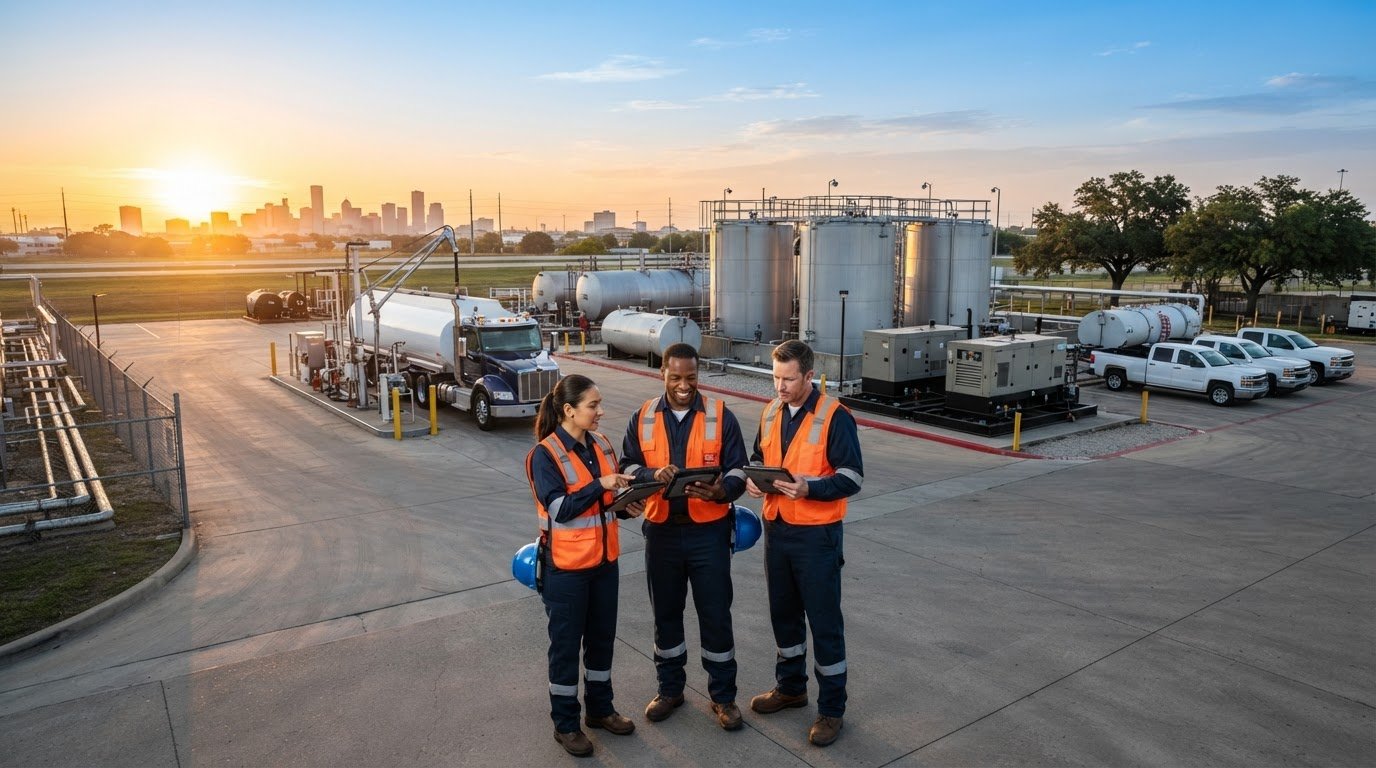
The onboarding process is designed for speed and clarity. It begins with a comprehensive site survey where our Texas-based specialists evaluate your yard layout, safety protocols, and storage needs. We identify potential bottlenecks and establish a delivery schedule that minimizes interference with your loading dock activity. Our boots-on-the-ground team is highly responsive and dedicated to showing up when it matters most, providing a level of service that distant, faceless corporations cannot match. We take pride in our local presence and our ability to solve complex problems before they interrupt your schedule.
Stop letting retail fueling drain your productivity and compromise your security. Reach out to our team today for a comprehensive logistics fuel audit. It's time to secure your supply chain with a partner that values discipline and operational uptime as much as you do. Schedule your first diesel delivery today and experience the stability of a managed fueling solution.
Securing Your Logistics Margins Across the Texas Triangle
The landscape of 2026 freight movement demands more than just a fuel vendor; it requires a strategic partner that understands the physical and economic reality of the road. Transitioning to specialized diesel delivery for logistics companies is the most effective way to reclaim lost labor hours and secure your supply chain against regional volatility. By integrating DEF delivery with high-quality diesel and leveraging real-time monitoring, you eliminate the operational gaps that lead to costly downtime. Taking control of your fuel logistics today builds the resilience your fleet needs for tomorrow's growth.
As a member of the React Holdings family, we provide the high-stakes reliability needed to navigate the Houston, Dallas, and San Antonio corridors. Our team offers 24/7 emergency response capabilities and comprehensive DEF and diesel integration to ensure your fleet remains compliant and moving, regardless of weather or grid instability. It's time to stop paying for downtime and start investing in operational continuity. Contact React Fueling for a Custom Logistics Fueling Quote and let us help you optimize your logistics margins. Your fleet is the backbone of the Texas economy, and we are here to keep it moving forward.
Frequently Asked Questions
Is diesel delivery more expensive than using a retail gas station?
Direct costs for fuel are market-based, but diesel delivery for logistics companies significantly lowers the total cost of ownership. You eliminate the 30 to 45 minutes of driver downtime spent at retail pumps per shift. This recovery of labor hours, combined with reduced vehicle wear and tear from off-route transit, often results in a net gain for your operational budget. You pay for the fuel while gaining back productive moving time.
What is the minimum volume required for a logistics diesel delivery?
React Fueling tailors delivery schedules to the specific scale and cadence of your logistics operations. Whether you require high-volume bulk tank refills or direct-to-truck mobile refueling for a smaller fleet, we design a plan that fits your yard's throughput. We focus on maintaining your operational continuity rather than forcing you into rigid volume tiers. Our specialists audit your consumption patterns to ensure your fuel reserves always meet your peak demands.
Can you deliver diesel and DEF to my logistics yard at the same time?
Yes, we provide comprehensive DEF fluid delivery alongside our standard fuel services. This integrated approach prevents the operational gaps caused by siloed procurement. Our delivery trucks are equipped to replenish both your diesel and Diesel Exhaust Fluid tanks in a single visit. This ensures your modern SCR engines remain EPA compliant and prevents the costly derate conditions that occur when DEF levels fall too low during a route.
How does mobile fueling help with IFTA tax reporting?
Mobile fueling provides a digital audit trail that simplifies IFTA compliance for every vehicle in your fleet. Every drop of fuel dispensed is recorded electronically at the point of delivery, providing precise data on consumption per unit. We integrate this data with your existing fleet management software to eliminate manual entry errors. This transparency ensures your tax reporting is accurate and ready for audit without the headache of collecting paper receipts from various stations.
What happens if our logistics yard loses power during a Texas storm?
React Fueling maintains 24/7 emergency fueling capabilities to keep your facility operational when the local grid fails. Our delivery trucks operate independently of station power, allowing us to reach your yard even during regional blackouts. We provide specialized generator fueling services to keep your warehouse lights, security systems, and climate controls running. This vigilant approach ensures your logistics chain remains unbroken regardless of the weather conditions in the Texas Triangle.
Is "wet-hosing" safe for my fleet and my facility?
Wet-hosing is a highly controlled and safe method for refueling your fleet while it is idle. Our trained specialists handle all equipment, following strict environmental protocols to prevent spills and soil contamination. This process is often safer than retail pumping because it eliminates the risk of drivers maneuvering 53-foot trailers through crowded, passenger-car-oriented parking lots. We prioritize site safety and compliance to protect your assets and your facility's environmental standing.
How do you track how much fuel is put into each individual truck?
We use calibrated, metered nozzles that record the exact volume dispensed into every power unit. This data is captured electronically and assigned to the specific vehicle ID in your fleet. You receive detailed reporting that shows the time, location, and amount of every transaction. This level of granular tracking prevents fuel shrinkage and unauthorized purchases, providing you with total visibility into your energy spend across the entire logistics network.
What areas of Texas do you provide diesel delivery for?
We provide diesel delivery for logistics companies throughout the major hubs of the Texas Triangle and surrounding regions. Our primary service areas include Houston, Magnolia, San Antonio, College Station, Austin, and Dallas. We maintain a strong local presence in these cities to ensure rapid response times and reliable scheduling for port-adjacent facilities and distribution centers. Our boots-on-the-ground team understands the unique traffic and logistical challenges of these specific Texas corridors.