Disaster Recovery Fuel Delivery: 5 Myths That Could Shut Down Your Operations
Your backup generator is a critical asset, but without a secured supply chain, it's just an idle engine waiting for a delivery that might never arrive. When a disaster declaration covers 59 Texas counties, like the one issued in July 2026, the local demand for diesel creates immediate logistical gridlock. Relying on a standard vendor for disaster recovery fuel delivery during these high-stakes moments often leads to empty tanks and dark facilities. It's a risk that most industrial operations simply cannot afford to take when the grid fails.
It's natural to feel uncertain about fuel availability when state-wide emergencies disrupt every major terminal from Houston to San Antonio. You've likely worried about the logistical chaos and price volatility that follows a major storm or grid failure. This article debunks the five most dangerous misconceptions about emergency fueling that threaten your operational continuity. We'll explore the reality of Texas fuel regulations, explain how to navigate logistical bottlenecks, and provide a framework for choosing a partner that keeps your critical systems online. You'll gain the clarity needed to secure your power supply before the next crisis hits.
The Reality of Disaster Recovery Fuel Logistics in Texas
Effective disaster recovery fuel delivery functions as a pre-planned logistics chain rather than a simple delivery service. It represents the definitive line between a facility that stays operational and one that grinds to a halt during a crisis. In Texas, diesel serves as the literal backbone for hospitals, data centers, and utility crews. These entities rely on consistent energy to maintain life-safety systems and regional stability. Without a secured supply, the infrastructure that supports our communities becomes vulnerable within hours of a grid failure.
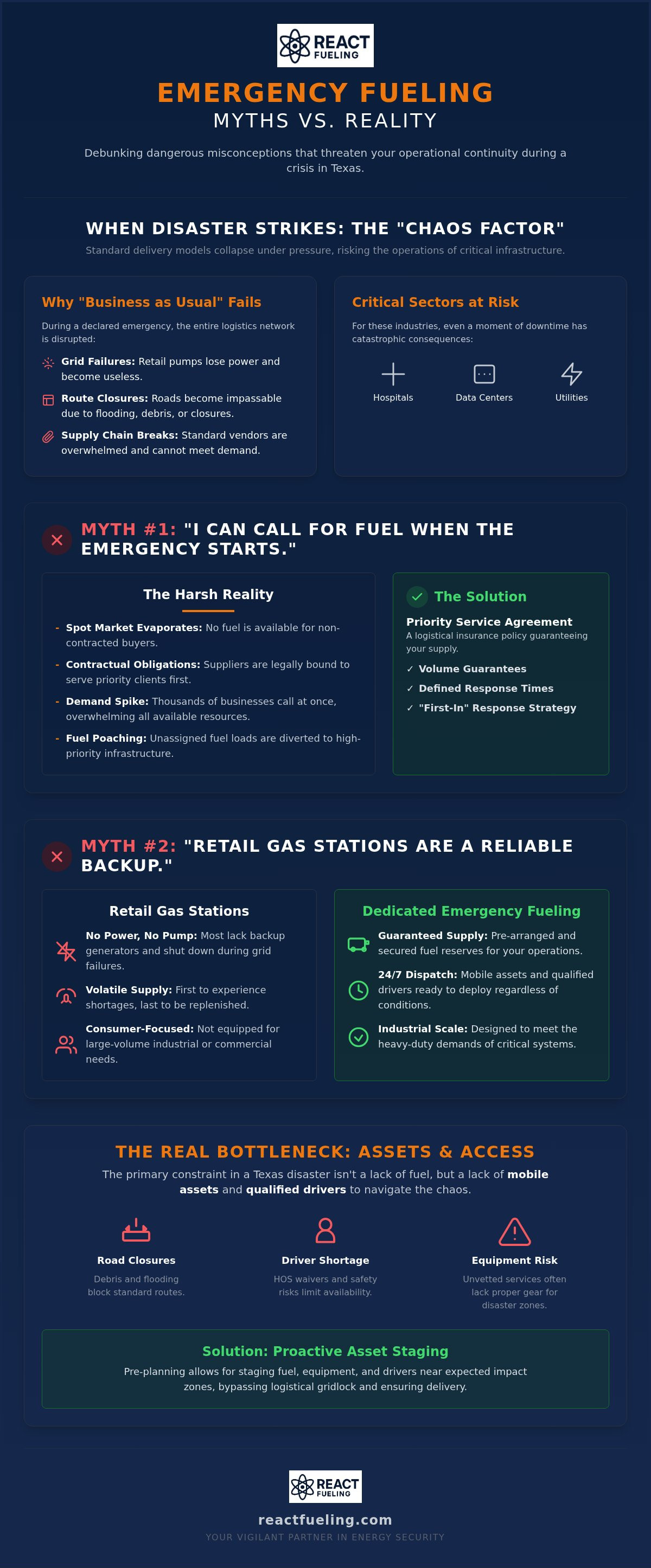
When a crisis hits, the "Chaos Factor" takes over. Standard delivery routes often disappear under floodwaters, fallen trees, or debris. Regional power outages render retail pumps useless, leaving unprepared businesses stranded without a way to replenish their reserves. This environment requires a shift in perspective. The primary goal of any disaster fuel plan is operational uptime, ensuring your facility never loses its primary or secondary power source regardless of external conditions.
Why "Business as Usual" Fails During a Disaster
Standard commercial delivery relies on stable roads and functional power grids. Emergency response ignores these luxuries. Grid failures often shut down local gas stations, making retail fuel completely inaccessible for commercial fleets. Disaster fuel logistics is the pre-arranged movement of energy to critical nodes. This specialized approach bypasses the typical supply chain failures that occur when regional demand spikes and traditional supply lines break. Relying on a standard vendor without a dedicated emergency protocol often results in indefinite delays during state-wide emergencies.
The Critical Infrastructure Connection
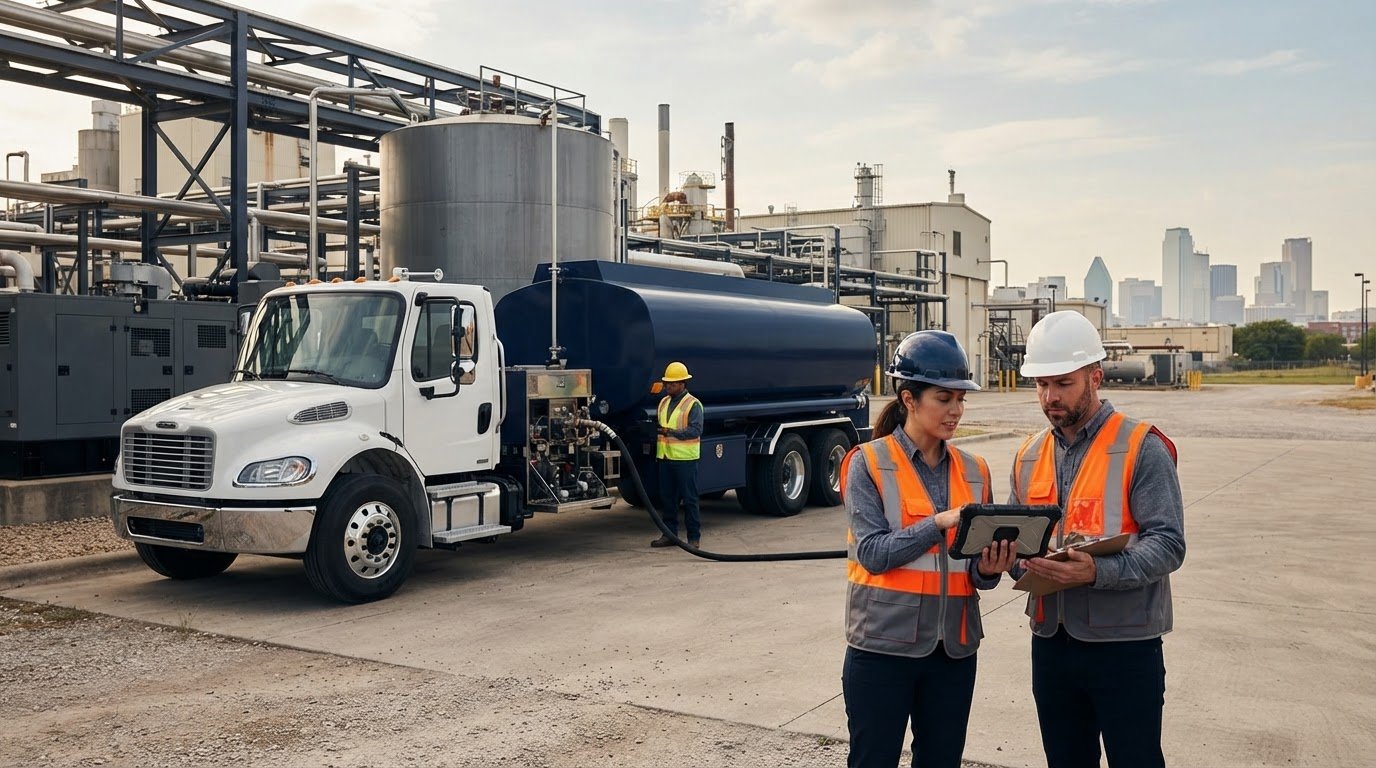
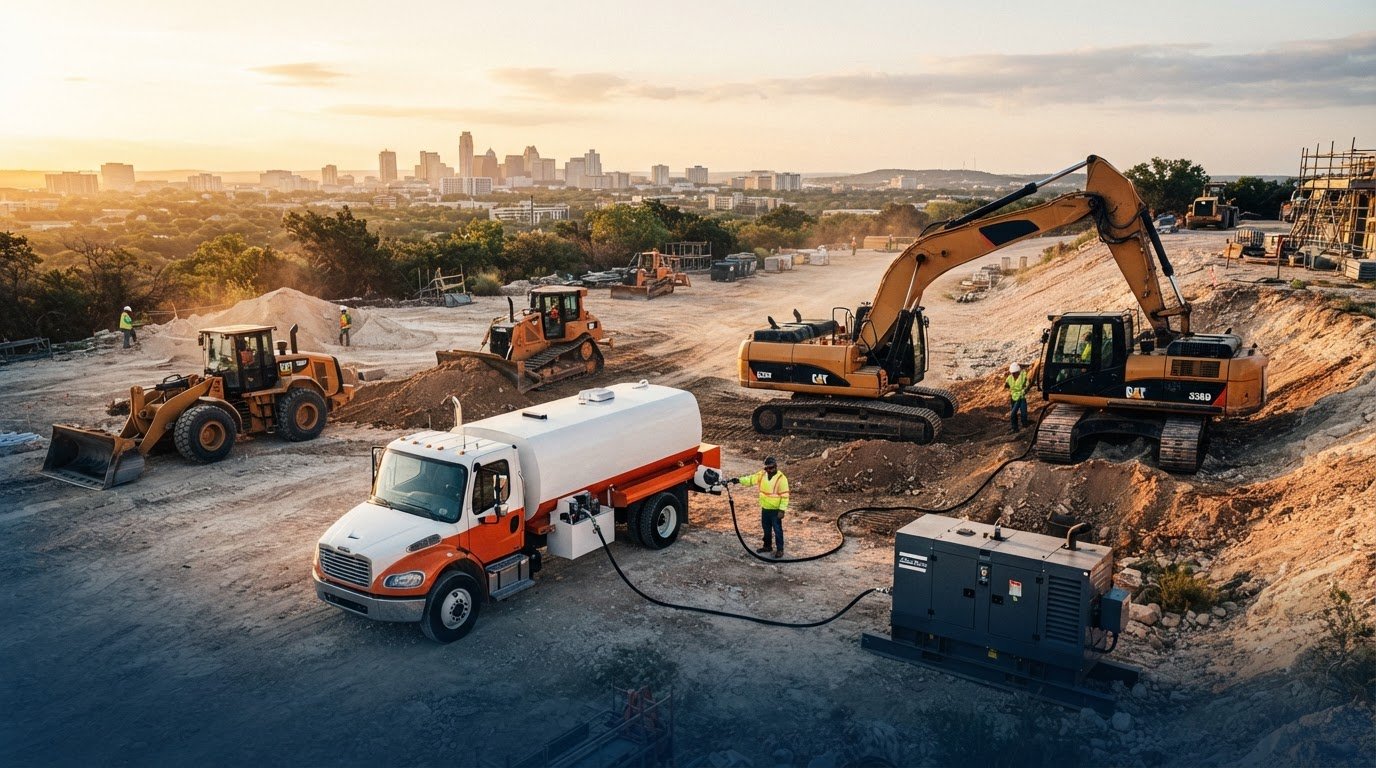
Certain sectors cannot experience even a moment of downtime without severe consequences. Healthcare facilities, telecommunications hubs, and cold storage warehouses face catastrophic losses if power fails. Utilizing professional generator fueling services ensures these critical systems remain online regardless of the external environment. React Fueling supports these high-stakes sectors across the Texas triangle, providing dedicated equipment and 24/7 dispatch in Houston, Dallas, San Antonio, and Austin. We act as a vigilant partner, securing the energy supply for the organizations that protect the state's infrastructure and public safety.
Myth 1: "I Can Just Call for Fuel When the Emergency Starts"
Waiting until the power fails to secure your supply is a strategy that often ends in total operational shutdown. When a regional crisis occurs, the spot market for fuel effectively evaporates. Suppliers are bound by legal obligations and service level agreements to fulfill their existing contracts first. This creates a massive demand spike where thousands of facilities call for assistance simultaneously, overwhelming local dispatch centers and exhaustible fuel reserves. Non-contracted companies often find themselves at the end of a very long line, facing indefinite wait times while their generators burn through their remaining on-site supply.
The risk of fuel poaching is also a reality during state-wide emergencies. In these scenarios, fuel loads originally intended for the spot market are often diverted to high-priority infrastructure or entities with established disaster recovery fuel delivery agreements. Without a pre-arranged commitment, your facility remains vulnerable to these shifts in the supply chain. Shifting from a wait-and-see approach to a 24/7 emergency fueling agreement is the only way to guarantee that your operations remain a priority when resources become scarce.
The Priority Service Agreement Advantage
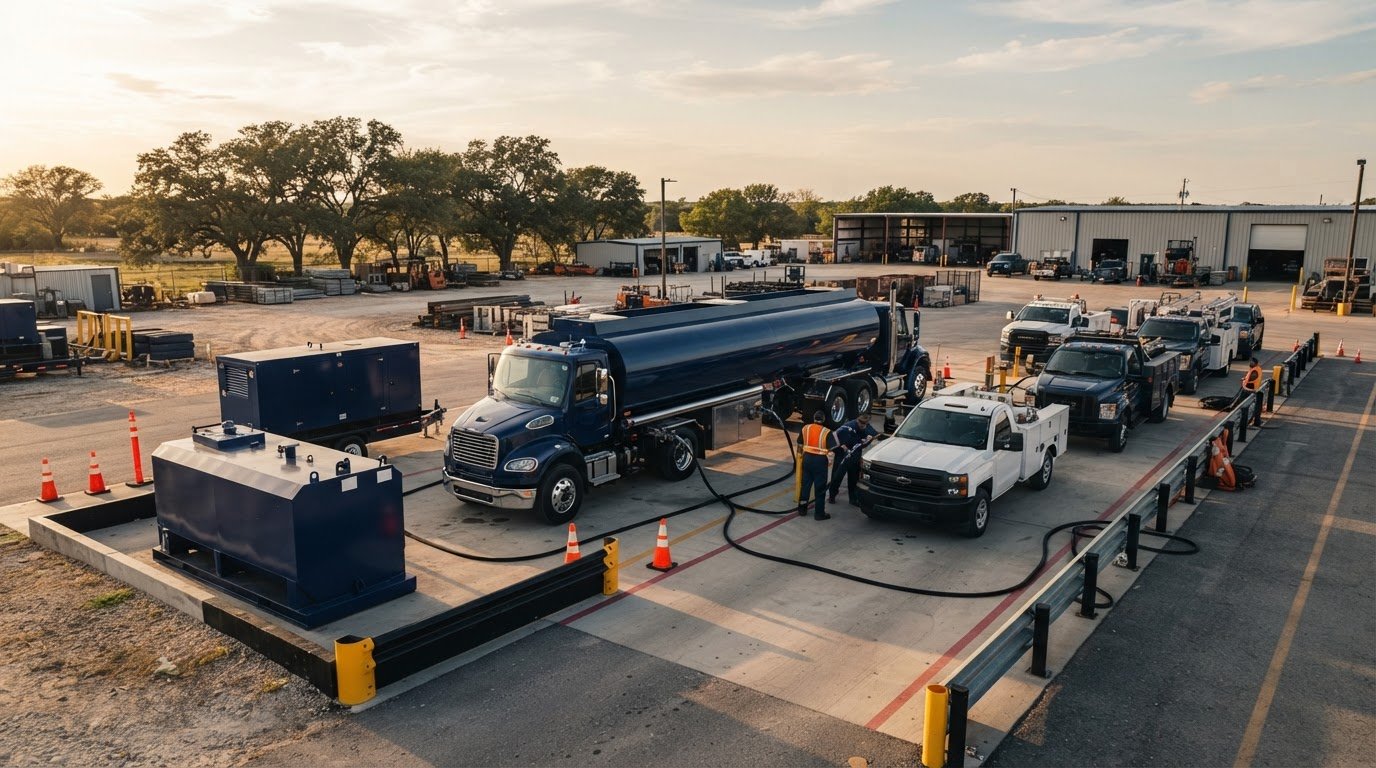
A priority service agreement functions as a logistical insurance policy. It defines specific volume guarantees and response times, ensuring that your facility is accounted for before a disaster even begins. React Fueling manages these commitments through a vigilant partner model, where we maintain a precise understanding of our partners' fuel capacities and consumption rates. Our "First-In" response strategy ensures that contracted partners receive their deliveries according to a pre-set schedule, bypassing the chaos of the open market. Securing your supply chain now ensures you aren't left behind when the next declaration is signed. You can consult with our logistics team to establish a priority response plan.
Logistical Bottlenecks: More Than Just Fuel
The primary constraint during a Texas disaster is rarely a lack of raw fuel within the state; it is a lack of mobile assets and qualified drivers. Road closures, debris, and strict regulatory requirements limit the number of trucks capable of reaching affected areas. Pre-planning allows for the staging of fuel and equipment closer to expected impact zones, a tactic that proved essential during the severe winter weather events of January 2026. This foresight allows our teams to navigate the five-day HOS (Hours of Service) waivers and other regulatory shifts that occur during declared emergencies. Relying on unvetted, third-party delivery services during these times introduces unnecessary risk, as these providers often lack the specialized equipment or local knowledge required to navigate a disaster zone safely.
Myth 2: "Retail Gas Stations Are a Reliable Backup Plan"
Relying on the corner gas station to keep your industrial operations running is a high-risk gamble that often fails when you need it most. Retail stations are designed for high-volume consumer traffic, not the heavy-duty demands of a commercial fleet or standby power systems. During a major event, these stations become the most volatile nodes in the energy supply chain. They are the first to experience shortages and the last to receive priority replenishment from regional terminals.
Most retail stations in Texas lack independent backup power. If the regional grid fails, their pumps stop working instantly. This "No Power, No Pump" reality means that even if a station has thousands of gallons in its underground tanks, that fuel is physically inaccessible. Professional disaster recovery fuel delivery bypasses this grid dependency entirely by bringing mobile pumping equipment directly to your site. This ensures your facility remains operational even when the surrounding retail infrastructure is dark.
The "Priority Access" myth is another dangerous assumption. Retail stations prioritize the general public and emergency vehicles. During the 2026 disaster declarations, we saw rationing and lines stretching for blocks at open stations. Commercial trucks are often turned away or limited to small quantities that fail to meet operational needs. A mobile fuel delivery service provides a dedicated supply that ignores retail chaos, focusing entirely on your specific volume requirements.
The Limitations of Retail Fueling
Grid dependency is a major failure point in Houston and Dallas. Beyond power issues, retail-grade diesel often lacks the purity required for sensitive standby generators. These units require fuel that meets strict moisture and sediment standards to prevent injector failure during critical runs. Additionally, sending employees into disaster conditions to fetch fuel creates significant safety liabilities. It wastes valuable man-hours that should be focused on facility recovery and places your team in unnecessary danger on congested, unmaintained roads.
Commercial Delivery vs. Retail Pumping
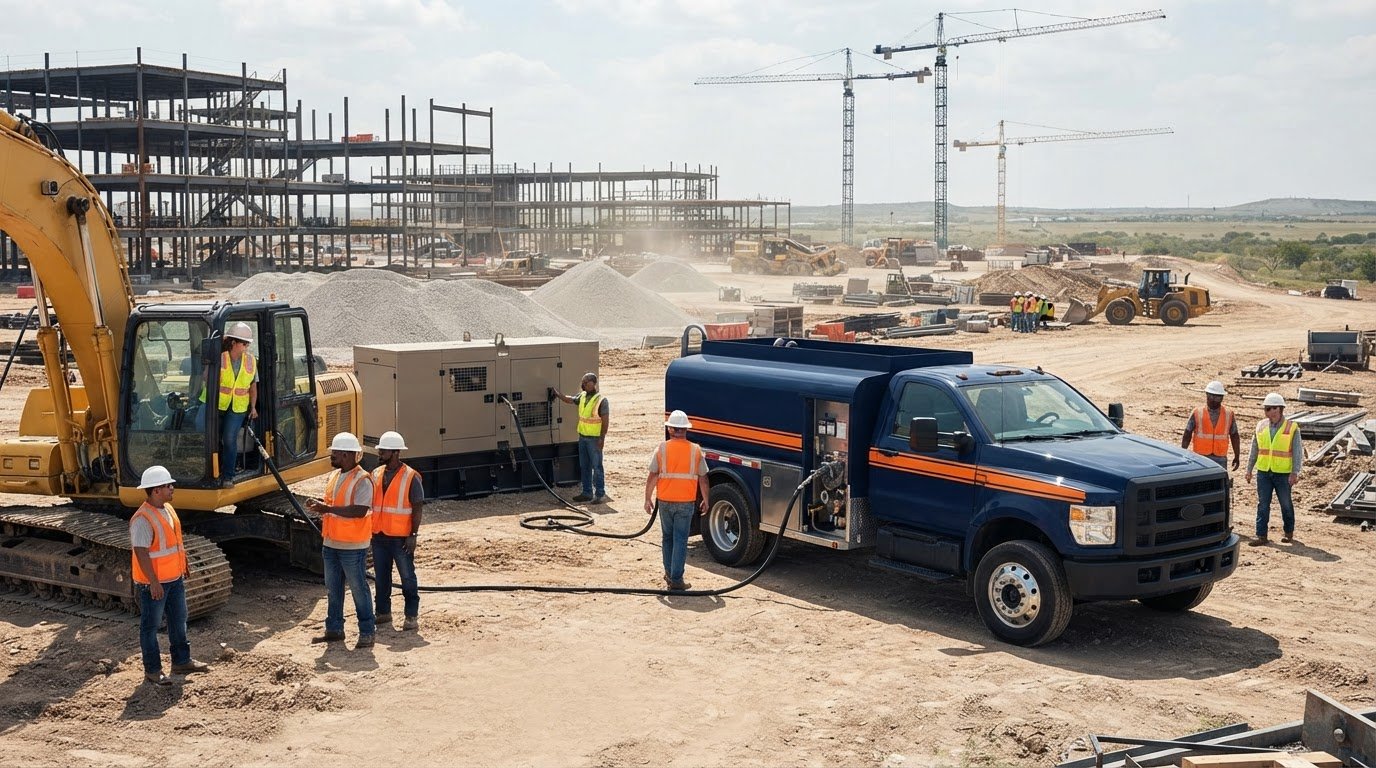
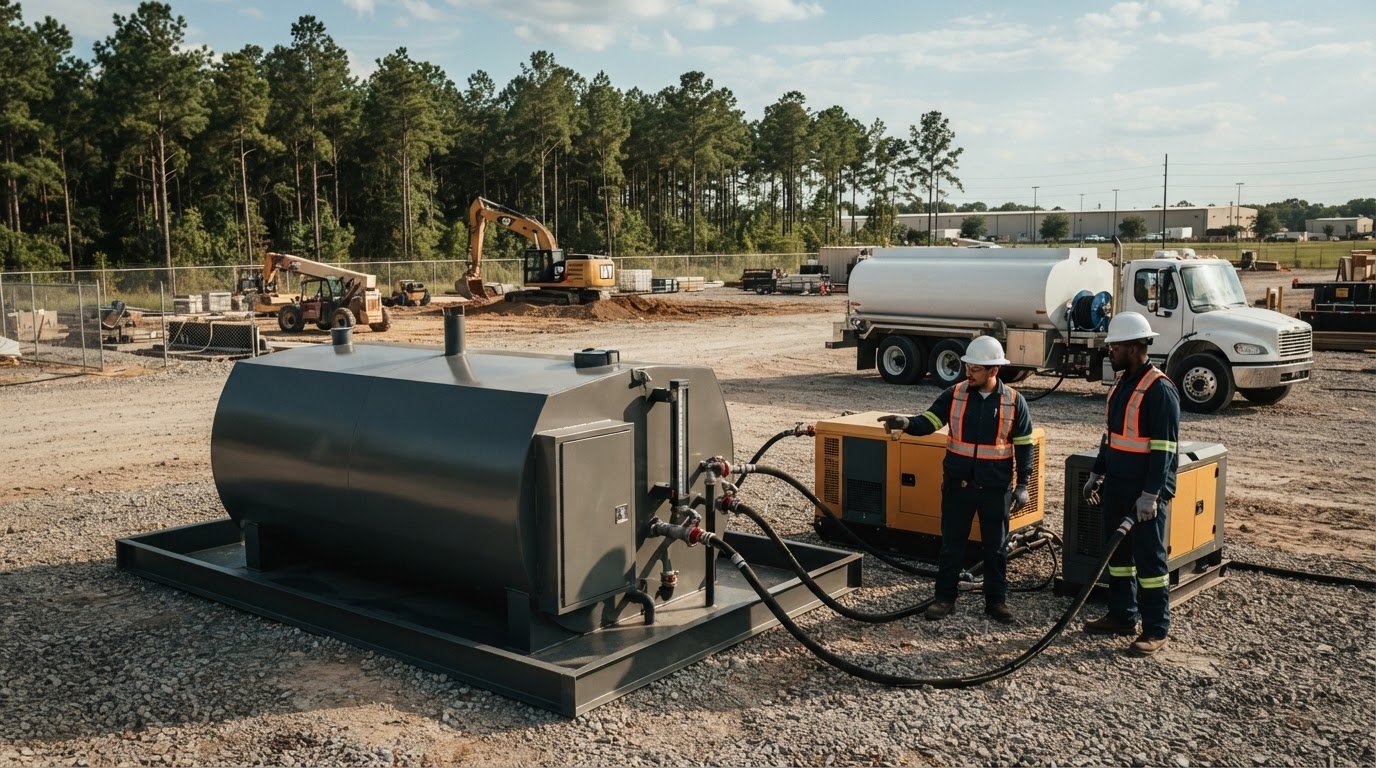
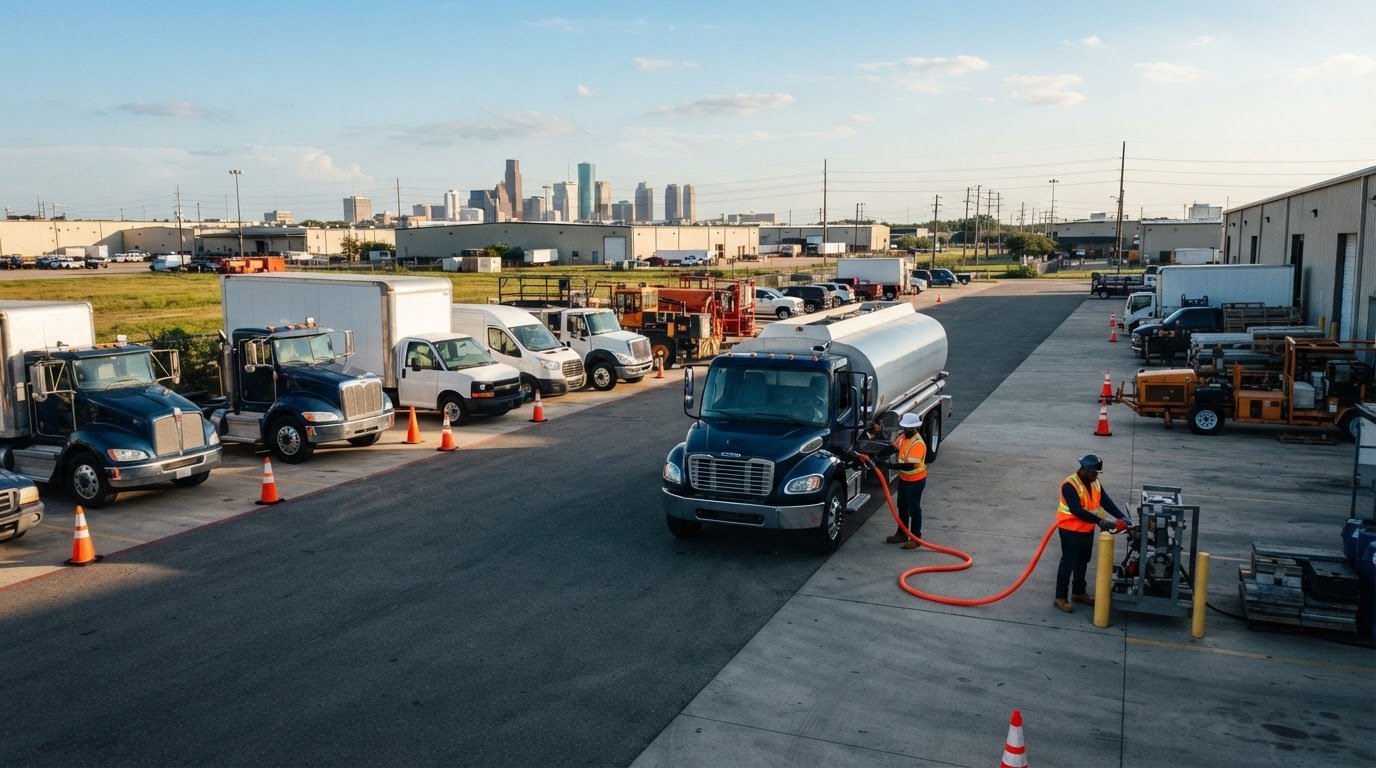
Direct-to-tank fueling is the only way to ensure maximum efficiency during a crisis. While your competitors lose hours idling in retail lines, commercial diesel delivery delivers fuel straight to your equipment. This process, often called "wet-hosing," eliminates the need for on-site storage or employee transit. It ensures your generators and fleet stay powered without ever leaving the yard. This professional approach to disaster recovery fuel delivery keeps your team safe and your systems online while the retail market struggles to recover.
Myth 3: "A Full Tank is All the Preparation We Need"
Assuming a full tank is sufficient for an extended outage is one of the most common mistakes in emergency planning. While a topped-off reservoir is a necessary starting point, it rarely covers the duration of a major Texas recovery effort. Effective disaster recovery fuel delivery is not just about the first fill; it is about maintaining a continuous supply chain as your equipment works through its reserves. Relying solely on your initial volume ignores the reality of burn rates and the technical requirements of modern industrial engines.
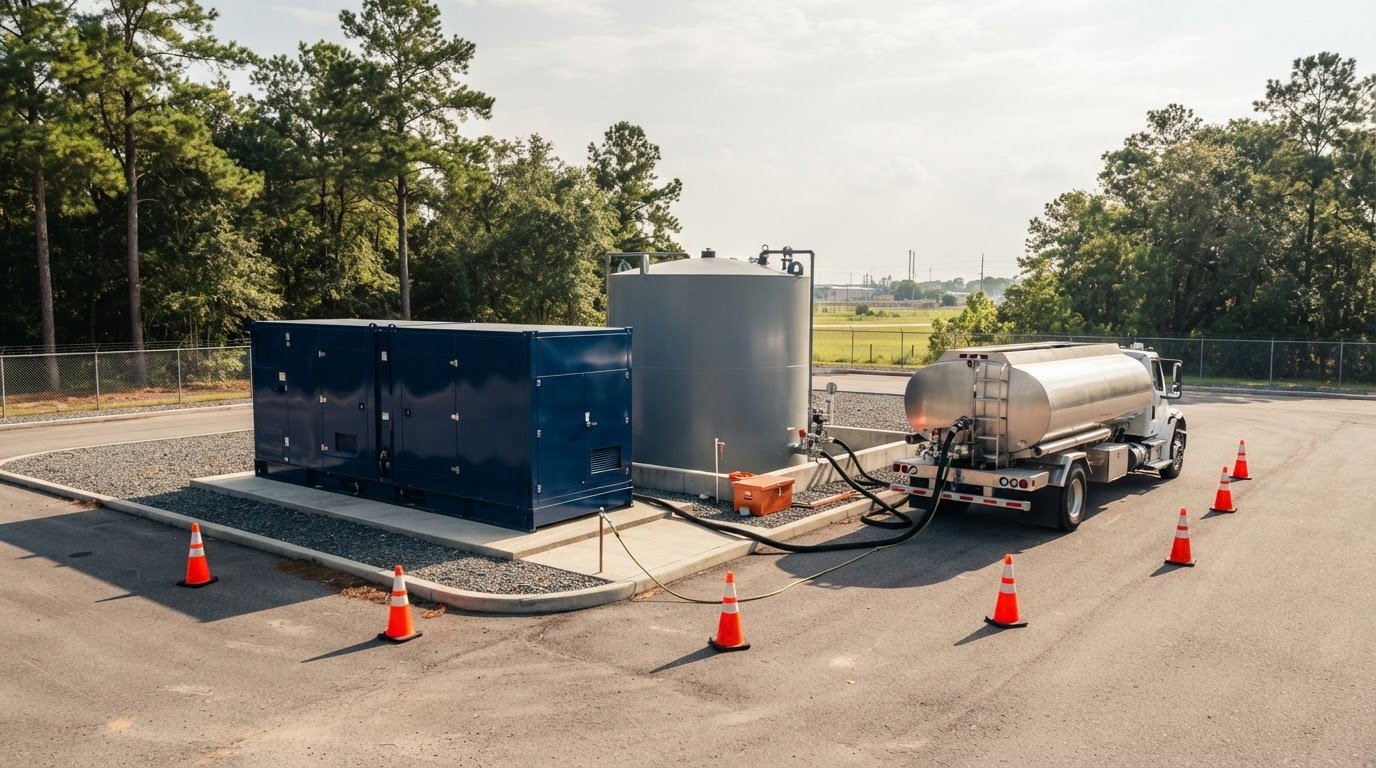
Modern Tier 4 diesel engines introduce an additional layer of complexity. These systems require Diesel Exhaust Fluid (DEF) to operate. If your DEF tank runs dry, the engine will de-rate or shut down entirely, regardless of how much diesel remains. Integrating on-site DEF fluid delivery into your logistics plan is essential for maintaining operational uptime. For facilities with limited storage, portable fuel tank rentals provide a scalable way to expand your on-site capacity before a storm makes land.
Calculating Your True Fuel Runtime
True runtime depends on your specific load requirements. A 1,000 kW generator running at full capacity can consume approximately 70 to 80 gallons of diesel per hour. At this rate, a standard 2,000-gallon belly tank will be empty in nearly 24 hours. If your recovery window extends to five or seven days, as seen in many regional emergencies, your initial supply is fundamentally inadequate. You must calculate your consumption based on 75% to 100% load to ensure your disaster recovery fuel delivery schedule keeps pace with your actual burn rate. Contact our team today to audit your equipment's fuel needs and establish a reliable replenishment schedule.
Maintaining Fuel Integrity
Fuel quality is just as important as fuel quantity. Diesel fuel left sitting in a tank for months is subject to degradation and microbial growth. Temperature fluctuations in Texas lead to condensation inside partially empty tanks, creating a breeding ground for "diesel bugs" or sludge. This contamination clogs filters and damages injectors precisely when the generator is under the highest stress. Fuel stability is as vital as fuel volume for generator reliability. Topping off tanks before a predicted event is a critical step, but you must also ensure your supply is fresh and treated to prevent engine failure during a crisis.
Building a Resilient Continuity Plan with React Fueling
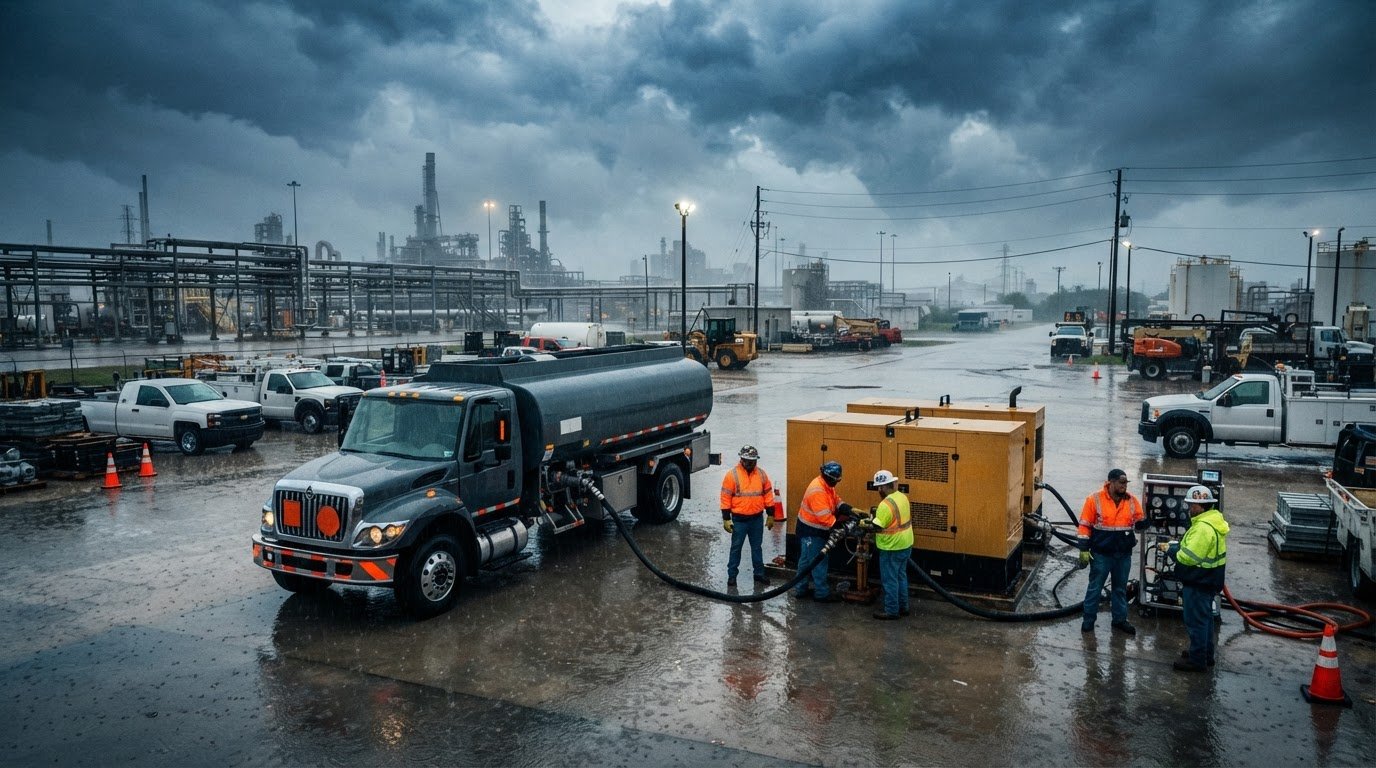
Transforming your facility from an unprepared target into a resilient operation requires more than just a backup generator. It demands a partnership grounded in foresight and logistical precision. React Fueling facilitates this transition through a comprehensive site assessment, where we identify fueling points, storage capacities, and potential access obstacles before a disaster occurs. This proactive approach ensures that our disaster recovery fuel delivery teams can navigate your site safely and efficiently, even in low-visibility or high-stress conditions.
Our operational model is built on a one-call response system designed specifically for contracted partners. This system eliminates the need for frantic negotiations or vendor vetting during a crisis. When the grid fails, one call activates our 24/7 dispatch center, putting our dedicated fleet and experienced drivers in motion. We provide the peace of mind that comes from knowing your fuel supply is secured by a team that understands the unique pressures of the Texas industrial landscape. By integrating our emergency fuel delivery capabilities into your continuity plan, you ensure that your facility remains a priority throughout any regional recovery effort.
The Site-Specific Logistics Plan
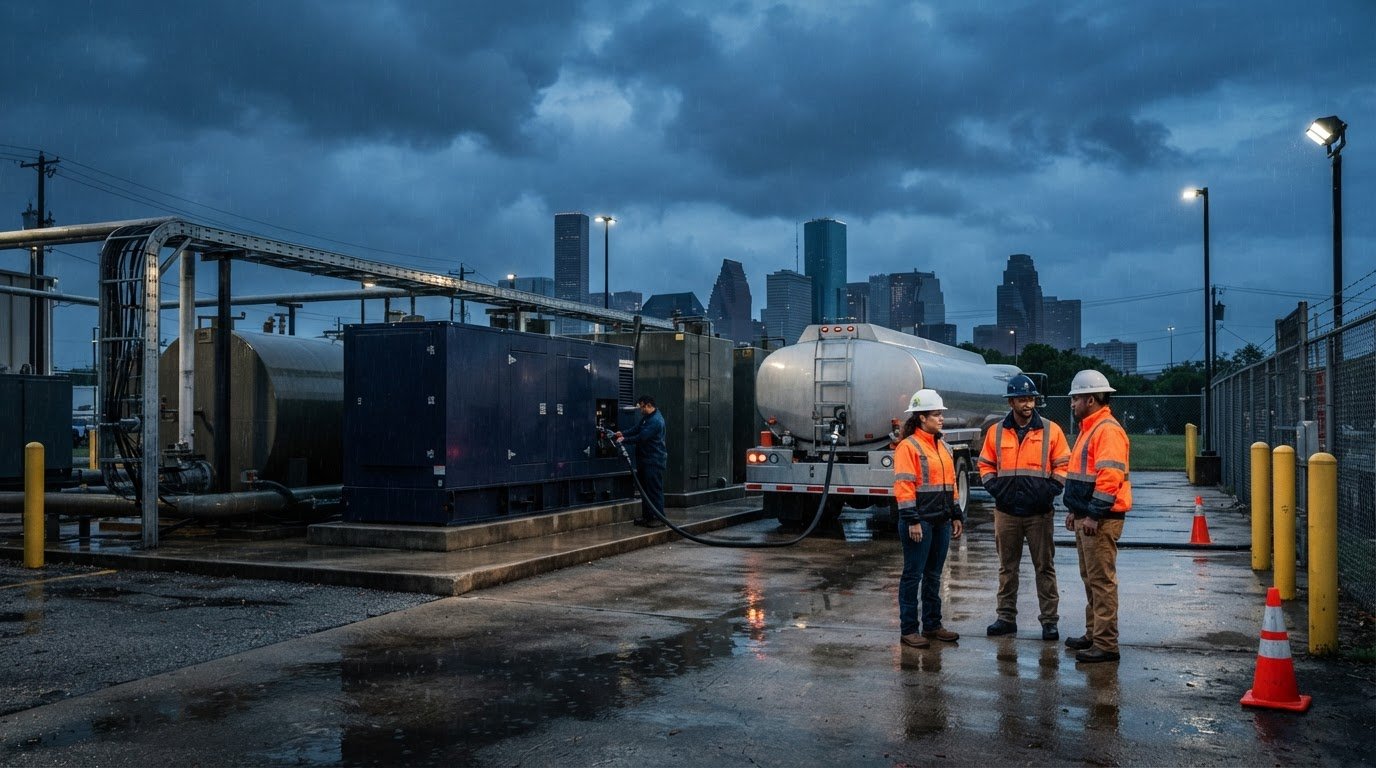
Effective response starts with a detailed map of your facility. We document every fill port, gate code, and potential bottleneck to ensure our trucks can reach your equipment without delay. This level of detail is a hallmark of our work in high-stakes environments, such as our hospital generator fueling operations in Houston. We maintain a relentless focus on dedicated equipment fueling, keeping your machinery moving and your critical systems online. This site-specific knowledge allows us to bypass the chaos that often paralyzes less prepared vendors during major storms or grid failures.
Securing Your Supply Chain for 2026
Establishing a Priority Service Agreement before the next hurricane season starts is the most critical step in your disaster readiness. This agreement guarantees your place in our response queue and secures your access to the React Holdings logistics network. This network provides the scale and stability needed to manage large-volume requirements across the Texas triangle, from San Antonio to Dallas. Don't wait for the next disaster declaration to scramble for resources. Secure your disaster recovery fuel plan today and ensure your operations stay powered when the rest of the state goes dark.
Secure Your Operational Continuity Before the Grid Fails
Operational readiness in the face of a Texas disaster isn't a matter of chance; it's a result of disciplined planning and logistical foresight. We've seen that relying on retail stations or a single full tank creates a false sense of security that evaporates when the grid goes dark. A robust disaster recovery fuel delivery strategy requires a pre-arranged logistics chain that accounts for rapid burn rates, fuel degradation, and the specialized needs of modern Tier 4 engines. By shifting from a reactive approach to a proactive partnership, you ensure your critical infrastructure remains online while others struggle to find supply.
React Fueling stands ready as your vigilant partner with 24/7 emergency dispatch and logistics across Houston, Dallas, Austin, and San Antonio. We utilize specialized equipment for critical infrastructure to keep your systems running regardless of external conditions. Take the first step toward total control over your energy security. Contact React Fueling for a Disaster Readiness Assessment and secure your facility's future. You don't have to face the next storm alone; we're here to keep you moving.
Frequently Asked Questions
What is disaster recovery fuel delivery?
Disaster recovery fuel delivery is a specialized logistics service that provides a guaranteed supply of diesel and gasoline to critical infrastructure during regional emergencies. Unlike standard commercial services, it utilizes a pre-planned supply chain designed to bypass road closures and grid failures. This service ensures that hospitals, data centers, and industrial facilities remain powered by generators when local retail options are unavailable or non-functional due to power outages.
How much fuel should I keep on-site for emergency generators?
You should maintain enough on-site fuel to support at least 72 to 96 hours of continuous operation at full load. While many facilities start with 24 or 48 hours of supply, regional disasters in Texas often cause logistical delays that exceed these windows. Calculating your specific burn rate based on generator size and expected load is essential. For facilities with limited storage, renting on-site fuel tanks can provide the necessary buffer.
Does diesel fuel expire if left in a generator tank too long?
Diesel fuel typically begins to degrade within six to twelve months if left untreated in a storage tank. Environmental factors like Texas heat and humidity accelerate oxidation and encourage microbial growth, often called "diesel bugs." This contamination leads to sludge that clogs filters and damages engine injectors. Regular fuel testing and topping off with fresh supply are critical steps to ensure your disaster recovery fuel delivery remains effective when power fails.
Can I use retail diesel for my facility’s backup power systems?
Retail diesel is technically compatible with most backup systems, but relying on gas stations during a crisis is a high-risk strategy. Most retail pumps require grid power to operate; if the area is dark, the fuel is inaccessible. Additionally, retail stations often experience rapid shortages and long lines during declared emergencies. Professional delivery services provide high-purity fuel delivered directly to your equipment, bypassing the instability and safety risks of public infrastructure.
What happens if road closures prevent fuel trucks from reaching my site?
Specialized fuel providers utilize pre-planned staging and high-clearance equipment to navigate areas affected by debris or minor flooding. During a declared disaster, carriers providing direct assistance can also utilize Hours-of-Service waivers and Federal Disaster Relief Permits to maintain movement. By mapping your site and identifying multiple access points in advance, our logistics teams can often find alternative routes that standard delivery services would be unable to navigate during an emergency.
Why is DEF delivery important during a disaster recovery scenario?
Diesel Exhaust Fluid (DEF) is essential for modern Tier 4 engines, which are standard in most new industrial generators and equipment. If a Tier 4 engine runs out of DEF, the system will automatically de-rate its power output or shut down completely to comply with emissions regulations. Ensuring your disaster recovery fuel delivery plan includes DEF replenishment is the only way to prevent these modern systems from failing while you still have diesel.
How do I get priority status for emergency fuel delivery in Texas?
Priority status is secured by establishing a formal Priority Service Agreement with a dedicated fuel partner before a disaster occurs. When a regional emergency triggers a massive spike in demand, suppliers are contractually obligated to fulfill their existing agreements before serving the spot market. This contract defines your expected volume and response time, ensuring your facility is accounted for in the provider's logistical staging and dispatch queue before a crisis.
Is on-site fueling safer than sending my fleet to a gas station?
On-site fueling is significantly safer because it eliminates the need to send employees and assets onto hazardous, congested roads during disaster conditions. Direct equipment fueling, or "wet-hosing," keeps your team focused on facility recovery and safety rather than navigating the chaos of public retail stations. This approach reduces corporate liability and ensures your vehicles and generators are replenished in a controlled, professional environment by technicians trained in industrial logistics.
Recent Posts