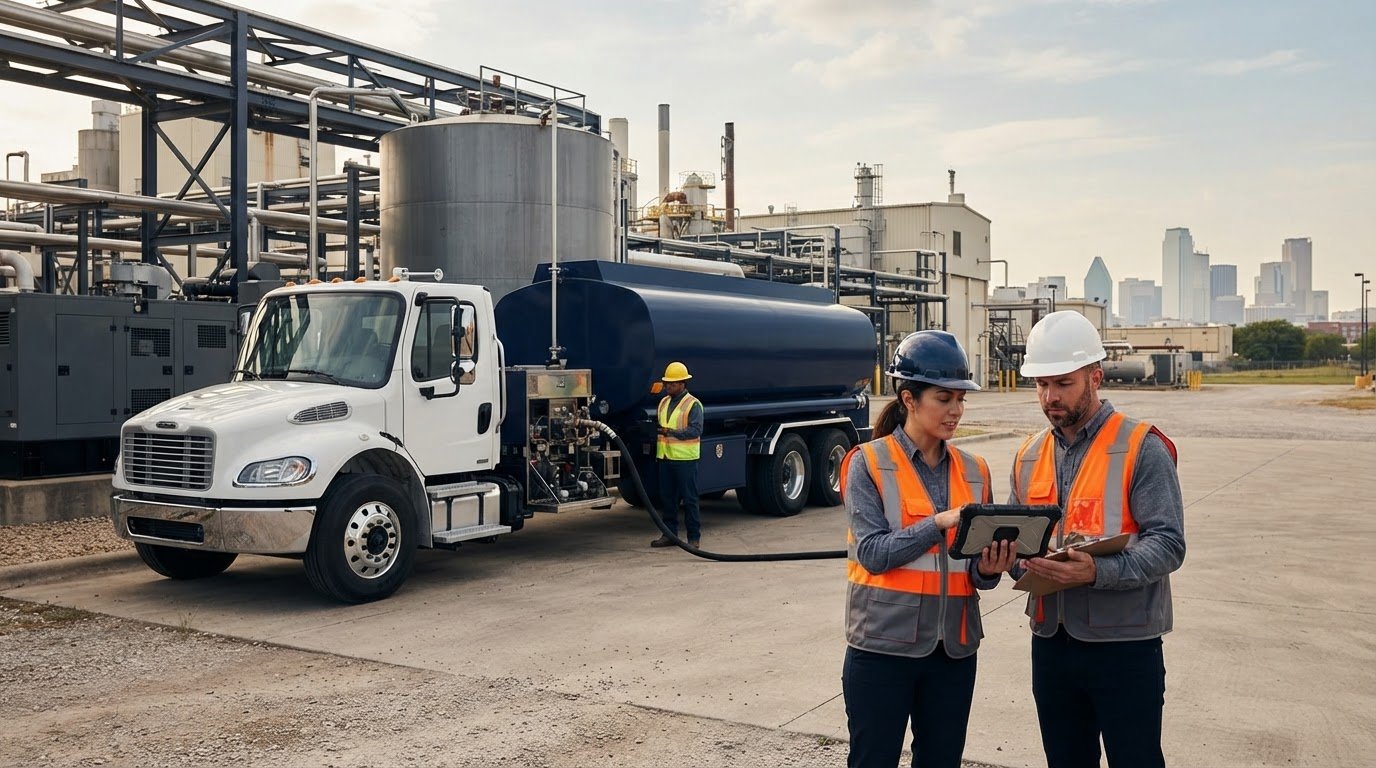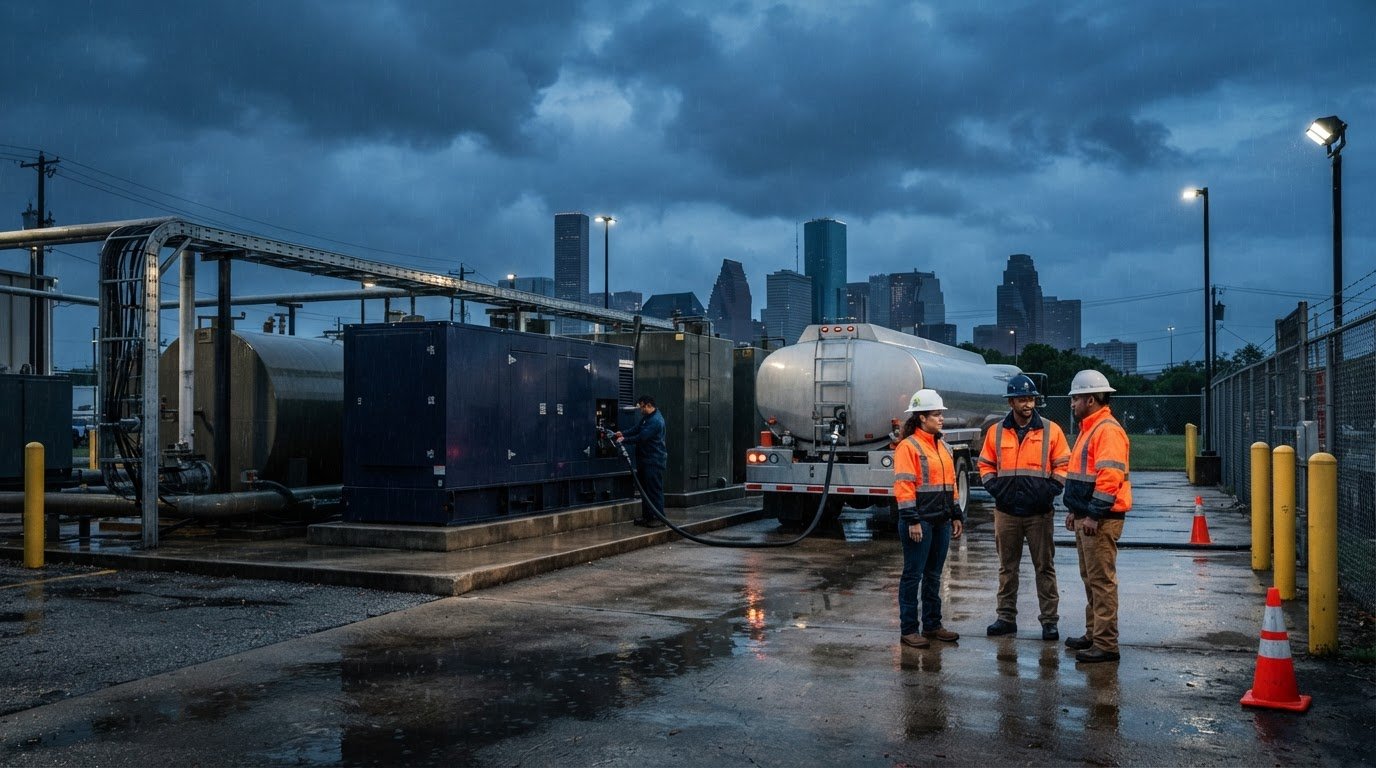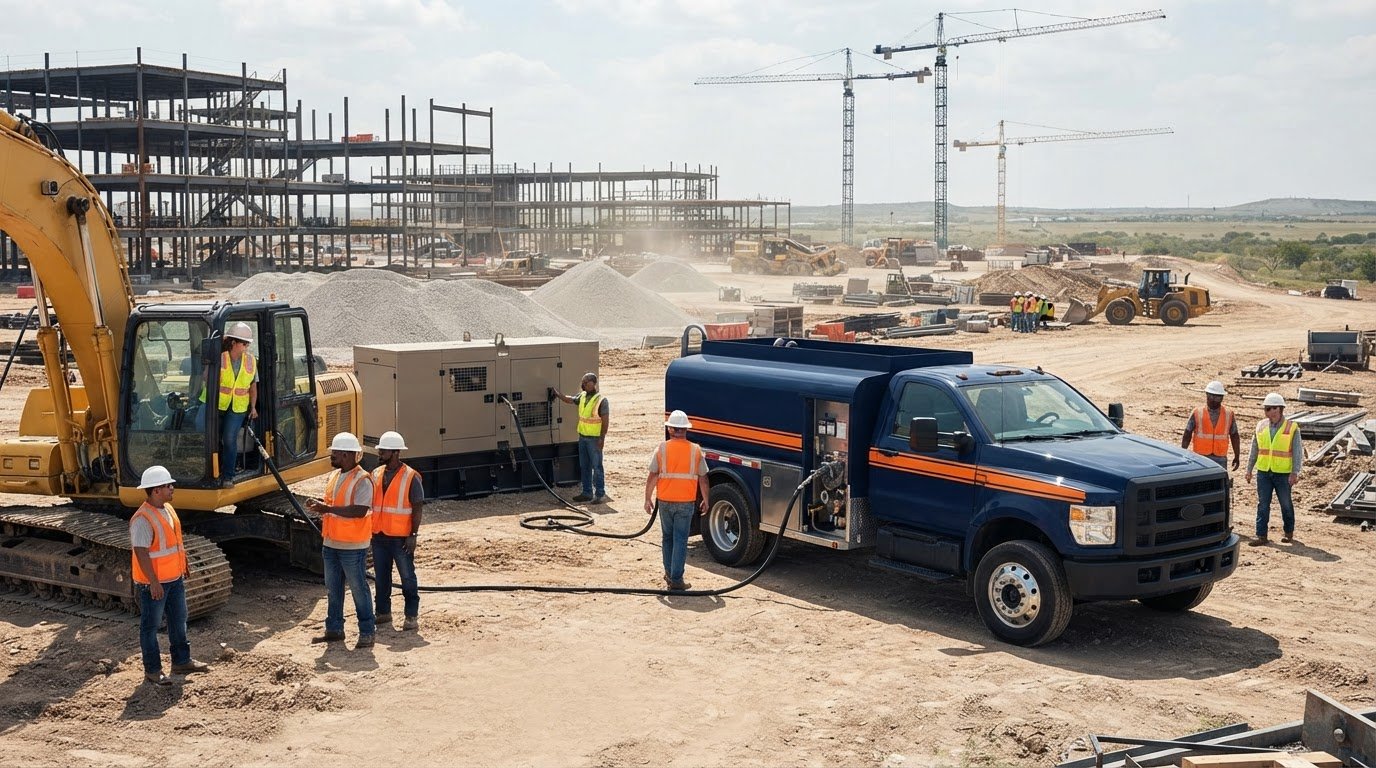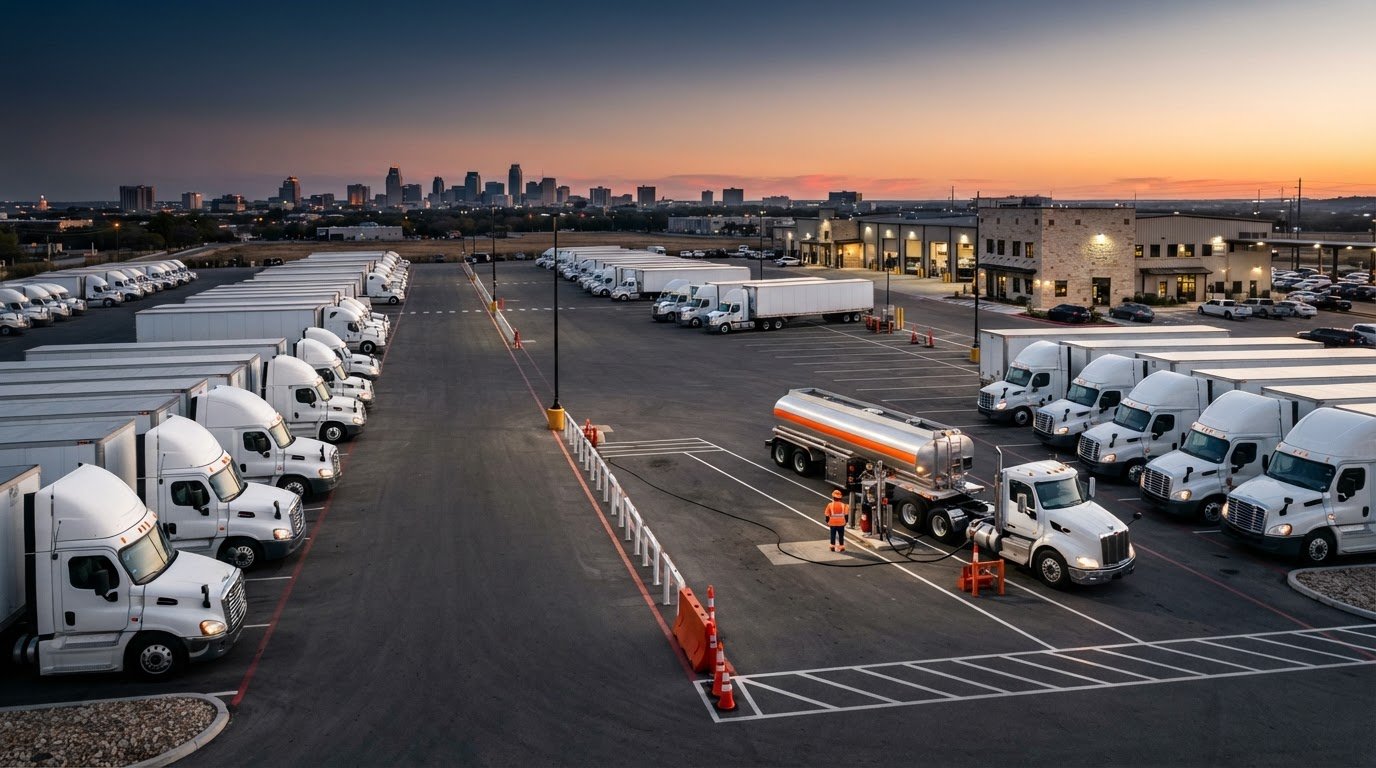
A stationary fuel tank is nothing more than a hollow metal box until it's backed by a logistical heartbeat that refuses to stop. In the high-stakes world of Texas industrial operations, waiting for a fuel truck isn't just an inconvenience; it's a direct drain on your bottom line. You've likely felt the frustration of heavy machinery sitting idle or the anxiety of watching fuel prices spike while your project timeline stretches thin. Searching for a fuel tank rental near me shouldn't just be about finding a container. It's about securing total operational continuity.
We understand that managing site logistics in hubs like Houston, Dallas, or San Antonio requires a partner who anticipates needs before the gauge hits empty. This 2026 guide provides a roadmap to optimizing on-site storage to eliminate downtime and simplify cost tracking across every job site. We'll explore the latest in secure storage technology, navigate the complexities of Texas Commission on Environmental Quality (TCEQ) regulations, and show you how a single point of contact for both rentals and diesel delivery can transform your project's efficiency.
The Strategic Value of On-Site Fuel Storage for Texas Operations
Relying on retail gas stations creates a significant bottleneck for commercial project timelines. Off-site refueling runs pull operators away from their primary tasks and introduce unnecessary safety risks on public roads. On-site storage provides a localized hub that stabilizes fuel costs during periods of market volatility. By maintaining a reserve, you shield your budget from the daily price swings common at the pump. This foresight allows for better financial forecasting and tighter control over project expenditures.
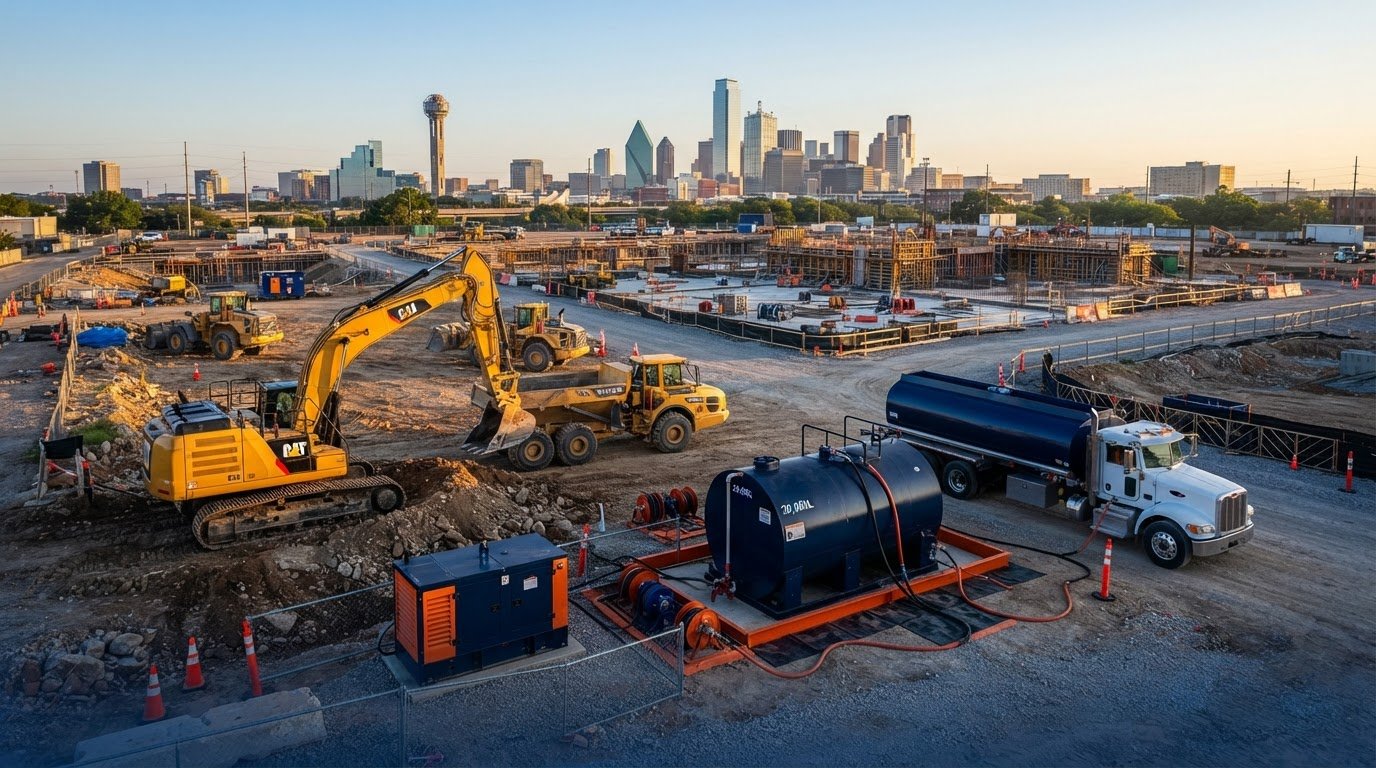
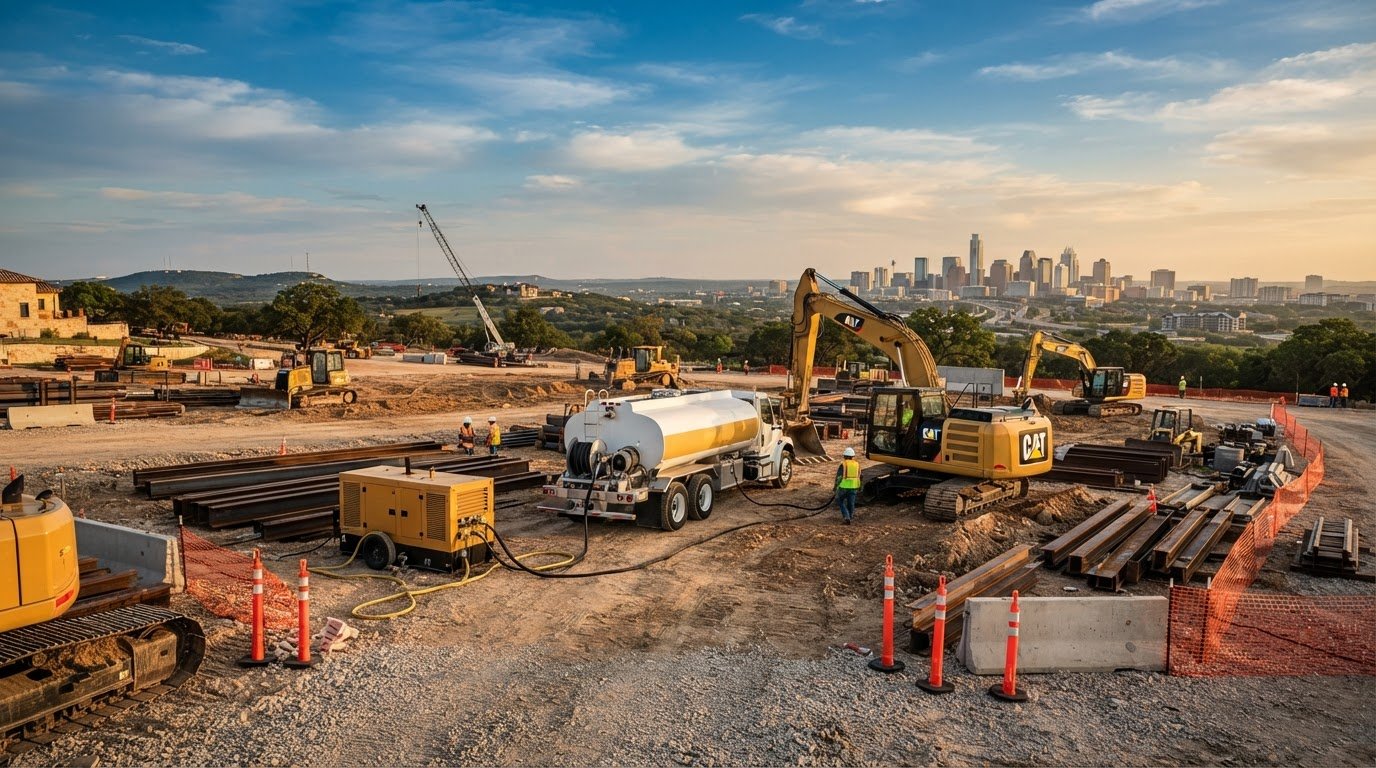
In regions like Magnolia and College Station, portable tanks serve as the logistical backbone for remote job sites. These locations often lack the infrastructure for frequent bulk deliveries, making a secure on-site supply critical. There is a direct link between fuel accessibility and machine hour maximization. When fuel is available within feet of the equipment, you eliminate the travel time that typically erodes daily productivity. This setup ensures that every engine hour is spent advancing the project rather than searching for the nearest station.
Eliminating Downtime for Construction and Industrial Sites
A dry machine is an expensive liability. Every minute of waiting for a fuel truck translates into lost revenue and stalled progress for the entire crew. On-site tanks facilitate seamless 24/7 multi-shift operations; crews can refuel during shift changes without pausing the work. Integrating equipment fueling services with your storage strategy ensures that your search for a fuel tank rental near me results in a fully managed solution. This combination keeps your fleet moving regardless of the hour or the location's remoteness.
Emergency Preparedness for Critical Texas Infrastructure
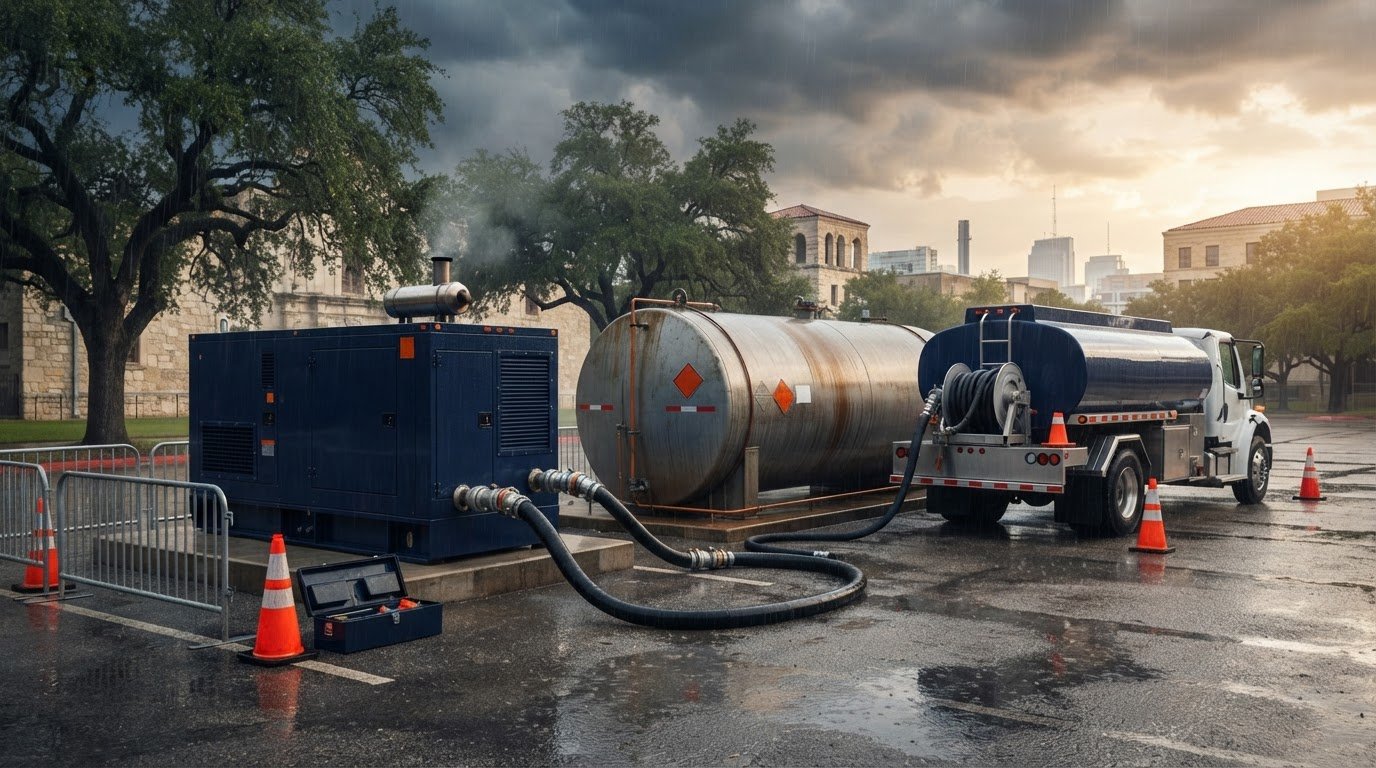
Houston facilities must prioritize fuel reserves long before hurricane season begins. Waiting for a storm to form before securing storage often leads to supply shortages and logistical gridlock. Dedicated storage is essential for reliable generator fueling services, keeping hospitals, data centers, and manufacturing plants online. We function as a vigilant partner, providing the discipline and foresight to ensure your tanks are topped off before environmental conditions deteriorate. This proactive stance provides the peace of mind required to manage high-stakes industrial environments where power failure is not an option.
Choosing the Right Portable Fuel Tank for Your Project
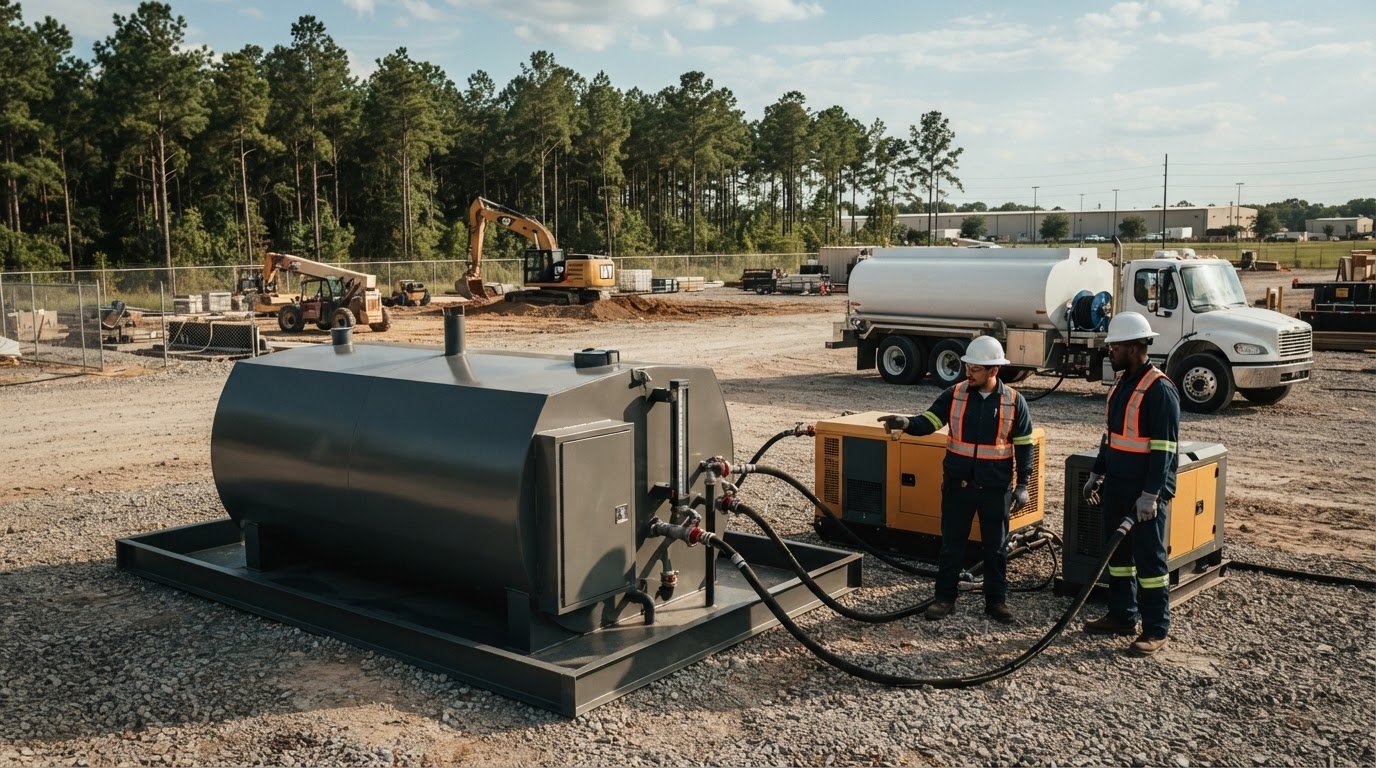
Selecting the correct hardware prevents logistical friction before it starts. When you search for a fuel tank rental near me, the primary objective is matching tank capacity to your fleet's daily burn rate. Industrial options typically range from 250-gallon units for compact job sites to massive 10,000+ gallon systems designed for major infrastructure projects. Choosing the wrong size leads to either wasted footprint or the constant stress of potential run-outs.
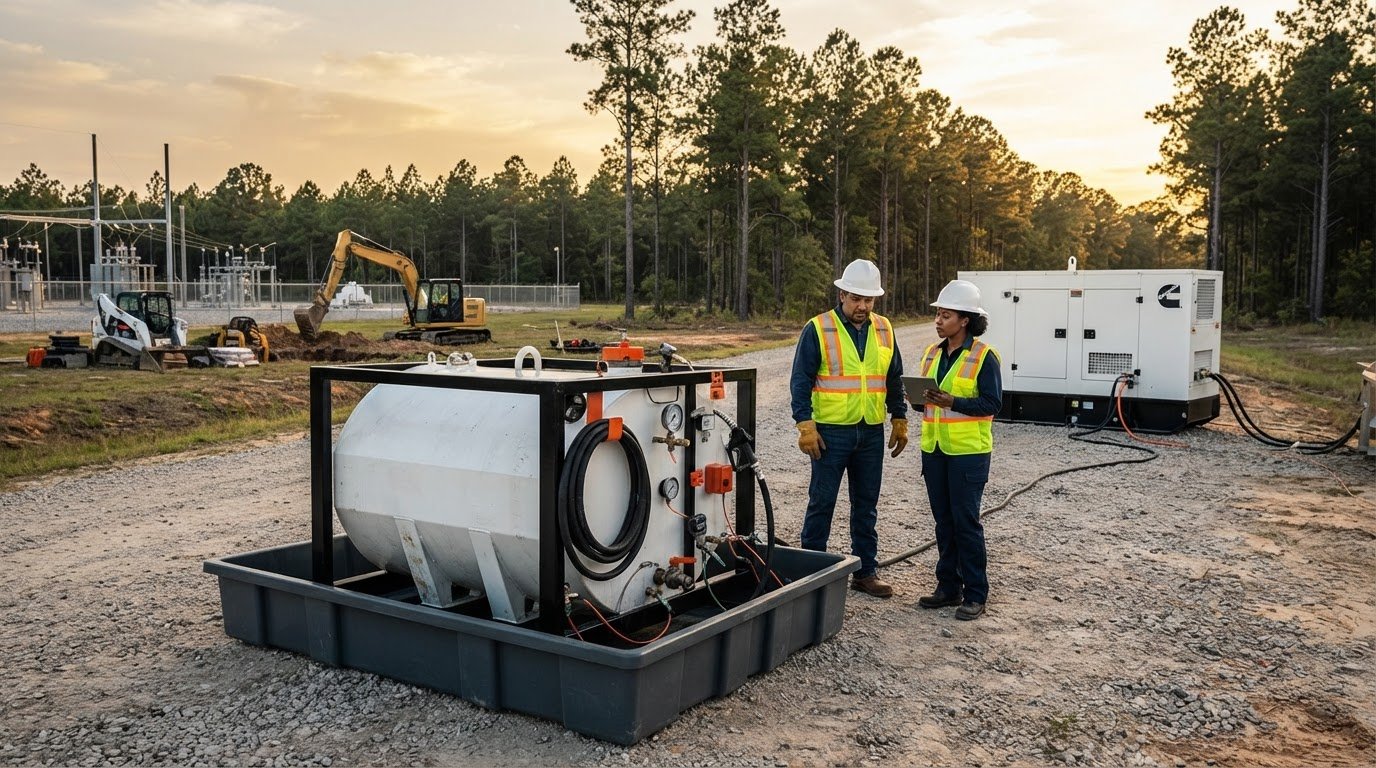
Mobility requirements also dictate your choice between skid-mounted units and towable fuel trailers. Skid-mounted tanks provide a stable, high-capacity solution for long-term construction sites where the tank remains stationary for months. In contrast, towable trailers offer the agility needed for rapid-response environments or projects with moving work zones. Every rental should include a feature checklist to ensure operational efficiency: lockable cabinets for security, accurate fuel gauges for monitoring, and integrated pumping systems for immediate use.
Capacity Planning: Finding the Sweet Spot
Accurate estimation is vital for heavy-duty equipment fleets operating in Austin and San Antonio. By utilizing a larger capacity than your minimum daily requirement, you create a buffer that reduces the frequency of delivery cycles and lowers overall transportation fees. This strategy also allows for the integration of DEF fluid delivery, ensuring your Tier 4 engines stay compliant without needing separate storage logistics. If you are unsure which capacity fits your fleet, speak with our logistics specialists to map out your requirements.
Double-Walled Protection and Environmental Compliance
Modern 2026 standards require double-walled construction for all commercial fuel rentals to mitigate environmental risks. This "tank-in-a-tank" design provides a built-in secondary containment area that catches leaks before they reach the ground. Such protection prevents catastrophic soil contamination and the heavy fines associated with Texas environmental violations. The UL 142 standard defines the essential design and testing requirements for steel aboveground tanks storing flammable and combustible liquids to ensure long-term structural reliability. This level of security is non-negotiable for professional operators who value site safety and regulatory adherence.
Rental vs. Retail: Analyzing the ROI of On-Site Storage
Procuring fuel at retail pumps is a logistical drain that many operators fail to quantify fully. Beyond the obvious price per gallon, the hidden "soft costs" of labor, vehicle wear, and crew idle time erode your profit margins. Sending a driver to a station involves paid transit time that could be spent on productive site work. When machinery sits idle waiting for a fuel truck or a return trip from a gas station, the cost of that downtime often exceeds the fuel's value itself.
Securing a fuel tank rental near me allows you to leverage bulk pricing through scheduled diesel delivery. This approach bypasses retail markups and provides a predictable cost structure for the duration of your project. Modern on-site tanks also feature digital fuel management systems. These tools provide real-time data on consumption, allowing you to track every gallon and identify inefficiencies in your fleet's operation. This level of oversight is impossible when relying on scattered retail receipts.
Labor Efficiency and Equipment Longevity
Refueling on-site during shift changes maximizes active man-hours and keeps your fleet operational without interruption. Utilizing a professional commercial fuel service ensures your equipment receives high-quality, filtered fuel. This is critical for protecting the sensitive components of modern Tier 4 engines, which are prone to damage from the contaminants often found in poorly maintained retail tanks. Industry benchmarks suggest that Houston-based industrial firms can reduce fuel-related downtime by approximately 15% through localized storage and delivery integration.
Long-Term Leasing vs. Short-Term Rental
The timeline of your project in Dallas or San Antonio should dictate your financial commitment. Short-term rentals offer the highest degree of flexibility for projects lasting under 90 days or for emergency surge capacity. However, as projects extend, transitioning to on-site fuel tank leasing typically offers a better return on investment. Leasing provides a stable monthly expense that is easily integrated into project bidding, ensuring your margins remain accurate even as the work scales over several years.
Navigating Texas Fuel Storage Regulations and Safety
Compliance with Texas environmental and fire safety regulations is a prerequisite for any industrial project. When you search for a fuel tank rental near me, you must ensure the equipment and its placement align with Spill Prevention, Control, and Countermeasure (SPCC) requirements. These federal mandates apply to sites with an aggregate aboveground storage capacity of 1,320 gallons or more. Failing to maintain an up-to-date SPCC plan can result in severe penalties from the Environmental Protection Agency (EPA) or the Texas Commission on Environmental Quality (TCEQ).
Safety protocols extend beyond the hardware itself to the physical transfer of fuel. Grounding and bonding are necessary during the fuel transfer process to prevent static electricity discharge, which can ignite flammable vapors. Your rental provider should deliver 2026-compliant hardware along with the necessary documentation to prove the equipment meets current safety standards. This foresight protects your crew and ensures your project remains in good standing with local authorities.
Permitting and Placement Requirements
Local fire marshal codes in Houston and Dallas impose strict rules on where a tank can be situated. Generally, tanks must maintain specific distance requirements from buildings, property lines, and potential ignition sources like running engines or electrical panels. While double-walled tanks provide secondary containment, some high-risk zones or local jurisdictions may still require an additional secondary containment berm. Working with a partner who understands integrated fuel management for industrial sites helps you navigate these logistical hurdles without delaying your start date.
Essential Safety Checklist for Portable Tanks
Maintaining site safety requires a disciplined daily inspection routine. Operators should check for visible leaks, monitor for water accumulation in the fuel, and ensure that tank vents are free of obstructions. Emergency shut-off valves must remain accessible at all times, and fire extinguishers should be mounted in clearly marked, unobstructed locations nearby. It's vital that a fully stocked Spill Kit is located within 25 feet of the tank to ensure immediate response to any accidental discharge during refueling. If you have questions about specific site compliance, contact our safety team for a regulatory review.
Why Integrated Fuel Logistics is the Ultimate Solution
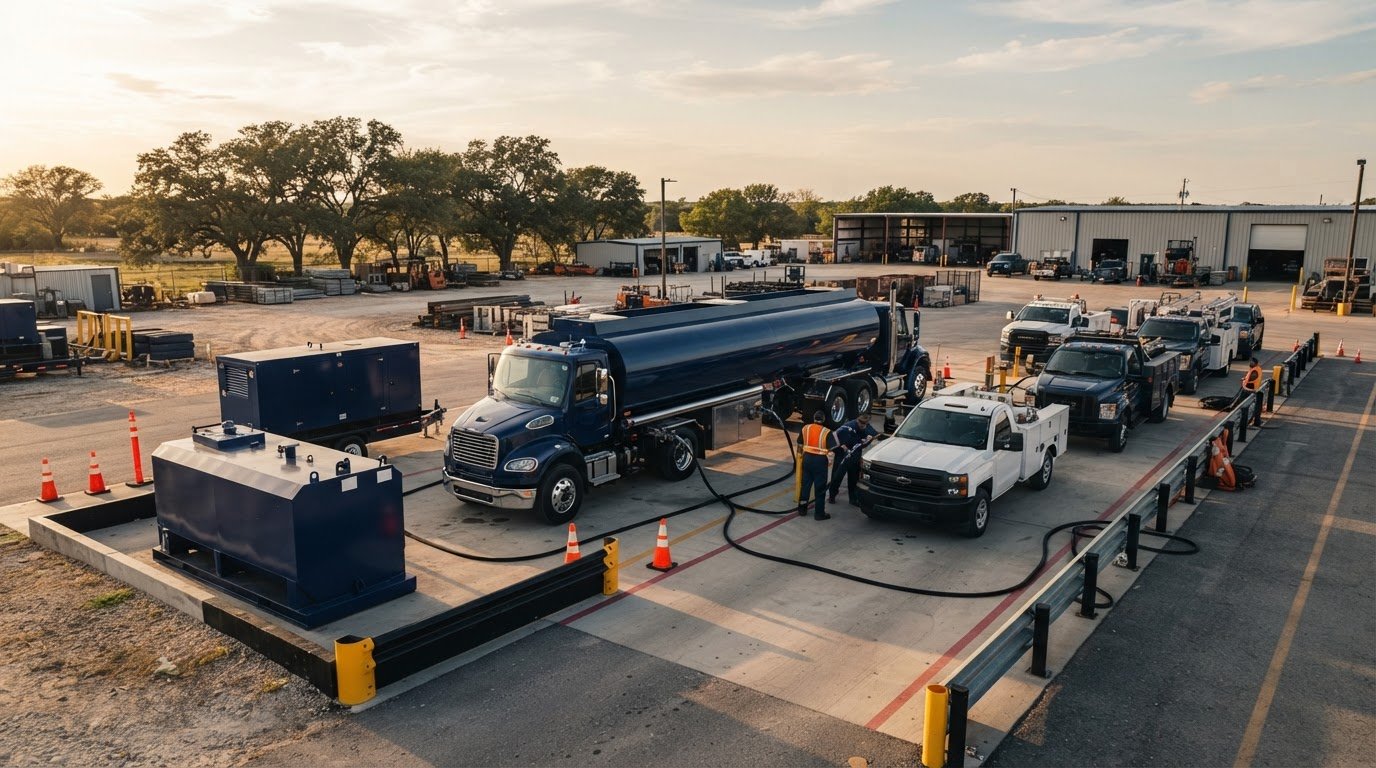
Sourcing hardware and fuel from separate vendors creates a communication gap that often leads to empty tanks and stalled projects. The "One-Call" advantage eliminates this friction by consolidating your storage and delivery needs under a single point of contact. This integrated approach ensures that the person providing your fuel tank rental near me is also the one responsible for keeping it full. React Fueling utilizes proactive monitoring systems to track levels in real-time. We often identify a low-fuel state and dispatch a truck before your on-site team even notices the gauge dropping.
Local expertise in Texas logistics is the final piece of the continuity puzzle. Navigating the traffic patterns of the I-35 corridor or the industrial zones of the Port of Houston requires a partner with boots-on-the-ground knowledge. We don't just deliver a tank; we manage a heartbeat of energy that sustains your entire operation. This level of dedication transforms a simple rental into a strategic partnership focused entirely on your uptime.
Beyond Hardware: The React Fueling Delivery Advantage
Custom delivery schedules are built around your project's peak demand hours to ensure refueling never interferes with active work windows. Direct-to-tank filling removes the burden from your staff, allowing them to focus on their primary industrial or construction duties rather than managing hoses and valves. This system seamlessly integrates our 24/7 emergency fueling capabilities, providing a safety net for critical power needs during unexpected outages. By leveraging our robust emergency fuel delivery network, you gain protection against regional supply disruptions that often paralyze less prepared operations.
Getting Started with On-Site Storage
Optimizing your logistics begins with a comprehensive site assessment at your Houston, Dallas, or San Antonio facility. Our specialists evaluate your fleet's burn rate and site layout to determine the most efficient placement and tank size. Transitioning from inefficient retail pumping to a fully managed fuel tank rental program simplifies your accounting and secures your operational continuity. This shift moves your project from a reactive state to a controlled, disciplined logistical flow. Ready to optimize your fuel logistics? Contact our Texas experts today to secure your on-site storage solution.
Securing Your Operational Future in Texas
Managing the energy needs of a high-stakes Texas project requires more than just hardware; it demands a logistical strategy that eliminates uncertainty. By transitioning to on-site storage, you protect your fleet from market volatility and remove the hidden labor costs associated with retail refueling. Selecting the right double-walled tank ensures your site remains compliant with environmental regulations while maximizing machine uptime through shift changes. It's about creating a controlled environment where fuel is a tool for progress rather than a source of stress.
React Fueling serves as your seasoned problem solver, providing integrated tank and delivery solutions that keep your project moving. Our local Texas expertise and 24/7 emergency response capability mean you don't have to worry about a dry engine stalling your progress. When you search for a fuel tank rental near me , look for a partner that handles both the container and the fuel with disciplined foresight. We take pride in showing up when it matters most to keep your heavy machinery operational.
Take control of your site's productivity today. Secure Your Fuel Supply: Request a Quote for Tank Rentals and Delivery. We're ready to help you optimize your project logistics across the Lone Star State.
Frequently Asked Questions
How much does it cost to rent a fuel tank near me in Texas?
Costs vary based on tank capacity, rental duration, and the frequency of scheduled deliveries. Large-scale industrial projects in Dallas or Houston often require higher-capacity units, which affects the monthly rate. We recommend requesting a custom quote to get an accurate breakdown for your specific site requirements. This ensures your project budget reflects the actual logistical needs of your fleet rather than a generic estimate.
Do I need a permit to have a portable fuel tank on my job site?
Permit requirements depend on your specific municipality and the total volume of fuel stored. Cities like Austin and San Antonio have distinct fire marshal codes regarding the placement and duration of portable storage. You must also comply with state-level TCEQ regulations if your aggregate storage exceeds certain thresholds. We advise checking with local authorities or consulting our safety team to ensure your site meets all current legal mandates.
What is the difference between a single-wall and double-wall fuel tank rental?
A double-wall tank features an internal primary tank and an outer secondary containment layer. This "tank-in-a-tank" design is the 2026 industry standard for commercial operations because it prevents leaks from reaching the soil. Single-wall tanks lack this built-in protection and often require additional external containment berms to meet environmental safety codes. Choosing a double-walled unit provides superior security and simplifies your regulatory compliance on complex job sites.
How often should I schedule fuel deliveries for my on-site tank?
Delivery frequency depends on your equipment's daily burn rate and the capacity of the tank you choose. Most high-demand construction sites in Texas schedule refills at least twice a week to maintain a consistent buffer. Our proactive monitoring systems track your levels in real-time, allowing us to adjust the schedule automatically. This ensures your search for a fuel tank rental near me results in a tank that never hits empty.
Can I store both diesel and DEF in the same rental tank system?
Specialized multi-compartment tanks are designed specifically to house both diesel and Diesel Exhaust Fluid (DEF) within the same footprint. These integrated systems are ideal for Tier 4 engine fleets that require both fluids to stay operational. Using a split tank simplifies your site logistics by consolidating two delivery points into one. It reduces the space needed for storage and ensures your crew has everything they need in a single location.
What happens if there is a fuel spill on my site?
Immediate action is required to contain the discharge and notify the appropriate regulatory bodies. You should utilize the spill kit located within 25 feet of your tank to stop the fluid from spreading. Texas law requires reporting spills that exceed specific volume thresholds to the TCEQ. We provide 24/7 emergency response to assist with containment and recovery, helping you mitigate environmental damage and avoid heavy non-compliance fines.
Does React Fueling provide 24/7 emergency refills for rental tanks?
Yes, we provide around-the-clock emergency refueling for critical infrastructure and industrial sites across Texas. Our team understands that power failure or equipment downtime can happen at any hour, especially during extreme weather events. We maintain a vigilant readiness to dispatch fuel trucks to your location whenever a shortage threatens your operational continuity. This service is a core part of our commitment to being a seasoned partner for your business.
What sizes of portable fuel tanks are available for rent?
We offer a range of sizes to fit different project scales, typically starting at 250 gallons and extending to over 10,000 gallons. Small skid-mounted tanks are perfect for compact urban sites, while larger towable trailers provide the high-volume capacity needed for massive earthmoving projects. Finding the right fuel tank rental near me involves balancing your daily fuel consumption with the available space on your job site for safe placement.