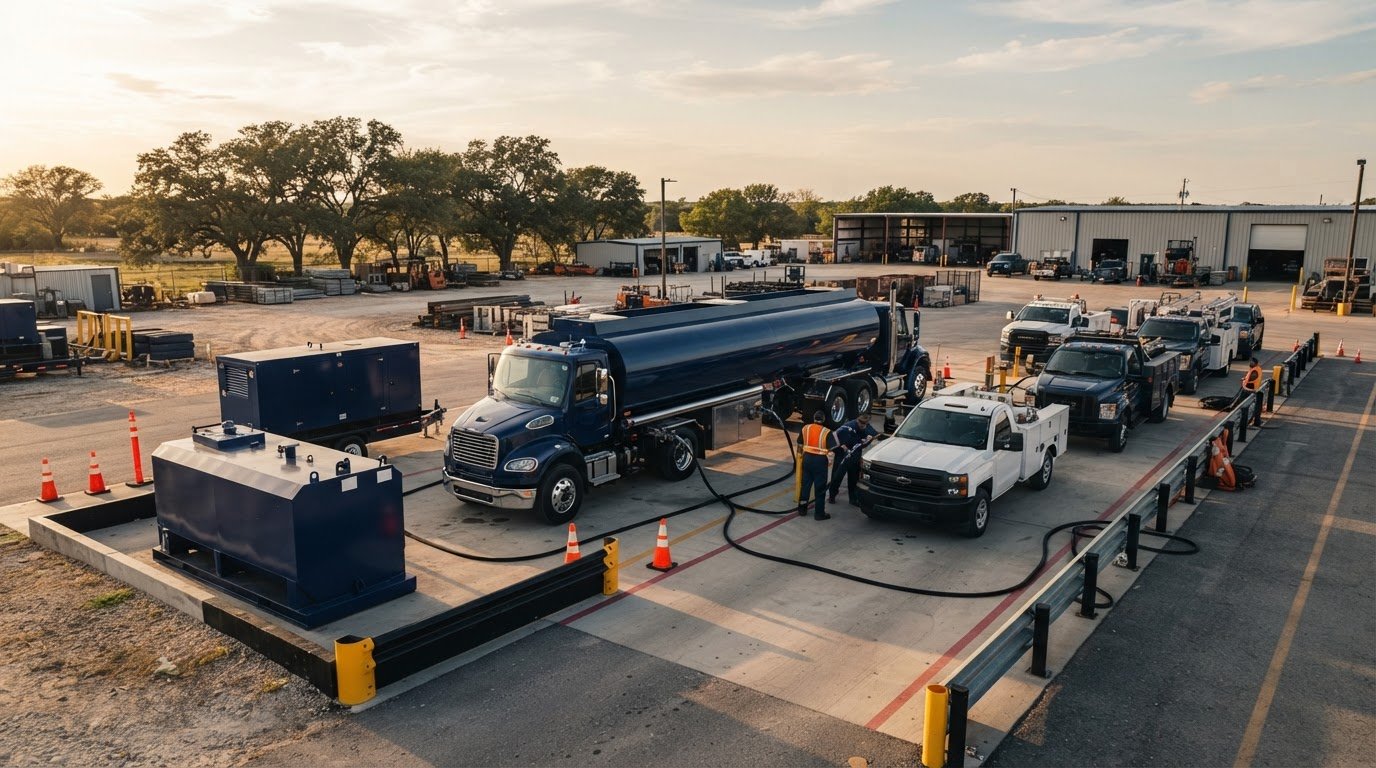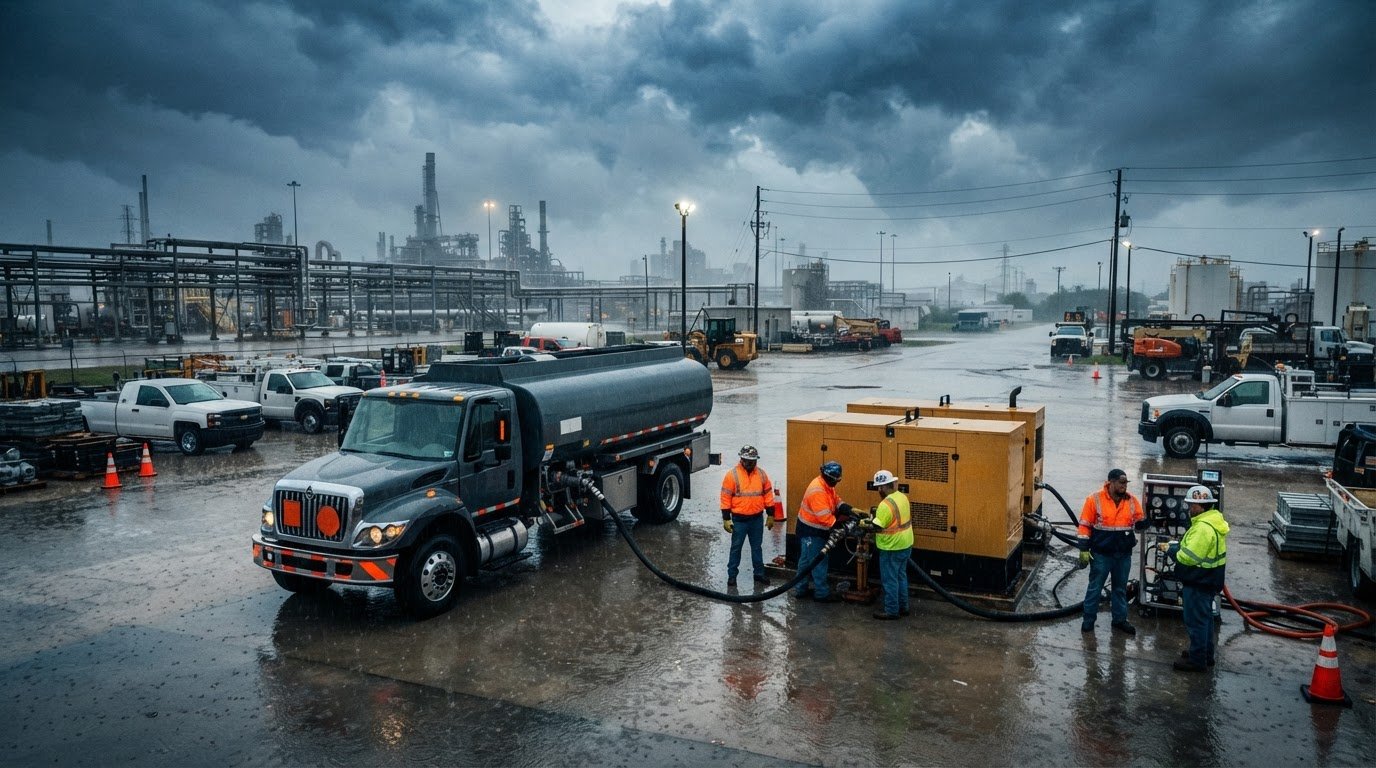
A generator can be ready to run and still lose operating time if fuel isn’t accessible when the site needs it. For Magnolia operators searching for portable fuel storage tanks for rent Magnolia, start with the work plan, not a guess at tank size.
Fuel demand, equipment use, site layout, and replenishment all affect whether storage will support daily operations. A tank placed without considering access or delivery coordination can create new challenges instead of helping maintain continuity.
React Fueling rents portable fuel tanks for commercial and industrial use in Magnolia, with related fuel delivery, equipment fueling, and generator fueling services. Rental planning can account for both on-site storage and the fuel support that helps keep equipment and facilities operating.
This article explains how to assess fuel use, choose a rental for your operating needs, and plan tank placement and replenishment around site activity. It also covers coordinating storage with fuel support so your team can make a practical plan before fuel access becomes an interruption.
When portable fuel storage tank rentals make sense for Magnolia sites
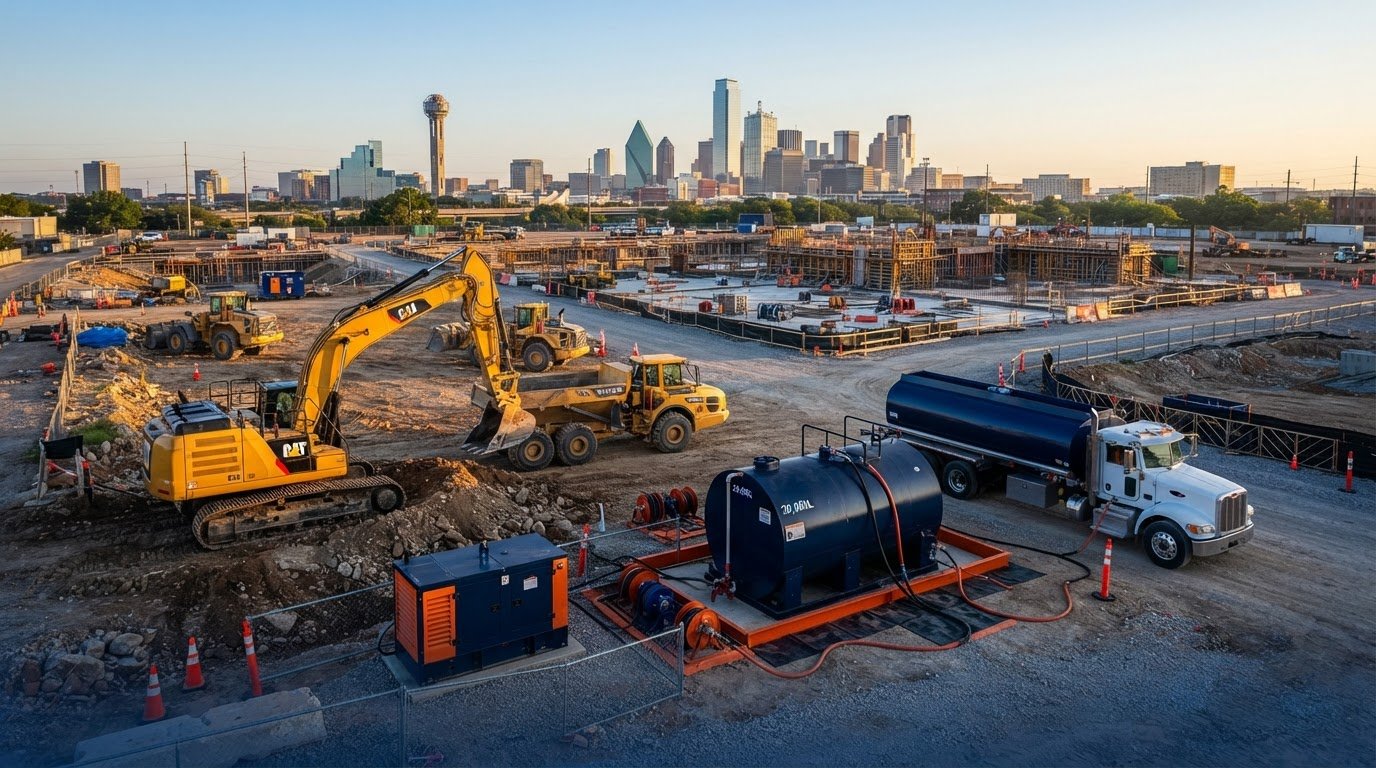
Equipment can’t keep working if fuel isn’t accessible where operations are underway. On a Magnolia construction site, at a facility relying on a generator, or in an industrial operation with scheduled production, distant fuel access can complicate the workday and disrupt plans. Portable fuel storage tanks for rent give Magnolia businesses a way to keep fuel closer to the equipment or facility that depends on it.
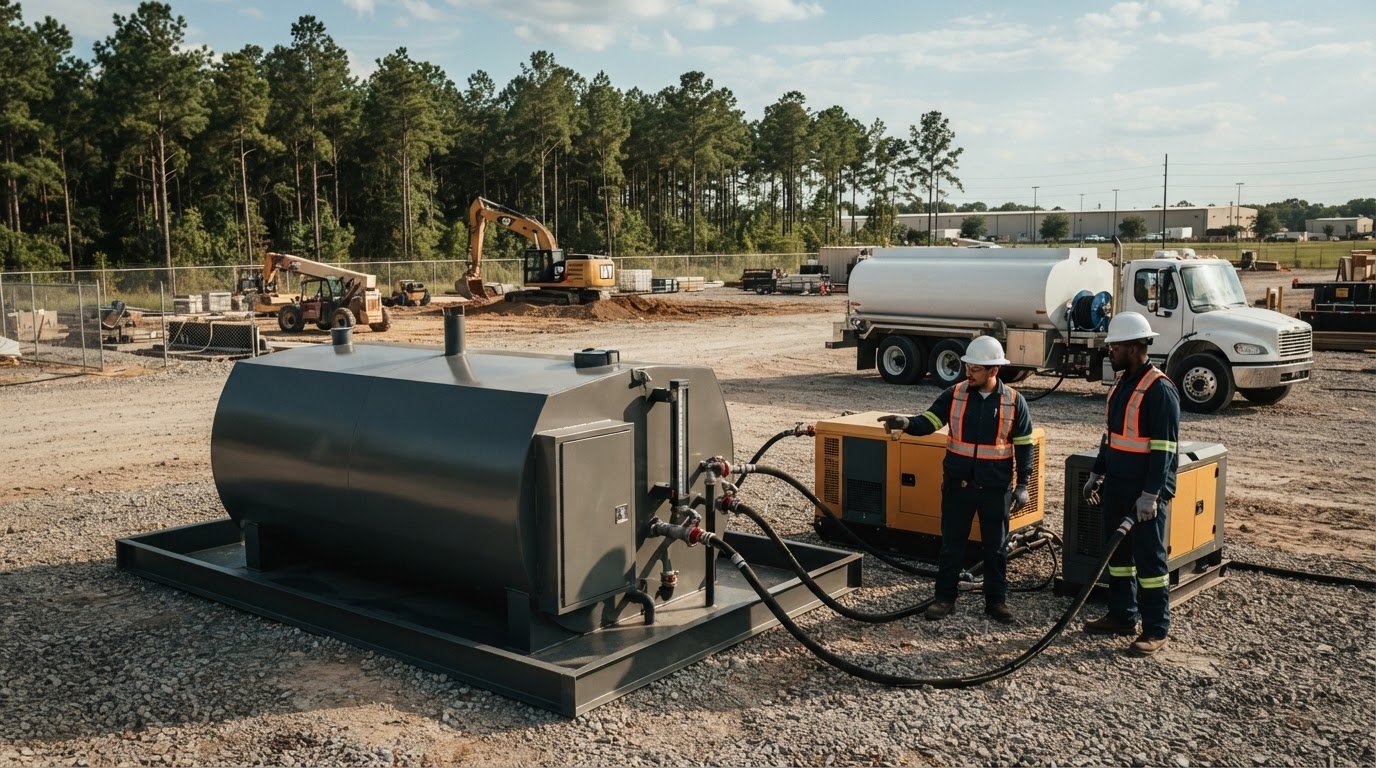
These rentals serve a different purpose from consumer self-storage. A storage unit holds personal or business belongings; a portable fuel tank stores fuel for operational use. It also differs from a vehicle’s built-in fuel tank, which supplies that vehicle rather than creating a shared on-site reserve for equipment or generators. Fuel bladders, also known as flexi-bags, are a type of portable fuel storage. They’re one example of a temporary storage format, while rental tanks can be planned around a site’s working needs. React Fueling provides portable fuel tank rentals for commercial and industrial use in Magnolia.
Which Magnolia operations benefit from a temporary fuel tank?
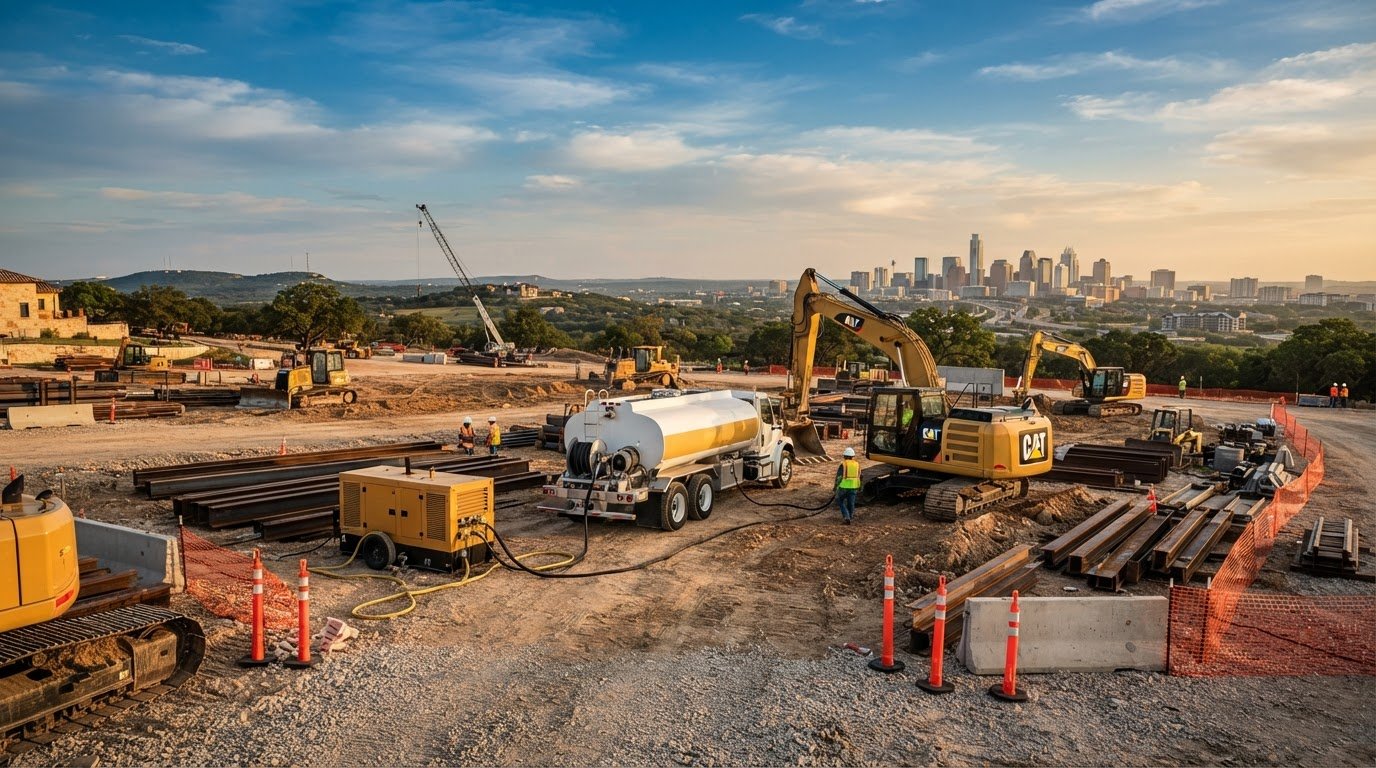
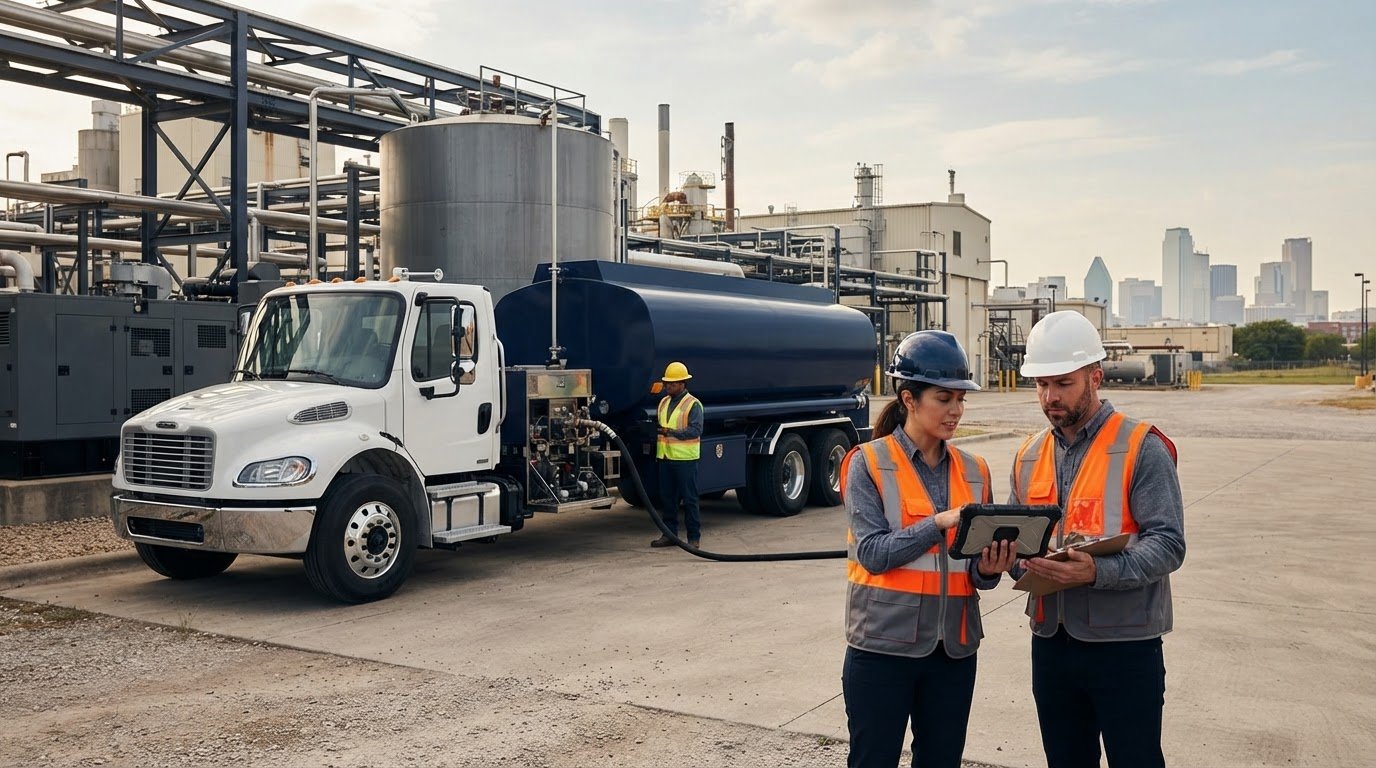
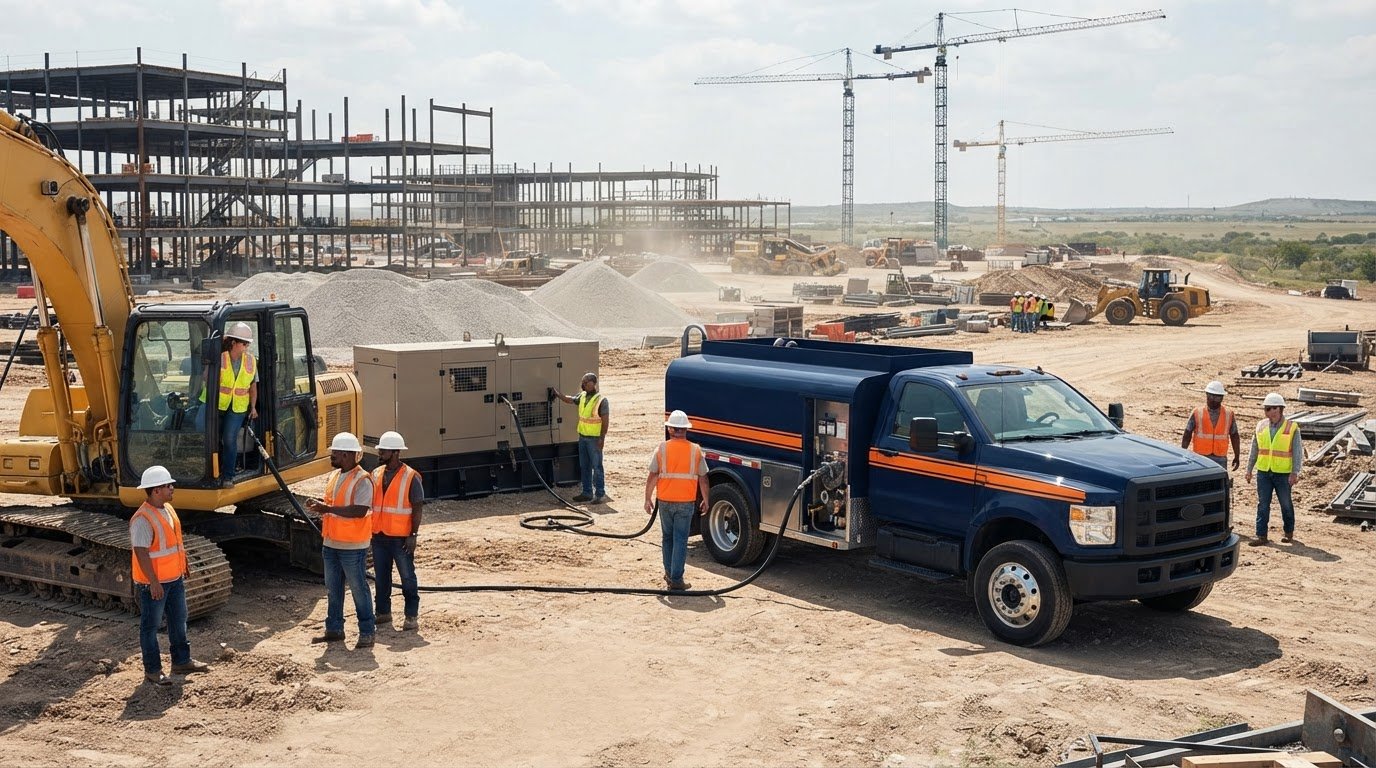
Construction teams may need fuel near active equipment as work areas shift or several machines operate across a site. An on-site tank can make fuel more accessible and help crews plan replenishment around equipment use. Industrial facilities can incorporate storage into their operating schedule, coordinating fuel access with production demands and planned work.
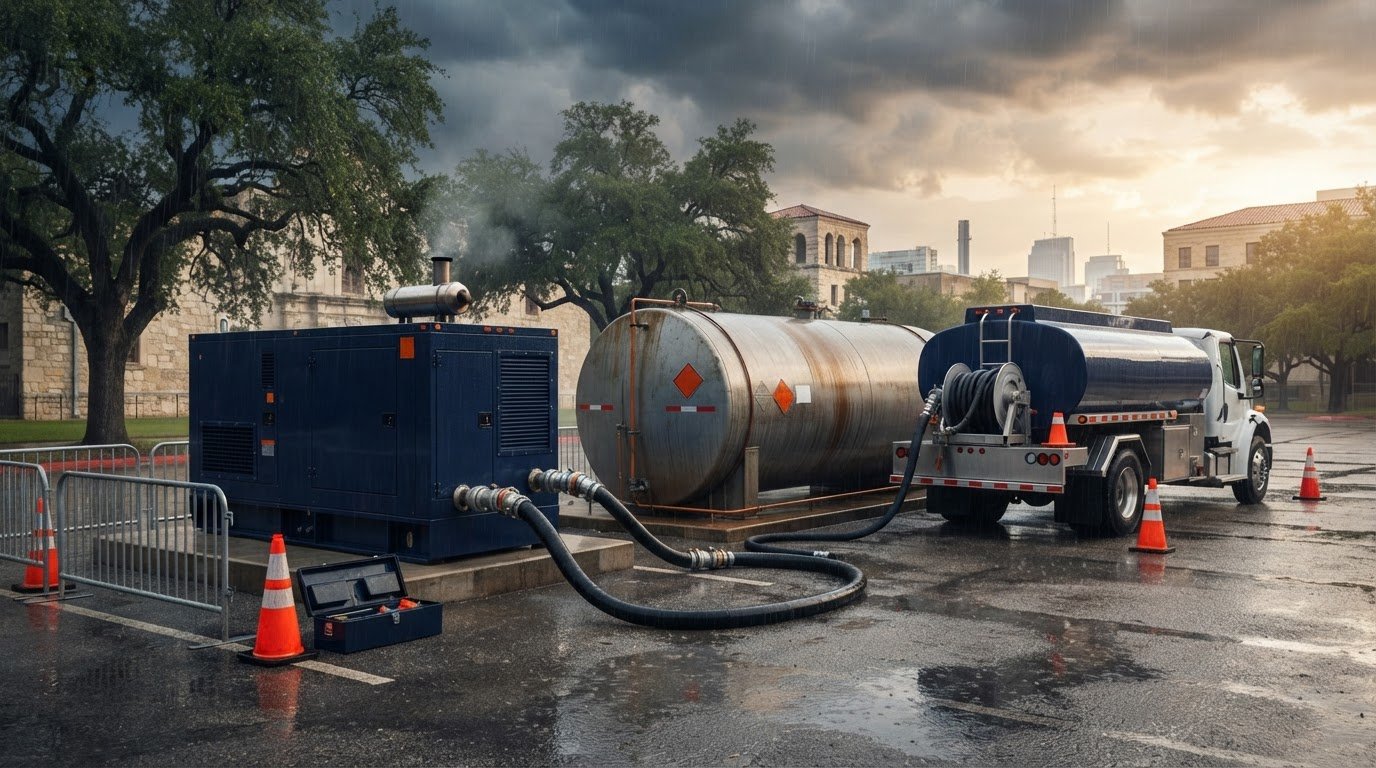
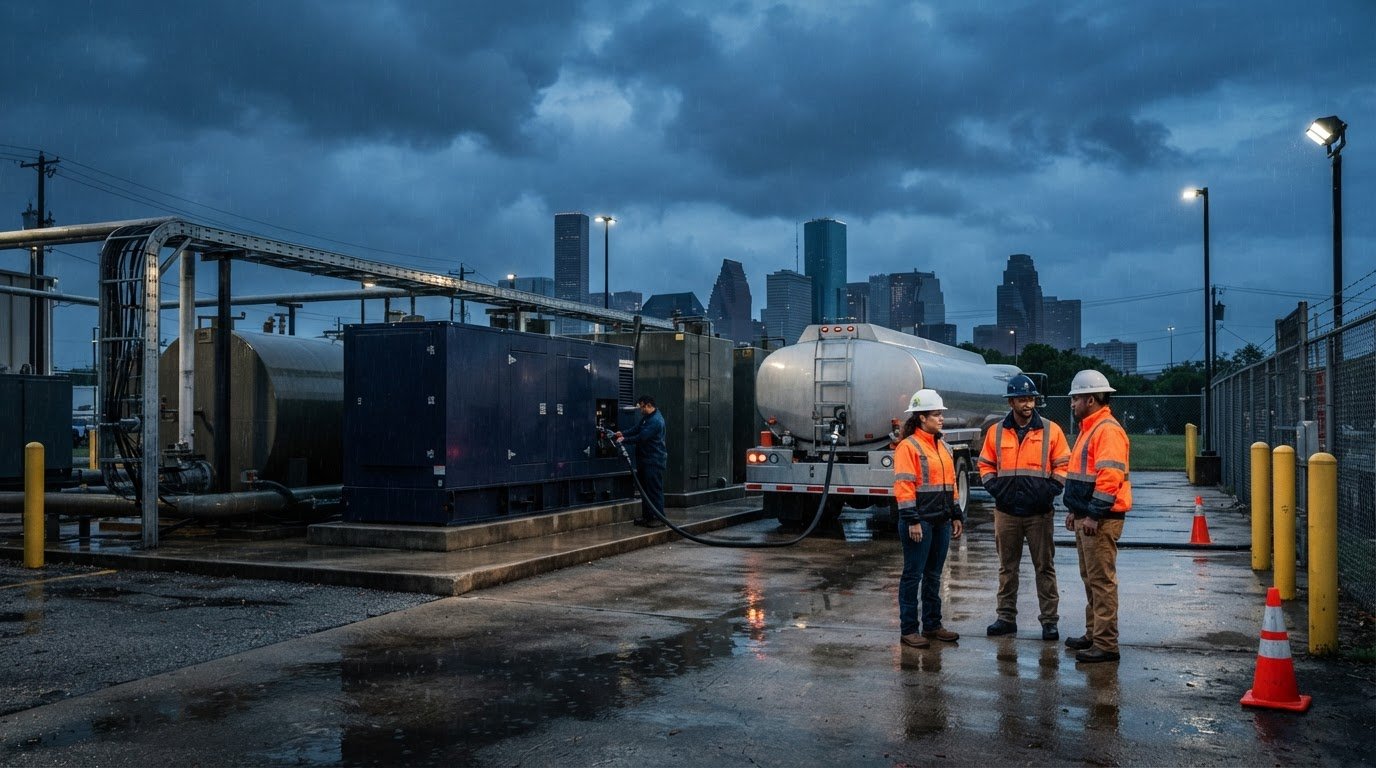
Backup-power sites have a different priority: keeping generator fuel accessible so the facility can prepare for an interruption to normal power. In each setting, consider where fuel needs to be available, when demand occurs, and how replenishment can fit around site activity. React Fueling’s fuel delivery and equipment or generator fueling services can complement rental storage.
When is renting more practical than permanent storage?
Renting can suit a defined construction project, temporary operation, or site whose fuel needs change over time. It gives a business a way to plan for on-site storage without making permanent infrastructure the default for work that may move, scale down, or end. Permanent storage may suit a continuing operation with stable demand and a long-term site plan; neither approach is right for every facility.
Project duration and fuel demand should shape the choice: temporary, changing needs may favor a rental, while sustained demand may support evaluating permanent storage. Map the work period, the equipment or generators that require fuel, and the locations where access matters. Then consider how tank placement and replenishment will fit the site’s routine. A rental is most useful when it supports a specific operating plan.
How to match a portable fuel tank rental to your fuel demand
Choose storage around how a site consumes fuel, not a rough guess or a tank size borrowed from another project. For portable fuel storage tanks for rent, Magnolia operators should work through four connected decisions: identify the fuel, estimate consumption, define the operating coverage needed, and plan replenishment. This gives the rental a clear role in site operations and helps the team coordinate fuel access before it becomes urgent.
Start with the intended fuel and the equipment that will use it. Fuel type affects what can be stored and supplied, so confirm that the tank and fuel are compatible. Then estimate demand using operating schedules and documented consumption data. A site with several machines running at once may draw fuel differently from one where equipment use is staggered, even if both have similar equipment.
Estimate fuel use from equipment and operating schedules
List the equipment and generators expected to draw from the site supply. Record each unit’s planned operating hours and documented fuel-consumption rate. Use those figures to estimate routine demand across the work schedule, accounting for overlapping use, shifts, and changes in operating intensity. Separate expected consumption from contingency needs, such as longer generator runtime or a schedule change, without assuming a fixed reserve amount.
Review and update the estimate when the work plan changes. If another machine joins the project or generator runtime increases, the original demand estimate may no longer apply. A practical estimate gives the team a basis for planning storage and replenishment without relying on guesswork.
Plan fuel type, access, and replenishment together
Fuel planning also depends on where the tank can serve the operation and how replenishment vehicles can reach it. Mark equipment locations, vehicle routes, work zones, and the fuel delivery access path on the site plan. Consider whether delivery access will remain workable as staging areas or active work fronts shift. Avoid making routine movement and fuel access compete for the same constrained area.
Coordinate the schedule with commercial fuel delivery so replenishment reflects expected use and site activity. React Fueling’s delivery service can complement a rental tank, while equipment or generator fueling can support operating needs directly. For locations that use powered industrial trucks in marine-terminal operations, OSHA’s powered industrial truck standard is a separate workplace reference. Its scope is specific and shouldn’t be treated as a general rule for fuel-tank placement.
Before settling on a rental plan, bring together the fuel type, demand estimate, operating schedule, access layout, and replenishment approach. This gives React Fueling a practical picture of the project’s operations to guide fuel tank rental planning.
Portable fuel tank rental versus other fuel-supply approaches
Fuel storage and fuel delivery solve related but different operating needs. A portable tank keeps fuel on-site for use between replenishments; delivery-led planning brings fuel to the site or equipment without relying on a dedicated storage tank there. Permanent storage is a longer-term infrastructure choice. For Magnolia operators weighing portable fuel storage tanks for rent, the best fit depends on how often equipment needs fuel, whether a tank can be positioned effectively, and how the site will coordinate replenishment.
| Approach | Operational fit | Flexibility and planning |
|---|---|---|
| Portable tank rental | Useful when equipment or generators need fuel accessible on-site. | Can suit temporary or changing projects; the site plans placement, access, and replenishment. |
| Scheduled fuel delivery | Fits sites that need fuel supplied on a planned schedule without positioning a storage tank on-site. | Requires coordination between expected consumption, delivery timing, and site access. |
| Permanent storage | May suit an ongoing operation with a continuing need for on-site fuel. | Requires a longer-term infrastructure decision and site-specific planning. |
These approaches aren’t always alternatives. A rental tank and scheduled fuel delivery can work together: storage keeps supply close to the operation, while planned deliveries replenish it in line with use. That coordination gives site managers a defined supply plan without assuming a tank alone will meet every demand. For fuel storage decisions, consult applicable site requirements; the NFPA 30 standard addresses safe storage and handling of flammable and combustible liquids.
When on-site storage supports equipment operations
A tank placed where it can serve active work may reduce reliance on off-site refueling trips, particularly when equipment is spread across a construction or industrial site. It can give crews a more accessible supply point, but placement, movement routes, and replenishment still need to fit daily operations. If equipment needs direct fueling rather than access to a shared on-site supply, on-site equipment fueling may be the more relevant approach.
When delivery-led or permanent storage may fit better
Some sites have reliable access for fuel delivery and no practical need to keep a tank on the property. A delivery-led plan can align supply with the work schedule, while permanent storage may suit a stable, long-term operation. Compare project duration, expected fuel use, vehicle and delivery access, and site conditions. Match the approach to the work rather than defaulting to one method.
Plan tank placement, site access, and safe operation in Magnolia
A workable tank location needs to serve daily operations without obstructing deliveries, equipment movement, or active work. Before arranging portable fuel storage tanks for rent, Magnolia crews should review the proposed location with site management and plan the route for tank delivery and fuel replenishment. Conditions can change as a project develops, so treat placement as part of the operating plan, not a one-time mark on a map.
Prepare a Magnolia job site for tank delivery and use
Walk the delivery route and proposed placement area before the tank arrives. Check entrance dimensions, turning areas, overhead or ground-level obstructions, and whether vehicles can reach the location without crossing busy work zones. Consider ground conditions, weather exposure, drainage, nearby work activity, and how the layout may shift as equipment and materials move.
Use this checklist to coordinate the plan:
- Access: Map the entrance, turning space, obstructions, and route to the proposed location.
- Work zones: Keep the planned placement from interfering with equipment routes, staging, or active tasks.
- Delivery: Identify a practical approach and access path for replenishment vehicles.
- Changing conditions: Revisit the location if weather, drainage, work activity, or the site layout changes.
Coordinate the plan with the people managing site activity. A location that works during setup may become difficult to reach once materials arrive or the work area shifts. Set a review point so the team can adjust access and placement as conditions evolve.
Keep fuel storage aligned with site safety requirements
Identify the project safety lead and the authority having jurisdiction for the site. Have them determine which requirements apply to the tank, fuel, location, and planned use. Include spill response, access control, signage, and inspection procedures in that review, rather than assuming a particular procedure or rule applies everywhere.
NFPA 30 can serve as a reference for considering flammable and combustible liquid storage, but its applicability to a specific rental and site should be verified with the appropriate authority and project safety lead. Keep their guidance with the site plan so crews understand the agreed controls and who is responsible for maintaining them. React Fueling’s fuel tank rentals can be coordinated around commercial and industrial site operating needs.
Once the access route, proposed placement, and site-specific safety planning are clear, share those details when arranging the rental. Contact React Fueling to discuss a fuel tank rental for your Magnolia site and coordinate the plan around its operating conditions.
Arrange portable fuel storage tank rentals in Magnolia with React Fueling
React Fueling provides portable fuel tank rentals for commercial and industrial operations in Magnolia as part of its Texas service coverage. To organize a rental, bring the project details together in one operating picture: where the site is, what the fuel will support, which fuel is needed, how demand is expected to change, and how delivery vehicles can access the location. These details give the rental plan a practical foundation.
Coordinate a rental around your project requirements
Outline the site’s purpose and the work the fuel will support. A construction project may need fuel access for active equipment, while a facility may be planning for generator operation or industrial use. Describe expected consumption using operating schedules and documented equipment information. Include the proposed placement area, delivery route, site access conditions, and any planned changes that could affect tank use.
React Fueling aligns fuel tank rental services with those operational requirements. Clear details connect the rental to how the site functions, from the intended use to the practical considerations involved in reaching and replenishing the tank. Share updates if the work plan or site layout changes so rental planning stays relevant as the project moves forward.
Connect storage planning with reliable fuel operations
A rental tank can provide on-site storage, while fuel delivery supports replenishment as the operation uses its supply. The services work together: the site plans where storage fits, then coordinates fuel support around expected use and delivery access. For backup-power operations, generator fueling services can support generator fuel needs. Equipment fueling can also fit projects where direct fueling is more suitable than relying only on a shared storage point.
Before arranging support, bring together the site location, intended fuel use, expected demand, access details, and operating schedule. This information helps React Fueling tailor rental planning to the project. For businesses looking for portable fuel storage tanks for rent in Magnolia, a clear site and operating summary makes coordination more direct and keeps fuel planning connected to the work.
Discuss your Magnolia fuel tank rental with React Fueling and outline your site requirements.
Turn your fuel plan into the next project step
A rental decision is easier to act on when the operating plan is clear enough for everyone involved. Put the key details in one place, including what the fuel supports, how the site expects to use it, and who coordinates changes as the work progresses. That shared reference can connect site management, operations, and fuel planning before conditions shift.
If you’re evaluating portable fuel storage tanks for rent in Magnolia, use your project’s current needs as the starting point, then revisit the plan when equipment use or site activity changes. A practical rental arrangement should fit the work as it stands and leave room to update the plan as the work evolves.
React Fueling can discuss a rental plan for your commercial or industrial operation. Contact React Fueling to discuss your Magnolia fuel tank rental and take the next step toward a fuel plan built around your site.
Frequently Asked Questions
Can I rent a portable fuel storage tank in Magnolia, Texas?
Yes, React Fueling rents portable fuel tanks for commercial and industrial use in Magnolia. If you’re comparing portable fuel storage tanks for rent in Magnolia, prepare a brief description of the business use, fuel type, and site location to make the rental discussion more focused. React Fueling also serves Houston, San Antonio, College Station, Austin, and Dallas, so businesses operating across these Texas markets can plan fuel support around their locations.
What should I consider when choosing a portable fuel tank rental?
Start with the fuel the tank will hold and the equipment or facility it will support. Consider how the tank’s location affects crew access, traffic flow, and daily tasks, as well as how fuel will reach the site. Account for changes such as additional equipment joining a project or a revised work schedule. These details help shape a rental plan around actual site conditions rather than assumptions.
Can a portable fuel tank rental support construction equipment?
Yes, a portable fuel tank rental can provide an on-site fuel supply for construction equipment when the fuel and tank suit the intended use. For example, a project using machinery in separate work areas can plan how crews will access fuel without disrupting material movement. If equipment is better served by direct fueling, React Fueling also offers equipment fueling services for commercial operations.
Can I arrange fuel delivery for a rented tank?
Yes, fuel delivery can be coordinated with a rented tank as part of a commercial site’s supply plan. Share how the tank will be used and how site activity could affect delivery access. Aligning deliveries with expected fuel use gives the site team a clearer replenishment plan. React Fueling provides fuel delivery alongside tank rentals, so storage and supply can be planned together.
How do I estimate the capacity needed for a portable fuel tank?
Use documented consumption rates and expected operating hours for the equipment drawing fuel, then compare the estimate with how often replenishment can be planned. Include overlapping equipment use and likely schedule changes rather than relying only on average daily consumption. The resulting demand profile helps guide rental planning. React Fueling can tailor tank rental planning to the project’s operating requirements.
Do I need a permit for a portable fuel tank in Magnolia?
Permit requirements can depend on the tank, fuel, location, and intended use, so don’t assume one answer applies to every Magnolia site. Have the project safety lead identify the authority having jurisdiction and verify the requirements for the specific installation and operation. Include the proposed placement and use in that review. This helps the site team address applicable local and project-specific rules before putting the tank into service.
Can a portable fuel tank support a backup generator?
Yes, a portable fuel tank can be part of a backup generator’s fuel plan when the storage arrangement suits the generator and intended fuel. Estimate expected runtime using the generator’s documented consumption information and the facility’s operating scenario. Consider how the tank will be accessed and replenished if the generator runs longer than planned. React Fueling also provides generator fueling services for commercial backup-power operations.