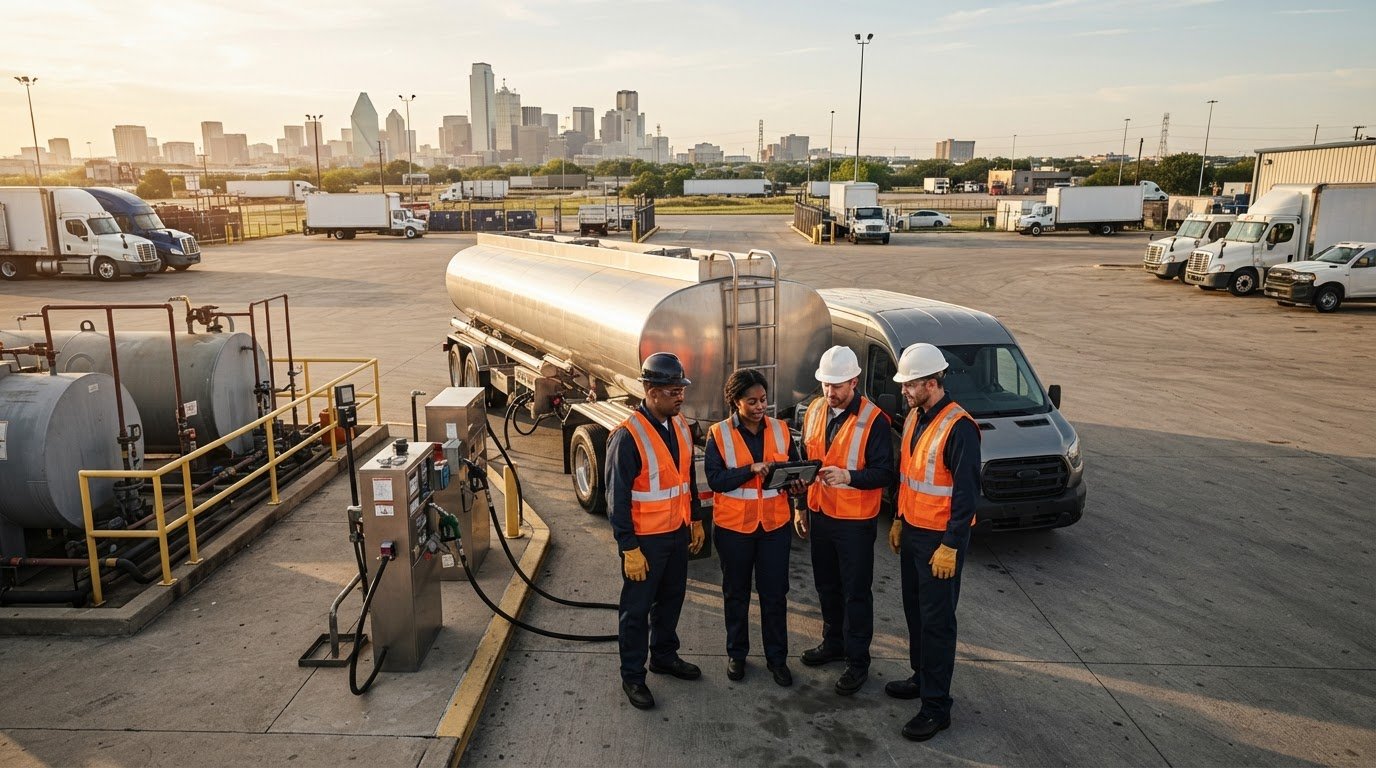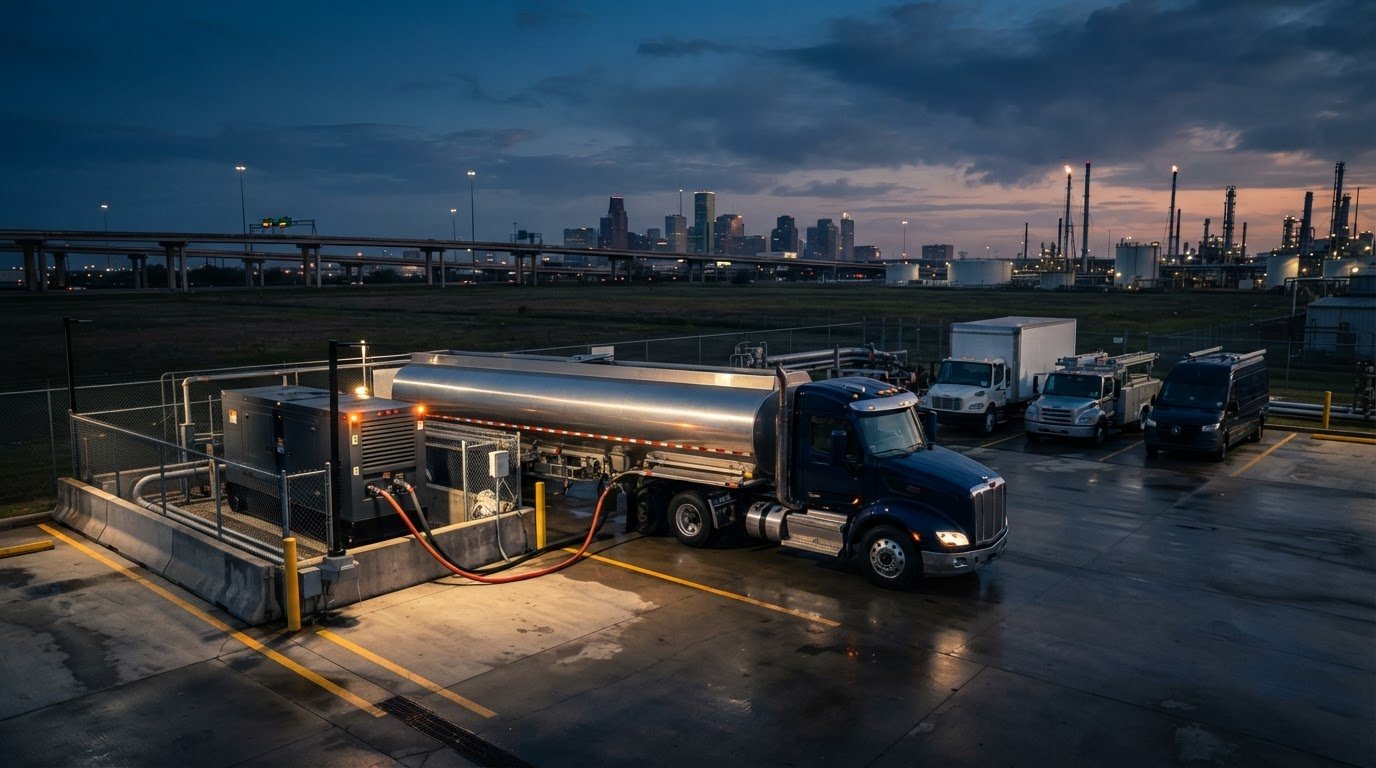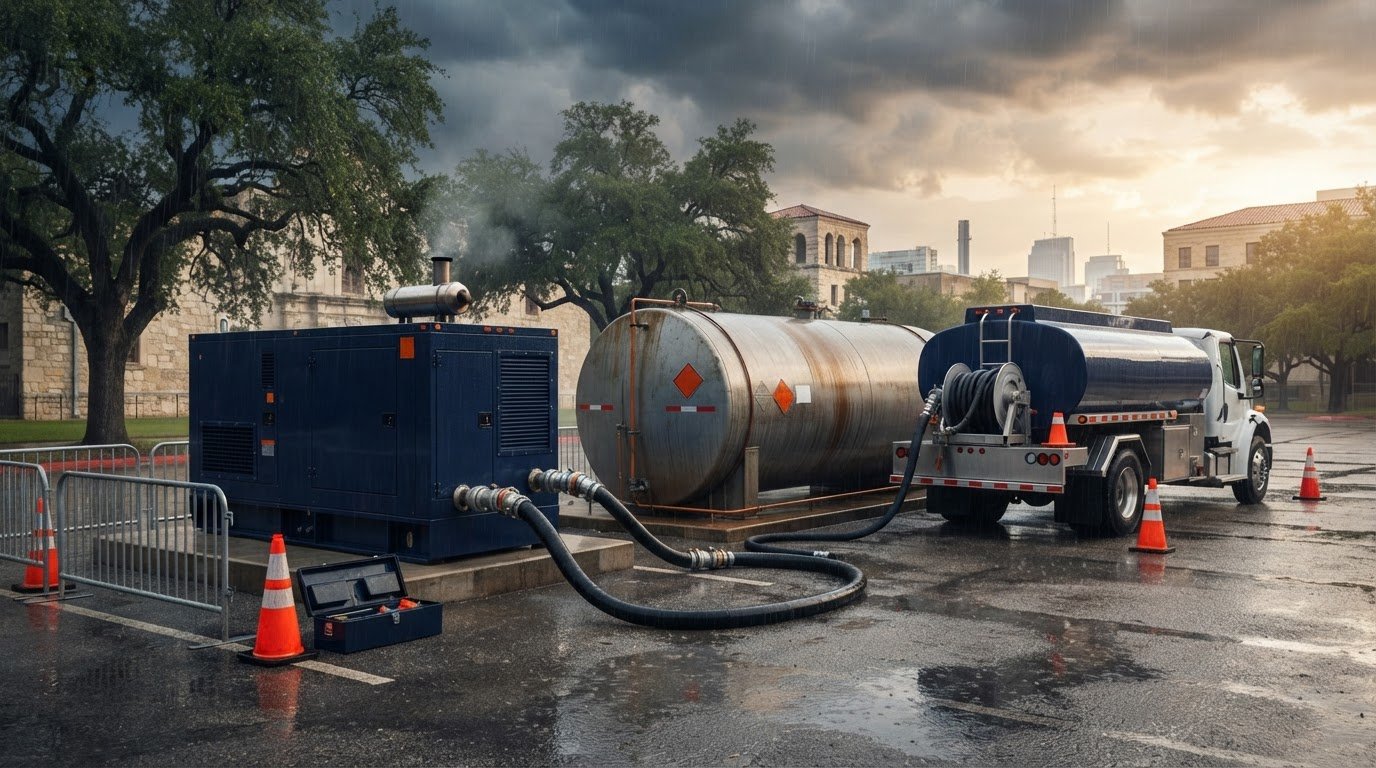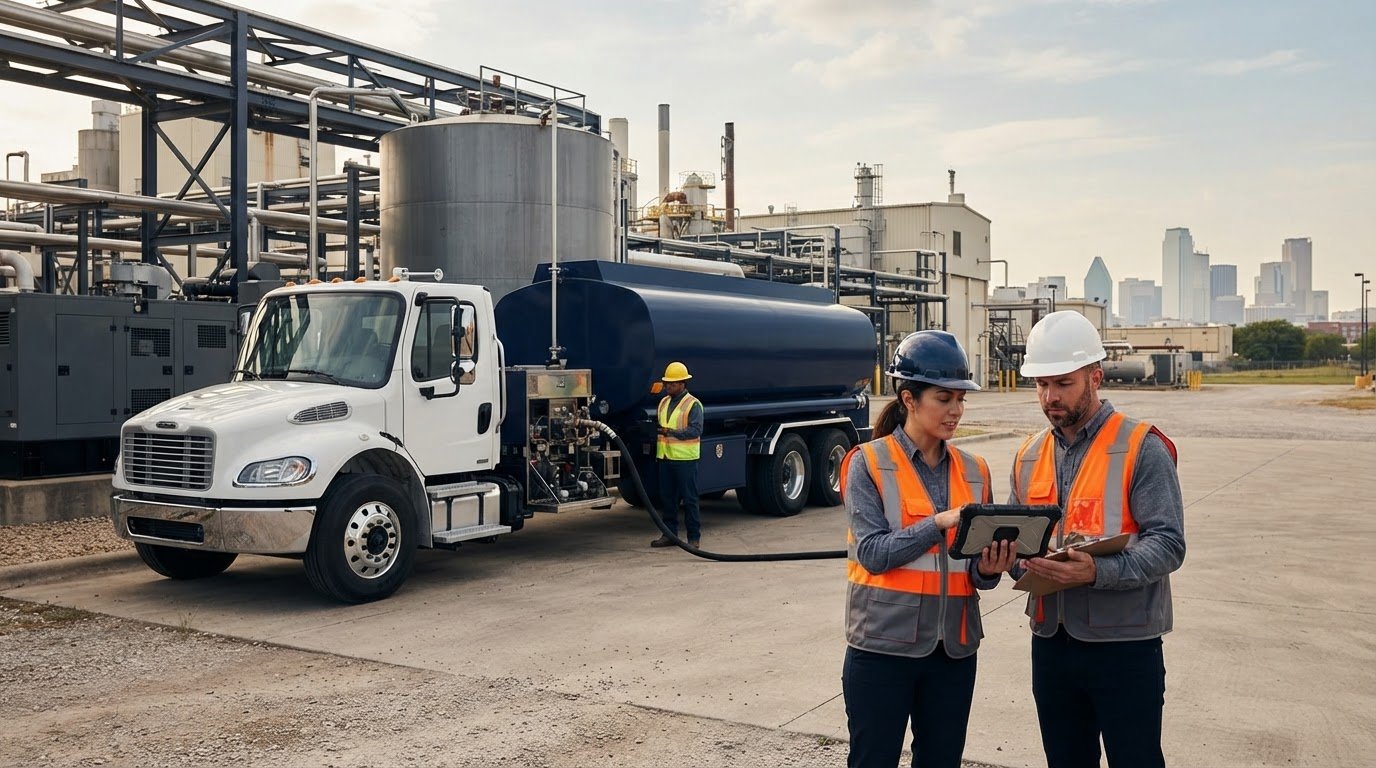
Over 68% of commercial fleet operators now prefer mobile fuel delivery systems because they recognize that fuel can account for up to 60% of a fleet's total operating budget. If your drivers spend 30 to 60 minutes every day idling at retail pumps or navigating Houston traffic for a fill-up, you're losing more than just time; you're bleeding productivity. When the pressure of hurricane season hits or supply chains tighten, having a partner for emergency diesel delivery Houston becomes a matter of operational survival rather than just a convenience.
It's a frustration many fleet managers share: the constant battle against inaccurate fuel tracking and the looming threat of unexpected downtime. This guide shows you how to eliminate those labor leaks and recapture thousands of hours by shifting to an optimized on-site fueling strategy. We'll examine the 2026 Texas regulations, including TxLED compliance and dyed diesel reporting requirements, while providing a roadmap for a set-and-forget schedule that simplifies your accounting and lowers your total cost of ownership.
The Real Cost of Traditional Fleet Fueling in Houston
Managing a fleet in the fourth largest city in the U.S. requires more than just keeping tanks full. It demands a sophisticated fuel management system that accounts for every hidden expense. The Total Cost of Fueling is a metric that combines the pump price with driver labor, vehicle idle time, and the logistical friction of off-site travel. For most Houston enterprises, the retail pump is actually the most expensive place to buy fuel because it ignores the reality of operational downtime.
When you factor in the "Houston Traffic Tax," the true cost of fueling skyrockets. Congestion on the 610 Loop or I-10 often turns a simple 10-minute refueling stop into a 45-minute detour. These minutes aren't just lost time; they're lost revenue. Beyond the road time, relying on retail stations introduces an administrative burden. Managers must chase down fragmented paper receipts and audit fuel cards for potential fraud, which drains back-office resources. During critical windows, such as the peak of hurricane season, relying on public stations is a high-stakes gamble. This is why many industrial leaders prioritize emergency diesel delivery Houston to ensure they have a dedicated supply regardless of local grid conditions.
Calculating Driver Downtime and Labor Leakage
The hourly cost of a driver sitting at a retail pump in the Houston metro quickly erodes profit margins. To find your annual labor loss, use this simple formula: (Number of Drivers) x (Average Hourly Wage) x (Time per Stop) x (Stops per Week) x 52 weeks. If you have 20 drivers earning $30 per hour wasting 45 minutes per stop twice a week, you're losing over $46,000 annually in pure labor. There's also the safety risk to consider. Maneuvering large commercial vehicles through tight retail stations increases the likelihood of minor collisions and liability claims, costs that are completely eliminated with on-site delivery.
The Impact of Fuel Inefficiency on Project Timelines
Fueling delays don't happen in a vacuum; they ripple through your entire schedule. A driver stuck in traffic for fuel is a driver who isn't at the job site, which delays every subsequent task for the crew. By utilizing commercial diesel delivery in Houston, your team starts every shift with a 100% fueled fleet. This operational continuity is a massive competitive advantage. When your equipment is ready to move the moment the sun comes up, you meet deadlines more consistently, leading to higher client satisfaction and more frequent contract renewals. Emergency diesel delivery Houston ensures that even when the unexpected happens, your project timelines remain intact.
How Mobile Fleet Fueling Services Optimize Operations
Wet-hosing, or direct-to-equipment fueling, eliminates the need for your drivers to touch a fuel pump. While your fleet remains parked during off-hours, mobile units fill each vehicle individually. This shift ensures every truck is ready for deployment the moment the shift starts. For Houston's industrial sectors that operate 24/7, this consistency is vital. When logistical bottlenecks threaten your schedule, emergency diesel delivery Houston provides the critical backup needed to maintain momentum. Digital meters on delivery trucks provide real-time data, ensuring 100% transparency for accounting teams who need to track every gallon against specific project codes.
Wet-Hosing vs. On-Site Tank Storage
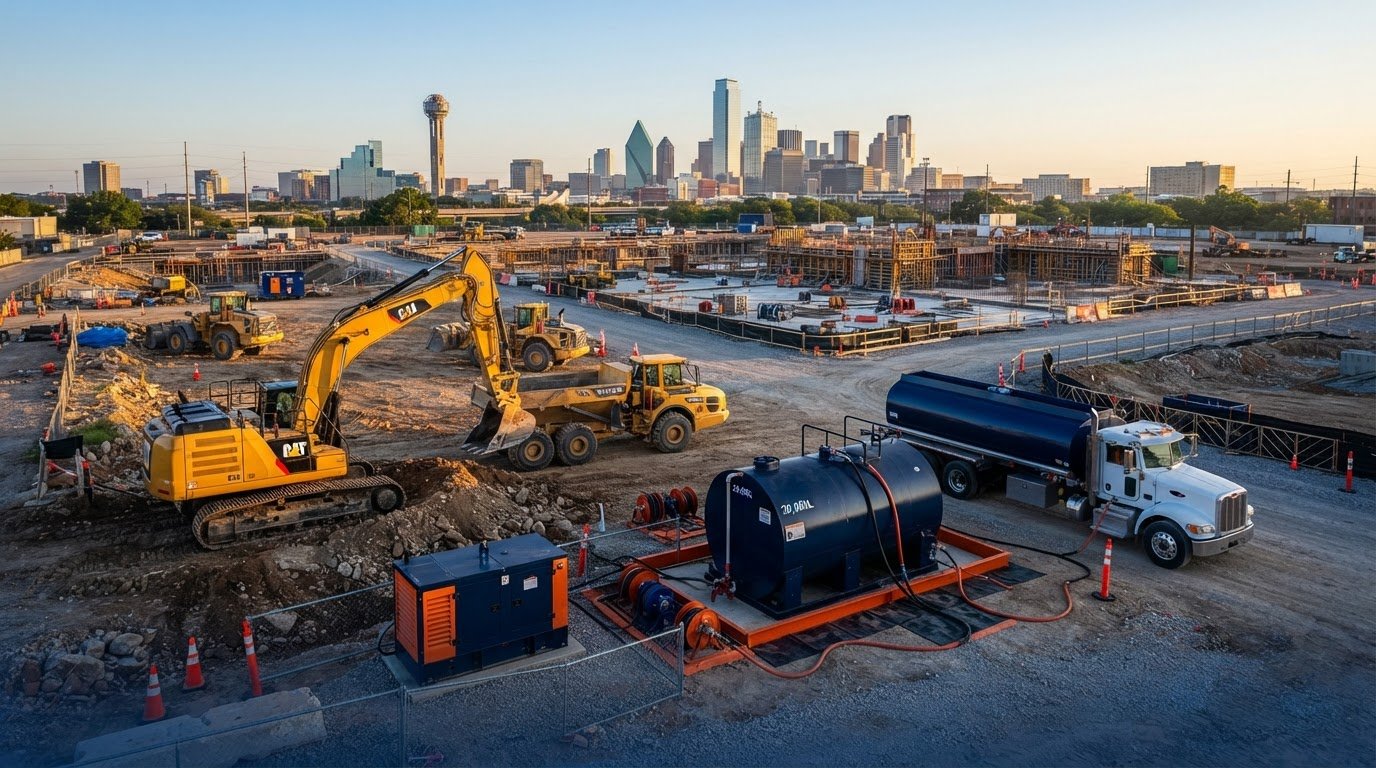
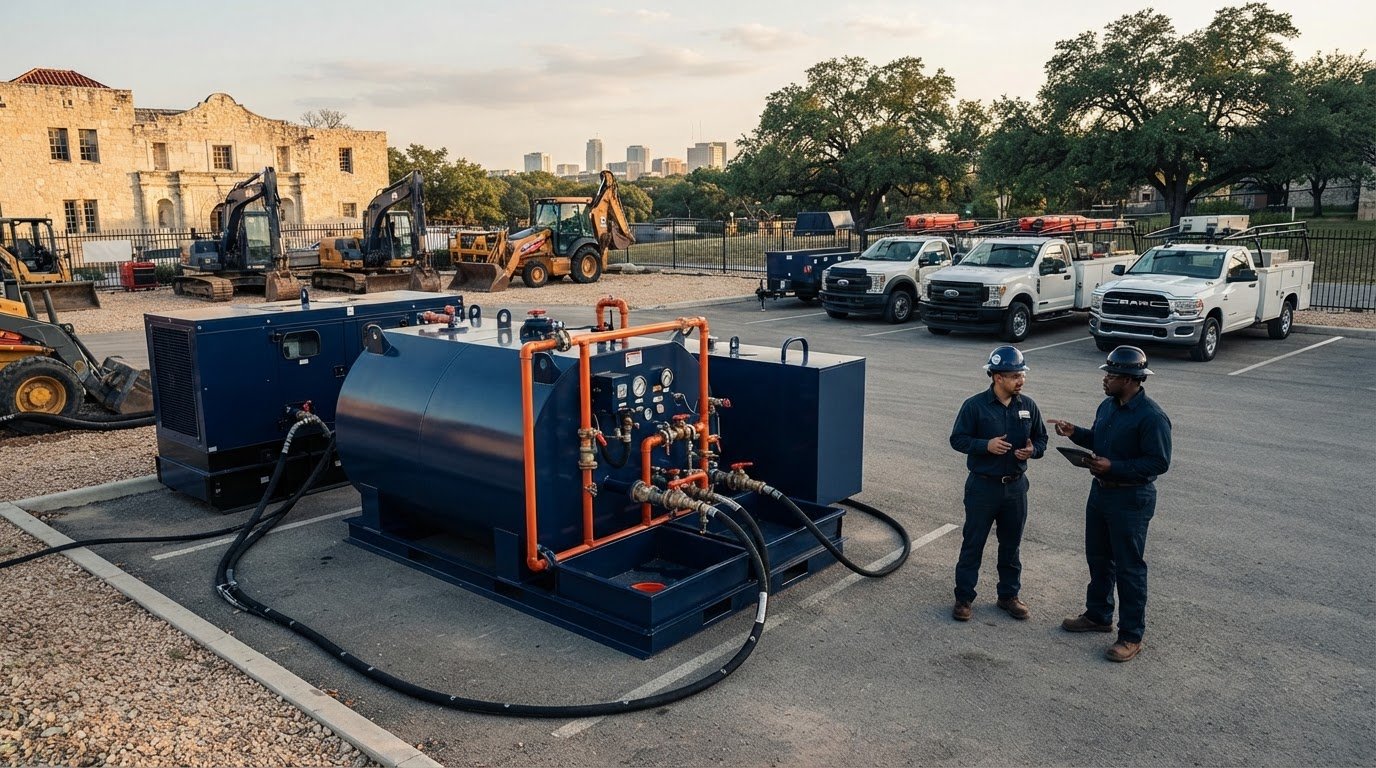
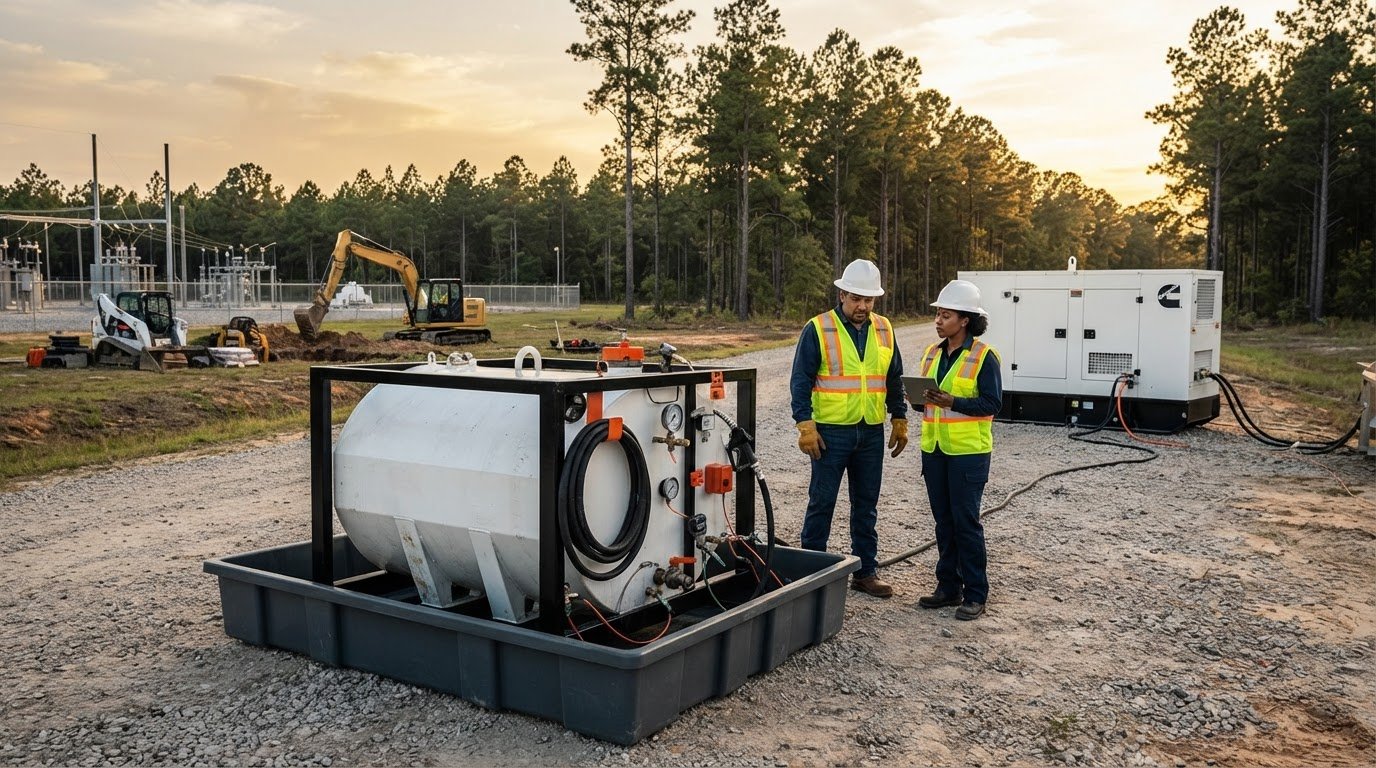
Choosing between direct fueling and a portable fuel tank rental depends on your site's physical footprint and fuel throughput. Direct fueling requires zero infrastructure and significantly reduces environmental liability. However, a temporary tank provides a necessary buffer for high-volume jobs or remote construction sites where daily deliveries aren't feasible. In Texas, on-site storage must meet specific insurance and safety standards to prevent spills. If you are unsure which model fits your current project, you can consult with our logistics team to build a custom fueling schedule.
Integrated DEF Supply for Tier 4 Engines
Modern fleets must adhere to strict EPA diesel standards, which require Selective Catalytic Reduction (SCR) systems to use Diesel Exhaust Fluid (DEF). Neglecting DEF levels triggers "limp mode," which can ground your equipment until a technician intervenes. By utilizing on-site DEF fluid delivery alongside your diesel service, you eliminate the risk of engine derating. This integrated approach ensures compliance and performance without requiring drivers to manage separate fluid levels at retail stations. React Fueling manages these complex logistics so your team stays focused on the job.
Reliability is the cornerstone of our service. Whether it's a routine night fill or a high-stakes request for emergency diesel delivery Houston , the goal remains the same: total operational continuity. Our 24/7 availability supports the physical reality of Houston’s industrial environment, where a missed delivery can halt a multi-million dollar infrastructure project. We act as a vigilant partner, ensuring that your equipment is fueled and compliant before the first driver arrives for the day.
Comparing Fueling Models: Mobile Delivery vs. Bulk Tanks vs. Retail
Every fueling model presents a trade-off between convenience, cost, and control. To determine the most efficient path for your operation, you must evaluate three pillars: labor costs, capital expenditure (CapEx), and scalability. In the Houston market, these variables shift rapidly during supply disruptions or periods of high growth. Choosing the wrong model doesn't just increase your fuel bill; it creates logistical friction that slows your entire organization.
Retail fueling often appears cost-effective on a per-gallon basis, but it hides massive labor leakage. Drivers lose hours to traffic and pump queues, while management suffers from a total lack of data control. Conversely, bulk on-site tanks offer lower fuel prices but introduce significant liability. You face strict environmental regulations, high maintenance costs, and a fixed footprint that doesn't move with your projects. Mobile fueling, or wet-hosing, provides maximum efficiency with zero CapEx. It delivers high data accuracy by tracking every drop directly to the asset. During grid failures or supply chain breaks, having a contract for emergency diesel delivery Houston ensures your fleet remains active while competitors are stranded at empty retail pumps.
When Mobile Delivery is the Clear Winner
For fleets with 10 or more vehicles staged in a central Houston yard, diesel delivery is the logical choice. High-value labor sectors, such as heavy logistics or specialized construction, cannot afford to have skilled operators acting as fuel runners. Mobile fueling scales instantly to meet seasonal demand without requiring you to build permanent infrastructure. In times of regional crisis, the federal government may issue an emergency fuel waiver in Texas to ease supply constraints. During these windows, a direct delivery partner provides the priority access needed to keep critical infrastructure moving.
Analyzing the Capital Expenditure (CapEx) Gap
Permanent tank installation in Houston involves complex permitting, environmental impact studies, and high upfront costs for underground or above-ground storage. These assets are difficult to move and require constant monitoring for leak detection and corrosion. In contrast, commercial fuel services require no infrastructure investment. This zero-upfront-cost model is ideal for companies operating out of leased yards or temporary job sites. It allows you to reallocate capital toward fleet expansion or technology upgrades rather than sinking it into fuel tanks. If a project location changes, your fuel supply moves with you, providing a level of agility that fixed tanks cannot match. Relying on emergency diesel delivery Houston further protects your bottom line by providing a safety net that doesn't require a permanent physical presence.
Implementing a Fleet Fueling Strategy in Houston
Transitioning from a reactive retail model to a proactive mobile fueling strategy requires a methodical implementation plan. To start, you must audit your current fuel spend and driver labor hours to establish a precise baseline for your total cost of ownership. Once you understand the financial leakages, map your fleet locations and identify optimal downtime windows. Most Houston operations find that night fueling maximizes uptime, as it ensures vehicles are ready before the morning rush on I-10 or the 610 Loop.
The next phase involves verifying site safety access and local compliance. You need to ensure delivery trucks can navigate your yard or job site without obstructing other operations. Establishing a recurring schedule is the final piece of the puzzle. This schedule should account for Houston's unique project cycles and seasonal traffic patterns. Finally, integrate your fueling data into existing fleet management software. This digital link provides real-time tracking that simplifies accounting and ensures you capture every available fuel tax credit.
Houston Logistics: Navigating Traffic and Flood Zones
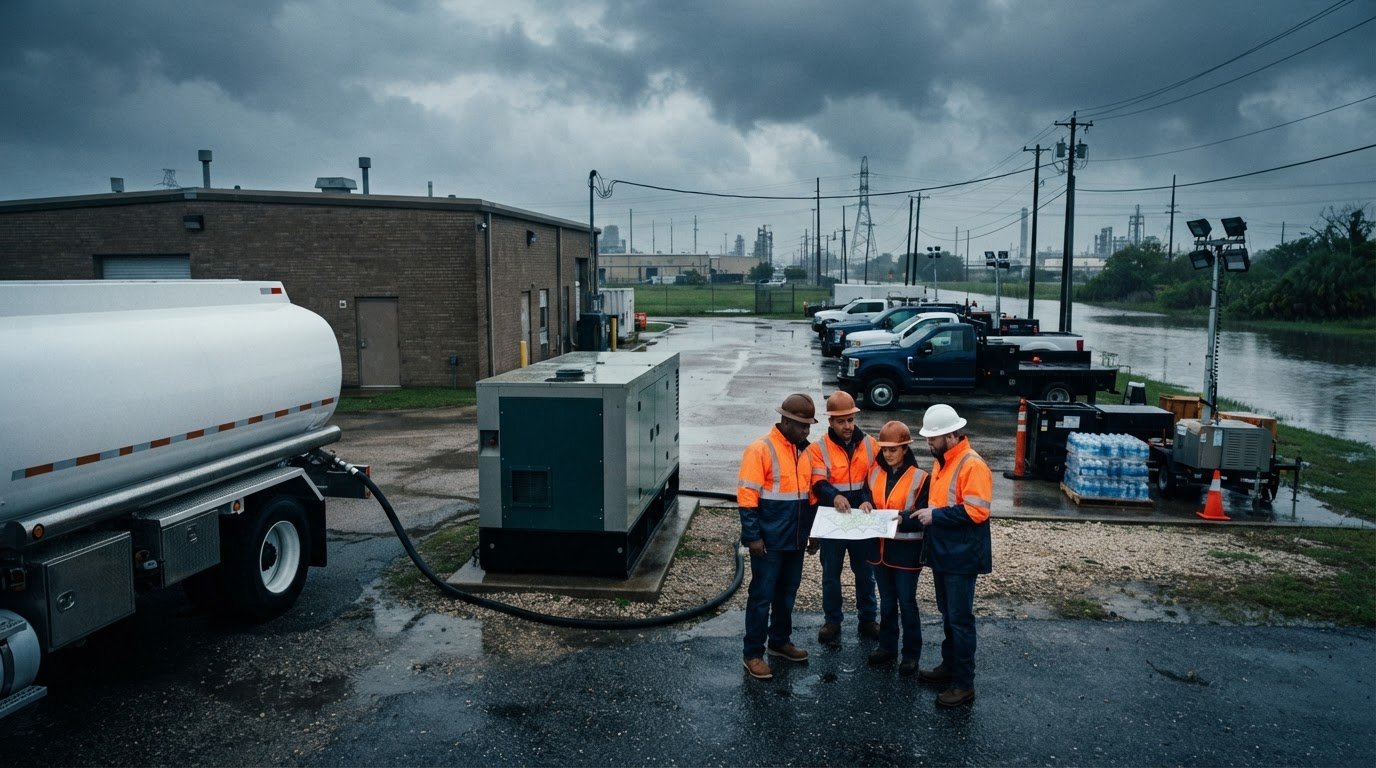
Reliable delivery in the Houston metro requires deep local knowledge of logistical bottlenecks. A provider like React Fueling plans routes specifically to avoid peak congestion around the Ship Channel and major industrial corridors. During hurricane season, the physical reality of flood zones makes emergency diesel delivery Houston a critical component of any continuity plan. Beyond fleet vehicles, maintaining power is essential, which is why we prioritize emergency generator fueling for critical infrastructure. Our Vigilant Partner approach means we monitor weather patterns and road closures to maintain your supply when regional disruptions occur.
Safety and Compliance Standards for On-Site Fueling
Operating in Harris County requires strict adherence to environmental and safety regulations. A professional fuel delivery partner must maintain comprehensive spill prevention and containment protocols to protect your site and the local environment. We utilize industry-standard equipment and highly trained operators to manage the high-stakes nature of industrial fueling. This includes specific Houston-level environmental compliance and fire marshal regulations for on-site transfers. React Fueling maintains these rigorous standards to eliminate your liability and ensure every gallon is delivered safely and legally. To begin building your custom fueling roadmap, contact our Houston logistics team today.
The React Fueling Advantage for Texas Commercial Fleets
React Fueling operates as a core member of the React Holdings family, leveraging a massive logistical network to provide certainty in high-stakes environments. We don't just deliver fuel; we serve as a Seasoned Problem Solver for Houston's most demanding industries. By managing the complexities of fuel procurement and delivery, we allow your management team to focus on core operational goals. Our comprehensive suite of services, ranging from daily equipment fueling service to rapid-response logistics, is designed to eliminate the stress of downtime.
Peace of mind comes from knowing your fueling partner has the infrastructure to show up when it matters most. Whether you're managing a construction site in the heart of the city or a logistics hub near the Ship Channel, our team provides a level of discipline and foresight that smaller providers cannot match. We understand the physical reality of Texas industrial environments and maintain a no-nonsense, hardworking attitude that mirrors the dedication of our clients. We take pride in our local presence and our ability to maintain operational continuity when the stakes are highest.
Customized Fueling Plans for Houston Industries
We provide tailored solutions for sectors that cannot afford a single hour of interruption, including construction, heavy logistics, and critical infrastructure. Our reach extends beyond the metro area to serve remote sites in Magnolia, College Station, and San Antonio, ensuring consistency across your entire Texas footprint. Getting started is a streamlined process. You can request a rapid quote and initiate a specialized service plan by reaching out to React Fueling directly. We assess your fleet size, location, and specific downtime windows to build a schedule that maximizes your operational efficiency and reduces your total cost of ownership.
24/7 Emergency Readiness and Disaster Recovery
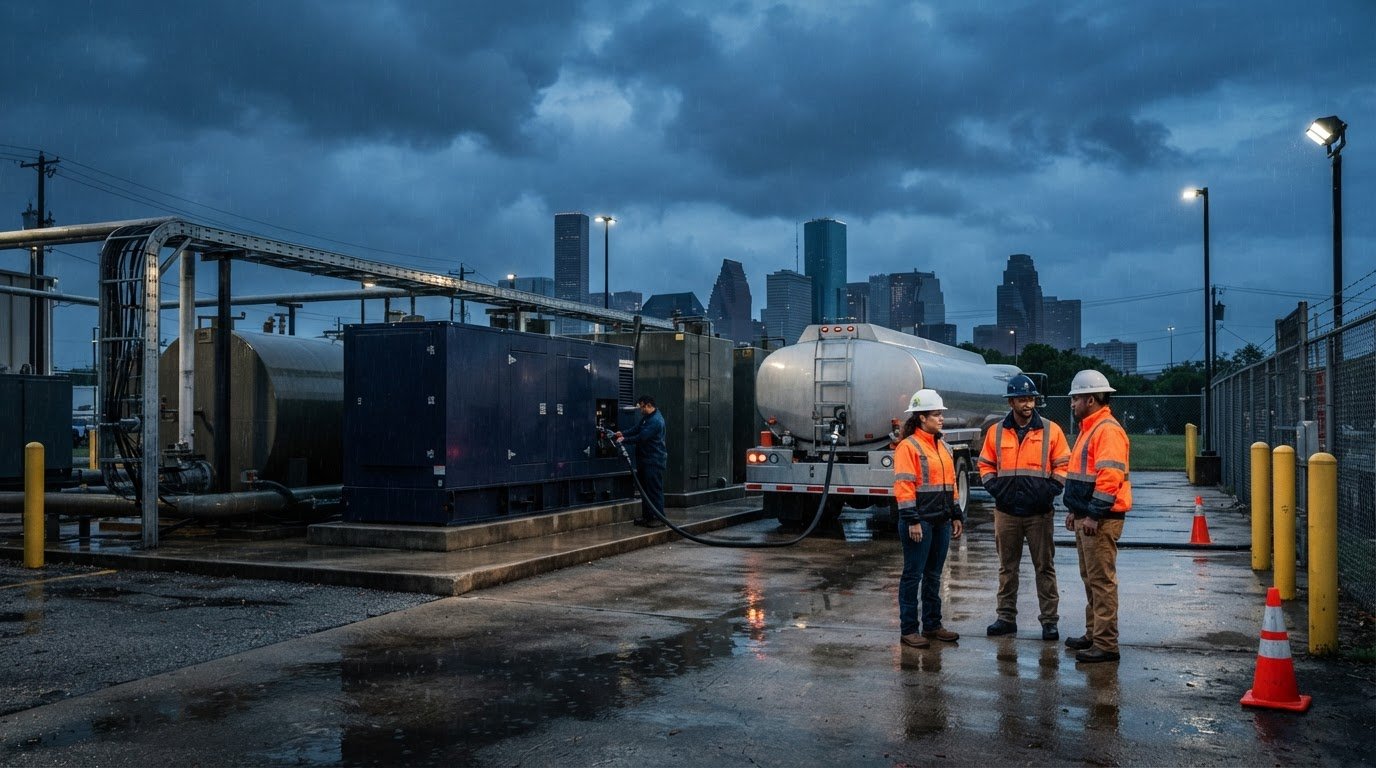
Our 24/7 emergency fueling infrastructure is built for the worst-case scenario. During regional power outages, fuel shortages, or extreme weather events, we prioritize fleet continuity for our partners. When the local grid fails, our emergency diesel delivery Houston service ensures that your generators and mobile assets remain fully operational. This commitment to keeping the commercial engine of Texas running is unwavering. We act as a vigilant ally, providing the physical resources and logistical expertise required to navigate disaster recovery and maintain business continuity regardless of external conditions.
Secure Your Operational Uptime for 2026 and Beyond
Fueling isn't just a line item; it's a strategic lever that determines whether your fleet leads or lags in the competitive Houston market. By eliminating the hidden costs of retail stops and the capital burdens of fixed tanks, you transform a logistical bottleneck into a distinct operational advantage. Shifting to a mobile fueling model allows your drivers to focus on production while our team handles the complex, around-the-clock coordination of DEF and diesel supply.
As a member of the React Holdings family, we provide the stability of a massive network combined with the precision of a local specialist. Our 24/7 infrastructure ensures that even during regional disruptions or peak hurricane season, your access to emergency diesel delivery Houston remains uninterrupted. We manage the high-stakes logistics of your fuel and DEF needs so you can maintain total focus on your core business goals. Consistency is the foundation of growth, and we're here to provide it.
Request a Custom Fleet Fueling Quote for Your Houston Operations
Let's build a more resilient and efficient future for your fleet together.
Frequently Asked Questions
How much can mobile fleet fueling save my Houston business annually?
Savings result from recapturing labor hours wasted at retail pumps. If a driver spends 45 minutes daily off-route for fuel, that's nearly 200 hours per year per driver. By shifting to on-site delivery, you eliminate these labor leaks and reduce vehicle wear. You also gain better control over fuel card fraud and administrative costs, which can represent a significant percentage of your total operating budget.
Is emergency diesel delivery Houston available 24/7 for critical situations?
Yes, emergency diesel delivery Houston is available 24/7 to support critical infrastructure and around-the-clock industrial operations. We understand that power outages and supply chain breaks don't follow a schedule. Our team remains on standby to ensure your generators and fleets stay operational during hurricanes or regional grid failures. This unwavering readiness is a core part of our commitment to maintaining Houston's business continuity.
Do you provide Diesel Exhaust Fluid (DEF) along with diesel delivery?
We provide Diesel Exhaust Fluid (DEF) alongside our standard diesel delivery services to keep your modern SCR systems compliant. Managing both fluids with a single partner simplifies your logistics and prevents engines from entering limp mode. Our delivery units are equipped to handle both products simultaneously. This integrated approach ensures your Tier 4 engines perform at peak efficiency without requiring separate stops at retail stations.
Can you fuel heavy construction equipment directly on a job site?
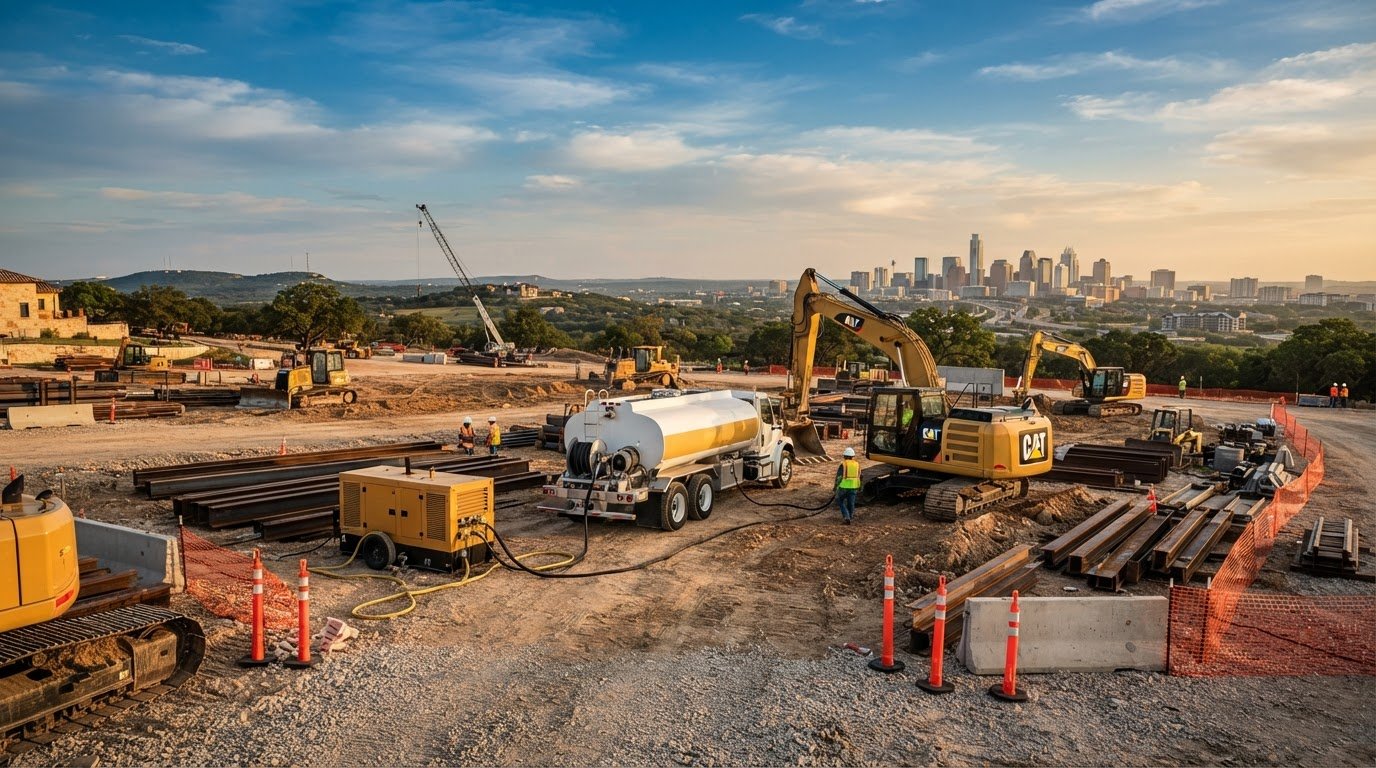
Our equipment fueling service is designed to deliver fuel directly to machinery on active construction sites and industrial facilities. We navigate complex site layouts to reach excavators, cranes, and stationary assets where they sit. This direct-to-tank method eliminates the need for your team to manage portable cans or move heavy equipment just for refueling. It maximizes your daily production window and keeps your project timelines on track.
What reporting features are available for fuel tax credit tracking?
We provide detailed digital reporting that integrates seamlessly with most fleet management software for precise fuel tax credit tracking. Every delivery is metered and logged with a timestamp and asset ID to ensure 100% transparency. These reports simplify the accounting process for off-road fuel usage, which is often eligible for significant tax rebates in Texas. You gain a clear audit trail that replaces the headache of managing paper receipts.
What areas around Houston do your fleet fueling services cover?
Our fleet fueling services cover the entire Houston metro area and extend to Magnolia, San Antonio, College Station, Austin, and Dallas. We maintain a local presence in these key Texas markets to ensure rapid response times and reliable scheduling. Whether your assets are located in the industrial corridors of the Ship Channel or at a remote site in Magnolia, our logistics network provides the coverage needed to maintain your uptime.
Is there a minimum fleet size required for on-site diesel delivery?
We customize our on-site diesel delivery plans based on your specific operational needs rather than a strict minimum fleet size. While mobile fueling is most efficient for operations with 10 or more vehicles, we evaluate each site's fuel throughput and logistical requirements individually. Our team works with you to determine if a scheduled wet-hosing route or a portable fuel tank rental is the most cost-effective solution for your current project scale.