Data Center Fuel Delivery in Texas: The 2026 Continuity Reference
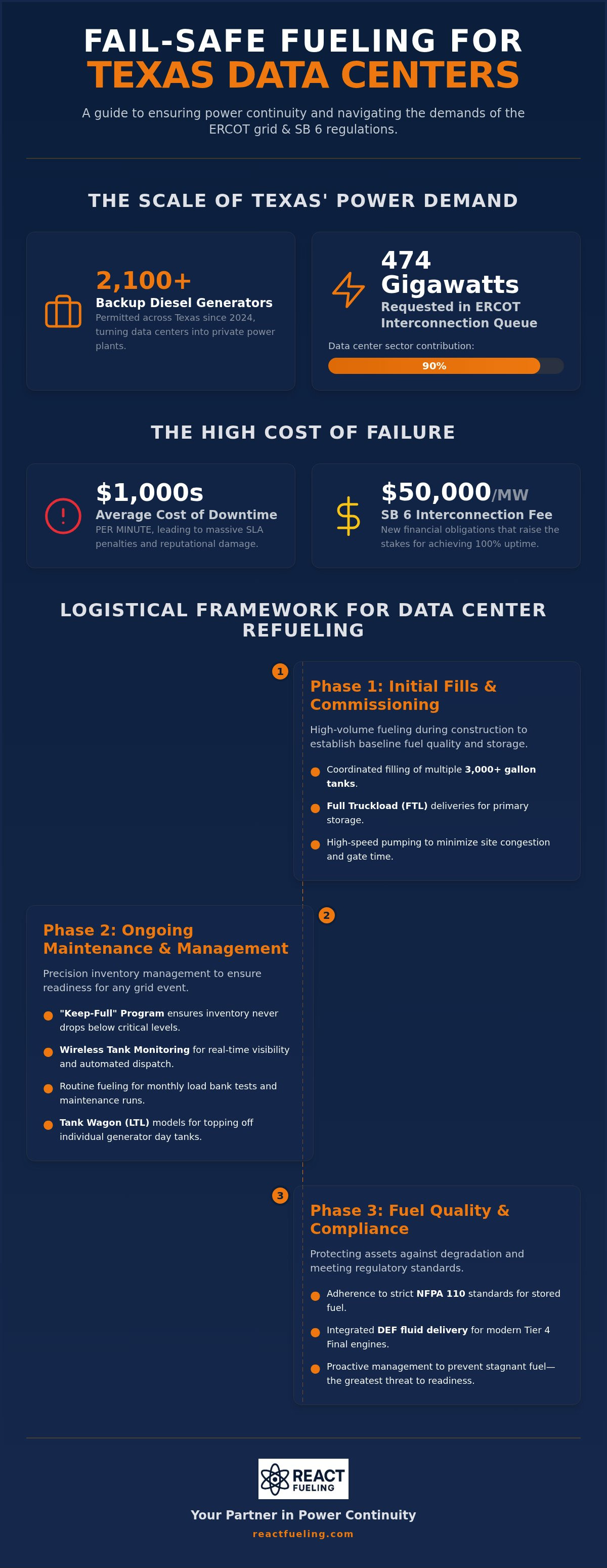
With over 2,100 backup diesel generators permitted across the state since 2024, your facility isn't just a data hub; it's a private power plant in waiting. You understand that when the ERCOT grid reaches its breaking point, the difference between seamless continuity and catastrophic downtime depends entirely on the fuel in your tanks. Establishing a resilient strategy for data center fuel delivery texas has become more complex as Governor Abbott's August 2026 audit and SB 6 implementation tighten the requirements for on-site power generation. The pressure to manage massive initial fills and maintain fuel quality over long storage periods is immense.
We've developed this guide to help you secure a fail-safe diesel supply chain that guarantees priority access during grid emergencies. You'll learn how to navigate the new financial and operational obligations of SB 6 while maintaining strict NFPA 110 standards. We'll preview the essential logistics of professional fuel management, from protecting your assets against degradation to ensuring your facility stays online when others go dark. By the end of this reference, you'll have a clear roadmap to lower operational risk and achieve total peace of mind through a vigilant fueling partnership.
The Critical Role of Diesel Fueling in the Texas Data Center Boom
Texas has solidified its position as a global epicenter for digital infrastructure. Concentrated growth in Dallas, Austin, and Houston demands a level of operational certainty that the local power grid cannot always provide. For facility managers, generator fueling service isn't a secondary utility; it's a mission-critical logistical requirement. Achieving "five nines" (99.999%) reliability requires a seamless transition from utility power to backup systems. While an Uninterruptible Power Supply (UPS) bridges the immediate gap after a failure, diesel generators remain the gold standard for sustained operations in Tier III and Tier IV facilities. Implementing robust data center fuel delivery texas ensures these systems have the energy density required to support massive cooling loads and server racks indefinitely.
Texas Grid Volatility and the ERCOT Factor
The Texas Interconnection faces unique pressures that national carriers often overlook. ERCOT currently manages an interconnection queue with requests for 474 gigawatts, and approximately 90% of that volume comes from the data center sector. Extreme summer heatwaves and unpredictable winter storms frequently push the grid toward curtailment. This reality forces facilities to adopt "behind-the-meter" power strategies, essentially operating as independent power plants during peak demand. Local fuel reserves provide the only reliable defense when regional grid strain triggers remote disconnections or mandatory load shedding. Consistent diesel delivery keeps these local reserves ready for immediate deployment, allowing facilities to maintain autonomy from the volatile wholesale market.
The Financial Impact of Data Center Downtime
Operational failures carry a staggering price tag that extends far beyond immediate repair costs. Industry reports for 2026 indicate that the average cost of data center downtime often reaches thousands of dollars per minute. New regulatory frameworks, such as SB 6, have introduced significant financial obligations, including a $50,000/MW fee for interconnection, which raises the stakes for every second of uptime. For hyperscale providers like AWS, Google, or Microsoft, even a brief interruption results in massive SLA penalties and severe reputational damage. Securing a dedicated Emergency Generator Fueling Service: The Comprehensive Guide to Power Continuity mitigates this risk by ensuring your supply chain remains intact during regional crises. Consistency in your fuel supply translates directly to the stability of your client's digital assets and your operational bottom line.
Logistical Framework for Fail-Safe Data Center Refueling
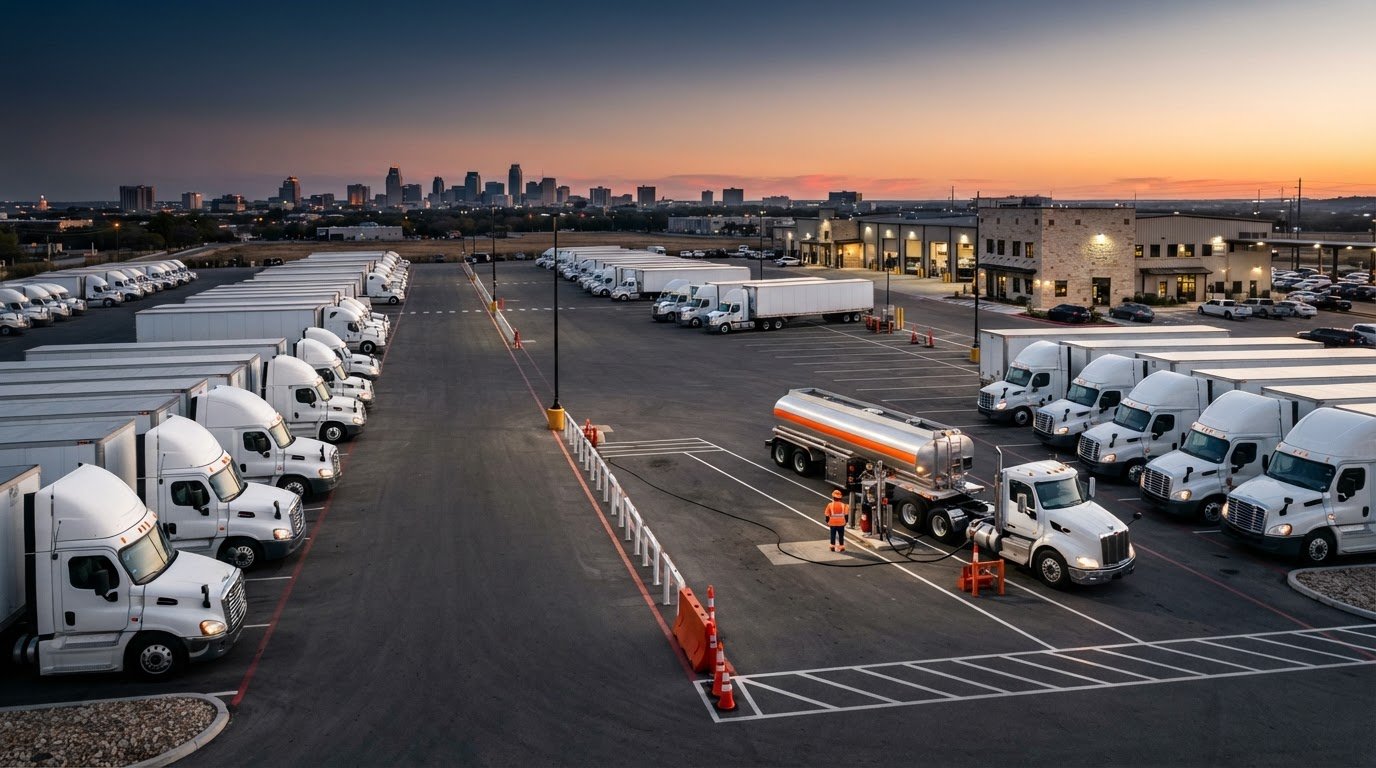
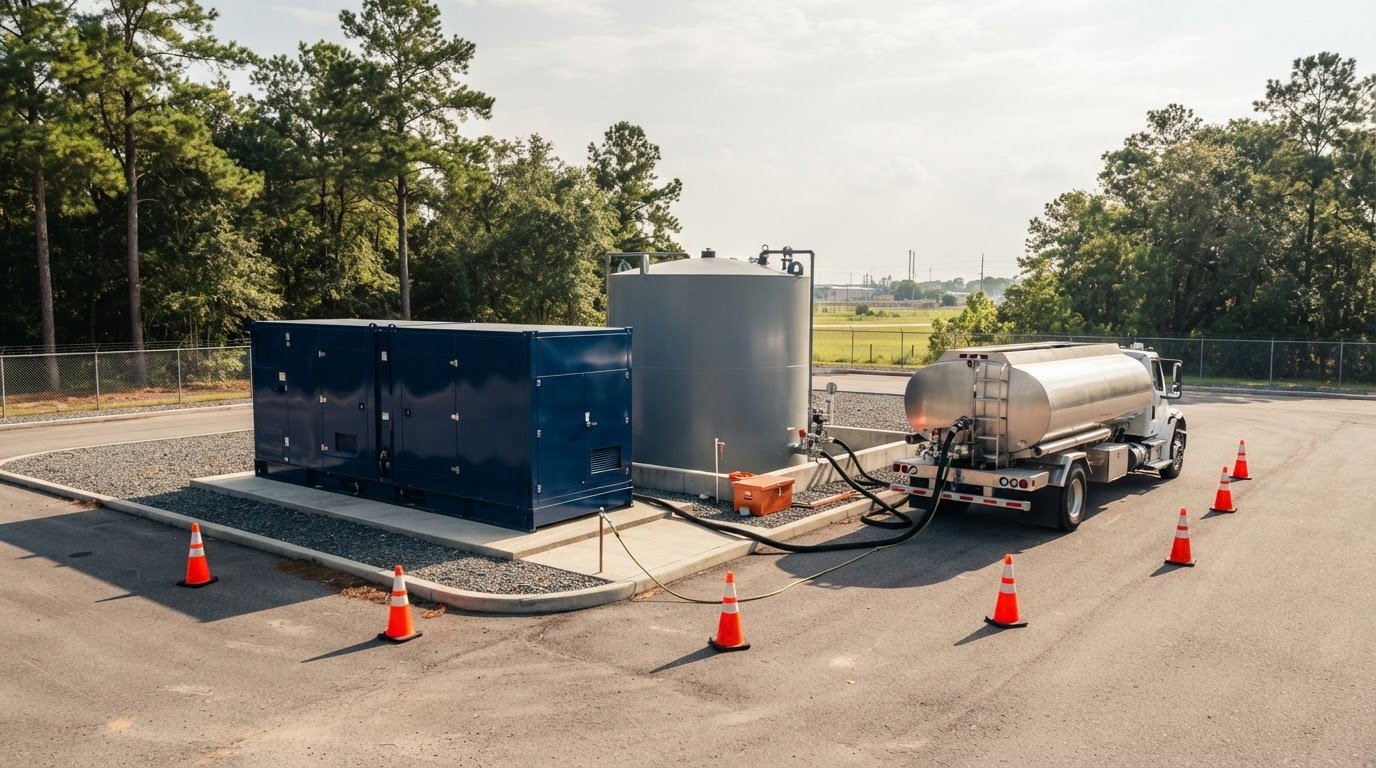
Building a resilient infrastructure requires a logistical plan that evolves alongside your facility. Successful data center fuel delivery texas begins long before the first server rack is powered. It requires a tiered approach that transitions from high-volume bulk drops during construction to precision maintenance once live. You must choose between Full Truckload (FTL) deliveries for primary storage tanks and Tank Wagon (LTL) models for individual generator day tanks. High-speed pumping equipment is essential for large-scale generator farms to minimize gate time and ensure rapid replenishment. Modern Tier 4 Final engines also necessitate integrated DEF fluid delivery to maintain emissions compliance and prevent equipment derating during extended runtimes.
Initial Fills and Commissioning Logistics
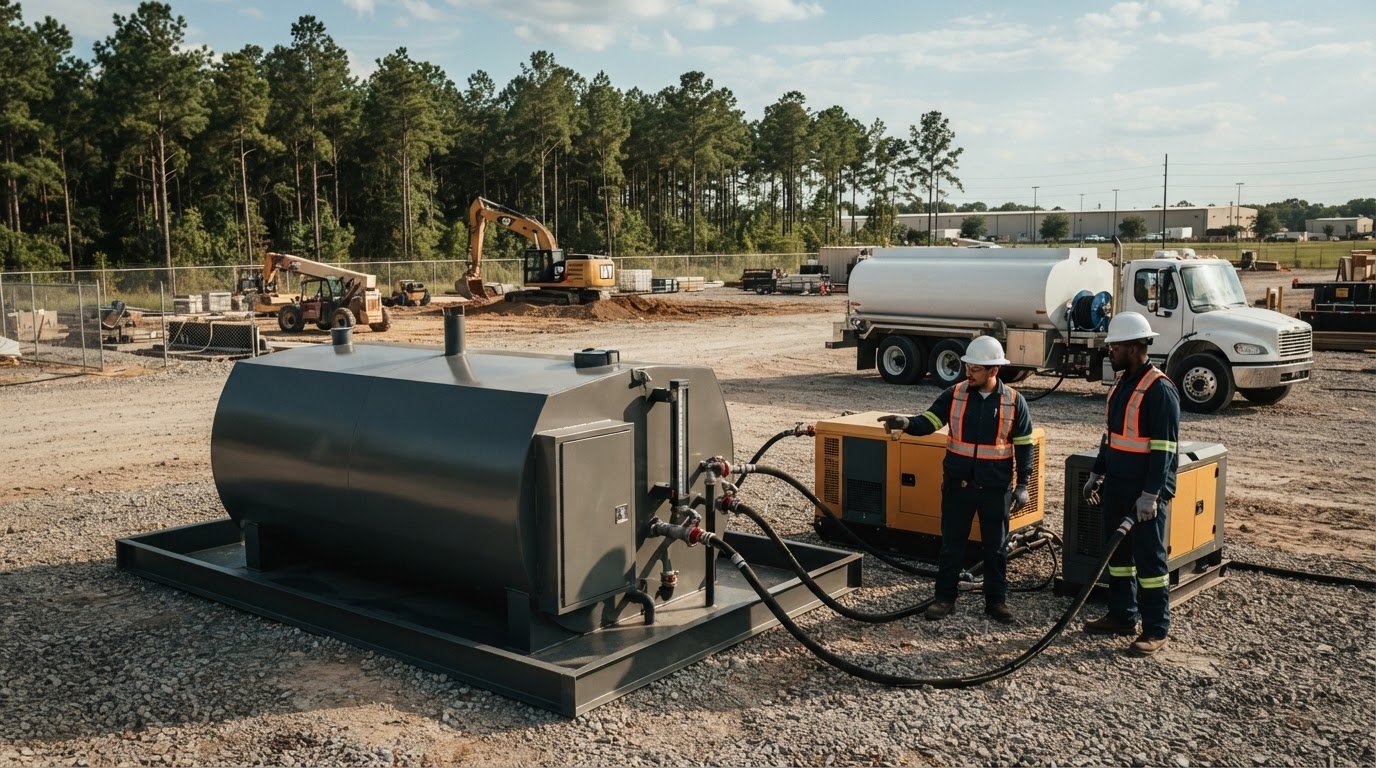
The commissioning phase presents the highest immediate demand for fuel volume. Coordinating the simultaneous filling of multiple 3,000+ gallon tanks requires disciplined scheduling to avoid site congestion. We work directly with construction firms during the build phase to ensure fueling assets don't interfere with active work zones. This phase is critical for establishing baseline fuel quality before the facility goes into operation. While some advocacy groups have raised concerns about backup diesel generators regarding their environmental impact, professional management ensures these systems operate at peak efficiency with minimal waste. For detailed insights on managing these early stages, refer to our guide on Construction Site Fuel Delivery Houston: The 2026 Uptime Strategy.
Ongoing Maintenance and Inventory Management
Once your facility is operational, the focus shifts to a "keep-full" program. This strategy ensures that on-site inventory never drops below a predetermined critical level, regardless of market conditions or grid stability. We utilize wireless tank monitoring systems to provide real-time visibility into your fuel levels, allowing for automated dispatch before a shortage occurs. Routine generator fueling services are also vital during monthly load bank testing and maintenance runs. These tests consume significant amounts of fuel, and failing to replenish immediately leaves your facility vulnerable to the next ERCOT event. Establishing a consistent schedule protects your uptime and simplifies your operational overhead. If you're ready to audit your current storage and delivery schedule, reach out to our logistics team for a consultation.
Evaluating Fuel Quality and Storage Solutions for Backup Power
Stagnant fuel represents the single greatest threat to your facility’s backup power readiness. While reliable data center fuel delivery texas ensures your tanks stay full, the physical properties of the fuel itself degrade over time. In the humid environments of Houston or the temperature swings of North Texas, diesel is prone to oxidation, sediment accumulation, and microbial growth. These contaminants clog filters and damage fuel injectors exactly when the system faces maximum load. To mitigate these risks, many facilities utilize fuel tank rentals to segregate fresh fuel during maintenance or to provide temporary capacity during high-risk weather seasons.
Fuel Polishing and Stabilization Strategies
Protecting your fuel supply requires a proactive chemical management strategy. NFPA 110 requires regular fuel quality audits for emergency systems to ensure operational integrity. Chemical stabilization and annual testing identify issues before they lead to a "fail-to-start" event. Fuel polishing systems offer a surgical solution, circulating stored diesel through high-efficiency filtration to remove water and particulates without the expense of a full fuel replacement. This process restores the fuel to its original specifications, protecting your investment and your uptime. Regular polishing significantly reduces the risk of engine hesitation during the critical transition from utility power to backup generation.
Renewable Diesel (HVO) in the Data Center Environment
Hyperscale operators are increasingly transitioning to Renewable Diesel (HVO) to satisfy aggressive ESG (Environmental, Social, and Governance) targets. Unlike traditional biodiesel, HVO is a drop-in replacement that offers superior technical properties for critical infrastructure. It features a significantly higher cetane rating, which improves cold-start performance and combustion efficiency under heavy loads. Its paraffinic nature provides a much longer shelf life than standard Ultra-Low Sulfur Diesel (ULSD), making it ideal for the long-term storage requirements of data center environments. Bulk HVO delivery is now readily available across the Texas market, providing a cleaner, more stable alternative that reduces both emissions and maintenance overhead. This shift allows facilities to meet sustainability goals without compromising on the reliability of their emergency power systems.
Strategic Emergency Response: Navigating Texas Grid Instability
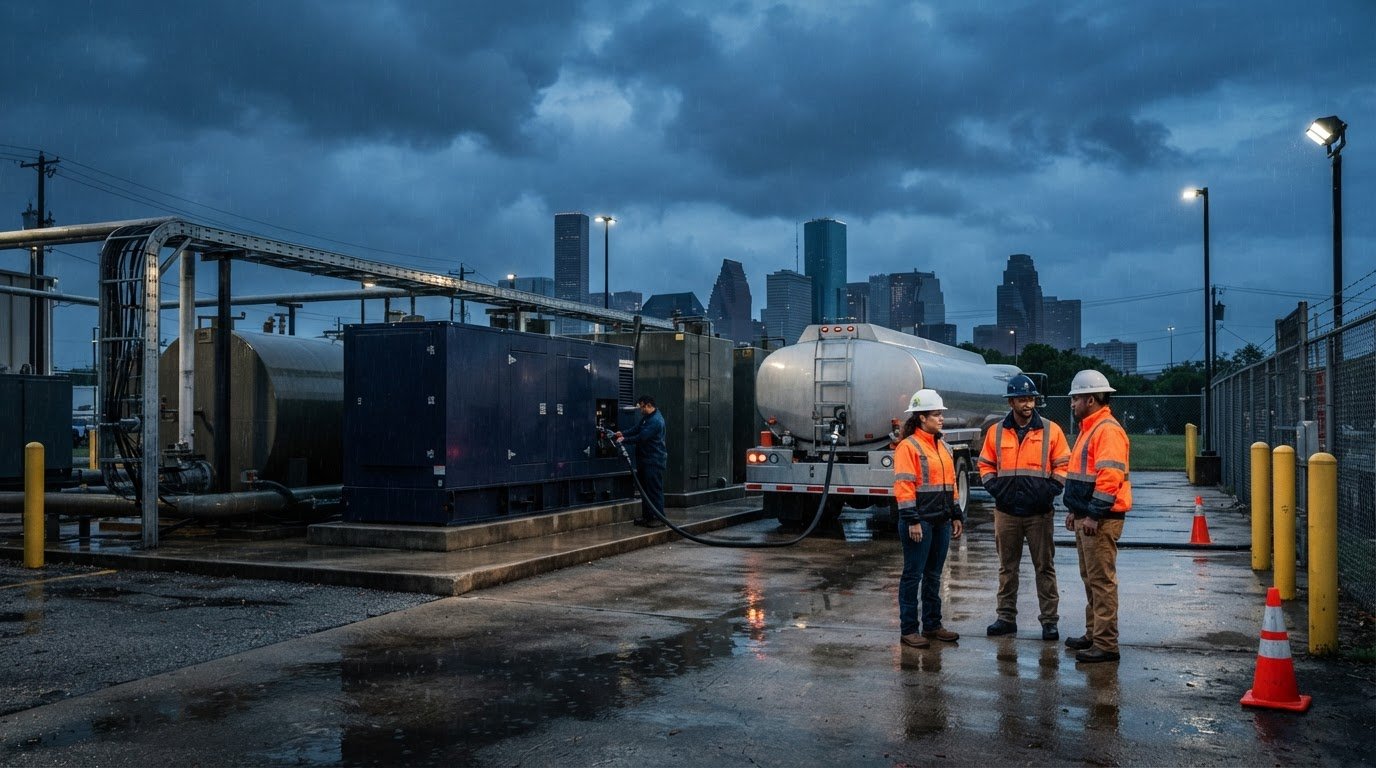
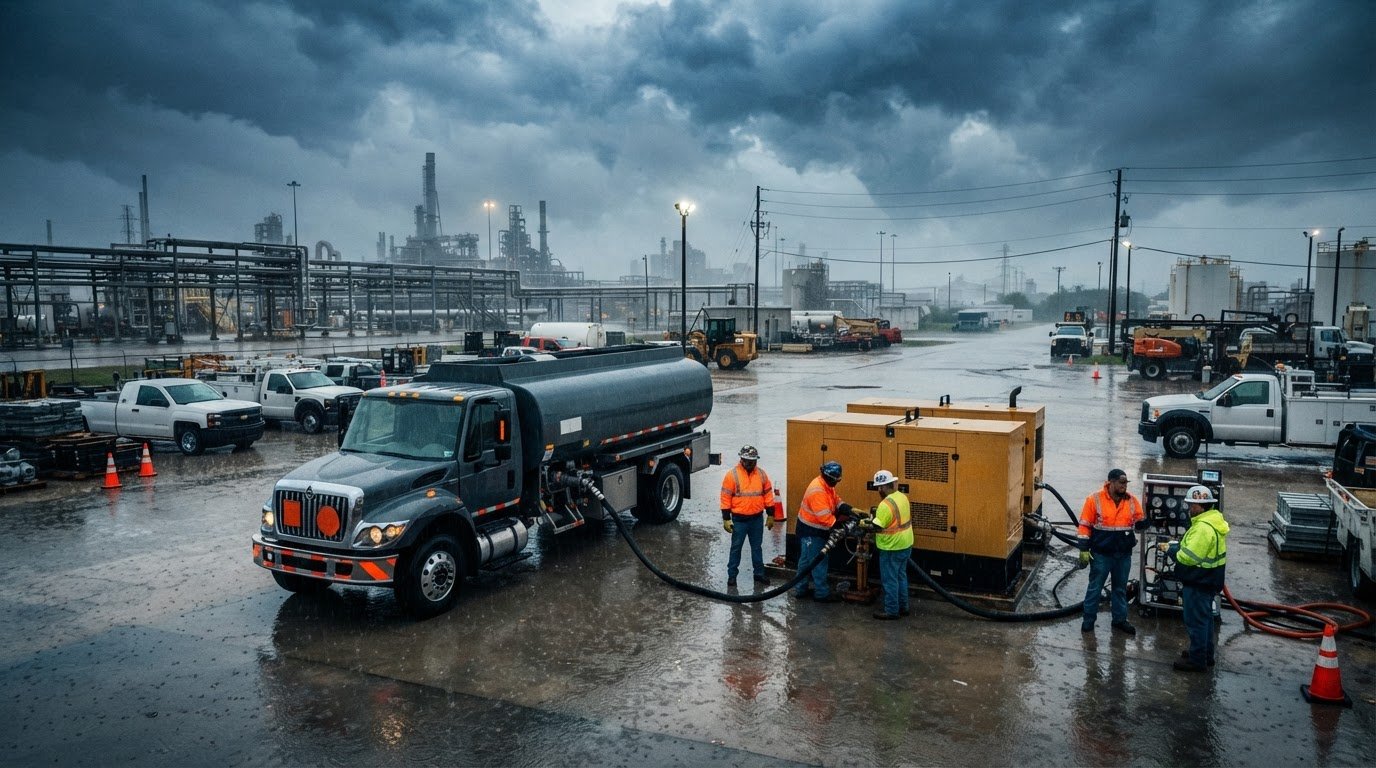
Standard on-call delivery agreements often fail when regional emergencies strike. When the ERCOT grid falters during a deep freeze or a hurricane makes landfall, every facility manager in the state dials the same numbers simultaneously. Relying on a generic vendor without a Priority Fueling Agreement (PFA) leaves your facility at the back of a very long line. A PFA guarantees your site first-tier access to assets and supply, even when regional fuel shortages occur. Implementing 24/7 emergency fueling protocols ensures your site stays operational while competitors wait for a return call. This level of commitment is what separates a vendor from a vigilant partner, as demonstrated in our Hospital Generator Fueling in Houston: Case Study.
Disaster Preparedness: The 5-Step Response Plan
Execution during a crisis requires a disciplined framework. We follow a methodical 5-step response plan to ensure your data center never loses power:
- Step 1: Top off all primary and secondary storage tanks 48 to 72 hours before a predicted weather event.
- Step 2: Stage dedicated fueling assets in safe, non-impacted zones. For Houston events, we often stage in Magnolia to ensure rapid entry once conditions allow.
- Step 3: Establish secondary supply routes. Flooded interstates or blocked roads won't stop a delivery if you've already scouted the backroads.
- Step 4: Maintain continuous communication. Our dispatchers provide facility managers with real-time updates on truck locations and ETAs.
- Step 5: Perform post-event fuel quality assessments and immediate replenishment to prepare for the next cycle.
The Importance of Local Fleet Presence
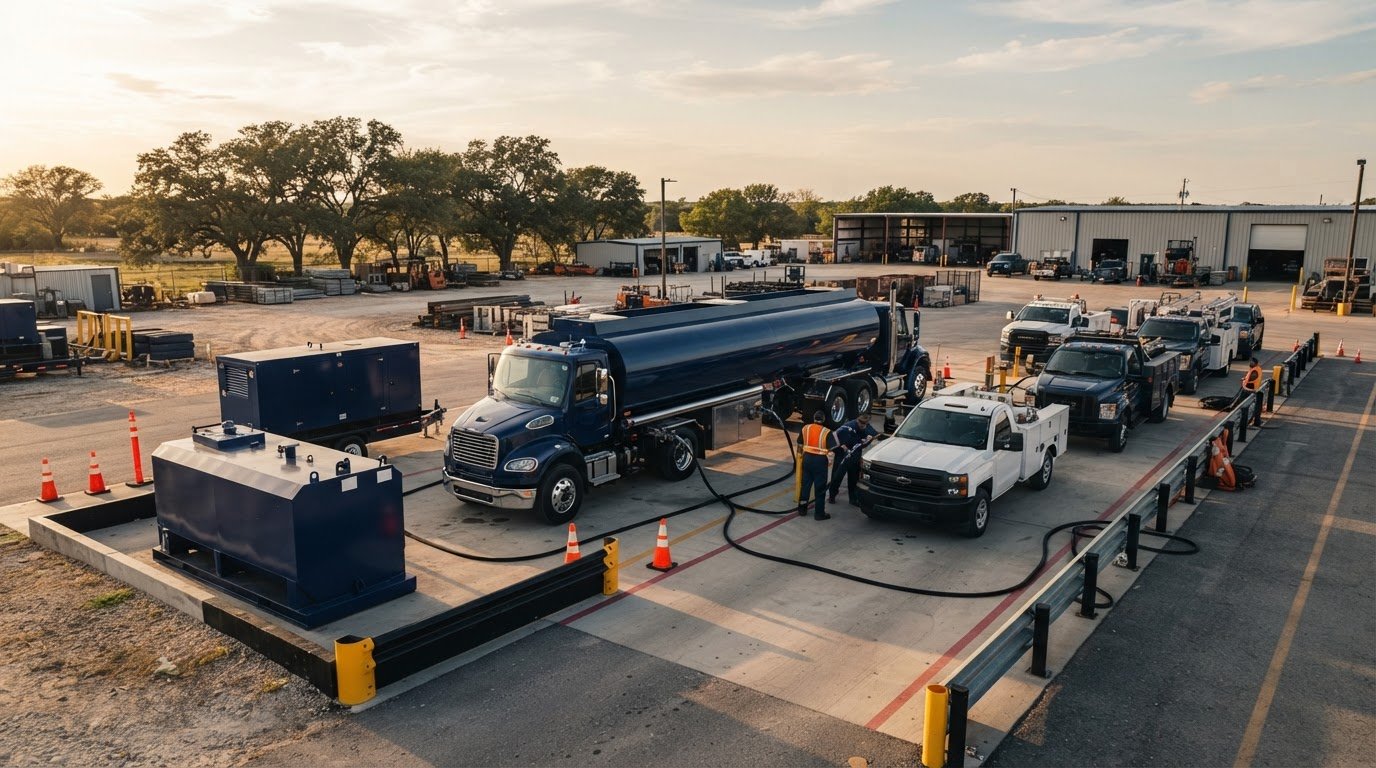
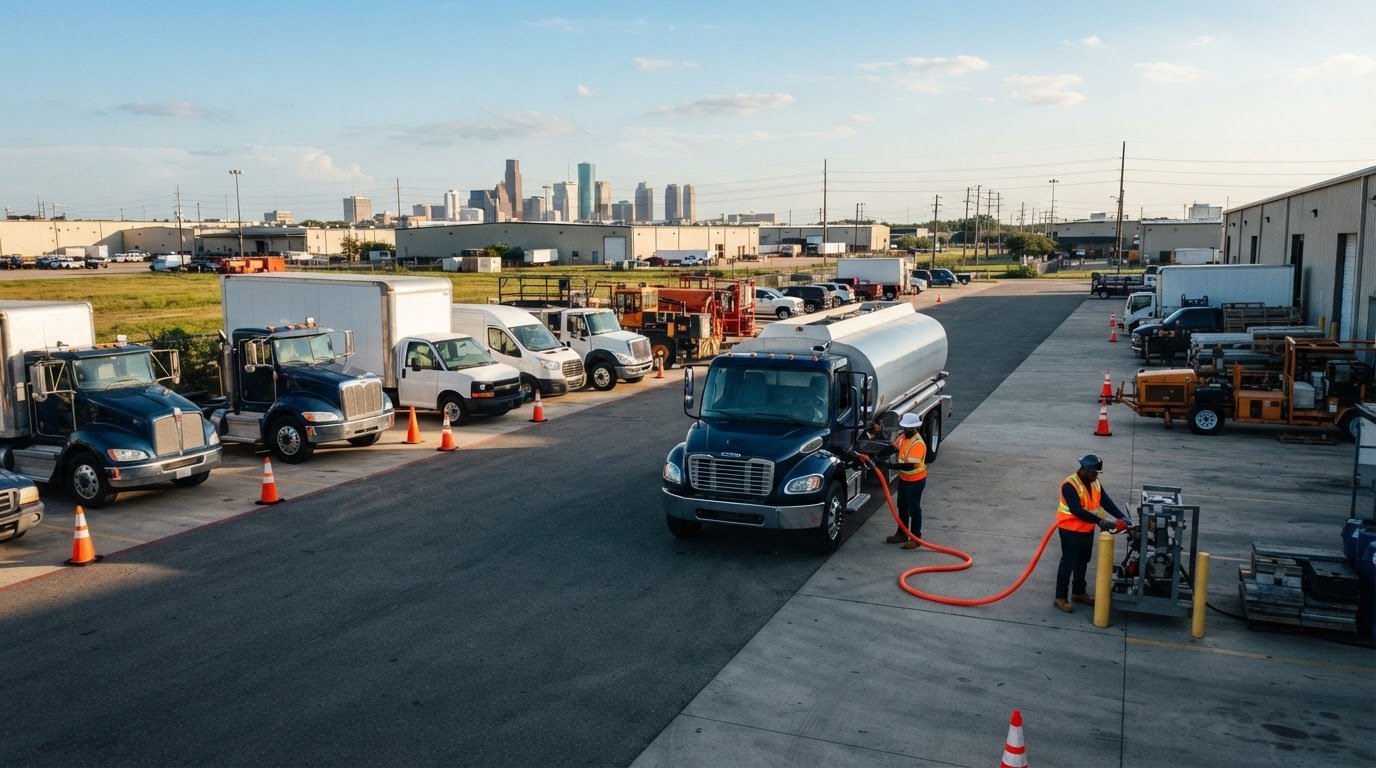
Local presence is the only way to beat the clock. Having a dedicated fleet stationed in Dallas, Houston, and San Antonio drastically reduces response times during data center fuel delivery texas operations. These local hubs allow us to navigate regional traffic patterns and regulatory hurdles faster than a national carrier can mobilize. It's vital to remember that emergency fuel delivery isn't just about keeping the servers spinning; it's about powering the massive cooling systems that prevent hardware meltdowns. For more staging tips, consult our 2026 Fuel Delivery Guide for Standby Generators. If you want to move your facility to the front of the line before the next storm, contact us today to secure your Priority Fueling Agreement.
Partnering with React Fueling for Texas Data Center Resilience
React Fueling stands as the premier energy logistics partner for critical infrastructure throughout the Lone Star State. We don't just deliver fuel; we provide the operational certainty required to manage a high-stakes environment. Our "boots-on-the-ground" approach relies on local drivers who navigate the Houston and Dallas corridors daily. They understand the specific traffic patterns, security gate protocols, and physical layout of the region’s major tech hubs. By choosing a dedicated specialist for data center fuel delivery texas, you transition from a reactive posture to a proactive strategy that anticipates grid instability before it impacts your servers.
Our comprehensive service suite addresses every stage of the facility lifecycle, ensuring that your backup power systems are never the weak link in your uptime chain:
- Diesel Delivery: Reliable bulk and tank wagon drops for primary and secondary storage.
- DEF Fluid Delivery: Essential supply for Tier 4 Final engines to maintain emissions compliance.
- Fuel Tank Rentals: Versatile solutions for temporary capacity increases or maintenance staging.
- 24/7 Emergency Fueling: Guaranteed priority response during ERCOT curtailment events and regional disasters.
Why Local Expertise Matters in the Texas Market
Knowledge of municipal fire codes and environmental safety standards varies significantly between Austin, San Antonio, and Houston. We maintain deep expertise in these local regulations to ensure your facility remains compliant during every drop. As a member of the React Holdings family, we offer integrated logistics that scale rapidly to support massive data center campus expansions. This local presence allows us to mobilize assets within hours, providing a level of responsiveness that national carriers simply cannot match. We know the roads, we know the regulations, and we know what's at stake for your clients.
Getting Started: Your Custom Fuel Continuity Audit
We invite facility managers to schedule a comprehensive site assessment to evaluate current storage capacity and emergency response readiness. During this audit, we identify potential supply chain gaps and customize delivery schedules to minimize facility disruption. Our goal is to blend into your operational background, ensuring your tanks stay full without interfering with daily maintenance or security protocols. We take the guesswork out of fuel logistics so you can focus on managing your digital assets. Secure your data center uptime with React Fueling today.
Securing Your Digital Infrastructure Against Grid Volatility
Operational continuity in the Texas market requires more than just standby power; it demands a disciplined, local logistical strategy. You've seen how the combination of ERCOT grid strain and strict NFPA standards makes proactive fuel management a necessity for any Tier III or Tier IV facility. Establishing a fail-safe supply chain through a Priority Fueling Agreement ensures your infrastructure remains resilient when regional demand spikes. By prioritizing fuel quality through regular polishing and securing local assets, you eliminate the single most common point of failure for backup systems.
React Fueling provides the specialized generator refueling equipment and 24/7 emergency response team needed to protect your "five nines" uptime. Our local Texas fleet coverage across Houston, Dallas, Austin, and San Antonio ensures we're on-site before a crisis escalates. We're ready to serve as your vigilant partner in data center fuel delivery texas , providing the peace of mind that comes from total logistical control. Request a Data Center Fuel Continuity Consultation to audit your facility's readiness. Let's build a more resilient future for your digital assets today.
Frequently Asked Questions
Why is diesel the preferred fuel for data center backup generators?
Diesel remains the industry standard because of its high energy density and the reliability of compression-ignition engines. These systems provide the immediate torque necessary to handle massive server and cooling loads within seconds of a power failure. Unlike natural gas, which relies on vulnerable pipeline infrastructure, on-site diesel storage provides total autonomy from external utility failures. This independence is vital for maintaining uptime during regional grid instability or severe weather.
What is the difference between FTL and LTL delivery for data centers?
Full Truckload (FTL) deliveries involve bulk shipments of approximately 7,000 to 8,000 gallons, typically used for initial fills or replenishing large primary storage tanks. Less than Truckload (LTL), or Tank Wagon delivery, utilizes smaller trucks to navigate tight facility layouts and refuel individual generator day tanks directly. Choosing the right model for data center fuel delivery texas depends on your storage capacity and the physical accessibility of your specific generator farm.
How long can diesel fuel be stored in a data center tank before it degrades?
Standard diesel fuel begins to degrade within six to twelve months under ideal conditions, but the high temperatures in Texas often accelerate this process. Chemical oxidation and microbial growth create sludge that clogs filters and damages injectors. Implementing a regular fuel polishing and stabilization program extends the shelf life of your inventory. This ensures that your backup systems remain ready for immediate deployment during unexpected ERCOT grid strain, protecting your facility from catastrophic engine failure.
What are the NFPA 110 requirements for data center fuel management?
NFPA 110 mandates strict protocols for the maintenance and testing of emergency power systems. These standards require regular fuel quality testing to ensure the supply is free from water and contaminants that cause engine failure. Facility managers must document these inspections to maintain compliance and guarantee that backup generators can carry the full facility load for the duration of an outage. Professional fueling partners help you meet these rigorous safety and operational standards consistently.
Can React Fueling provide renewable diesel (HVO) for data centers in Texas?
Yes, we provide Hydrotreated Vegetable Oil (HVO) as a high-performance alternative to traditional diesel. HVO is a drop-in replacement that offers a higher cetane rating and a significantly longer shelf life, which is critical for long-term data center storage. It helps hyperscale operators meet ESG targets by reducing carbon emissions without requiring modifications to existing generator sets. We deliver bulk HVO to major tech hubs and data center campuses across the state.
How does a priority fuel agreement work during a Texas power emergency?
A Priority Fueling Agreement (PFA) guarantees your facility first-tier access to fuel supplies and delivery assets during regional emergencies. While non-contracted sites wait for available trucks, PFA partners receive scheduled deliveries based on pre-storm staging and real-time tank monitoring. This agreement secures your supply chain against the shortages and logistical bottlenecks that often occur during severe weather events or major grid failures. It provides the certainty required for 24/7 data center operations.
Does React Fueling provide DEF delivery for modern generator sets?
We provide specialized Diesel Exhaust Fluid (DEF) delivery to support Tier 4 Final generator engines. Modern emissions control systems require consistent DEF levels to operate at full capacity. If a system runs out of fluid, the engine will often derate or shut down entirely, compromising your facility's uptime. Our integrated delivery service ensures that both your fuel and DEF tanks remain at optimal levels, even during the most extended emergency runtimes.
What cities in Texas does React Fueling cover for data center services?
We maintain a local presence in every major Texas tech hub, including Houston, Dallas, Austin, and San Antonio. Our regional fleets are strategically positioned to provide rapid data center fuel delivery texas and emergency response across the state's primary data center corridors. This local coverage allows us to navigate regional traffic and regulatory requirements efficiently. Our boots-on-the-ground teams are familiar with the specific security and access protocols of the region's largest data center campuses.
Recent Posts