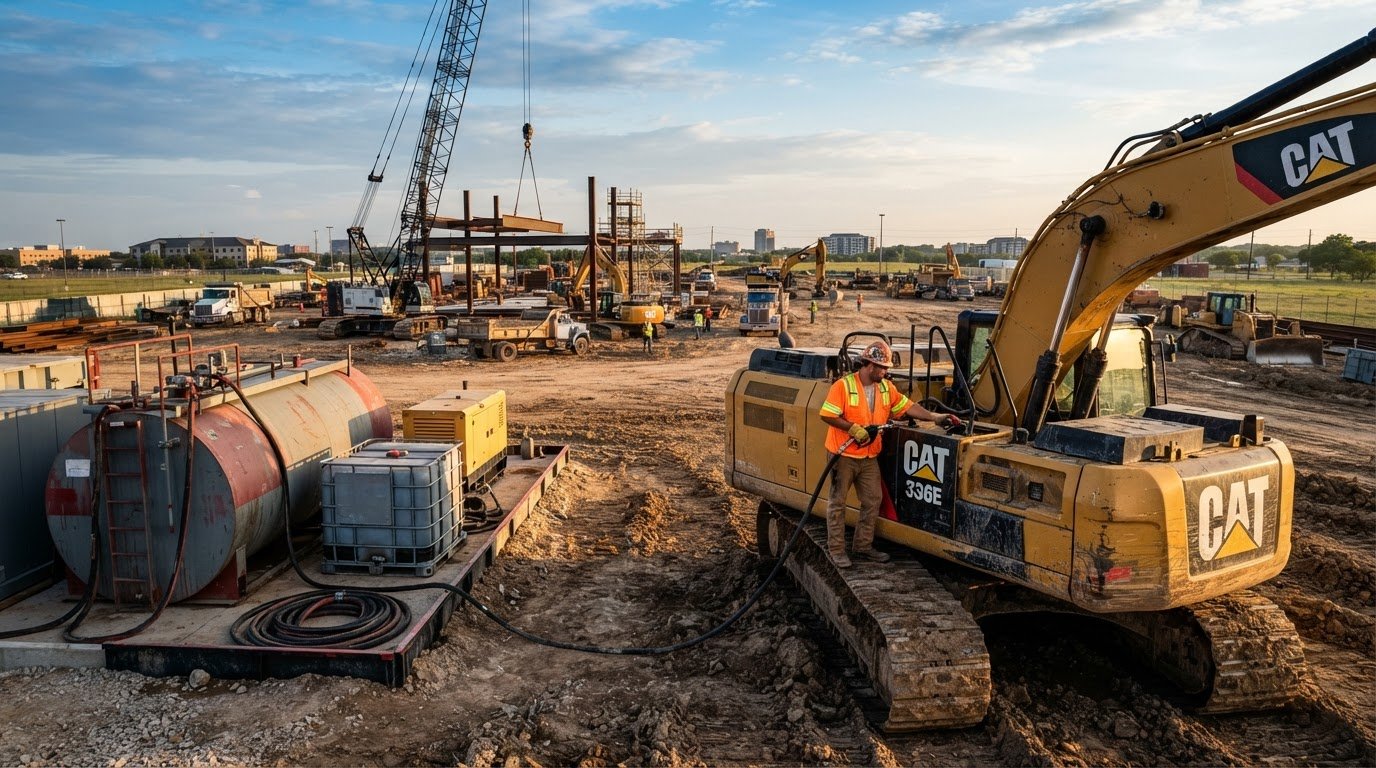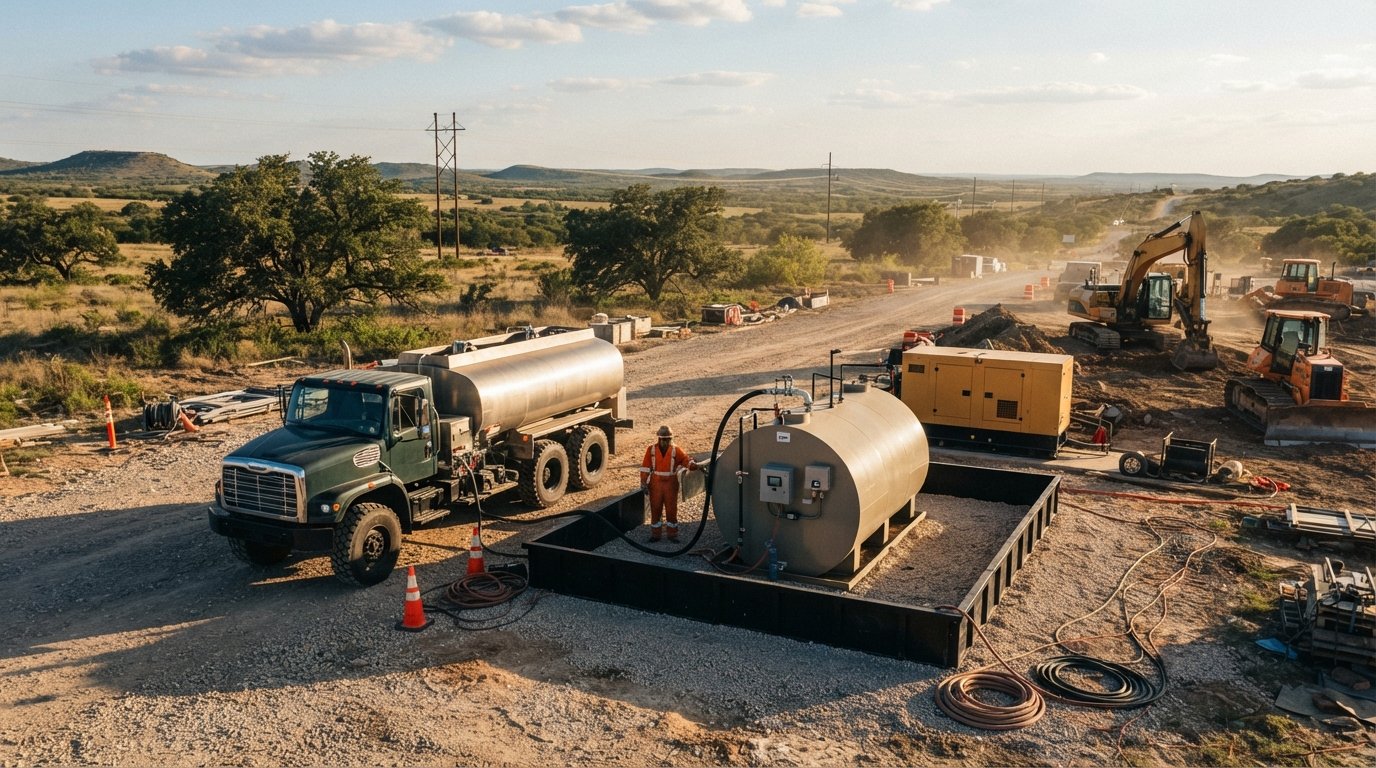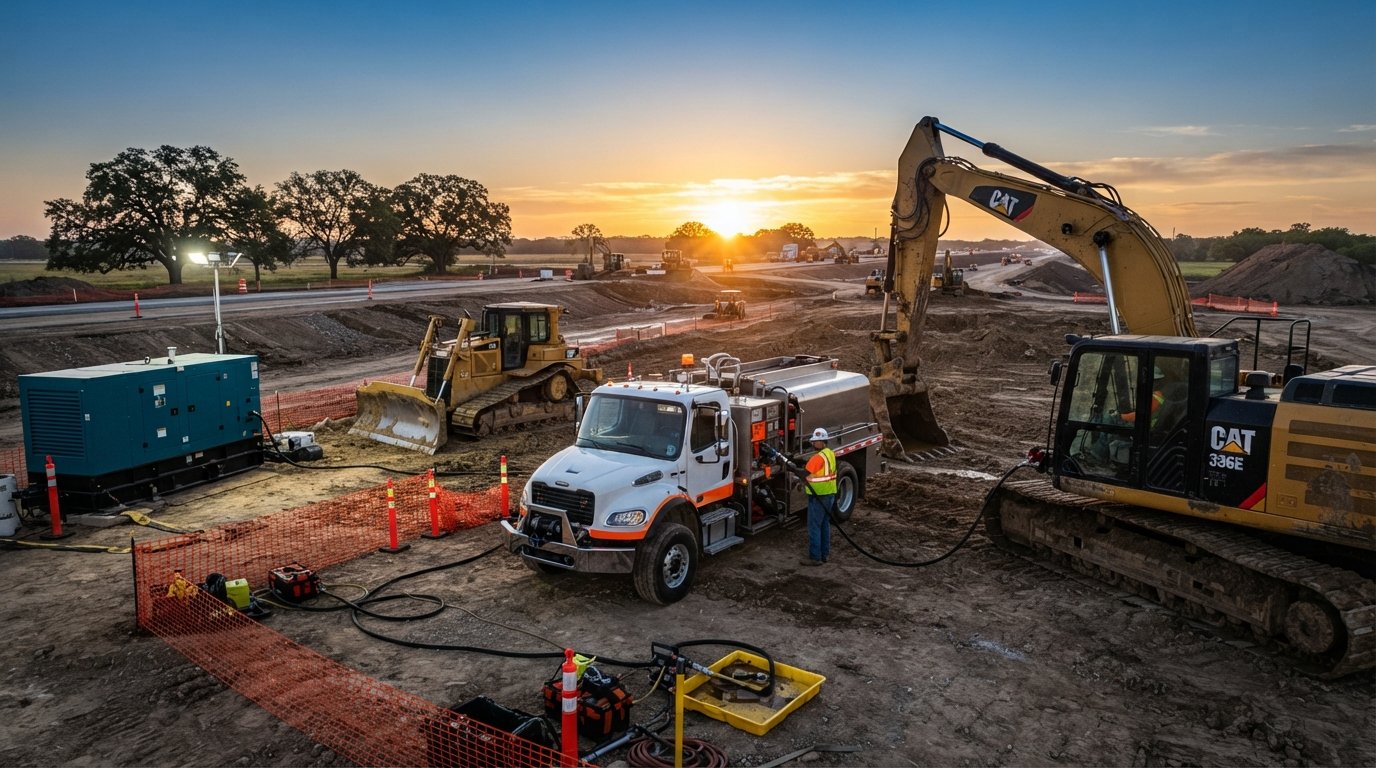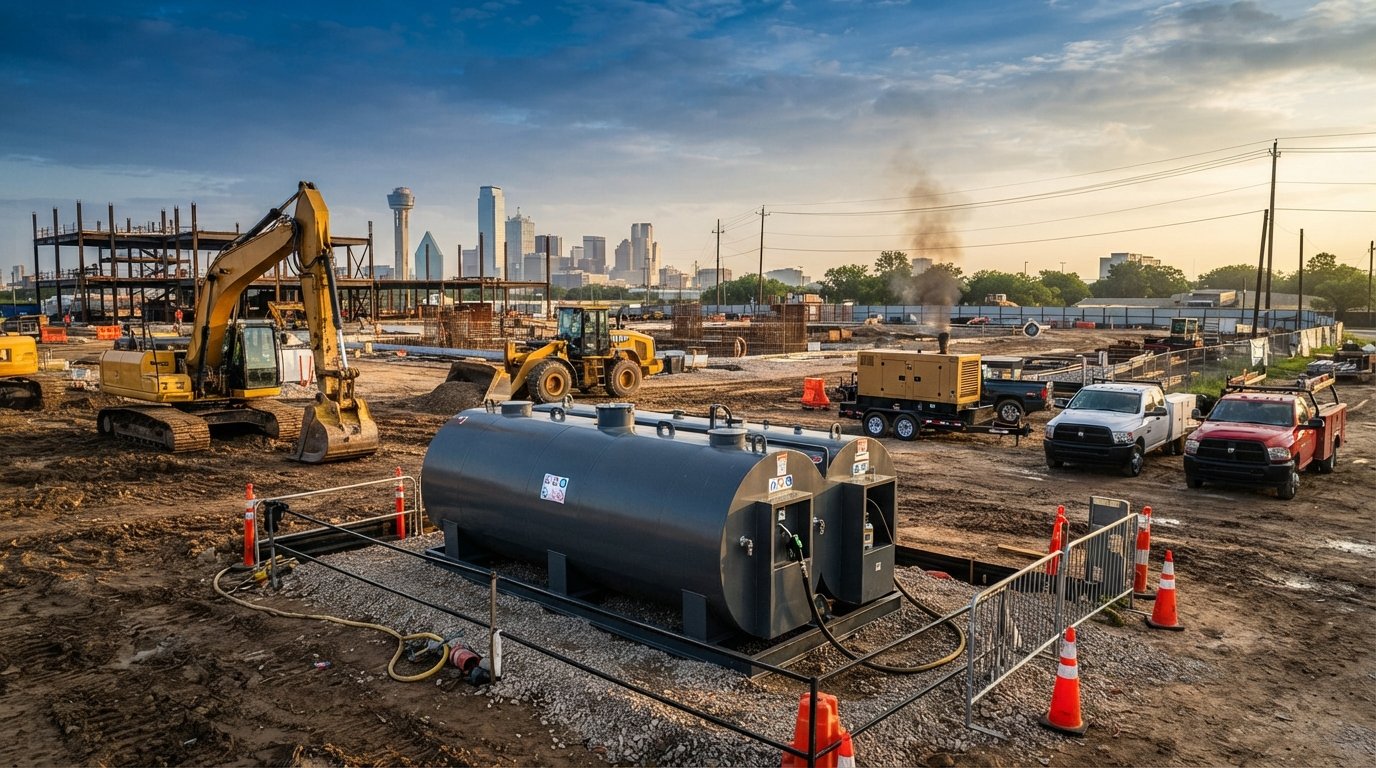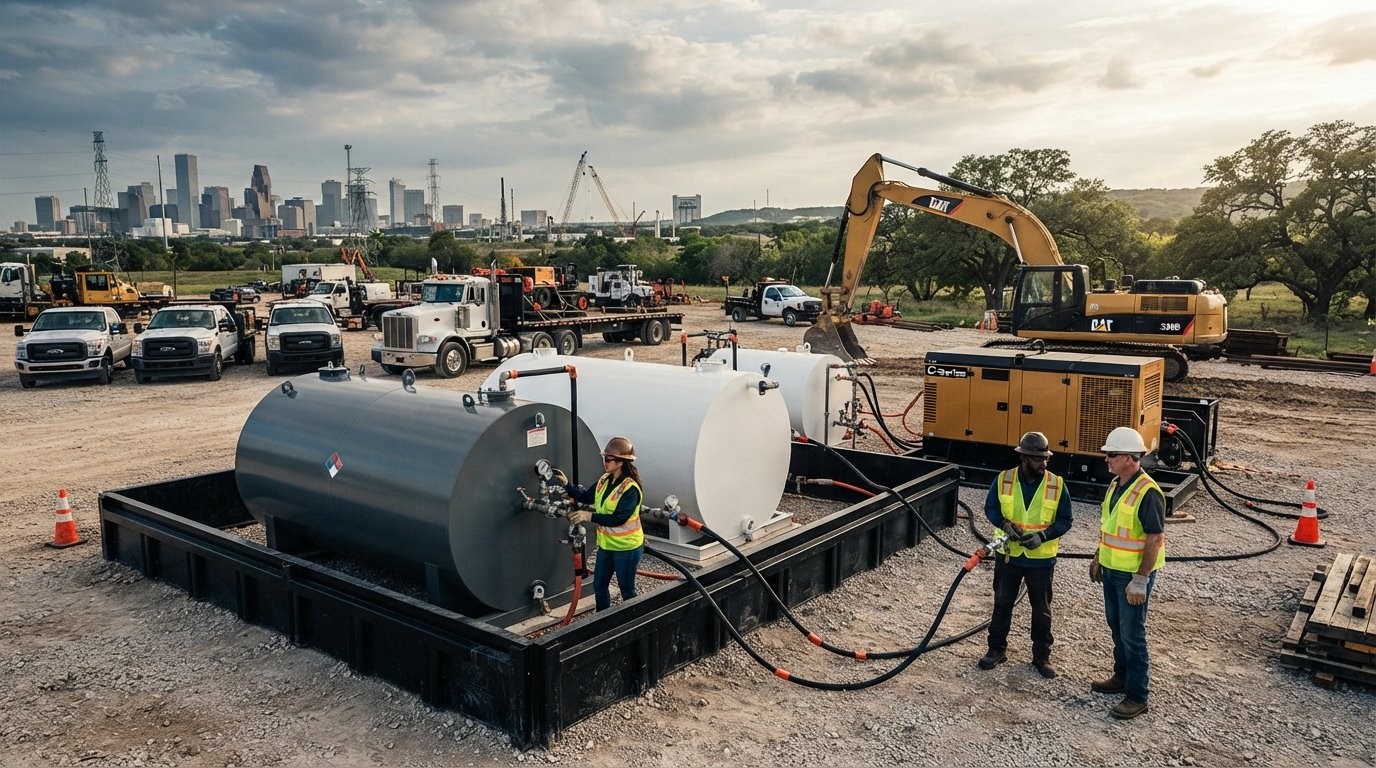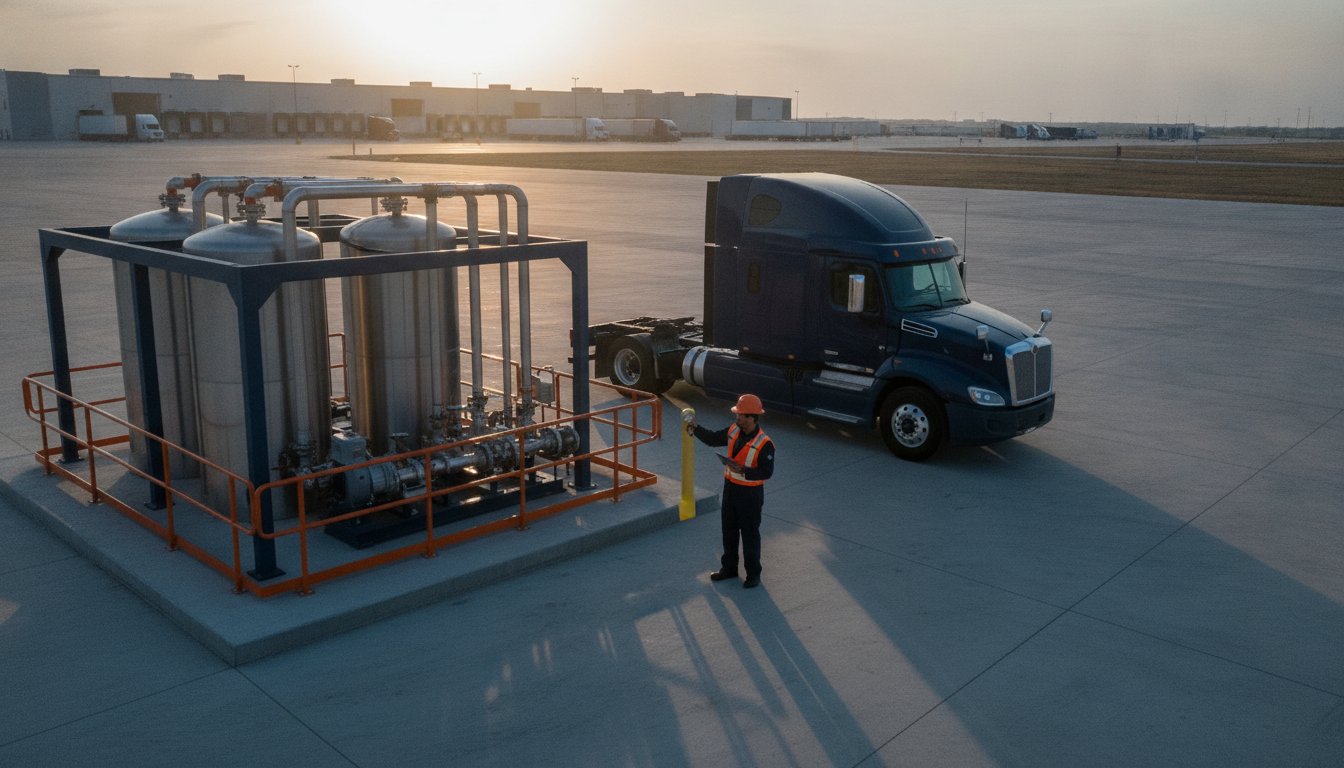
A full fuel tank doesn’t guarantee a data center can keep operating through an outage. Data center fuel management must account for usable inventory, generator demand, fuel condition, and how quickly replenishment can reach the site when access or supply is constrained.
Backup power depends on more than the generator itself. Facility teams also need to know whether the fuel on hand can support the planned operating scenario, who verifies inventory and fuel condition, and how replenishment will be requested. A documented plan turns these responsibilities into clear steps instead of last-minute decisions.
This guide explains how to connect generator demand with stored inventory, readiness checks, and replenishment. It covers what to track, how to assign responsibilities, and what to confirm with a delivery partner before an urgent need arises. The goal is a maintainable fuel readiness plan that fits facility procedures and gives your team a clearer view of what is available and what needs attention.
What data center fuel management covers, and why readiness depends on more than tank levels
Data center fuel management is the coordinated planning and control of generator fuel demand, usable stored inventory, fuel condition, readiness checks, and replenishment. It’s a process, not a tank gauge reading. A useful plan records what fuel is available, who verifies its quantity and condition, what generator demand it must support, and how replenishment is requested.
Generator nameplate capacity alone can’t establish usable runtime. It describes rated output, not how long a specific generator configuration can operate on the fuel that is actually accessible. Qualified site personnel should base runtime estimates on site-specific load and fuel-consumption information, usable inventory, and facility procedures. Have appropriate engineering and generator professionals confirm the assumptions rather than relying on a generic estimate.
This coordination matters because data center infrastructure relies on dependable power systems as part of a larger operating environment. Fuel readiness supports that environment, but it doesn’t replace engineering, generator maintenance, or wider continuity planning.
How fuel readiness supports data center continuity
Backup generator availability is one dependency in a facility’s continuity and escalation procedures. If a tank record is outdated or staff aren’t sure who owns the inventory check, they may lose time confirming whether to request fuel. Define review and escalation steps in advance, then keep records accessible and current. This supports timely decision-making, but it doesn’t guarantee uninterrupted operation.
Who owns each part of the fuel management process?
Assign responsibilities across the facility team. Operations can maintain inventory records and initiate the documented escalation process. Engineering and other qualified site personnel determine technical requirements, verify runtime assumptions, and confirm applicable site procedures. Procurement can maintain supplier contacts and purchasing steps. An approved fuel supplier handles the agreed delivery using the site’s confirmed instructions and access procedures.
- Facility operations: Track inventory, checks, records, and escalation contacts.
- Engineering: Establish technical requirements and validate site-specific calculations.
- Procurement: Coordinate supplier approval and purchasing procedures.
- Fuel supplier: Confirm delivery arrangements, site access, and instructions with facility contacts.
A provider such as React Fueling can support replenishment through its generator fueling service. The facility remains responsible for setting fuel specifications, storage procedures, access rules, and escalation requirements. Confirm service availability and delivery capabilities for the specific site before including a supplier in the plan.
How to plan data center fuel demand, usable inventory, and replenishment
A workable data center fuel management plan turns generator and tank information into clear actions. Build it from verified site data, then document the assumptions and approvals behind each reorder trigger. Avoid adopting a generic runtime or reserve target. Both depend on the facility’s equipment, operating scenario, and procedures.
Estimate demand using site and generator information
Start with generator documentation and the facility’s expected operating scenarios. Have qualified engineers validate fuel-consumption inputs and calculations before setting reserve targets. Runtime estimates depend on actual load and equipment data, not nameplate capacity alone. Record the approved assumptions so the team can review them if generator configurations, loads, or procedures change.
- 1. Gather source documents. Collect generator specifications, operating sequences, expected loads, tank configuration, and site-approved scenario assumptions.
- 2. Validate demand. Ask qualified engineering personnel to confirm the relevant consumption inputs and calculate expected demand for the scenarios the facility plans for. Don’t apply a generic rate across different equipment or loads.
- 3. Determine usable inventory. Compare tank readings with documented operating limits and the amount of fuel considered usable under site procedures. Account for tank configuration and monitoring practices. A displayed level alone may not represent the fuel available for the planned operation.
- 4. Set site-specific reserves. Establish thresholds using the validated demand estimate and usable inventory. Record the assumptions, who approved them, and how applicable requirements were verified with site professionals and current authorities. Treat thresholds as facility controls, not universal figures.
Set inventory visibility and replenishment triggers
Assign an owner to reconcile tank readings, delivery records, and inventory logs. Document how to review discrepancies before they delay a replenishment decision. Specify the threshold that prompts action, who can authorize a request, which supplier contacts to use, and what information the request must include.
- 5. Document the reorder process. Record escalation steps, decision authority, supplier contacts, delivery instructions, and site access requirements. Confirm these details with the approved provider before an urgent need.
- 6. Review and update. Recheck calculations and contacts when equipment, expected loads, tank arrangements, or operating procedures change. Keep the current plan accessible to the people responsible for acting on it.
A qualified fuel supplier supports the replenishment step, not facility engineering decisions. A facility can assess commercial generator fueling service as a potential supply resource, then confirm site-specific availability, delivery capabilities, access procedures, and escalation contacts before listing a provider in the plan.
Fuel quality, generator testing, and delivery coordination: how the controls fit together
Fuel records, condition checks, generator exercises, and delivery confirmations answer different readiness questions. Coordinate them through one documented process, but don’t treat one record as proof of another. A delivery receipt can confirm a transfer. It can’t establish fuel quality or demonstrate that a generator will operate as expected.
| Control | What it helps confirm | Record to retain |
|---|---|---|
| Monitoring | Recorded tank levels and inventory changes against site thresholds. | Readings, dates, responsible staff, and reconciliations. |
| Sampling or testing | Fuel condition, assessed using the facility’s approved methods and qualified guidance. | Sample or test records, findings, and follow-up actions. |
| Generator exercises | Whether the equipment starts and operates according to approved procedures. | Exercise logs, observations, and any issues referred to qualified personnel. |
| Replenishment | Whether fuel was delivered to the designated location and inventory records were updated. | Order details, delivery documentation, quantities received, and updated inventory. |
Coordinate fuel condition checks with generator readiness
Facility personnel should schedule fuel checks and generator exercises under approved site procedures, retain the results, and assign someone to track follow-up. Verify handling and testing guidance against equipment instructions and advice from qualified specialists. Don’t set testing intervals or technical thresholds using generic guidance alone. A condition result speaks to the fuel assessed. An exercise record speaks to generator operation under the conditions tested. Neither substitutes for the other.
Use reconciliation to connect records without confusing their purpose. For example, compare a delivery record with the inventory log to confirm the receipt was entered and the tank record updated. Maintain fuel-condition results and generator exercise logs separately, linking them to the same site process where useful. This creates a clearer trail from receipt through readiness checks.
Plan deliveries around site requirements and access
Before adding a supplier to the escalation plan, document approved delivery points, access restrictions, receiving contacts, and site safety instructions. Share authorization steps and escalation contacts with the designated supplier in advance. Confirm how delivery instructions should be updated if site conditions change. These details help align logistics with facility procedures, but they don’t replace the facility’s technical decisions.
For an overview of available commercial services, review commercial fuel services. Confirm site-specific availability and delivery capabilities before relying on a provider in the data center fuel management plan.
Build a data center fuel contingency plan for disruptions and extended operation
A fuel contingency plan should turn changing conditions into clear decisions: who assesses inventory, who authorizes replenishment, and how a delivery can reach the site if normal access is restricted. Include routine operations and disruption scenarios so staff aren’t creating procedures during an incident.
- Normal operations: Assign owners for inventory records, readiness checks, supplier contacts, and plan reviews. Keep approval paths and escalation details current.
- Forecast disruption: Identify who reviews site-relevant weather and risk information, reassesses fuel status, and decides whether to initiate replenishment. For Texas facilities, use current local information to consider severe weather, road access, and site-specific exposure rather than relying on a general regional assumption.
- Active outage: Set out the decision owner, communication channels, approved order authorization steps, supplier contacts, receiving contact, and any alternate delivery access procedure. Keep facility operating decisions with qualified site personnel.
- Post-event recovery: Reconcile inventory and delivery records, document decisions and issues, and assign follow-up actions before returning to routine procedures.
Verify applicable fire, environmental, fuel storage, and local authority requirements with qualified professionals and current authorities. The data center fuel management plan should reflect the facility’s design and approved procedures, not substitute for technical or compliance review.
Prepare for delivery constraints before an incident
Document gate procedures, receiving hours, vehicle routes, security rules, approved delivery points, and alternate site contacts. Confirm supplier serviceability and operating arrangements for the actual facility location, then share order authorization steps and escalation contacts in advance. Emergency fuel delivery can be considered as a planning resource. Confirm site-specific availability and capabilities rather than assuming coverage or response times.
Test the plan and close operational gaps
Run tabletop reviews with facility operations, engineering, procurement, and relevant supplier contacts. Walk through a disrupted-access scenario: who approves the order, how the driver receives updated instructions, and who can accept the delivery? Record gaps, assign corrective actions, and update the plan after each review or material site change.
Contingency readiness depends on assigned roles and tested procedures. Use the review to verify contacts, access instructions, and escalation paths while conditions are controlled. To discuss fuel delivery coordination for a facility plan, contact React Fueling and confirm service availability for your site.
Where a fuel delivery partner fits into data center fuel management
A fuel delivery provider can support the physical replenishment step in a facility’s plan. The facility still owns demand estimates, inventory thresholds, fuel requirements, approvals, and readiness decisions. Keep that distinction clear: a supplier may deliver fuel, but facility personnel and qualified engineering professionals determine what the site needs and when replenishment should be initiated.
Evaluate a supplier against the operating plan, not just a general service description. Confirm the details directly for the data center’s location before relying on a provider.
Evaluate a supplier against the site operating plan
Use these questions to check whether delivery logistics can align with facility procedures:
- Service area: Can the provider serve the exact facility location, and are the required delivery capabilities available there?
- Fuel type: Can the provider supply the fuel specified by the facility’s approved requirements?
- Delivery process: How are orders submitted, authorized, confirmed, and updated if plans change?
- Site access: Can delivery instructions account for the approved entrance, vehicle route, security rules, receiving contact, and access restrictions?
- Escalation: Which contacts should facility staff use, and how should exceptions or access issues be communicated?
- Records: What order and delivery documentation is provided, and how can the facility reconcile it with its own inventory records?
Document the answers, contacts, and procedures in the site plan. Don’t assume that a city listed as a service location confirms availability for a specific facility or delivery scenario.
Coordinate React Fueling with your facility team
React Fueling provides commercial fuel delivery and generator fueling services. These may be relevant options for the replenishment portion of a facility’s logistics plan, subject to confirmation of service availability and delivery capabilities for the actual site. The facility team should provide approved fuel and access instructions, authorize orders through its established process, and retain responsibility for technical readiness and generator maintenance.
For related continuity planning, see this emergency generator fueling guide. Facilities can also review generator fueling service details as they assess supplier fit. Confirm operating arrangements directly, then incorporate agreed contacts, delivery instructions, and record handling into the plan.
Discuss your data center fuel logistics with React Fueling to evaluate whether its fuel delivery services fit your facility’s requirements.
Put your fuel readiness plan into action
Reliable backup-fuel readiness comes from connecting verified generator demand with usable inventory, clear responsibilities, and replenishment steps your team can follow under pressure. Keep fuel-condition checks, generator exercises, and delivery records distinct, then coordinate them through documented procedures. A tested contingency plan helps staff act with clarity when access or supply conditions change.
That’s the practical value of data center fuel management: a shared, maintainable process that supports the facility’s broader continuity planning without treating fuel delivery as a substitute for engineering or generator maintenance.
React Fueling provides commercial diesel and fuel delivery, including generator fueling and emergency fuel delivery. Its listed Texas service locations include Houston, Magnolia, San Antonio, College Station, Austin, and Dallas. Confirm service availability and delivery capabilities for your specific site before relying on a provider in your plan.
To evaluate replenishment support for your facility, contact React Fueling about your data center fuel logistics.
Frequently Asked Questions
What does data center fuel management include?
Data center fuel management connects generator demand, usable stored inventory, fuel condition checks, generator exercises, and replenishment procedures. It also assigns responsibility for records, approvals, escalation, and supplier coordination. For example, a tank reading and a delivery receipt help track inventory, but neither confirms fuel quality or proves that a generator will operate as expected. Facility personnel retain ownership of technical requirements and readiness decisions.
How do data centers estimate backup generator fuel requirements?
Estimate requirements from verified generator documentation, expected electrical loads, operating sequences, tank configuration, and facility-approved outage scenarios. Qualified engineering personnel should validate consumption inputs and calculations before the facility sets reserve or reorder thresholds. Runtime depends on actual load and equipment data, as well as usable fuel, so a nameplate rating alone isn’t enough. Document assumptions and review them when equipment, loads, or procedures change.
How often should data center generator fuel be tested?
Follow the facility’s approved procedures, equipment instructions, and guidance from qualified fuel and generator specialists to set testing schedules. There isn’t one interval that can be applied to every site without considering its equipment, fuel system, and applicable requirements. Assign an owner to schedule checks and retain results. Keep fuel-condition records separate from generator exercise logs, since each documents a different part of readiness.
How long can a data center run on stored generator fuel?
There’s no reliable universal runtime figure. It depends on the facility’s actual electrical load, generator configuration and consumption, and the usable fuel available in the connected storage system. Ask qualified site engineers to calculate runtime for approved operating scenarios and identify the assumptions behind the estimate. Keep the calculation with current inventory records, then use documented reserve thresholds to guide replenishment decisions rather than relying on tank capacity alone.
What happens if a data center runs low on generator fuel during an outage?
Low fuel can limit how long backup generation remains available, increasing the risk that the facility can’t sustain its planned operating scenario. Follow the site’s escalation and continuity procedures: confirm inventory through the designated process, notify the decision owner, and request replenishment through approved channels. Keep operational decisions with qualified facility personnel. A supplier may support delivery, but access, availability, and delivery arrangements must be confirmed for the specific site.
Can a fuel delivery provider replenish a data center during an emergency?
A provider may be able to support emergency replenishment, but capabilities, service availability, site access, and operating arrangements must be confirmed for the facility’s location. Clarify delivery points, fuel requirements, authorization steps, receiving contacts, and escalation procedures before an incident. React Fueling lists generator fueling and emergency fuel delivery among its offerings. Facilities in Houston, Magnolia, San Antonio, College Station, Austin, and Dallas should confirm site-specific availability directly.
What should a data center ask a fuel delivery company before an outage?
Confirm whether the provider can serve the exact site and supply the required fuel. Ask how orders are authorized, how delivery timing and exceptions are communicated, what records are supplied, and what access instructions the driver needs. Review gate procedures, vehicle routes, security requirements, receiving contacts, and escalation steps together. Document confirmed arrangements in the facility plan, and assign an owner to keep supplier contacts and delivery instructions current.