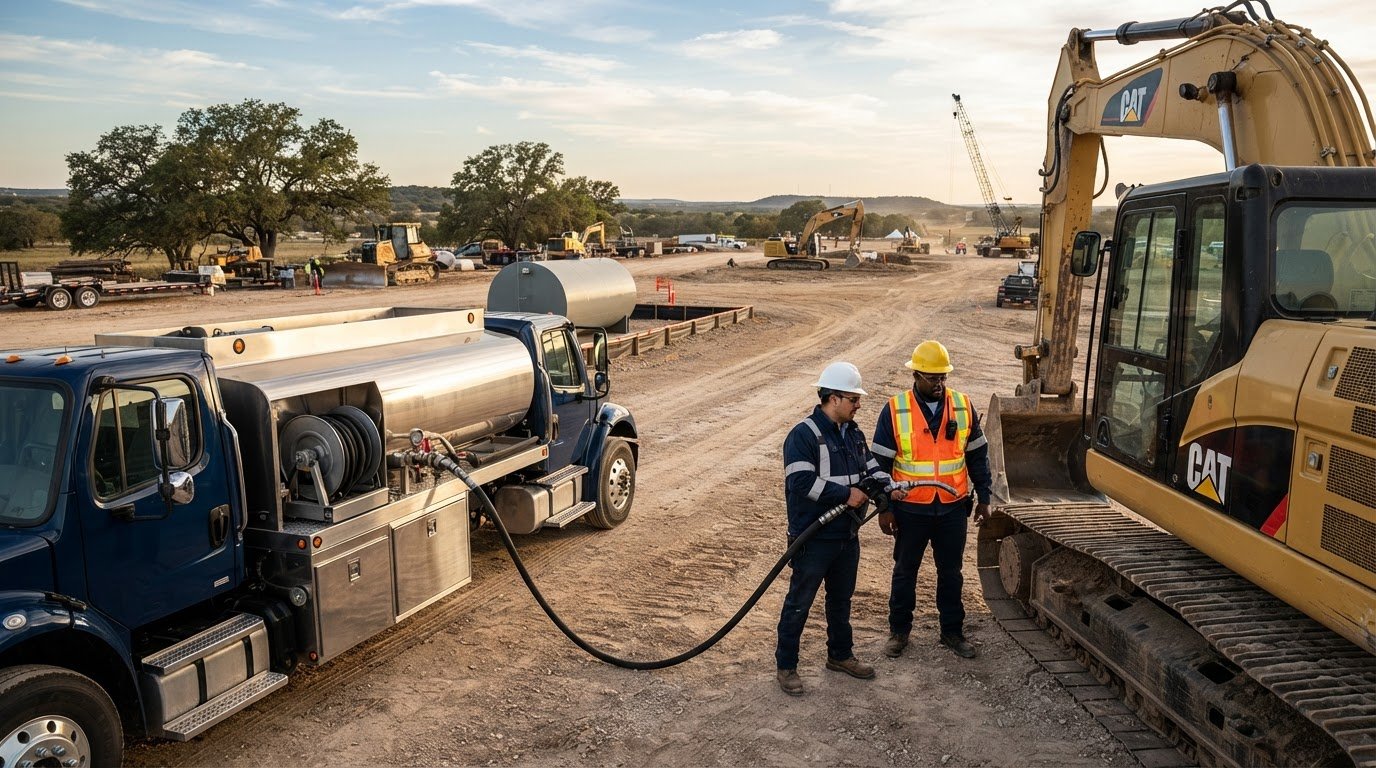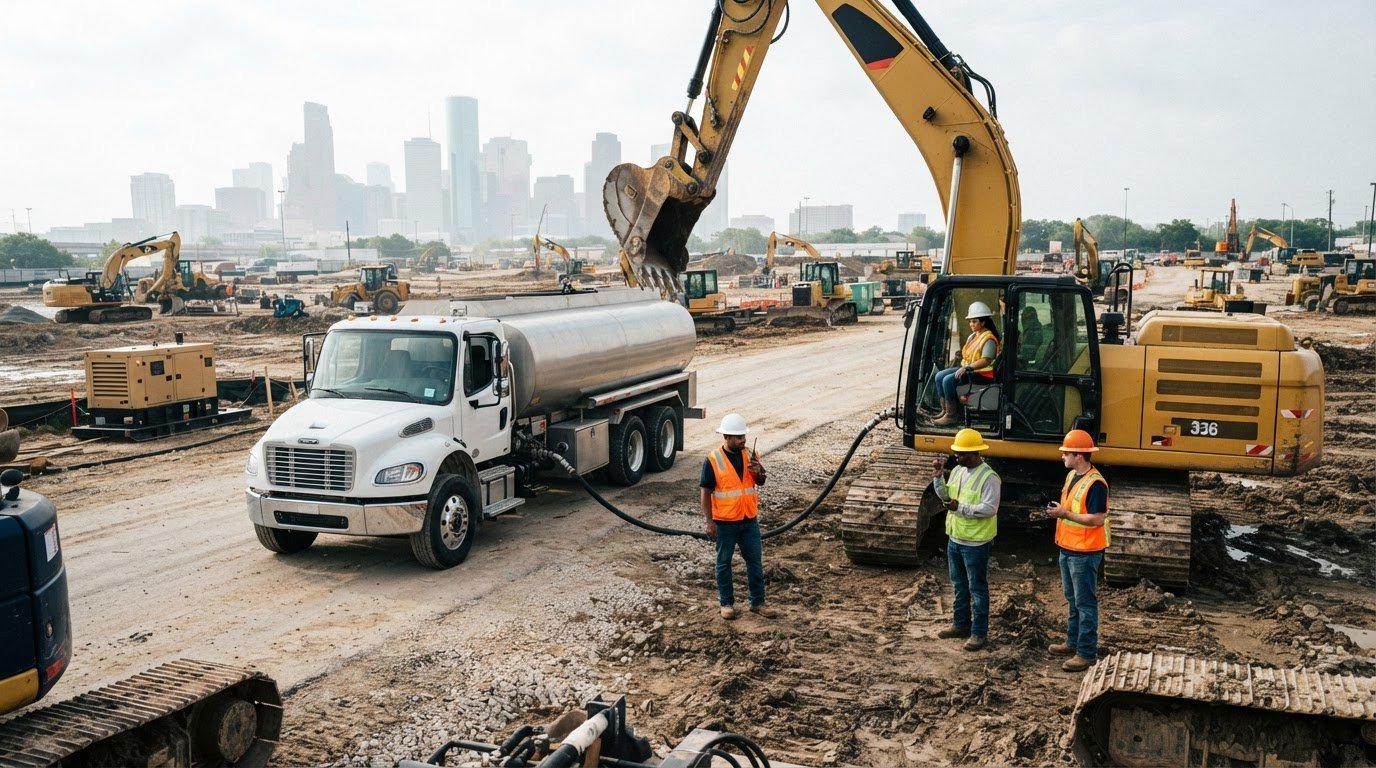
Construction equipment needs more than a generator-only fuel plan. Choosing an industrial diesel fuel supplier in College Station starts with matching delivery to where fuel is needed, whether that is a jobsite, generator, or agricultural operation. On-site diesel delivery can keep equipment supplied without repeated trips for fuel.
Fuel needs vary by operation. Equipment fueling, generator fueling, and agricultural use each call for a plan that accounts for where machinery works and how fuel reaches it. Coordinated delivery can help reduce interruptions, especially when several machines or sites depend on timely supply.
This guide explains what to consider when arranging bulk diesel delivery in College Station, how fuel needs differ across generators, agricultural operations, and construction equipment, and what information helps arrange delivery. You’ll also learn how on-site fueling and fuel tank rentals can fit into a practical supply plan.
Bulk fuel delivery
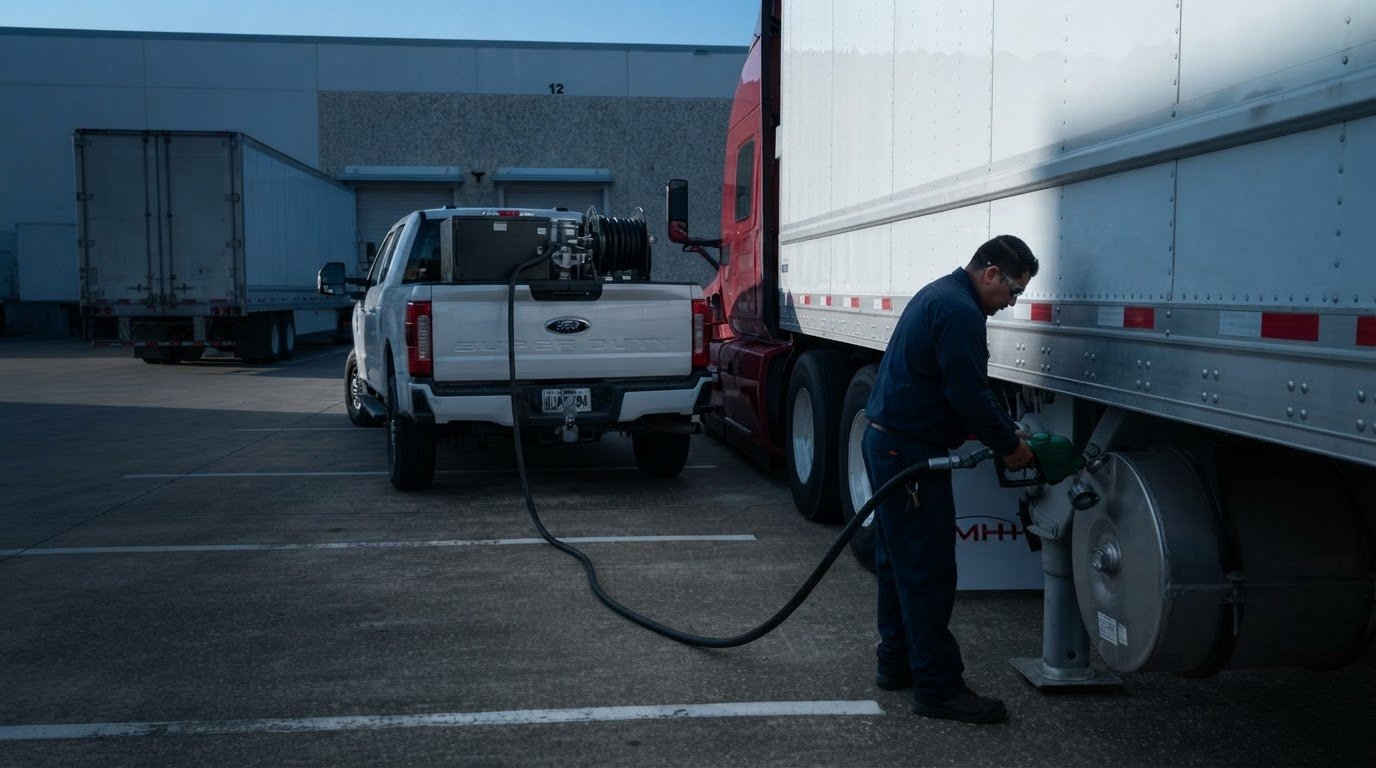
Bulk delivery brings fuel to a jobsite, fleet yard, or industrial facility instead of requiring repeated trips to a retail pump. For College Station operations, an industrial diesel fuel supplier in College Station should align the delivery plan with the fuel type, destination, and receiving tank or equipment.
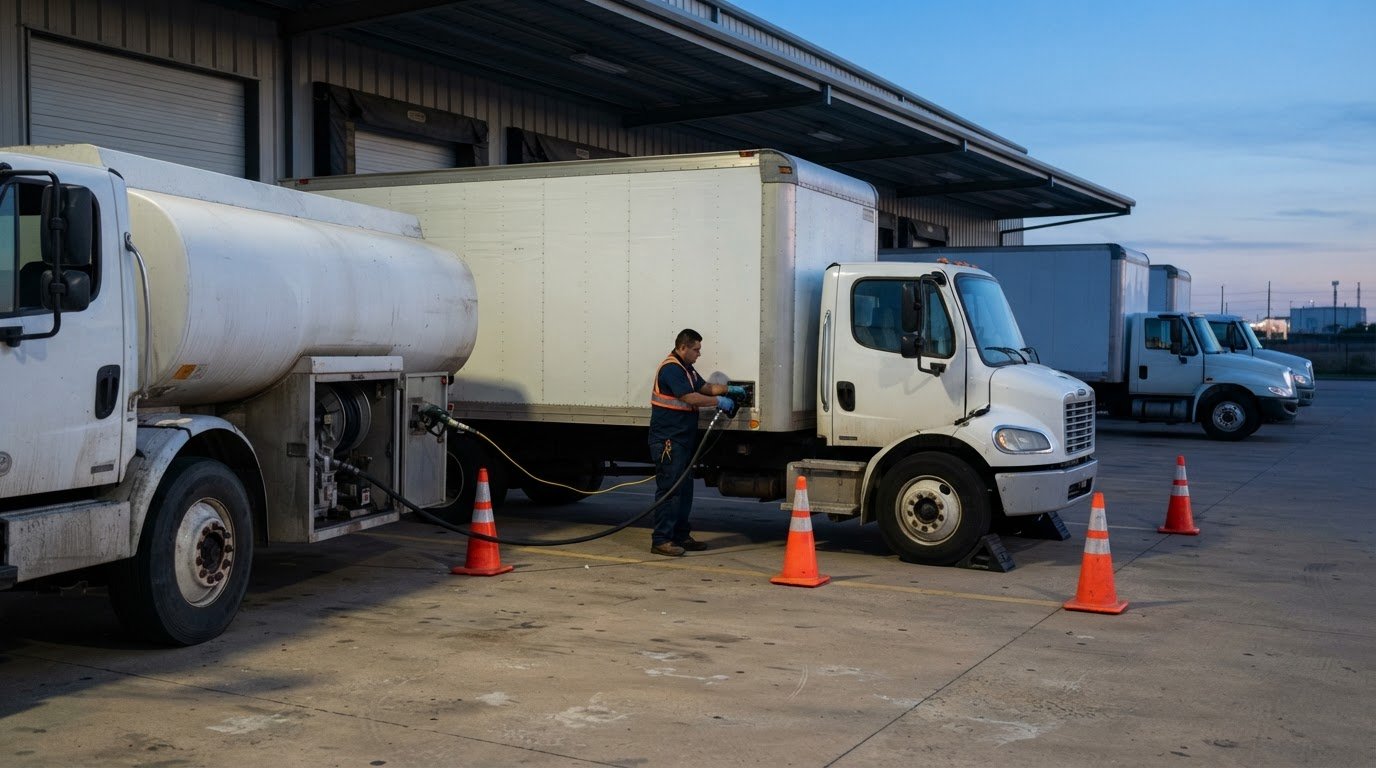
Construction Site and Fleet Deliveries
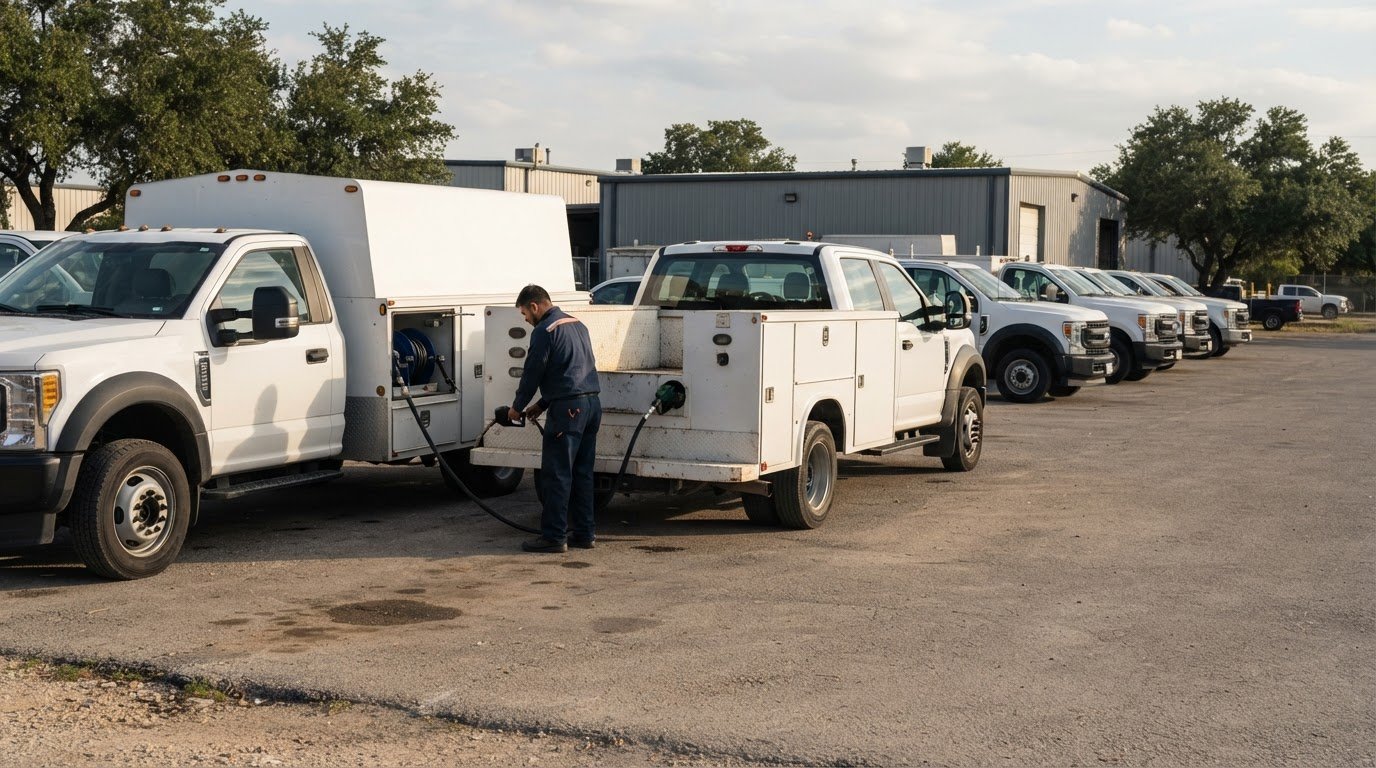
Construction sites may need fuel delivered to stationary tanks, parked machinery, or several equipment locations. Fleet delivery may focus on a yard or designated fueling point, while an industrial facility may need fuel for equipment and generators. Provide the delivery address, access instructions, fuel type, and receiving point when arranging service.
For construction equipment, specify which machines need fueling and where they will be positioned. A loader at a staging area may need a different approach from vehicles returning to a central yard. Keep directions current as work zones shift, and include site access details that identify the correct fueling location.
Regional Delivery Coverage
For operations in College Station, Houston, Magnolia, San Antonio, Austin, or Dallas, list each delivery destination separately. React Fueling serves Houston, TX; Austin, TX; San Antonio, TX; Dallas, TX; College Station, TX. Identify the receiving point and fuel needs for each yard, facility, or jobsite.
A company with several Texas locations should distinguish its College Station project from its Austin fleet yard, for example. Separate delivery details make it easier to plan routes and coordinate supply across sites without confusing one location’s requirements with another’s.
Diesel, Gasoline, and DEF Delivery
Choose fuel based on the vehicle or equipment receiving it. Diesel, dyed diesel, gasoline, and DEF are distinct delivery categories; DEF is a fluid, not a fuel. State the product and its destination clearly, especially when a site has several tanks or equipment types.
Dyed diesel is not interchangeable with every diesel product or suitable for every use. Applicable Texas and federal requirements govern its purchase, storage, and use, so follow the rules that apply to your circumstances. Keep product labels and delivery instructions distinct to help prevent mix-ups.
Supplier Service Area and Reliability
Commercial bulk-fuel suppliers serving College Station are the relevant providers for jobsite or facility deliveries. Compare service coverage and delivery coordination alongside customer reviews. Reviews may describe communication or service experience, but they do not determine whether a particular address fits the supplier’s service area.
For on-site bulk diesel storage, requirements depend on the tank, placement, and site. Plan for safe access, spill control, and protection from environmental release while following applicable local and federal requirements. When comparing an industrial diesel fuel supplier in College Station, consider how clearly its delivery process accounts for your site’s receiving location and instructions.
Fuel for generators and agricultural operations
Generators and agricultural equipment draw fuel at different places and times. A useful supply plan matches each delivery point to the machinery it supports, from a standby generator beside a facility to tractors working across a farm.
Generator Fuel Planning
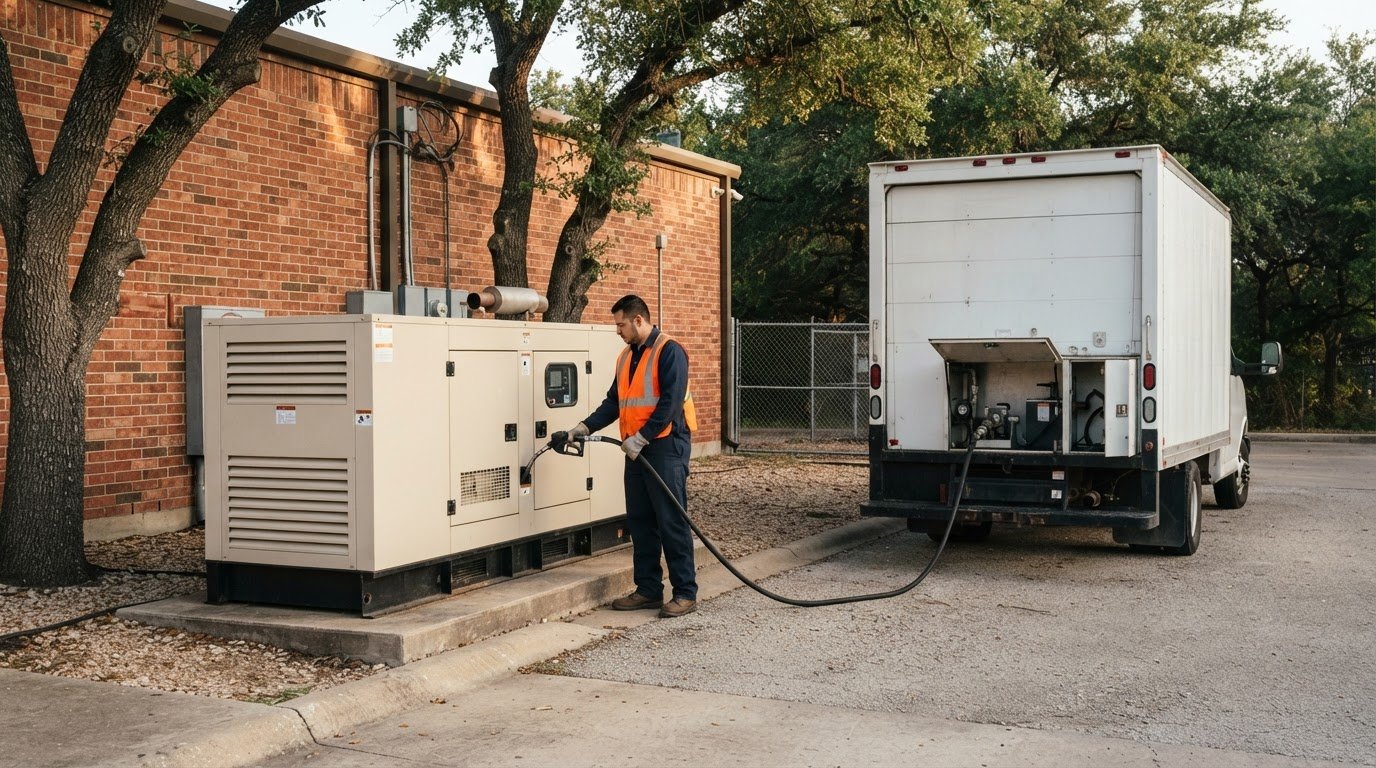
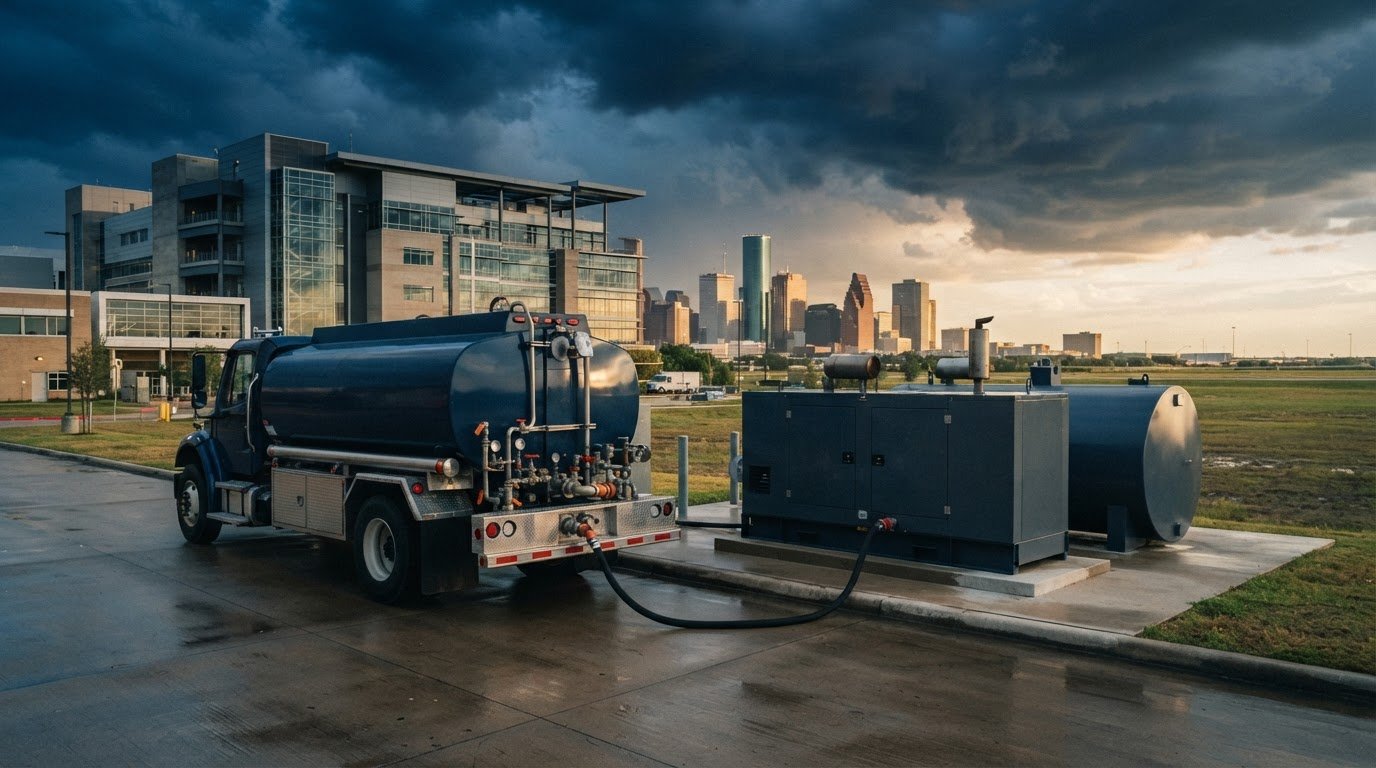
For a generator, record its location, fuel tank, access route, and role in the operation. A standby unit serving a facility has different scheduling needs from a generator powering temporary work in a remote field. Identify whether the unit supports essential operations, then plan delivery around fuel use and the site’s storage arrangement.
Keep the generator’s fuel supply distinct from other equipment tanks. Clear labels and delivery instructions help direct fuel to the correct receiving point, particularly where a property has several tanks. Generator fueling can support continuity during an outage, but the fuel plan should also account for routine testing and expected operating demands.
Fuel for Agricultural Operations
A farm’s fuel demand can shift with fieldwork, equipment movement, and seasonal tasks. A tractor working away from the main yard may need a different delivery arrangement from machinery stored near a central tank. Map the fields, equipment staging areas, and storage locations before setting a delivery plan.
Group equipment by operating area and fuel needs. This gives farm managers a clearer view of which locations need replenishment and helps avoid sending a delivery to an inactive or inaccessible part of the property. For delivery in College Station, include the farm entrance, receiving location, and access directions in the order details.
Off-Road, Agricultural, and Industrial Diesel
Off-road, agricultural, and industrial diesel needs should be identified by the equipment and its intended use, not just the site address. A tractor, industrial machine, and generator may operate at the same property but have different fueling points. State the equipment type and destination when arranging delivery.
Keep fuel categories clear in storage and delivery records. If a site uses dyed diesel, follow applicable requirements for its purchase and use; do not assume it can be used interchangeably across vehicles or machines. Separate labels and instructions help prevent mix-ups between tanks.
For a practical plan, gather the generator or equipment location, fuel type, receiving point, and access details before arranging delivery. These details help align fuel supply with farm work and facility needs. Share your generator or agricultural delivery requirements to discuss a suitable plan.
Ordering and customer service
A clear order connects the fuel type, delivery point, and timing to the equipment that must keep running. For College Station businesses, accurate site details help shape a practical delivery plan.
Minimum Orders and Delivery Lead Times
Minimum quantities and lead times depend on order size, fuel type, delivery location, and route logistics. There is no single quantity or lead time for every College Station order.
Build the request around the receiving tank or equipment, not just a general estimate of demand. A fleet yard with a storage tank has different delivery needs from a remote jobsite fueling several machines. Include the fuel type, desired quantity, site address, access instructions, and preferred delivery timing.
These details clarify whether the requested quantity fits the receiving setup and how delivery can be coordinated. A changing work schedule may also affect timing, especially when equipment moves between sites. Share expected usage and planned site changes so the order reflects actual operations.
Emergency and Scheduled Delivery
Emergency diesel delivery and scheduled deliveries address different needs. Emergency delivery is intended for an immediate fuel shortage; scheduled delivery supports planned replenishment. Neither term alone means 24/7 coverage, so don’t treat emergency service and around-the-clock availability as interchangeable.
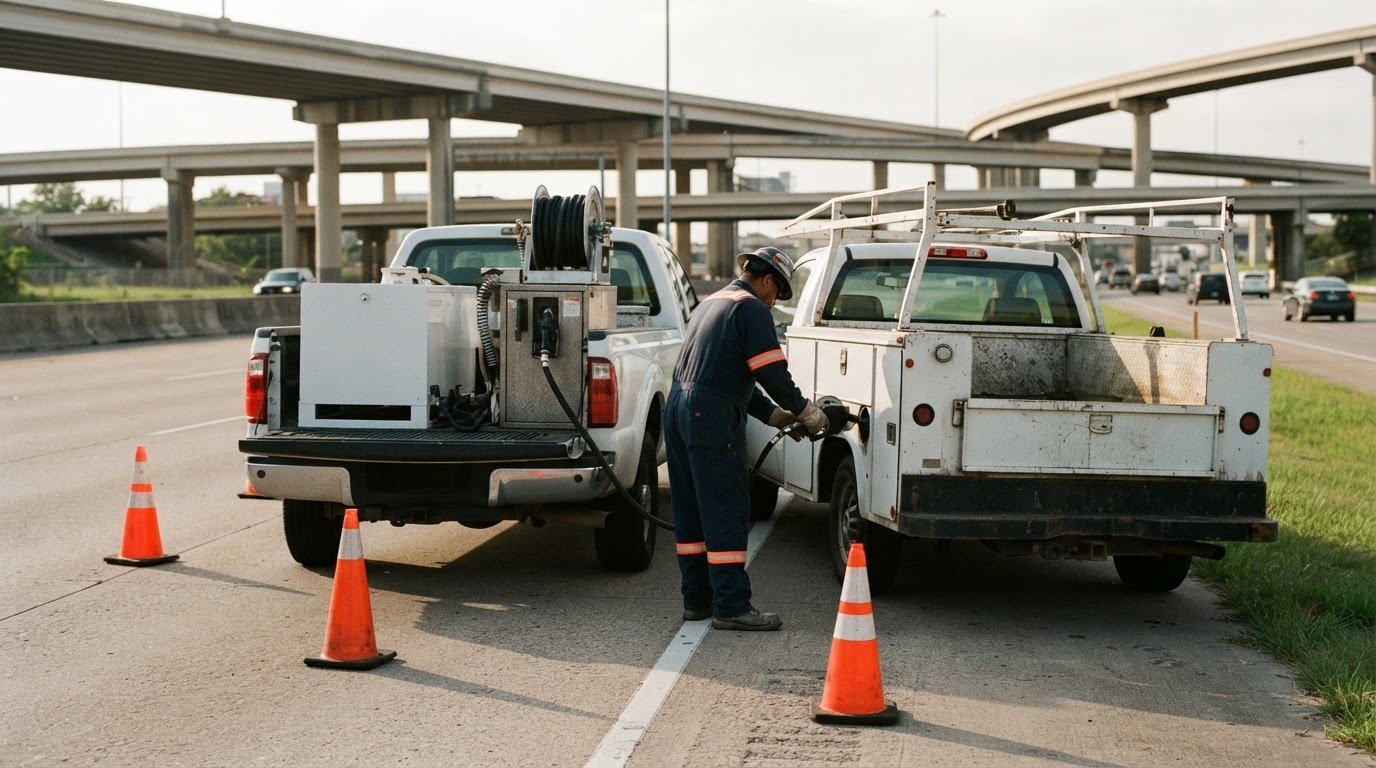
For a scheduled order, provide the delivery location, fuel requirements, and preferred timing. For an urgent request, explain which equipment or operation is affected and where fuel must go. A generator supporting a facility, for instance, may have a different priority from vehicles returning to a fleet yard.
A complete order and clear communication about changes help delivery go smoothly. If a gate code, site entrance, or receiving point changes, updated instructions help prevent confusion. Keep the contact person and location details consistent across dispatch and site teams.
When evaluating a trusted supplier, consider how clearly it explains order requirements, service coverage, and delivery coordination. Customer reviews can offer context about communication and dependability, but they don’t establish whether a provider serves your particular site or delivery schedule. Compare those details alongside operational fit, not price language alone.
Keep these details ready for an order:
- Fuel type and requested quantity
- College Station delivery address and receiving location
- Equipment, tank, or vehicles the fuel will serve
- Access instructions and preferred timing
- Whether the need is scheduled or urgent
For a business balancing competitive operating demands with equipment uptime, these details make the order easier to coordinate. Share your diesel delivery requirements to discuss the appropriate next step.
Available fuel types
Fuel selection depends on the equipment, its operating location, and how it receives supply. A commercial fuel plan should distinguish the product from the storage and delivery arrangement.
Diesel supports many industrial machines, generators, and commercial vehicles. DEF is a separate fluid used by some diesel equipment, not a substitute for diesel fuel. Gasoline and dyed diesel are other product categories, so identify the required product clearly rather than treating them as interchangeable.
Start with the equipment or generator manufacturer’s fuel requirements, then identify which receiving point needs supply. A site running diesel equipment and storing DEF should keep delivery instructions and storage locations distinct. Clear product identification helps reduce mix-ups when multiple tanks or machines share a property.
For mobile equipment, the key decision is where fueling occurs. A machine working across a large jobsite may need on-site equipment fueling, while a generator beside a facility may be supplied at its designated tank. A fuel tank rental can support a project that needs on-site storage, with the arrangement based on the operation’s requirements.
Tank and rental needs depend on the project’s fuel demand, site layout, equipment access, and expected use. Fuel management can focus on tracking consumption, setting replenishment points, and coordinating delivery with operating schedules.
Bulk fuel planning also depends on whether the site has permanent storage or needs a temporary setup. A construction project with changing work areas may need a different arrangement from an industrial facility with a fixed generator location. The receiving point, vehicle access, and available space all affect how fuel reaches equipment.
Dependable commercial fuel supply starts with matching each product to its use. Keep a simple site record of the equipment, fuel type, storage location, and delivery point. For example, list a generator’s diesel tank separately from any DEF storage. This gives dispatch and site personnel a shared reference when requirements change.
For mobile fueling, identify which equipment will be accessible during delivery and where it will be working. For stationary storage, provide the tank location and access route. These details help align delivery with site operations instead of relying on a general address alone.
Review fuel needs when machinery changes, a project moves, or generator use shifts. An updated equipment list can reveal that a site needs different delivery points or storage arrangements. Keep instructions current so the fuel plan stays aligned with the work.
Construction equipment fueling
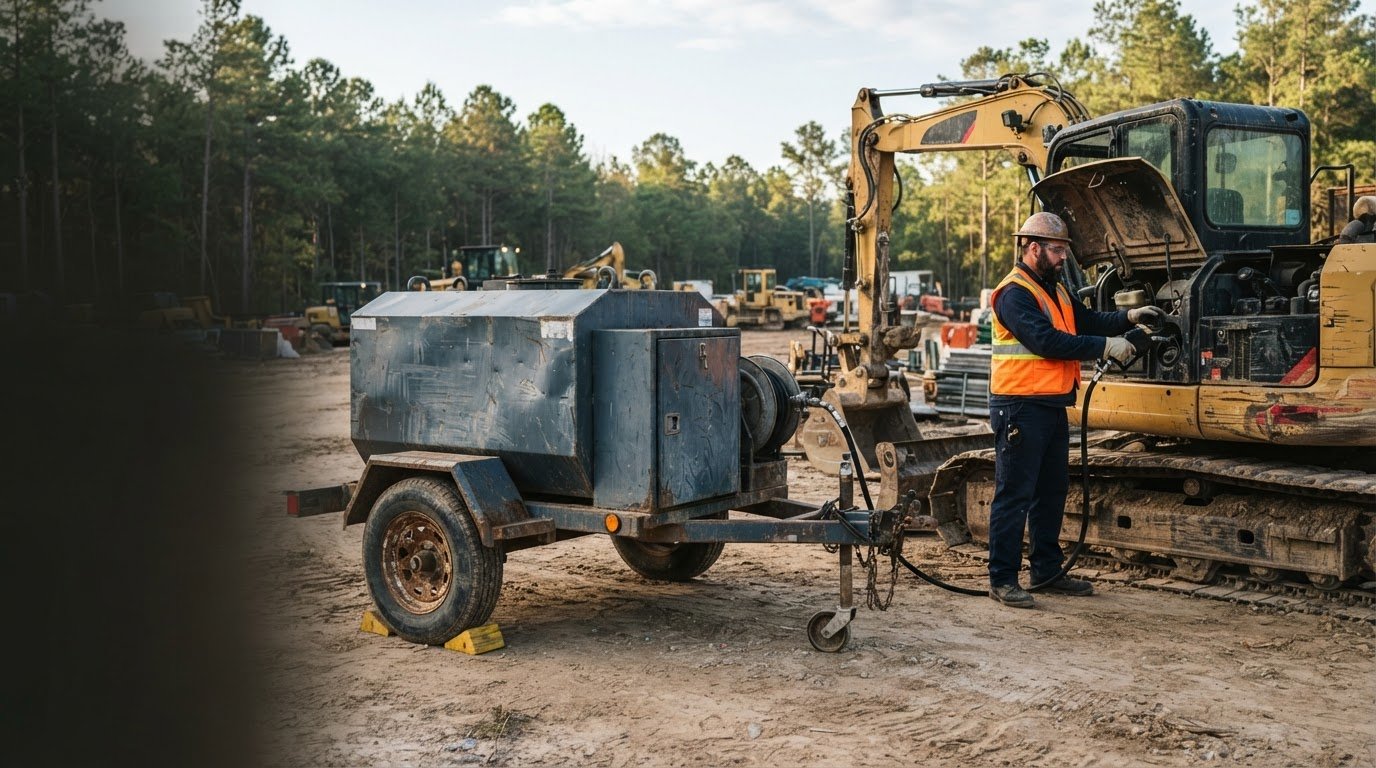
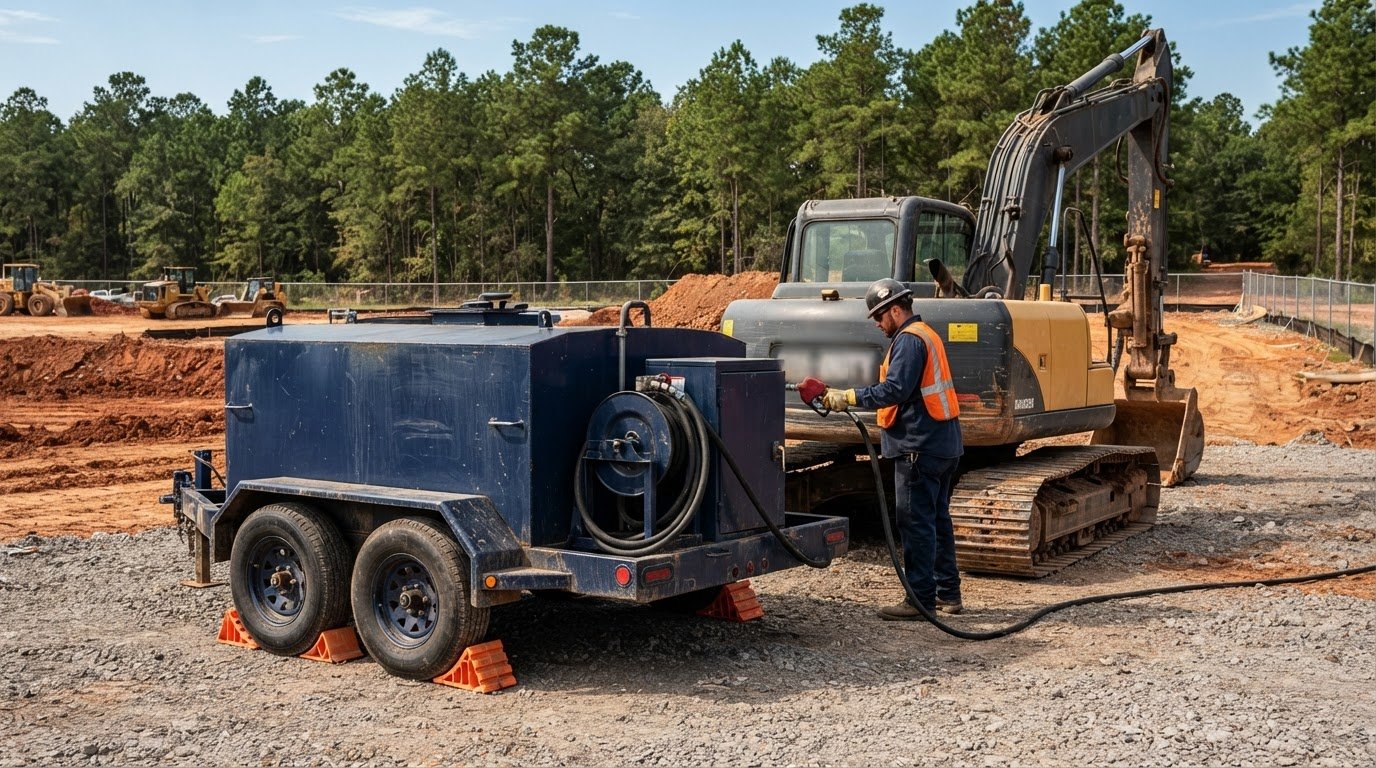
Construction equipment often works across a site rather than beside one central tank. A fueling plan should account for machine locations, active work areas, delivery access, and the order that keeps operations moving. An excavator near an earthwork zone, for example, may need a different fueling point from a loader parked at the materials area.
Start with an equipment list and map each machine to its work location. Include the machine type, fuel requirement, usual parking area, and any access limits that affect delivery. Then identify which equipment can move to a designated fueling point and which needs fuel where it is working. This helps set a practical approach for each part of the jobsite.
Site changes matter. A grader may move as roadwork advances, while a generator or pump stays in place. Update delivery instructions when equipment shifts zones, a temporary entrance changes, or a new work area opens. Current directions help prevent delivery to an inactive staging area or the wrong side of the site.
Coordinate fueling with the construction schedule. Delivery planned around equipment downtime can reduce disruption to active work, while fueling several machines may require clear sequencing and location notes. For a fleet returning to a yard, identify the designated fueling area; for equipment spread across a project, provide directions for each receiving point.
Before arranging fueling, gather the details that determine where fuel needs to go:
- Equipment types, such as excavators, loaders, and graders
- Fuel type and the intended receiving tank or machine
- Current work zones, staging areas, and site entrance
- Preferred delivery timing and any schedule constraints
- Site contact and instructions for reaching each fueling point
These details also help distinguish routine fueling from an emergency request. If a machine runs low in an active work zone, state its exact location and the effect on the current task. If a shortage affects several machines, identify each one and prioritize equipment holding up scheduled work.
For construction projects in College Station, keep one current fueling plan and revise it as crews, equipment, and work areas change. The clearest plan ties each machine to its fuel needs, location, access route, and timing. That gives dispatch and site personnel the same instructions, even when equipment moves during the project.
Discuss fuel delivery for your construction equipment with the site’s equipment locations and schedule in hand.
React Fueling: Diesel Delivery
React Fueling provides diesel delivery for College Station businesses that need fuel at industrial sites, construction projects, or fleet locations. Its Equipment Fueling Service supplies machinery where it operates, while Generator Fueling Service supports facilities that rely on on-site power.
Share the fuel type, delivery location, receiving equipment or tank, and preferred timing when arranging service. These details help align delivery with site access and operating needs. For a generator or active jobsite, clear directions to the fueling point help keep coordination focused.
Contact React Fueling to arrange diesel delivery for your equipment, fleet, or generator.
Put a Clear Fuel Plan in Motion
Turn operating needs into a practical delivery plan. Identify the sites, equipment, and fueling points that matter most, then decide how fuel supply should fit the work schedule. A clear plan gives your team a useful starting point as projects, machines, and site conditions change.
As you choose an industrial diesel fuel supplier in College Station, focus on how delivery will support your operation, not simply where fuel is dropped. React Fueling offers Diesel Delivery, Equipment Fueling Service, and Fuel Delivery for commercial needs. Share the locations and equipment involved to identify the service that best fits your operation.
Contact React Fueling about fuel delivery and take the next step toward a fuel plan that supports your work. Your team can move forward with a clearer path for keeping equipment supplied.
Frequently Asked Questions
Which College Station-area fuel suppliers offer bulk diesel delivery?
React Fueling provides commercial diesel delivery in College Station for fleets, construction sites, and industrial operations. For a bulk delivery request, identify the destination and whether fuel is going to a storage tank, generator, or equipment. A fleet yard’s tank and a remote construction site have different delivery points and access instructions. Sharing those details helps connect the order to your operation’s actual fueling needs.
What industrial diesel products are available, including on-road, off-road, and dyed diesel?
React Fueling provides diesel and gasoline delivery, including on-road and off-road fuel, and offers DEF delivery for trucks and equipment. Product selection should match the receiving vehicle or machine. Dyed diesel is a separate category, so do not assume it is interchangeable with other diesel or suitable for every use. Specify the equipment and intended fuel category when arranging service to keep instructions clear.
How do College Station industrial diesel suppliers compare by service area, reliability, and customer reviews?
Compare each supplier’s stated service area and delivery coordination alongside customer reviews. Reviews can describe communication and service experience, but they do not confirm coverage at a specific address or a delivery schedule.