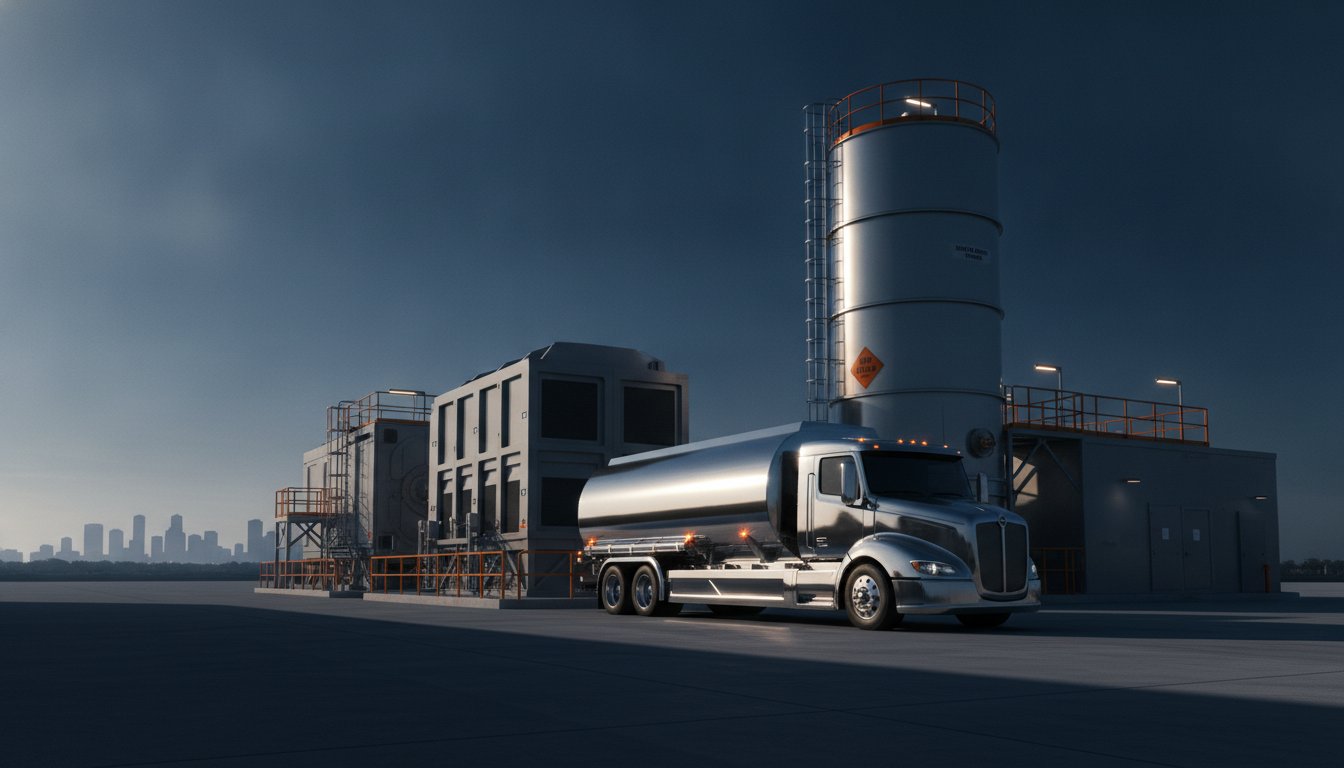
By 2027, your fleet's DEF consumption is projected to surge by up to 50 percent as new EPA NOx emissions standards take hold. This shift transforms Diesel Exhaust Fluid from a secondary concern into a critical fuel component that demands the same logistical precision as diesel itself. Relying on 2.5-gallon jugs is no longer a viable strategy for Texas operators; it's a recipe for plastic waste, contamination risks, and the constant threat of equipment "limp mode" during peak hours. Securing a reliable bulk diesel exhaust fluid supply is the only way to protect your SCR systems and maintain operational continuity across Houston, Dallas, Austin, and San Antonio.
We understand that managing complex logistics while urea prices fluctuate feels like a moving target. You need a system that works in the background so you can focus on the job at hand. This guide shows you how to transition to a hands-off replenishment schedule that optimizes your operational costs and ensures zero regulatory downtime. We will cover the latest ISO 22241 purity standards for 2026, the ROI of on-site storage infrastructure, and specific strategies to prevent fluid degradation in the intense Texas heat.
Why Bulk Diesel Exhaust Fluid Supply is Critical for Texas Fleets
Bulk diesel exhaust fluid supply represents the logistical backbone for modern heavy-duty operations. It involves the scheduled delivery of diesel exhaust fluid, a precise solution consisting of 32.5 percent high-purity synthetic urea and 67.5 percent deionized water. This fluid is essential for any engine utilizing Selective Catalytic Reduction (SCR) technology. Without a consistent supply, the chemical reaction required to neutralize nitrogen oxide emissions cannot occur. This failure renders Tier 4 Final equipment non-compliant with federal standards and risks immediate operational penalties.
Texas fleet managers face a specific threat known as "limp mode" or engine derate. When on-board sensors detect an empty DEF tank, the engine's control unit triggers a staged power reduction to force compliance. Initially, this involves dashboard warnings. However, under 2026 standards, the system will eventually cap speeds or prevent engine restarts entirely. In a high-stakes environment like a Houston industrial site or a Dallas construction project, a single dry tank can halt an entire crew. Relying on 2.5-gallon jugs is no longer a viable strategy for these large-scale operations. It introduces human error, increases the risk of debris contamination, and creates unnecessary labor costs.
The Cost of Compliance vs. The Price of Downtime
Compliance is a fixed operational requirement. Downtime is a variable cost that can spiral out of control. Forced engine derates often require specialized technician resets that extend far beyond a simple refill. The 2026 regulatory environment for NOx reduction in Texas industrial zones makes SCR health a priority. A vigilant partnership with a provider like React Fueling for DEF fluid delivery ensures your supply is proactive. Integrated fueling is always cheaper than reactive emergency sourcing after a machine has already entered a restricted state.
Identifying High-Consumption Industries
Certain sectors require a higher volume of fluid to maintain peak performance. Construction sites utilizing heavy excavators and earthmovers burn through DEF rapidly under high load. Similarly, logistics fleets operating through the San Antonio and Austin corridors need predictable top-offs to avoid roadside delays. Even static installations, such as data centers, require generator fueling service to maintain emergency readiness. For these high-demand environments, equipment fueling service that includes bulk DEF eliminates the clutter of retail packaging and ensures every asset is mission-ready.
Understanding SCR Technology and EPA Compliance Standards
Selective Catalytic Reduction (SCR) relies on a precise chemical injection to function effectively. Inside the exhaust stream, DEF vaporizes into ammonia gas. This gas reacts with nitrogen oxides (NOx) across a ceramic catalyst to transform harmful emissions into harmless nitrogen and water vapor. It's a highly efficient process, but it's also chemically fragile. Maintaining a bulk diesel exhaust fluid supply that strictly adheres to ISO 22241-1 specifications is the only way to protect this reaction. Any deviation in the 32.5 percent urea concentration disrupts the chemistry and leads to system failure.
Modern 2026 sensors are more sophisticated than previous generations. They don't just check for fluid levels; they monitor chemical purity in real-time. If the fluid falls outside the required 31.8 percent to 33.2 percent range, the engine's control unit triggers immediate alerts. This technological precision has a direct environmental benefit for Texas. It significantly reduces smog-forming pollutants in high-density metropolitan areas like Houston and Dallas, where air quality standards remain a top priority for local regulators.
The Vulnerability of SCR Systems
SCR catalysts are easily "poisoned" by trace elements. Common job site materials like dust, zinc, or copper can cause permanent chemical damage to the catalyst surface. This damage is often irreversible and requires an aftertreatment replacement costing upwards of $8,000 per unit. Using dedicated pumping equipment is mandatory to prevent cross-contamination with diesel or lubricants. Every delivery must utilize closed-loop connections and ISO-compatible materials like stainless steel or high-density polyethylene. SCR injectors are highly sensitive to non-deionized water and will clog if even microscopic mineral deposits are present.
Tier 4 Final and Beyond: 2026 Regulations
Current EPA emissions compliance standards demand rigorous NOx control for both on-road and off-road engines. Looking ahead to model year 2027, the Clean Trucks Rule establishes a limit of 0.035 g/bhp-hr, which is an 82.5 percent reduction from previous standards. These tightening rules mean your bulk diesel exhaust fluid supply documentation is a vital asset during environmental audits. For large Texas industrial corporations, consistent DEF usage is a core component of achieving Environmental, Social, and Governance (ESG) goals. It provides a measurable way to prove fleet-wide emission reductions. If you are refining your compliance strategy for the coming year, reach out to our team for a logistical assessment.
Bulk Delivery vs. Jugs: Calculating the ROI of Your DEF Strategy
Transitioning to a bulk diesel exhaust fluid supply is often viewed as an infrastructure upgrade, but it is primarily a financial strategy. Retail jugs often cost triple the price of bulk fluid when calculated per gallon. For a typical fleet of 25 trucks, this price gap can translate to annual savings exceeding $65,000. These figures only represent the direct purchase price. They don't account for the "soft" costs associated with retail purchasing, such as the time spent by drivers or yard staff making emergency stops at truck centers.
Every 2.5-gallon jug creates approximately one pound of high-density plastic waste. For large operations, this results in tons of debris that requires disposal and frequent yard cleanup. Labor efficiency also suffers when technicians spend hundreds of man-hours annually manually pouring fluid and managing individual inventory units. Secure on-site bulk tanks eliminate inventory shrinkage from spills or theft. They provide total control over every drop, ensuring that every gallon purchased actually makes it into an SCR system. Adhering to API Diesel Exhaust Fluid Certification standards during bulk handling further protects this investment by preventing the contamination that leads to expensive repairs.
Totes, Drums, or Bulk Pumping?
Medium-sized Houston construction projects often benefit from 330-gallon totes. These provide mobility on active job sites without the waste of small packaging. Permanent industrial facilities should prioritize direct-to-tank bulk pumping for the lowest possible price point. While 55-gallon drums seem like a middle ground, they often represent the worst of both worlds for high-volume users. They are heavy, difficult to maneuver, and require specialized pumps that are frequently prone to contamination if not strictly maintained.
Streamlining the Procurement Process
Automated delivery schedules remove the burden of manual inventory checks from your site managers. This proactive approach prevents the critical "empty tank" scenarios that trigger engine derates. By bundling DEF with your scheduled diesel delivery, you eliminate separate delivery fees and simplify vendor management. A Dallas-based logistics fleet recently achieved a 15 percent reduction in total operational overhead by consolidating these services into a single-source provider. This "one-stop" approach ensures that no piece of equipment sits idle due to a missing fluid component, allowing your team to focus entirely on production targets.
Safe Storage and Handling of Bulk DEF in the Texas Heat
Texas summers present a unique challenge for your bulk diesel exhaust fluid supply . When ambient temperatures exceed 90°F, the urea in DEF begins to hydrolyze into ammonia gas. This chemical breakdown reduces the concentration below the required 32.5 percent threshold. In humid environments like Magnolia or College Station, moisture and heat accelerate this process. Storing fluid in unshaded, uninsulated poly totes on asphalt can push internal temperatures toward 130°F, cutting shelf life from 12 months down to just 8 weeks.
DEF is highly corrosive to certain metals. It must never come into contact with carbon steel, copper, brass, or zinc. These materials leach into the fluid, creating microscopic metallic traces that poison the SCR catalyst. Use only 304 or 316 stainless steel and high-density polyethylene (HDPE) for all storage and transfer equipment. Implementing a closed-loop delivery system is the most effective way to prevent these contaminants and airborne dust from entering your supply during on-site transfers.
Temperature Management for Peak Performance
Sustained exposure to high heat causes urea to crystallize, which leads to clogged injectors and pump failures. Insulated bulk tanks are a necessity for Texas job sites to maintain a stable internal climate. While the freezing point of DEF is 12°F and rarely impacts Texas fleets, it still requires seasonal planning to ensure expansion room in tanks during rare winter weather events.
Equipment and Tank Maintenance
Regular maintenance of your portable fuel tank rentals and dedicated DEF storage units is critical. Cleaning protocols must involve only deionized water; tap water contains minerals that will ruin the fluid's purity. Use dedicated, color-coded nozzles and hoses—typically blue for DEF—to prevent catastrophic mix-ups with diesel fuel. Inspect your bulk tanks monthly for any signs of sediment or white crystallization at the seals. If you need a climate-ready storage solution for your site, contact our logistics team to discuss high-purity delivery options.
Optimizing Your Supply Chain with React Fueling’s Integrated Solutions
React Fueling provides a distinct logistical advantage by integrating on-site DEF fluid delivery directly with your core fuel logistics. Most providers treat diesel and DEF as separate commodities, which leads to fragmented scheduling and increased administrative work. Our approach ensures your bulk diesel exhaust fluid supply is managed as a critical component of your total energy needs. We maintain strategic coverage across Houston, San Antonio, Dallas, and Austin to provide rapid response times that match the pace of Texas industry. Our 24/7 emergency fueling capability serves as a vital safety net for critical infrastructure and data centers where a "limp mode" event is unacceptable. We offer customized delivery volumes to fit any operation, ranging from 275-gallon totes for mobile job sites to full bulk tanker replenishment for permanent industrial facilities.
The One-Stop Energy Partner
Eliminate vendor fatigue by combining equipment fueling services with your DEF supply. This consolidation reduces the number of trucks on your site and the number of invoices on your desk. Single-vendor billing provides transparent, consolidated reporting that simplifies back-office tasks for fleet managers and accounting teams. Our deep local expertise ensures that every delivery complies with Texas-specific industrial standards and environmental safety protocols. We don't just deliver product; we act as a seasoned problem solver that understands the physical realities of your specific environment.
Getting Started with Bulk DEF Supply
The transition to a more efficient supply chain begins with a methodical site assessment. We analyze your fleet's consumption rates, equipment count, and duty cycles to determine the most effective storage capacity for your footprint. This assessment accounts for the heat-related storage risks previously mentioned to ensure your fluid remains within ISO purity standards. Setting up your first delivery in the Houston or Dallas metro areas is a streamlined process focused on speed and technical accuracy. Reach out to the React Fueling team to establish a customized fuel and DEF logistics plan that secures your fleet's reliability through 2026 and beyond.
Future-Proof Your Fleet's Compliance and Performance
Maintaining a high-performing fleet in 2026 requires more than just diesel; it demands a sophisticated approach to emissions chemistry. As regulatory standards tighten and equipment becomes more sensitive to contamination, the shift toward a professional bulk diesel exhaust fluid supply is no longer optional for serious Texas operators. Transitioning to bulk logistics eliminates the hidden costs of manual labor and plastic waste while protecting your SCR systems from the volatile Texas heat. An integrated supply model ensures that your machinery stays out of "limp mode" and remains on the job site where it belongs.
React Fueling stands ready as your vigilant partner, providing the 24/7 emergency support and integrated fuel logistics necessary to keep your operations moving. We serve every major Texas metropolitan area with the local expertise required to manage complex industrial environments. Don't let a secondary fluid become a primary point of failure for your business. Secure your fleet's uptime with React Fueling's Bulk DEF Delivery and gain the peace of mind that comes with total operational control. We look forward to keeping your equipment running at peak efficiency.
Frequently Asked Questions
What is the shelf life of bulk Diesel Exhaust Fluid in the Texas heat?
Shelf life depends entirely on storage temperature. At 86°F, the fluid lasts 12 months, but this drops to 6 months at 95°F. Texas summers in Houston or Dallas often exceed 100°F, which can reduce shelf life to under 8 weeks if stored in unshaded poly totes. To protect your bulk diesel exhaust fluid supply , we recommend using insulated tanks or shaded storage areas to maintain chemical stability and prevent urea decomposition.
Can I store DEF in the same tanks as my off-road diesel?
No, you must never store DEF in standard diesel tanks. Diesel tanks are typically made of carbon steel, which DEF corrodes instantly. This chemical reaction leaches metals into the fluid that will poison your SCR catalyst and lead to expensive repairs. Proper storage requires dedicated tanks made of high-density polyethylene or stainless steel. React Fueling ensures all transfer equipment is dedicated to DEF to eliminate the risk of cross-contamination with your diesel supply.
How much DEF does a typical heavy-duty truck consume compared to diesel?
Most current heavy-duty trucks consume DEF at a rate of 2 to 3 percent relative to their diesel fuel burn. However, upcoming engine standards are projected to increase this rate to 4 or 6 percent to meet stricter NOx limits. This means a truck burning 100 gallons of diesel will require up to 6 gallons of DEF. We help fleet managers calculate these consumption spikes to ensure their bulk diesel exhaust fluid supply remains adequate during peak operations.
What happens if my equipment runs completely out of DEF fluid?
Running out of DEF triggers a "limp mode" or engine derate. The engine control unit will first issue dashboard warnings before limiting vehicle speed to 5 mph or restricting engine power significantly. In some cases, the machine won't restart once turned off. This safeguards emissions compliance but causes catastrophic downtime on job sites. Our 24/7 emergency response prevents these empty-state scenarios for critical infrastructure projects across Houston, Dallas, and San Antonio.
Is there a minimum order quantity for bulk DEF delivery in Houston?
We offer flexible delivery volumes tailored to your site's specific footprint. Our services in the Houston metro area range from 275-gallon intermediate bulk container (IBC) totes to full tanker replenishment for large-scale industrial facilities. Whether you are managing a single construction site in Magnolia or a massive logistics hub in Dallas, we scale our deliveries to match your consumption rates. This approach ensures you have the fluid you need without forcing unnecessary inventory overhead.
Does React Fueling provide the storage tanks for bulk DEF?
Yes, we provide specialized storage solutions through our fuel tank rentals service. These units are designed to meet ISO 22241 standards for material compatibility and purity. We can deploy portable tanks to your site in College Station or San Antonio, ensuring you have a secure, climate-protected reservoir for your fluid. This eliminates the logistical headache of managing hundreds of retail jugs and provides a centralized point for your fleet's integrated fueling needs.
What are the ISO 22241 standards and why do they matter for my warranty?
ISO 22241 is the international standard that defines the chemical composition and purity of Diesel Exhaust Fluid. It requires a precise 32.5 percent urea concentration and strictly limits metallic contaminants. Most engine manufacturers require the use of ISO-certified fluid to maintain your factory warranty. Using substandard or degraded fluid can lead to expensive aftertreatment repairs that aren't covered if the fluid fails a purity test. We strictly adhere to these standards for every delivery.
How do I prevent DEF contamination on a dusty construction site?
Preventing contamination requires a closed-loop delivery and dispensing system. Dust and debris are common on Texas construction sites, and even microscopic particles can ruin SCR injectors. We recommend using dedicated, color-coded hoses and nozzles that remain sealed when not in use. Our integrated equipment fueling services utilize professional-grade filtration and closed-connection transfers to ensure your fluid remains pure from our tanker to your machine's reservoir, even in the most demanding industrial environments.