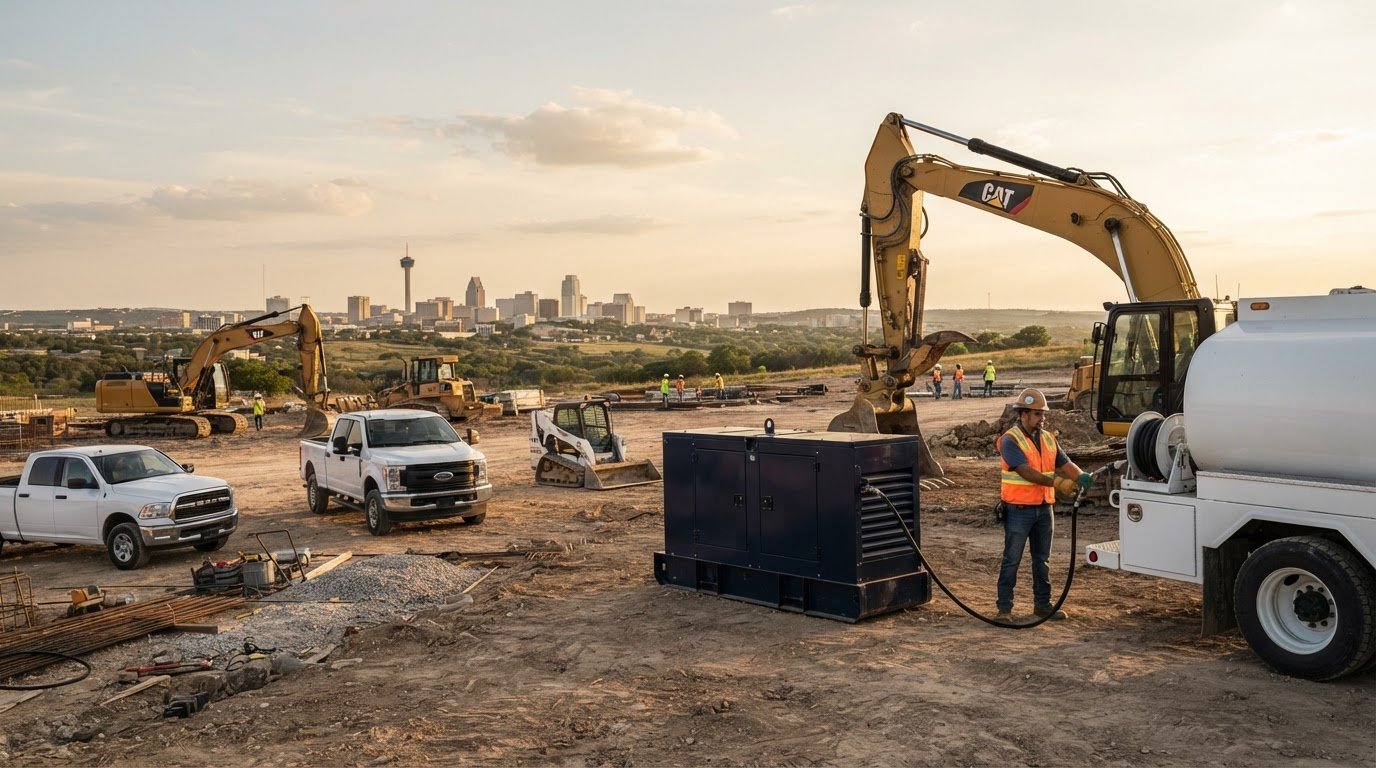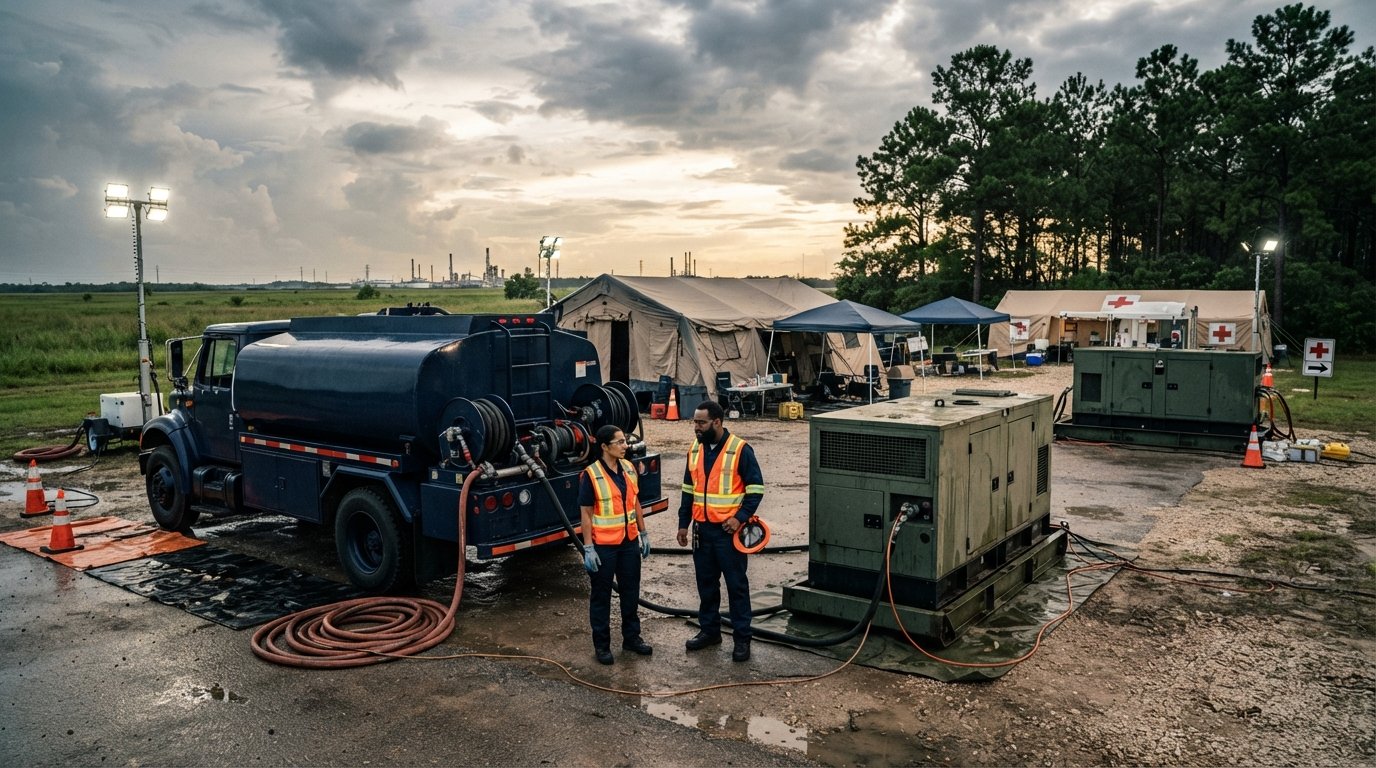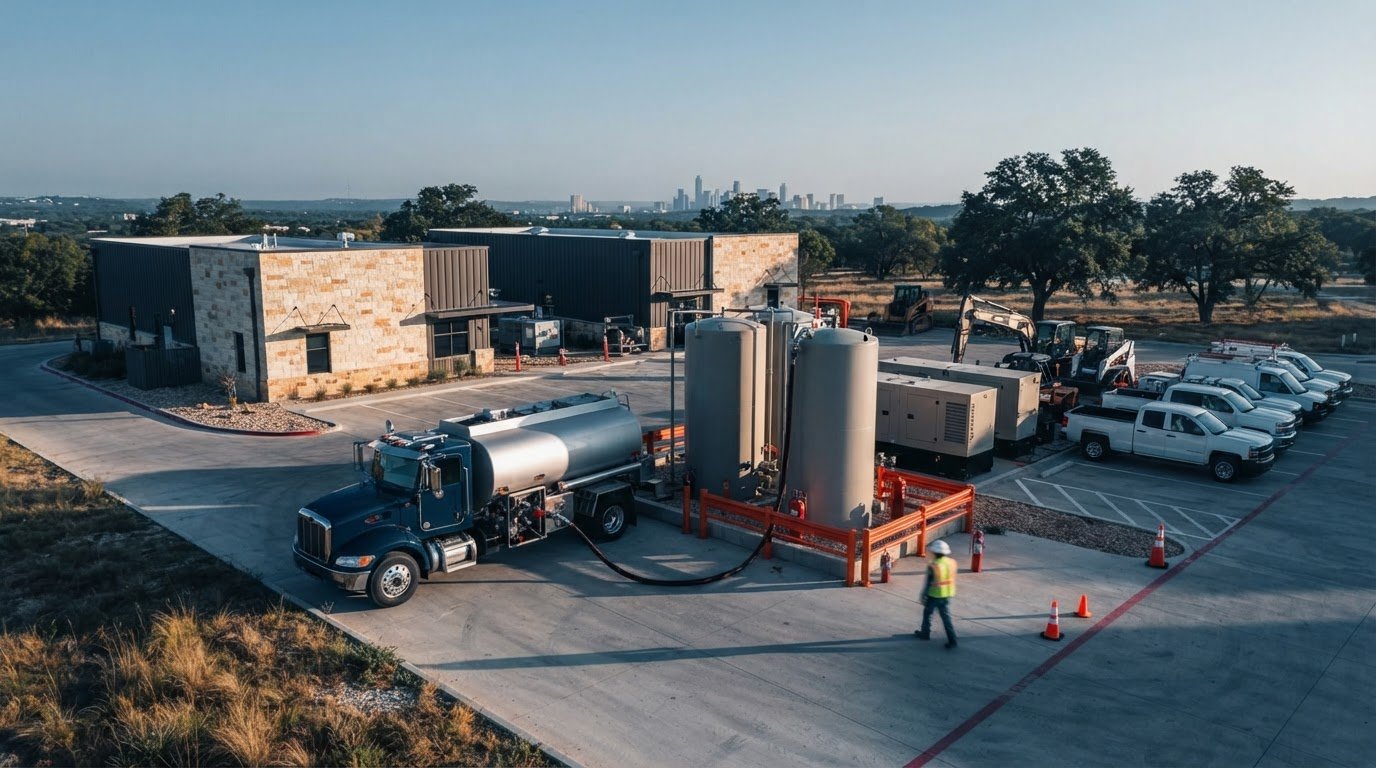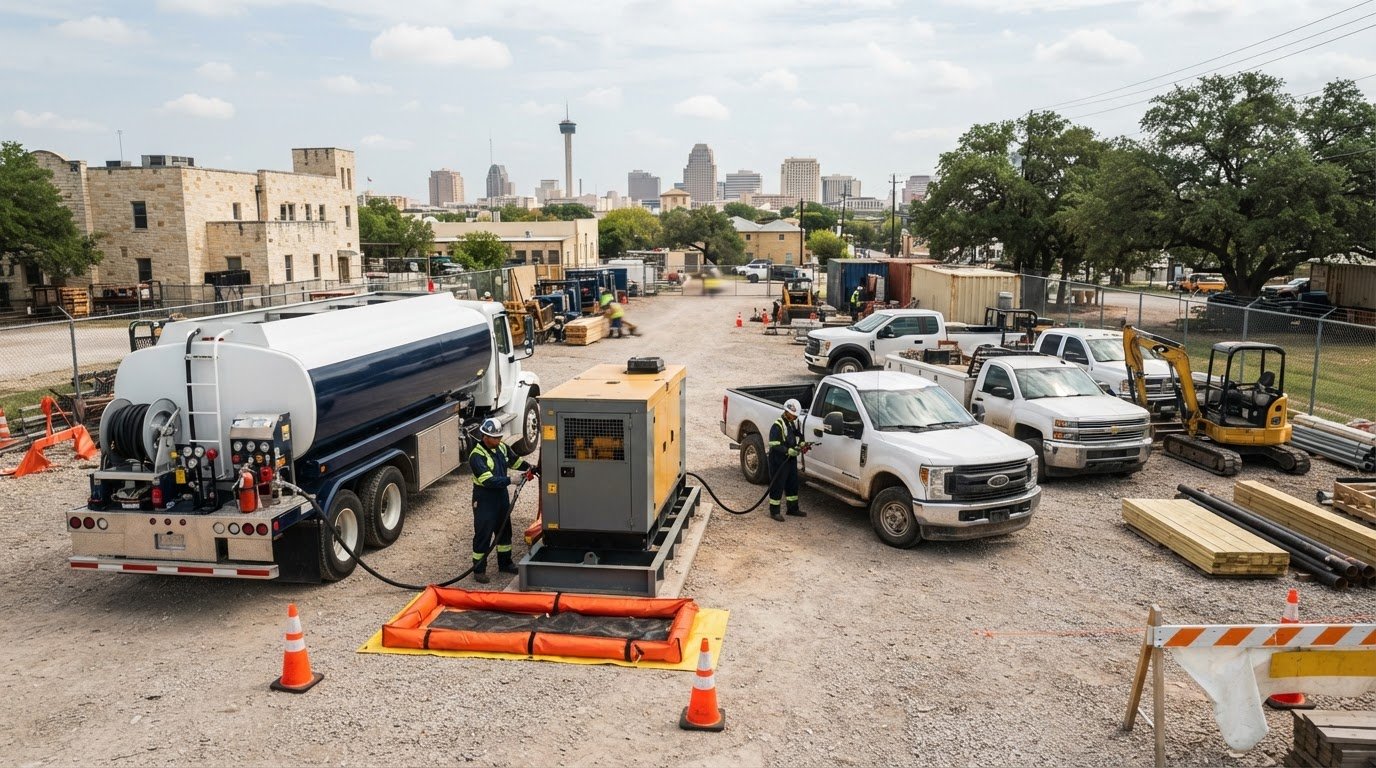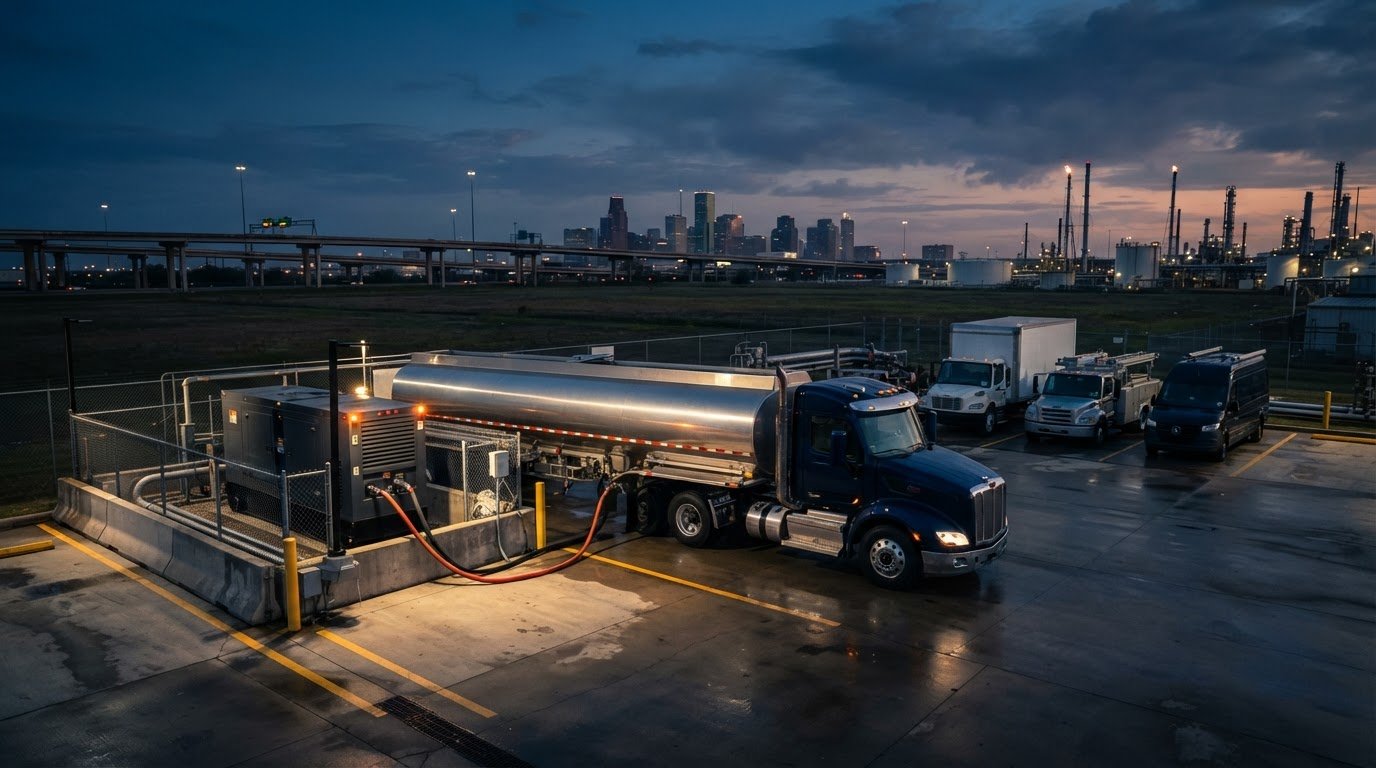
Critical power depends on fuel reaching the generator when and where it is needed. Dedicated generator fueling for critical operations in Austin can include scheduled or emergency on-site diesel delivery to stationary, portable, and rental generators. Planning around each unit’s location and fuel needs helps coordinate refueling with the work the generator supports.
Keeping backup power ready takes more than having a generator on site. A practical fuel-supply plan is essential, especially when an outage puts critical operations under pressure.
This article explains what generator fueling includes, how delivery works for different generator types, and what to consider when planning fuel. It also covers how emergency delivery can support hospitals, data centers, logistics hubs, and food distributors during an outage, and when dedicated fueling can fit into a continuity plan.
Emergency delivery for trucks and generators
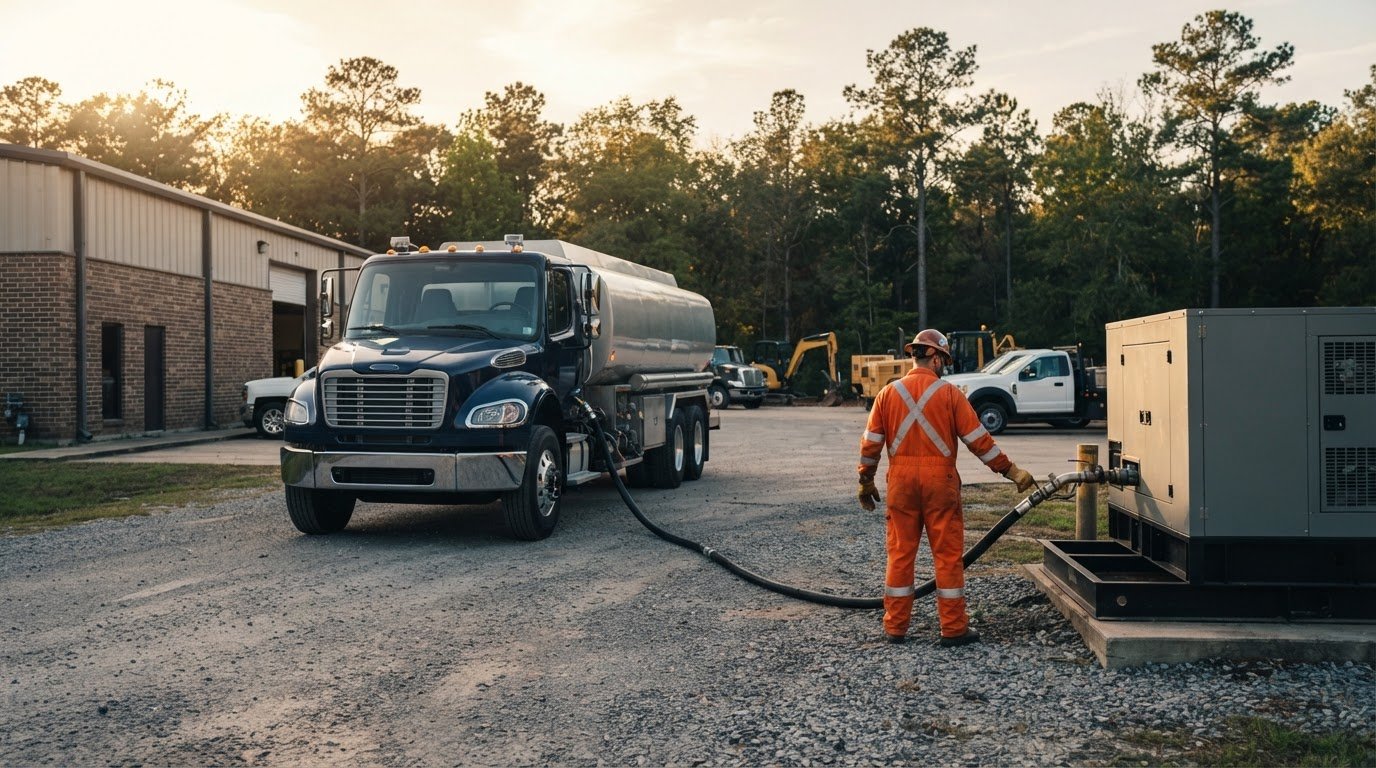
Emergency fuel delivery replenishes stationary or portable generators at their location. A clear delivery plan identifies the equipment, access route, fuel requirement, and urgency before dispatch.
On-Site Generator Fueling
On-site delivery brings fuel directly to the generator, reducing the need to move equipment or arrange separate transport. Before delivery, identify each generator, its tank access point, the site entrance, and any operating constraints that affect safe truck positioning.
Scheduled deliveries support routine replenishment, while emergency delivery addresses an unexpected drop in available fuel. Emergency fueling teams handle thousands of generator diesel fuel deliveries to stationary and portable generators each year. For Austin-area emergency fueling, the emergency fueling service page describes the relevant local service.
Fuel Types and Generator Requirements
The generator’s design determines its fuel type. Diesel generators require diesel, while generators designed for other fuels need their specified fuel. Match the fuel plan to the generator nameplate and operating instructions before arranging delivery.
Fuel use varies with generator size and load. Small rental generators typically use 3-5 gallons per hour, while large rental generators typically consume 15-25 gallons per hour. Tank capacity should reflect expected runtime, operating load, and the time needed to arrange replenishment. Those factors help determine how much storage is useful without treating a single tank size as suitable for every site.
Texas and Austin requirements: On-site generator fuel storage and delivery must meet applicable fire, environmental, and site-specific safety requirements. Requirements depend on the tank, its location, the quantity stored, and the delivery setup, so account for these conditions when planning storage and fuel transfer.
Pricing and payment: Pricing depends on the case and is provided after a quote request; cost factors include delivery volume, urgency, distance, and site access. Payment methods depend on the agreed billing arrangement. For on-site delivery and invoicing, keep the delivery date, fuel volume, generator or tank served, and invoice details together so operations staff can reconcile fuel use.
For an emergency call, provide the site address, generator location, fuel type, access instructions, and current operating need. These details help dispatch teams distinguish a truck needing diesel from a stationary or portable generator, then plan the fuel delivery around the site’s immediate requirements.
Generator fueling for hospitals and data centers
Hospitals and data centers need backup-power plans that account for both generator capacity and fuel supply. Fuel-related issues are the main cause of generator failure at mission-critical facilities, according to ESI, so fuel readiness deserves attention alongside equipment testing.
Fuel choice affects how a facility stores and replenishes its backup supply. Diesel can be stored on site and delivered. Natural gas depends on a gas connection, while propane requires suitable on-site storage. Renewable diesel may also be an option for compatible equipment, subject to the generator manufacturer’s specifications.
For Austin commercial facilities, a fuel-storage review should address tank location, capacity, construction, containment, fire protection, and delivery access. Permits and fire-safety requirements depend on the tank installation and site conditions, so assess the plans before installing or changing storage.
Hospitals must account for critical loads such as life-support systems, clinical equipment, and essential building operations. Data centers must consider computing loads, cooling, and supporting infrastructure. One generating unit participant reported an internal requirement to maintain 96 hours of alternate fuel, according to the Federal Energy Regulatory Commission (FERC); that is a reported internal requirement, not a universal rule.
Austin’s Skybox Austin Building 1 supports 30 MW of data center capacity. At that scale, fuel planning should connect generator demand to a documented replenishment process rather than treating tank level as an isolated reading. A facility team can organize records by generator, tank, date, delivery volume, and operating conditions.
- Track consumption: Record fuel levels and generator runtime at consistent intervals.
- Compare supply with demand: Review use during tests and outages to identify changing consumption patterns.
- Log replenishment: Match each delivery record to the receiving tank and generator.
- Escalate exceptions: Flag unexpected fuel loss, low levels, or differences between expected and recorded use.
Fuel records help operations teams distinguish routine use from a sudden increase in demand. They also provide a practical basis for adjusting delivery schedules and estimating how long stored fuel can support priority loads.
For a site planning diesel replenishment, commercial diesel delivery can support the fuel supply process. Pair delivery records with generator runtime logs to give hospital engineering teams and data center operators a clearer view of stored fuel and consumption.
Keep delivery details with operating records so staff can review usage alongside available supply. For each generator, document its fuel source, storage arrangement, and replenishment contact. A clear handoff identifies who checks levels, arranges delivery, and communicates exceptions. Review these responsibilities as part of backup-power planning, and keep records accessible to the staff who may need them during an outage.
The NRG (Skybox Houston I) project has 1,200 kW of capacity. At a facility with a defined capacity, fuel planning should remain connected to the equipment plan and the process for replenishment. Teams can use their operating records to revisit assumptions, identify gaps in assigned responsibilities, and make updates when site needs change. Clear documentation helps keep fuel readiness part of ongoing operations rather than a task considered only when a generator is tested or called into service.
What Is Generator Refueling Service?
Generator fueling delivers fuel to backup equipment at its operating location. For critical facilities, scheduled replenishment and urgent response can be planned around the generator’s fuel type, tank access, and operating needs. Dedicated generator fueling for critical operations in Austin connects these site details with the facility’s continuity process.
Priority refueling organizes delivery around the operational consequences of an interruption. A facility can identify critical generators, assign site contacts, and set a process for reporting low fuel. During an outage, these steps help responders locate the right equipment and access point. Refueling supports coordination, but it does not replace generator maintenance or the facility’s continuity procedures.
Healthcare facilities may rely on backup generators for clinical operations and essential building systems. Hospital engineering teams can map each generator to the loads it supports, then record its tank location, fuel type, and access instructions. For example, separate directions for a loading entrance and a restricted generator area can help staff guide a delivery to the right equipment.
Critical facilities can make a refueling plan more actionable by documenting:
- Equipment details: Generator identification, fuel type, and the tank or fill connection serving it.
- Site access: Gate instructions, delivery route, staging area, and any escort process.
- Operational contact: The staff member who can direct a driver to the correct equipment.
- Priority order: Which generators support the facility’s most time-sensitive operations.
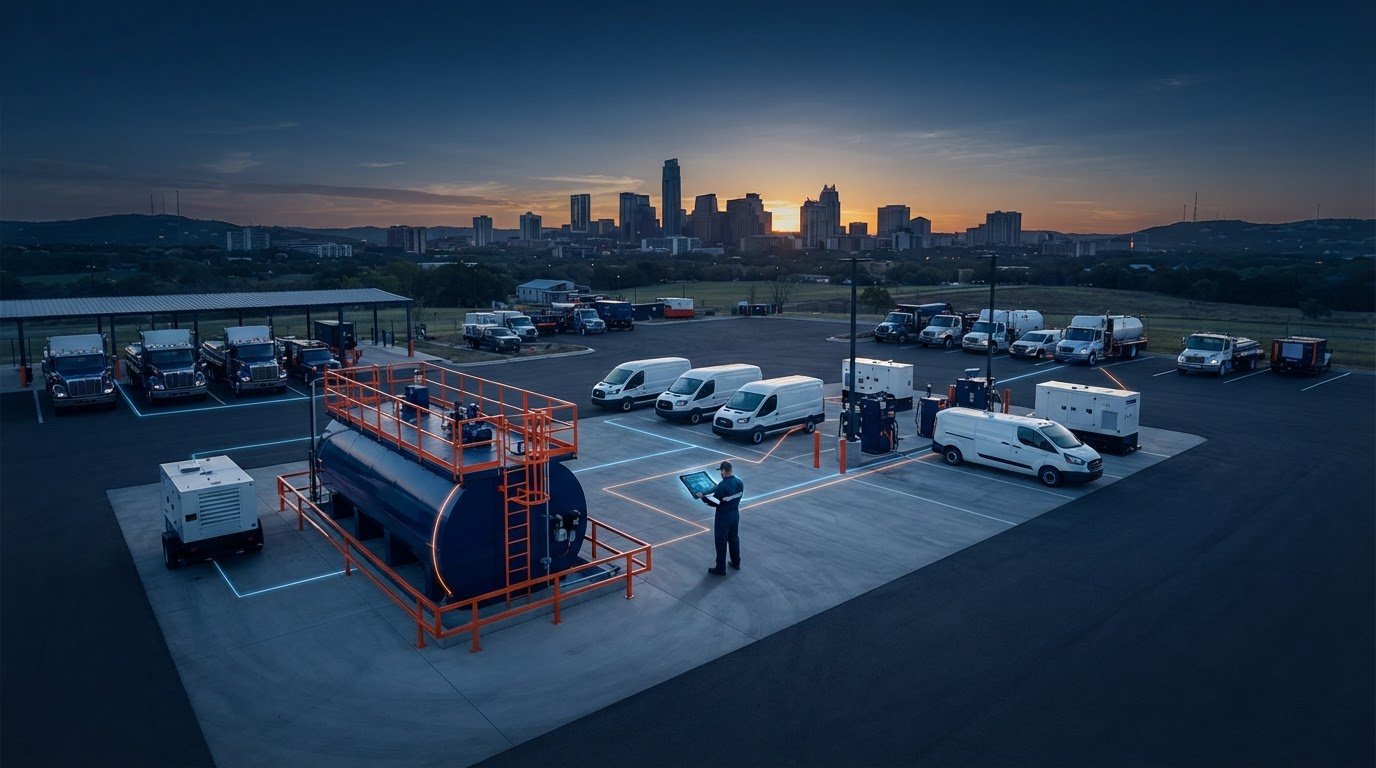
Generator locations and access routes may vary across a data center campus. A site map marking tanks and delivery points gives operations staff a shared reference during a high-pressure response. Dedicated generator fueling for critical operations in Austin can be planned around these site-specific details, not just a general address.
Conditions that support delivery include a usable entrance, safe vehicle staging space, clear directions, and an available site contact. Document these details for each delivery point. If construction barriers or temporary closures change the route, update the instructions so drivers can reach the intended tank.
Assign responsibility for reporting fuel levels, requesting replenishment, and receiving delivery records. A hospital facilities team might route a low-fuel alert to its engineering lead, while a data center may assign the task to an operations contact. Clear roles connect a request with staff who can grant access and identify the correct generator.
For Austin critical operations, treat refueling as part of a site-specific continuity process. Define generator priorities, access steps, and response contacts before an outage, then update records when equipment or facility layouts change.
Business continuity during power outages
Outages can disrupt hospitals, data centers, logistics hubs, and food distributors. A continuity plan connects generator runtime, fuel reserves, power distribution, and replenishment decisions.
Generator Fuel Reserves and Runtime
Estimate runtime by comparing usable tank supply with generator consumption at the expected operating load. Then account for priority loads, changing demand, and the time needed to arrange replenishment. A reserve plan should specify when to request delivery, who is responsible, and which generators take priority.
Fuel degradation, contamination, or an interrupted supply can reduce usable fuel or delay replenishment. Track tank readings, delivery records, and generator test observations together, and investigate unusual changes rather than relying on a single reading.
Standby Power Reliability
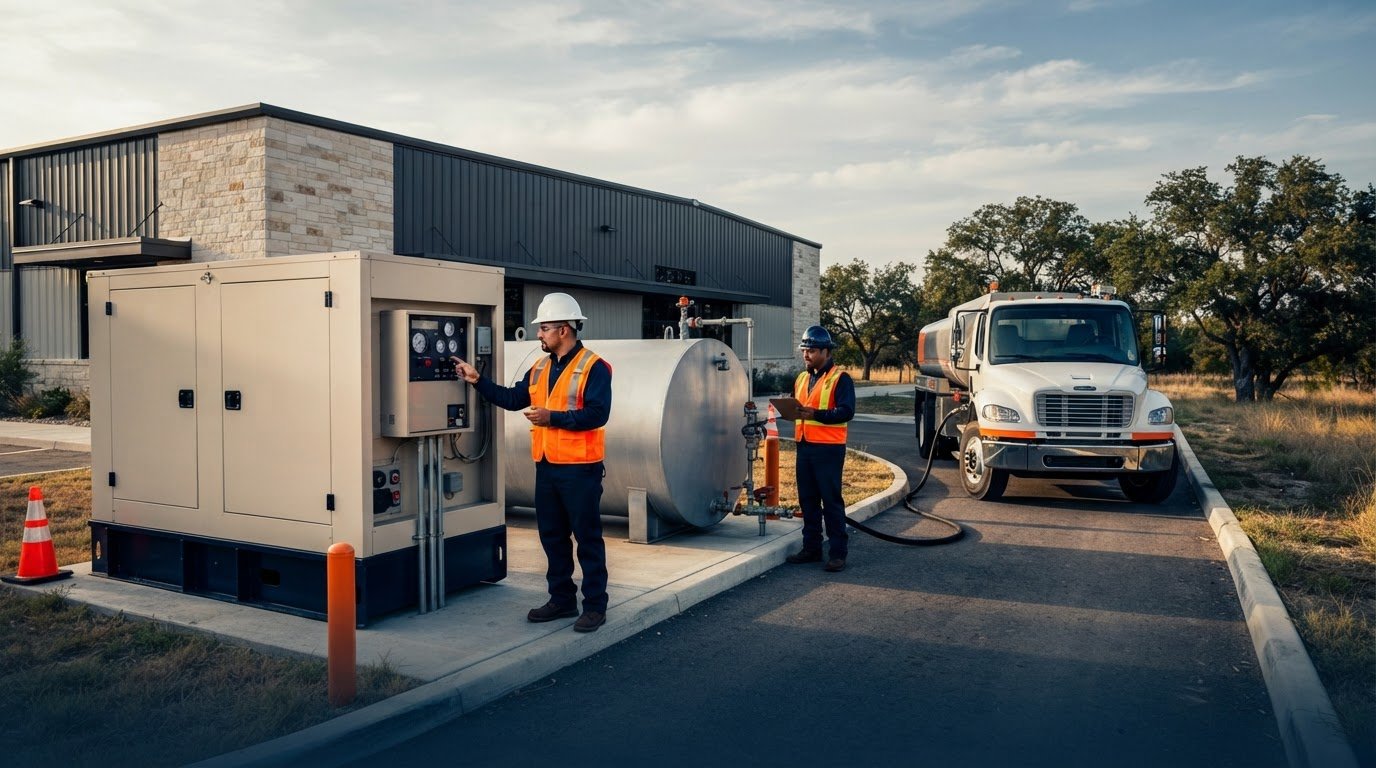
Standby reliability depends on functioning equipment, adequate fuel, and a clear response process. Facilities can monitor tank levels and generator status, record test results, and assign responsibility for escalating faults. These checks help staff identify developing issues before an outage makes the generator essential.
Efficiency also depends on matching powered loads to generator capacity. A continuity plan should identify essential equipment first, then explain how operators handle noncritical loads if available generation becomes constrained.
Power density and block configurations shape how a data center distributes backup capacity. A campus with separate buildings or power blocks may need to map each generator and fuel tank to the equipment it supports. Skybox Austin occupies a twenty-five-acre campus, and its master plan supports up to two 141,000 SF facilities. That layout makes clear equipment identification and delivery access important planning details.
Power feeds matter alongside standby generation. Skybox Austin is supported by two diverse Oncor substations, illustrating how a large campus connects to utility power. Businesses in Oncor’s territory should map utility feeds, transfer arrangements, generator locations, and fuel access together. This map helps staff understand which areas remain powered and where backup capacity must respond during an outage.
Build a practical monitoring routine around decisions staff can act on:
- Record: Log generator status, tank readings, and runtime during tests and outages.
- Compare: Review fuel use against operating conditions and the loads being supported.
- Escalate: Assign a contact for low supply, unexpected consumption, or delivery access changes.
- Revise: Update the plan when equipment, campus routes, or powered priorities change.
For Austin facilities, this approach connects generator fuel planning with site-specific power arrangements. Current records help operations teams make replenishment and load decisions without relying on assumptions about runtime or campus demand.
Fueling stationary, portable, and rental generators
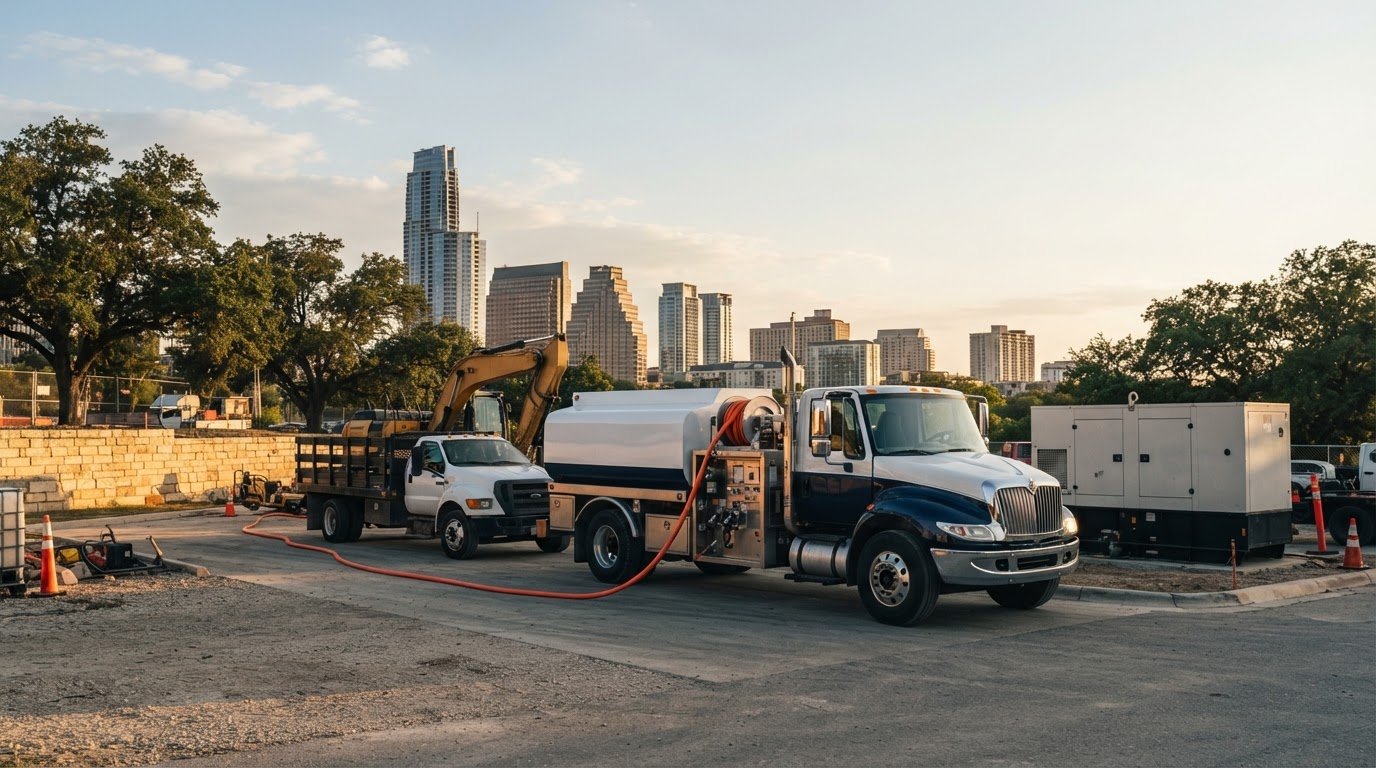
Generator fueling needs vary with equipment location, tank configuration, and operating pattern. A fixed standby unit, a portable generator supporting temporary work, and a rental unit at a changing jobsite each need clear identification and refueling instructions. Plan fuel delivery around the specific generator, not just the site address.
Stationary generators remain in one place, so a site plan can identify their tanks, fill points, and safe truck access. For example, a facility can label each generator and mark its delivery route on an operations map. This helps staff direct fuel to the intended unit, even when several generators serve different buildings or loads.
Portable generators may move as work areas change. Before refueling, update the equipment location and access instructions, then identify the correct tank and fuel type. On a construction site, for example, the delivery point may need updating when equipment moves to a different work zone. Accurate instructions reduce confusion and help keep the generator running where crews need it.
Rental generators need a plan that accounts for both operating demand and storage. Small rental generators typically use 3-5 gallons per hour, while large rental generators typically consume 15-25 gallons per hour. Use the unit’s actual load and operating schedule to estimate fuel needs, then set a replenishment trigger that allows time for delivery.
Fuel in rental generators can last 6-12 months in storage with proper treatment. Fuel management may also include polishing, diesel additives, and tank cleaning. These steps address storage condition and tank maintenance; they don’t replace checking the generator manufacturer’s requirements or tracking fuel levels.
A useful site-level record can include:
- Generator identity: Record the unit’s label, location, and fuel type.
- Delivery access: Note gates, routes, staging areas, and the person who can guide a driver.
- Operating pattern: Track runtime and load changes that affect fuel demand.
- Storage status: Log tank readings, deliveries, and treatment or cleaning work.
Scheduled refueling can keep stationary equipment supplied during planned operations, while an emergency request addresses an unexpected need. For rental equipment, revise the schedule when the generator’s location or workload changes. For fixed units, review it when operating conditions shift. Both approaches tie delivery timing to actual use rather than assumptions.
Before arranging service for stationary, portable, or rental generators, organize equipment details, access instructions, and recent usage records. These steps help teams coordinate refueling and reduce avoidable downtime across changing sites.
React Fueling: Diesel Delivery
React Fueling supports Austin businesses with diesel delivery, generator fueling, and equipment fueling for commercial operations. Its services can supply stationary, portable, or rental generators on a planned basis or during an outage. Sharing the equipment’s location, fuel type, and access requirements helps organize delivery around the site’s operating needs.
For critical operations, include the generator location, tank access details, and site instructions when arranging service. This connects the delivery plan to the equipment that must keep running. React Fueling delivers diesel to generators and other commercial equipment.
To discuss fueling for your operation, contact React Fueling or visit reactfueling.com.
Set your next fueling plan in motion
A dedicated generator fueling plan for critical operations in Austin should give your team a clear next step before fuel becomes urgent. Define who tracks generator needs, how staff communicate site access, and how your operations team records each delivery. A written process gives staff a shared reference when facility conditions or equipment use change.
React Fueling provides diesel delivery, equipment fueling service, and fuel delivery for commercial operations. These services can support a fueling plan based on your equipment and site requirements. Share the generator location, fuel needs, and delivery instructions to start with practical operating details.
Keeping the plan current takes ongoing attention. Review it when equipment moves, access routes change, or operational priorities shift, and make sure responsible staff know where to find the latest instructions.
Contact React Fueling to discuss service and take the next step toward a more organized fueling plan for your operation.
Frequently Asked Questions
What are the costs of dedicated generator fueling services in Austin?
React Fueling offers clear, competitive rates with no long-term commitments or hidden fees. Request a quote based on your service needs, including fuel type and volume, scheduled or urgent delivery, distance, and site access. Providing the generator location, delivery requirements, and operating schedule helps define the request.
Which Austin-area companies provide generator fuel delivery and refueling services?
React Fueling provides generator fueling and fuel delivery for commercial operations in Austin. Its listed service areas are Houston, TX; Austin, TX; San Antonio, TX; Dallas, TX; College Station, TX. When arranging service, prepare the facility address, generator type, fuel requirements, and site access instructions. These details clarify whether the request is for a fixed facility generator or equipment at a temporary worksite.
How quickly can emergency generator fuel be delivered in Austin during an outage?
React Fueling lists an average 4-hour response time across Texas and offers 24/7 emergency fueling. That figure describes response time, not a stated delivery arrival time. During an outage, share the facility address, generator location, site entrance instructions, and current fuel need. Clear directions help the response team understand the request and coordinate access to the equipment that needs replenishment.
What generator fueling contracts or backup fuel plans are available for Austin businesses?
React Fueling offers scheduled and on-demand generator fueling, emergency fuel delivery, and fuel tank rentals. Austin businesses can build a backup plan around routine replenishment, an emergency request process, or on-site storage needs. Define who tracks fuel levels, who authorizes service, and which equipment takes priority. Keep those responsibilities in the facility’s continuity procedures so staff can follow the same process during an outage.
What fuel consumption rates and tank sizes do commercial standby generators require?
Fuel use varies with generator size and load; the stated rates are 3-5 gallons per hour for small rental generators and 15-25 gallons per hour for large rental generators. Tank capacity should reflect expected runtime, operating load, and replenishment time; no specific tank size is given for commercial standby generators.