In the high-stakes industrial corridors of Houston, every minute an excavator sits idle or a generator runs dry isn't just a delay; it's a direct hit to your bottom line. You're likely familiar with the logistical headaches of moving heavy machinery to fueling stations or the frustration of waiting on national providers that treat your urgent delivery window like a suggestion. With Gulf Coast diesel prices reaching $5.75 per gallon in late 2026, you simply can't afford the labor costs and wasted fuel associated with equipment idling.
This guide demonstrates how professional mobile diesel fueling Houston services eliminate these operational bottlenecks by delivering fuel directly to your equipment, ensuring your fleet stays in motion. We'll show you how to optimize your fuel logistics to lower overhead and guarantee availability even during emergencies. We'll also cover critical 2026 updates, including TxLED compliance standards and the latest EPA Tier 4 DEF regulations, to ensure your operations remain both efficient and fully compliant with Texas law. By shifting from reactive refueling to a strategic logistics model, you protect your schedule and your profit margins.
What is Mobile Diesel Fueling and How Does it Support Houston’s Economy?
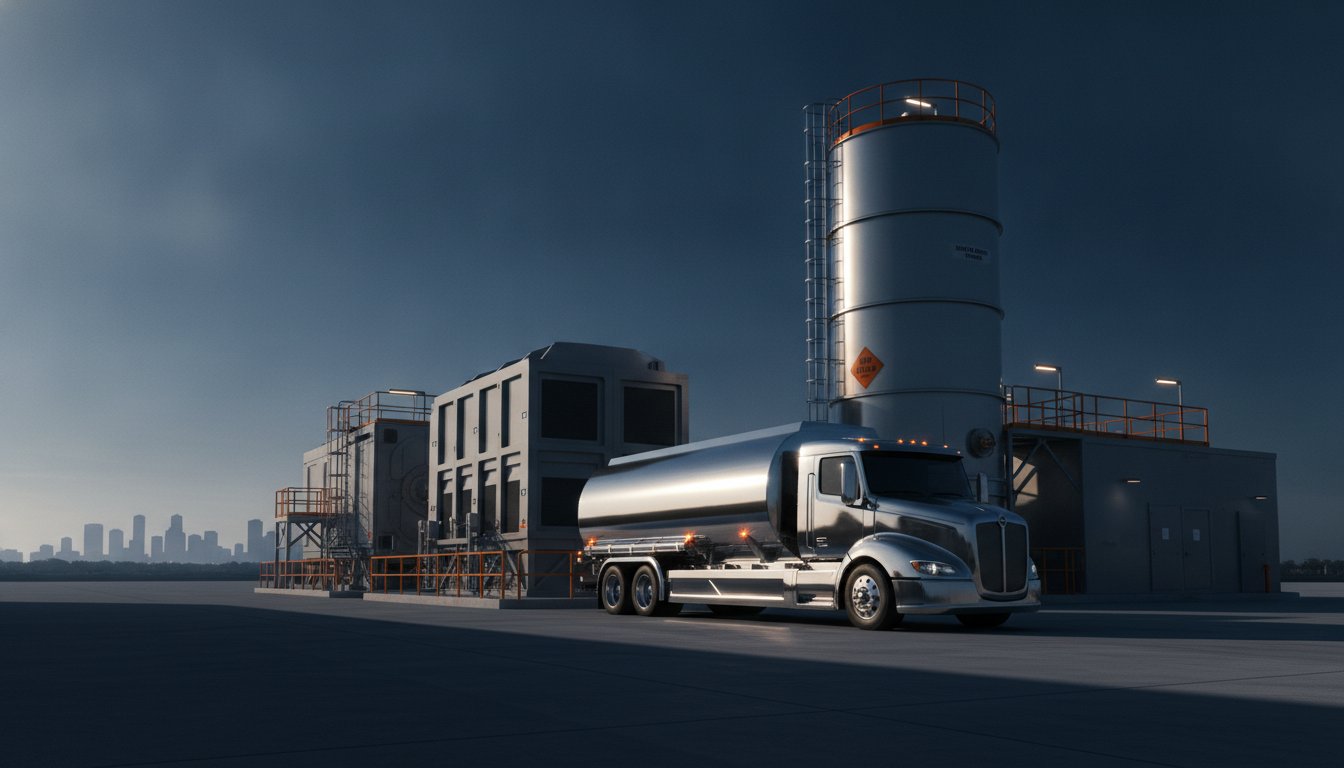
Mobile diesel fueling is a direct-to-asset delivery service that brings fuel directly to machinery, vehicles, and storage tanks exactly where they operate. In Houston's sprawling industrial landscape, this service bypasses the traditional requirement of moving heavy equipment to a central fueling station. By delivering diesel delivery services straight to the job site, providers ensure that projects remain on schedule and operational costs stay predictable. Mobile diesel fueling functions as a critical logistics bridge that eliminates operator "dead time" by ensuring machinery is fueled during off-hours or active shifts without ever leaving the site.
Fuel logistics serve as the pulse of Houston’s construction and industrial sectors. With the regional economy tied to massive infrastructure projects and the Port of Houston, any interruption in fuel availability creates a ripple effect of delays. Providers typically deliver two primary fuel types: Ultra-Low Sulfur Diesel (ULSD) for on-road vehicles and Dyed Diesel for off-road equipment. For operators in the Houston, Galveston, and Brazoria area, all diesel must meet Texas Low Emission Diesel (TxLED) standards, which mandate a minimum cetane number of 48 to reduce nitrogen oxide emissions. Utilizing mobile diesel fueling Houston services ensures that every drop of fuel meets these strict environmental requirements while maintaining engine performance.
The Mechanics of On-Site Fuel Logistics
Specialized fuel trucks navigate complex Houston job sites through precision routing and experienced operators who understand the physical constraints of industrial environments. These vehicles utilize an integrated fuel management system to provide accurate, metered delivery and real-time reporting for every asset fueled. This technology provides a transparent paper trail, which is essential for documenting dyed diesel usage during state audits. Safety protocols remain the highest priority; technicians follow rigorous transfer procedures to prevent spills and ensure compliance with Houston Fire Department regulations, especially in high-traffic zones where equipment and personnel move constantly.
Key Industries Benefiting from Houston Mobile Refueling
The construction sector relies heavily on equipment fueling service to keep excavators, cranes, and earth-movers running through double shifts. In the logistics and freight industry, mobile units refuel fleet trucks during mandated driver rest periods, maximizing uptime without adding miles to the odometer. Critical infrastructure also depends on this model; Houston medical centers and data centers utilize generator fueling service to ensure backup power is always ready. This proactive approach to fueling protects vital services from the risks of power grid instability or localized emergencies.
How On-Site Diesel Delivery Streamlines Houston Project Timelines
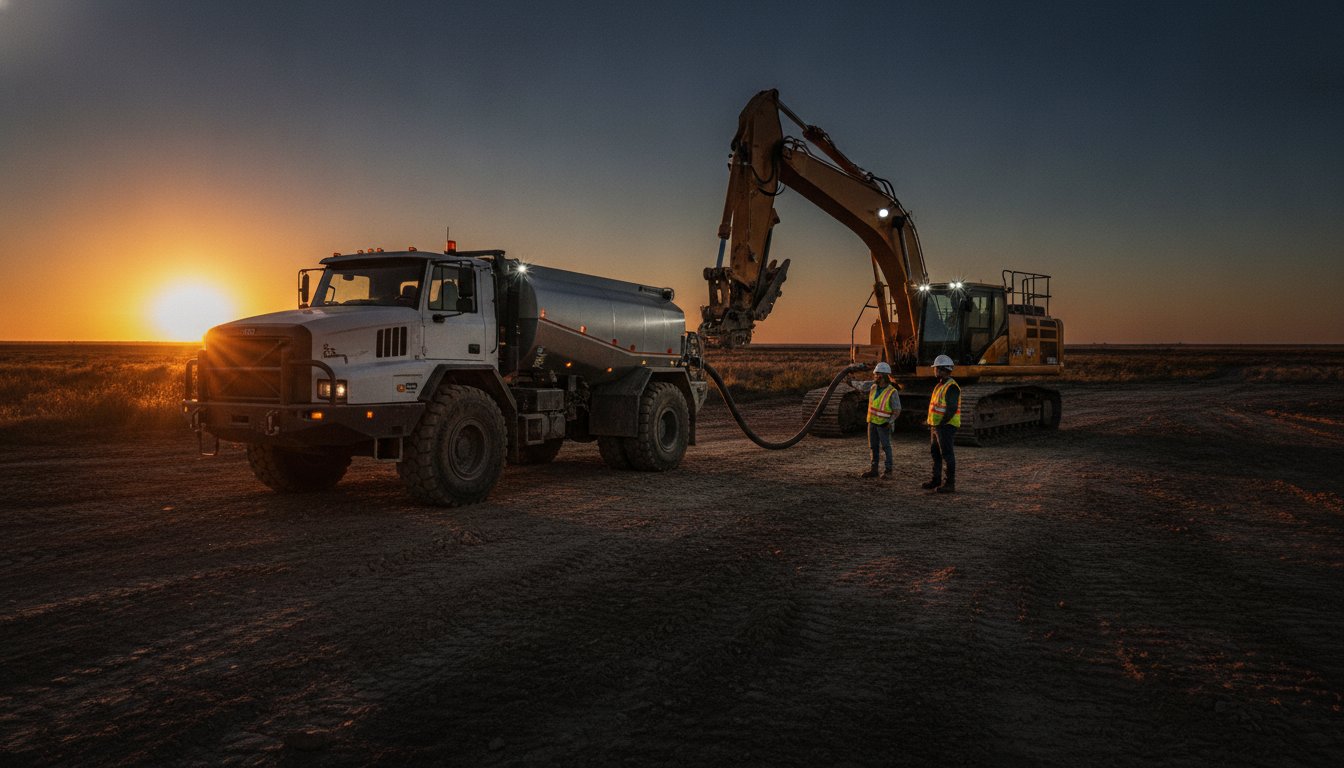
Wet hosing represents the most efficient method for maintaining operational momentum on a modern job site. Instead of requiring operators to drive machinery to a central tank or an off-site station, specialized trucks perform direct-to-asset fueling. This process eliminates the "fueling lines" that often paralyze job sites during shift starts. When labor costs are high and Diesel fuel price data shows rates at $5.75 per gallon as of late 2026, every minute spent idling is a financial leak. By utilizing professional equipment fueling service, project managers ensure that machinery is ready for the next shift without requiring manual intervention from the crew.
This method also significantly mitigates environmental hazards. Hand-carrying portable fuel cans across a rugged site is a recipe for spills, soil contamination, and safety violations. Professional mobile diesel fueling Houston operations use closed-loop systems and metered nozzles to ensure every drop reaches the tank safely. This level of precision is vital for Houston projects where local environmental regulations and site safety standards are strictly enforced to protect the surrounding community and workforce.
Direct-to-Equipment Fueling Strategy
Maximizing machine uptime requires a methodical approach to scheduling. We coordinate deliveries during shift changes or scheduled breaks to ensure that work never stops. For massive Houston projects such as highway expansions or industrial plant upgrades, managing hundreds of assets requires surgical precision. We utilize GPS tracking and digital fuel management to provide total accountability for every gallon delivered. You receive a detailed report of exactly how much fuel went into each asset, allowing for precise cost allocation and project tracking across multiple phases of construction.
Generator Readiness for Houston’s Gulf Coast Climate
Reliability is non-negotiable when facing Houston’s unpredictable storm seasons. Standby generators must be maintained through consistent generator fueling service to prevent fuel degradation. Diesel that sits too long can develop microbial growth or water contamination, leading to engine failure when you need power most. We implement regular turnover and testing protocols to ensure your fuel remains viable throughout the year. For a deeper look at protecting your facility, consult our Emergency Generator Fueling Service Guide to build a robust continuity plan.
If you need to secure your project's timeline against logistical delays and fuel shortages, reach out to our logistical experts to discuss a custom delivery schedule tailored to your site's specific needs.
Mobile Refueling vs. Traditional Methods: A Cost-Benefit Analysis
Choosing the right fueling strategy requires a thorough analysis of three primary methods: mobile delivery, retail gas station trips, and on-site bulk storage tanks. While retail stations might seem convenient, they carry significant hidden costs that erode project margins. Sending a driver to a local station involves paying hourly wages for non-productive time, increasing vehicle wear-and-tear, and assuming unnecessary insurance liability for accidents occurring off-site. On-site bulk storage avoids these trips but introduces heavy capital expenditure (CAPEX) for tank procurement, installation, and ongoing maintenance. Mobile diesel fueling Houston services provide a superior alternative by optimizing both labor and infrastructure costs.
Mobile fueling offers the lowest total cost of ownership for dynamic job sites because it eliminates the need for permanent infrastructure while reclaiming hundreds of hours of labor annually. Unlike bulk tanks, which require fixed locations and constant environmental monitoring, mobile delivery adapts to the shifting footprint of a construction project. This flexibility ensures that assets are fueled at the point of work, removing the need for a dedicated fuel technician or specialized transport vehicles on your payroll.
Calculating the Real Cost of Downtime
Quantifying the impact of fueling delays is essential for protecting your bottom line. When a specialized machine with an operational cost of $500 per hour sits idle while waiting for fuel, the financial loss extends beyond the operator's wage to include lost productivity and potential late-completion penalties. These delays often cascade, pushing back project milestones and triggering contractual fines that can reach thousands of dollars per day. Utilizing commercial diesel delivery in Houston acts as a hedge against labor waste, ensuring that every hour of the workday is spent on project progress rather than logistics.
When to Use Portable Tank Rentals
Certain high-intensity projects benefit from combining mobile delivery with fuel tank rentals to create a hybrid logistics model. This strategy is ideal for remote sites or projects requiring high-volume consumption over a short duration. Modern, lockable portable tanks provide enhanced security against fuel theft, which remains a concern on Houston construction sites. Additionally, renting compliant tanks ensures you meet Texas regulatory standards for on-site fuel storage without the long-term liability of ownership. This approach maintains a constant fuel reserve while professional delivery teams keep the tanks topped off, providing a seamless supply chain for your most demanding operations.
Implementing a Mobile Fueling Strategy for Your Houston Job Site
Successful integration of mobile diesel fueling Houston services begins with a rigorous operational audit. You must first quantify your fleet's consumption rates across different asset types to establish a baseline that accounts for current fuel costs, which reached $5.75 per gallon in late 2026. Next, map your site access points carefully; fuel delivery trucks require clear, stable paths to reach stationary equipment without disrupting active workflows. Establishing a precise delivery cadence, whether daily, weekly, or on-demand, ensures that your project intensity dictates your fuel supply rather than the other way around.
Compliance and financial tracking are the final pillars of a professional strategy. You must integrate DEF fluid delivery to ensure your Tier 4 engines remain operational and compliant with environmental standards. Additionally, setting up digital reporting is essential for tracking fuel tax credits. Under Texas House Bill 326, businesses must maintain a transparent paper trail to capture the $0.20 per gallon excise tax exemption for dyed diesel used in off-road applications. This documentation is your primary defense during state audits, proving that all tax-exempt fuel was used for authorized purposes.
Coordinating Diesel and DEF Logistics
Modern diesel engines are highly sensitive to DEF levels, and running out can trigger an immediate shutdown. A new EPA rule proposed in July 2026 mandates that Tier 4 engine manufacturers provide more consistent warnings before an engine enters "derate" or "limp mode" due to low fluid levels. Relying on a single-source provider for both diesel and on-site DEF fluid delivery ensures that neither fluid reaches critical levels simultaneously. Proper storage is also vital; DEF must be kept in a protected environment to prevent contamination and urea crystallization, which can damage sensitive engine components.
Emergency Readiness and Disaster Recovery
Houston’s position on the Gulf Coast necessitates a robust disaster recovery plan that prioritizes operational continuity. Establishing a priority fueling agreement before hurricane season ensures your project has guaranteed access to mobile diesel fueling Houston when local infrastructure fails. Our 24/7 emergency fueling services support critical resilience for hospitals and data centers that cannot tolerate power interruptions. Navigating a disaster zone requires advanced logistics and a partner that understands the physical reality of flooded or obstructed industrial environments.
Contact our team to build a custom fueling strategy that protects your project from downtime and ensures your fleet remains compliant with the latest Texas regulations.
React Fueling: Houston’s Partner for Reliable Diesel Logistics
React Fueling operates as a dedicated logistical ally for firms seeking mobile diesel fueling Houston services throughout the metro area. As a member of the React Holdings family, we leverage significant logistical scale to ensure consistency and reliability, even when regional demand spikes. Our "Vigilant Partner" philosophy drives us to go beyond simple delivery; we act as a seasoned problem solver that understands the high-stakes nature of your work. By prioritizing operational continuity, we alleviate the stress of potential downtime through unwavering readiness and a commitment to keeping your machinery in motion. We don't just provide fuel; we provide the peace of mind that your project will never stall due to a dry tank.
Why Local Expertise Matters in Texas Logistics
Navigating the logistical hurdles of the Houston industrial corridor requires more than just a truck; it requires a partner that understands local traffic dynamics and industrial zoning restrictions. Executing mobile diesel fueling Houston effectively means planning routes that avoid peak congestion near the Port of Houston or the Energy Corridor to maintain strict delivery windows. We also bring deep expertise in Texas fuel regulations, specifically the TxLED standards that mandate a minimum cetane number of 48 for non-road equipment. Our team ensures that your documentation for dyed diesel is audit-ready, protecting you from the heavy financial penalties associated with tax non-compliance under Texas House Bill 326.
Get Started with a Customized Fueling Assessment
The transition to a professional fueling model starts with a detailed audit of your commercial site. We evaluate your specific fleet requirements, including the need for DEF fluid delivery for Tier 4 engines, to create a unified logistics plan. Our team coordinates delivery windows to match your shift changes, ensuring that fuel is never the reason your work stops. For critical facilities like hospitals or data centers, we establish 24/7 emergency fueling protocols that guarantee priority response during severe weather or grid instability. This methodical onboarding process transforms fuel from a variable risk into a stable, managed asset that supports your long-term project viability.
Secure your Houston project uptime-contact React Fueling today.
Protect Your Project Timelines with Strategic Fuel Logistics
Managing fuel as a logistical asset rather than a commodity is the key to maintaining a competitive edge in Houston's industrial market. By eliminating the hidden costs of retail station trips and the capital burden of bulk storage, you ensure your equipment stays in motion and your labor remains productive. Implementing a professional mobile diesel fueling Houston strategy provides the stability needed to navigate shifting fuel prices and strict environmental regulations with total confidence.
React Fueling stands ready as your vigilant partner, offering Texas-owned and operated expertise to safeguard your operations. We provide 24/7 emergency support and utilize metered delivery systems to guarantee 100% price transparency for every gallon. Whether you're managing a highway expansion or critical hospital infrastructure, our team is committed to your operational continuity and peace of mind. Request a custom mobile fueling quote for your Houston project to secure your 2026 uptime. We look forward to keeping your fleet moving forward.
Frequently Asked Questions
Is mobile diesel fueling legal on construction sites in Houston?
Mobile diesel fueling is fully legal on Houston construction sites when performed by licensed providers following local fire codes. The Houston Fire Department requires refueling to occur at least 20 feet from mobile food units and generators, with fuel stored in UL or FM approved safety containers. Our technicians adhere to these safety protocols to ensure your site remains compliant with municipal standards while maintaining operational continuity.
What is the difference between clear diesel and dyed diesel for mobile fueling?
Clear diesel is intended for highway vehicles and includes a $0.20 per gallon Texas state excise tax. Dyed diesel contains a red marker to indicate it's for off-road use, such as construction equipment or generators, and is exempt from this tax. Using dyed fuel in highway vehicles is illegal and leads to heavy penalties. We provide both types to ensure your fleet uses the most cost-effective fuel for its specific application.
How quickly can React Fueling respond to an emergency fuel request in Houston?
React Fueling operates a 24/7 emergency response line to address urgent fuel needs throughout the Houston area. While response times vary based on traffic and site location, our status as a local provider allows us to deploy resources rapidly to critical infrastructure like hospitals and data centers. We prioritize emergency requests to prevent power interruptions and maintain stability during unexpected outages or localized disasters.
Can mobile fueling trucks reach equipment in tight or remote locations?
Our specialized mobile fueling trucks are designed to navigate the physical constraints of active industrial zones and remote job sites. We utilize extended hose reels and precision-engineered vehicles to reach machinery parked in tight configurations or difficult terrain. This capability ensures that even equipment situated far from primary access roads receives consistent fueling without requiring you to move assets, which saves significant labor and machinery wear.
Do I need to be present when the fuel delivery truck arrives?
You don't need to be present during the delivery as long as our technicians have authorized access to your site and equipment. We coordinate with project managers to establish secure entry protocols and equipment lists beforehand. After each visit, we provide digital metered reporting that details exactly how much fuel went into each asset, ensuring total transparency and accountability without disrupting your team's rest periods or active shifts.
How does mobile fueling help with EPA compliance for my fleet?
Professional mobile diesel fueling Houston services support EPA compliance by delivering fuel that meets Texas Low Emission Diesel (TxLED) standards. These regulations require a minimum cetane number of 48 and restricted aromatic content to lower nitrogen oxide emissions. Additionally, our combined DEF delivery ensures Tier 4 engines remain compliant with federal exhaust standards, preventing your machinery from entering a restricted "limp mode" due to low fluid levels.
What are the insurance requirements for having a fuel truck on my job site?
Professional fuel providers must maintain comprehensive insurance coverage, including general liability, pollution liability, and workers' compensation. When we arrive on your job site, we assume the primary risk associated with fuel transfer and handling. We recommend that site owners verify their provider’s certificates of insurance to ensure they meet the specific safety and environmental standards required for high-stakes industrial environments in the Houston area.
Can I schedule combined delivery of diesel and DEF fluid?
We offer combined delivery of diesel and Diesel Exhaust Fluid (DEF) to streamline your site logistics. This single-source approach ensures that your Tier 4 engines receive both critical fluids in a single visit, reducing the number of third-party vehicles on your site. Our technicians use dedicated equipment to prevent DEF contamination, ensuring your fleet stays operational and compliant with the latest 2026 EPA engine regulations.