
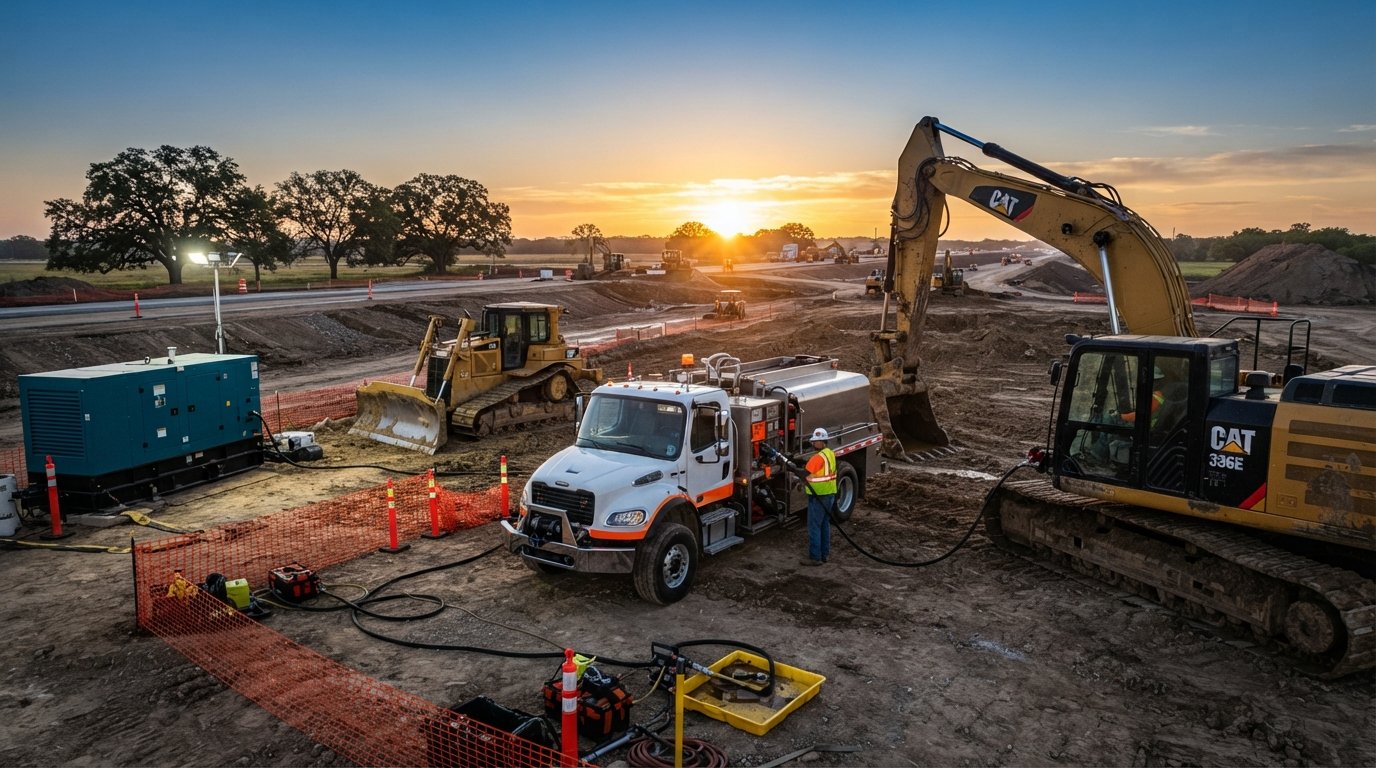
Fuel Safety & Environmental Best Practices

April 1, 2025

Share this article

Introduction. Delivering diesel is only half the story; storing and handling it safely protects your crew, your equipment and the environment. Spills not only cost money to clean up but can also lead to fines and damage your reputation. Thankfully, modern tank designs and best practices make it easier than ever to keep fuel contained. In this article we outline key safety measures—from equipment selection to daily inspections and emergency preparedness—that help you manage fuel responsibly.

Choose the right equipment

Fuel safety starts with the tank itself. High‑quality portable cubes and fuel cells are double‑walled and include integral spill containment. This design captures leaks from the inner tank, preventing environmental contamination. Lockable cabinets house pumps and fittings, protecting them from tampering and weather. Manway access and removable inner tanks facilitate cleaning and inspection. Four‑way forklift pockets and lifting eyes allow you to move the tank safely without dragging or rolling it. Ensure any tank you use is certified to UL 142 or equivalent standards, and verify it’s rated for transport if you need to tow it.

Proper placement and secondary containment

Place tanks on level ground away from traffic and ignition sources. When possible, locate them in a contained area such as a lined berm or concrete pad. Even though double‑walled tanks provide secondary containment, local regulations may require additional measures. Keep a minimum clearance between the tank and structures to allow for inspection and maintenance. Avoid positioning tanks near waterways or storm drains. If a spill occurs, quick response kits—including absorbent pads, booms and neutralizing agents—should be readily accessible.

Safe handling and dispensing

Train personnel on proper fueling procedures. Always shut off engines and extinguish smoking materials before fueling. Use grounded and bonded equipment to prevent static discharge. Inspect hoses and nozzles regularly for wear, cracks and leaks. When dispensing fuel, operators should wear appropriate personal protective equipment such as gloves and eye protection. Never leave a nozzle unattended while fueling. After dispensing, return the hose and nozzle to the lockable cabinet to protect them from damage and unauthorized use.

Regular inspection and maintenance

Perform routine inspections of your tanks and fueling equipment. Check for signs of corrosion, dents or other damage. Verify that all fittings and vents are intact and that the secondary containment area is free of liquid. Inspect fuel filters, pump seals and meters for leaks. For trailer‑mounted cells, examine tires, brakes and lights before towing. Many tanks include spiral or float gauges and spare ports for installing remote monitors. Monitoring devices send level data to your fuel supplier and provide early warning of leaks or unauthorized usage, reducing the risk of environmental incidents.

Emergency preparedness and response

Even with the best precautions, accidents happen. Develop an emergency response plan that outlines procedures for containing and cleaning up spills, notifying authorities and documenting incidents. Ensure that spill kits are stocked and that employees know how to use them. Keep emergency contact numbers easily accessible. Partnering with a fuel provider that offers 24/7 emergency response and has experience navigating disasters further reduces risk. React Fueling trains its drivers in spill response and carries the necessary equipment to contain leaks quickly.

Environmental considerations

Beyond preventing spills, consider how to minimise your overall environmental impact. Right‑size generators and use efficient equipment to reduce fuel consumption. Consolidate deliveries to decrease emissions from transport. Choose ultra‑low sulfur diesel and, when available, renewable diesel or biodiesel blends. Properly dispose of used filters, oily rags and contaminated absorbents in accordance with local regulations. Remember, protecting the environment isn’t just about compliance—it’s about safeguarding the communities where we live and work.

Conclusion

Safe fuel management is integral to successful projects. By selecting certified double‑walled tanks with lockable cabinets, placing them thoughtfully, training staff on proper handling and conducting regular inspections, you dramatically reduce the likelihood of spills and injuries. Integrate remote monitoring to detect issues early and partner with a responsive fuel supplier prepared to assist during emergencies. At React Fueling we believe that operational success and environmental stewardship go hand in hand—and we’re committed to helping you achieve both.

Recent Posts

By lawncarewebdesign September 21, 2026
Cut downtime with on-site fuel delivery for heavy machinery College Station. Learn compliance, night fueling, and dyed diesel tax savings in this 2026 guide.
By lawncarewebdesign September 21, 2026
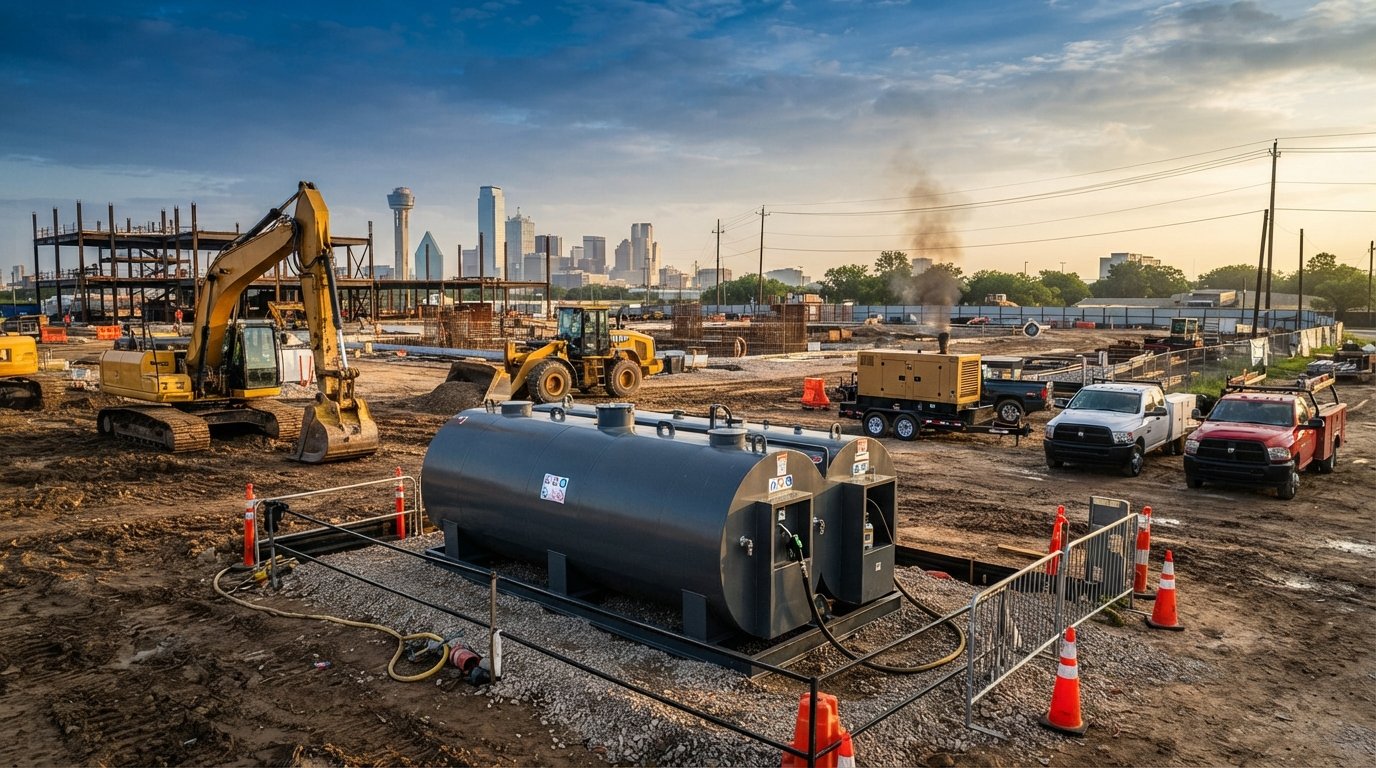
Explore temporary fuel tanks for construction sites Dallas. Cut downtime, ensure local compliance, and protect fleet budgets with our 2026 buying guide.
By lawncarewebdesign September 20, 2026
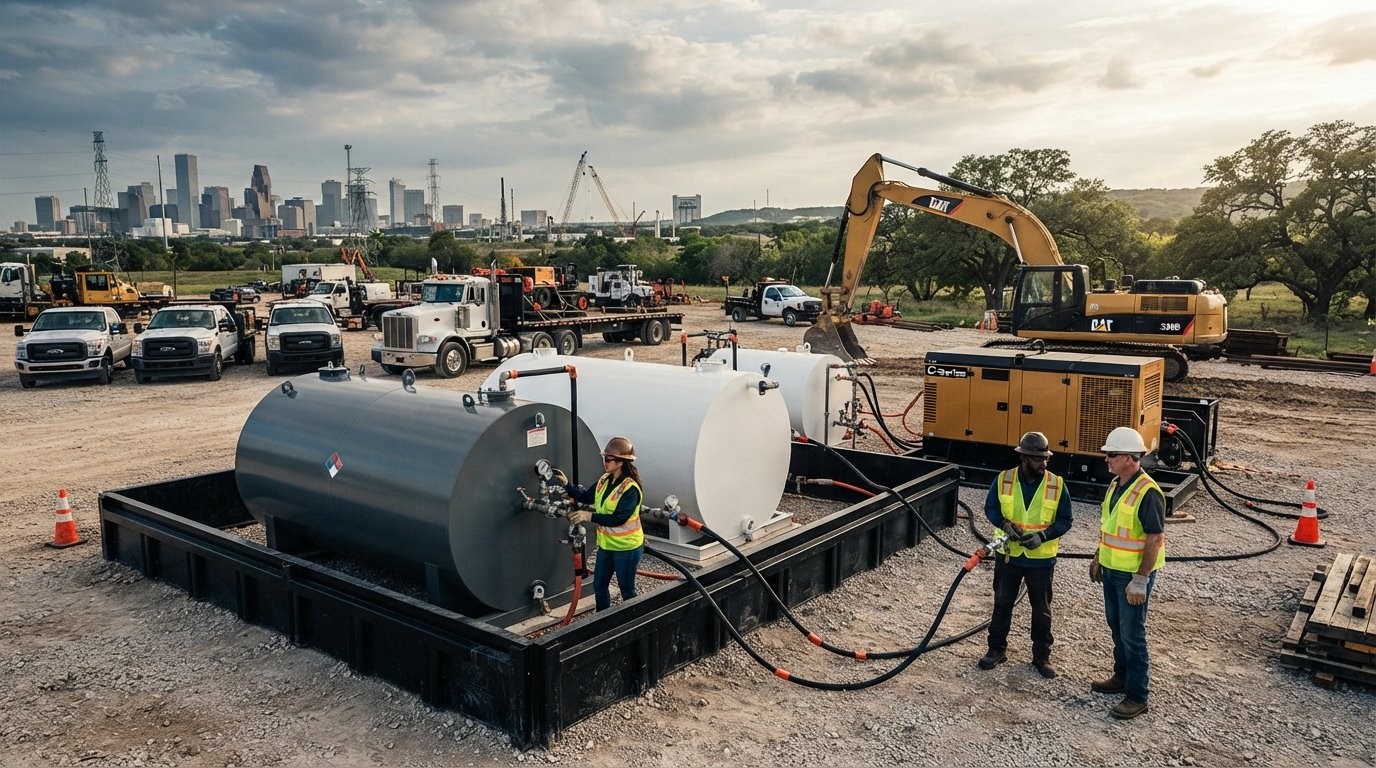
Discover how temporary fuel storage solutions eliminate job site downtime, ensure Texas TCEQ compliance, and secure reliable on-site fuel supply in 2026.
By lawncarewebdesign September 19, 2026
Stop losing thousands to DEF downtime. Our 2026 guide shows Texas fleets how on-site DEF delivery for commercial trucks cuts costs and ensures compliance.
By lawncarewebdesign September 18, 2026
Secure your bulk diesel exhaust fluid supply to avoid downtime and cut costs. Discover storage solutions, ISO standards, and reliable Texas fleet strategies.
By lawncarewebdesign September 17, 2026
Boost uptime with mobile diesel fueling in Houston. Our 2026 guide covers cost savings, logistics, and new TxLED & EPA compliance to keep your fleet moving.

By Dylan Rose, React Fueling, 10 years industry experience September 16, 2026
Boost uptime with scheduled fuel delivery for fleets Fort Worth. Our 2026 guide shows how to cut costs, simplify tax compliance, and keep your drivers on the...

By lawncarewebdesign September 15, 2026
Maximize uptime with on-site fuel delivery for construction equipment Dallas. Learn how to bypass DFW traffic, reduce costs, and meet 2026 deadlines in our e...

By lawncarewebdesign September 13, 2026
Find the best on-site fleet fueling service Austin offers. Our 2026 guide helps you cut costs, avoid traffic, and boost efficiency with the right partner.
By Dylan Rose, React Fueling, 10 years industry experience September 12, 2026
Master your 2026 fuel strategy with our guide to industrial diesel delivery service Houston. Learn to navigate high prices & new taxes to eliminate downtime.