
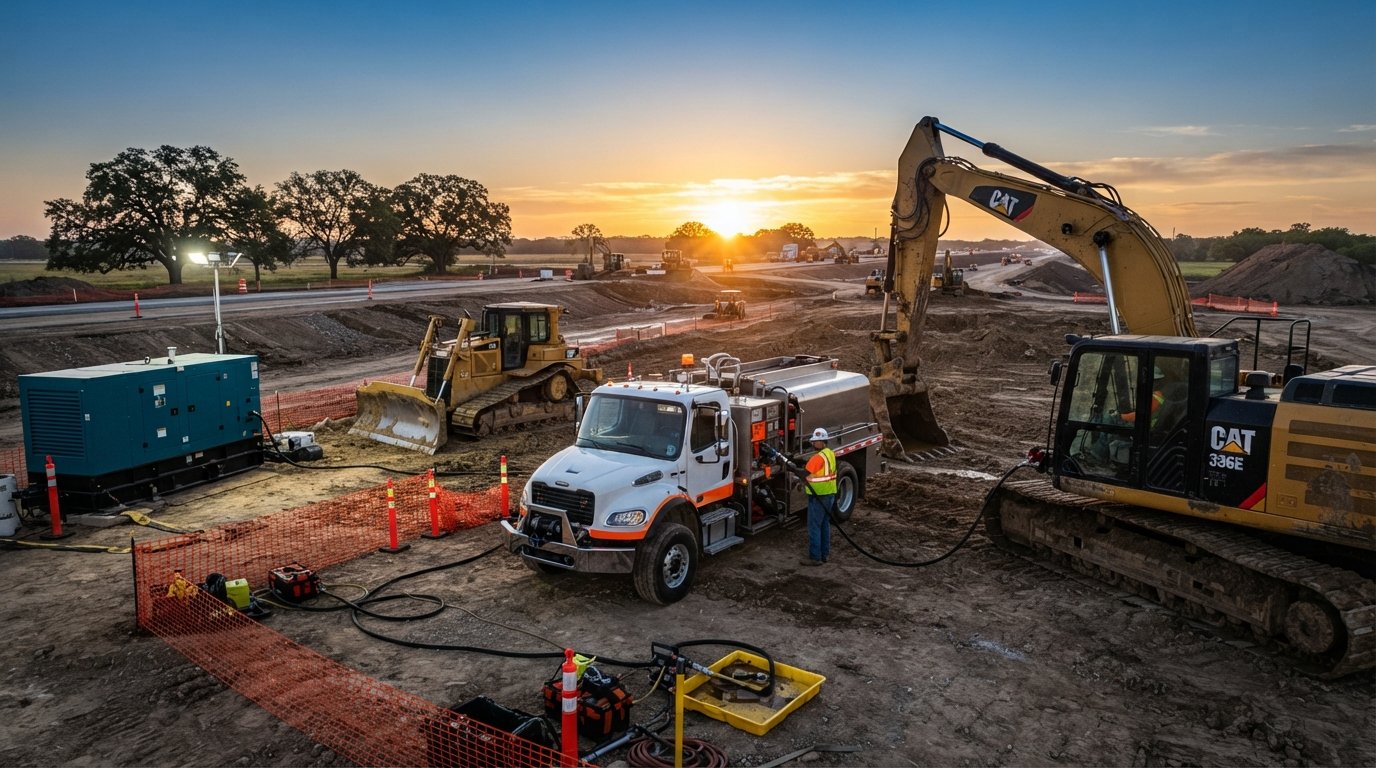
Choosing the Right Fuel Tank: Size & Safety Considerations

July 1, 2025

Share this article

Introduction. When your business relies on fuel, storage isn’t an afterthought – it’s central to your operations. Selecting the correct tank ensures you have sufficient autonomy between deliveries, comply with environmental regulations and protect your equipment and personnel. This guide examines the most common portable fuel cubes on the market, discusses key safety features and helps you match tank size to your needs.

Understand available sizes and capacities

Portable fuel cubes like the Western Global TransCube and FuelCube lines are built in capacities ranging from roughly 250 gallons up to 1,200 gallons. The TransCube Global series offers sizes such as 251, 552, 787, 1,000 and 1,215 gallons, while the FuelCube stationary range includes 252, 544, 1,018 and 1,847 gallon models. Each of these tanks is designed to be filled to approximately 95 percent of nominal capacity for safe transport. When considering a rental, think in terms of safe fill capacity rather than nominal volume. For example:


  • 250–350 gallons: Ideal for small crews, light tower generators or short‑term projects where space is limited.
  • 500–550 gallons: Supports medium‑sized earthmoving fleets or multiple light towers for several days.
  • 750–800 gallons: Perfect for large construction sites that run heavy machinery continuously. Provides a good balance of capacity and mobility.
  • 1,000–1,215 gallons: Suitable for long‑duration jobs, remote operations or large backup generators that must run for extended periods.


While React Fueling offers 350, 500, 750 and 990 gallon tanks in our fleet, these capacities align closely with the standard TransCube and FuelCube models. Choosing a size that matches your burn rate reduces delivery frequency and ensures you have reserve capacity when the unexpected happens.

Evaluate safety features

Safety should be a top priority. Look for tanks with built‑in spill containment, secure access and durable construction. Western Global’s TransCube line features a lockable equipment cabinet that protects pumps and ports from tampering and weather. Both TransCube and FuelCube tanks are double walled, meaning there is an integrated secondary containment that eliminates the need for drip trays. These tanks also come with removable inner tanks for easy maintenance and four‑way forklift pockets so you can move them safely when empty. Additionally, stackable corner brackets allow you to store multiple units efficiently when space is limited.

Consider mobility and site logistics

Job site conditions often dictate which tank is most appropriate. Smaller cubes are easier to maneuver in tight urban environments, while larger tanks may require a forklift or crane. The TransCube Global series includes corner brackets and lifting eyes, allowing safe lifts by crane and enabling you to stack tanks two high when full and three high when empty. FuelCube models provide four‑way forklift pockets for mobility when empty. If your project spans multiple locations, consider smaller units that can travel with your equipment. For stationary applications, larger cubes or even vertical fuel tanks may provide better value.

Factor in monitoring and connectivity

Modern fuel management goes beyond storage – it’s about data. Many portable tanks can be fitted with remote monitoring devices that transmit real‑time level information to both you and your supplier. This enables automatic reorders and prevents runouts. Western Global’s models feature spare ports within the lockable cabinet, designed to accommodate gauges and meters. Some units come with built‑in gauges, such as Rochester float or spiral gauges, to provide visible readings. When selecting a tank, ensure that it can integrate with your telemetry system or that your supplier offers a monitoring service.

Understand regulatory requirements

Fuel storage is subject to environmental and fire codes that vary by jurisdiction. Double‑walled tanks are generally required to eliminate the need for secondary containment, and tank size may dictate additional safety measures such as emergency vents or fire‑rated barriers. Many portable cubes carry approvals and certifications for transport on public roads and compliance with OSHA and EPA guidelines. Always confirm that the tank you select meets regulations for your project location and usage. React Fueling’s rental fleet includes tanks that comply with state and federal regulations and can be deployed on construction sites, industrial facilities and remote oil fields.

Make a decision based on total cost of ownership

While rental fees and purchase prices are important, evaluate the entire cost of ownership. Consider the frequency of deliveries, downtime costs due to runouts, potential penalties for spills and the resale value of tanks if you purchase them. Investing in a tank with robust safety features and monitoring capabilities reduces long‑term risks and insurance premiums. Competitive fuel distributors note that reducing downtime and offering proactive solutions are selling points; the right tank contributes directly to those outcomes. By partnering with a provider like React Fueling, which supplies tanks tailored to your usage and offers round‑the‑clock delivery, you benefit from predictable costs and peace of mind.

Conclusion

Choosing a fuel tank is not a one‑size‑fits‑all decision. Start by estimating your consumption and selecting a capacity that matches your burn rate while providing reserve for emergencies. Prioritize safety features such as double‑walled construction, lockable cabinets, removable inner tanks and forklift pockets. Take into account site logistics, monitoring requirements and regulatory compliance. When in doubt, consult with a trusted supplier. React Fueling’s experts can walk you through the options and deliver tanks ranging from 350 to 990 gallons directly to your jobsite. With the right fuel storage in place, you’ll safeguard your operations and minimize downtime.

Recent Posts

By lawncarewebdesign September 21, 2026
Cut downtime with on-site fuel delivery for heavy machinery College Station. Learn compliance, night fueling, and dyed diesel tax savings in this 2026 guide.
By lawncarewebdesign September 21, 2026
Explore temporary fuel tanks for construction sites Dallas. Cut downtime, ensure local compliance, and protect fleet budgets with our 2026 buying guide.
By lawncarewebdesign September 20, 2026
Discover how temporary fuel storage solutions eliminate job site downtime, ensure Texas TCEQ compliance, and secure reliable on-site fuel supply in 2026.
By lawncarewebdesign September 19, 2026
Stop losing thousands to DEF downtime. Our 2026 guide shows Texas fleets how on-site DEF delivery for commercial trucks cuts costs and ensures compliance.
By lawncarewebdesign September 18, 2026
Secure your bulk diesel exhaust fluid supply to avoid downtime and cut costs. Discover storage solutions, ISO standards, and reliable Texas fleet strategies.
By lawncarewebdesign September 17, 2026
Boost uptime with mobile diesel fueling in Houston. Our 2026 guide covers cost savings, logistics, and new TxLED & EPA compliance to keep your fleet moving.
By Dylan Rose, React Fueling, 10 years industry experience September 16, 2026
Boost uptime with scheduled fuel delivery for fleets Fort Worth. Our 2026 guide shows how to cut costs, simplify tax compliance, and keep your drivers on the...
By lawncarewebdesign September 15, 2026
Maximize uptime with on-site fuel delivery for construction equipment Dallas. Learn how to bypass DFW traffic, reduce costs, and meet 2026 deadlines in our e...
By lawncarewebdesign September 13, 2026
Find the best on-site fleet fueling service Austin offers. Our 2026 guide helps you cut costs, avoid traffic, and boost efficiency with the right partner.
By Dylan Rose, React Fueling, 10 years industry experience September 12, 2026
Master your 2026 fuel strategy with our guide to industrial diesel delivery service Houston. Learn to navigate high prices & new taxes to eliminate downtime.