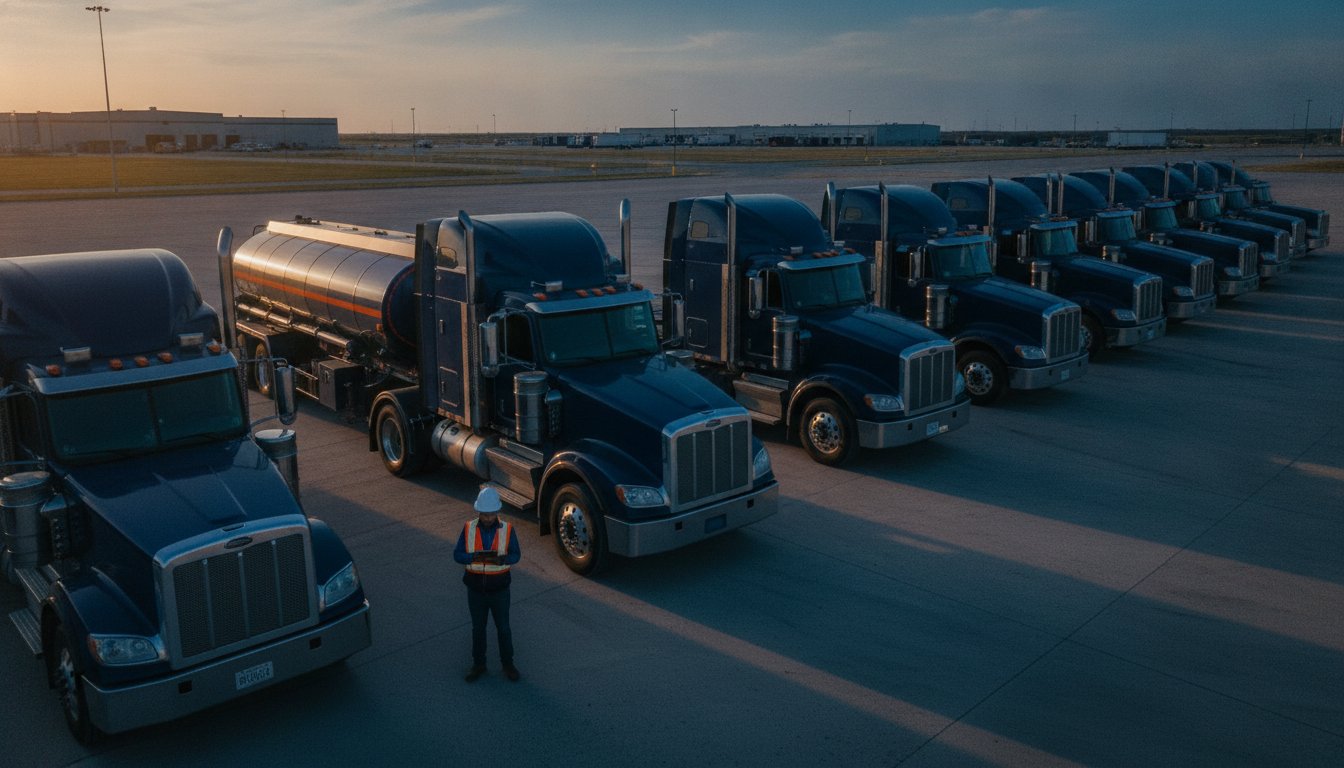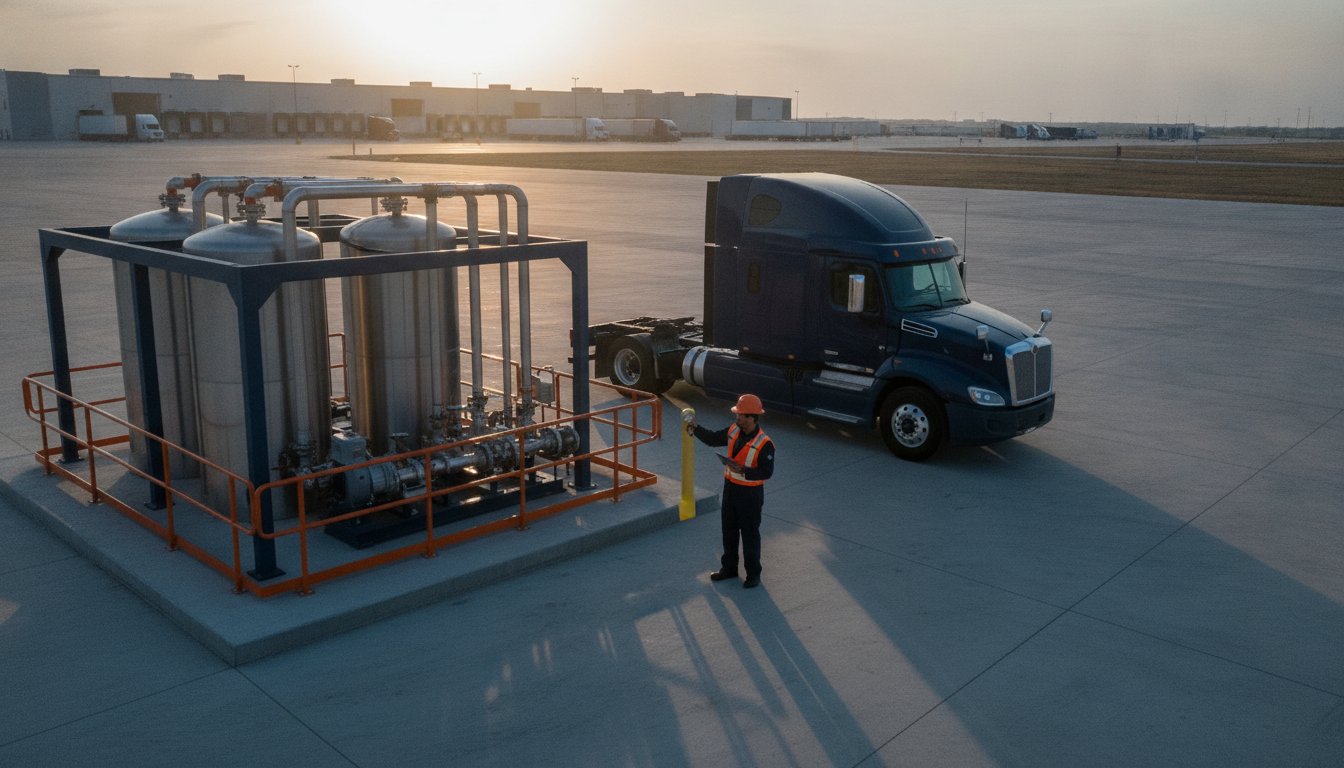
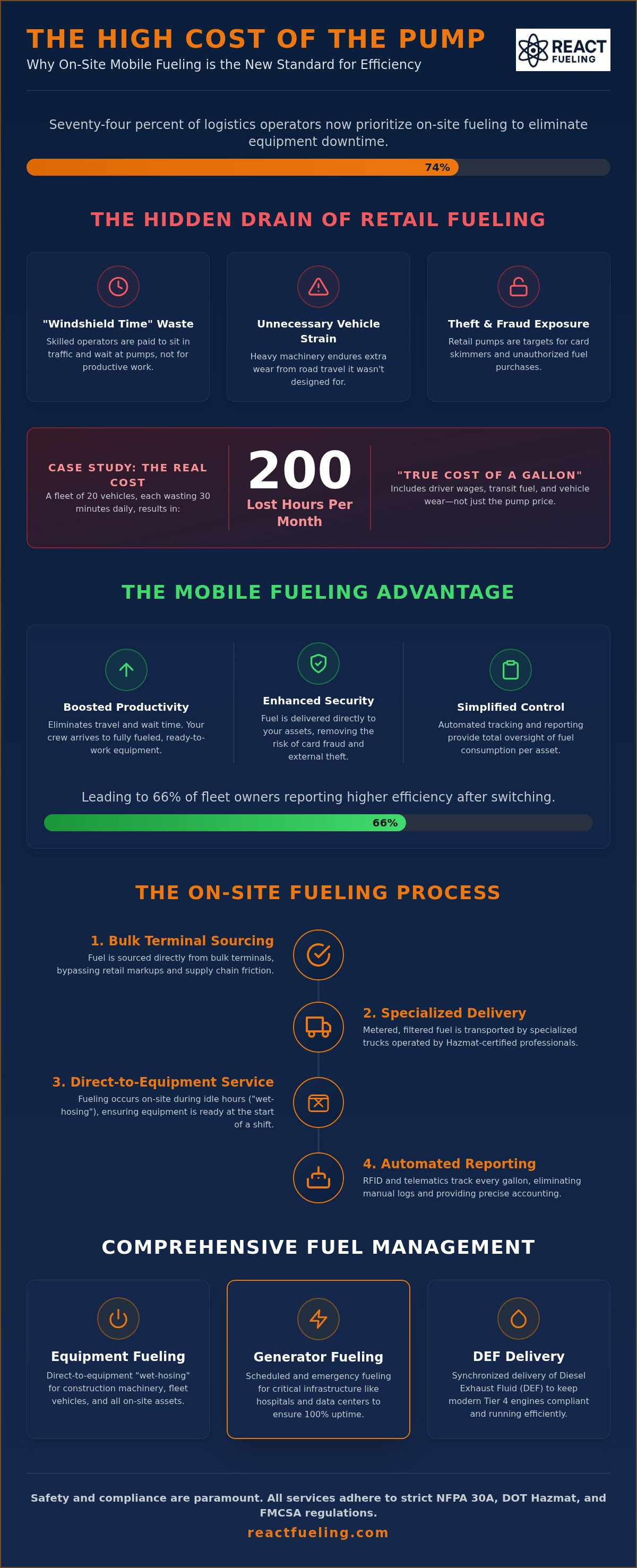
Seventy-four percent of logistics operators now prioritize on-site fueling to eliminate the hidden drain of equipment downtime. You understand the frustration of watching skilled operators wait in line at retail pumps while your project schedule slips. Utilizing a professional mobile fuel delivery service addresses these inefficiencies by bringing the supply directly to your machinery. Texas industrial operations require unwavering readiness, yet managing fuel across remote sites often feels like a losing battle against rising labor costs and complex reporting requirements.
This guide details how automated, direct-to-equipment fueling secures your supply chain and provides total operational continuity. We'll explore the latest 2026 safety standards, including NFPA 30A Chapter 14 compliance, and demonstrate how simplified billing gives you total control over your overhead. From Houston to Dallas, discover how to keep your machinery running while your competitors are still stuck at the pump.
What is Mobile Fuel Delivery and Why is Demand Growing?
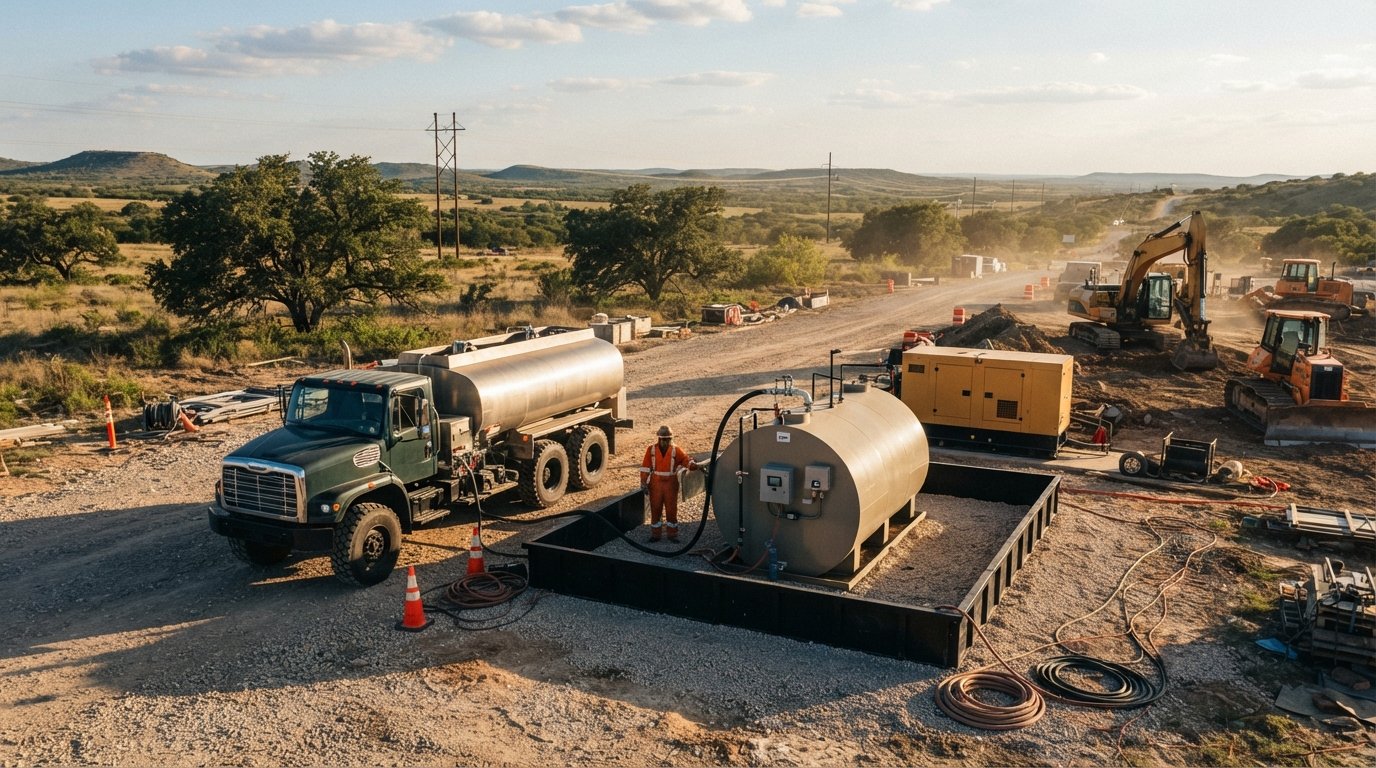
Mobile fuel delivery service is a specialized logistical solution that bypasses traditional retail infrastructure. It brings diesel, gasoline, and DEF directly to vehicles and stationary equipment. This "behind-the-fence" approach has become the standard for commercial enterprises that cannot afford the logistical friction of off-site fueling. By utilizing various methods of petroleum transport, professional providers deliver fuel to construction sites, logistics hubs, and critical facilities like healthcare centers and data centers. It's a system designed for high-stakes environments where every minute of equipment operation is tied to the bottom line.
The shift toward "Fuel-as-a-Service" has reached a tipping point in 2026. Global market estimates for this sector now range between $5.8 billion and $6.2 billion. Commercial operators no longer view fuel as a simple commodity. Instead, they treat it as a strategic asset that requires precise, automated management. Sixty-six percent of fleet owners report higher efficiency after switching to on-site solutions. This demand is driven by the need for total control over consumption and the elimination of administrative overhead.
The Core Difference: Retail Pumping vs. Mobile Delivery
Sending equipment to a retail station creates "windshield time." This is the period where drivers are paid to sit in traffic or wait at pumps rather than performing productive work. Mobile fuel delivery service eliminates this waste entirely. It also reduces unnecessary wear on heavy machinery that isn't designed for long-distance road travel. Security is another critical factor. With Texas requiring at least two security measures at retail pumps to prevent card skimmers as of 2024, on-site delivery removes the risk of unauthorized card use and external fuel theft. You gain peace of mind by knowing exactly who is handling your fuel and where it's going.
The Role of Diesel Exhaust Fluid (DEF) in Modern Fleets
Modern Tier 4 engines rely on Diesel Exhaust Fluid (DEF) to meet strict environmental standards. Managing DEF separately from diesel often leads to logistical bottlenecks or engine derating if the fluid runs low. Synchronized delivery solves this problem. React Fueling's DEF delivery ensures that your DEF levels match your diesel consumption. This integrated approach keeps your fleet in compliance and prevents costly performance issues associated with empty DEF tanks. It's a proactive way to maintain engine health across your entire fleet.
The Mechanics of On-Site Refueling: How Mobile Services Operate
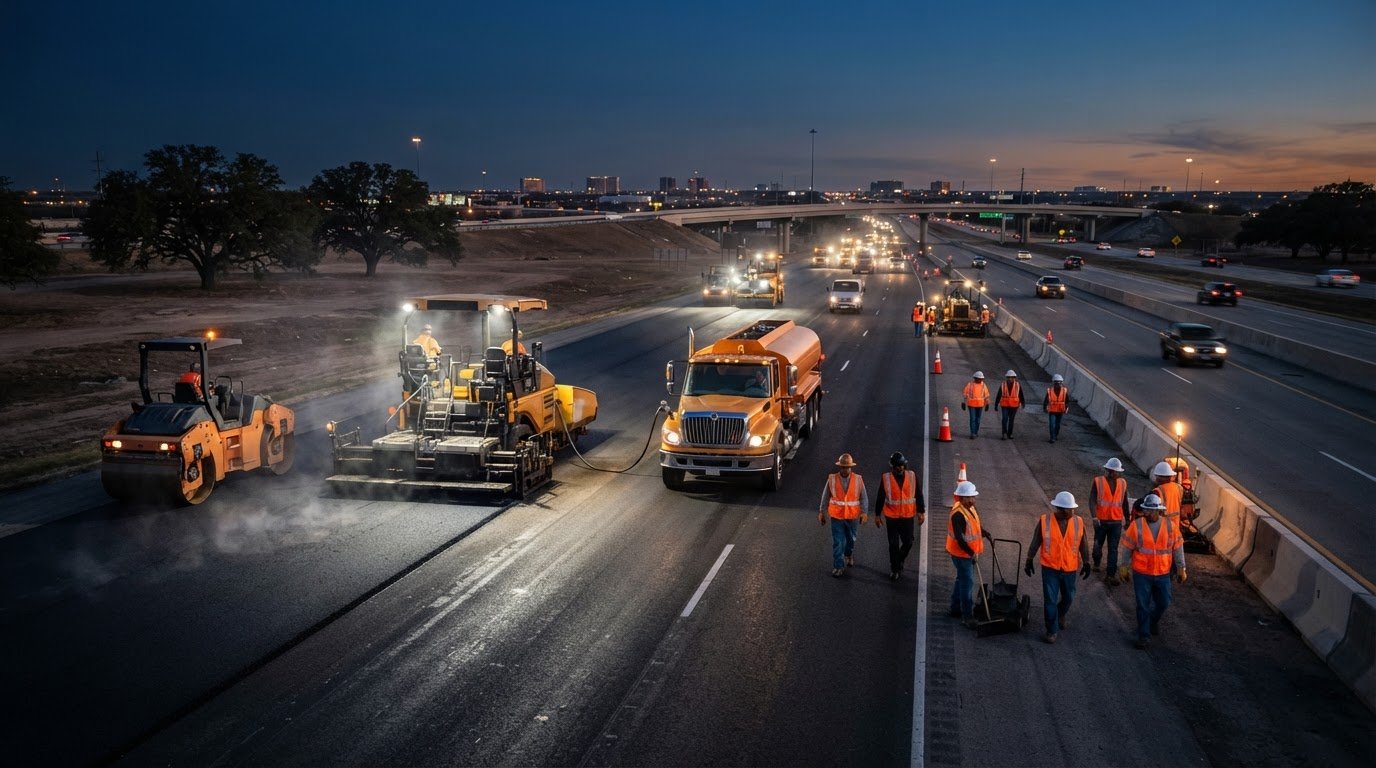
Operational efficiency starts with a streamlined logistics chain. A professional mobile fuel delivery service sources fuel directly from bulk terminals, bypassing the retail middleman. Specialized delivery trucks, equipped with high-accuracy meters and advanced filtration systems, transport the product to your job site. This model reflects the increasing demand for efficient, on-site fueling solutions across high-demand markets, driving its adoption for businesses seeking to optimize operations. By delivering during idle hours, providers transform fuel from a daily chore into a background utility that supports your primary work objectives.
Automation drives the reporting process. Modern providers utilize RFID tags and telematics to track every gallon delivered to specific assets. This eliminates manual logs and human error in fuel accounting. Safety remains paramount in these high-risk industrial environments. Operators strictly follow NFPA 30A Chapter 14 guidelines, maintaining the 25-foot separation from buildings required by ordinances like the 2020 Dallas Fire Code. These protocols ensure that fueling happens safely without interrupting your primary operations. Every driver adheres to DOT Hazmat regulations and updated 2026 FMCSA rules regarding electronic logging devices to maintain total compliance.
Direct-to-Equipment (Wet-Hosing) Explained
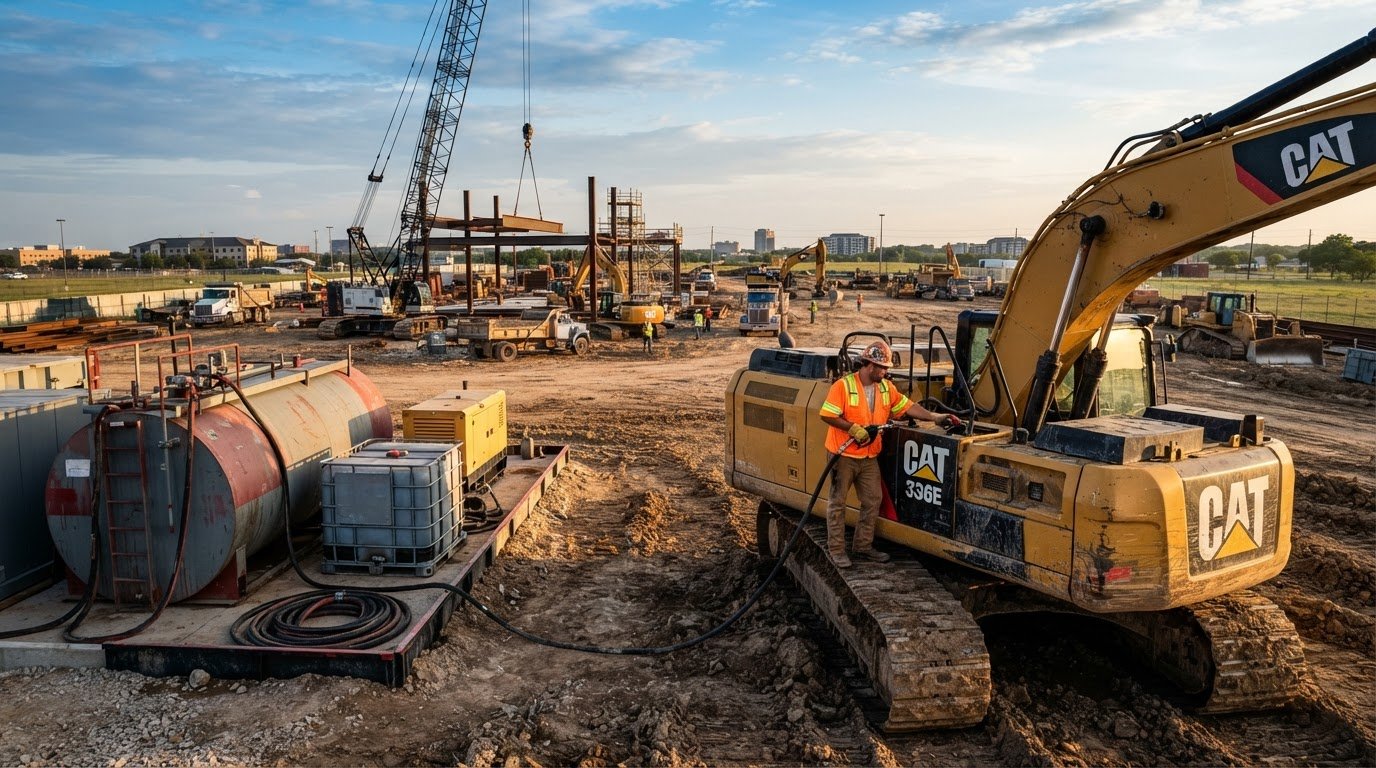
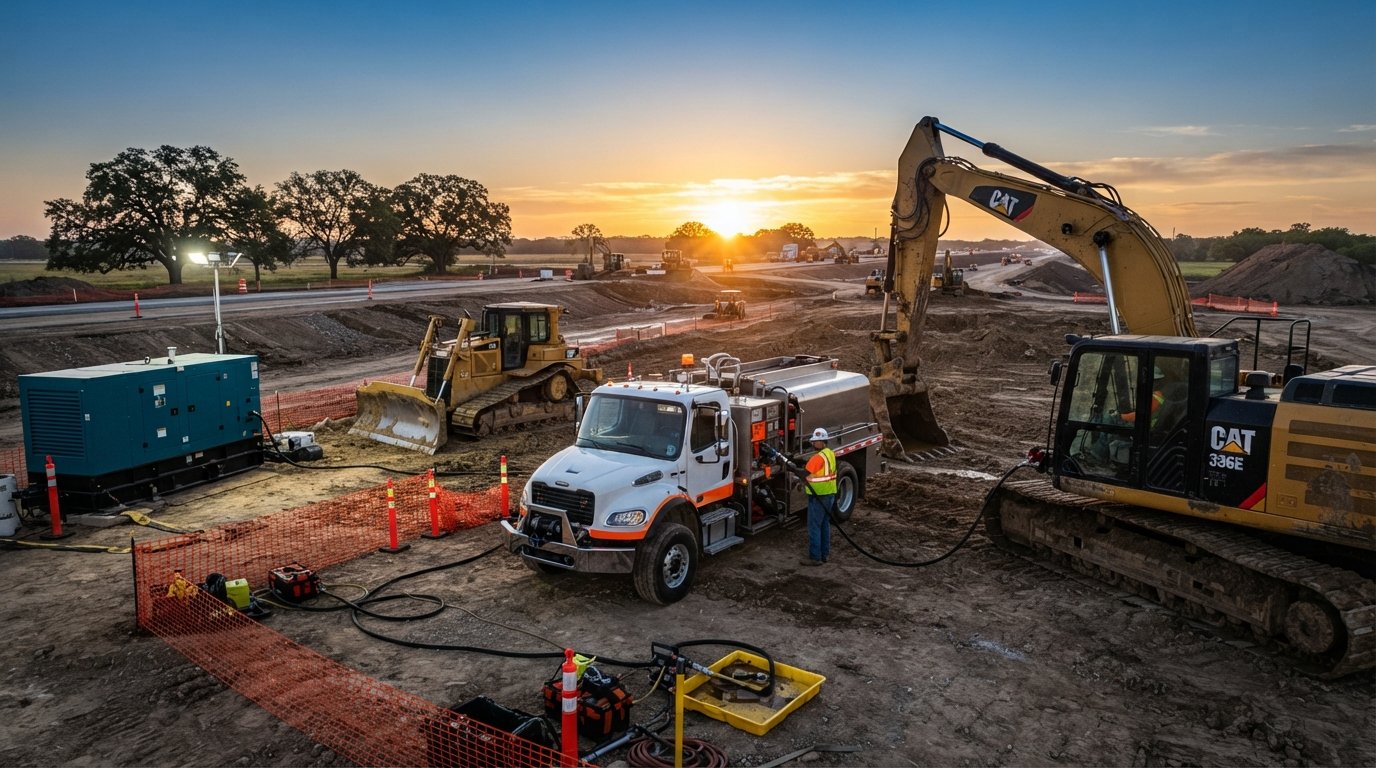
Wet-hosing involves fueling individual assets, such as bulldozers or cranes, directly at their work location. This typically occurs during off-hours when equipment is stationary. Your team arrives at a site where every machine is already topped off and ready for immediate use. Integrating an equipment fueling service removes the need for on-site storage tanks, reducing environmental liability and the risk of fuel theft. It's a method that prioritizes maximum uptime for heavy machinery while providing granular data on fuel consumption per asset.
Generator Fueling for Critical Infrastructure
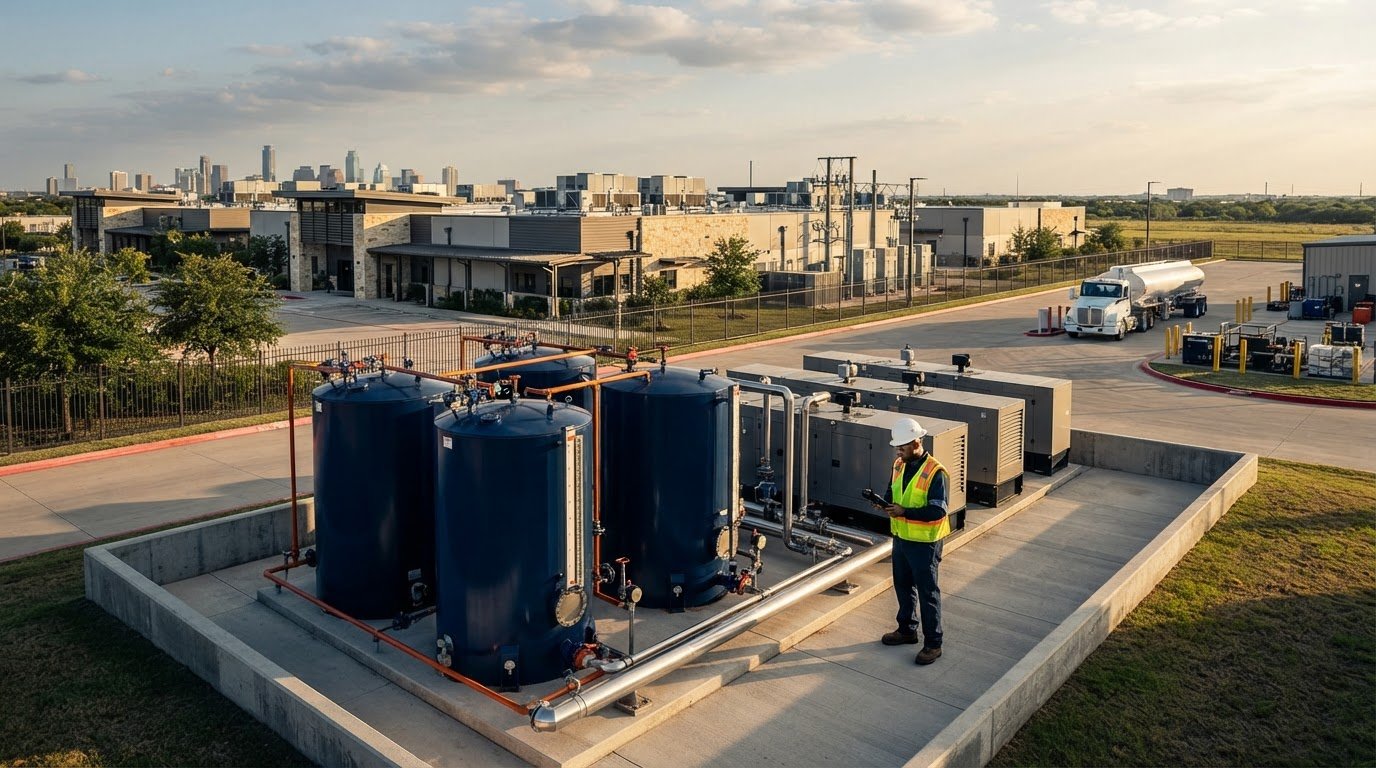
Critical facilities like hospitals and data centers cannot tolerate power interruptions. Maintaining backup power systems requires a vigilant approach to fuel quality and tank levels. Professional generator fueling services provide scheduled top-offs and emergency response to guarantee readiness during grid failures. This specialized service prevents catastrophic power loss by ensuring your emergency systems have the stabilized fuel they need to kick in instantly. You can contact our team to establish a priority fueling schedule for your critical infrastructure and secure your backup power supply.
Case Study Analysis: The Economic Impact of Mobile Fueling
Calculating the economic return of a mobile fuel delivery service requires looking beyond the price per gallon. For a fleet of 20 commercial vehicles, the traditional refueling model creates a massive productivity gap. If each driver spends just 30 minutes daily traveling to and from a retail station, the organization loses 10 hours of billable labor every single day. Over a standard 20-day work month, this equates to 200 hours of wasted capacity. When you factor in the "True Cost of a Gallon," you aren't just paying for the fuel; you're paying for the driver's wage, the fuel consumed during transit, and the wear on the vehicle.
Environmental and safety ROI also play a significant role in the bottom line. On-site delivery reduces the risk of spills associated with transporting small containers or improper fuel handling at crowded retail stations. It also minimizes the liability of station traffic accidents. By centralizing fueling through a professional partner, you gain precise control over your supply chain. This stability is essential for maintaining project timelines in the demanding Texas industrial sector, where a single day of downtime can cost thousands in liquidated damages.
Labor Savings: The Hidden Profit Driver
Driver downtime represents one of the largest controllable expenses in logistics and construction. Quantifying the cost of a driver at a retail pump, which typically ranges from $30 to $50 per hour when including overhead, reveals the scale of the problem. Saving 30 minutes per vehicle across a fleet of 20 recaptures thousands of dollars in monthly labor costs. Utilizing commercial diesel delivery effectively pays for itself by allowing your skilled operators to focus on their primary tasks. This labor recapture transforms a logistical burden into a direct contribution to your profit margins.
Reducing Capital Expenditure on Fuel Infrastructure
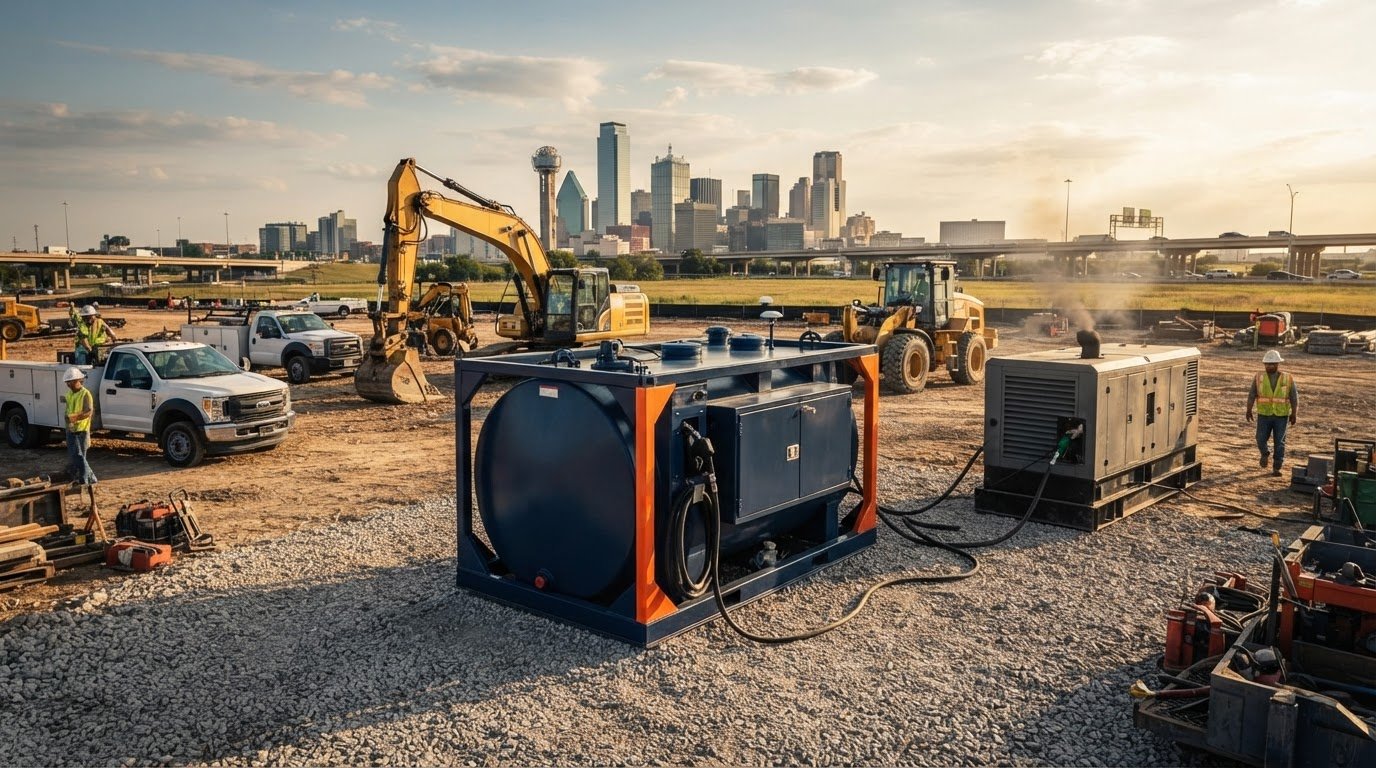
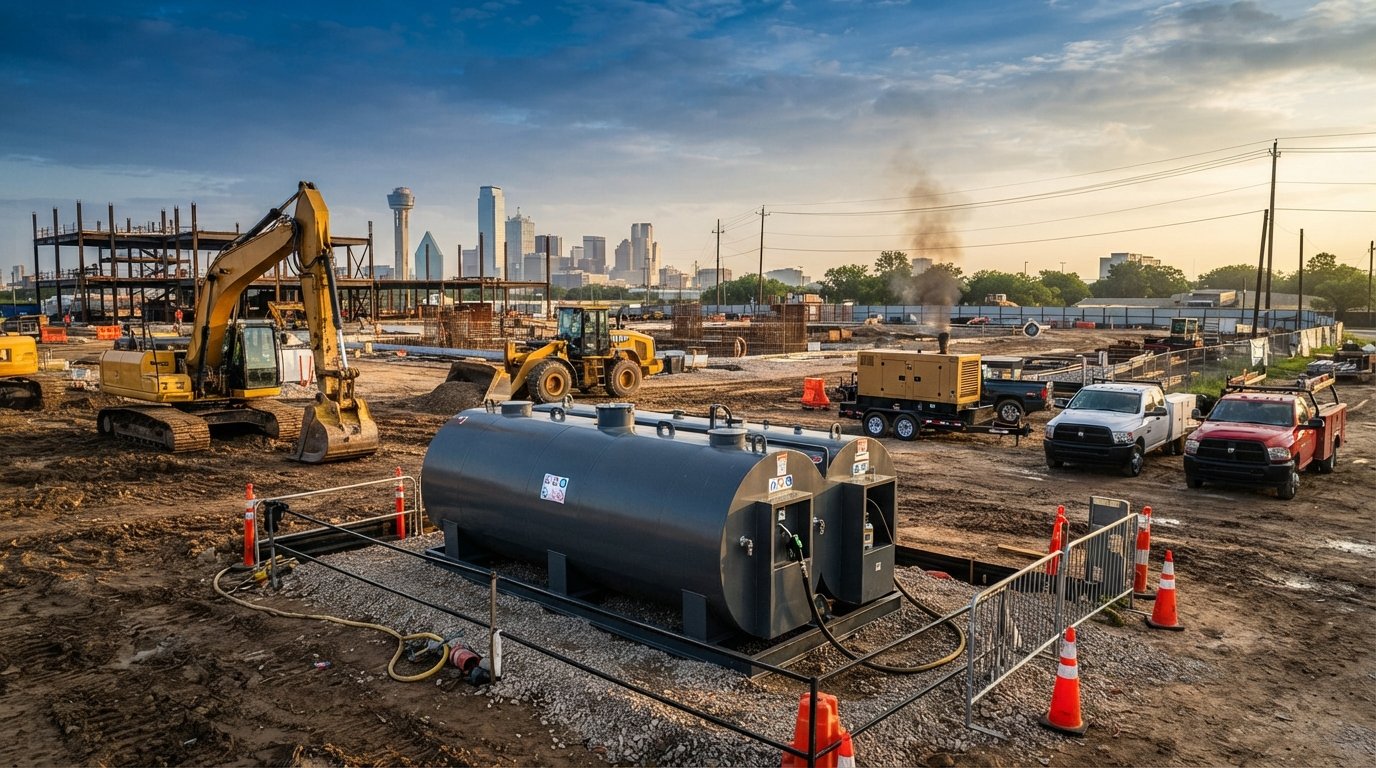
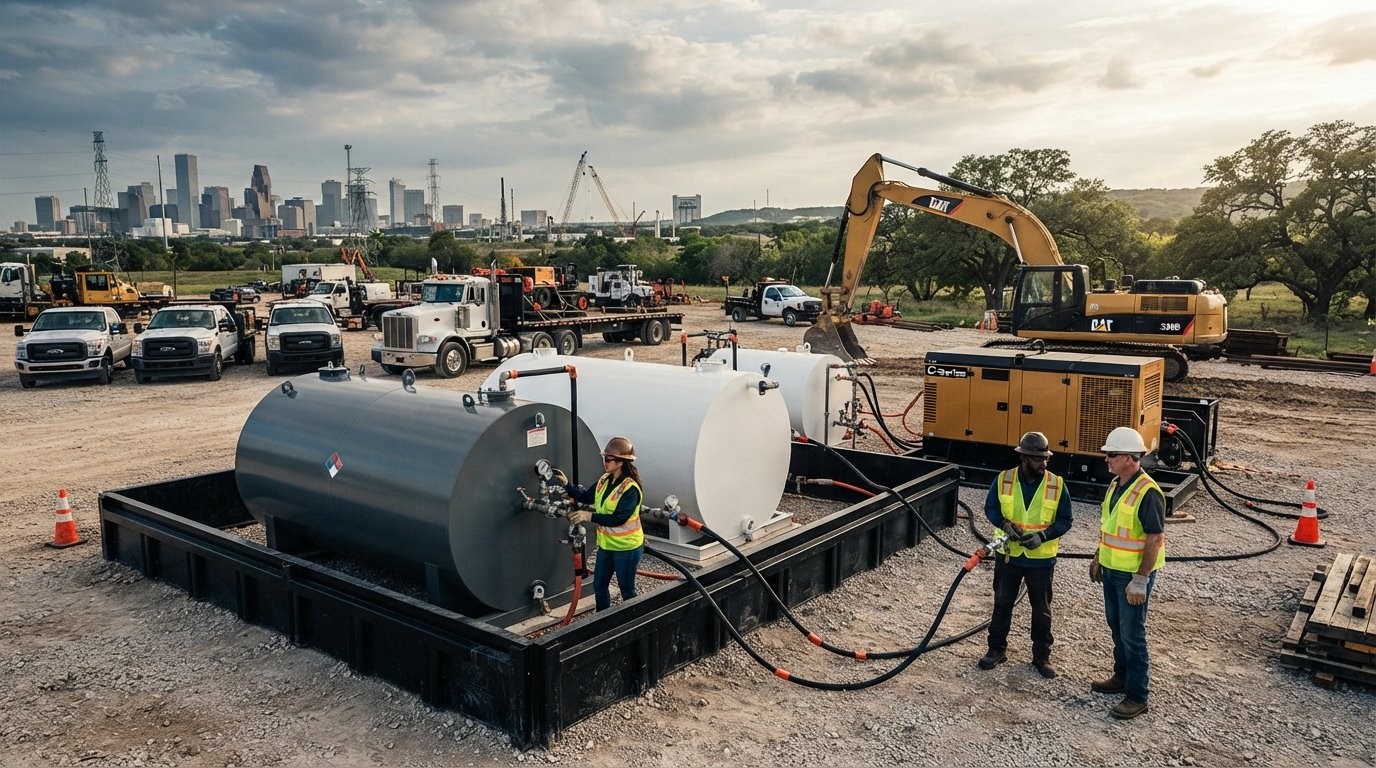
Fixed infrastructure often presents a barrier to site flexibility and requires significant upfront investment. Installing permanent on-site tanks involves complex permitting processes in hubs like Houston and Dallas, along with ongoing maintenance and eventual asset depreciation. Many operators find that portable fuel tank rentals provide a more agile and cost-effective solution for short-term projects. Rental models allow you to scale your fuel storage capacity based on the specific needs of a job site without the long-term capital commitment. This approach preserves your cash flow while ensuring your equipment remains fueled and ready for work.
Implementing a Mobile Fueling Strategy: A Practical Guide
Transitioning to a mobile fuel delivery service requires a methodical approach to ensure maximum return on investment. Begin with a comprehensive fuel audit to determine your peak volume requirements and the optimal delivery frequency for each site. This data prevents over-fueling and ensures that no asset runs dry during critical project phases. Next, evaluate site accessibility for delivery trucks. Most industrial bobtails require clear, stable paths to reach stationary equipment without risking ground compaction or getting stuck in unpaved areas. Ensuring your site can accommodate these vehicles is the first step toward seamless integration.
Establish designated safety zones that comply with local fire codes and environmental regulations. This includes maintaining proper spill kits and ensuring that fueling areas are situated away from drainage points. Finally, integrate your fuel data into existing fleet management software. Modern systems allow for real-time tracking of every gallon, providing the transparency needed for accurate job costing and tax reporting. This digital trail eliminates the need for paper receipts and manual data entry, allowing your administrative team to focus on higher-value tasks.
Evaluating Your Fueling Partner
Select a partner that offers 24/7 emergency fueling capabilities to protect against unexpected outages. Reliability is non-negotiable in high-stakes environments. Verify their insurance coverage and environmental safety track record to mitigate your own corporate liability. Inquire about dyed diesel options for off-road equipment. Since dyed diesel is exempt from certain road taxes, this single choice can significantly lower your operational expenses for generators and earth-moving machinery. A partner who understands these tax nuances acts as a consultant, not just a vendor.
Site Preparation for Efficient Deliveries
Streamline the delivery process by clearing dedicated access paths for fuel bobtails and tankers. Implementing RFID tags on every piece of equipment automates the identification process, ensuring that the right fuel type enters the right tank every time. Clear communication is vital, particularly during emergency fuel delivery scenarios where site conditions may be rapidly changing. A well-prepared site reduces the time a technician spends on-site, further enhancing the efficiency of the service. These small preparations ensure that your "Vigilant Partner" can perform their work without needing constant supervision from your team.
Ready to eliminate downtime and regain control of your operational costs? Contact React Fueling today to schedule your initial site audit and optimize your Texas fueling logistics.
Securing Your Texas Operations with React Fueling
React Fueling operates as a boots-on-the-ground ally across the Texas industrial landscape. Our footprint extends through the primary economic hubs of Houston, Dallas, Austin, and San Antonio. This local presence allows us to deploy a mobile fuel delivery service with the speed and precision that high-stakes operations demand. As a member of the React Holdings family, we leverage a robust logistical network to ensure your supply chain remains secure even during periods of regional fuel volatility. We don't just deliver fuel; we provide a proactive management system that anticipates your needs before they become critical shortages.
Our "Vigilant Partner" approach means we take ownership of your fuel logistics so you can focus on project execution. By managing consumption data and delivery windows across multiple remote sites, we eliminate the administrative burden that often leads to operational friction. We understand the unique pressures of the Texas construction and industrial sectors. Whether you're managing a massive infrastructure project in North Texas or a specialized manufacturing facility in the Gulf Coast region, our team provides the discipline and foresight required to keep your machinery moving without interruption.
Reliability in the Face of Texas Weather
Texas weather presents unique challenges to operational continuity. Houston and coastal facilities face significant risks during hurricane season, where grid failures and supply disruptions can halt production. Our priority response system ensures that registered emergency clients receive fuel first when conditions deteriorate. We maintain unwavering readiness to support backup power systems and heavy equipment, providing the peace of mind that your facility will remain online when the grid goes down. This seasoned approach to problem-solving is what defines our role as a dedicated specialist in the region.
Get Started with a Custom Fueling Plan
Every job site has distinct logistical requirements. We offer site-specific fuel consultations to map out your consumption patterns and accessibility constraints. Whether you need a consistent supply of diesel for a multi-year construction project or flexible fuel tank rentals for a remote industrial site, we customize the plan to fit your budget and timeline. Our services include:
- Integrated diesel delivery for fleets and machinery.
- Synchronized DEF fluid delivery to maintain engine compliance.
- Specialized generator fueling service for critical infrastructure.
- Rapid-response emergency fuel delivery.
Secure your operations with a partner that understands the physical reality of the Texas industrial environment. Contact React Fueling for a Quote today to build a resilient fueling strategy and eliminate the risk of downtime.
Optimize Your Fuel Logistics for a More Productive 2026
Transitioning to a professional mobile fuel delivery service isn't just about convenience; it's a strategic move to recapture billable labor and eliminate the logistical friction of off-site refueling. By adopting direct-to-equipment fueling, you ensure that your machinery is always ready for work, effectively protecting your project timelines from avoidable delays. Precise reporting and automated tracking provide the transparency needed for accurate job costing while reducing the liabilities associated with permanent on-site fuel storage.
React Fueling stands as your vigilant partner across Houston, Dallas, San Antonio, and Austin. Our specialists deliver direct-to-equipment solutions and 24/7 emergency response to keep your operations moving through every challenge, from construction booms to coastal weather events. Don't let retail pump lines or fuel shortages compromise your bottom line. Request a custom mobile fueling quote for your Texas job site today to secure your supply chain and optimize your site efficiency. We're ready to show up when it matters most to keep your business moving forward.
Frequently Asked Questions
Is mobile fuel delivery more expensive than going to a gas station?
Total operational costs are often lower because you eliminate labor waste and equipment idle time. While per-gallon rates follow market trends, you save significantly by removing "windshield time" for drivers. You won't pay for staff to sit in retail traffic or wait at pumps. This recapture of productive hours typically offsets delivery fees and reduces wear on heavy machinery not intended for road travel.
What types of fuel can be delivered to my job site?
React Fueling delivers clear diesel for highway vehicles and dyed diesel for off-road industrial machinery. We also provide gasoline and Diesel Exhaust Fluid (DEF) to ensure your entire fleet remains operational. Our mobile fuel delivery service is designed as a single-source solution for construction, logistics, and emergency sectors throughout the major Texas hubs.
How do you track how much fuel is put into each piece of equipment?
We utilize high-accuracy digital meters and RFID tagging to monitor every gallon dispensed into your assets. Each machine receives a unique tag that records the exact volume, date, and time of the fueling event. This data integrates with your management software to provide transparent consumption reports. It eliminates the errors of manual logs and ensures total accountability for your fuel budget.
Can you provide emergency fuel delivery during a power outage or storm?
Yes, we maintain a 24/7 emergency response capability to support critical infrastructure during grid failures and severe weather. Registered clients receive priority status to ensure their backup generators remain fueled when conditions deteriorate. Our team has extensive experience navigating the logistical challenges of storm recovery in Houston and across the Gulf Coast to maintain your operational uptime.
Do you offer off-road diesel for construction equipment?
We provide dyed diesel specifically for off-road construction machinery and stationary backup generators. This fuel is exempt from certain road taxes, which provides a direct cost saving for your project overhead. Utilizing dyed diesel for assets like bulldozers and excavators is a standard industry practice that we facilitate through our scheduled on-site delivery routes.
What is the minimum fuel volume required for a delivery?
Minimum requirements depend on your site location and the frequency of your fueling schedule. We establish these parameters during your initial site-specific consultation to ensure the service remains cost-effective for your operation. Our goal is to maximize delivery efficiency while guaranteeing that your equipment never experiences downtime due to fuel exhaustion.
How does DEF fluid delivery work alongside diesel fueling?
DEF fluid delivery is synchronized with your diesel top-offs to prevent engine derating and performance issues. We use specialized equipment to dispense DEF directly into your machinery's dedicated tanks at the same time we deliver fuel. This integrated approach ensures your Tier 4 engines remain compliant with environmental standards without requiring you to manage separate fluid inventories or storage.
Is on-site fueling safe for my facility and the environment?
On-site fueling is extremely safe when performed by professionals following NFPA 30A Chapter 14 standards. We maintain strict safety zones and utilize advanced spill prevention technology to protect your property. Our drivers are trained in DOT Hazmat protocols and follow all updated 2026 federal safety regulations to ensure environmental compliance and total operational security during every drop.