2026 Fuel Delivery Guide for Standby Generators
The moment the Texas grid falters during a hurricane, your standby generator transitions from a capital expense to a critical lifeline. Many facility managers realize too late that a backup system is only as reliable as the fuel delivery for standby generators supporting it. You likely already know the stress of watching fuel levels drop while waiting for a delivery truck that's delayed by storm surge or regional logistical bottlenecks. It's a high-stakes environment where a delay of even a few hours results in catastrophic operational downtime. We understand that "good enough" is never an option when your facility's continuity is on the line.
This guide provides the strategic framework you need to master backup power logistics and select a Texas fuel partner that prioritizes transparency and speed. We're here to help you move beyond reactive panic and into a state of total readiness. We will examine how to secure guaranteed response times during disasters, the importance of stabilized diesel that won't clog your filters, and the specific steps to identify a local partner that eliminates hidden emergency fees. By the end of this guide, you'll have a clear roadmap for maintaining power through 2026 and beyond.
Why Fuel Delivery for Standby Generators Requires a Specialized Partner
Standby fueling is not a commodity purchase; it's a specialized logistical requirement. While fleet vehicles burn through fuel in days, Emergency power systems rely on fuel that may sit in a tank for months or even years. Standard retail diesel is engineered for immediate consumption. When left stagnant, it attracts moisture and fosters microbial growth that quickly clogs filters and damages injectors. Choosing a partner that understands these chemical realities is the only way to ensure your generator starts when the main grid fails.
Facility managers must shift their focus from the cost per gallon to the cost of downtime. For critical infrastructure like hospitals, data centers, and industrial plants, a single hour of power loss can result in millions of dollars in lost data or compromised patient safety. Specialized fuel delivery for standby generators ensures that the fuel arriving at your site is stabilized, polished, and ready for high-performance combustion. It transforms a volatile liquid into a reliable asset.
The Risks of Reactive Fueling
Waiting for a power outage to request a delivery is a high-risk gamble. During regional Texas power failures, such as those seen during hurricane season, logistical bottlenecks are inevitable. Road closures, high demand, and limited supply can leave reactive facilities stranded while they wait for a truck. Modern Tier 4 diesel engines are extremely sensitive to fuel quality and pressure. "Fuel starvation" occurs when air enters the fuel system or when degraded fuel fails to reach the combustion chamber at the required pressure. This often leads to immediate engine shutdown, requiring a technician to prime the system before power can be restored. Proactive scheduling avoids these bottlenecks entirely.
Understanding Your Facility’s Burn Rate
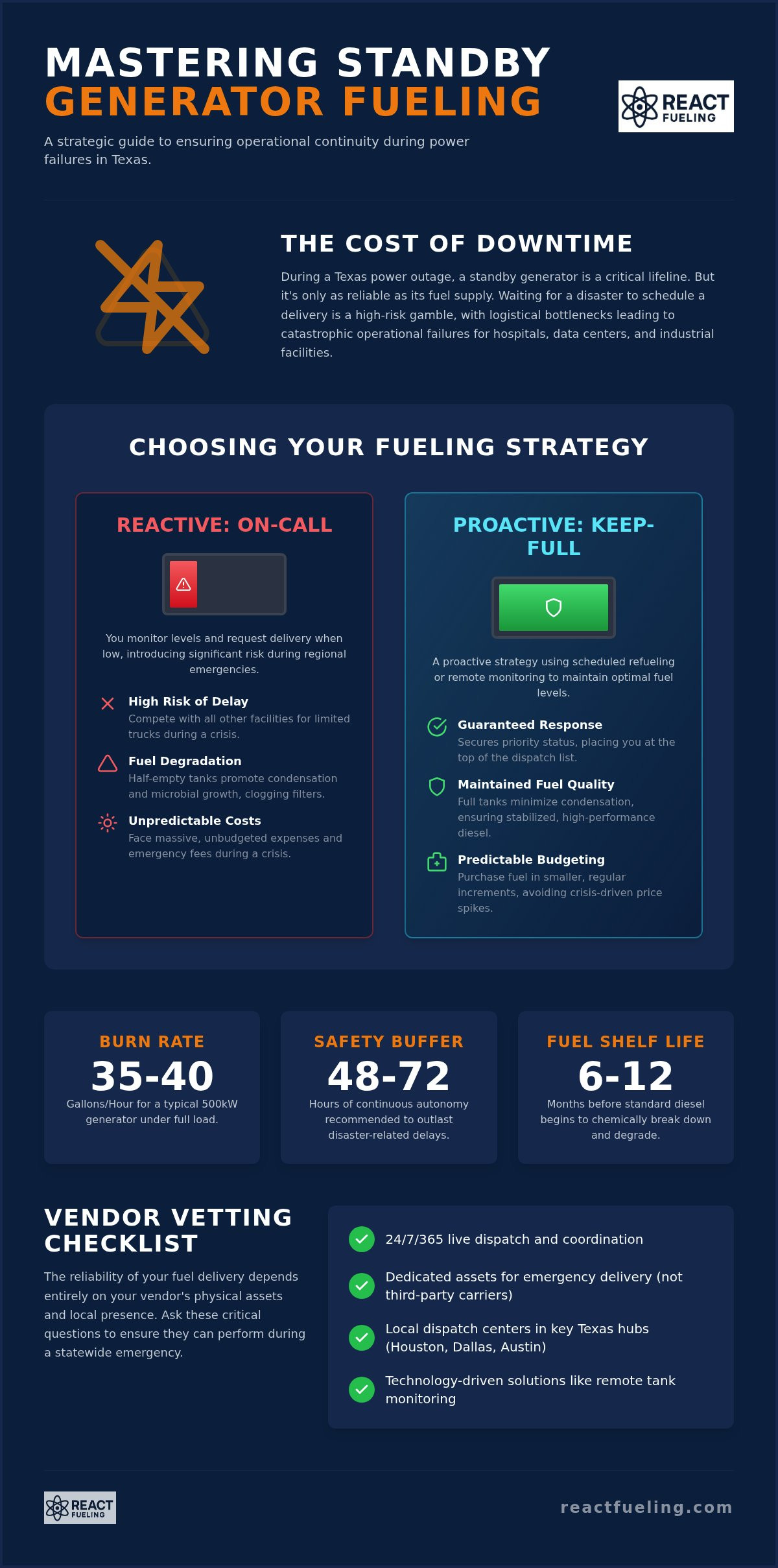
Precision is vital when planning your fuel reserves. You must calculate your generator’s fuel consumption under a 100% load rather than relying on idle figures. A standard 500kW generator can consume approximately 35 to 40 gallons per hour at full capacity. Establishing a "Safety Buffer" is essential; we recommend maintaining enough fuel for at least 48 to 72 hours of continuous autonomy to account for delivery delays during major disasters. You can Calculate your requirements with our generator fueling service to ensure your facility remains operational until the local utility stabilizes. Proactive planning transforms fuel delivery for standby generators from an emergency chore into a managed asset.
Evaluating Service Models: On-Call vs. Keep-Full Programs
Choosing the right service model for fuel delivery for standby generators determines whether your facility survives a disaster or succumbs to a logistical breakdown. The On-Call model operates on a reactive basis; you monitor your own levels and request a truck when the tank is low. While this may seem cost-effective during periods of grid stability, it introduces significant risk during regional emergencies. When a major storm hits Texas, every facility manager in the region calls their provider simultaneously. If you aren't already on a scheduled route, you're competing for a limited number of trucks and drivers during a period of peak demand.
Modern fuel logistics have evolved to utilize remote tank monitoring and digital tracking to eliminate this uncertainty. By 2026, the industry standard has shifted toward tech-driven models that provide real-time visibility into inventory levels. This allows providers to prioritize deliveries based on actual need rather than estimated burn rates. Most professional partners now offer tiered response levels, distinguishing between standard commercial accounts and priority emergency status. Securing priority status ensures that your facility is at the top of the dispatch list when local authorities declare an energy emergency.
The "Keep-Full" Advantage
Keep-Full service is a proactive replenishment strategy that maintains optimal fuel levels through scheduled cycles or real-time monitoring. This approach prevents the common issue of condensation, which occurs when a half-empty tank experiences temperature fluctuations that pull moisture from the air. Maintaining a full tank minimizes the headspace where water can collect and degrade the fuel. It also ensures that you're always using diesel that meets current EPA fuel quality standards for sulfur content and stability. From a financial perspective, this model allows for predictable budgeting because you're purchasing fuel in smaller, regular increments rather than facing a massive, unbudgeted expense during a crisis.
Vetting Your Vendor’s Response Capacity
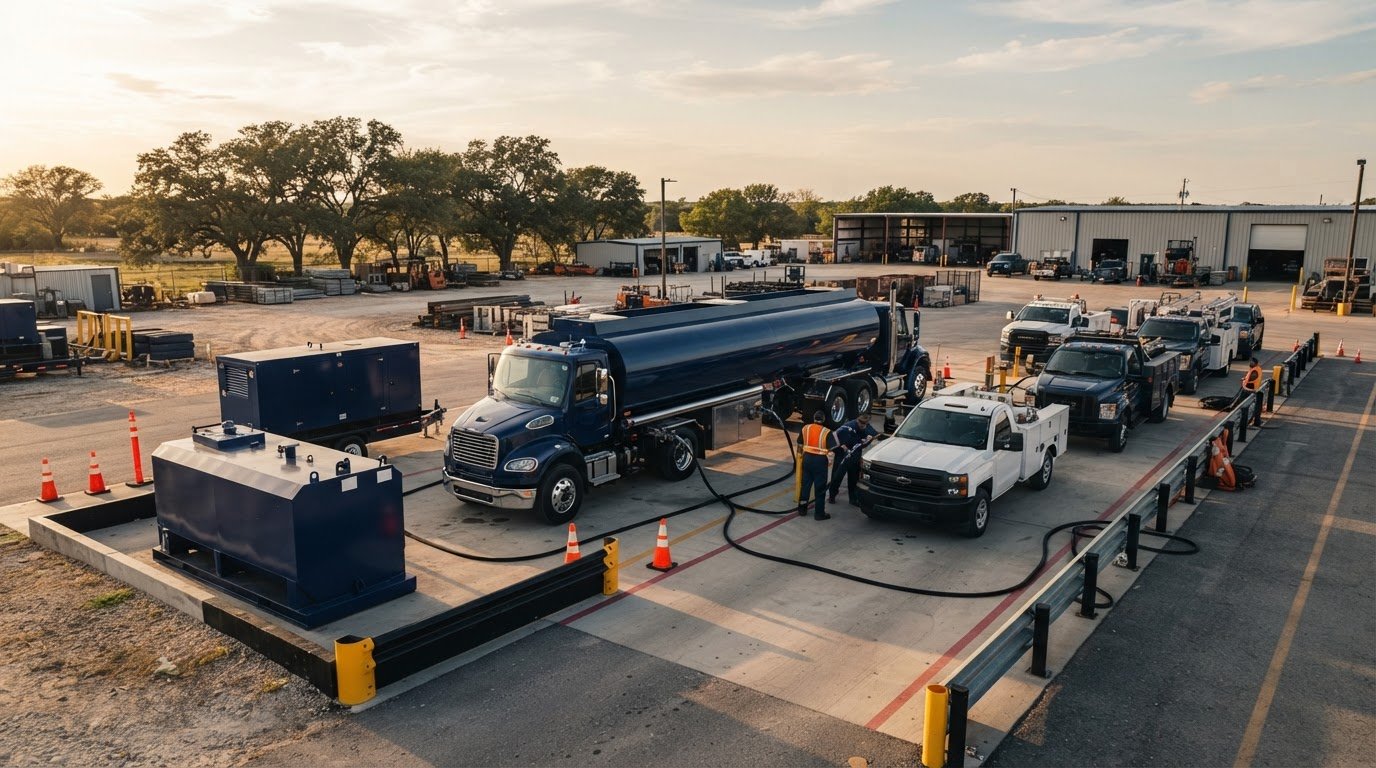
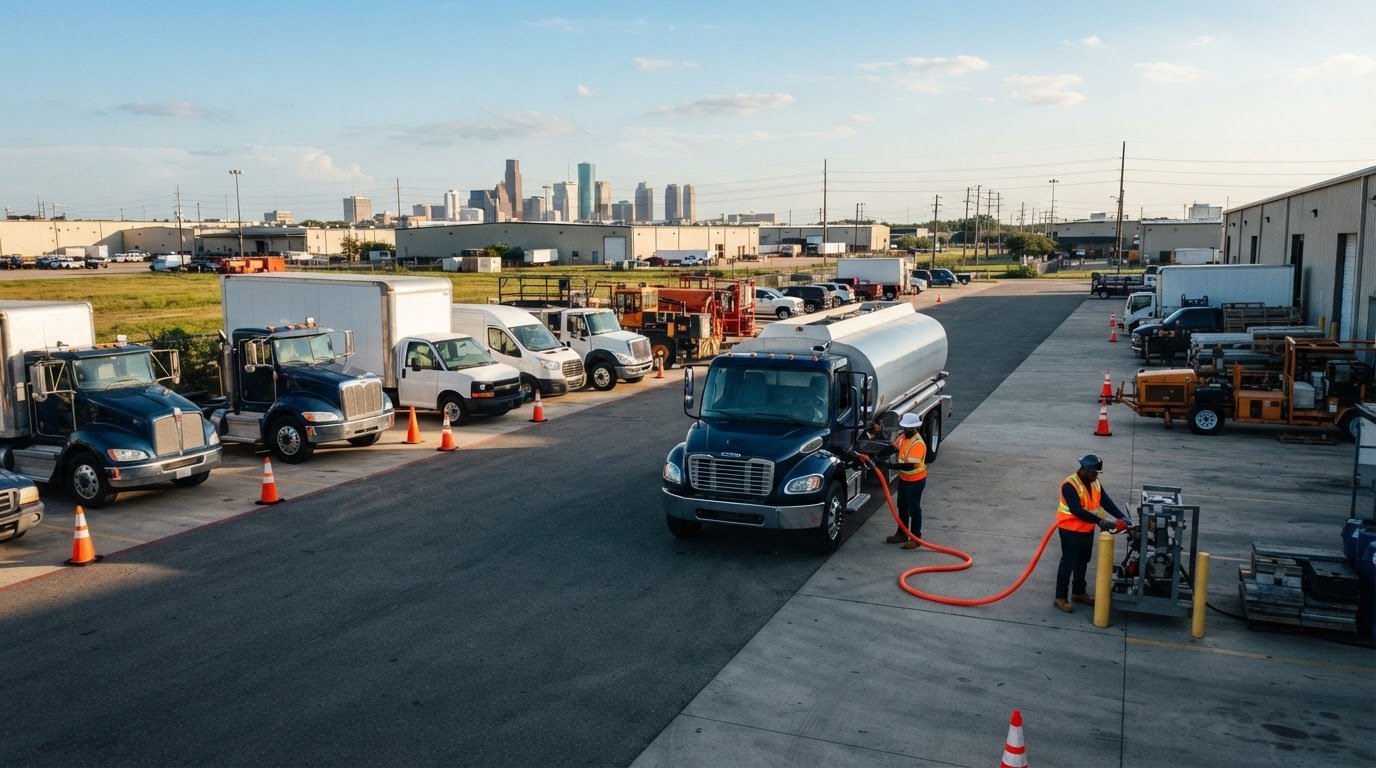
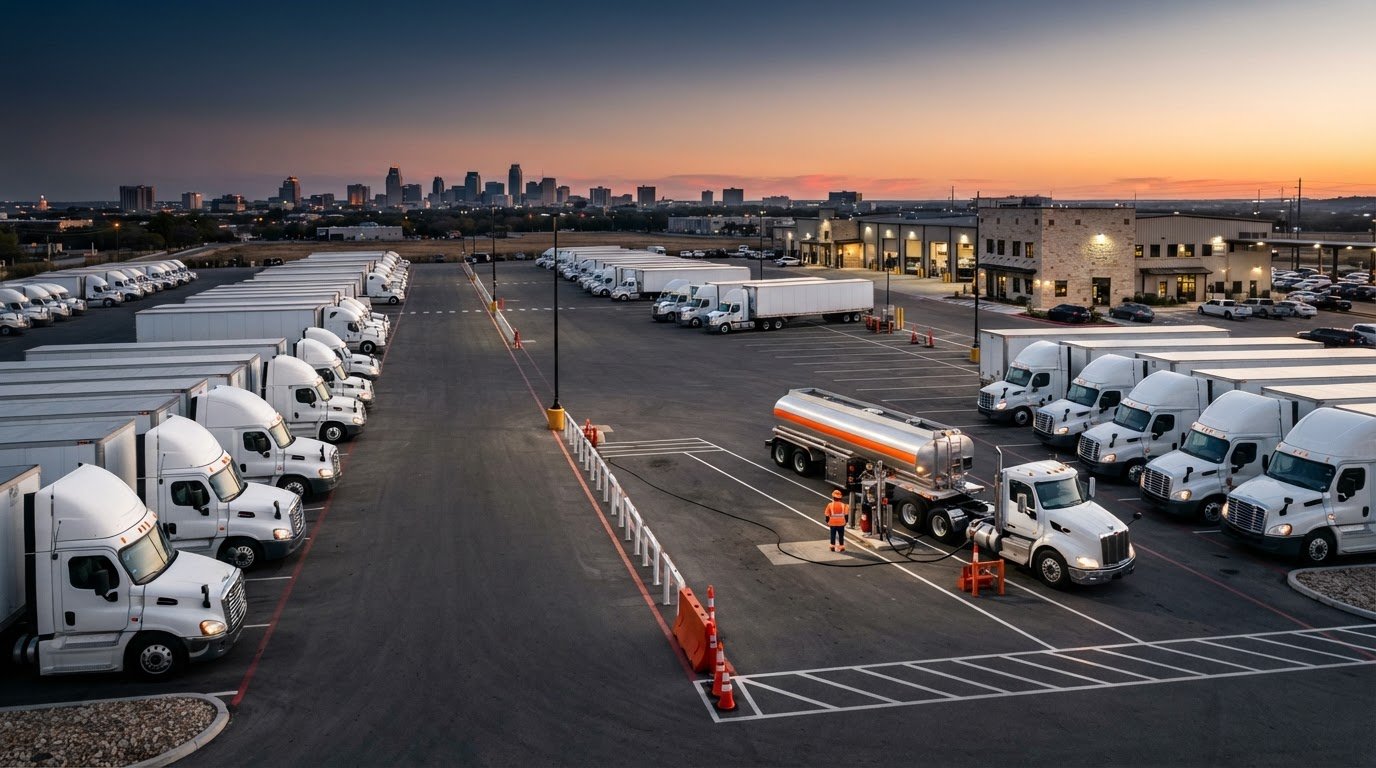
The reliability of fuel delivery for standby generators depends entirely on the vendor's physical assets and local presence. Ask potential partners about their fleet size and the specific location of their dispatch centers in Texas hubs like Houston, Dallas, Austin, and San Antonio. A vendor should have dedicated assets for emergency fuel delivery rather than relying on third-party common carriers who may be redirected during a state-wide emergency. Verify their 24/7/365 dispatch capabilities to ensure a live coordinator is always available to manage your logistics. You may want to discuss your facility's specific response requirements to ensure your provider can meet your required autonomy window.
The Technical Side: Fuel Quality and Long-Term Stabilization
Standby diesel fuel is a volatile asset that begins to chemically break down within six to twelve months of delivery. This oxidation process creates fine sediments and gums that can compromise your engine’s fuel injection system. Effective fuel delivery for standby generators must include the proactive application of oxidative stabilizers and biocides to neutralize these threats. Without these additives, the fuel that sits in your tank today may fail to ignite during a crisis next year. We view fuel quality as a cornerstone of disaster readiness for power outages, ensuring that your equipment performs exactly as the manufacturer intended.
Modern Tier 4 Final engines introduce another layer of complexity. These units utilize Selective Catalytic Reduction (SCR) systems which require a steady supply of Diesel Exhaust Fluid. If your DEF tank runs dry, the generator’s onboard computer will initiate a "derate" mode, significantly reducing power output or forcing a total shutdown to protect emissions components. Integrating DEF fluid delivery into your refueling schedule is no longer optional; it's a mechanical necessity for facility continuity. All fuel must meet ASTM D975 standards to protect your engine warranty and ensure reliable combustion under high-load conditions.
Combating Microbial Growth and Sludge
Most commercial diesel sold today contains a percentage of biodiesel. While environmentally friendly, these blends are hygroscopic, meaning they actively pull moisture from the air. This water accumulates at the bottom of your tank, creating a breeding ground for bacteria and fungi. This microbial growth produces a thick sludge that can blind a fuel filter in minutes. Regular fuel polishing and annual testing are the only ways to verify that your reserves remain free of contaminants. Professional fuel delivery for standby generators includes the expertise to identify these issues before they lead to mechanical failure.
Off-Road vs. On-Road Diesel for Generators
Stationary standby generators typically utilize off-road diesel, which is chemically identical to on-road fuel but contains a red dye to signify its tax-exempt status. Using dyed diesel for your backup power systems can result in significant cost savings compared to clear, taxed fuel. It's the industry standard for industrial and commercial infrastructure. When you schedule commercial diesel delivery, ensure your provider understands the specific tax implications for your region and industry. This logistical detail ensures your facility remains compliant while maximizing your operational budget.
Texas Disaster Readiness: Navigating Hurricane Season and Grid Failures
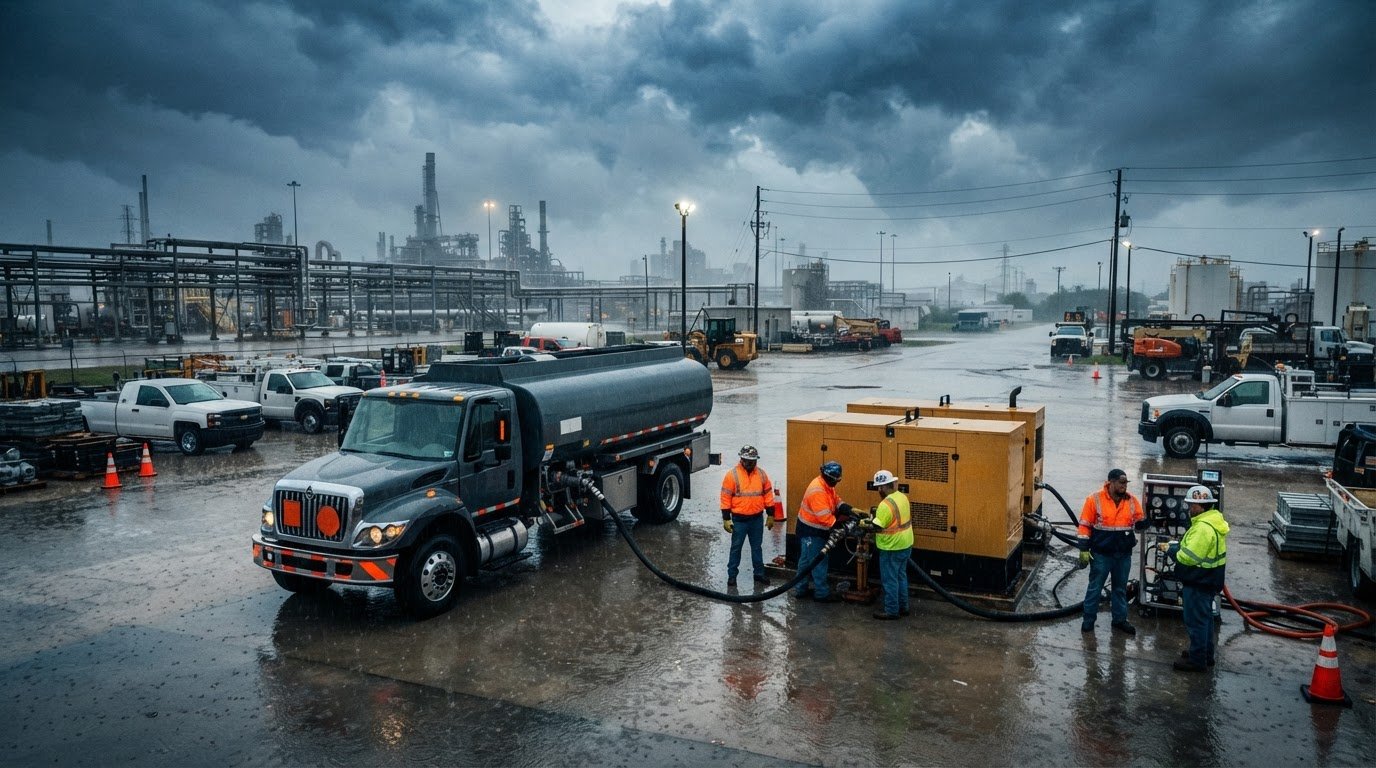
Operating within the Texas Interconnection (ERCOT) grid presents unique challenges that facilities in other states don't face. Because the Texas grid is largely isolated from the national power supply, regional generation failures lead to immediate and extreme volatility in fuel demand. During peak hurricane season or severe winter weather, the sudden shift to backup power creates a localized "run" on diesel supplies. Successful fuel delivery for standby generators in this environment requires more than just a truck; it requires a deep understanding of Texas geography and infrastructure rules. We coordinate closely with local emergency management to ensure our routes remain viable even when major thoroughfares are restricted to emergency vehicles.
Preparation for these events can't wait until a storm enters the Gulf. We recommend a 90-day pre-storm fuel plan that begins with a full tank and a verified stabilization treatment. Navigating the specific logistical hurdles of a Houston flood or a Dallas ice storm requires real-time intelligence on road conditions and site accessibility. Our teams maintain constant communication with dispatch centers to pivot routes as conditions change, ensuring that critical infrastructure stays online when the grid fails. This level of foresight is what separates a dedicated partner from a simple fuel vendor.
Step-by-Step Emergency Fueling Plan
- Step 1: Audit storage capacity. Verify your current usable capacity and the age of the fuel currently in your tanks.
- Step 2: Establish contracts. Secure a primary and secondary delivery contract to ensure redundancy in your supply chain.
- Step 3: Test site logistics. Confirm that emergency transfer pumps are operational and that site access points are clear for large delivery vehicles.
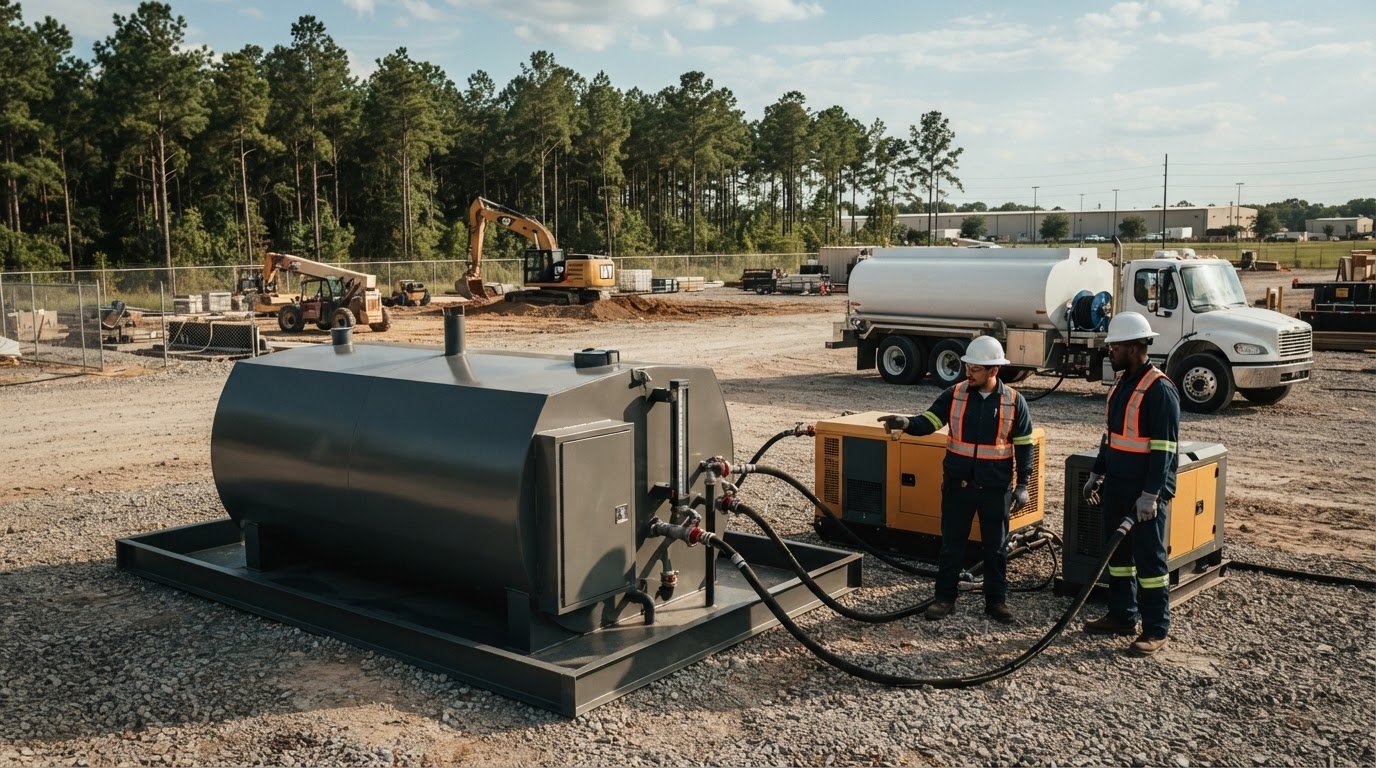
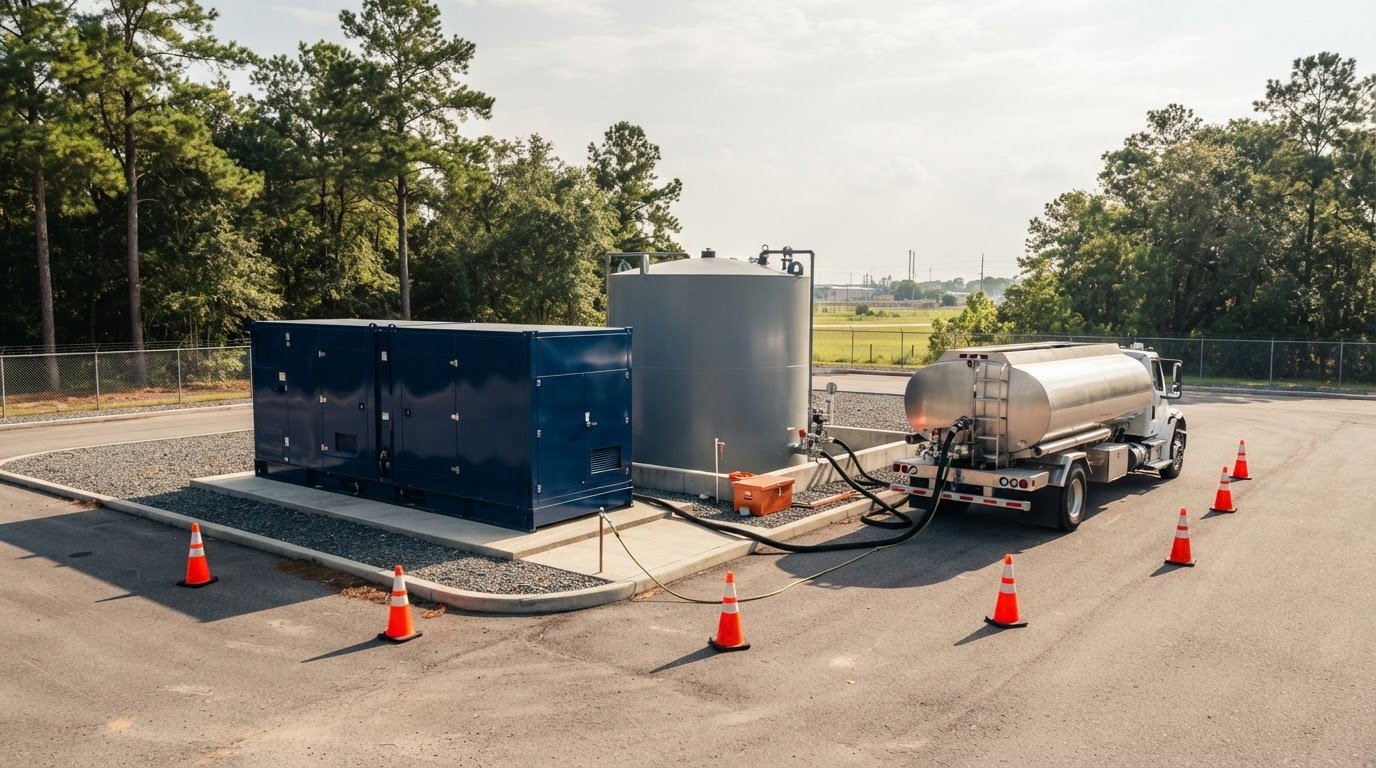
- Step 4: Secure surge capacity. Utilize portable fuel tank rentals to increase your on-site reserves before a predicted weather event hits.
The Importance of Local Dispatch
National fuel brokers often struggle during localized Texas disasters because they lack "boots on the ground" in specific communities. A broker in a different time zone can't account for a specific bridge closure in Magnolia or a power outage affecting a terminal in San Antonio. Localized dispatch centers in Austin and Dallas provide the tactical advantage of knowing exactly which routes are passable. This local presence ensures your driver already has your site-specific access codes and understands your safety clearances before they leave the yard. It eliminates the friction of the "first-time delivery" during a high-stakes crisis. To ensure your facility is prepared for the next grid event, contact our Texas dispatch team today to review your emergency logistics.
React Fueling: Your Vigilant Partner for Texas Power Continuity
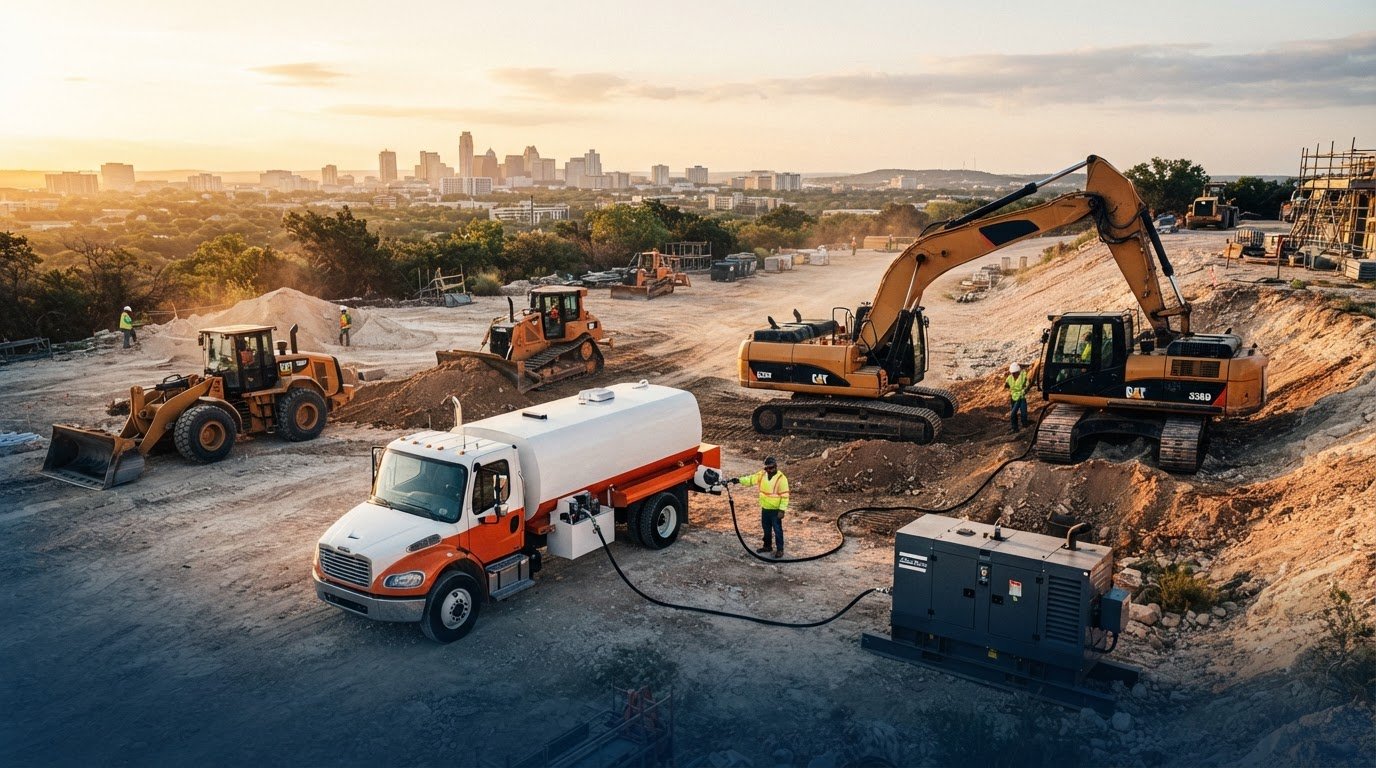
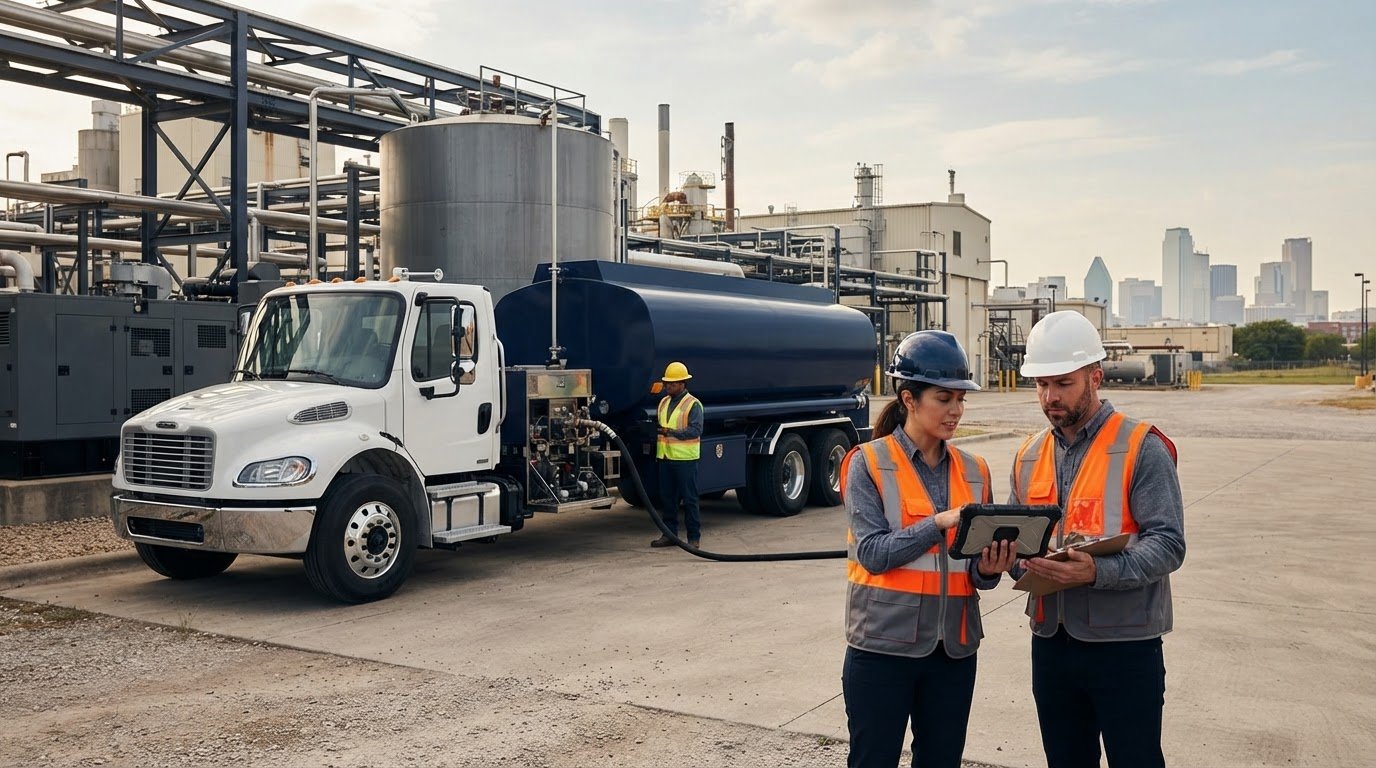
React Fueling functions as an extension of your internal operational team. We integrate directly into your facility's disaster recovery plan to ensure that fuel delivery for standby generators is a guaranteed asset rather than a logistical variable. Our "Seasoned Problem Solver" approach means we anticipate barriers before they manifest. We evaluate every detail of your fuel supply chain, from the chemical stability of your reserves to the physical accessibility of your fill ports. Whether you require precision equipment fueling for active industrial sites or high-volume bulk diesel for mission-critical data centers, our team maintains the discipline required to keep your facility moving.
Reliability in the Texas market requires a partner that understands the physical reality of industrial environments. We don't operate as a distant corporate entity; we are a boots-on-the-ground ally with a local presence in the state's most critical energy hubs. This proximity allows us to respond with a sense of urgency that national brokers simply cannot match. We prioritize operational continuity above all else, providing the steady confidence you need to manage complex logistics during high-stakes grid failures.
The React Holdings Advantage
Leveraging the deep energy logistics expertise of the React Holdings family gives our clients a distinct advantage in the Texas market. Our "Vigilant Partner" promise is rooted in the belief that we must show up when it matters most, especially when weather conditions or grid instability drive regional demand to its limit. We provide total control over the fueling process, ensuring that every gallon delivered meets the highest professional standards for purity and performance. For a comprehensive look at maintaining your facility's resilience, consult our sibling guide: Emergency Generator Fueling Service: The Comprehensive Guide to Power Continuity.
Contact Us for a Readiness Audit
Establishing a customized fuel management program is the most effective way to eliminate the stress of potential downtime. We provide specialized support across Houston, Dallas, Austin, and San Antonio, offering site audits that identify hidden risks in your current setup. During a readiness audit, our team inspects your tank integrity, verifies fuel quality through ASTM-standard testing, and confirms that your site logistics can handle heavy delivery equipment during a crisis. This proactive assessment ensures that your fuel delivery for standby generators remains seamless when the local utility fails. Secure your backup power supply with React Fueling today and gain the peace of mind that comes with unwavering readiness.
Securing Your Facility’s Operational Future
Reliable backup power is built on proactive logistics rather than reactive hope. Mastering fuel delivery for standby generators requires a shift in focus from the cost per gallon to the absolute certainty of operational uptime. By implementing a Keep-Full program and prioritizing advanced fuel stabilization, you protect your critical infrastructure against the unique volatility of the Texas grid. Transitioning to a specialized partnership ensures that your diesel remains chemically viable and your delivery schedule stays prioritized when regional demand surges.
React Fueling provides the local Texas dispatch and 24/7 emergency response capabilities necessary to navigate the high stakes of hurricane season and winter weather events. Our comprehensive fuel stabilization programs prevent the microbial growth and degradation that lead to engine failure during a crisis. We stand ready as your vigilant partner in Houston, Dallas, Austin, and San Antonio, providing the seasoned problem-solving skills your facility demands. We're committed to keeping your operations moving through every challenge the Texas environment presents.
Frequently Asked Questions
How long can diesel fuel be stored in a standby generator tank?
Diesel fuel typically remains stable for six to twelve months in a standard tank before chemical degradation begins. After this period, oxidation occurs, leading to sediment buildup and gum formation that can damage your engine. Environmental factors like temperature fluctuations and moisture levels in Texas significantly impact this timeline. Implementing a stabilization program and regular fuel polishing can extend this shelf life to several years.
Does standby generator fuel need to be treated with additives?
Yes, standby fuel requires treatment with oxidative stabilizers and biocides to prevent degradation and microbial growth. Standby units often sit idle for long periods, allowing moisture to accumulate and foster "diesel bugs" that clog filters. Professional fuel delivery for standby generators includes the application of these additives at the point of delivery. This proactive approach ensures the fuel remains combustible and free of contaminants during emergency start-ups.
What is the difference between on-road and off-road diesel for generators?
Off-road diesel contains a red dye to indicate its tax-exempt status for stationary equipment like standby generators. On-road diesel is clear and includes highway taxes in its price. Chemically, both fuels are identical Ultra-Low Sulfur Diesel (ULSD) and meet the same performance standards. Using dyed diesel for your backup power systems is the industry standard because it significantly reduces operational costs without compromising engine performance or reliability.
How often should I check the fuel levels in my backup generator?
You should inspect your fuel levels at least once a month during routine maintenance and testing. However, relying on manual checks can be risky during active disaster seasons. We recommend installing remote tank monitoring systems that provide real-time inventory data. This technology allows your delivery partner to track consumption during an outage and schedule a replenishment before your levels reach a critical low point, ensuring continuous power.
Can I use a fuel delivery service for a rental generator?
Yes, we provide dedicated fueling services for rental generators at construction sites, hospitals, and industrial facilities. Rental units often have smaller integrated tanks that require frequent top-offs during extended power outages. Coordinating a scheduled fueling service ensures that your temporary power source doesn't run dry. We can also provide portable fuel tank rentals to increase your on-site storage capacity and provide a larger safety buffer for rental equipment.
What happens if my generator runs out of fuel during a power outage?
Running out of fuel causes an immediate engine shutdown and can introduce air into the fuel lines. Modern diesel engines, especially Tier 4 units, often require a technician to bleed the air and prime the system before the generator can restart. This leads to extended downtime even after fuel is delivered. Maintaining a consistent fuel delivery for standby generators prevents these mechanical complications and ensures your facility stays online without interruption.
Are there specific regulations for storing diesel fuel on-site in Texas?
Texas facilities must comply with federal Spill Prevention, Control, and Countermeasure (SPCC) rules if their total aboveground storage capacity exceeds 1,320 gallons. Local fire codes in cities like Houston and Dallas also dictate tank placement, secondary containment requirements, and venting specifications. It's essential to consult with a provider that understands these regional safety standards to ensure your fuel storage remains compliant with environmental and safety regulations.
How does React Fueling ensure 24/7 delivery during a major storm?
React Fueling maintains a fleet of dedicated delivery assets and local dispatch centers in Houston, Dallas, Austin, and San Antonio. We don't rely on third-party common carriers who may be diverted during a crisis. Our teams operate 24/7 during weather events, utilizing real-time logistical data to navigate road closures and flooding. This "boots on the ground" presence allows us to fulfill emergency requests when national brokers are unable to reach your site.
Recent Posts