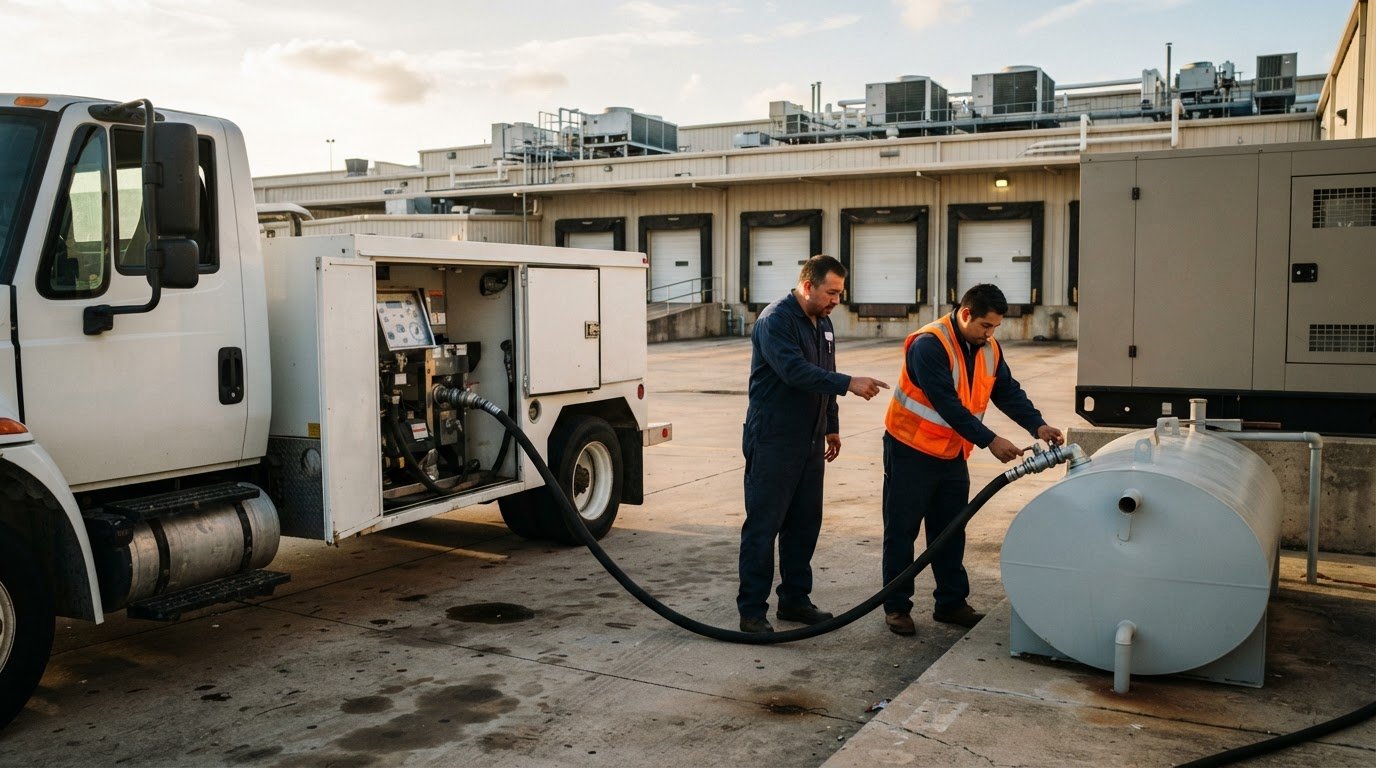
An existing generator can often be fitted with fuel monitoring; replacement isn’t automatically necessary. A generator fuel level monitoring service in Houston can add compatible sensing and communications hardware, with the setup depending on the generator’s controller, sensors, and site connection. The key is matching the monitoring equipment to the system already in place.
It’s reasonable to want a clear view of generator fuel before an outage or demanding work period, rather than relying on manual checks alone. A generator fuel level monitoring service in Houston can report fuel levels when compatible sensing is installed, alongside information such as operating hours, exercise activity, and alarms.
This guide explains what sensors and monitoring hardware track, how reports can travel over Wi-Fi or cellular connections, and what affects the connection choice at a Houston site. It also explains the limits of monitoring, so you can see how remote visibility fits alongside generator inspections, maintenance, and fuel planning.
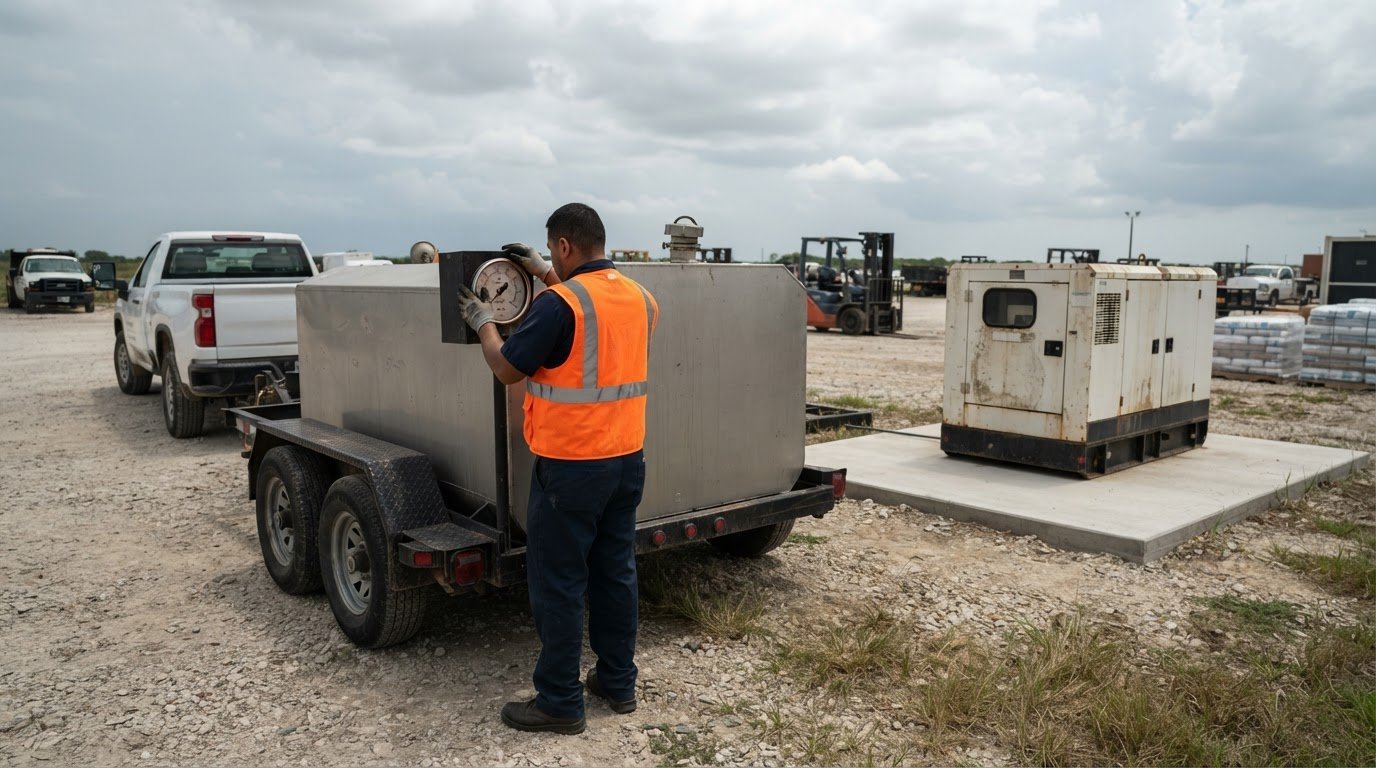
Fuel consumption tracking and reporting
Fuel reporting turns tank readings and generator activity into information for planning refills. Review trends alongside runtime, testing, and backup-power requirements.
Fuel Consumption Tracking
A monitoring system records fuel-level readings over time when compatible sensing is installed. Comparing those readings with generator operating hours helps show how quickly fuel is being used. For useful reporting, focus on the generator, reporting period, and level changes rather than treating one reading as the whole picture.
Generator size gives context, but actual consumption varies with the unit and its operation. Small rental generators typically use 3-5 gallons of fuel per hour, while large rental generators typically consume 15-25 gallons per hour. These figures help frame planning, not predict the exact burn rate of every machine. A generator running under load during an outage may use fuel differently from one during a brief testing cycle.
Keep a clear record of readings, refills, runtime, and unusual changes. Where multiple units serve a Greater Houston site, filter reports by generator and period to identify which equipment needs attention first. Compare a new report with the unit’s own operating history, not just another generator’s readings. This makes it easier to spot a rising usage trend and plan fuel replenishment for generators around expected operation.
Low-Fuel and Abnormal-Use Detection
Monitoring can flag a low reading after receiving fuel-level data and detecting that a configured threshold has been crossed. How quickly the alert appears depends on the reporting interval and communications connection, so there is no single detection time for every setup. Assign an owner and escalation path for each important alert, and establish recipients and notification types during setup.
A sudden level drop or a consumption pattern that differs from previous operation may indicate a leak, unexpected use, or a reading problem. A level sensor reports a change but cannot establish its cause. Treat an alert as a prompt for a focused inspection of the fuel system and any visible signs of leakage or damage. Review recent refills and generator runtime for context.
Where the setup allows, separate low-fuel alerts from abnormal-use notifications. This helps the responsible person prioritize a refill, review a possible leak, or investigate a sensor reading. During an outage, each recipient should know who takes the next step if the first contact cannot respond. Remote reporting supports fuel planning, but it doesn’t replace onsite inspection, routine service, or performance testing.
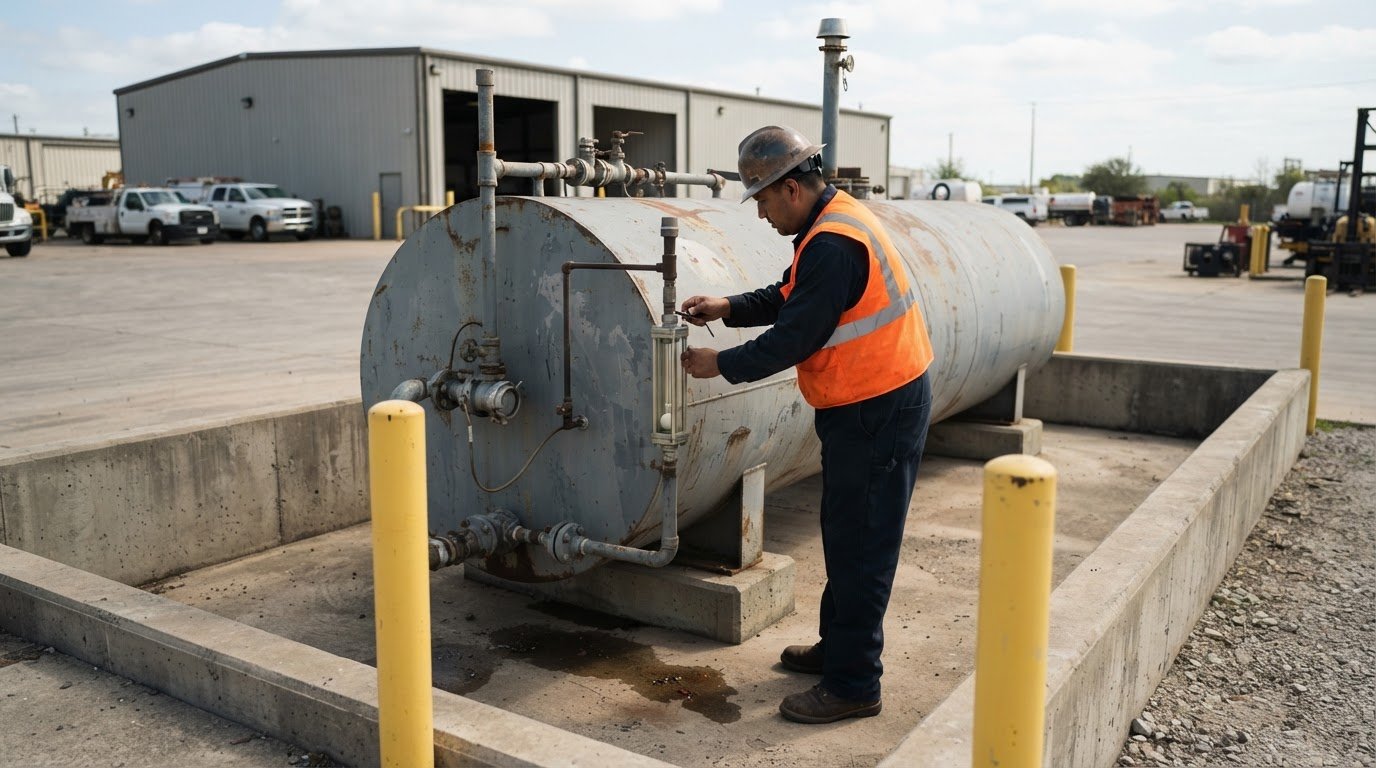
Fuel-level monitoring
Remote fuel readings help track generator readiness between site visits. Their value depends on compatible equipment, a working connection, and clear alert handling.
Remote Fuel-Level Monitoring
A sensor measures fuel level, while monitoring hardware passes the reading through a communications connection. The controller, sensor, hardware, and network determine which data reaches the reporting system. Depending on site coverage, the connection may use Wi-Fi, cellular service, or another network.
For a Houston-area installation, consider the generator’s location and available network connection. Remote readings can help staff track changing fuel levels without being beside the tank. They don’t show every site condition, so pair them with scheduled inspections.
Houston-area requirements for generator fuel tanks, leak detection, and monitoring depend on the facility and tank installation. Remote monitoring alone does not establish compliance or replace applicable tank and leak-control measures. Treat the sensor as an operational tool, and keep installation records and inspection procedures aligned with the rules for the specific site.
Monitoring Alerts
Depending on compatible sensing and the setup, monitoring may report fuel level, generator alarms, operating hours, and exercise activity. Establish alert recipients and available notification types during setup. Assign a person to each important notification, with an escalation path if that person cannot respond.
A low-fuel alert can prompt a refill plan before a power outage. An alarm or unexpected level change can prompt staff to inspect equipment and review its operating history. Alerts report signals, not confirmed causes, so a possible leak still requires onsite inspection.
Set thresholds around the site’s backup-power needs and expected generator operation. A facility relying on one generator during an outage may handle low fuel differently from a site with several units and scheduled testing. Reporting intervals matter too: a reading sent less often can take longer to show a developing change. Decide who receives each message, who follows up, and how unresolved alerts reach the next responsible person.
Keep monitoring records with scheduled inspection notes, service history, and warranty documents. Compare remote readings with onsite observations during inspections. A difference may point to a sensor, connection, or equipment issue that needs attention. Monitoring improves visibility, while physical checks assess conditions sensors cannot report, including visible fuel-system damage.
For sites coordinating refills with generator operation, discuss generator fuel planning as part of the monitoring response process.
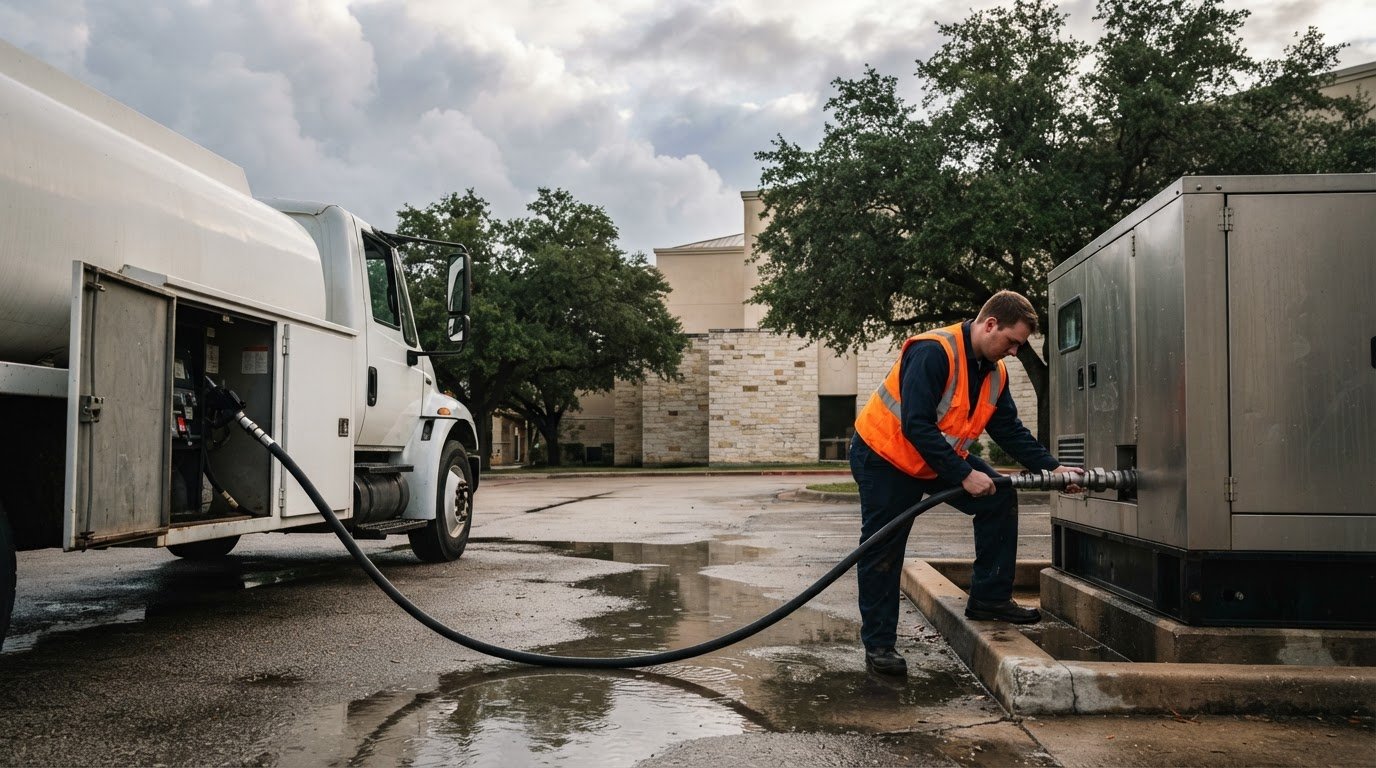
Generator monitoring services
Generator monitoring combines equipment data, communications hardware, and alert handling. In Houston, distinguish remote data reporting from maintenance, fuel delivery, and emergency response.
Houston Monitoring Providers
Houston-area options include generator service companies and monitoring-system providers, with different scopes. One may configure remote monitoring, while another handles generator maintenance or fuel delivery. Monitoring data depends on the generator controller, sensors, hardware, and communications connection. Compare the actual scope, including which signals are reported and who receives alerts.
For example, a compatible setup may report fuel level, alarms, exercise activity, and operating hours. Generator operating history helps put a new alert in context and reveal recurring events. Fuel supply and monitoring are distinct functions, so review what the system measures and how notifications reach designated recipients.
Around-the-Clock Monitoring
Remote alerts can be sent beyond standard business hours if the system and notification setup support them. That doesn’t mean someone watches every reading continuously or that an alert dispatches a technician. Establish recipients and available notification types during setup. Keep monitoring notifications separate from any maintenance, fuel-delivery, or emergency-response arrangement.
Assign an owner to each critical alert and define an escalation path. If a standby generator reports a fuel alarm overnight, for example, the recipient needs a clear next step. Remote monitoring can identify a reported condition, but it doesn’t ensure someone will respond onsite. Response responsibilities are separate from configuring equipment alerts.
Monitoring has limits. It doesn’t replace scheduled generator maintenance, onsite inspection, or performance testing. A fuel-level sensor can report a reading but cannot assess every condition in the fuel system. A technician’s inspection can identify visible leaks or damage, while generator operating history can help reveal repeated alarms. Use both records and physical checks to assess readiness.
Include the battery in standby-generator maintenance records. React Fueling states that a typical standby generator has a 12 V battery powering its ignition control and starter motor. Its condition affects starting, not the fuel reading itself. Monitoring and maintenance serve different purposes: one reports selected operating data; the other inspects equipment and addresses service needs.
Use this sequence to make monitoring more actionable:
- List each generator and its critical role during a power outage.
- Match the controller and installed sensors to the data required.
- Choose a communications path based on site coverage and network needs.
- Set alert recipients, notification types, and escalation responsibilities.
- Review alert history alongside maintenance records and fuel-system inspections.
Fuel delivery and remote monitoring are separate functions. An alert can inform fuel planning, but it doesn’t automatically arrange a refill. A generator service plan should define how staff interpret alarms, handle recurring events, and maintain the equipment that supports backup power.
Frequently, monitoring reports conditions, while maintenance involves inspection and service. Alerts do not automatically dispatch a technician; recipients and service-response arrangements must be established separately. React Fueling states that fuel problems are the number 1 cause of generator failure.
Monitoring hardware and sensors
A fuel reading reaches a remote dashboard through several connected components. The generator controller, sensors, monitoring hardware, and communications path all affect the information available.
Houston monitoring support depends on the generator, controller, tank configuration, and compatible sensing. A commercial standby unit, rental generator, or home generator may need a different setup. No single arrangement suits every generator and fuel tank. Compatibility determines whether the system can report a reliable level reading.
The fuel-level sensor measures the tank level and supplies data to monitoring hardware. Where compatible, that hardware communicates with the generator controller, then sends available readings over a network connection. Monitoring may use cellular service or another network connection. Site coverage and network requirements help determine the communications path.
During a power outage, remote reporting depends on the monitoring equipment retaining power and its communications connection remaining available. If either stops working, new readings may not reach recipients. A generator supplying backup power doesn’t automatically power every separate monitoring device. Include the monitor’s power source and network path in the installation review.
Before choosing hardware, assess the complete signal path. A mismatch at any point can limit readings or interrupt reporting. Review these components together:
- Generator controller: Identify what operating data it can share.
- Fuel sensor: Confirm that it can measure the tank level for the installed configuration.
- Monitoring hardware: Match its inputs to the sensor and available controller data.
- Communications connection: Consider site coverage and the network needed to deliver reports.
- Power supply: Determine whether monitoring hardware can stay operational during an outage.
Use the installation review to distinguish fuel-level reporting from leak detection. A level change can flag a problem, but it cannot establish whether a leak caused it. A technician still needs to inspect the fuel system for visible damage or other problems. Monitoring supports earlier investigation, but it doesn’t prevent all equipment failures or replace repairs.
Keep sensor readings useful by comparing them with onsite observations during scheduled inspections. If a displayed level differs from a physical inspection, investigate the sensor, wiring, connection, and tank configuration. Record the finding and any repair, then compare later readings. This can help distinguish a recurring equipment issue from a one-time reporting interruption.
For a fleet with several generators, document each unit’s controller, tank, sensor, and communications setup separately. That record helps maintenance teams identify which equipment needs inspection when a reading disappears or changes unexpectedly. A home generator also needs a compatible configuration; its smaller scale alone doesn’t establish sensor or network compatibility.
Wi-Fi and cellular monitoring options
A generator monitor needs a communications path to send readings and alerts. In Greater Houston, choose that path based on site coverage, network access, and the generator’s location.
Wi-Fi can connect monitoring hardware through a site’s existing network, provided there is a usable signal where the equipment is installed. A generator in a detached enclosure, below grade, or beyond the building’s coverage may have a weaker connection than office equipment. Nearby structures and distance from network access points affect whether Wi-Fi is practical.
Cellular monitoring uses a cellular connection rather than the facility’s Wi-Fi network. It may suit an isolated generator location where site Wi-Fi doesn’t reach, provided cellular coverage is available there. Neither option is automatically reliable everywhere. Both the communications hardware and local connection affect whether readings arrive.
Assess the actual installation site before selecting a communications path. A practical review considers:
- Equipment location: Note the generator’s enclosure, distance from occupied buildings, and surrounding structures.
- Network access: Identify whether Wi-Fi reaches the monitoring hardware’s planned position.
- Cellular coverage: Consider whether a cellular connection can serve that specific site.
- Power continuity: Determine how monitoring hardware remains powered during a power outage.
- Alert priority: Decide which readings need prompt attention and who receives them.
Connection choice also affects routine operations. If scheduled maintenance includes a generator exercise, staff can compare reported activity with the maintenance record. If reports stop arriving, treat the interruption as a communications issue until the system’s status is reviewed. A missing update doesn’t prove the engine has stopped or the fuel level has changed.
Keep a record of the selected network path, monitoring hardware, and alert recipients. If a facility changes its Wi-Fi network or relocates a generator, revisit those details. A sound setup relies on a functioning sensor, compatible hardware, available communications, and a clear response plan. This makes it easier to distinguish a network interruption from a generator or fuel-system problem.
During a power outage, Wi-Fi or cellular reporting depends on communications availability and power for the monitoring equipment. A cellular path may offer an alternative to site Wi-Fi, but it doesn’t eliminate every outage-related interruption. Include monitoring power and communications in backup planning, then review the setup during scheduled maintenance.
For help coordinating generator fuel planning with site needs, contact React Fueling.
Generator monitoring coverage and network requirements should be considered at the site when selecting a communications path. General assumptions about service across Greater Houston cannot replace that review. Confirm the chosen path is available where the monitoring equipment will operate, and note any site-specific limitation that could affect reporting. If the connection is unsuitable, resolve the communications plan before relying on remote readings or alerts. Revisit the choice when installation conditions or network access change, so the setup continues to fit the site.
React Fueling: Generator Fueling Service
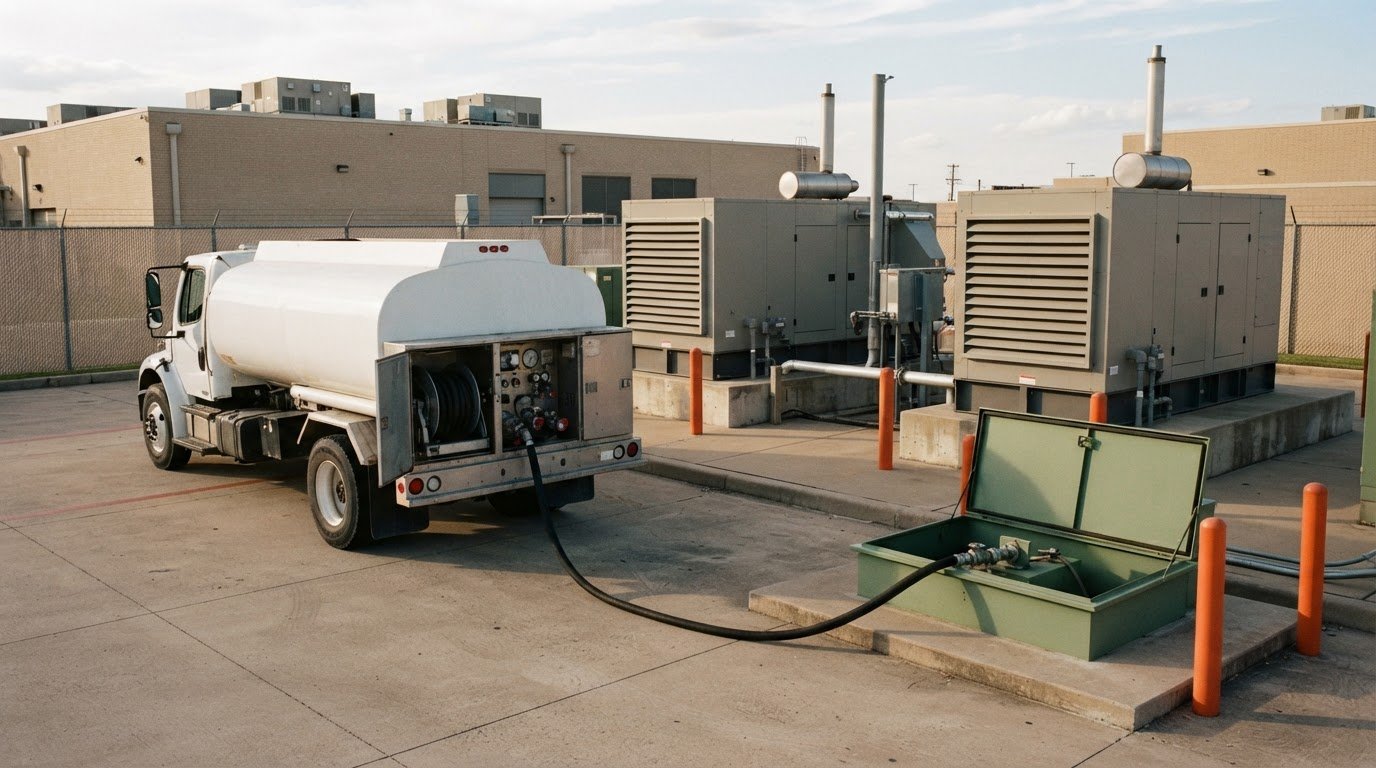
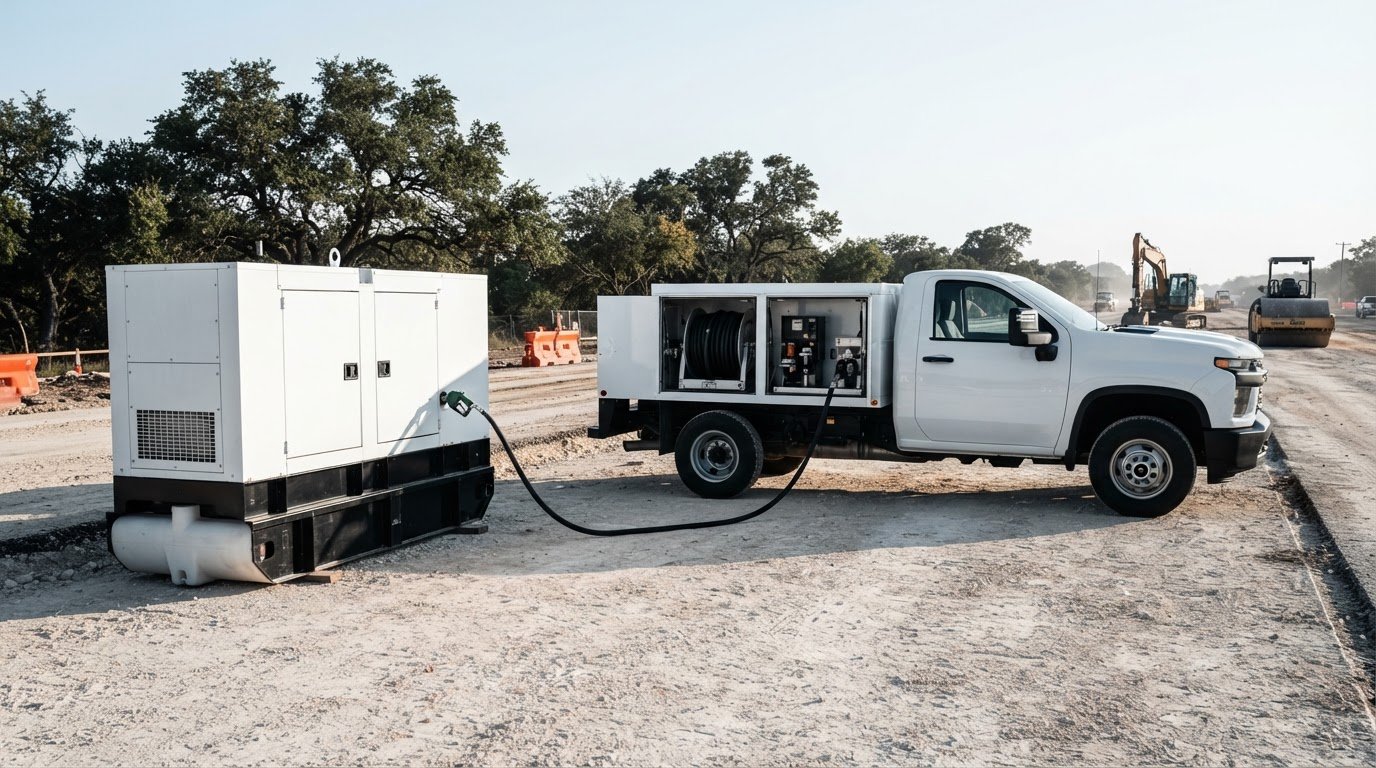
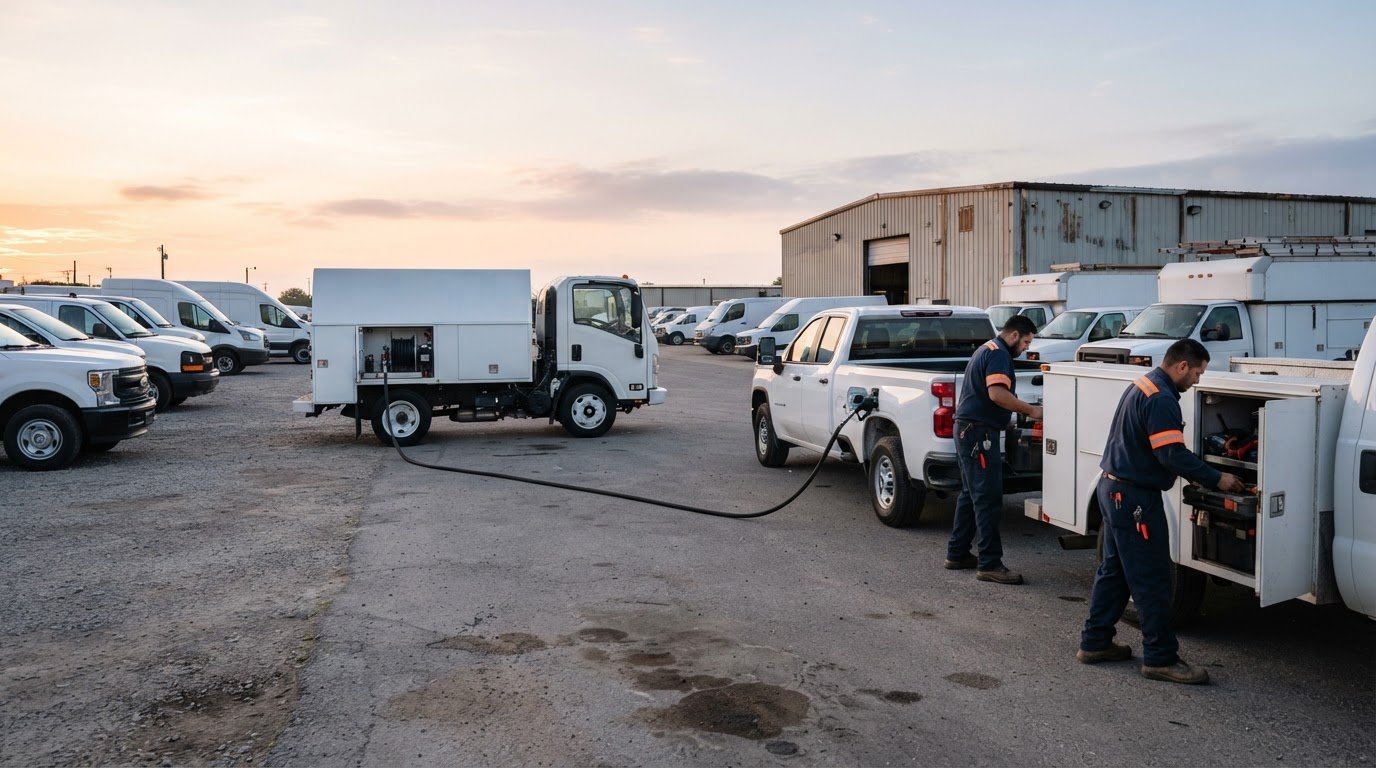
React Fueling supports generator readiness with Generator Fueling Service when fuel levels indicate a refill is needed. Monitoring reports fuel information; fueling provides the practical next step of replenishing the generator’s supply.
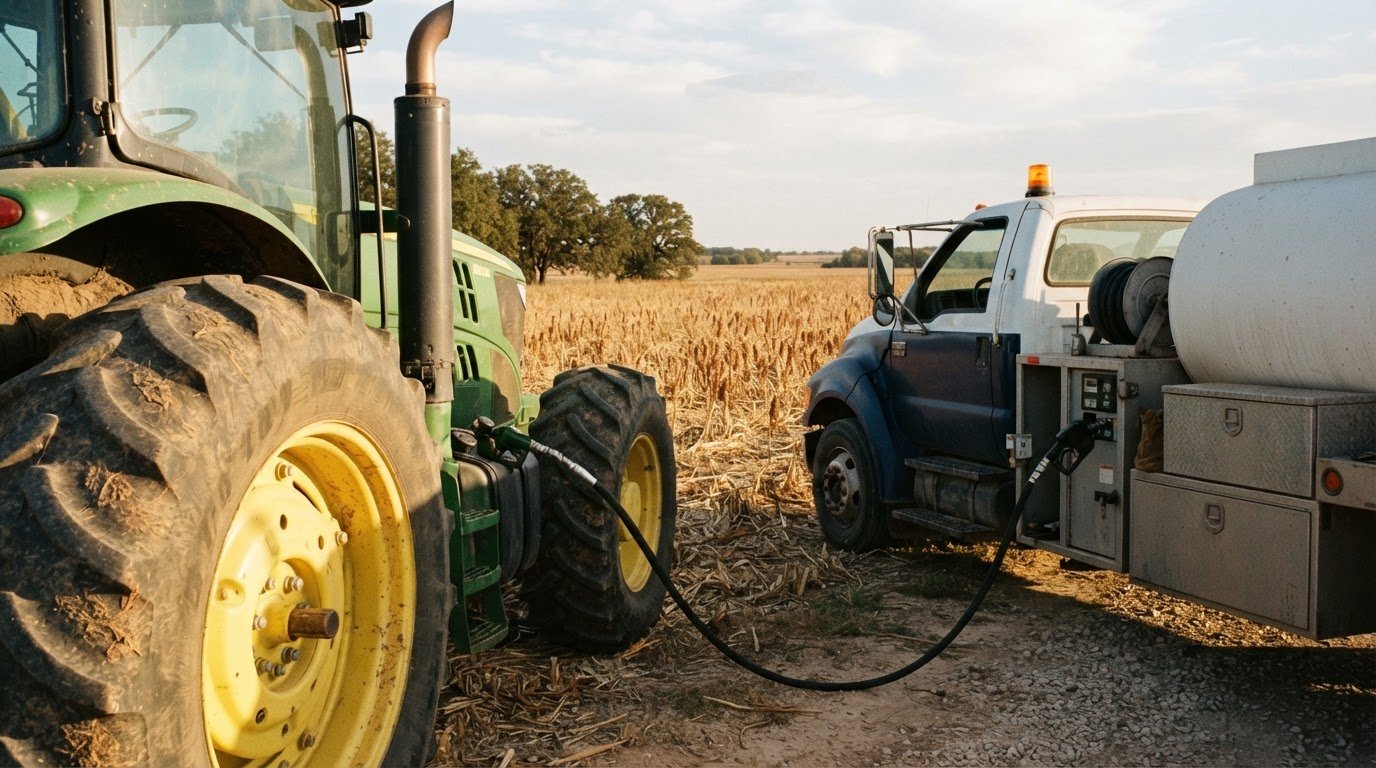
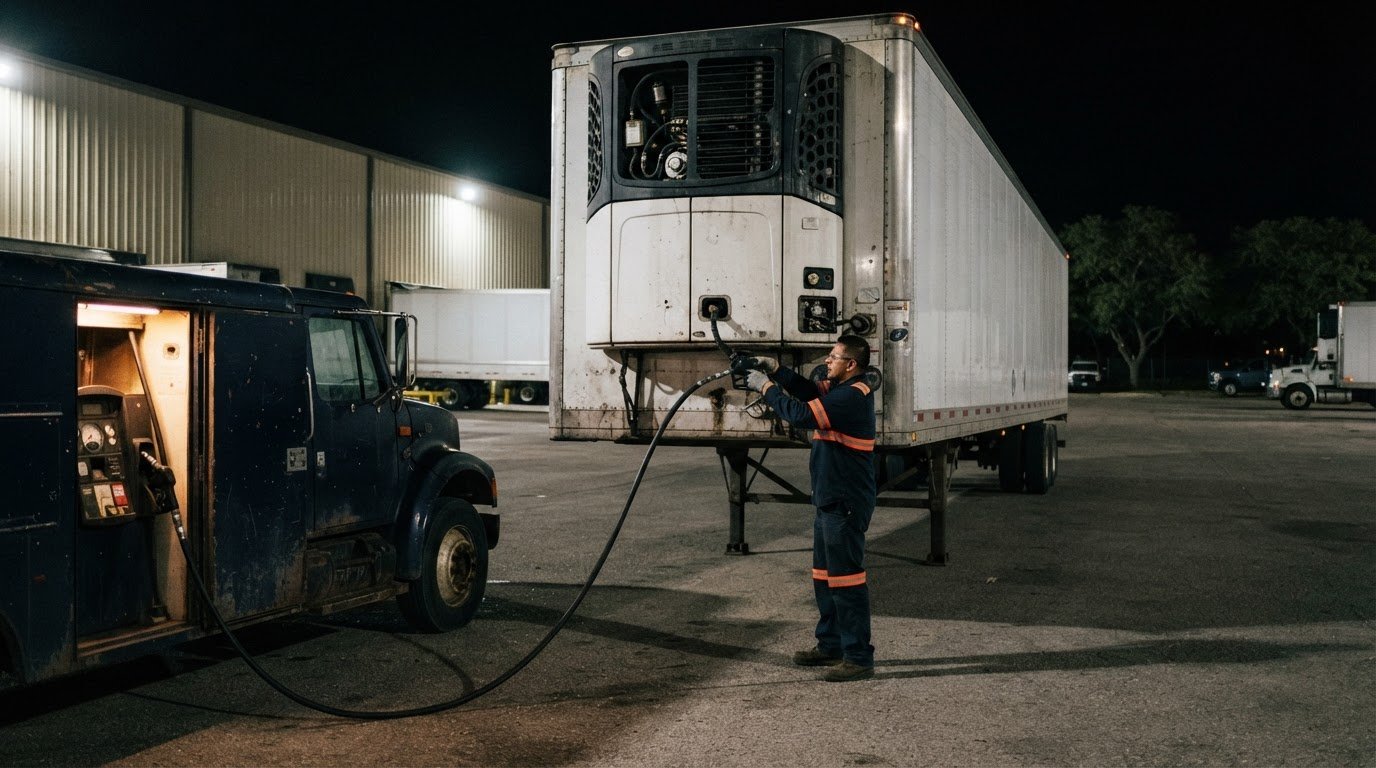
For commercial sites, construction operations, and industrial facilities, scheduled generator fueling service can support continuity when fuel planning is part of backup-power preparation. React Fueling also provides diesel delivery, equipment fueling, and fuel delivery for operational needs.
Share the generator’s location, fuel requirements, and delivery needs to help coordinate the next step. Contact React Fueling to discuss generator fueling for your site.
Plan the Next Step for Generator Readiness
Turn monitoring information into a clear operational handoff. Identify who receives generator alerts, who coordinates fuel planning, and how backup-power needs shape the plan. A generator fuel level monitoring service in Houston is most useful when reporting connects to a defined response instead of sitting apart from day-to-day operations.
React Fueling supports commercial fuel needs with Generator Fueling Service, Diesel Delivery, Equipment Fueling Service, and Fuel Delivery. These services supply fuel for generators, machinery, and operating sites. Monitoring and fueling are distinct functions, but fuel reports can help inform when to plan replenishment.
When preparing to discuss your site, bring the generator’s location, its role, and the fuel requirements that affect your operation. That gives the conversation a practical starting point without treating an alert as a substitute for maintenance or inspection.
Contact React Fueling about your generator fuel needs and take the next step toward a more coordinated plan.
Frequently Asked Questions
Can monitoring be added to an existing generator?
Often, yes, if the generator’s controller, fuel sensor, monitoring hardware, and communications path work together. For example, a compatible controller may provide operating data while a separate sensor supplies tank-level readings. The setup depends on the installed equipment and the information required. Plan a generator fuel level monitoring service in Houston around the existing system rather than assuming identical hardware will suit every unit.
Does an alert automatically dispatch a technician?
No. A monitoring alert reports a condition to its configured recipient; it doesn’t automatically dispatch a technician. A fuel-level notification, for example, may reach a facilities contact, while arranging an inspection or service response remains a separate step. Before relying on alerts during a disruption, define who receives them and who coordinates follow-up. Keep the response process distinct from the monitoring system.
Which operating conditions can be monitored?
Depending on the generator and compatible sensing, monitoring may report fuel level, exercise activity, operating hours, and alarms. These records help teams compare an unexpected alert with recent generator activity. An alarm during a scheduled exercise, for example, may have different context from one during a power interruption. Use monitoring history to guide follow-up, while recognizing that reported data doesn’t replace onsite inspection or performance testing.
What questions should Houston businesses ask before choosing a generator fuel monitoring service?
Start with the decisions the system must support: Can it report the fuel level and operating information needed for this generator? Which controller, sensors, and communications path will it use? Who receives each alert, and who handles follow-up? Clarify how staff should respond if readings stop arriving. These answers help Houston-area businesses align monitoring with site procedures, generator responsibilities, and fuel-planning workflows.