Emergency Generator Fueling Service: The Comprehensive Guide to Power Continuity
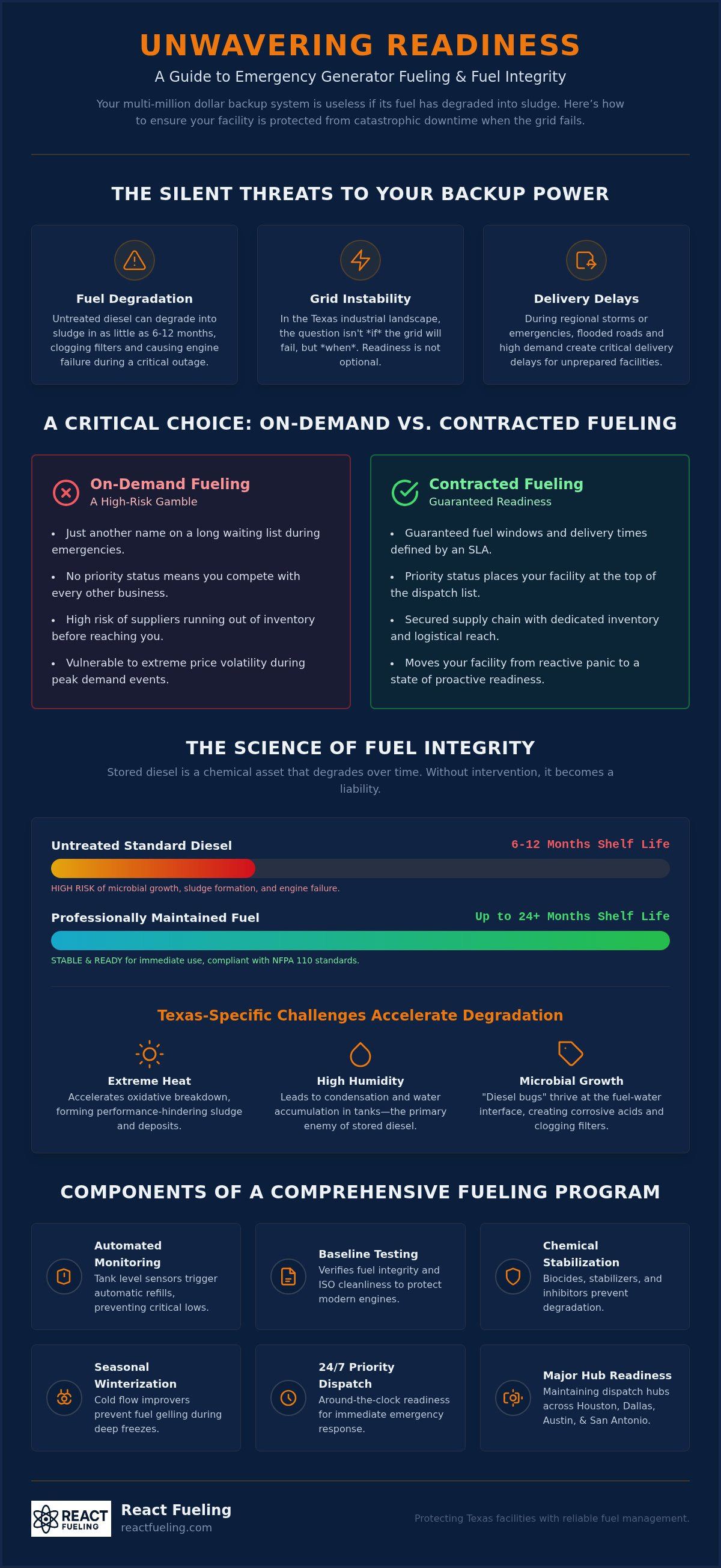
What if your multi-million dollar backup system is nothing more than an expensive paperweight because the fuel inside it has quietly degraded into sludge over the last year? You already know that in the Texas industrial landscape, the question isn't if the grid will fail, but when. Managing fuel levels across multiple sites creates a constant state of anxiety, especially when you're balancing a limited fuel shelf life against the very real threat of delivery delays during regional storms. Relying on a professional emergency generator fueling service is the only way to move from reactive panic to a state of unwavering readiness.
We understand that your primary goal is operational continuity without the burden of constant oversight. This guide will show you how to protect your facility from catastrophic downtime by implementing a fuel management plan that ensures your backup power is ready the moment the grid fails. We'll examine the technical realities of fuel integrity, the necessity of guaranteed priority during emergencies, and how to maintain strict compliance with evolving Texas safety regulations and EPA standards to keep your facility running without interruption.
What is an Emergency Generator Fueling Service?
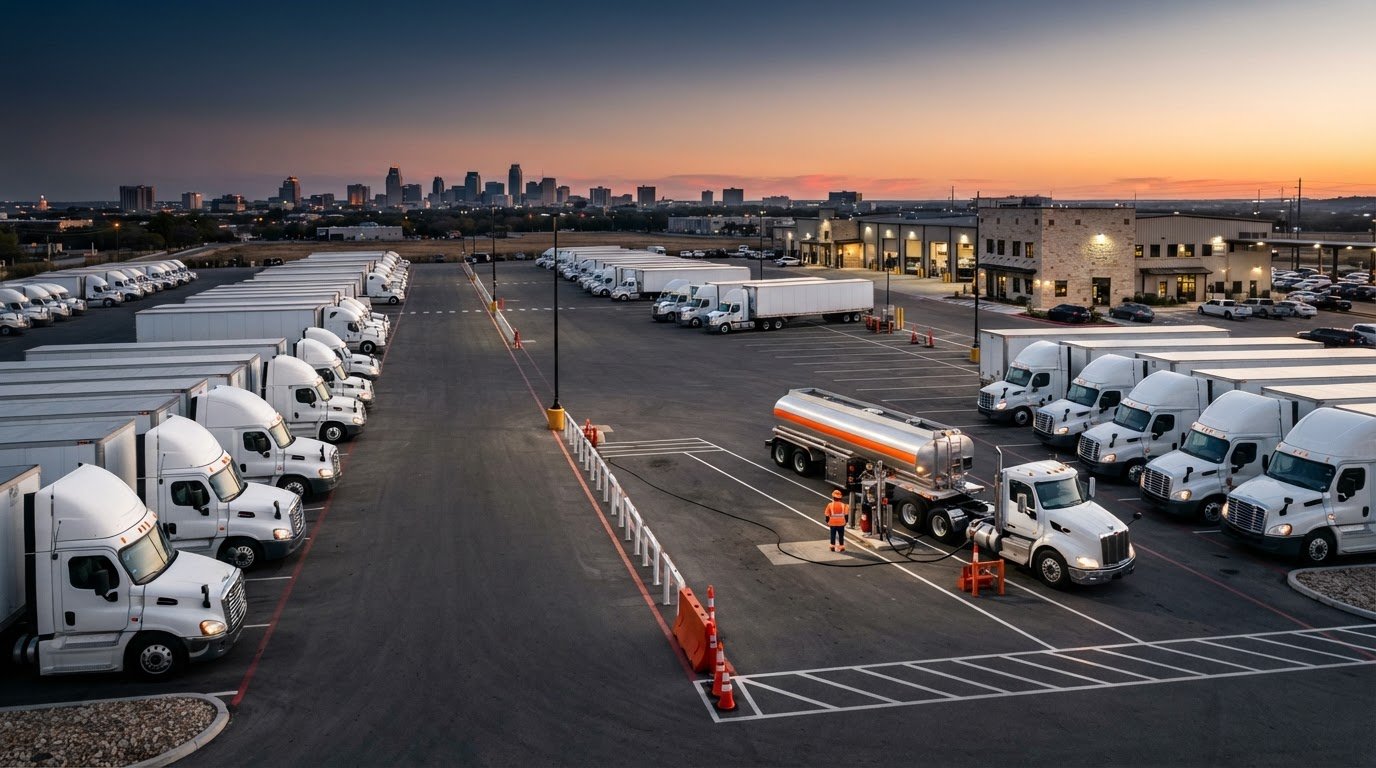
Reliable power depends on more than just a functional engine; it requires a guaranteed supply of high-quality fuel. An emergency generator fueling service is a specialized logistical framework designed to keep critical infrastructure operational when the primary electrical grid fails. Unlike standard fuel delivery, this service functions as a comprehensive continuity strategy. It integrates three core pillars: strategic fuel procurement, scheduled replenishment to maintain tank levels, and rapid emergency response during regional disasters. This structured approach ensures that facilities like hospitals, data centers, and industrial plants never face a dry tank when they are most vulnerable.
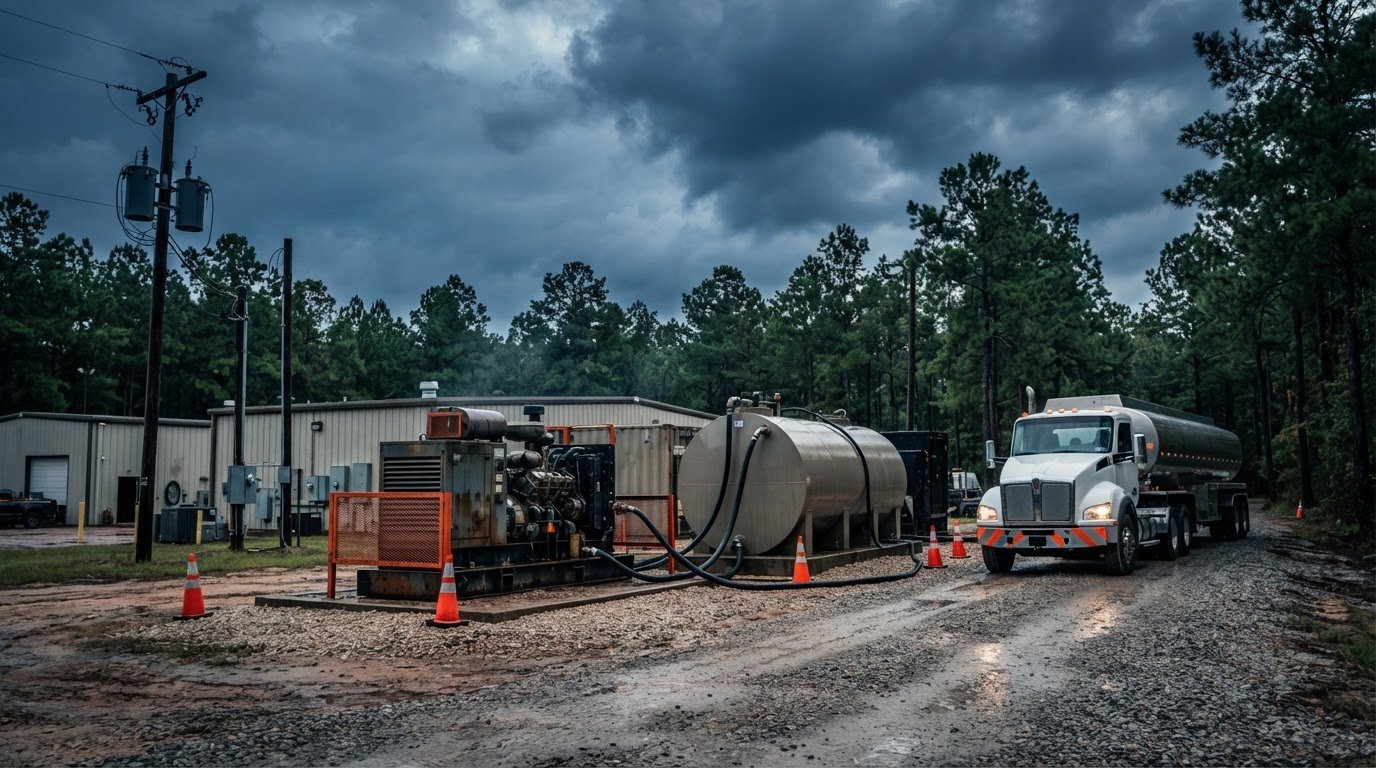
Standard retail fuel delivery is insufficient for commercial infrastructure. During a major Texas storm or a grid-wide emergency, retail stations often lose power or run out of supply within hours. Specialized partners like React Fueling operate with a different set of priorities. We maintain dedicated supply chains and the logistical reach to navigate flooded roads or debris-filled routes. Our role is to serve as a vigilant partner, taking over the complex burden of fuel management so facility managers can focus on their primary operations. This partnership is a vital component of any robust disaster recovery plan.
The Difference Between On-Demand and Contracted Fueling
Relying on on-demand delivery is a high-risk gamble for critical sites. When a regional emergency strikes, every business in the area calls for fuel simultaneously. Without a prior agreement, your facility is just another name on a long waiting list. Contracted emergency fuel delivery changes this dynamic by providing guaranteed fuel windows. Service Level Agreements (SLAs) define exactly when and how your fuel will arrive, even during peak demand events. This priority status secures your supply chain, ensuring that your facility remains at the top of the dispatch list while others struggle to find a provider with available inventory.
Key Components of a Generator Fueling Program
A professional fueling program begins long before the power goes out. It starts with an initial tank fill-up and baseline fuel quality testing to ensure compliance with ISO cleanliness standards. Because untreated diesel can degrade in as little as six to twelve months, regular monitoring is essential. A comprehensive program typically includes:
- Automated Monitoring: Utilizing tank level sensors to trigger automatic refills before levels reach a critical low.
- Baseline Testing: Verifying fuel integrity to prevent microbial growth and sludge from damaging high-pressure common rail engines.
- 24/7 Dispatch: Maintaining around-the-clock readiness across major hubs like Houston, Dallas, Austin, and San Antonio.
This proactive management style eliminates the "set and forget" mentality that often leads to generator failure. By maintaining a constant state of readiness, a dedicated generator fueling service ensures that your backup power system performs exactly as intended during a crisis.
Maintaining Fuel Integrity: The Science of Reliable Diesel
Stored diesel is a biological and chemical asset that begins to degrade the moment it leaves the refinery. While standard untreated diesel typically has a shelf life of only 6 to 12 months, a professional emergency generator fueling service utilizes advanced chemistry to extend this window up to 24 months. NFPA 110 standards recommend that fuel for emergency power systems be consumed or replaced within approximately 1.5 to 2 years. Without these interventions, the fuel inside your tanks will succumb to oxidation, water accumulation, and microbial growth, turning a critical energy source into a liability that can cause total engine failure during a grid outage.
The Texas environment presents unique challenges that accelerate these degradation processes. High humidity levels lead to increased condensation inside storage tanks, introducing water, which is the primary enemy of stored diesel. This moisture facilitates the growth of "diesel bugs" and causes internal corrosion. Additionally, extreme summer heat accelerates the oxidative breakdown of fuel molecules, resulting in sludge that clogs filters and damages high-pressure common rail (HPCR) engines. To ensure your fuel remains within ISO 4406 cleanliness codes, consider consulting with a technical specialist regarding a customized stabilization schedule.
Diesel Stabilization and Additives
Chemical stabilization is the first line of defense in protecting your fuel investment. Oxidative stabilizers are used to prevent the breakdown of fuel molecules during long-term storage, maintaining the fuel's combustible properties. Biocides are equally critical; they eliminate the microbial colonies that thrive at the fuel-water interface. Finally, corrosion inhibitors protect the internal lining of the generator’s fuel system, preventing metallic debris from entering the combustion chamber. These additives work in tandem to ensure the fuel remains stable and ready for immediate use.
Winterization for the Texas Climate
While heat is a constant threat, Texas facilities must also prepare for rare but devastating deep freezes. Diesel fuel has a "cloud point," the temperature at which wax crystals begin to form and clog filters. If your tanks are filled with summer-grade diesel during a freeze in Dallas or Austin, your generator might fail to start exactly when the grid is most stressed. A vigilant emergency generator fueling service incorporates cold flow improvers into the winterization process. These additives ensure the fuel remains liquid and pumpable even when temperatures drop well below the standard operating range, providing a necessary layer of protection against seasonal volatility.
Strategic Fuel Planning for Disaster Recovery
Strategic planning prevents the chaos of the last-minute scramble. To maintain true readiness, you must first calculate your facility’s "Burn Rate," which is the precise volume of fuel consumed per hour during an outage. This calculation isn't static; it fluctuates based on the electrical load your generator carries. Once you establish these numbers, adopting a "Keep Full" strategy ensures your tanks stay at 80-90% capacity year-round. This buffer provides critical hours of operation before the first replenishment truck arrives. This lead time is vital when you consider the logistical hurdles of a regional disaster. Road closures, terminal power outages, and supply chain bottlenecks often delay standard deliveries, making a proactive emergency fuel delivery partnership a necessity rather than an option.
Texas facilities face unique logistical challenges during state-wide emergencies. When the grid fails, fuel terminals often lose the power required to pump product into trucks, creating a localized shortage even if fuel is available. A professional emergency generator fueling service bypasses these bottlenecks by utilizing a network of supply hubs across Houston, Dallas, Austin, and San Antonio. This geographic diversity ensures that if one terminal is down, we draw from another. We prioritize contracted partners, ensuring that your critical infrastructure remains operational while others are left waiting for a diminishing supply.
Developing a 72-Hour Fuel Continuity Plan
A 72-hour continuity plan serves as the backbone of your disaster recovery strategy. Start by auditing your generator's fuel consumption at 50%, 75%, and 100% load levels to understand your maximum run time. Next, identify secondary and tertiary delivery routes for fuel trucks, as primary highways often become impassable during floods or ice storms. Finally, establish redundant communication protocols. When local phone lines or cellular networks fail, having a pre-arranged response schedule with your emergency generator fueling service ensures that deliveries happen even when you can't place a call.
Remote Monitoring and Tank Telemetry
Remote monitoring and tank telemetry eliminate the guesswork of manual gauging. Wireless tank monitors provide real-time visibility into your inventory, preventing "run-dry" scenarios that could stall your operations. These systems offer immediate alerts for sudden drops in fuel levels, which can signal a leak or unauthorized fuel theft. Integrating this data into your facility management software allows for more accurate forecasting and automated dispatching. This level of oversight ensures that your fuel supply is always ready, regardless of the external conditions.
Industry-Specific Requirements for Generator Refueling
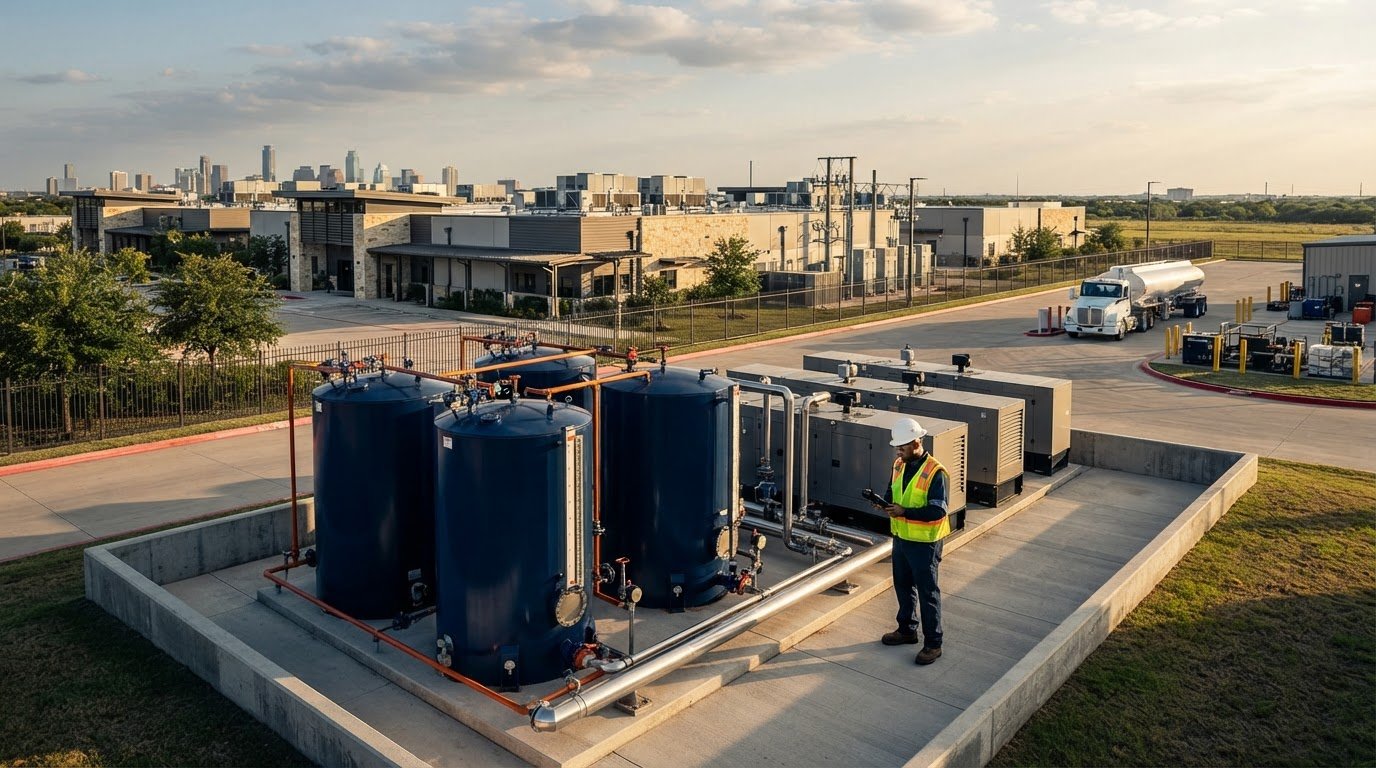
Different industries operate under varying regulatory frameworks and operational demands. For healthcare providers, backup power isn't just a convenience; it's a life-safety requirement. Hospitals must comply with NFPA 110 and Joint Commission standards, which mandate rigorous testing and fuel maintenance protocols. Under the Texas Backup Power Program established in May 2026, critical facilities including nursing homes and water utilities must maintain systems capable of providing 48 hours of continuous power during an outage. An emergency generator fueling service ensures these sites meet these mandates by providing documented fuel quality reports and guaranteed replenishment schedules.
Healthcare Facility Compliance
Life-safety systems in major medical centers typically require a 96-hour runtime capability. Meeting this standard requires more than just a full tank; it requires a documented trail of fuel deliveries and quality tests for regulatory audits. A vigilant partner manages these complexities, ensuring that every gallon meets the required standards and that the facility remains compliant during surprise inspections. Documenting these processes is essential for maintaining certification and ensuring patient safety remains uncompromised during a grid failure.
Data Center Continuity
Data centers aiming for Tier III or Tier IV certification require 99.999% uptime, leaving zero room for fuel-related failures. Texas Senate Bill 6, signed in June 2025, now authorizes ERCOT to mandate the use of backup power for large electricity users like data centers. These facilities consume high volumes of fuel to power both the servers and the massive cooling systems required to prevent hardware failure. Maintaining this continuity requires a high-purity supply of Ultra-Low Sulfur Diesel (ULSD) and Diesel Exhaust Fluid (DEF) to meet Tier 4 emissions standards while supporting multi-generator "farms."
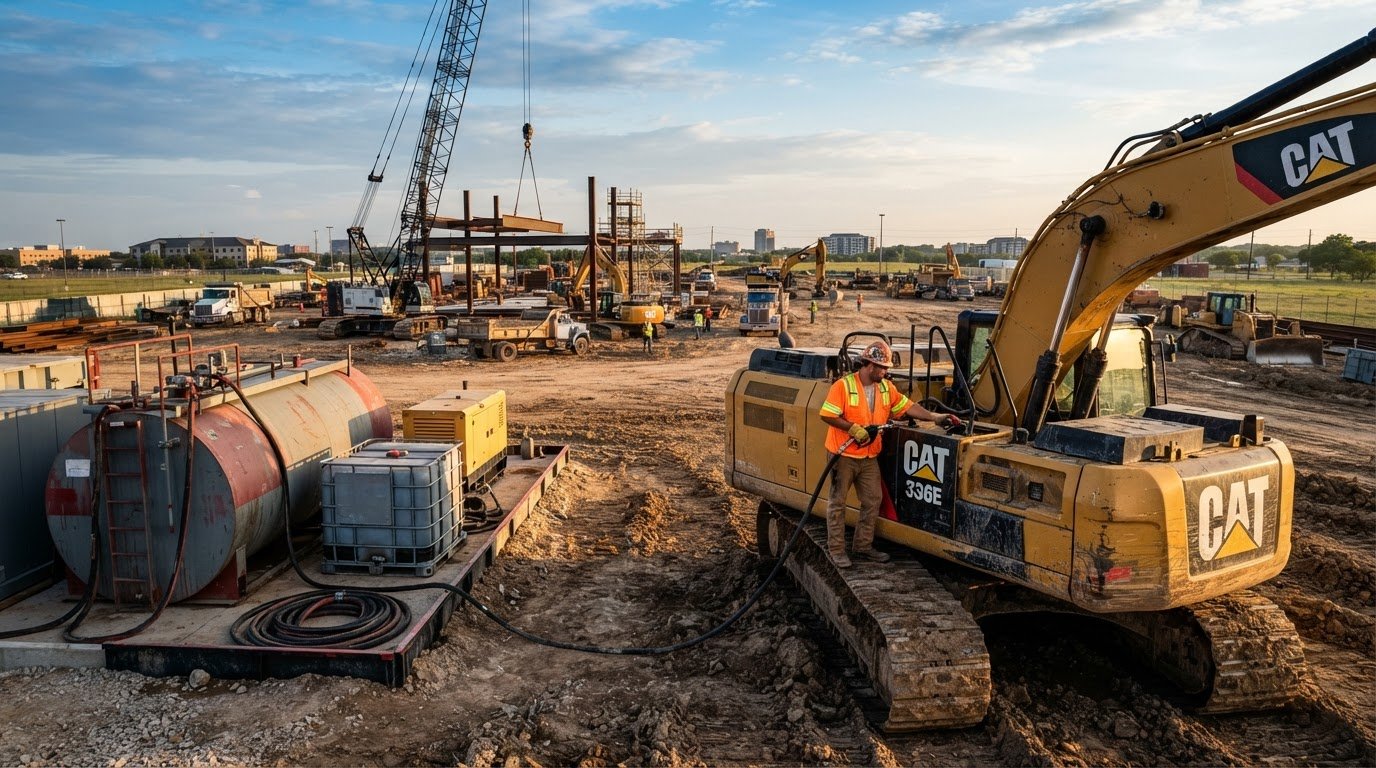
Manufacturing plants and cold storage facilities rely on backup power to protect perishable inventory and maintain production timelines. A single hour of downtime can result in significant losses in product and labor costs. Similarly, construction sites utilize Generator Fueling Services to power temporary offices and security systems before a permanent grid connection is established. Whether you are managing a hospital or a high-tech facility, contact our team to develop a refueling plan tailored to your specific industry requirements and regulatory obligations.
Partnering with React Fueling for Texas Power Security
Securing your facility’s power requires a partner that operates with the same level of urgency as your own internal teams. React Fueling provides a comprehensive emergency generator fueling service across the Texas Triangle, covering the major hubs of Houston, Dallas, San Antonio, and Austin. We function as a vigilant partner, maintaining 24/7/365 emergency response capabilities to ensure that your operations never stall when the grid fails. Our approach integrates local expertise with large-scale logistical strength, allowing us to move precisely when the power stops. We don't just deliver fuel; we manage the entire energy ecosystem to protect your continuity during high-stakes regional emergencies.
Reliability in the Texas market depends on more than just a fleet of trucks. As a member of the React Holdings family, we leverage a robust infrastructure to provide stability in a volatile environment. We understand the specific risks associated with the Texas grid and the pressures of maintaining critical infrastructure. Our team prioritizes contracted clients, ensuring that your facility remains at the top of the dispatch list. By choosing a dedicated emergency generator fueling service , you eliminate the uncertainty of the open market and secure a supply chain that is reserved specifically for your operational needs.
Our Houston and Texas Footprint
Strategic positioning remains the key to rapid response during a crisis. We maintain fuel assets in Magnolia, College Station, and other critical metro hubs to minimize transit times when every minute counts. Our local drivers possess deep knowledge of Texas terrain and specific storm patterns, enabling them to navigate complex routes or flooded areas that outsiders might miss. This regional focus allows us to scale our services effectively. Whether we are refueling a massive industrial plant with high-volume needs or a small commercial office requiring a baseline fill, we show up with the right equipment for the job.
Beyond Diesel: DEF and Portable Tank Solutions
Modern power systems require more than just standard fuel to remain operational and compliant. To keep Tier 4 engines running within emissions standards, we provide On-Site DEF Delivery as part of our integrated logistics plan. If your existing on-site storage is insufficient for an extended 72-hour outage, we supplement your capacity with Portable Fuel Tank Rentals. This ensures you can accept a larger volume of Diesel Delivery before a storm hits, extending your runtime significantly. Ready to secure your power? Contact React Fueling for a custom plan tailored to your facility’s specific logistical requirements.
Secure Your Infrastructure Against the Next Grid Failure
Maintaining power continuity requires a disciplined approach to fuel management that begins long before a storm makes landfall. We have explored how the Texas climate necessitates aggressive fuel stabilization and how a 72-hour continuity plan serves as your facility’s ultimate safety net. A professional emergency generator fueling service does more than just fill tanks; it provides the logistical certainty required to meet NFPA 110 and Joint Commission standards. By integrating real-time telemetry with a "Keep Full" strategy, you eliminate the risks of fuel degradation and delivery delays.
React Fueling stands ready as your vigilant partner with a 24/7 emergency dispatch system and a Texas-wide service network. As a member of the React Holdings Logistics Group, we possess the reach and technical expertise to support critical infrastructure across Houston, Dallas, Austin, and San Antonio. Don't leave your facility’s uptime to chance during the next regional emergency. Take the proactive step to secure your supply chain and ensure your backup power performs exactly when it matters most.
Secure Your Facility's Power Continuity-Contact React Fueling Today . We look forward to helping you maintain total control over your complex logistics.
Frequently Asked Questions
How long can diesel fuel be stored in a generator tank?
Untreated diesel fuel typically maintains its integrity for 6 to 12 months. With the application of stabilizers, biocides, and proper water management, this shelf life extends to 24 months. NFPA 110 standards recommend that fuel for emergency power systems be consumed or replaced within approximately 1.5 to 2 years. Regular testing ensures the fuel remains within ISO cleanliness codes, preventing the accumulation of sludge that can compromise engine performance.
What happens if my generator runs out of fuel during an outage?
Running out of fuel causes an immediate loss of power and introduces air into the fuel lines. This requires a professional technician to bleed the system before the unit can restart, leading to extended downtime. In high-pressure common rail engines, a dry tank can also damage sensitive fuel injectors. Utilizing a professional emergency generator fueling service prevents these scenarios through proactive monitoring and scheduled replenishment, ensuring your facility remains operational throughout the crisis.
Do I need a special type of diesel for my backup generator?
Most modern backup generators require Ultra-Low Sulfur Diesel (ULSD) to comply with EPA emissions standards. For stationary emergency generators, red-dyed diesel is the industry standard because it's exempt from federal motor fuel taxes, provided it's used strictly for off-road applications. It's identical in performance to clear highway diesel but includes a dye for regulatory identification. Always verify your manufacturer’s specifications to ensure the fuel meets specific cetane and lubricity requirements.
How often should I have my generator fuel tested or polished?
You should perform fuel quality testing at least once per year to comply with NFPA 110 and Joint Commission requirements. If testing reveals high levels of water, particulate matter, or microbial growth, fuel polishing becomes necessary to restore the fluid to ISO 4406 cleanliness standards. In high-humidity regions like Houston, semi-annual testing is often recommended to identify condensation issues early, preventing the formation of sludge that clogs filters and damages engine components.
Can you deliver fuel during a hurricane or major storm in Houston?
Yes, we maintain 24/7/365 emergency response capabilities specifically designed for extreme weather events. Our teams utilize a Texas-wide service network with assets strategically positioned in hubs like Magnolia and College Station to bypass local road closures. We prioritize contracted partners during hurricanes and grid emergencies, ensuring they receive guaranteed fuel windows. Our local drivers understand the regional terrain, allowing them to navigate flooded routes and deliver fuel when standard logistics providers cannot operate.
What is the difference between red-dyed diesel and clear diesel for generators?
The primary difference between red-dyed and clear diesel is its tax status and intended use. Red-dyed diesel is intended for off-road equipment and stationary generators, making it exempt from federal highway taxes. Clear diesel is taxed for on-road use. Chemically, both fuels are typically Ultra-Low Sulfur Diesel (ULSD) and provide identical performance. Using clear diesel in a stationary generator is legal but unnecessarily increases operational costs due to the included highway taxes.
How much fuel does a commercial generator consume per hour?
Fuel consumption varies based on the generator’s kilowatt (kW) rating and the electrical load it carries. For example, a 500 kW generator typically consumes approximately 35 to 40 gallons per hour at full load. At 50% load, that consumption drops to roughly 20 gallons per hour. Calculating your specific "Burn Rate" is a critical step in disaster recovery planning, as it determines exactly how many hours of runtime your current inventory provides during an outage.
Do I need DEF fluid for my backup generator?
You need Diesel Exhaust Fluid (DEF) if your generator uses a modern Tier 4 Final engine equipped with Selective Catalytic Reduction (SCR) technology. This fluid is essential for reducing nitrogen oxide emissions to meet EPA standards. If a Tier 4 engine runs out of DEF, it will enter a "derate" mode, significantly reducing power output or shutting down entirely. We provide integrated DEF delivery alongside our emergency generator fueling service to ensure your system remains fully compliant and operational.
Recent Posts