Every hour your equipment sits idle waiting on fuel is an hour your project bleeds money. If you manage a construction site, an industrial facility, or a fleet of heavy machinery across Texas, you already know that feeling. A delayed fuel delivery doesn't just slow one machine; it stalls crews, compresses schedules, and puts contract deadlines at risk. Choosing the right commercial fuel logistics partner is not simply a procurement decision. It's a strategic one that determines whether your operation keeps moving or grinds to a halt.
You're right to be skeptical of vendors who promise the world and then leave your generator dry during a critical shift. The frustrations are real: drivers burning labor hours at retail stations, inconsistent delivery windows, DEF compliance questions with no clear answers, and the constant anxiety of not knowing whether fuel will show up before your equipment does. Those aren't minor inconveniences. In Texas-scale operations, they're profit killers.
This guide lays out a clear 2026 strategy for evaluating and working with a fuel logistics partner built for the physical demands of Texas job sites. You'll learn how to eliminate unplanned downtime, reduce the administrative weight of fuel management, and ensure your backup generators have guaranteed emergency response when conditions demand it. Here's exactly what to look for and how to build a supply relationship that holds.
What is a Commercial Fuel Logistics Partner?
A commercial fuel logistics partner is a strategic ally that integrates with a company’s operational workflow to ensure zero-downtime energy supply. This role encompasses the professional management of procurement, delivery, and on-site distribution of essential fluids. Unlike a standard vendor who fulfills a one-time order, a logistics partner assumes responsibility for your energy continuity. They handle demand forecasting and equipment fueling service with a level of precision that eliminates the need for site managers to monitor tank levels manually.
Moving from a vendor model to a true partnership is about risk mitigation. One-off deliveries are prone to delays and leave industrial timelines vulnerable to external market shocks. A partner provides a dedicated framework for your operation. They ensure that fuel quality is consistent and that delivery timing aligns perfectly with your work shifts. This proactive management allows your team to focus on the build, not the fuel gauge.
Core responsibilities of this partnership include:
- Demand Forecasting: Predicting fuel usage based on project scale and equipment types.
- Equipment-Level Refueling: Delivering fuel directly to tanks on the job site to maximize uptime.
- Compliance Management: Ensuring all DEF fluid delivery and storage meets environmental standards.
- Administrative Reduction: Consolidating invoicing and tracking to lower the burden on office staff.
The Role of Logistics in Modern Industry
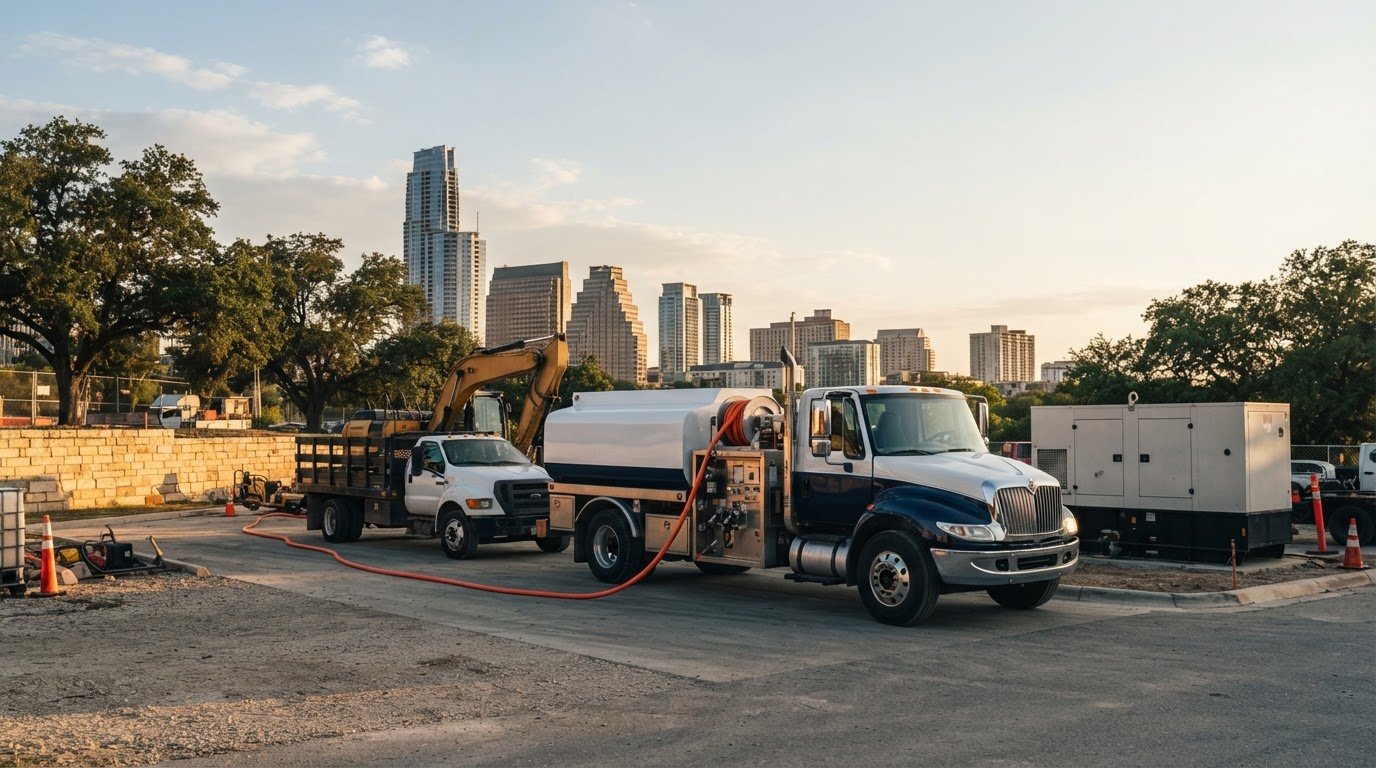
Texas industrial markets are moving faster than ever. In cities like Austin and San Antonio, construction project milestones are tied directly to machine uptime. Fuel logistics is the invisible engine behind these schedules. When fuel arrives exactly when needed, labor productivity stays high. A professional commercial fuel logistics partner also looks ahead to manage the entire fluid ecosystem. This includes DEF delivery to keep modern engines compliant with emissions standards and specialized lubricants to prevent mechanical failure.
Identifying the Risks of Fragmented Fuel Supply
A fragmented supply chain hides significant costs that erode your bottom line. "Just-in-time" fueling without a clear strategy often leads to emergency calls and premium pricing. The financial drain is even more apparent when crews refuel at retail stations. You lose money on labor hours, fuel taxes, and unnecessary vehicle wear. It's an inefficient use of resources that adds up over a long-term project.
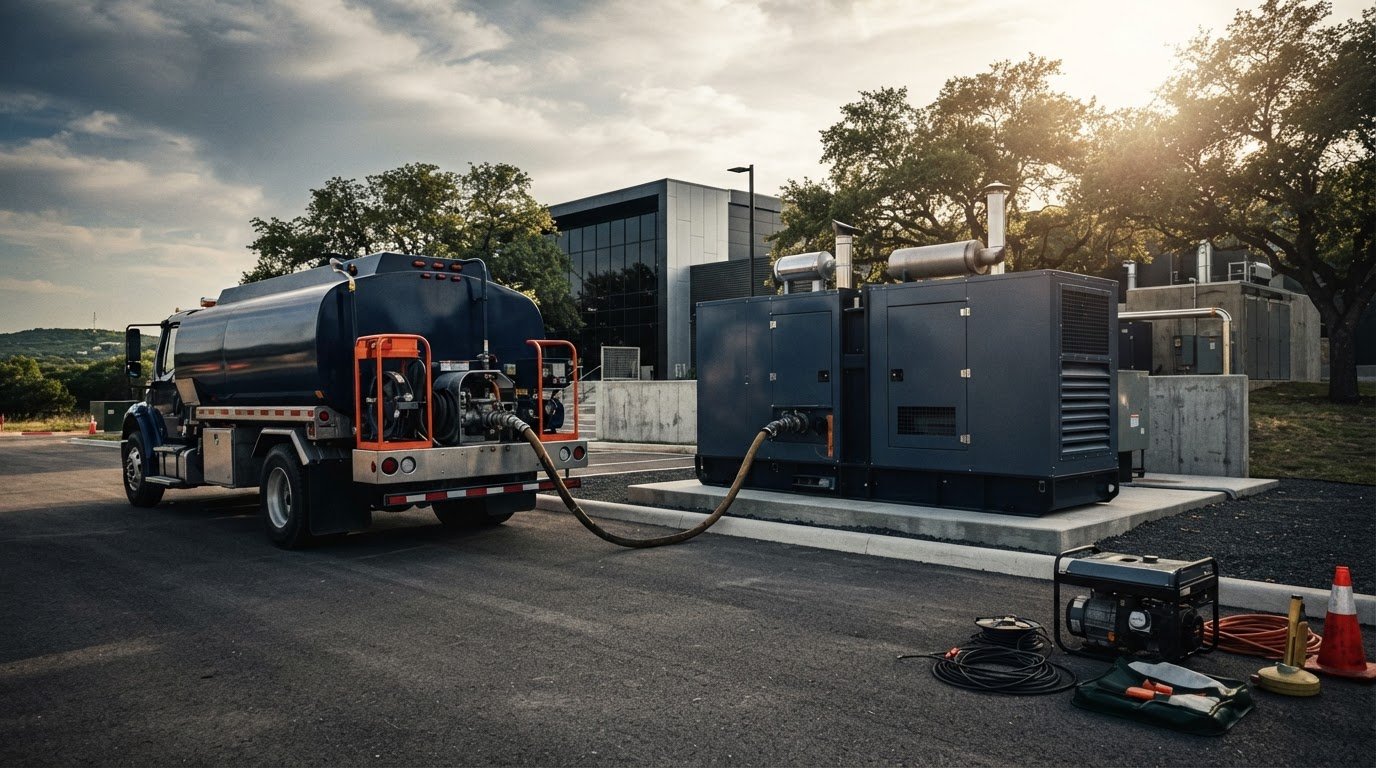
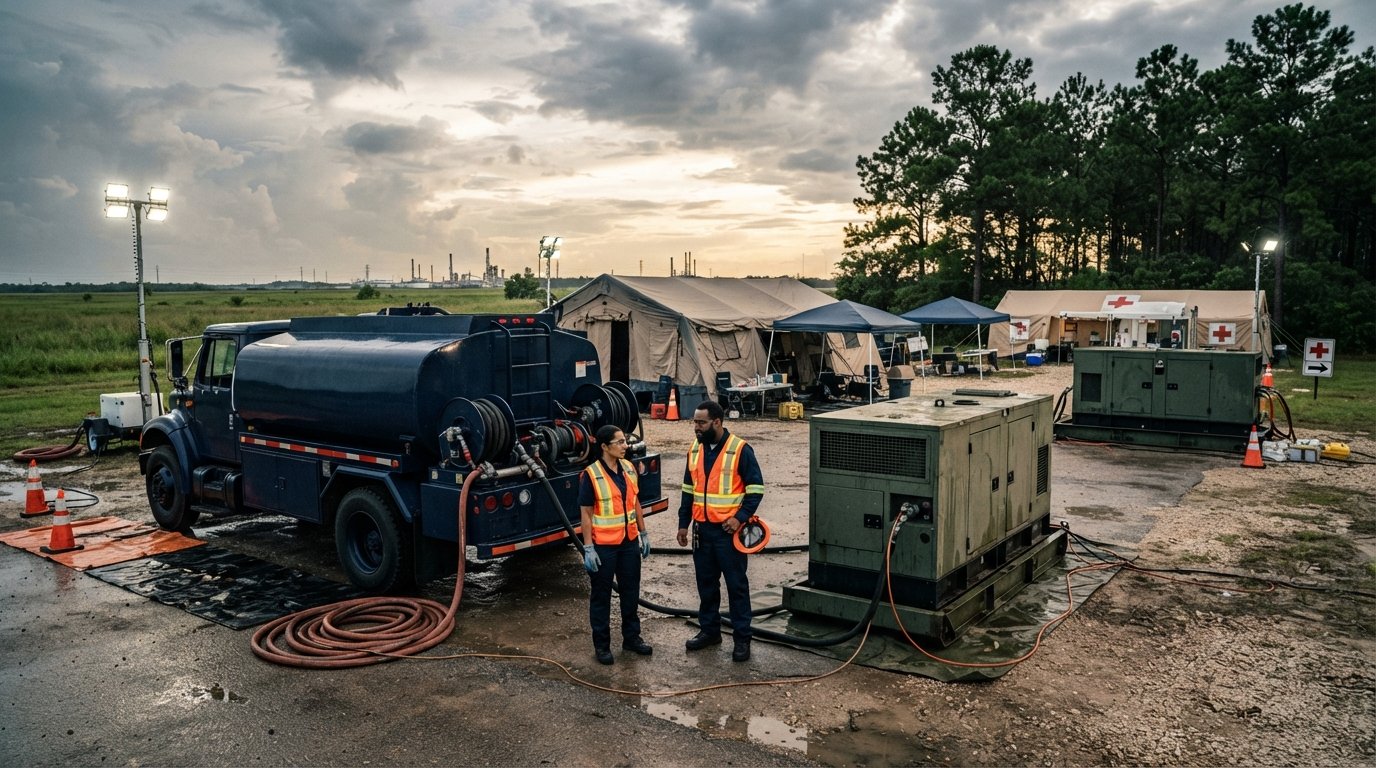
The risks become critical during Texas weather emergencies. When a freeze or hurricane impacts the Gulf Coast, unverified suppliers often prioritize their largest contracts or fail to show up entirely. A strategic partnership guarantees you aren't left at the back of the line. It provides the foresight to pre-fill tanks and the infrastructure to maintain generator fueling service when the grid fails. Relying on a fragmented system during these high-stakes moments is a gamble that most commercial operations don't want to take.
Components of High-Performance Fuel Logistics
Treating fuel as a commodity is the most expensive mistake a Texas operation can make. A cardlock program or retail fuel account moves the burden onto your drivers and your equipment. They still have to travel to the fuel. High-performance fuel logistics inverts that model entirely: the fuel travels to the work. Every component of a mature system is built around that single principle.
On-Site Equipment Refueling Strategies
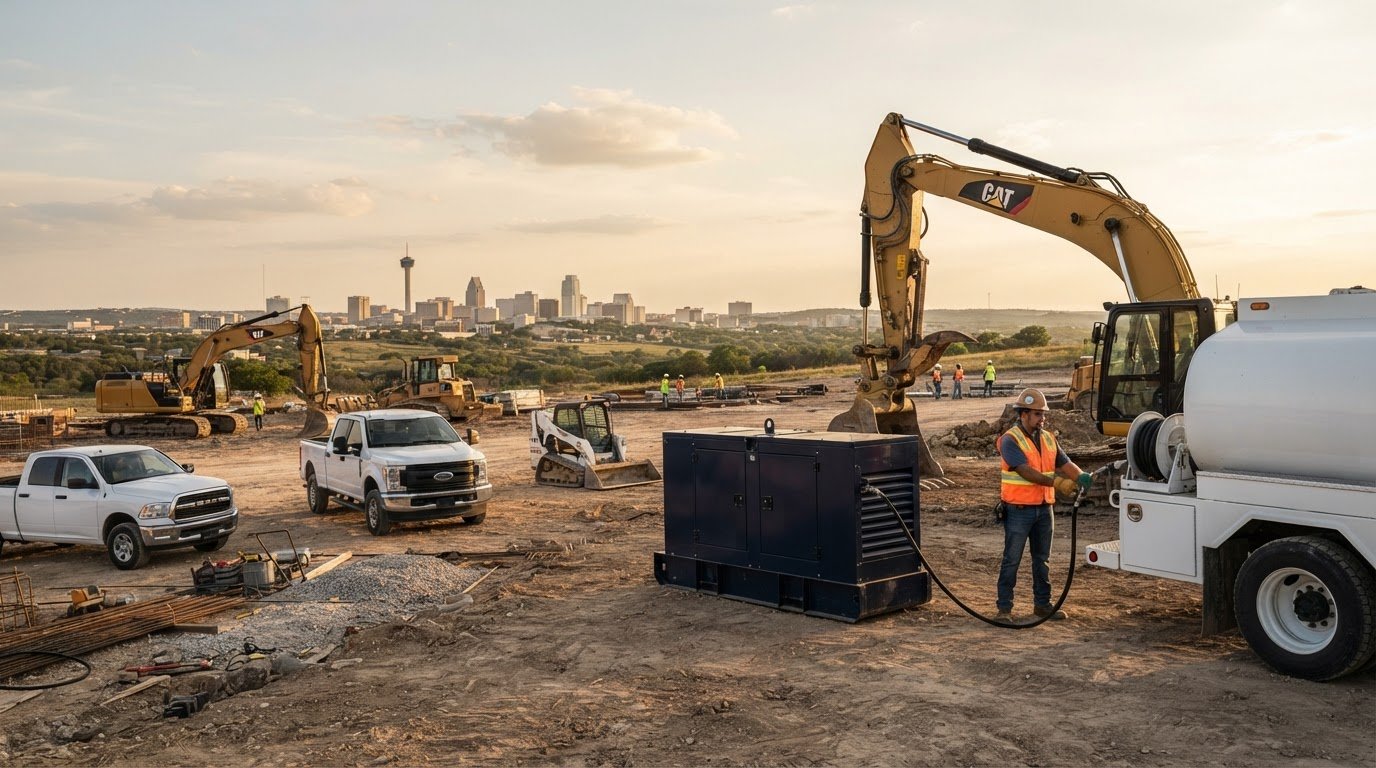
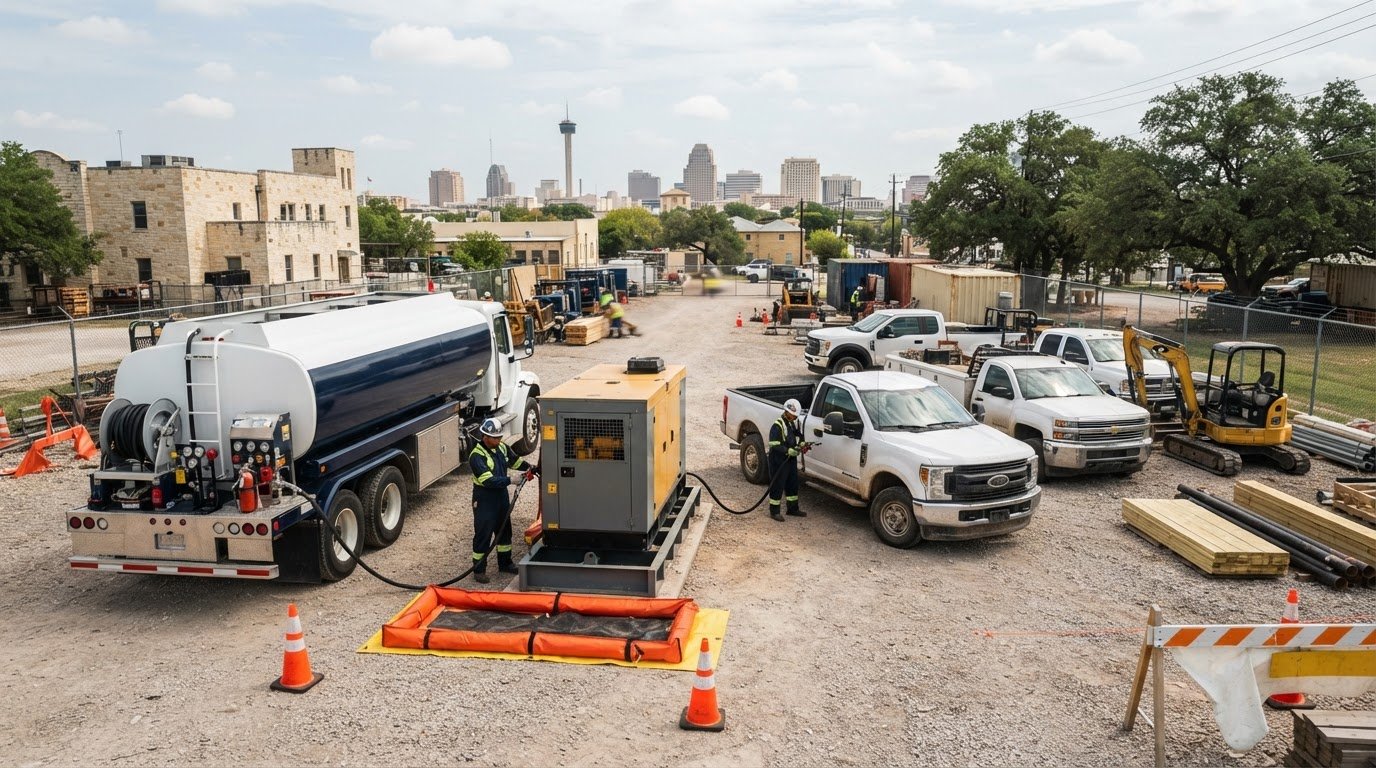
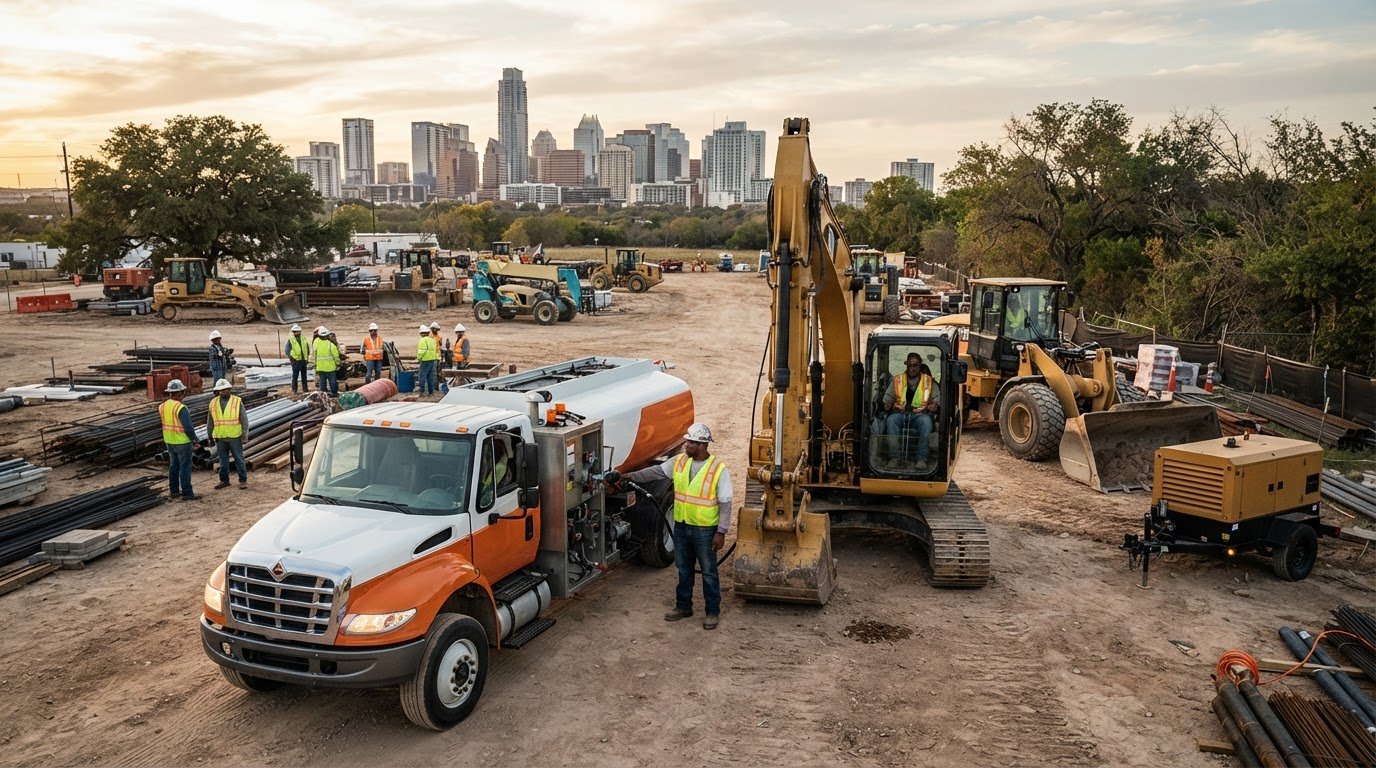
Wet-hosing is the gold standard for active construction sites. A certified driver operates a metered delivery truck and refuels each machine directly at its working position. Excavators, generators, and haul trucks never leave their stations. That means no idle repositioning time, no operator downtime, and no fuel lost to improper transfers. A qualified commercial fuel logistics partner also tracks consumption at the asset level, logging gallons delivered per unit per shift. That data feeds directly into project accounting, giving site managers a precise cost-per-machine figure rather than a single bulk fuel invoice that tells them nothing about where the consumption actually occurred.
Environmental discipline during on-site transfers is non-negotiable. Spill containment equipment, grounded transfer hoses, and properly trained drivers protect your site from regulatory exposure. These aren't optional courtesies; they're operational requirements on any permitted Texas job site.
Emergency Fueling and Critical Infrastructure
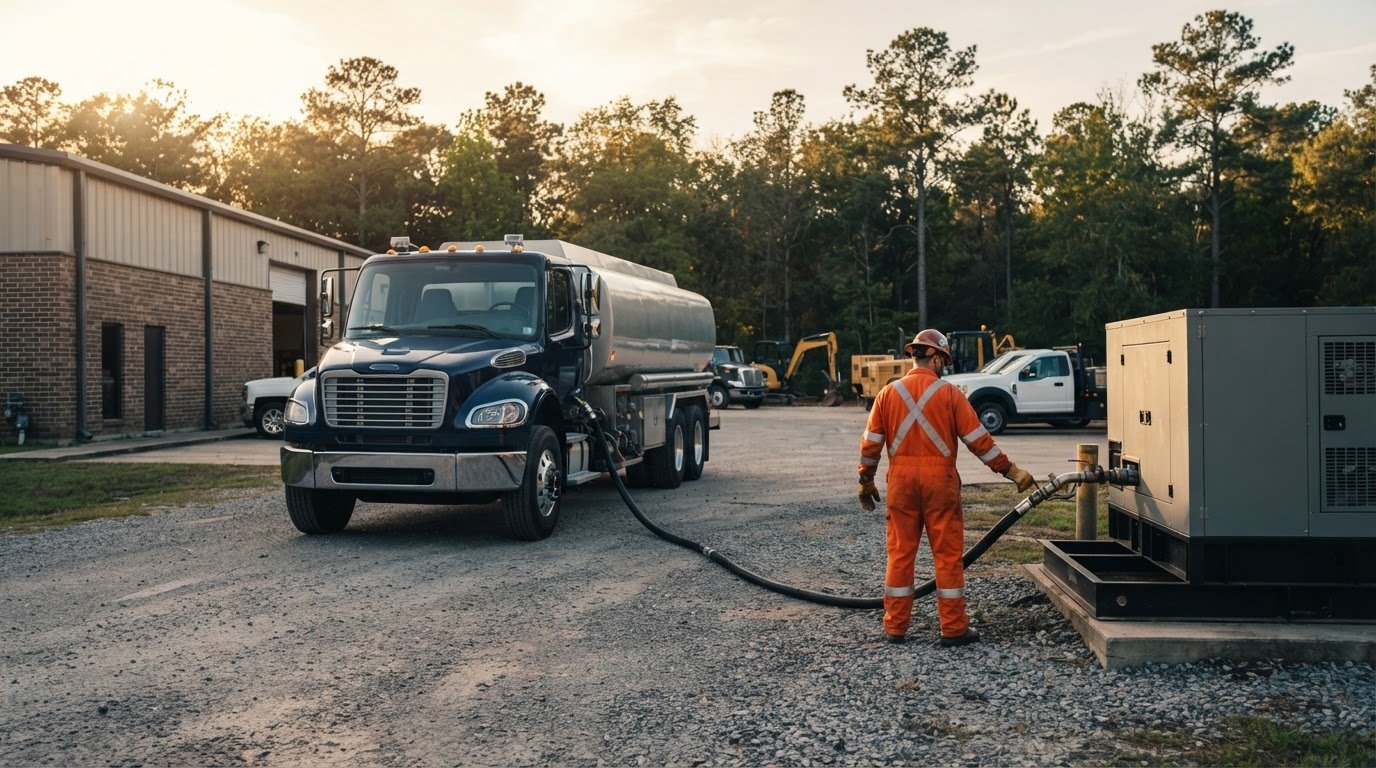
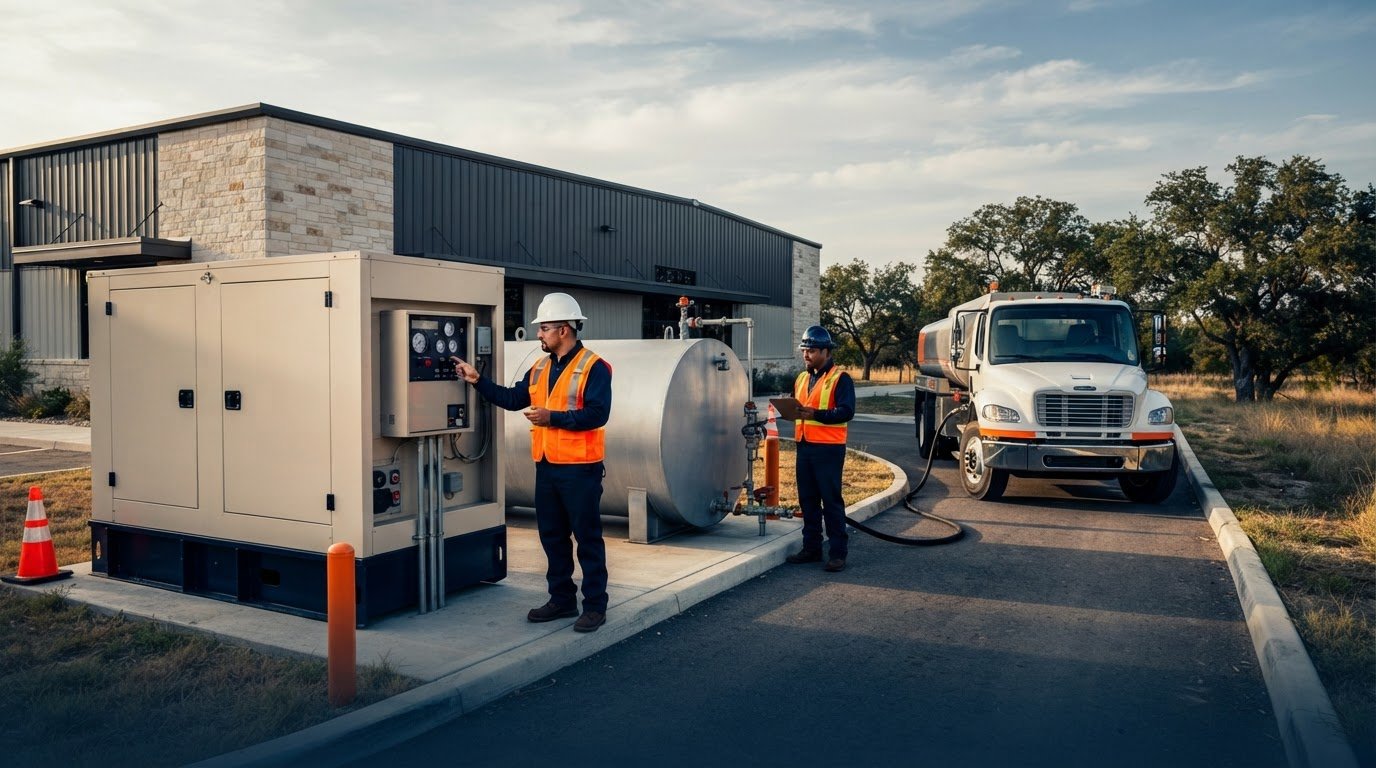
Hospitals, data centers, and industrial plants in Houston operate under a different standard. For these facilities, generator failure isn't an inconvenience; it's a life-safety event or a catastrophic data loss. Managing priority fueling during grid failures requires pre-positioned logistics, not reactive scrambling. A partner with emergency generator fueling services maintains the routing infrastructure to reach critical facilities ahead of demand spikes, not after them.
The 24/7 nature of this work demands a logistics structure that never goes offline. Delivery schedules must account for access restrictions, security protocols, and the specific tank configurations of each facility. Planning for these variables in advance is what separates a reliable partner from a vendor who shows up late with the wrong equipment.
Two additional components complete a high-performance system:
- DEF Fluid Integration: Modern diesel engines require on-site DEF fluid delivery to maintain emissions compliance. Coordinating DEF alongside diesel eliminates a separate procurement process and keeps engines running within regulatory standards.
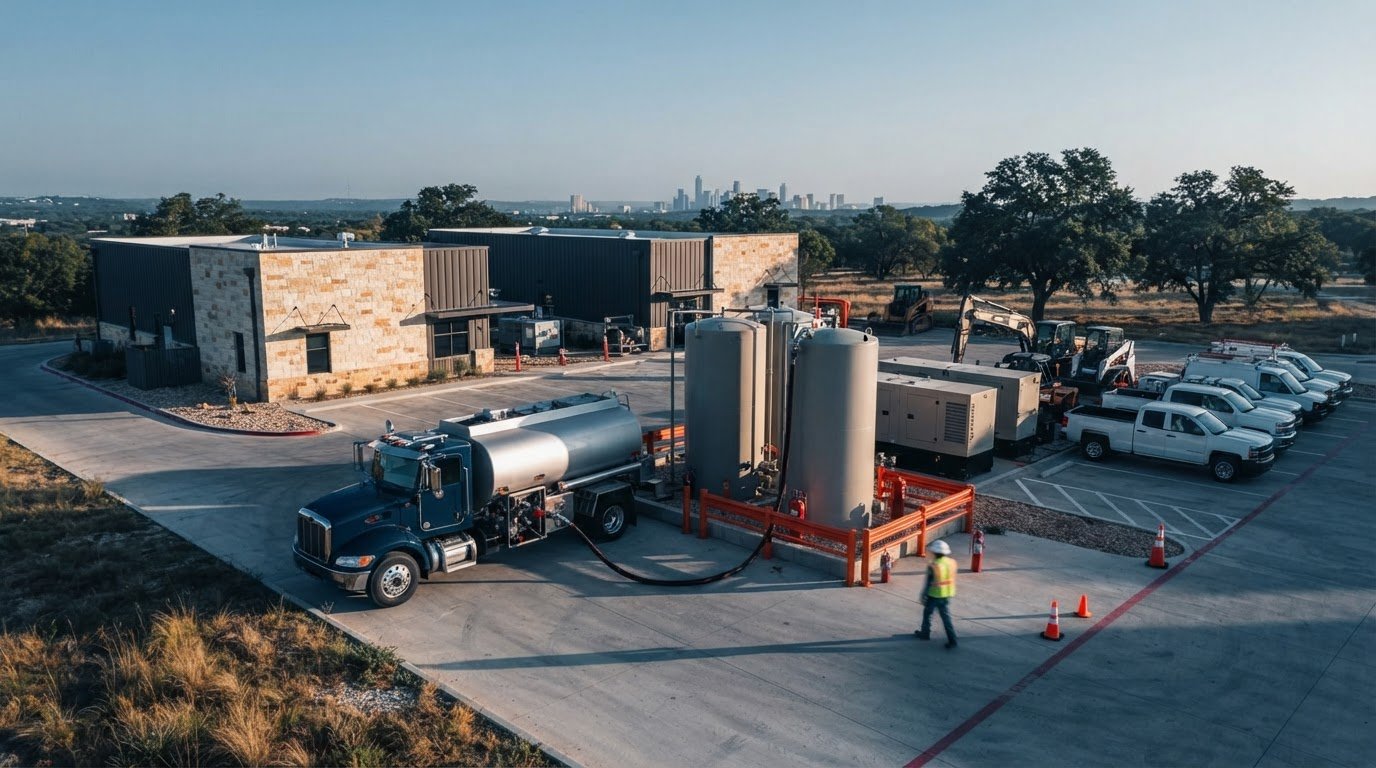
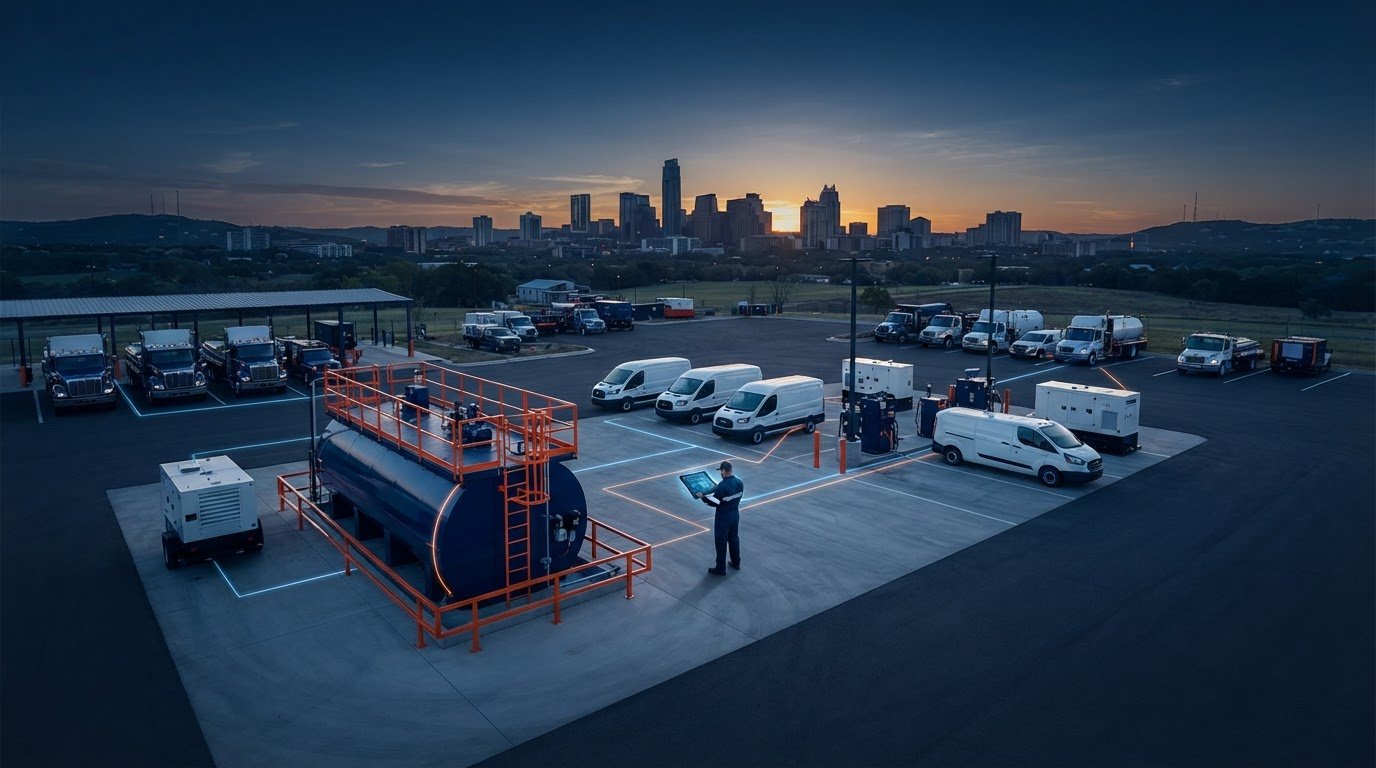
- On-Site Storage: Portable fuel tank rentals establish secure, on-site reserves that buffer against delivery gaps and reduce exposure to supply chain disruptions.
If your current fuel program doesn't include all of these components working in coordination, it's worth discussing your site's specific requirements with a specialist who understands Texas operational conditions.
The ROI of Partnered Logistics vs. Traditional Fueling
The real price of fuel isn't found on a receipt; it's found in your operational efficiency. When you evaluate a commercial fuel logistics partner , you're looking for a return on investment that goes far beyond a few cents per gallon. Traditional fueling methods, such as sending drivers to retail stations or relying on central on-site tanks that require equipment to move, carry heavy hidden costs. These include lost labor hours, unnecessary idle time, and the physical wear-and-tear of moving heavy machinery across a job site just to reach a pump. Calculating the "true cost of a gallon" requires looking at the total expense of getting that fuel into the tank, not just the wholesale price.
Companies switching to on-site logistics often see a double-digit percentage increase in equipment uptime. This shift moves the focus from procurement to productivity. By bringing fuel directly to the asset, you ensure that every machine is ready to work the moment the shift starts. This eliminates the "morning rush" and the mid-day stalls that occur when equipment runs dry unexpectedly.
Mobile Fueling vs. Retail Pumping
The math of driver downtime is punishing for Texas fleets. If a driver spends 30 minutes at a gas station each day, you aren't just paying for 30 minutes of labor; you're losing 30 minutes of revenue-generating work. In a high-demand market like Dallas or Houston, those 30 to 60 minutes of saved labor per driver per day can translate into thousands of dollars in reclaimed productivity over a single project. Mobile fueling converts that wasted time back into billable hours.
On-site delivery also targets the issue of "shrinkage." Monitored delivery systems provide asset-level reporting that makes fuel theft nearly impossible. You know exactly how much fuel went into each machine, leaving no room for discrepancies. Additionally, on-site fueling removes your vehicles from public station traffic, significantly lowering the risk of minor accidents and liability issues associated with navigating heavy trucks through crowded retail lots.
Administrative and Compliance Savings
Managing fuel is an administrative burden that often goes uncalculated. A commercial fuel logistics partner simplifies this through consolidated billing and automated fuel tax reporting. This is particularly vital for operations using both dyed diesel for off-road equipment and highway diesel for transport fleets. Distinguishing between these for tax credits requires precise documentation that a professional logistics system handles automatically.
Compliance with EPA and environmental standards is another area where a partner adds value. Professional spill prevention and containment protocols ensure your site stays within regulatory bounds without requiring constant oversight from your project managers. For those looking to optimize specific Texas locations, integrating these strategies with Construction Site Fuel Delivery Houston ensures that your local uptime strategy is as robust as your logistics chain. This level of coordination mitigates the risk of supply shortages during peak demand, providing a guaranteed supply when others are left waiting.
How to Choose a Fuel Logistics Partner in Texas
Selecting a commercial fuel logistics partner requires a shift from vendor vetting to operational auditing. You aren't just buying a commodity; you're investing in a logistics infrastructure that must mirror the scale and urgency of your own. In the high-stakes environment of Texas industrial sites, a partner's ability to execute is defined by their local footprint and their commitment to safety standards. Start by evaluating their fleet. Late-model trucks and certified operators aren't just about appearances; they're indicators of reliability and a lower risk of mechanical failure during your most critical shifts. If a provider's equipment is aging, your delivery schedule is already at risk.
Response time guarantees must be specific and documented. Ask what "emergency" means in their service level agreement. For a hospital or a data center, an emergency response that takes six hours is a failure. A true partner provides a defined window for 24/7 readiness, ensuring they can pivot to your site when the grid fails or a supply chain break occurs. Scalability is equally vital. Your partner should possess the capacity to fuel a single remote generator in Magnolia while simultaneously managing a multi-city fleet across the Austin and San Antonio corridors. If they can't scale with your growth, they'll eventually become a bottleneck.
The "Boots-on-the-Ground" Requirement
Local dispatch matters more than a national 1-800 number. When an operator is navigating a complex industrial facility layout or a muddy construction site in the middle of the night, they need local knowledge, not a GPS coordinate from a call center in another time zone. A partner with a physical presence in hubs like Houston, College Station, and Dallas understands the terrain and the specific traffic patterns that impact delivery windows. You should demand references from other Texas-based industrial firms to verify that the provider actually shows up when conditions are at their worst.
Technological Integration
Modern logistics relies on data as much as it does on diesel. High-performance partners utilize real-time delivery tracking and tank monitoring to remove the guesswork from your fuel levels. This technology should integrate directly with your existing fleet management software, providing a seamless view of fuel consumption and asset health. Automated alerts for low fuel levels in backup systems are no longer a luxury; they're a requirement for maintaining critical infrastructure. This foresight allows you to focus on your core business while your partner manages the energy supply chain in the background.
If your current provider relies on manual checks and vague delivery windows, it's time to audit your fuel logistics strategy with a specialist who understands the physical reality of Texas operations.
React Fueling operates as a specialized energy logistics division of React Holdings. We combine the infrastructure required for large-scale industrial projects with the dedication of a family-owned organization. This unique structure allows us to serve as a high-stakes commercial fuel logistics partner for businesses that cannot afford a single minute of downtime. We focus our resources on the critical Houston-Dallas-Austin triangle, maintaining a local presence in Magnolia, San Antonio, and College Station to ensure our fleet is always within reach of your job site.
Transitioning from a traditional vendor to a strategic partnership with React Fueling means moving away from reactive ordering. We integrate with your existing workflow to provide 24/7 reliability. Our team doesn't just deliver fuel; we manage your energy continuity. We understand that your project's success depends on our ability to show up on time, every time, regardless of external conditions. This boots-on-the-ground approach ensures your site stays productive while we handle the logistical complexity.
Customized Fueling Programs
Efficiency on a job site is often dictated by the timing of your shifts. We tailor our delivery schedules to match your specific operational windows, ensuring that your equipment is ready before the first operator arrives. Our specialized equipment fueling services provide direct-to-tank delivery for heavy machinery, eliminating the need for central refueling points. For operations in the Gulf Coast region, we offer integrated solutions for emergency diesel delivery in Houston, providing a localized management guide that addresses the unique logistical hurdles of the metro area.
The Peace of Mind Guarantee
Our "Seasoned Problem Solver" persona is built on the physical reality of the Texas environment. We don't just provide a service; we offer a vigilant partnership that anticipates interruptions before they happen. Preparing your facility for the next Texas storm requires more than a last-minute phone call. Our standby programs ensure that your critical infrastructure, from data centers to hospitals, is pre-filled and prioritized before severe weather hits. We maintain constant readiness so you don't have to manage the stress of potential fuel run-outs during a crisis.
If your current fuel supply feels like a liability rather than an asset, it's time to elevate your strategy. You can contact React Fueling for a comprehensive logistics audit to identify gaps in your current supply chain and secure your 2026 operational goals.
Securing Your Operational Future in 2026
Energy continuity is the foundation of every successful industrial and construction project in Texas. You've seen how a dedicated commercial fuel logistics partner transforms a job site by eliminating the hidden costs of driver downtime and equipment idling. Moving away from a reactive vendor model allows you to recapture billable hours and ensure your machinery is powered before the first shift begins. This strategic shift protects your bottom line and your contract deadlines from the unpredictability of the retail fuel market.
React Fueling stands ready as a member of the React Holdings family to provide that operational stability. Our specialized direct-to-equipment fleet and 24/7 emergency readiness ensure that your Houston, Dallas, or Austin projects never sit idle. We understand the physical demands of the Texas landscape and take pride in showing up when it matters most. We don't just deliver fuel; we provide the peace of mind that comes from total control over your energy supply chain.
Don't leave your 2026 project milestones to chance. Take the next step toward total operational certainty and efficiency. Get a customized fuel logistics plan from React Fueling today. We look forward to keeping your equipment moving.
Frequently Asked Questions
What is the difference between a fuel supplier and a fuel logistics partner?
A fuel supplier typically sells a commodity and leaves the management to you. A commercial fuel logistics partner integrates with your workflow to handle procurement, demand forecasting, and direct-to-equipment distribution. This partnership focuses on energy continuity rather than just volume. By managing your supply chain proactively, a logistics partner eliminates the administrative burden of tracking tank levels and coordinating multiple vendors, ensuring your operation never stops due to a fuel run-out.
How does on-site equipment fueling improve my bottom line?
On-site fueling eliminates the "morning rush" and the labor hours lost when drivers travel to retail stations. By bringing fuel directly to your machinery, you reclaim 30 to 60 minutes of productivity per operator every day. This approach also reduces wear and tear on heavy equipment that would otherwise need to move to a central tank. Asset-level reporting provides precise accounting, allowing you to identify exactly where your fuel spend is going.
Do you provide emergency fuel delivery for generators during power outages?
React Fueling provides 24/7 emergency fuel delivery specifically designed for generators at hospitals, data centers, and industrial facilities. We maintain a vigilant standby posture to respond during grid failures or severe Texas weather events. Our logistics infrastructure allows us to prioritize critical infrastructure, ensuring your backup power systems remain operational when the public supply chain is compromised. We pre-plan routes and access protocols to guarantee rapid response when every minute counts.
Can a fuel logistics partner help with DEF fluid compliance?
Yes, a comprehensive commercial fuel logistics partner manages Diesel Exhaust Fluid (DEF) alongside your diesel supply. Modern engines require DEF to maintain EPA emissions compliance; running out can trigger "limp mode" or complete engine shutdown. We provide on-site DEF fluid delivery to keep your fleet running efficiently. Integrating this service into your fuel schedule simplifies procurement and ensures your equipment stays within regulatory standards without requiring a separate vendor.
What areas of Texas does React Fueling cover?
React Fueling provides localized service across the major industrial hubs of Texas. Our primary service areas include Houston, Magnolia, San Antonio, and College Station. We also maintain a strong presence in the Austin and Dallas corridors to support large-scale construction and infrastructure projects. This regional footprint allows us to offer rapid response times and local dispatching, ensuring our drivers understand the specific terrain and traffic patterns of your local job site.
How do portable fuel tank rentals work for construction sites?
Portable fuel tank rentals provide a secure, on-site reserve that buffers your project against supply chain disruptions. We deliver the tanks directly to your construction site and manage the refueling schedule based on your consumption rates. These rentals are ideal for remote locations or high-demand phases where equipment-level fueling isn't enough. Having a dedicated reserve on-site reduces the frequency of deliveries and provides immediate access to fuel for emergency backup systems.
Is mobile fueling safer than going to a retail gas station?
Mobile fueling is significantly safer than sending heavy commercial vehicles to crowded retail stations. Public gas stations aren't designed for the turning radii or weight of industrial trucks, which increases the risk of collisions and liability. On-site delivery happens in a controlled environment with certified operators who follow strict spill prevention and containment protocols. This method keeps your equipment on the job site and removes your drivers from the hazards of public traffic.
What should I look for in a 24/7 emergency fueling contract?
Look for specific response time guarantees and a commitment to local dispatch. A contract should define what constitutes an "emergency" and outline priority status for your facility during wide-scale disasters. Verify the provider's fleet capacity and their ability to operate 24/7 without relying on third-party carriers. You need a partner who owns their equipment and has a proven track record of showing up during Texas freezes or hurricanes when others cannot.